Quick Answer
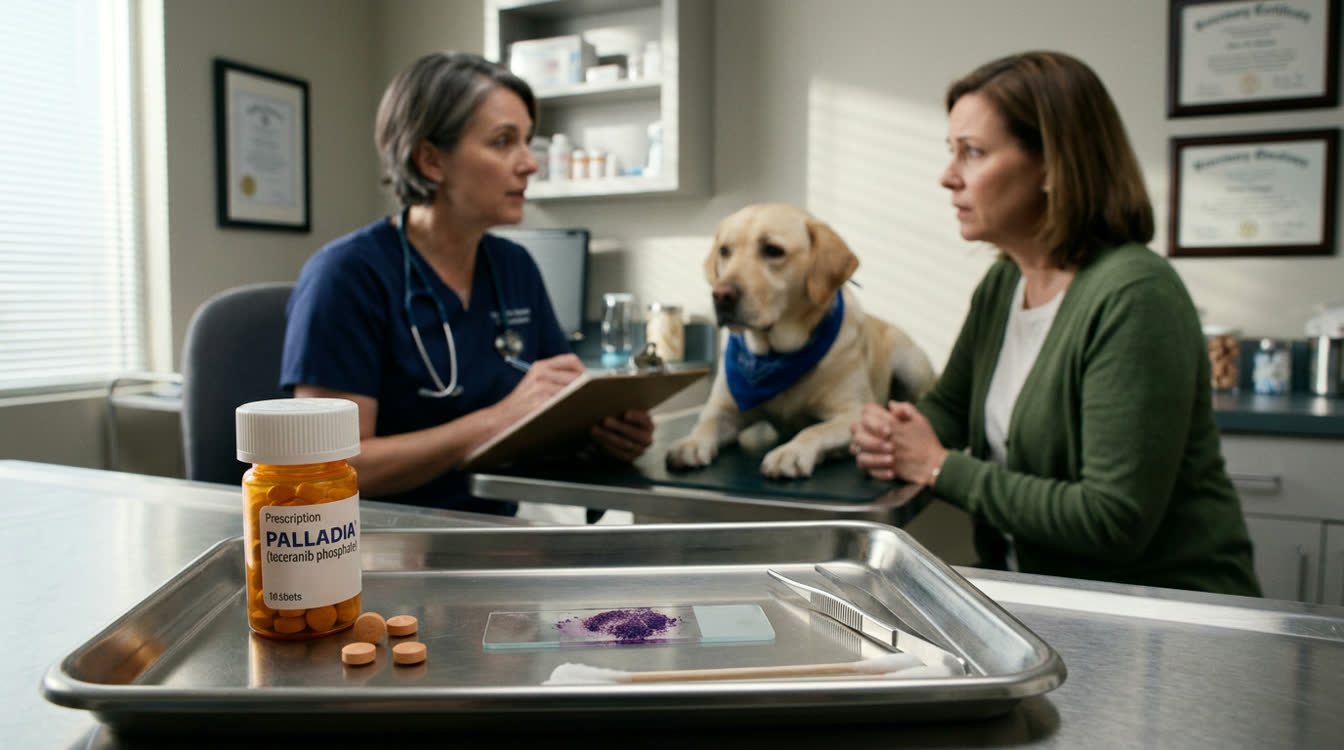
Toceranib phosphate (Palladia) is an FDA-approved oral tyrosine kinase inhibitor (TKI) for dogs with recurrent grade II–III mast cell tumors. This guide covers dosing schedules, c-KIT mutation significance, adverse effects (GI, hypertension, protein-losing nephropathy), and monitoring protocols.
Key Takeaways
- ✓Toceranib phosphate (Palladia) at 3.25 mg/kg PO 3x/week is FDA-approved for recurrent grade II–III mast cell tumors in dogs.
- ✓c-KIT exon 11 mutation testing predicts higher response rates; wild-type KIT tumors may still respond via VEGFR2 inhibition.
- ✓Monitor blood pressure every 4–6 weeks; toceranib-induced hypertension occurs in 30–40% of dogs and responds to amlodipine.
- ✓UPC monitoring at each recheck detects protein-losing nephropathy; UPC >0.5 warrants ACE inhibitor therapy.
- ✓GI toxicity (diarrhea, vomiting) is the most common adverse effect and is managed with metronidazole, maropitant, and GI protectants.
- ✓Dose reduction follows a structured ladder: standard 3.25 → 2.5 → 2.0 mg/kg 3x/week based on toxicity grade.
Mechanism of Action, FDA Approval and Clinical Indications
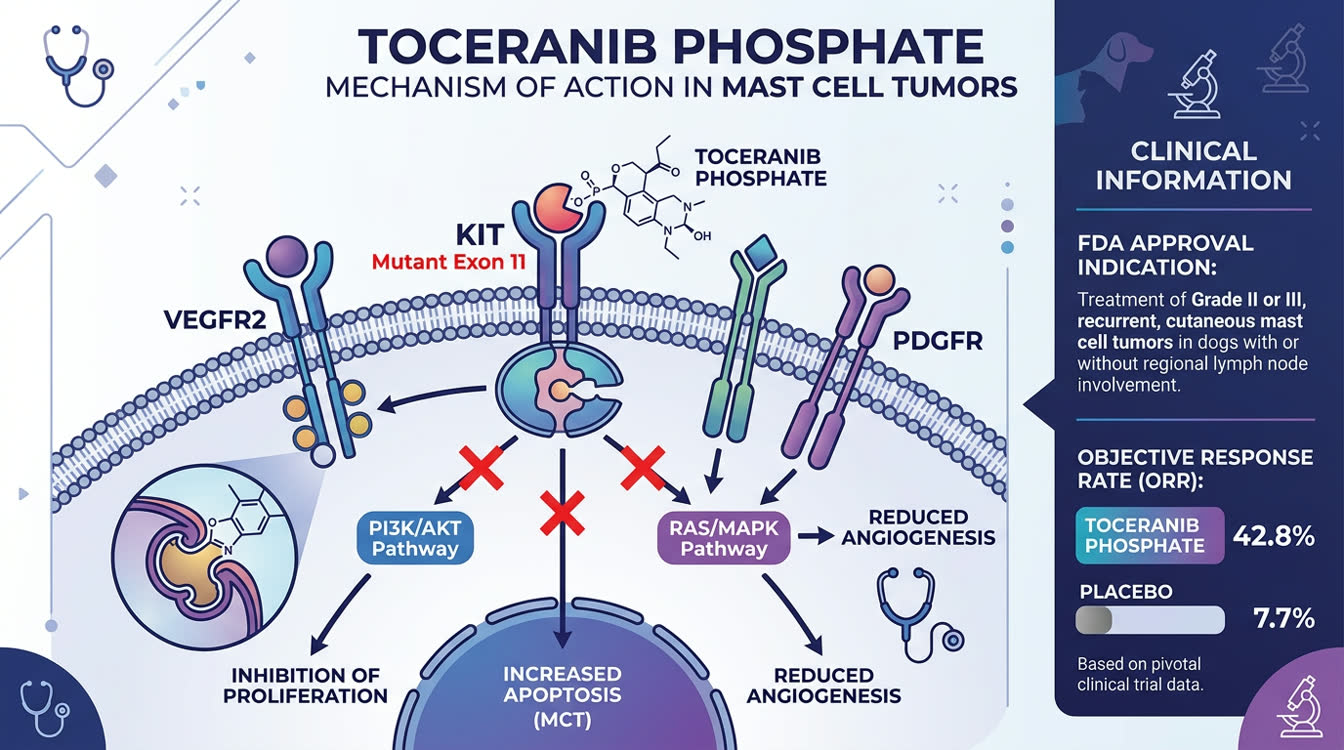
Toceranib phosphate (Palladia, Zoetis) is an oral multi-targeted receptor tyrosine kinase inhibitor (TKI) with potent activity against KIT (CD117), VEGFR2, and PDGFR-beta. It was the first veterinary-specific TKI approved by the FDA (2009) for the treatment of canine mast cell tumors.
Mechanism of Action:
- KIT inhibition: Binds the ATP-binding pocket of the KIT receptor, blocking downstream signaling through PI3K/AKT and RAS/MAPK pathways that drive mast cell proliferation and survival.
- c-KIT mutations: Exon 11 (juxtamembrane domain) mutations are present in approximately 30–35% of canine mast cell tumors and confer constitutive KIT activation; toceranib has stronger inhibitory activity against mutant KIT.
- VEGFR2 inhibition: Antiangiogenic effects independent of KIT mutation status; relevant for off-label use in other solid tumors.
- PDGFR inhibition: Activity against carcinomas and sarcomas with PDGFR overexpression.
FDA Approval (NADA 141-267):
- Indicated for dogs with Patnaik grade II or III mast cell tumors, with or without regional lymph node involvement, that have recurred following prior surgery, with or without chemotherapy.
- Approval was based on a randomized controlled trial (London et al., 2009) demonstrating objective response rates of 42.8% for toceranib vs 7.7% for placebo.
Clinical Indications:
- Primary indication: Recurrent or inoperable grade II–III mast cell tumors with or without c-KIT exon 11 mutation
- Off-label uses with evidence: Thyroid carcinoma, nasal carcinoma, anal sac adenocarcinoma, osteosarcoma (post-amputation), soft tissue sarcoma, head/neck squamous cell carcinoma
- Metronomic combination: Toceranib + low-dose cyclophosphamide (see metronomic protocols)
c-KIT Mutation Testing:
- PCR for c-KIT exon 8 and 11 mutations recommended before starting toceranib in mast cell tumors
- Exon 11 internal tandem duplications (ITDs) predict higher response rates and longer progression-free survival
- Wild-type KIT tumors may still respond due to VEGFR2 inhibition, but response rates are lower
Dosing, Schedule and Administration Guidelines
Toceranib is available as 10 mg and 50 mg film-coated tablets. Tablet sizes allow dosing adjustment by body weight, but exact mg/kg dosing requires attention to avoid under- or overdosing.
Standard Dosing Schedule:
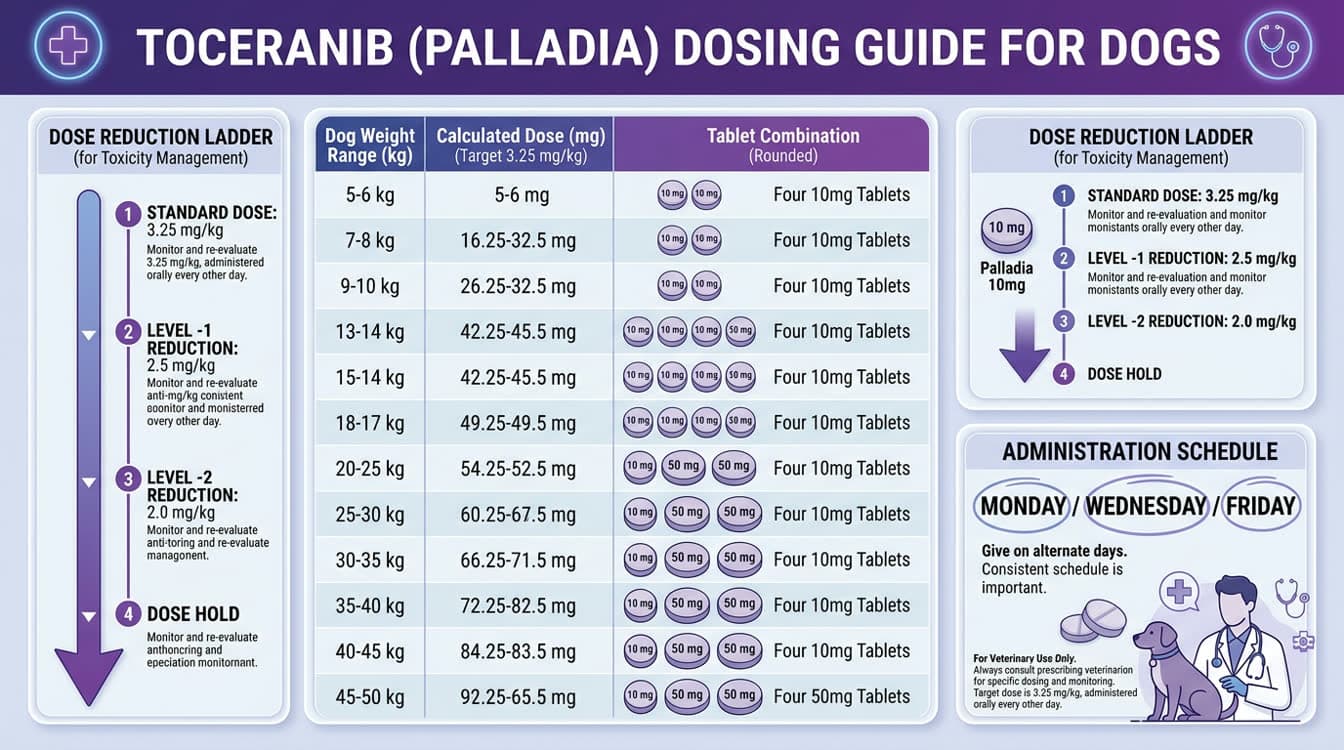
- Approved dose: 3.25 mg/kg PO every other day (Monday/Wednesday/Friday — 3 times per week)
- Doses are rounded to nearest whole tablet; do not split 50 mg tablets
- Example: 25 kg dog = 81.25 mg → round to 80 mg (one 50 mg + three 10 mg tablets) 3x/week
Dose Reduction Schedule (toxicity-guided):
| Dose Level | Mg/kg | Comment |
|---|---|---|
| Starting | 3.25 mg/kg | Standard; 3x/week |
| Level -1 | 2.5 mg/kg | First reduction for grade 2 toxicity |
| Level -2 | 2.0 mg/kg | Further reduction or 2x/week |
| Hold | — | Grade 3–4 toxicity; resume at Level -1 after resolution |
Administration:
- Give with or without food; food reduces GI adverse effects
- Swallow whole; do not crush (hazardous drug — wear gloves)
- No dose adjustment required for mild hepatic impairment; use caution with significant hepatic disease (toceranib is hepatically metabolized via CYP3A4)
Drug Interactions:
- Strong CYP3A4 inhibitors (azole antifungals, clarithromycin) increase toceranib plasma levels — avoid or reduce dose
- Proton pump inhibitors (omeprazole): minimal effect on absorption
- Corticosteroids: concurrent use increases GI toxicity risk; taper dexamethasone or prednisone to lowest effective dose when co-administering
Pregnancy and Reproduction:
- Toceranib is teratogenic and embryotoxic; do not use in pregnant or breeding animals
- Wash hands after handling; consider gloves; keep away from children
Duration of Therapy:
- Continue until tumor progression, unacceptable toxicity, or owner decision
- Median progression-free survival in mast cell tumor trials: 11–18 weeks in recurrent disease; may be significantly longer in c-KIT mutant tumors
Adverse Effects, Toxicity Grading and Monitoring Protocol
Toceranib has a well-characterized toxicity profile. Most adverse effects are manageable with dose modification and supportive care. Approximately 50–60% of dogs experience at least one adverse effect requiring intervention.
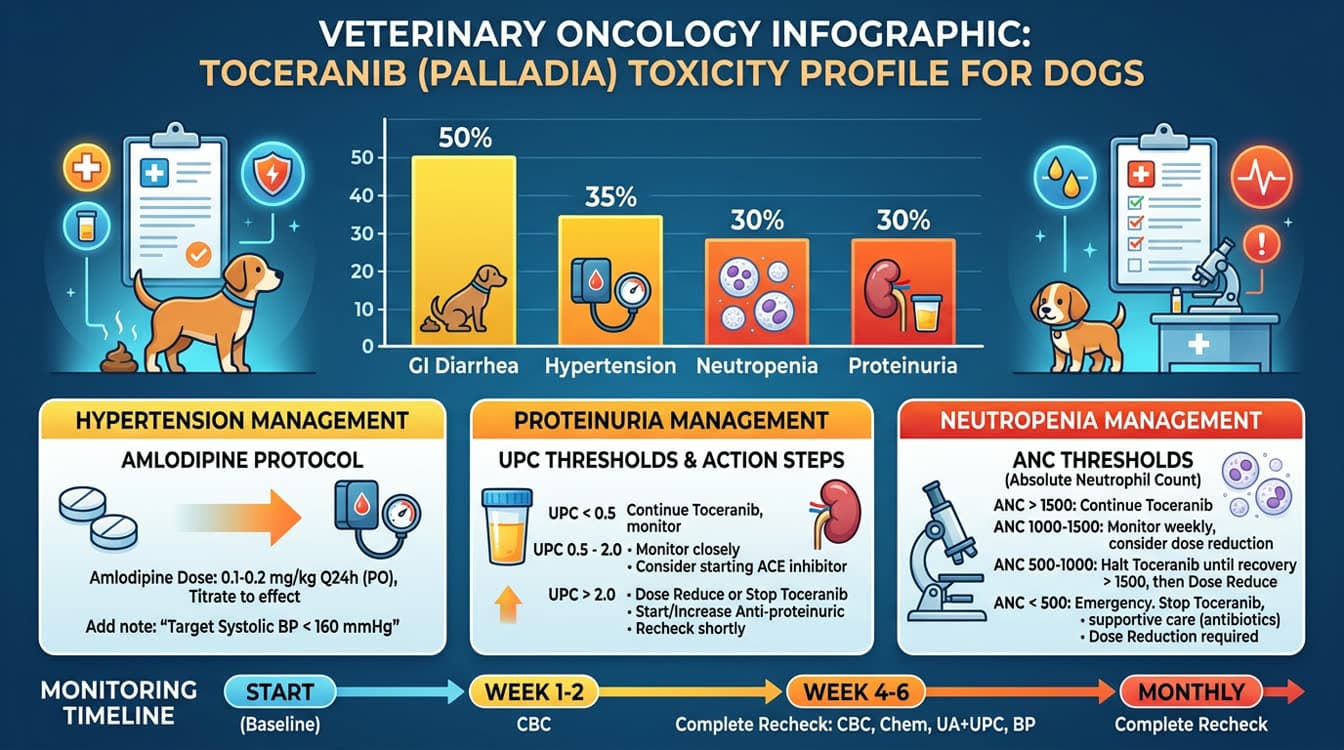
Most Common Adverse Effects (by frequency): 1. Gastrointestinal: Diarrhea (50%), anorexia (40%), vomiting (35%), weight loss (20%) 2. Hematologic: Neutropenia (20–30%), thrombocytopenia (15%) 3. Hypertension: Systemic hypertension in 30–40% of dogs 4. Musculoskeletal: Lameness, muscle pain (20%) 5. Protein-losing nephropathy: Proteinuria in 30%; nephrotic syndrome in <5% 6. Dermatologic: Muzzle depigmentation, follicular cysts
Gastrointestinal Management:
- Grade 1–2 diarrhea: Metronidazole 15 mg/kg PO q12h for 5–7 days; probiotics; bland diet
- Grade 3 diarrhea (>7 stools/day or hospitalization needed): Hold toceranib; resume at Level -1 after resolution to Grade 1
- Maropitant 2 mg/kg PO q24h for nausea/vomiting
- Famotidine 0.5 mg/kg PO q12h or omeprazole 1 mg/kg PO q24h for GI ulcer prophylaxis
Hypertension Monitoring and Management:
- Measure blood pressure (Doppler or oscillometric) at baseline and every 4–6 weeks
- Target BP <160 mmHg systolic in dogs
- Toceranib-induced hypertension: Amlodipine 0.1–0.2 mg/kg PO q24h; benazepril 0.5 mg/kg PO q24h as adjunct
- Grade 3 hypertension (SBP >200 mmHg or end-organ effects): Hold toceranib; aggressive antihypertensive treatment
Proteinuria Monitoring:
- UPC (urine protein:creatinine ratio) at baseline and every 4–6 weeks
- UPC >0.5: renal protective diet; benazepril 0.5 mg/kg PO q24h
- UPC >2.0: consider dose reduction and nephrology consultation
CBC Monitoring:
- CBC at weeks 2–3, then every 6 weeks
- Neutropenia ANC <2,000/µL: dose reduction; ANC <1,000/µL: hold; antibiotics if febrile
- Thrombocytopenia <100,000/µL: reduce dose or hold
Baseline and Follow-Up Schedule:
| Timepoint | Tests |
|---|---|
| Baseline | CBC, chemistry, UA, UPC, BP |
| Week 3 | CBC, BP |
| Week 6 | CBC, chemistry, UA, UPC, BP |
| Every 8–12 weeks | CBC, chemistry, UA, UPC, BP, re-staging imaging |
Frequently Asked Questions
What is the standard dose of toceranib (Palladia) for dogs?
The FDA-approved dose of toceranib phosphate (Palladia) for dogs is 3.25 mg/kg orally every other day, given as a Monday/Wednesday/Friday schedule (3 times per week). Doses are rounded to the nearest whole tablet combination using the available 10 mg and 50 mg tablets.
Do dogs with c-KIT mutations respond better to toceranib?
Yes. Dogs with c-KIT exon 11 internal tandem duplication mutations generally achieve higher objective response rates and longer progression-free survival with toceranib compared to wild-type KIT tumors. c-KIT mutation testing by PCR is recommended before initiating therapy in mast cell tumor patients.
How do you monitor for toceranib-induced hypertension in dogs?
Blood pressure should be measured at baseline and every 4–6 weeks during toceranib therapy. Systolic blood pressure above 160 mmHg warrants antihypertensive treatment with amlodipine (0.1–0.2 mg/kg PO q24h) and benazepril. Grade 3 hypertension (systolic >200 mmHg) requires immediate toceranib hold.
What is the UPC threshold that requires action during toceranib therapy?
A urine protein:creatinine ratio (UPC) above 0.5 warrants initiation of an ACE inhibitor (benazepril 0.5 mg/kg PO q24h) and a renal protective diet. A UPC above 2.0 indicates significant protein-losing nephropathy and should prompt dose reduction and nephrology consultation.
Can toceranib be combined with other cancer drugs in dogs?
Yes. Toceranib is commonly combined with low-dose metronomic cyclophosphamide (10–12.5 mg/m²/day) for its antiangiogenic synergy. It can also be used with vinblastine for mast cell tumors. Concurrent corticosteroids increase GI toxicity; if steroids are required, taper to the lowest effective dose.
References
- London CA, et al. "Multi-center, placebo-controlled, double-blind, randomized study of oral toceranib phosphate (SU11654), a receptor tyrosine kinase inhibitor, for the treatment of dogs with recurrent (either local or distant) mast cell tumor following surgical excision." Clin Cancer Res. 2009;15(11):3856-3865.
- Robat C, et al. "Adverse effects and outcomes associated with toceranib phosphate (Palladia) use in cats." J Feline Med Surg. 2011;13(10):701-706.
- Carlsten KS, et al. "Prospective blinded evaluation of toceranib phosphate in the treatment of nonresectable or recurrent canine mast cell tumors." Vet Comp Oncol. 2012;10(1):1-12.