Quick Answer
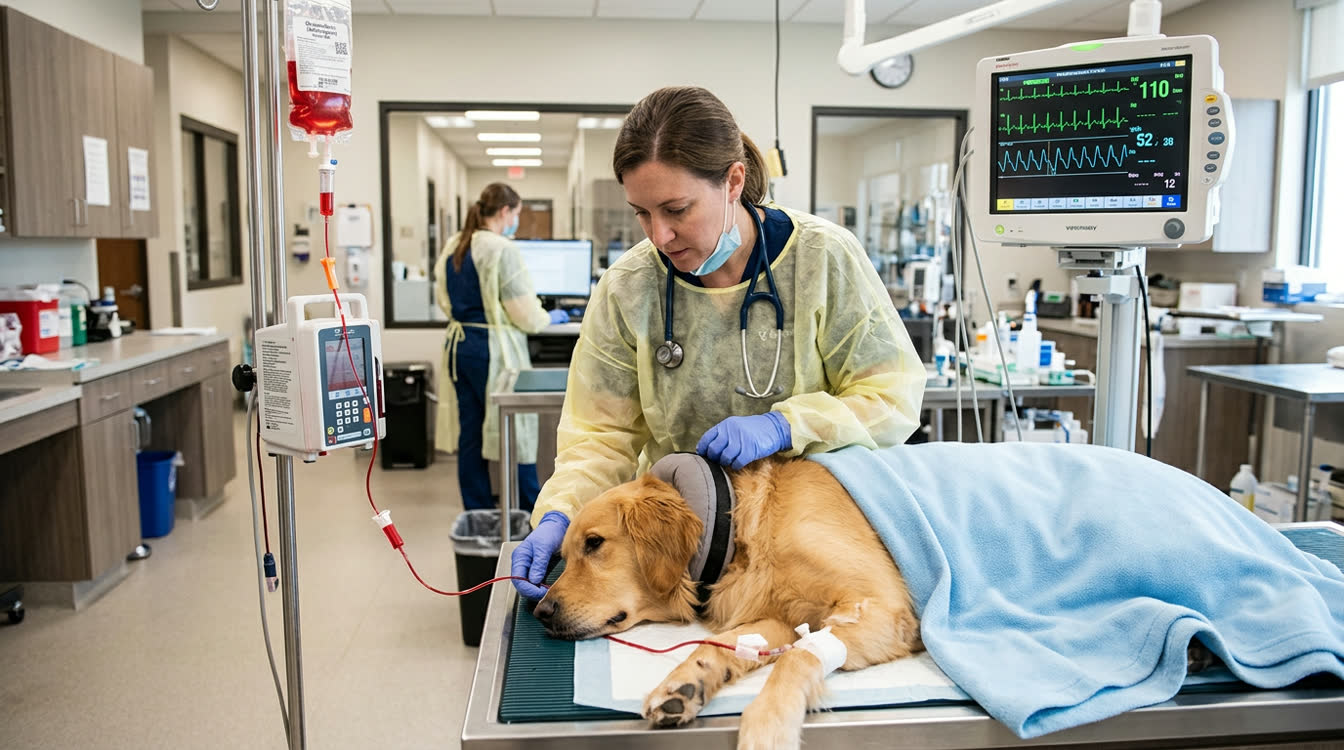
Doxorubicin (Adriamycin) is one of the most important chemotherapy agents in veterinary oncology, used for lymphoma, sarcomas, and carcinomas. This guide covers dosing by species, the critical cumulative dose limit for cardiotoxicity prevention, pre-treatment ECG and echocardiography protocols, and extravasation management.
Key Takeaways
- ✓Doxorubicin cumulative dose limit: 180 mg/m² in dogs (6 cycles at 30 mg/m²); cats ≤6 doses at 1 mg/kg q3 weeks.
- ✓Pre-treatment ECG and echocardiography are mandatory before starting doxorubicin; recheck echo at midpoint and completion.
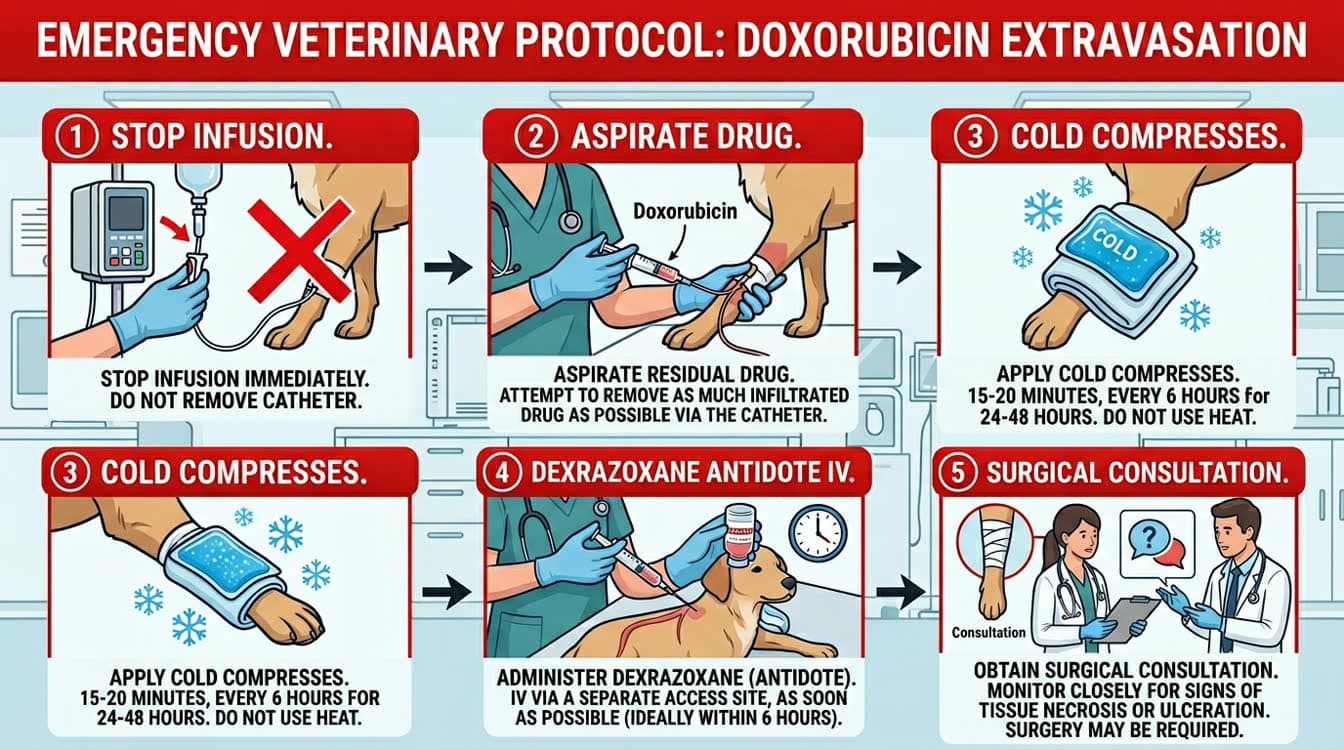
- ✓Doxorubicin is a severe vesicant — extravasation protocol: stop infusion, aspirate, cold compresses, dexrazoxane within 6 hours.
- ✓Always pre-medicate with diphenhydramine 1-2 mg/kg IV slow 15 min before infusion to prevent anaphylactoid reactions.
- ✓Neutrophil nadir at day 7-10 — check CBC at this time point and before each cycle.
Mechanism of Action and Indications
Mechanism of Action Doxorubicin (hydroxydaunorubicin, Adriamycin) is an anthracycline antibiotic that intercalates into DNA, inhibits topoisomerase II (preventing DNA re-ligation after strand breaks), and generates free radicals that damage cell membranes and DNA. It is cell-cycle non-specific.
Clinical Indications in Veterinary Medicine
| Tumor Type | Species | Response Rate |
|---|---|---|
| Multicentric lymphoma (CHOP) | Dog | 80-90% CR in first-line |
| Alimentary/high-grade lymphoma | Cat | 60-75% CR |
| Osteosarcoma (adjuvant) | Dog | Extends DFI vs surgery alone |
| Hemangiosarcoma | Dog | 35-50% response |
| Soft tissue sarcoma | Dog | 20-30% response |
| Thyroid carcinoma | Dog | 20-30% response |
| Mammary carcinoma | Dog, Cat | Adjuvant use |
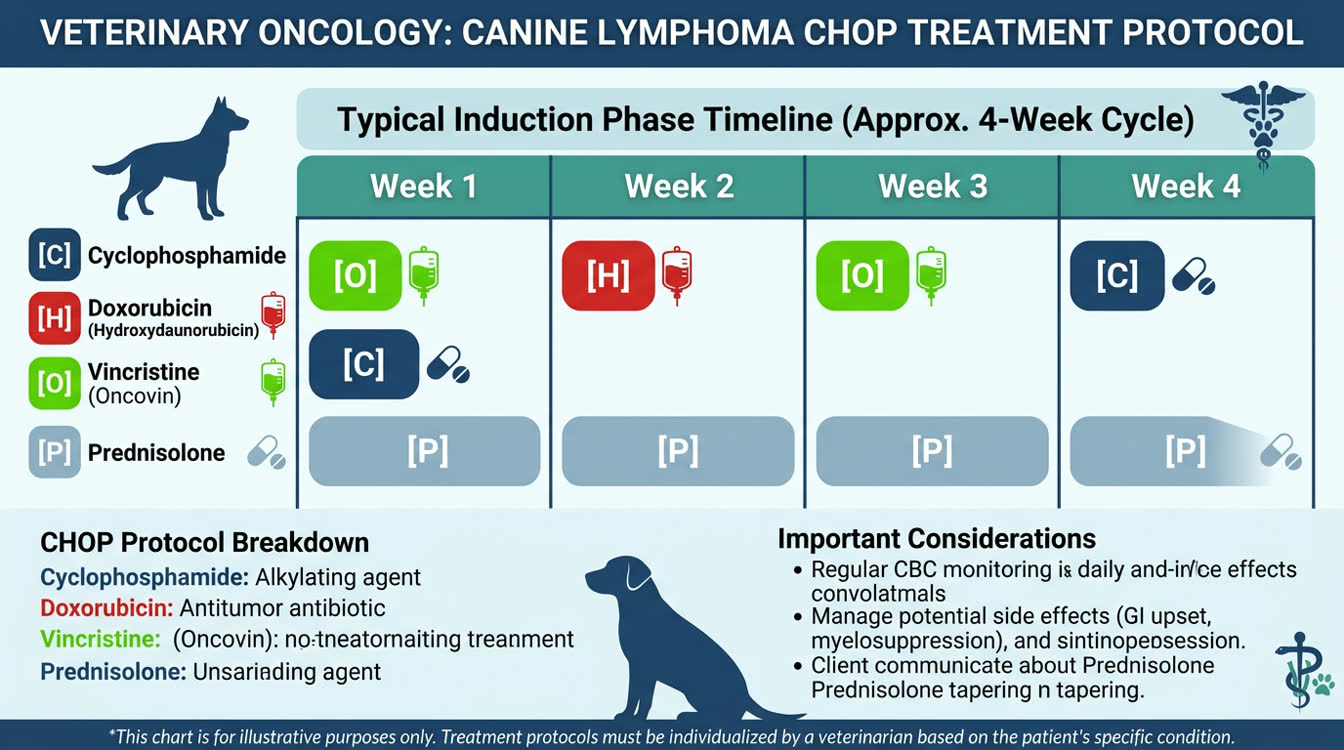
CHOP Protocol (Standard Canine Lymphoma) Week 1: Vincristine 0.7 mg/m² IV + Prednisolone 2 mg/kg PO q24h Week 2: Cyclophosphamide 200-250 mg/m² IV/PO + Prednisolone continue Week 3: Vincristine 0.7 mg/m² IV Week 4: Doxorubicin 30 mg/m² IV (dogs >15 kg) or 1 mg/kg IV (dogs <15 kg) Then repeat cycle (weeks 5-8, etc.)
Standard 19-week protocol; most practices use 6-cycle CHOP.
Dosing and Cardiotoxicity Monitoring
Dosing by Species and Size
| Species/Size | Dose | Route | Frequency in CHOP |
|---|---|---|---|
| Dogs >15 kg | 30 mg/m² | IV infusion | Every 3 weeks (cycle week 4) |
| Dogs <15 kg | 1 mg/kg | IV infusion | Every 3 weeks |
| Cats | 1 mg/kg (max 25 mg/m²) | IV infusion | Every 3 weeks |
Administration Requirements
- Must be given as IV infusion over 20-30 minutes in 0.9% NaCl
- Do NOT use dextrose solutions (precipitates with doxorubicin)
- Pre-medicate with diphenhydramine 1-2 mg/kg IV (slow) 15 min before doxorubicin — reduces anaphylactoid reactions
- Some practices also pre-medicate with maropitant 1 mg/kg SQ
- Monitor patient throughout infusion — cardiac arrhythmias and hypersensitivity reactions can occur
CRITICAL: Cumulative Dose Limit for Cardiotoxicity Doxorubicin causes a cumulative, irreversible dilated cardiomyopathy (DCM) by generating free radicals in cardiac myocytes.
- Dogs: MAXIMUM cumulative dose = 180-240 mg/m² (most practices use 180 mg/m² as the hard limit)
- Cats: MAXIMUM cumulative dose = 170-200 mg/m² (cats are more sensitive — generally ≤6 doses total at 1 mg/kg q3 weeks)
- At 30 mg/m² per treatment: this is a maximum of 6 cycles (180 mg/m²) in dogs
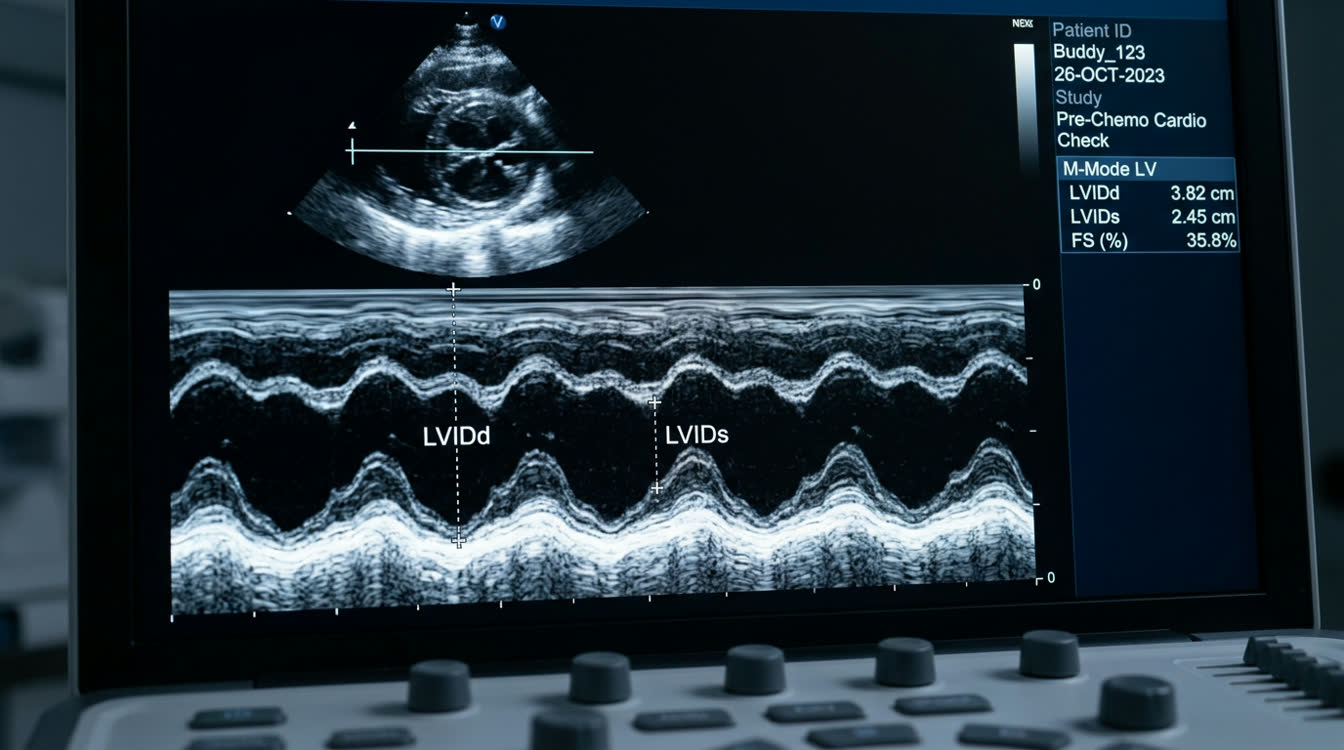
Pre-Treatment Cardiac Evaluation Before starting doxorubicin therapy, EVERY patient requires: 1. ECG: rule out pre-existing arrhythmias; document baseline 2. Echocardiography (echo): document baseline fractional shortening (FS) and left ventricular internal dimension in diastole (LVIDd)
Cardiac Monitoring During Therapy
- Recheck ECG before each doxorubicin dose
- Echo at midpoint of therapy (typically after 3 cycles = 90 mg/m²)
- Echo after completion of therapy
- Discontinue doxorubicin if:
Baseline and Monitoring Values
- FS: 25-40% (alarm if drops below 25% or drops >10% from baseline)
- LVIDd: breed-specific; use Tidholm/Chetboul scaling formulas
Dilated Cardiomyopathy from Doxorubicin
- Can develop months to years after treatment completion
- Breeds with existing DCM predisposition (Doberman, Boxer, Great Dane) at higher risk
- Treatment if it develops: standard DCM protocol — pimobendan, ACE inhibitor, diuretics
Extravasation Protocol and Additional Toxicities
Extravasation Protocol — TRUE EMERGENCY
- Immediate burning sensation
- Progressive tissue necrosis developing over 7-21 days
- Deep, non-healing ulceration potentially requiring flap surgery or amputation
Extravasation Response Protocol 1. Stop infusion immediately — do NOT flush the line 2. Do not remove catheter — attempt to aspirate residual drug back through catheter 3. Mark the affected area with a surgical marker 4. Apply cold compresses (ice pack wrapped in towel) for 15 minutes, 4 times daily for 3 days - Note: COLD for doxorubicin, WARM for vinca alkaloids — opposite! 5. Dexrazoxane (Totect, Savene): the antidote for anthracycline extravasation - First dose: within 6 hours of extravasation - 1,000 mg/m² IV infusion over 1-2h on Day 1, Day 2; then 500 mg/m² on Day 3 - Available at human hospitals; specialist referral recommended 6. Topical DMSO 99%: apply 1-2 mL q8h x 7 days over affected area (only if dexrazoxane unavailable) 7. Surgical consultation within 24-48h if significant extravasation 8. Document, photograph, and notify the oncologist immediately
Hypersensitivity / Anaphylactoid Reaction (During Infusion)
- Signs: facial swelling, urticaria, vomiting, hypotension, respiratory distress
- More common in cats and small dogs
- Always pre-medicate with diphenhydramine
- If reaction occurs: stop infusion, give additional diphenhydramine 2 mg/kg IV, dexamethasone 0.1 mg/kg IV, IV fluids if hypotensive
- May resume at 50% rate after 30 minutes if reaction was mild
Other Toxicities
*Myelosuppression (Dose-limiting)*
- Neutrophil nadir: day 7-10 (critical window)
- Monitor CBC at day 7-10 post-doxorubicin
- Febrile neutropenia: hospitalize, IV antibiotics (ampicillin + enrofloxacin)
- Hold doxorubicin if neutrophils <1,500/uL on treatment day; reduce 25% if repeated neutropenia
*Hemorrhagic Cystitis (Rare with Doxorubicin Alone)*
- More common with cyclophosphamide (same CHOP protocol)
- Furosemide 1-2 mg/kg IV after cyclophosphamide prevents bladder toxicity
*GI Toxicity*
- Vomiting, diarrhea: days 2-5 post-treatment
- Pre-medicate with maropitant 1 mg/kg SQ; home antiemetics for 3-5 days
*Alopecia*
- Hair loss: primarily affects whiskers, undercoat in breeds with continuously growing hair (Poodles, Old English Sheepdogs)
Related Articles:
- [Vincristine in Dogs and Cats](/articles/vincristine-dogs-cats)
- [Lomustine (CCNU) in Dogs and Cats](/articles/lomustine-ccnu-dogs-cats)
Frequently Asked Questions
How many doxorubicin treatments can a dog safely receive?
The cumulative dose limit is 180-240 mg/m², and most oncologists use 180 mg/m² as the maximum. At the standard CHOP dose of 30 mg/m² per cycle, this allows a maximum of 6 cycles. Beyond this limit, the risk of irreversible dilated cardiomyopathy increases significantly. Echocardiography must be performed before starting and monitored throughout therapy.
Is doxorubicin safe in Doberman Pinschers?
Dobermans have a high genetic predisposition to dilated cardiomyopathy (DCM). Doxorubicin significantly increases the risk of DCM in breeds already predisposed. A pre-treatment Holter monitor and echocardiogram are essential, and the cumulative dose limit should be strictly followed. Some oncologists reduce the limit to 150 mg/m² in Dobermans and other high-risk breeds. Discuss the cardiac risk with a cardiologist before proceeding.
What should I do if I think doxorubicin leaked outside the vein at home?
Doxorubicin should only be given in a hospital setting — it cannot be administered at home. If during an in-clinic infusion you notice swelling, redness, or your pet is showing pain at the catheter site during infusion, alert the veterinary staff immediately. Do not wait — doxorubicin extravasation requires immediate intervention including aspiration, cold compresses, and potentially dexrazoxane within 6 hours.
Why does doxorubicin cause heart damage?
Doxorubicin generates free radicals that damage the mitochondria in cardiac cells. The heart has limited ability to regenerate cardiomyocytes, so the damage is cumulative and irreversible. This is why a strict maximum total dose (180 mg/m² in dogs) and echocardiographic monitoring are mandatory — once cardiotoxic DCM develops, treatment is palliative only.
References
- Vail DM, Thamm DH, Liptak JM, eds. Withrow and MacEwen's Small Animal Clinical Oncology. 6th ed. Elsevier; 2020.
- Mauldin GN, et al. Efficacy and toxicity of doxorubicin and cyclophosphamide used in the treatment of selected malignant tumors in 23 cats. J Vet Intern Med. 1988;2(2):60-65.
- Settles EL, et al. Doxorubicin-induced cardiomyopathy in dogs: clinical features and outcome. J Vet Intern Med. 2022;36(4):1281-1290.