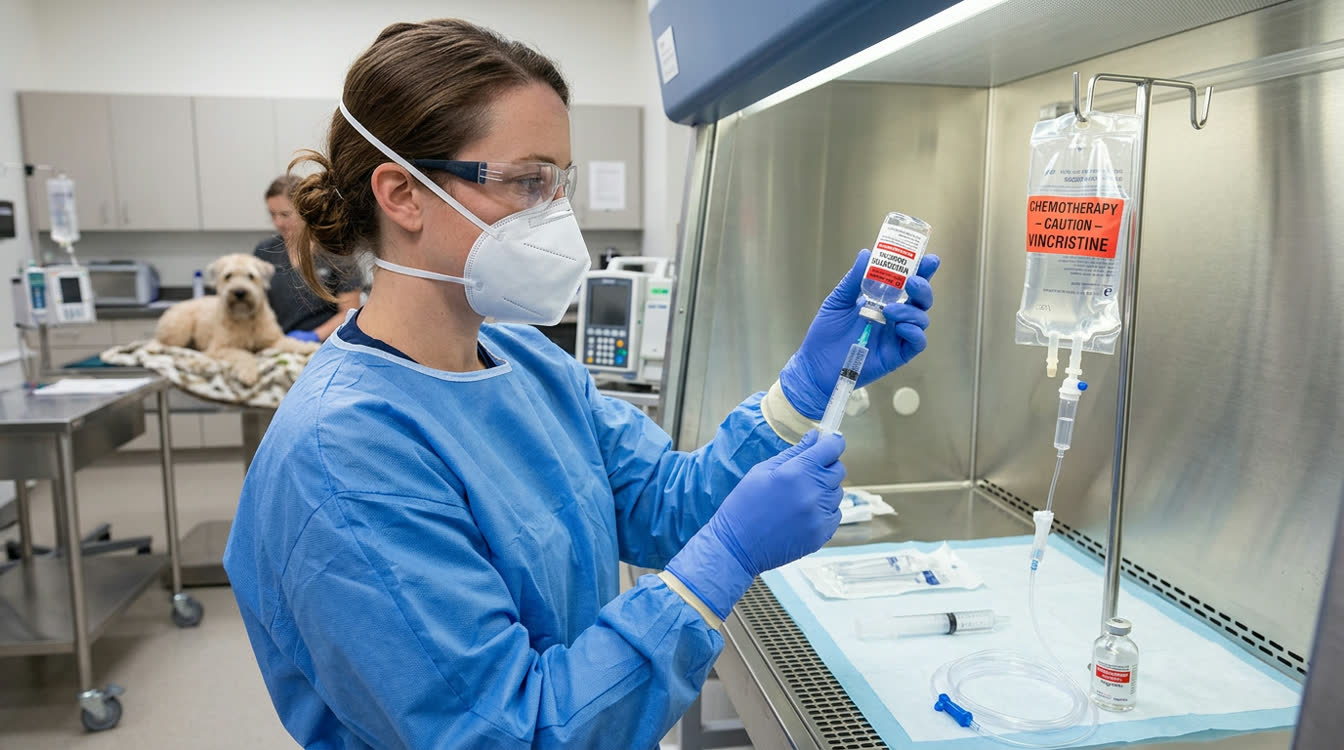
Quick Answer
Vincristine (Oncovin) is a vinca alkaloid chemotherapy agent used in veterinary oncology for transmissible venereal tumor (TVT), lymphoma protocols, and immune-mediated thrombocytopenia (ITP). This guide covers clinical indications, dosing, vesicant precautions, and peripheral neuropathy monitoring.
Key Takeaways
- ✓Vincristine is curative as a single agent for TVT — 90%+ cure rate with 4-8 weekly IV injections at 0.5-0.7 mg/m².
- ✓Vincristine is a VESICANT — confirm IV catheter patency with saline flush before every administration; extravasation causes tissue necrosis.
- ✓The ITP platelet-release dose (0.02 mg/kg) is much lower than the oncology dose — do not confuse these.
- ✓Peripheral neuropathy manifests primarily as constipation in dogs — prophylax with cisapride 0.5 mg/kg PO q8h during vincristine therapy.
- ✓Neutrophil nadir occurs at day 7-10 — check CBC before each weekly treatment.
Mechanism of Action and Clinical Indications
Mechanism of Action Vincristine is a vinca alkaloid derived from the periwinkle plant (*Catharanthus roseus*). It binds to tubulin, preventing microtubule polymerization during cell division (M-phase arrest). This inhibits metaphase chromosome segregation, causing mitotic arrest and apoptosis.
Clinical Indications
| Indication | Species | Role in Protocol |
|---|---|---|
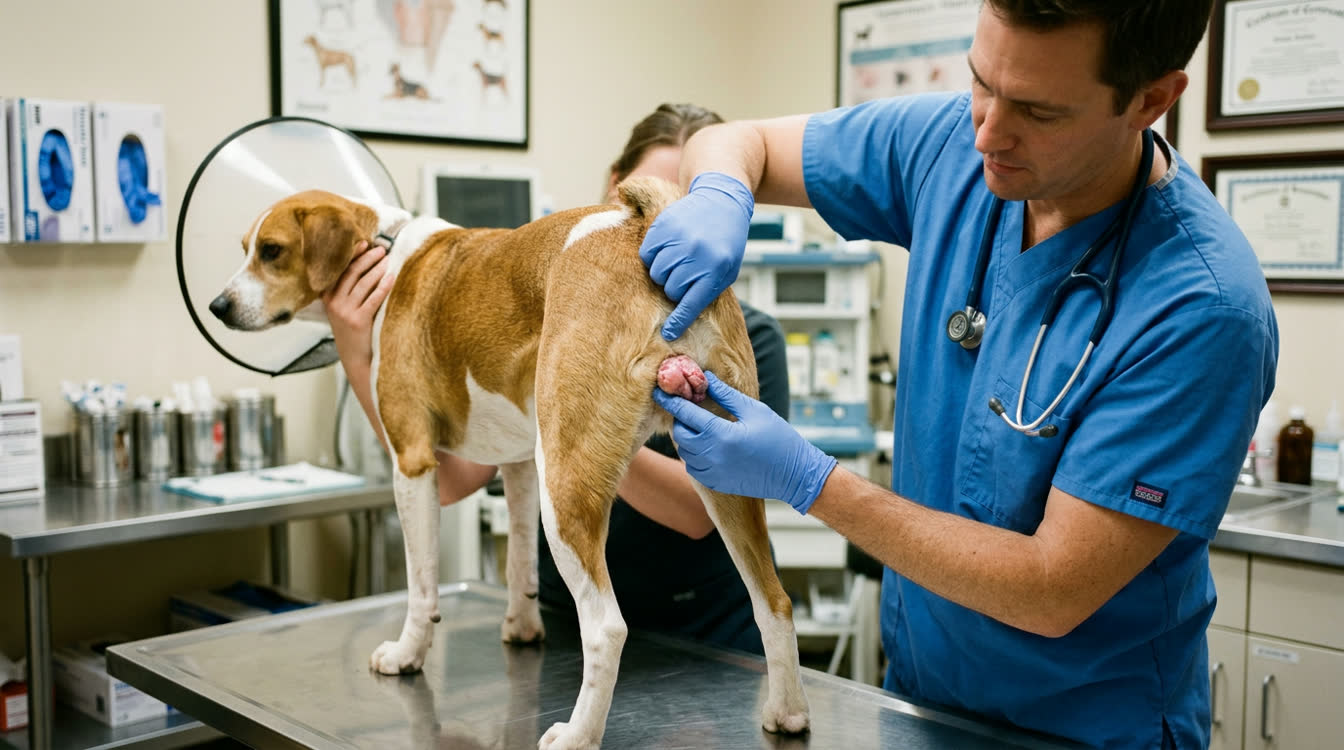
| Transmissible Venereal Tumor (TVT) | Dog | Single-agent first-line; highly curative |
| Multicentric Lymphoma | Dog, Cat | Part of CHOP protocol (cyclophosphamide, doxorubicin, vincristine, prednisolone) |
| Immune Thrombocytopenia (ITP/IMT) | Dog | Promotes platelet release from megakaryocytes |
| Lymphoma rescue protocols | Dog, Cat | Part of MOPP, L-MOPP rescue |
| Mast cell tumor (adjuvant) | Dog | Rarely; part of combination protocols |
TVT — Curative Single-Agent Use
- TVT is uniquely responsive to vincristine — complete cure rates exceed 90%
- Protocol: vincristine 0.5–0.7 mg/m² IV weekly x 4–8 treatments (until tumor resolved + 1 additional treatment)
- Most TVTs resolve within 4–6 weekly injections
- Resistance may occur if treated inadequately in early stages — complete the full course
ITP (Thrombocytopenia)
- Vincristine accelerates platelet release from megakaryocytes in the bone marrow
- Used when platelet count <5,000–10,000/uL or active bleeding
- Single dose: 0.02 mg/kg IV (note: much lower than oncology dose)
- Platelet count rises within 3–5 days in responsive patients
Dosing, Administration, and Vesicant Precautions
Dosing
| Indication | Species | Dose | Route | Frequency |
|---|---|---|---|---|
| TVT | Dog | 0.5-0.7 mg/m² | IV | Weekly x 4-8 |
| CHOP lymphoma | Dog | 0.7 mg/m² (max 1 mg total) | IV | Day 8, 15 of each cycle |
| CHOP lymphoma | Cat | 0.5-0.75 mg/m² | IV | Weekly protocol variations |
| ITP (platelet release) | Dog | 0.02 mg/kg | IV | Single dose, may repeat |
BSA Conversion for Dosing
- Dog BSA (m²) = 0.1 x (weight in kg)^0.667
- Cat BSA (m²) = 0.1 x (weight in kg)^0.667
- Standard tables available; most practices use published BSA charts
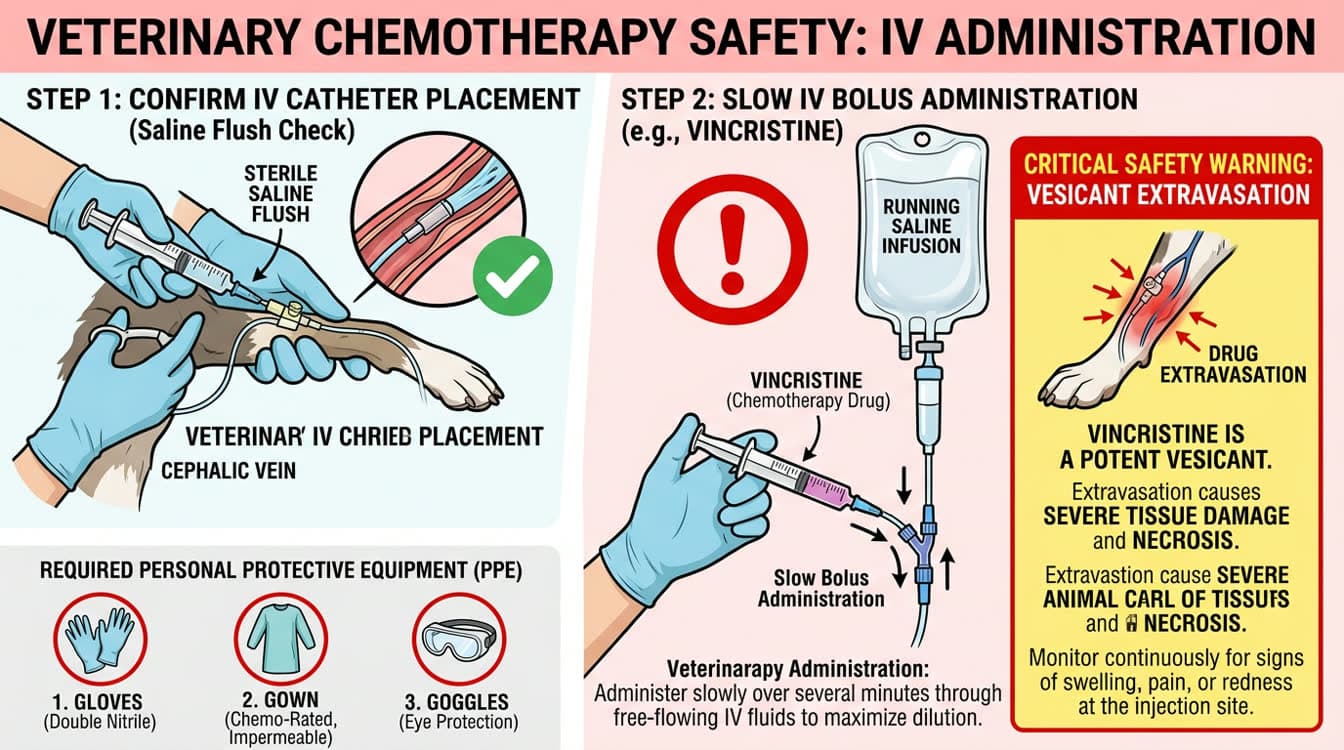
CRITICAL: Vincristine is a VESICANT
- Intense pain and inflammation
- Progressive tissue necrosis over 7–14 days
- Potentially deep ulceration requiring surgical debridement
Vesicant Handling Protocol 1. Confirm IV catheter patency before administration: flush with 5–10 mL saline; confirm free flow and no swelling 2. Use a new IV catheter placed specifically for chemotherapy — do not use a catheter used for prior fluids 3. Administer as slow IV bolus (over 1–2 minutes) through running saline 4. Flush after drug: flush line with 10–20 mL saline 5. If extravasation occurs: - STOP infusion immediately - Do not remove needle — try to aspirate residual drug - Inject hyaluronidase (150 units in 1 mL saline) SC around the site - Apply warm compresses (warm promotes dispersal and absorption by hyaluronidase) — opposite to most vesicants - Mark the area; monitor daily - Consult surgeon if tissue necrosis develops
Chemotherapy Safety (PPE)
- Nitrile chemotherapy gloves (double-glove)
- Closed-system drug transfer device (CSTD) for drawing up
- Eye protection and gown for mixing
- Cytotoxic waste disposal
- Patient urine/feces cytotoxic for 48h — gloves for litter handling
Toxicity Profile and Monitoring
Peripheral Neuropathy Vincristine's primary dose-limiting toxicity in humans is peripheral neuropathy. In dogs and cats, neuropathy occurs but is less prominently limiting than myelosuppression from other agents.
Signs of vincristine-induced neuropathy:
- Constipation (most common): ileus from autonomic neuropathy; prophylax with cisapride 0.5 mg/kg PO q8h or lactulose
- Hindlimb weakness or ataxia: cranial nerve dysfunction, peripheral sensory neuropathy
- Reduce dose 25-50% if neuropathy develops; discontinue if severe
Myelosuppression
- Vincristine is considered relatively non-myelosuppressive compared to other chemotherapy agents
- Neutrophil nadir: day 7–10 post-administration
- Monitor CBC before each treatment; hold if neutrophils <2,500/uL
GI Toxicity
- Anorexia, vomiting possible but generally mild
- Maropitant 1 mg/kg SQ or PO q24h as pre-medication reduces nausea
Drug Interactions
- Asparagine combinations: L-asparaginase given before vincristine reduces clearance — wait 12-24h after L-asparaginase before vincristine in protocols that combine them
- CYP3A4 inducers/inhibitors: clinically relevant in cats (more sensitive to CYP metabolism changes)
Response Monitoring
- TVT: measure tumor size at each weekly visit; expect 25-50% regression per treatment cycle
- Lymphoma: assess lymph node size; staging ultrasound at start of each 3-week cycle
- ITP: platelet count 3-5 days after administration
Prognosis with Vincristine-based Therapy
- TVT: complete cure rate 90%+; most dogs respond within 4-6 treatments
- Canine lymphoma (CHOP): median remission 6-8 months; 20-25% survive 2 years
- Feline lymphoma (high-grade): median remission 3-6 months; lower cure rates
- ITP: vincristine is adjunct only; outcome depends on underlying disease management
Related Articles:
- [Doxorubicin in Dogs and Cats](/articles/doxorubicin-dogs-cats)
- [Lomustine (CCNU) in Dogs and Cats](/articles/lomustine-ccnu-dogs-cats)
Frequently Asked Questions
What is the difference between vincristine for TVT and vincristine for lymphoma?
The dose is different. For TVT, vincristine 0.5-0.7 mg/m² IV is given weekly as a single agent — TVT is exceptionally responsive and cures without other drugs. For lymphoma in CHOP protocol, vincristine is given at the same dose but combined with doxorubicin, cyclophosphamide, and prednisolone. For ITP (platelet emergency), a much lower dose of 0.02 mg/kg is used to trigger platelet release from megakaryocytes.
Can vincristine be given outside the vein?
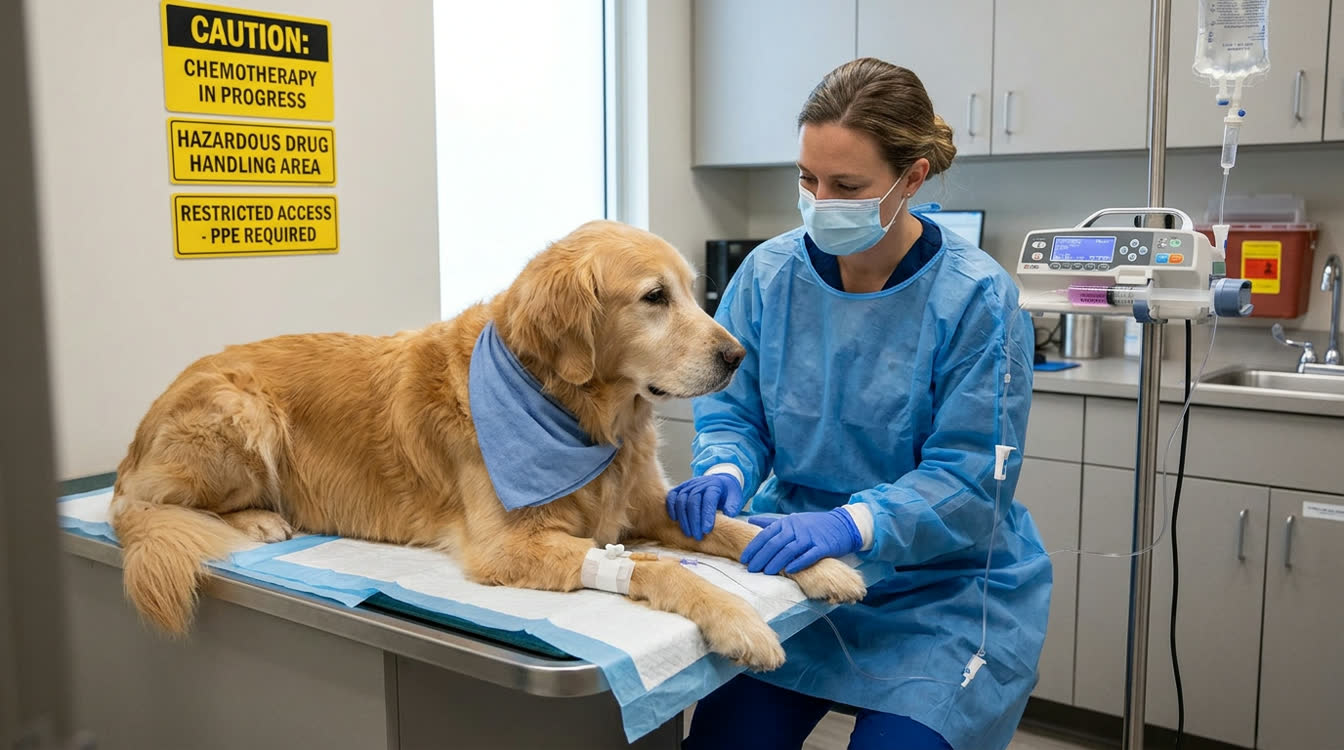
No — vincristine is a vesicant. Even small amounts outside the vein cause severe tissue necrosis that can require surgical debridement. A new, well-placed IV catheter must be confirmed with a saline flush before each administration. If there is any doubt about catheter placement, the drug must not be given until a new catheter is placed.
How do I know if vincristine is working for my dog's TVT?
The tumor should visibly decrease in size after each weekly treatment. Most TVTs show 25-50% regression per cycle. Typically after 4-6 weekly injections, the tumor is fully resolved. Treatment should continue for one additional cycle after complete clinical resolution. If there is no regression after 2-3 treatments, reconsider diagnosis and drug resistance.
Is vincristine safe for cats?
Yes, at veterinary doses vincristine is used in cats for lymphoma and other tumors. Cats may be more sensitive to gastrointestinal and neurological side effects. Always monitor CBC before each treatment. Pre-medicate with maropitant for nausea. Monitor for constipation (autonomic neuropathy) and treat proactively with lactulose or cisapride.
References
- Fossum TW, ed. Small Animal Surgery. 5th ed. Elsevier; 2018. Chemotherapy chapter.
- Vail DM, Thamm DH, Liptak JM, eds. Withrow and MacEwen's Small Animal Clinical Oncology. 6th ed. Elsevier; 2020.
- Theilen GH, Madewell BR. Veterinary Cancer Medicine. 2nd ed. Lea & Febiger; 1987.