Quick Answer
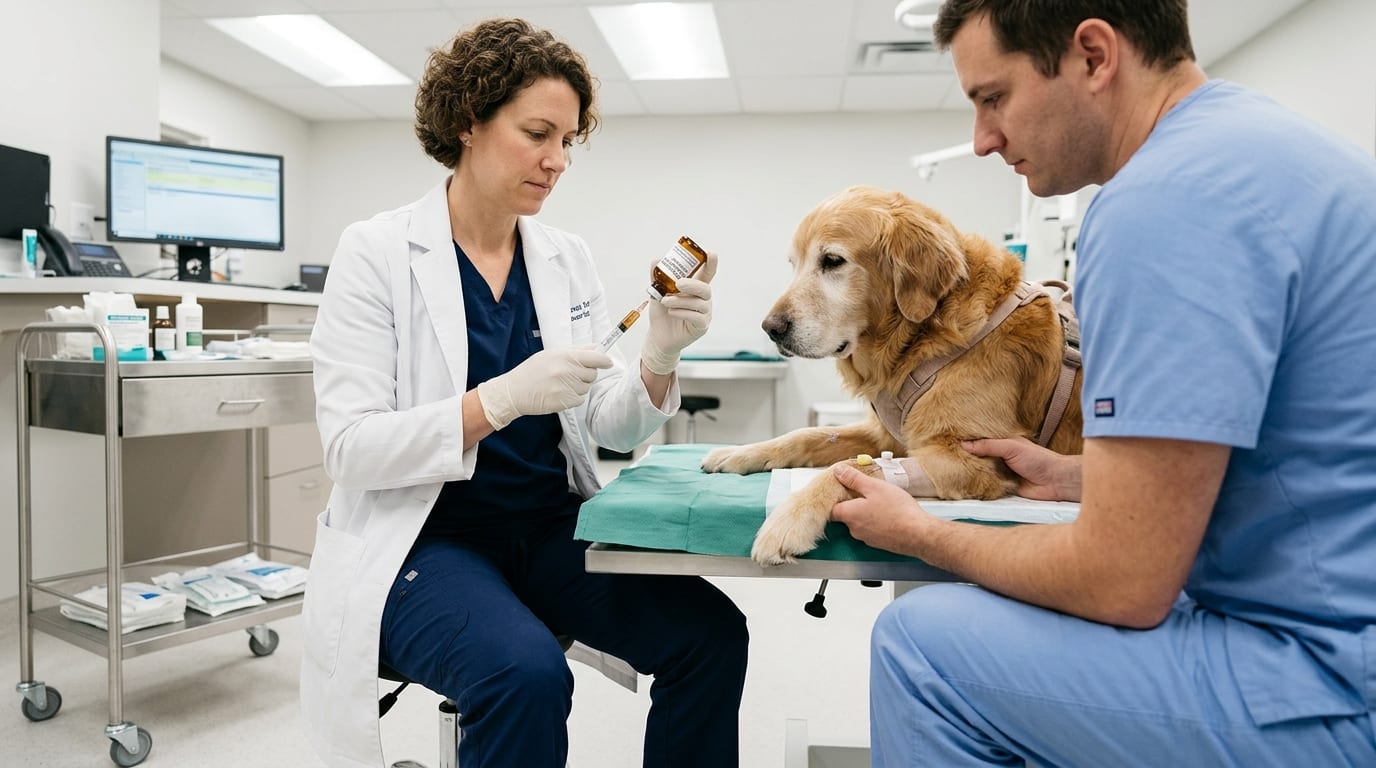
Metronomic chemotherapy uses sub-cytotoxic doses of cytotoxic drugs continuously to suppress tumor angiogenesis and regulatory T-cells. This guide covers cyclophosphamide-piroxicam, chlorambucil, and toceranib-based metronomic protocols with dosing, monitoring, and indications in dogs.
Key Takeaways
- ✓Metronomic cyclophosphamide at 12.5–15 mg/m²/day targets tumor endothelium and regulatory T-cells rather than tumor cells directly.
- ✓The cyclophosphamide-piroxicam combination is the most validated metronomic protocol in veterinary oncology.
- ✓Weekly furosemide at 1 mg/kg PO and high water intake reduce hemorrhagic cystitis risk from continuous cyclophosphamide.
- ✓Monitor urinalysis and CBC every 2–3 weeks initially, then every 8–12 weeks once stable; halt cyclophosphamide for any gross hematuria.
- ✓Chlorambucil at 4 mg/m² every other day is the preferred metronomic agent for lymphoma maintenance and CLL in dogs.
- ✓Cyclophosphamide combined with toceranib (Monday/Wednesday/Friday) has shown activity in hemangiosarcoma and soft tissue sarcoma.
Mechanism of Action and Rationale for Metronomic Dosing
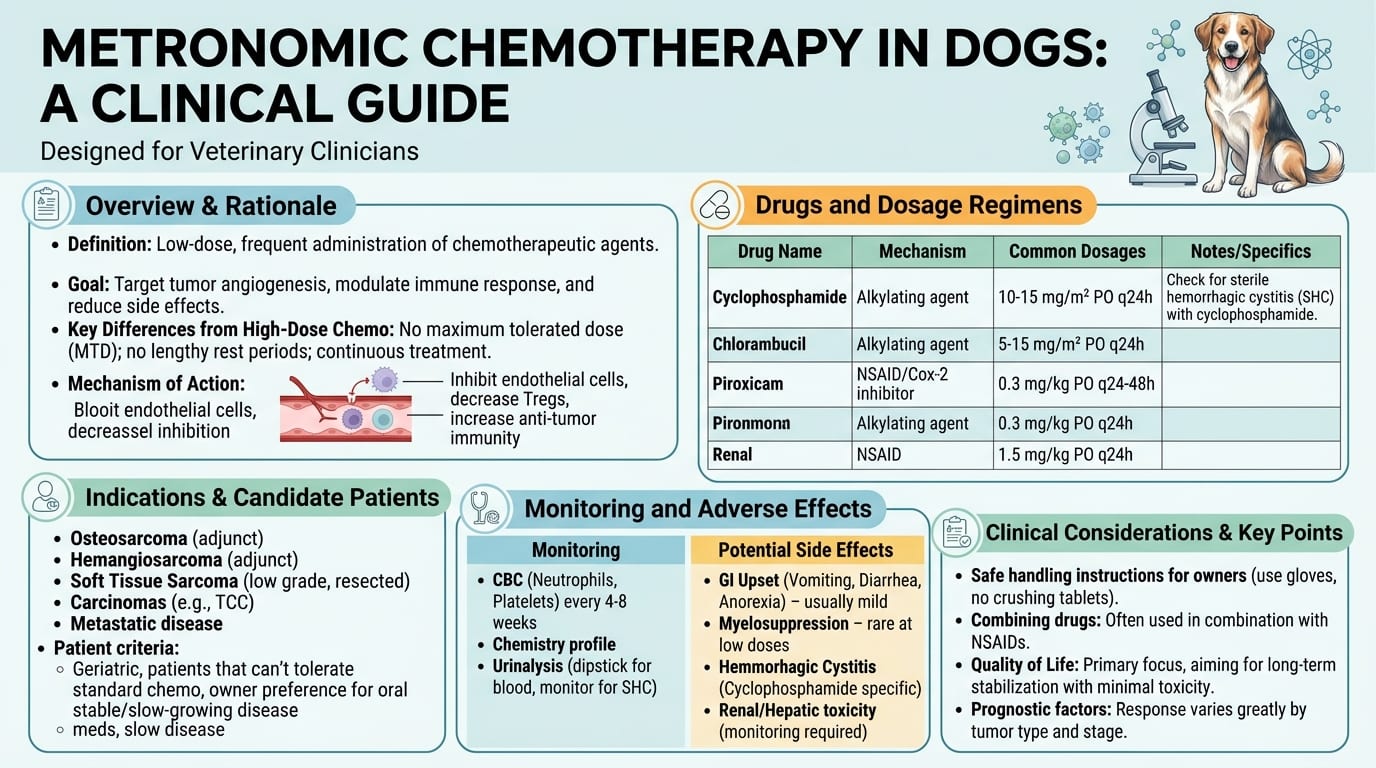
Metronomic chemotherapy (MC) refers to the continuous, low-dose administration of cytotoxic agents at doses well below the maximum tolerated dose (MTD), without prolonged drug-free intervals. Unlike conventional pulse chemotherapy, MC does not primarily act by direct tumor cell kill.
Key Mechanisms:
- Antiangiogenic effect: Continuous low-dose cyclophosphamide suppresses endothelial progenitor cell (EPC) mobilization and induces apoptosis of tumor-associated endothelial cells, impairing neovascularization.
- Immunomodulation: MC selectively depletes and suppresses CD4+CD25+FoxP3+ regulatory T-cells (Tregs), restoring antitumor immune surveillance.
- Direct cytostatic activity: Some tumor cell populations are growth-arrested at sub-MTD doses without triggering full apoptosis.
- Reduced multidrug resistance: Low steady-state drug concentrations may overcome P-glycoprotein-mediated efflux mechanisms.
Pharmacological Basis for Cyclophosphamide MC: Cyclophosphamide requires hepatic activation to 4-hydroxycyclophosphamide and acrolein. At metronomic doses (10–15 mg/m²/day), plasma concentrations maintain antiangiogenic effects while avoiding the myelosuppression seen at pulse dosing (200–300 mg/m² IV q3 weeks).
Clinical Indications in Dogs:
- Adjuvant therapy after surgery or radiation for high-grade tumors (mast cell tumors grade III, soft tissue sarcoma, hemangiosarcoma)
- Macroscopic disease when conventional chemotherapy is declined or not tolerated
- Combination with piroxicam (COX-2 inhibitor) for additive antiangiogenic and proapoptotic effects
- Following doxorubicin/cyclophosphamide pulse chemotherapy as maintenance therapy
Key Differences from Conventional MTD Chemotherapy:
| Parameter | MTD Chemotherapy | Metronomic Chemotherapy |
|---|---|---|
| Dose | Near maximum tolerated | 10–20% of MTD |
| Schedule | Pulse (q2–4 weeks) | Daily continuous |
| Primary target | Tumor cells | Endothelium + Tregs |
| Myelosuppression risk | High | Low |
| GI toxicity | Moderate–severe | Mild |
| Hemorrhagic cystitis (CPA) | Occasional | Low at MC doses |
Metronomic Protocol Dosing: Cyclophosphamide, Piroxicam and Chlorambucil
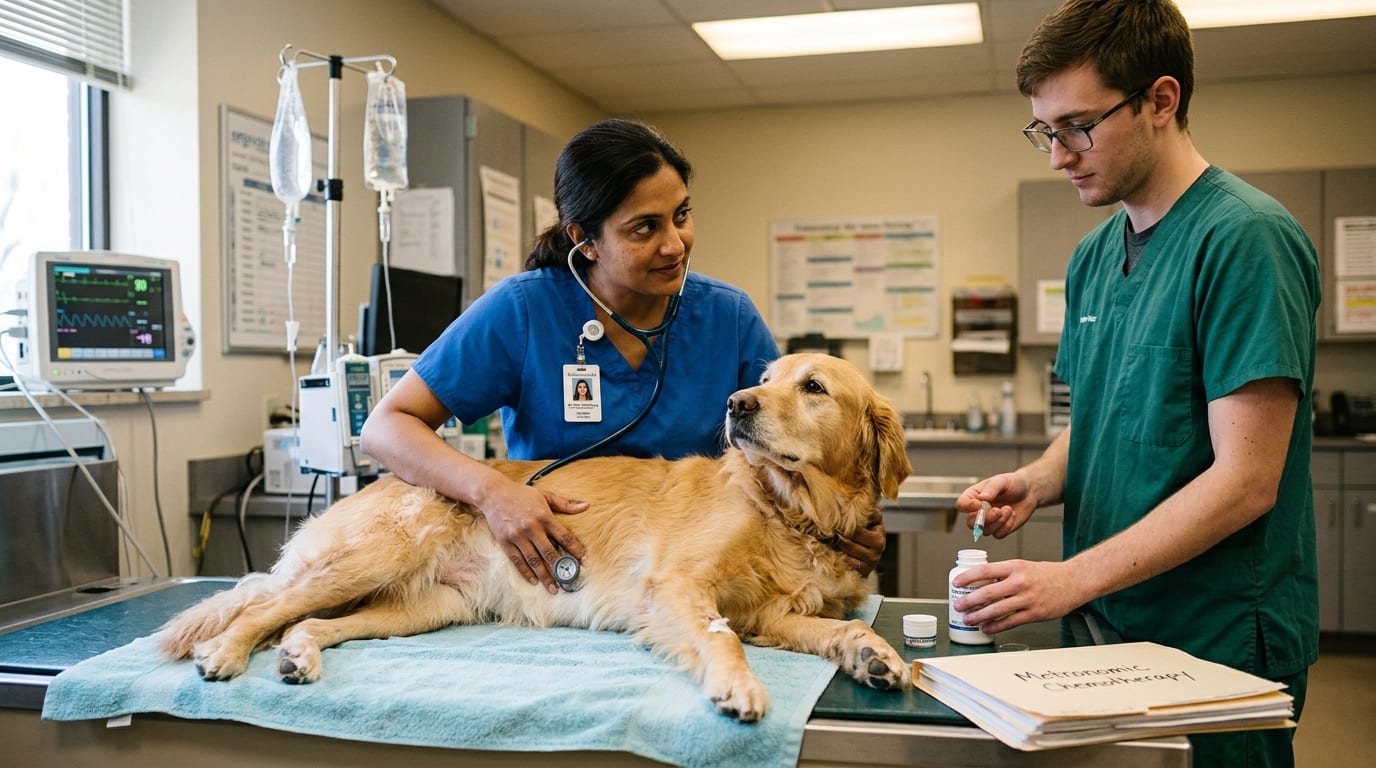
Several metronomic protocols have been validated in dogs, with the cyclophosphamide-piroxicam combination being the most widely used.
Protocol 1: Cyclophosphamide + Piroxicam (Standard MC)
- Cyclophosphamide (Cytoxan): 12.5–15 mg/m² PO once daily (range 10–25 mg/m²/day)
- Piroxicam: 0.3 mg/kg PO once daily with food
- Furosemide: 1 mg/kg PO once weekly — given concurrently with cyclophosphamide to reduce acrolein accumulation in the bladder wall (reduces hemorrhagic cystitis risk)
- Alternatively: provide ample water and encourage urination after cyclophosphamide dose
Protocol 2: Chlorambucil (Leukeran) Metronomic
- Indication: Lymphoma maintenance, chronic lymphocytic leukemia (CLL), low-grade GI lymphoma, mast cell disease
- Dose: 4 mg/m² PO every other day (or 2 mg/m² daily in small dogs)
- Minimal GI and bone marrow toxicity at metronomic doses
- No hemorrhagic cystitis risk
Protocol 3: Cyclophosphamide + Toceranib (Palladia)
- Cyclophosphamide: 10–12.5 mg/m² PO daily
- Toceranib phosphate (Palladia): 2.5–3.25 mg/kg PO every other day (Monday/Wednesday/Friday schedule)
- This combination has shown activity in hemangiosarcoma, thyroid carcinoma, and soft tissue sarcoma
- Monitor CBC q2–3 weeks (toceranib causes neutropenia and thrombocytopenia)
- Monitor blood pressure (toceranib can cause hypertension)
Compounding and Administration Notes:
- Cyclophosphamide is a hazardous drug; wear gloves when handling
- Store at room temperature; do not crush if possible
- Fasted or fed administration does not significantly alter absorption
Duration of Therapy:
- Adjuvant MC: typically 4–6 months minimum; many oncologists continue 12 months
- Macroscopic disease: continue until progression or unacceptable toxicity
- Re-staging every 8–12 weeks (thoracic radiographs, abdominal ultrasound, or relevant imaging)

Monitoring Schedule, Toxicity Recognition and Response Assessment
Metronomic chemotherapy is generally well tolerated, but structured monitoring is essential to detect early toxicity and assess treatment response.
Baseline Evaluation:
- CBC with differential and platelet count
- Serum biochemistry (ALT, ALP, BUN, creatinine, phosphorus)
- Urinalysis with sediment (for hemorrhagic cystitis baseline)
- Staging imaging appropriate to tumor type
Monitoring Schedule During MC:
| Week | Tests |
|---|---|
| Baseline | CBC, chemistry, UA, imaging |
| Week 2–3 | CBC, urinalysis |
| Week 6 | CBC, chemistry, UA |
| Every 8–12 weeks | CBC, chemistry, UA, re-staging imaging |
Hemorrhagic Cystitis Monitoring:
- Urinalysis for hematuria at each recheck
- Signs: pollakiuria, hematuria, dysuria
- If microscopic hematuria detected: hold cyclophosphamide for 3–5 days, recheck UA; if resolved, may restart at lower dose or switch to chlorambucil
- Gross hematuria: discontinue cyclophosphamide permanently; consider cystoscopy
Hematologic Toxicity:
- Neutropenia: ANC <2,000/µL — reduce dose or dose frequency
- ANC <1,000/µL — hold cyclophosphamide; recheck in 5–7 days; consider prophylactic marbofloxacin in febrile neutropenia
- Platelet count <100,000/µL — reduce dose or pause
GI Toxicity:
- Mild nausea and vomiting reported in 10–20% of dogs
- Maropitant 2 mg/kg PO q24h PRN for nausea
- Piroxicam-related: GI ulceration signs (melena, vomiting, anorexia); sucralfate 0.5–1 g PO q8h prophylactically in at-risk dogs
Renal Monitoring with Piroxicam:
- BUN and creatinine at every recheck; NSAID-related renal papillary necrosis is rare but possible
- Discontinue piroxicam if creatinine rises >50% above baseline or SDMA elevates
Response Assessment:
- Stable disease or tumor regression on imaging = treatment success in adjuvant and macroscopic settings
- Progression on MC: consider switching to a different metronomic drug or discussing palliative options
- Quality of life assessment (appetite, energy, pain scores) at every visit
Frequently Asked Questions
What is the standard metronomic cyclophosphamide dose for dogs?
The standard metronomic cyclophosphamide dose for dogs is 12.5–15 mg/m² orally once daily. For small dogs under 15 kg, 10 mg/m² daily is often used. This is approximately 10–20% of the maximum tolerated pulse dose and maintains antiangiogenic plasma concentrations with minimal myelosuppression.
How do you prevent hemorrhagic cystitis with metronomic cyclophosphamide in dogs?
Hemorrhagic cystitis is prevented by co-administering furosemide at 1 mg/kg orally once weekly to flush acrolein from the bladder, encouraging high water intake, and monitoring urinalysis at every recheck. If microscopic hematuria develops, hold cyclophosphamide for 3–5 days and recheck before restarting at a lower dose.
Can piroxicam be combined with cyclophosphamide for metronomic chemotherapy in dogs?
Yes. The cyclophosphamide-piroxicam combination is the most validated metronomic protocol in dogs. Piroxicam at 0.3 mg/kg orally once daily inhibits COX-2, providing additive antiangiogenic effects. Monitor renal function (BUN, creatinine) and GI signs; do not combine with other NSAIDs or corticosteroids.
Which canine cancers respond best to metronomic chemotherapy?
Metronomic chemotherapy has shown activity in soft tissue sarcoma, mast cell tumor (grades II–III), hemangiosarcoma, and as maintenance therapy after conventional chemotherapy in lymphoma. It is most effective in the adjuvant setting after surgery or radiation to suppress micrometastases and tumor angiogenesis.
How often should CBC be checked for dogs on metronomic chemotherapy?
CBC should be checked at weeks 2–3 after starting metronomic chemotherapy, then every 6 weeks initially, and every 8–12 weeks once stable. At metronomic doses, significant myelosuppression is uncommon but monitoring remains essential. Neutropenia below ANC 2,000/µL warrants dose reduction; below 1,000/µL requires treatment hold.
References
- Lana S, et al. "Continuous low-dose oral chemotherapy for adjuvant therapy of splenic hemangiosarcoma in dogs." J Vet Intern Med. 2007;21(4):764-769.
- Elmslie RE, et al. "Metronomic therapy with cyclophosphamide and piroxicam effectively delays tumor recurrence in dogs with incompletely resected soft tissue sarcomas." J Vet Intern Med. 2008;22(6):1373-1379.
- Leach TN, et al. "Prospective trial of metronomic chlorambucil chemotherapy in dogs with naturally occurring cancer." Vet Comp Oncol. 2012;10(2):102-112.