Quick Answer
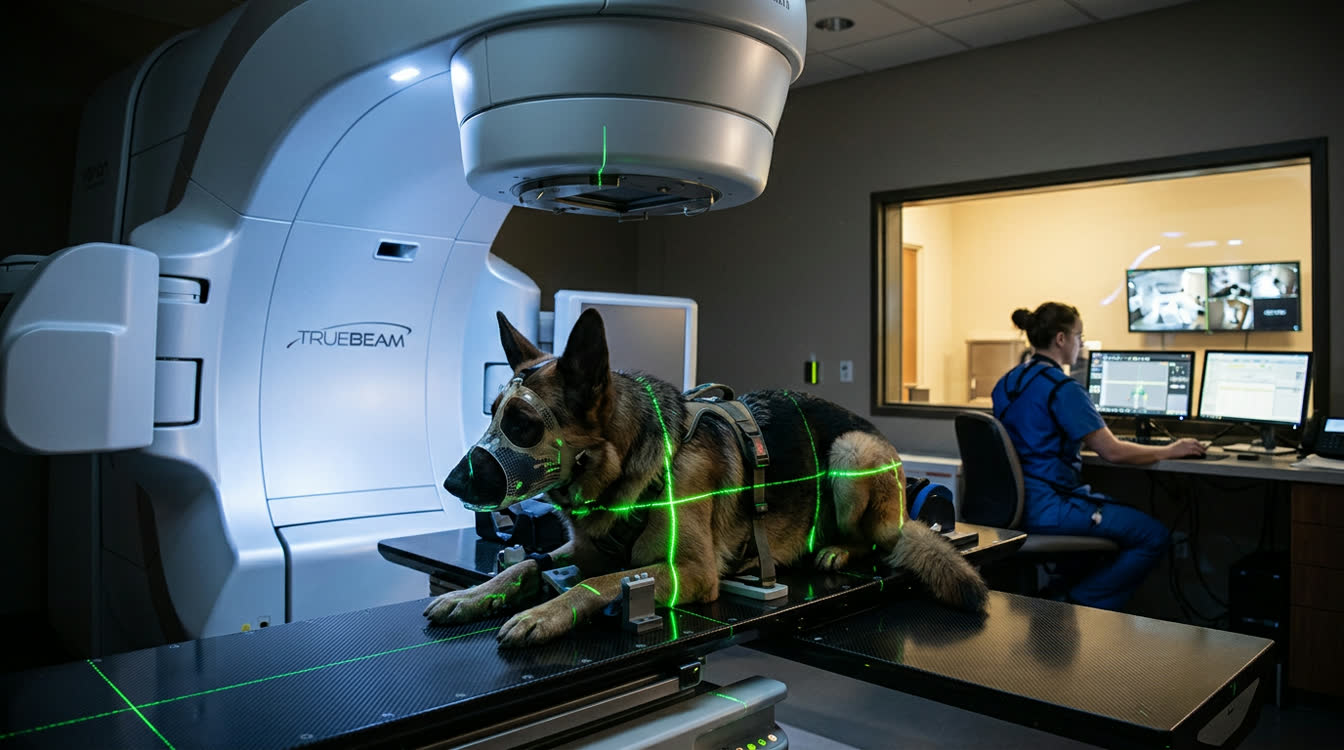
Palliative radiation therapy uses a small number of large-dose fractions to relieve cancer pain and improve quality of life in dogs. This guide covers coarse fractionation protocols (4 x 8 Gy, 3 x 10 Gy), indications for bone metastases and nasal tumors, side effect management, and expected response rates.
Key Takeaways
- ✓Palliative radiation uses 3–4 large-dose fractions (8–10 Gy each) to relieve cancer pain and improve quality of life in dogs with advanced tumors.
- ✓The 4 x 8 Gy weekly protocol achieves pain relief in 70–80% of dogs with osteosarcoma; stereotactic radiosurgery offers comparable results in 1–3 sessions.
- ✓Nasal tumor patients treated with hypofractionated RT have median survival times of 7–10 months vs 3–5 months untreated.
- ✓Pathological fracture risk is 20–30% in osteosarcoma patients undergoing RT; leash-only exercise is mandatory throughout treatment.
- ✓Acute side effects (mucositis, dermatitis) are managed with chlorhexidine rinses, silver sulfadiazine cream, and GI protectants.
- ✓Multimodal analgesia with NSAIDs, gabapentin, and tramadol should be maintained throughout the palliative RT course.
Rationale for Palliative Radiation and Clinical Indications in Dogs
Palliative radiation therapy (PRT) aims to relieve cancer-associated pain, reduce tumor burden, and improve quality of life rather than achieve tumor cure. Unlike definitive radiation (20–22 fractions over 4–5 weeks), PRT uses coarse fractionation — a small number of large dose fractions — making it practical, cost-effective, and well-tolerated in dogs with advanced cancer.
Mechanisms of Pain Relief:
- Tumor volume reduction decreases pressure on adjacent structures (bone cortex, nerves, mucosa)
- Anti-inflammatory effects of radiation reduce prostaglandin and cytokine release in tumor microenvironment
- Neuronal desensitization in irradiated bone (mechanism not fully elucidated)
- Onset of pain relief: typically 1–4 weeks post-treatment; median duration 3–6 months
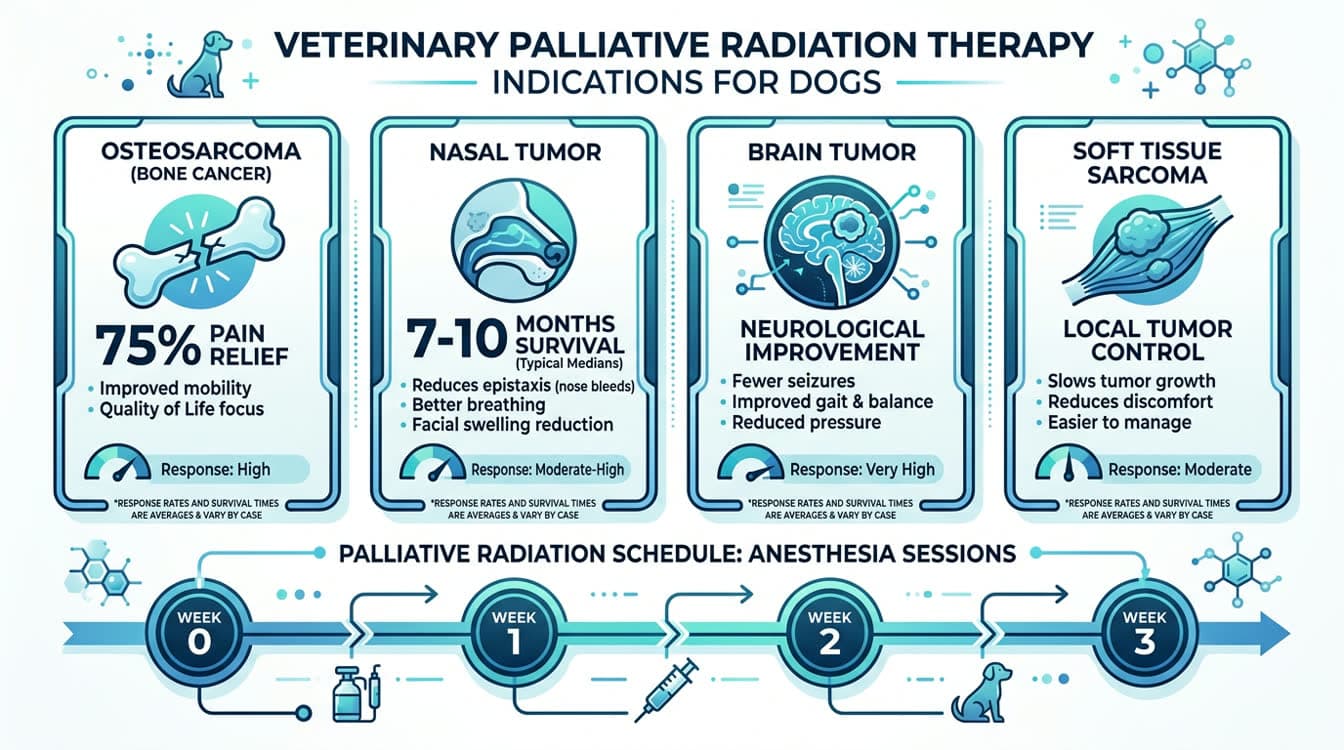
Primary Indications: 1. Appendicular osteosarcoma (primary bone tumor): Palliative RT for dogs who are not surgical candidates or owners who decline amputation; provides pain relief in 70–80% of dogs 2. Nasal carcinoma or sarcoma: Hypofractionated RT is the standard of care; significantly extends median survival vs no treatment (7–10 months vs 3–5 months) 3. Brain tumors (meningioma, glioma): Palliative RT improves neurological signs and quality of life; often used when radiosurgery is unavailable 4. Soft tissue sarcoma (incomplete margins): Reduces local recurrence risk; palliative RT when surgery declined 5. Vertebral and rib tumors: Spinal pain and compressive symptoms 6. Mast cell tumor (locally advanced or unresectable): Achieves local control of 50–80% 7. Perianal adenocarcinoma, thyroid carcinoma: Regional disease control
Patient Selection Criteria:
- Life expectancy >1–2 months to benefit from treatment
- Adequate general health for repeated anesthesia (PRT requires 3–4 general anesthesia events)
- Owner commitment to follow-up monitoring
- No active pathological fracture requiring stabilization first (orthopaedic fixation should precede RT in unstable fractures)
Coarse Fractionation Protocols: 4 x 8 Gy, 3 x 10 Gy and Stereotactic Options
Several validated coarse fractionation protocols are available for palliative radiation in dogs. Protocol selection depends on tumor type, anatomic location, and available equipment (linear accelerator vs cobalt unit vs stereotactic radiosurgery).
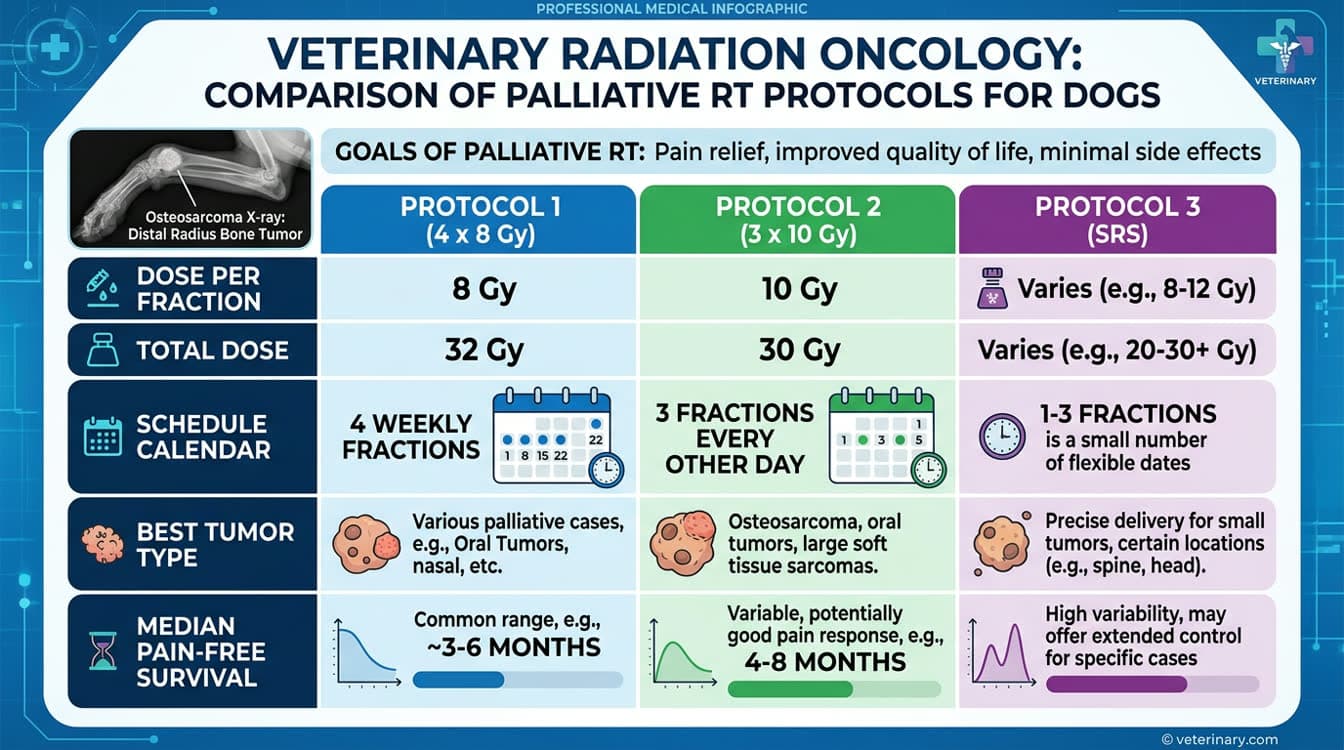
Protocol 1: Weekly 8 Gy x 4 Fractions (Total 32 Gy)
- Schedule: Once weekly for 4 consecutive weeks
- Dose per fraction: 8 Gy
- Best for: Appendicular osteosarcoma, soft tissue sarcoma, mast cell tumor
- Advantages: Most widely used; excellent pain response rate (70–80% in osteosarcoma); fewer anesthetic events per week
- Median pain-free duration: 2–4 months in osteosarcoma
Protocol 2: Every-Other-Week 10 Gy x 3 Fractions (Total 30 Gy)
- Schedule: Once every 2 weeks for 3 treatments
- Dose per fraction: 10 Gy
- Best for: Patients with travel constraints; similar biological effectiveness to 4 x 8 Gy
- Median pain-free duration: Similar to 4 x 8 Gy protocol
Protocol 3: 3 x 10 Gy (Every Other Day for 1 Week, Total 30 Gy)
- Schedule: Fractions on Monday, Wednesday, Friday
- Best for: Nasal tumors, brain tumors, pelvic/axial tumors
- Nasal tumor outcomes: Median survival 7–10 months; 85% experience improved nasal discharge and epistaxis control within 2–4 weeks
Stereotactic Radiosurgery (SRS) / Stereotactic Body Radiation Therapy (SBRT):
- 1–3 fractions of high dose: 12–20 Gy per fraction; highly conformal delivery
- Advantages: Fewer anesthesia events (1–3 sessions); superior dose conformality; growing evidence in canine osteosarcoma (median pain-free survival 4–6 months)
- Requires specialized equipment (CyberKnife, Varian TrueBeam with stereotactic planning); available at veterinary teaching hospitals and specialty referral centers
Concurrent Systemic Therapy:
- Carprofen or meloxicam: continue throughout RT for additive analgesic effect
- Tramadol: 2–5 mg/kg PO q8–12h for breakthrough pain
- Gabapentin: 5–10 mg/kg PO q8–12h for neuropathic bone pain
- Doxorubicin or carboplatin concurrent with RT in nasal tumors: increases tumor response but also mucositis risk
Acute and Late Radiation Side Effects, Monitoring and Supportive Care
Palliative radiation with coarse fractionation carries a different side effect profile than definitive radiation. Large fraction sizes increase the risk of late (chronic) effects relative to acute effects, but the shorter overall treatment duration limits cumulative tissue dose.
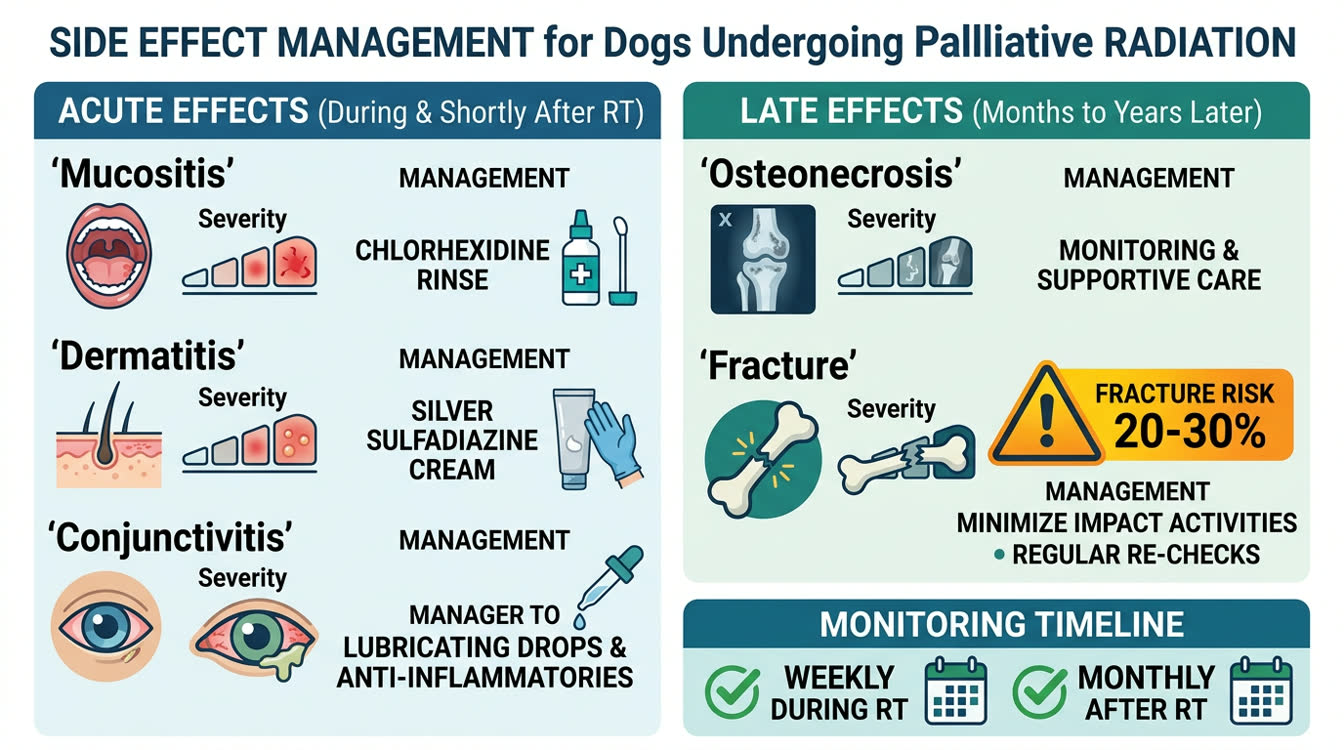
Acute Radiation Side Effects (during or within 4 weeks of RT):
- Mucositis: Particularly relevant for nasal and oral tumors; grades I–III mucositis in 30–60% of nasal tumor patients
- Radiation dermatitis: Moist desquamation in treatment field (10–20% of cases)
- Conjunctivitis/keratitis: With periocular tumors; lubricating eye drops q6–8h
- Esophagitis: With thoracic radiation; omeprazole 1 mg/kg PO q24h; sucralfate
Acute Bone Effects in Osteosarcoma Patients:
- Pathological fracture: Risk of pathological fracture through irradiated tumor bone is 20–30% (osteolysis precedes repair)
Late Radiation Effects (months to years post-RT):
- Osteonecrosis/osteoradionecrosis: Bone death in the radiation field
- Radiation-induced neoplasia: Very rare; clinically relevant only in long-term survivors
- Chronic mucositis or fistula: Particularly after nasal tumor RT
Anesthesia Management for RT:
- Multiple short general anesthetics required (typically q1–2 weeks)
- Propofol for induction; isoflurane/sevoflurane maintenance
- Pre-plan IV access to minimize stress; minimize anesthetic depth
- Dogs with skull-based tumors: monitor for increased intracranial pressure; dexamethasone 0.1 mg/kg IV perioperatively
Monitoring Schedule:
- Acute effects: Daily owner monitoring; weekly recheck during RT course
- Re-staging imaging (radiographs, CT, or MRI) at 4–8 weeks post-completion
- Quality of life scoring using validated instruments (FETCH, VAS pain scores)
Frequently Asked Questions
What is the most common palliative radiation protocol for canine osteosarcoma?
The most commonly used palliative radiation protocol for appendicular osteosarcoma in dogs is 4 weekly fractions of 8 Gy each (total 32 Gy). This protocol achieves pain relief in approximately 70–80% of dogs, with a median pain-free survival of 2–4 months. Stereotactic radiosurgery in 1–3 fractions is an emerging alternative with similar or better outcomes.
What is the expected survival time for dogs with nasal tumors treated with palliative radiation?
Dogs with nasal carcinoma or sarcoma treated with hypofractionated radiation (3–4 fractions over 1–3 weeks) have median survival times of 7–10 months, significantly longer than untreated dogs (3–5 months). Concurrent chemotherapy (carboplatin, doxorubicin) may further extend survival in select patients.
What is the risk of pathological fracture during palliative radiation for canine osteosarcoma?
The risk of pathological fracture through the irradiated osteosarcoma lesion is approximately 20–30%. This occurs because radiation initially increases osteolysis before stimulating repair. Owners must be informed of this risk, and affected dogs should be restricted to leash-only exercise throughout treatment and recovery.
How many anesthesia sessions are required for palliative radiation in dogs?
Standard coarse fractionation palliative radiation requires 3–4 general anesthesia sessions (one per fraction). Stereotactic radiosurgery reduces this to 1–3 sessions. Each session typically lasts 30–45 minutes for positioning and delivery. Dogs must be healthy enough to safely undergo repeated anesthesia.
What pain medications should be continued during palliative radiation therapy in dogs?
NSAIDs (carprofen or meloxicam) should be continued throughout palliative RT for additive analgesic effect. Gabapentin at 5–10 mg/kg PO q8–12h addresses neuropathic bone pain, and tramadol at 2–5 mg/kg PO q8–12h provides breakthrough analgesia. Multimodal pain management significantly improves quality of life during treatment.
References
- Ramirez O, et al. "Hypofractionated radiation therapy as treatment for appendicular osteosarcoma in dogs." J Am Vet Med Assoc. 1999;215(6):825-830.
- Theon AP, et al. "Megavoltage irradiation of neoplasms of the nasal and paranasal cavities in 77 dogs." J Am Vet Med Assoc. 1993;202(9):1469-1475.
- Oblak ML, et al. "Stereotactic radiosurgery for treatment of canine osteosarcoma: outcomes and complications." Vet Radiol Ultrasound. 2012;53(4):460-467.