Quick Answer
Effective post-operative pain management in dogs and cats requires multimodal analgesia combining opioids, NSAIDs, and adjuncts. This guide covers validated pain scoring tools (Glasgow CMPS, UNESP-Botucatu), intraoperative and post-operative drug protocols, opioid-to-oral NSAID transitions, and home care analgesic instructions.
Key Takeaways
- ✓Validated pain scoring (Glasgow CMPS-SF for dogs, UNESP-Botucatu for cats) should be documented at regular intervals post-operatively; intervention is indicated at scores ≥6/24 in dogs and ≥8/30 in cats.
- ✓Multimodal analgesia combining opioids, NSAIDs, ketamine, and local anesthetics achieves superior pain control at lower individual drug doses compared to single-agent protocols.
- ✓Fentanyl CRI (2–6 mcg/kg/h) is appropriate for severe post-operative pain requiring continuous opioid infusion; ketamine CRI (0.1–0.6 mg/kg/h) provides NMDA receptor blockade and reduces wind-up.
- ✓Transition from injectable opioids to oral NSAID + gabapentin typically occurs at 12–24 hours post-operatively once the patient is eating and tolerating oral medications.
- ✓Buprenorphine (0.01–0.02 mg/kg OTM Q6–8h) is the preferred post-operative opioid for cats due to excellent efficacy and owner-administrable OTM route.
- ✓Owners must receive explicit written instructions that human NSAIDs and acetaminophen are toxic to dogs and cats, and should be given NSAID warning signs (vomiting, black stools, decreased urination) to monitor for at home.
Pain Assessment Tools and Scoring in Dogs and Cats
Objective pain assessment is the foundation of appropriate analgesic dosing. Pain is notoriously underestimated in veterinary patients, particularly in cats who mask signs of discomfort. Validated scoring tools provide reproducible, actionable pain scores.
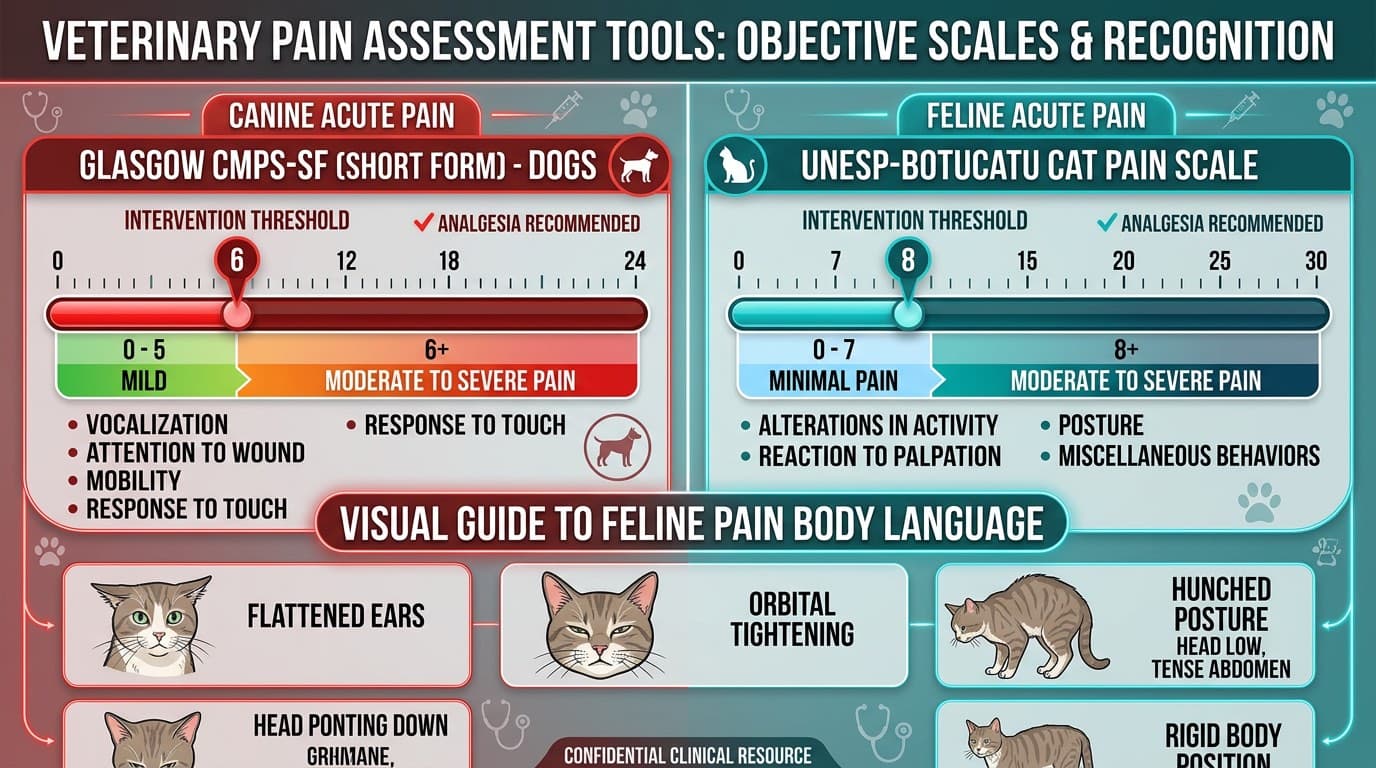
Glasgow Composite Measure Pain Scale (CMPS-SF) — Dogs The Glasgow CMPS Short Form is the most widely validated canine acute pain tool. It assesses 6 behavioral categories with a maximum score of 24 (or 20 for the short form).
| Score | Pain Level | Action |
|---|---|---|
| 0–5 | None to mild | Monitor; reassess in 2–4 hours |
| 6–10 | Moderate | Analgesic intervention warranted |
| >10 | Severe | Immediate analgesia; reassess in 30 minutes |
Intervention threshold: score ≥6/24 or ≥5/20 on CMPS-SF.
UNESP-Botucatu Multidimensional Composite Pain Scale — Cats Validated specifically for feline acute pain post-ovariohysterectomy and abdominal surgery.
Categories assessed:
- Pain expression (vocalization, facial expression)
- Psychomotor change (activity, posture, reaction to touch)
- Physiological variables (blood pressure, appetite)
Score ≥8/30 indicates moderate-to-severe pain requiring intervention.
Practical Pain Assessment Tips
- Assess the patient at rest and during gentle wound palpation
- Compare bilateral structures where possible (e.g., both hips post-TPLO)
- Document baseline score before analgesic administration to track response
- Reassess within 30–60 minutes after analgesic intervention
- Cats in pain often show reduced activity, hunched posture, orbital tightening, and flattened ears — not vocalization
Multimodal Analgesia: Intraoperative and Post-Operative Drug Protocols
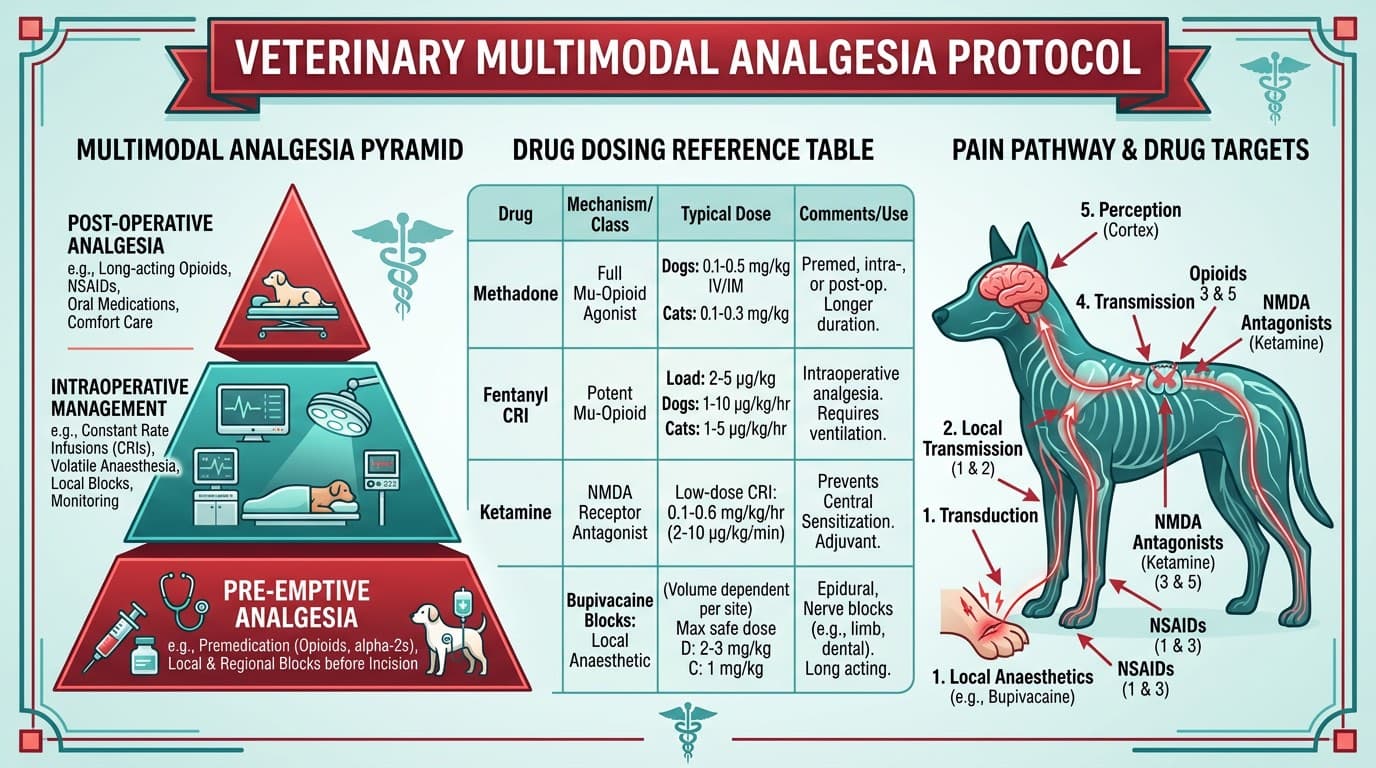
Multimodal analgesia — combining drugs with different mechanisms to achieve additive/synergistic effects at lower individual doses — is the current standard of care for veterinary post-operative pain management.
Principles of Multimodal Analgesia
- Target multiple pain pathways simultaneously
- Reduce dose and side effects of any single drug
- Provide preventive (pre-emptive) analgesia before surgical stimulus
Intraoperative Analgesia
| Drug | Dose | Route | Timing |
|---|---|---|---|
| Methadone | 0.2–0.5 mg/kg (dogs), 0.1–0.3 mg/kg (cats) | IV/IM | Pre-medication or induction |
| Hydromorphone | 0.1–0.2 mg/kg (dogs), 0.05–0.1 mg/kg (cats) | IV/IM | Pre-medication |
| Fentanyl | 2–5 mcg/kg IV bolus; 2–10 mcg/kg/h CRI | IV | Intraoperative |
| Ketamine | 0.5–2 mg/kg IV bolus; 0.1–0.6 mg/kg/h CRI | IV | Intraoperative NMDA blockade |
| Lidocaine | 1–2 mg/kg IV bolus; 25–50 mcg/kg/min CRI | IV (dogs only) | Systemic anti-inflammatory |
Post-Operative Injectable Analgesia Protocol
| Pain Level | Drug | Dose | Frequency |
|---|---|---|---|
| Mild | Buprenorphine (cats preferred) | 0.01–0.02 mg/kg IV/IM/OTM | Q6–8h |
| Moderate | Methadone | 0.1–0.3 mg/kg IV/IM | Q4–6h |
| Moderate | Hydromorphone | 0.1–0.2 mg/kg IV/IM | Q4–6h |
| Severe | Fentanyl CRI | 2–6 mcg/kg/h IV | Continuous infusion |
| Severe | Morphine epidural | 0.1 mg/kg epidural | Single dose; lasts 12–24h |
Local Anesthetic Techniques
- Incisional line block: bupivacaine 0.25% 1–2 mg/kg at wound edges at closure
- Intercostal nerve block: bupivacaine for thoracotomy; 1–1.5 mg/kg per nerve
- Femoral/sciatic nerve block: for hind limb orthopedic surgery; 0.5% bupivacaine 1–2 mg/kg total
Transition to Oral Analgesia and Home Pain Management
The transition from injectable to oral analgesics at discharge is a critical decision point. Sending home an inadequate analgesic regimen is one of the most common post-operative welfare failures in small animal practice.
Opioid to Oral NSAID Transition
For most soft tissue and orthopedic procedures:
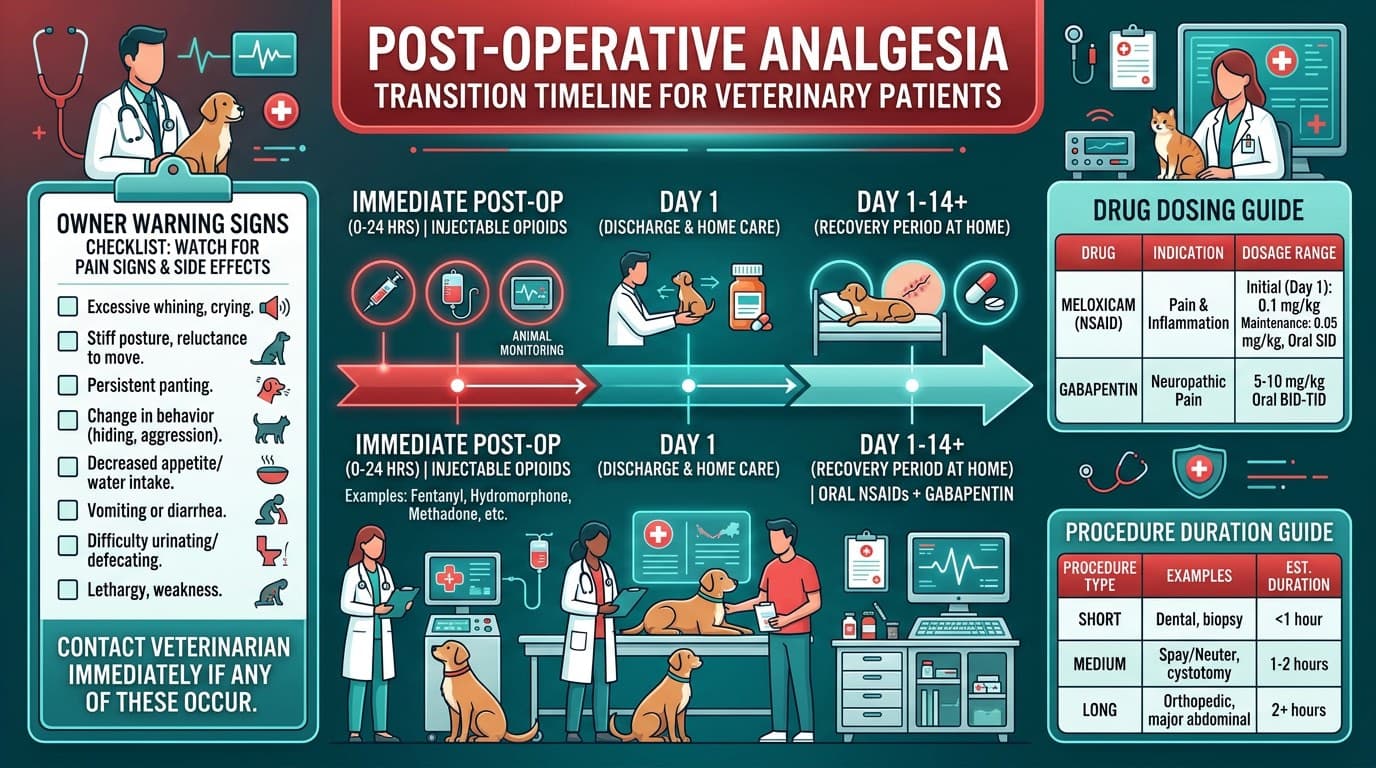
- Continue injectable opioids for 12–24 hours post-operatively
- Begin oral NSAID on day 1 or day 2 post-operatively (once eating and tolerating oral medications)
- Do NOT combine NSAIDs with corticosteroids
Oral NSAID Selection for Home Use
| Drug | Dog Dose | Cat Dose | Frequency | Duration |
|---|---|---|---|---|
| Meloxicam | 0.1 mg/kg on day 1, then 0.05 mg/kg | 0.05 mg/kg (limited duration only) | SID | 3–7 days typical; up to 28 days with monitoring |
| Carprofen | 2.2 mg/kg BID or 4.4 mg/kg SID | Not approved in cats | SID or BID | 3–7 days |
| Grapiprant (Galliprant) | 2 mg/kg | Not labeled for cats | SID | Chronic use labeled |
Gabapentin for Post-Operative Neuropathic Pain
Particularly useful for orthopedic procedures, spinal surgery, and any procedure with nerve handling:
| Species | Dose | Frequency |
|---|---|---|
| Dogs | 5–10 mg/kg | BID–TID |
| Cats | 5–10 mg/kg | BID |
Begin gabapentin 24–48 hours pre-operatively for maximum preventive effect; continue for 7–14 days post-operatively.
Home Care Analgesic Instructions for Owners
- Administer NSAID with food to reduce GI side effects
- Do NOT give human pain medications (ibuprofen, acetaminophen, aspirin) — can be fatal
- Monitor for NSAID side effects: vomiting, diarrhea, black tarry stools, decreased urination — contact clinic if any occur
- Restrict activity as instructed — activity restriction is itself analgesic (reduces inflammation)
- Return for recheck if patient is not weight-bearing, crying out, or refusing to eat at home
Procedure-Specific Duration Guidelines
| Procedure | NSAID Duration | Gabapentin Duration |
|---|---|---|
| Routine spay/neuter | 3–5 days | Optional; 3 days |
| Soft tissue surgery (moderate) | 5–7 days | 5–7 days |
| TPLO/orthopedic | 14–28 days | 14 days |
| Spinal surgery (IVDD) | 14 days | 14–28 days |
Frequently Asked Questions
What pain medication is safe to give a dog after surgery?
Veterinarian-prescribed NSAIDs (meloxicam, carprofen) and gabapentin are safe and effective for post-operative pain in dogs. Never give ibuprofen, acetaminophen, naproxen, or aspirin — these are toxic to dogs. Administer NSAIDs with food and monitor for GI or renal side effects.
How can I tell if my dog is in pain after surgery?
Signs of pain in dogs include panting at rest, reluctance to move, guarding the surgical area, decreased appetite, abnormal posture (hunched back, weight shifting), whimpering, and reduced interest in surroundings. Pain scores peak at 12–24 hours post-surgery and should decrease each day.
Can cats have NSAIDs after surgery?
Meloxicam can be used in cats at 0.05 mg/kg SID but for short courses only (1–3 days in most cases) due to limited renal reserve. Cats require very careful monitoring with repeated use. Buprenorphine (0.01–0.02 mg/kg OTM Q6–8h) is often the preferred post-operative analgesic for cats.
What is a multimodal pain protocol for dogs?
A multimodal protocol combines drugs targeting different pain pathways: an opioid (methadone, buprenorphine) for nociceptive pain, an NSAID (meloxicam, carprofen) for inflammatory pain, ketamine for NMDA receptor blockade preventing central sensitization, and local anesthetics (bupivacaine incision block) for peripheral nerve blockade.
How long should a dog receive pain medication after TPLO surgery?
Dogs undergoing TPLO typically require NSAIDs for 14–28 days post-operatively, with dosing tapered after the first week if function improves. Gabapentin for neuropathic pain is recommended for 14 days. Physical rehabilitation therapy should begin as early as 48–72 hours post-surgery to complement pharmacological pain management.
References
- Reid J, Nolan AM, Hughes JML, et al. Development of the short-form Glasgow Composite Measure Pain Scale (CMPS-SF) and derivation of an analgesic intervention score. Anim Welf. 2007;16(S):97-104.
- Brondani JT, Luna SP, Padovani CR. Refinement and initial validation of a multidimensional composite scale for use in assessing acute postoperative pain in cats. Am J Vet Res. 2011;72(2):174-183.
- Mathews K, Kronen PW, Lascelles D, et al. Guidelines for recognition, assessment and treatment of pain. J Small Anim Pract. 2014;55(6):E10-E68.