Quick Answer
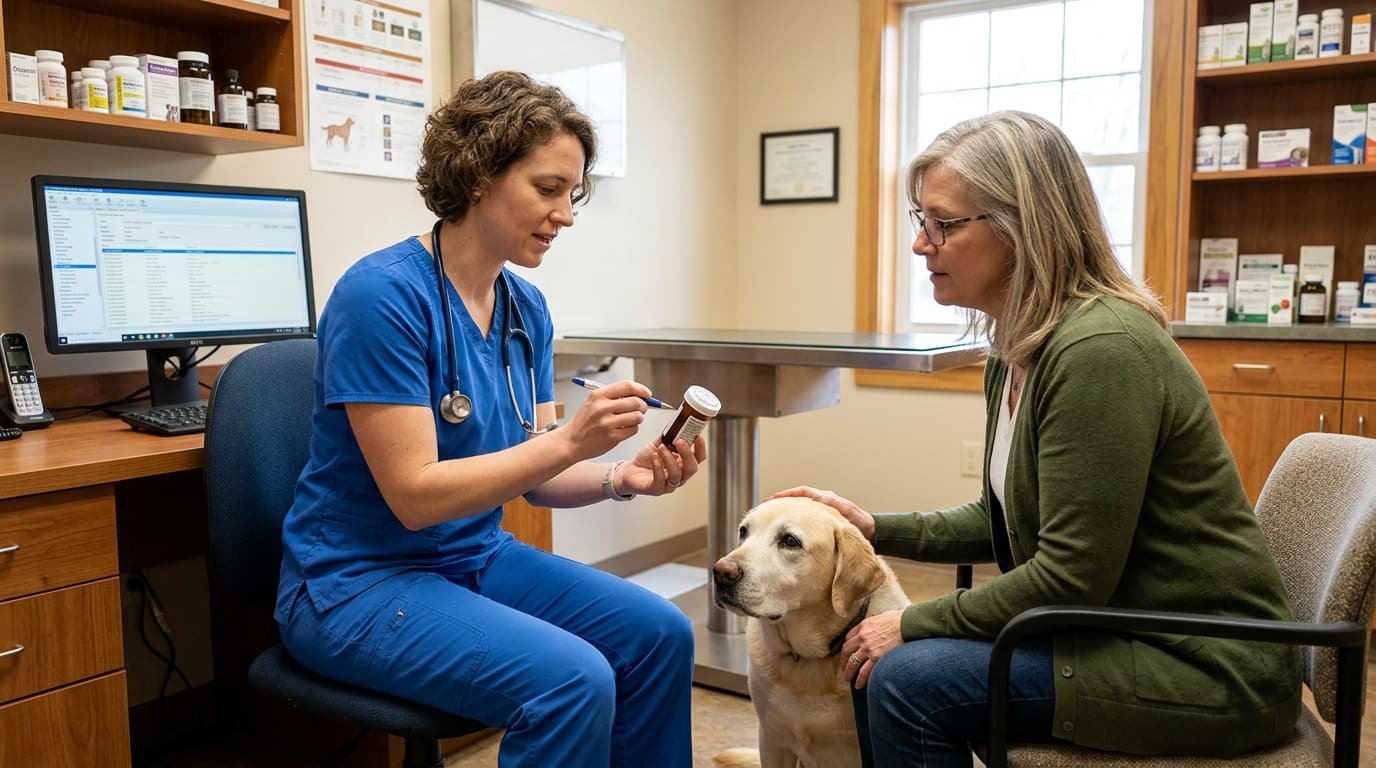
Gabapentin is one of the most versatile drugs in small animal medicine, used for neuropathic pain, seizure adjunct therapy, and anxiety/sedation. This guide covers mechanism, dosing by indication, drug interactions, and clinical protocols.
Key Takeaways
- ✓Gabapentin binds alpha-2-delta calcium channel subunits, reducing excitatory neurotransmitter release most effective for neuropathic and central sensitization pain
- ✓NEVER use the gabapentin oral liquid solution in dogs it contains xylitol (toxic). Use capsules or tablets only
- ✓Pain dosing: 515 mg/kg TID; sedation/anxiety: 2030 mg/kg single dose 1.5-2 hrs before event; seizure adjunct: 1030 mg/kg TID
- ✓Taper gradually when discontinuing long-term therapy abrupt withdrawal may trigger seizures
- ✓Dose reduction required in renal failure (primarily renally excreted)
- ✓Combines synergistically with amantadine (NMDA antagonist) for neuropathic pain a highly effective 2-drug protocol for IVDD and DM
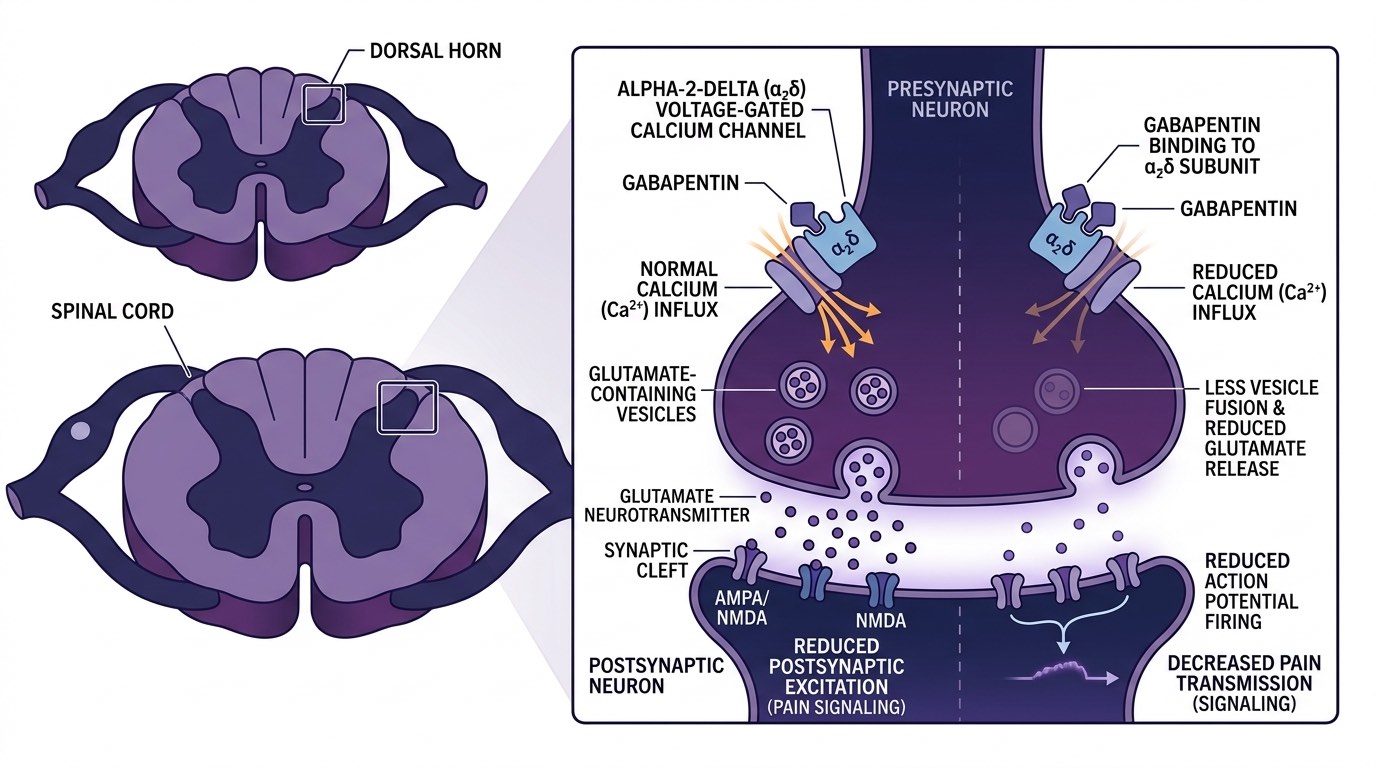
How Gabapentin Works: Alpha-2-Delta Calcium Channel Modulation
Gabapentin (Neurontin) is a structural analog of GABA (gamma-aminobutyric acid) but does NOT act on GABA receptors. Despite its name, its mechanism is distinct from benzodiazepines or barbiturates.
Mechanism of Action
- Decreasing release of excitatory neurotransmitters (glutamate, norepinephrine, substance P, calcitonin gene-related peptide)
- Reducing neuronal hyperexcitability (central sensitization)
- Raising seizure threshold
- Dampening pain signal amplification (wind-up)
Why This Matters Clinically Gabapentin is most effective against pain conditions involving central sensitization neuropathic pain, chronic musculoskeletal pain, post-surgical pain, cancer pain. It is less effective for acute nociceptive pain (though still used perioperatively for preemptive analgesia).
Pharmacokinetics in Dogs
- Bioavailability: ~80% oral (human formulation)
- Peak plasma: 13 hours
- Half-life: ~24 hours (shorter than humans; explains need for TID dosing in dogs)
- Metabolism: Largely renal excretion unchanged; hepatic metabolism minimal
- Clinical implication: Dose reduction required in renal failure (creatinine clearance <30 mL/min)
Available Formulations
- Capsules: 100 mg, 300 mg, 400 mg (most used)
- Tablets: 100 mg, 300 mg, 400 mg, 600 mg, 800 mg
- Oral solution: 250 mg/5 mL (contains xylitol TOXIC TO DOGS. Never use the oral liquid formulation in dogs. Capsules/tablets only.)
Gabapentin Dosing in Dogs by Indication
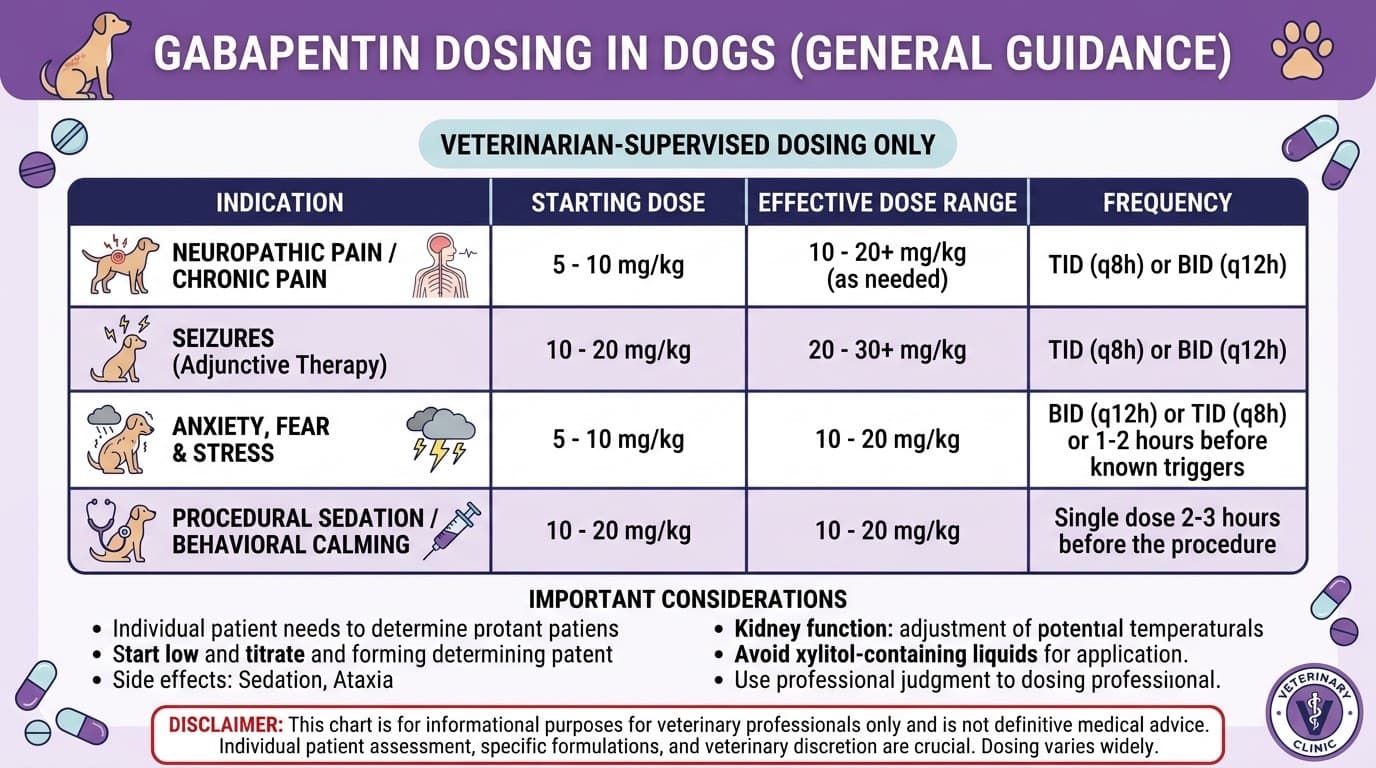
Dosing varies significantly by indication and individual patient response. Start low, titrate up based on effect and tolerability.
| Indication | Starting Dose | Effective Range | Frequency |
|---|---|---|---|
| Neuropathic/chronic pain | 5 mg/kg | 515 mg/kg | BIDTID |
| Post-surgical pain (periop) | 1020 mg/kg | 1020 mg/kg | Single preop + TID 3d post-op |
| Seizure adjunct (add-on) | 5 mg/kg | 1030 mg/kg | TID |
| Anxiety/sedation (car travel, exams) | 20 mg/kg | 2030 mg/kg | Single dose 1.52 hrs before event |
| Procedural sedation aid | 2030 mg/kg | 2030 mg/kg | Single dose 2 hrs pre-procedure |
Maximum dose: No clearly defined ceiling, but doses >30 mg/kg TID are rarely needed and increase sedation risk. Most pain protocols use 515 mg/kg TID.
Titration Protocol for Chronic Pain 1. Start: 5 mg/kg PO BID 1 week 2. If tolerated, increase to 5 mg/kg TID 3. Reassess at 24 weeks if insufficient response, increase by 5 mg/kg increments 4. Target: pain score improvement (Glasgow CMPS-SF) or functional improvement 5. Do NOT abruptly discontinue taper over 12 weeks when stopping long-term therapy
Important: Xylitol Warning The Neurontin oral solution (250 mg/5 mL) contains xylitol, a sweetener that causes severe hypoglycemia and hepatic failure in dogs at doses as low as 0.1 g/kg. ALWAYS prescribe capsules or tablets for dogs NEVER the oral liquid.
Combination Protocols and Drug Interactions
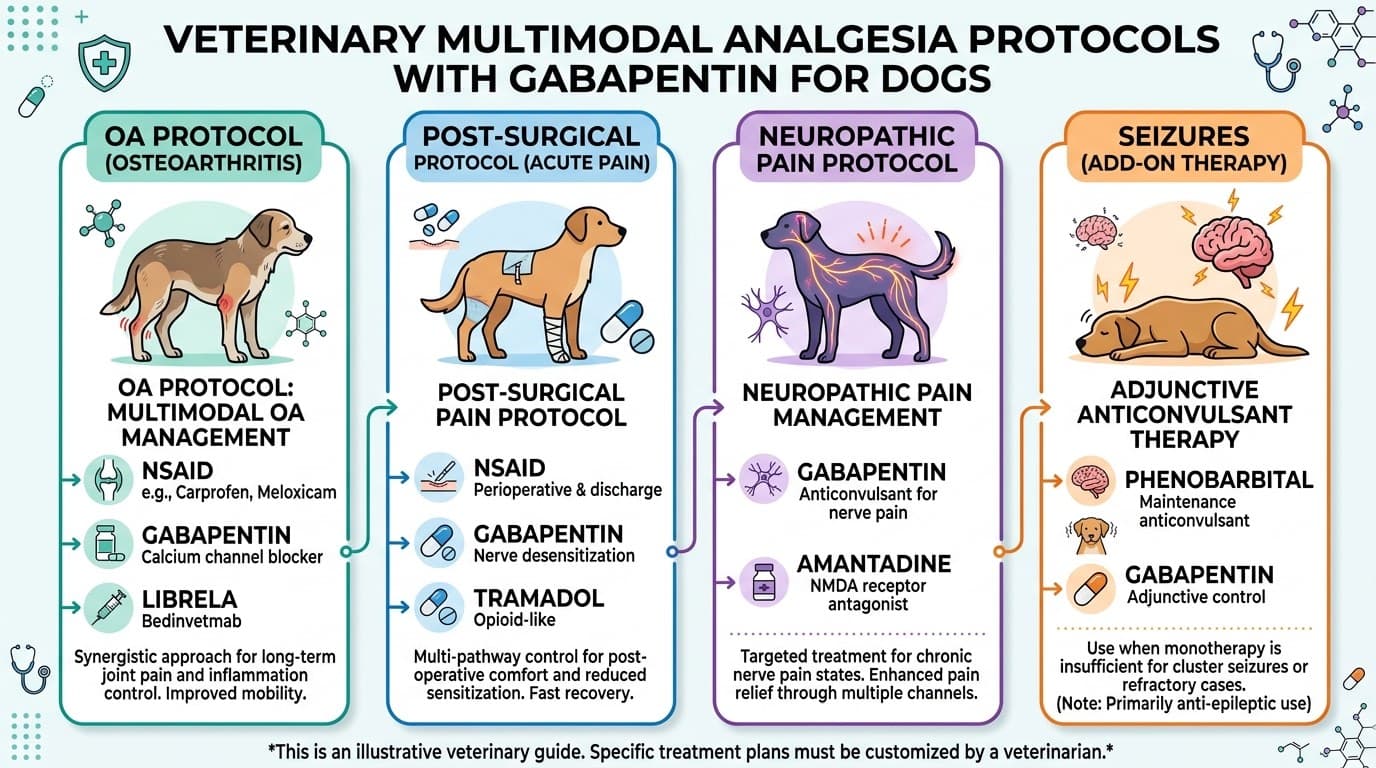
Gabapentin in Multimodal Pain Management Gabapentin is rarely used as a sole analgesic. Its power lies in combination:
*Dogs with chronic OA pain:*
- Meloxicam 0.1 mg/kg/day + gabapentin 510 mg/kg TID
- Add Librela (bedinvetmab 1 mg/kg SQ q28d) for NSAID-partial responders
*Post-surgical pain (orthopedic):*
- Carprofen BID + gabapentin 1020 mg/kg TID 37 days
- Tramadol 35 mg/kg TID (though tramadol's canine efficacy is debated poor CYP2D6-mediated conversion to active metabolite in dogs)
*Neuropathic pain (IVDD, degenerative myelopathy):*
- Gabapentin + amantadine (NMDA antagonist) 35 mg/kg/day
- Amantadine adds synergistic central sensitization block; well-tolerated
*Seizure adjunct therapy:*
- Added to phenobarbital or potassium bromide when seizures are not fully controlled
- Target gabapentin serum levels: 416 g/mL (therapeutic range not well-validated in dogs)
Drug Interactions
- CNS depressants (opioids, benzodiazepines, acepromazine): Additive sedation reduce doses accordingly
- Antacids (aluminum/magnesium): May reduce gabapentin absorption by 20% separate dosing by 2 hours
- Renal impairment: Dose reduction required; gabapentin cleared renally. For GFR <30 mL/min, use BID instead of TID at same per-dose amount.
Side Effects
- Sedation: Most common; usually mild and transient (12 weeks as animal adjusts)
- Ataxia: At higher doses; dose-dependent
- Paradoxical excitation: Rare; more common in cats
- GI effects: Mild; vomiting, increased appetite (weight gain with long-term use)
Frequently Asked Questions
What is the correct gabapentin dose for a dog in pain?
For chronic pain or neuropathic pain, start at 5 mg/kg orally twice daily (BID) and titrate up to 515 mg/kg three times daily (TID) based on response. For acute post-surgical pain, 1020 mg/kg TID for 37 days post-operatively. For anxiety/sedation before stressful events, 2030 mg/kg as a single oral dose 1.52 hours before the event.
Can I give my dog the gabapentin liquid solution?
No. The human gabapentin oral solution (Neurontin 250 mg/5 mL) contains xylitol, which is severely toxic to dogs and can cause life-threatening hypoglycemia and liver failure at doses as low as 0.1 g/kg. Always use gabapentin capsules or tablets for dogs, never the liquid solution.
How long does gabapentin take to work in dogs?
Single doses for anxiety/sedation take effect within 12 hours and last 812 hours. For chronic pain management, therapeutic effect builds over 12 weeks as tissue levels stabilize. Seizure control may take 12 weeks to assess properly.
Does gabapentin make dogs very sleepy?
Sedation is the most common side effect, especially when first starting therapy. Most dogs adjust within 12 weeks. If sedation is excessive, reduce the dose and titrate more gradually. At standard pain doses (510 mg/kg BIDTID), sedation is usually mild. Higher anxiety/sedation doses (2030 mg/kg) intentionally produce more significant sedation.
Can gabapentin be used long-term in dogs?
Yes gabapentin is commonly used for chronic conditions including osteoarthritis, IVDD, degenerative myelopathy, and epilepsy. Long-term use is generally safe. Monitor for excessive sedation, weight gain (increased appetite), and adjust dose as needed. Do not abruptly discontinue after prolonged use taper over 12 weeks to avoid potential seizure risk.
References
- Cashmore RG, et al. Clinical investigation of the efficacy and safety of pregabalin in the treatment of neuropathic pain in dogs. Aust Vet J. 2009.
- Aghighi SA, et al. Assessment of the influence of gabapentin on postoperative pain after intervertebral disc surgery in dogs. Vet Anaesth Analg. 2012.
- Plumb DC. Gabapentin. In: Plumb's Veterinary Drug Handbook. 10th ed. Wiley-Blackwell; 2023.