Quick Answer
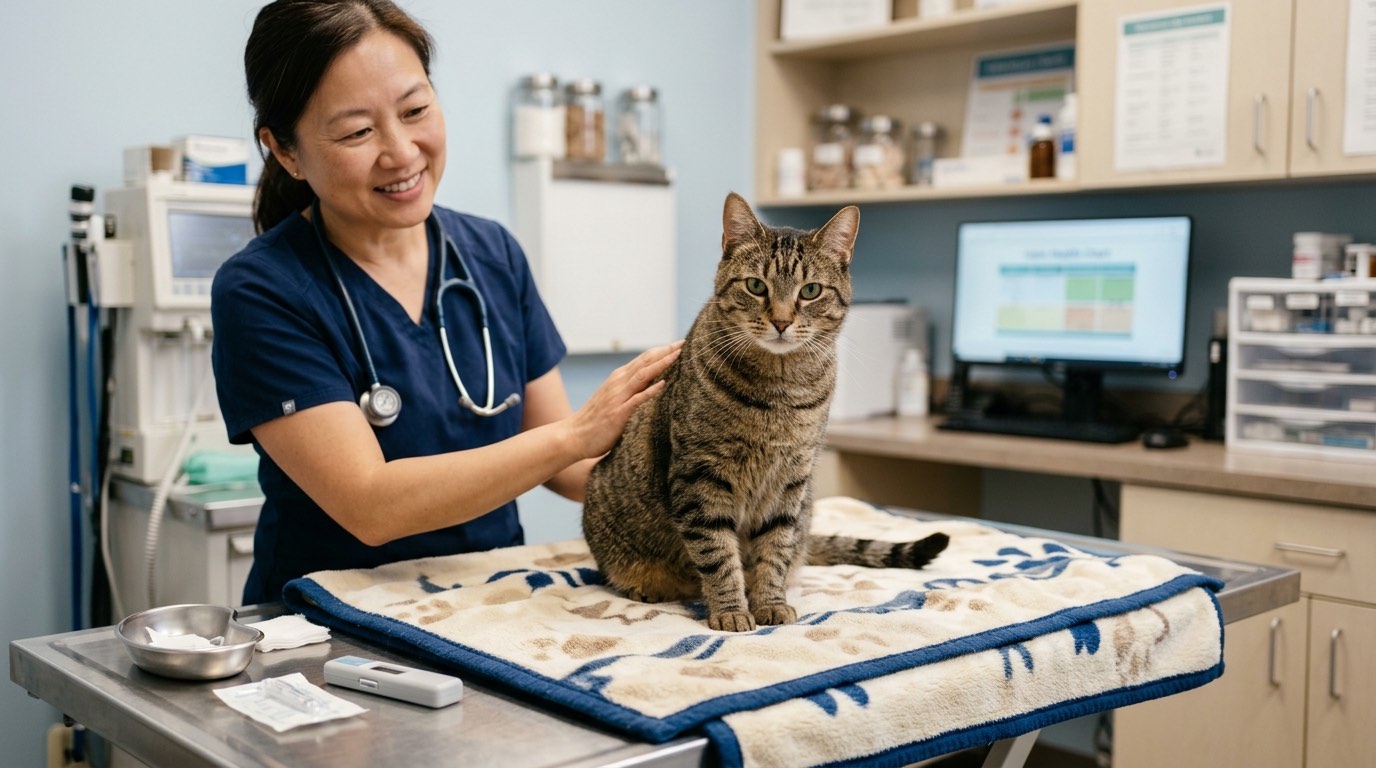
Gabapentin has transformed the management of feline anxiety during veterinary visits and is a key analgesic for chronic pain. This guide covers the evidence base, dosing protocols by indication, the Fear Free approach, and important safety considerations specific to cats.
Key Takeaways
- ✓Gabapentin 100 mg/cat oral 90 minutes before veterinary visits is the most effective, evidence-based feline anxiety reduction protocol (reduces FAS scores by 50%)
- ✓For chronic pain: 510 mg/kg BIDTID; for seizures: 510 mg/kg TID; for pre-visit anxiety: 100200 mg/cat single dose
- ✓Mild ataxia is expected after pre-visit doses owners must plan carrier transport home; ensure no access to heights
- ✓Dose reduction required for CKD: IRIS Stage 3 BID dosing; IRIS Stage 4 50% dose BID
- ✓Open capsules and mix with small amount of wet food for easy administration in cats that resist pilling
- ✓Long-term use is generally safe; monitor renal function every 612 months in chronic-use patients
Gabapentin as the Foundation of Fear Free Feline Visits
Cats are notoriously difficult to examine and treat due to stress-related behavioral responses. Fear, anxiety, and stress (FAS) in cats during veterinary visits:
- Confounds physical examination (stress hyperglycemia, stress tachycardia, hypertension, increased respiratory rate)
- Creates exam room safety issues (biting, scratching)
- Reduces diagnostic accuracy
- Causes lasting negative associations with veterinary care
- Reduces owner compliance with recommended care
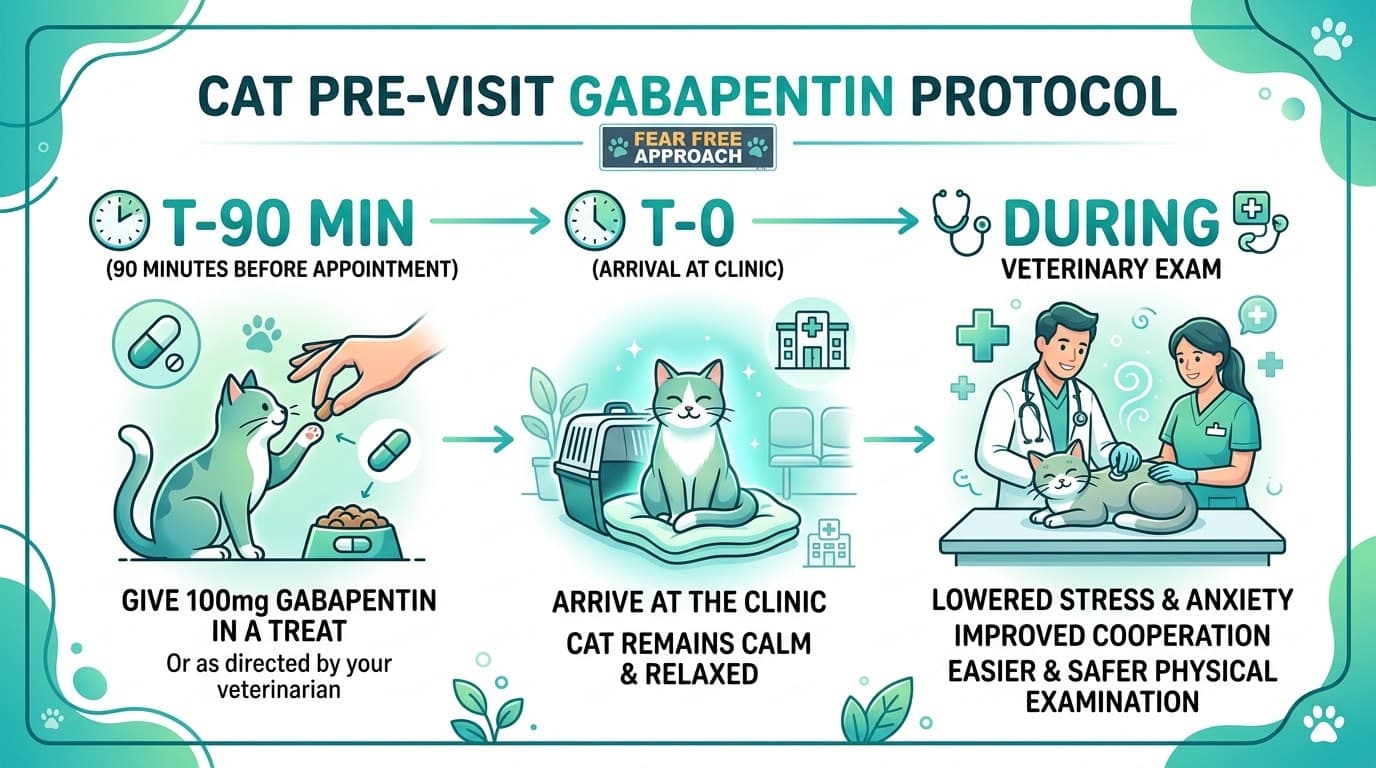
Gabapentin Pre-Visit Protocol (Evidence-Based)
- Stress scores at admission (-50% vs placebo)
- Restraint scores during examination (-33% vs placebo)
- Overall fear, anxiety, and stress scores
The Protocol:
- Dose: 100 mg/cat orally ( 510 mg/kg depending on cat size) given in a small treat or empty gelatin capsule 90 minutes before the appointment
- For highly anxious cats: 200 mg/cat may be used ensure owner has a crate/carrier ready as cat will be more sedated
- Return transport: Owner should use carrier and minimal handling cats may remain transiently ataxic for 24 hours after the dose
Clinical impact: Multiple practices report 4060% reduction in "fractious cat" designations after implementing pre-visit gabapentin protocols. This is arguably the highest-value, lowest-cost intervention in feline veterinary medicine today.
Gabapentin Dosing in Cats by Indication
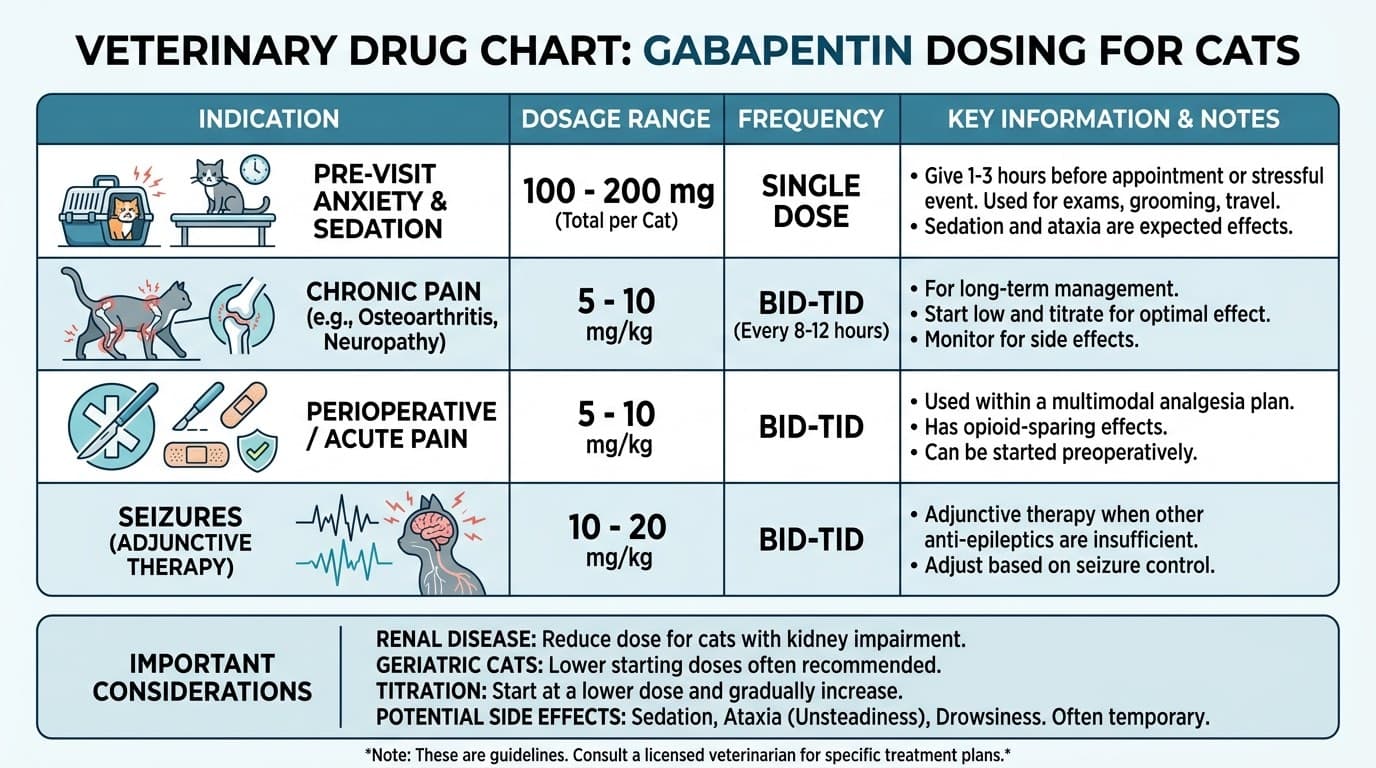
| Indication | Dose | Frequency | Notes |
|---|---|---|---|
| Pre-visit anxiety (mild) | 100 mg/cat | Single dose 90 min before | 5 mg/kg in average 5 kg cat |
| Pre-visit anxiety (severe) | 200 mg/cat | Single dose 2 hrs before | Ensure carrier transport home |
| Chronic pain (OA, cancer) | 510 mg/kg | BIDTID | Start low, titrate up |
| Neuropathic pain | 510 mg/kg | TID | Best as part of multimodal protocol |
| Perioperative analgesia | 10 mg/kg | Single preop dose | Reduces intraoperative anesthetic requirement |
| Seizure adjunct | 510 mg/kg | TID | Monitor for excessive sedation |
Formulation Notes
- Capsules: 100 mg capsules most useful (can open and mix powder into a small amount of wet food)
- The 100 mg capsule = approximately one ideal dose for an average 5 kg cat
- AVOID: the human oral solution (contains xylitol though this is less of an issue in cats than dogs, it should still be avoided)
- Compounded transdermal gel: Limited evidence for efficacy (low transdermal absorption); not recommended for pain management; potentially acceptable for anxiety if oral administration is not feasible
- Compounded oral suspension (without xylitol): Useful for precise dosing in small cats and kittens
Dosing Considerations in Feline Patients
- Lean body weight should be used for dosing (not total body weight in obese cats)
- Start at the lower end of the range and assess response at 2 weeks
- Elderly cats and those with renal disease: Start at 2.55 mg/kg BID; monitor for excessive sedation
Safety Profile and Special Considerations in Cats
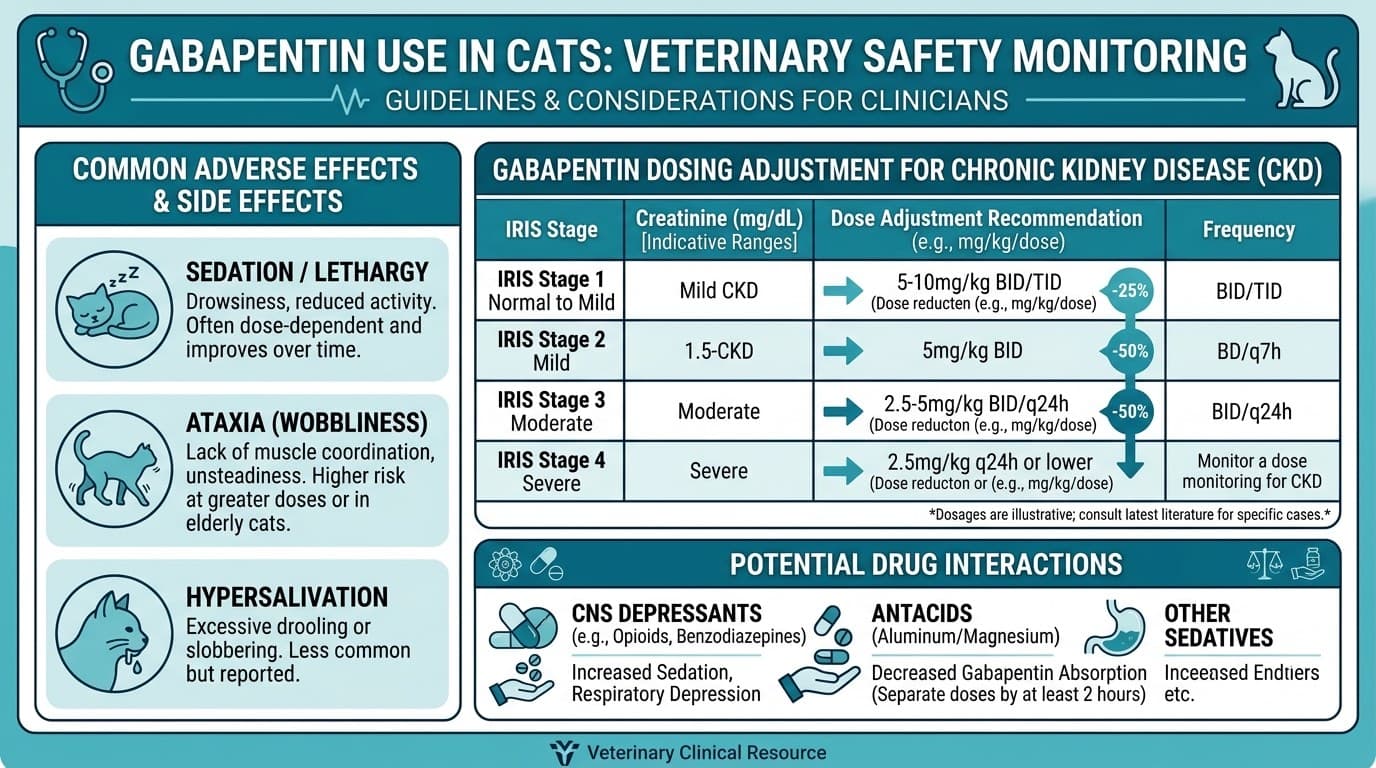
Common Side Effects in Cats
- Sedation: Expected and dose-dependent. Mild sedation at pain doses; more pronounced at anxiety/pre-visit doses (intentional for the latter)
- Ataxia: Most prominent 13 hours post-dose; usually resolves within 46 hours. Cats should not be left unsupervised near heights after dosing.
- Hypersalivation: Occasionally observed after oral gabapentin usually transient
- Paradoxical excitation: Rare; more common in cats than dogs; seen especially in anxious cats at first use
Chronic Use Safety
- Renal function (BUN, creatinine, SDMA) every 612 months gabapentin is renally cleared
- Body weight (mild appetite increase reported in some cats)
- Behavioral assessment for sedation tolerance
Renal Disease (CKD) Cats
- IRIS Stage 12: Standard dosing with monitoring
- IRIS Stage 3: Reduce to BID instead of TID; or reduce dose by 25%
- IRIS Stage 4: Use with caution; BID at 50% of standard dose; monitor closely for sedation
Drug Interactions
- Opioids (buprenorphine, butorphanol): Additive CNS depression reduce opioid dose by 2550% when combining
- Acepromazine/dexmedetomidine: Enhanced sedation standard protocols; adjust total anesthesia depth accordingly
- Oral antacids: Reduce absorption; separate by 2 hours
Summary: Is Gabapentin Right for Your Feline Patient? Yes gabapentin is one of the most useful drugs in feline medicine. For anxious patients, it transforms the veterinary experience. For chronic pain patients (especially OA, HCM-related, cancer), it provides meaningful adjunctive relief with an excellent safety profile.
Frequently Asked Questions
How much gabapentin should I give my cat before a vet visit?
The evidence-based dose is 100 mg per cat (approximately 5-10 mg/kg for a 4-6 kg cat) given orally 90 minutes before the appointment. For highly anxious cats, 200 mg may be used, given 2 hours before. Open the capsule and mix the powder into a small amount of wet food for easy administration.
How long does gabapentin last in cats?
The sedative/anxiolytic effect peaks at 12 hours and lasts approximately 812 hours. Mild ataxia may persist for 35 hours after the pre-visit dose. For chronic pain management, the analgesic effect requires 12 weeks of consistent twice to three times daily dosing to reach full therapeutic benefit.
Is gabapentin safe for cats with kidney disease?
Gabapentin can be used in cats with CKD but requires dose adjustment. For IRIS Stage 3 CKD, reduce to twice-daily dosing. For IRIS Stage 4, use cautiously at 50% of standard doses twice daily. Gabapentin is renally excreted, so clearance is reduced with kidney disease, increasing risk of sedation.
Can I give my cat gabapentin every day?
Yes gabapentin is safe for daily long-term use in cats. It is routinely used for chronic conditions such as osteoarthritis, neuropathic pain, and seizure management. Monitor renal function (BUN, creatinine) every 6-12 months and watch for excessive sedation or unexpected weight gain.
My cat is wobbly after gabapentin is that normal?
Yes, mild ataxia (unsteadiness, wobbling) is expected, especially after the higher pre-visit doses (100200 mg). This is dose-dependent and typically resolves within 35 hours. Keep the cat confined to a safe area away from heights after dosing. If ataxia is severe or prolonged beyond 8 hours, contact your veterinarian.
References
- van Haaften KA, et al. Effects of a single preappointment dose of gabapentin on signs of stress in cats during transportation and veterinary examination. JAVMA. 2017.
- Pypendop BH, Ilkiw JE. Pharmacokinetics of gabapentin in cats. Am J Vet Res. 2016.
- Plumb DC. Gabapentin. In: Plumb's Veterinary Drug Handbook. 10th ed. Wiley-Blackwell; 2023.