Quick Answer
Neuropathic pain and central sensitization are underdiagnosed in dogs. This guide covers the pathophysiology, clinical recognition, and evidence-based multimodal treatment protocols including gabapentin, amantadine, maropitant and physical rehabilitation.
Key Takeaways
- ✓Neuropathic pain involves central sensitization wind-up at the dorsal horn that amplifies pain beyond the original injury
- ✓Key clinical signs: allodynia, spontaneous vocalization, pain disproportionate to imaging, <50% NSAID response
- ✓Gold-standard protocol: Gabapentin (10 mg/kg TID) + Amantadine (3-5 mg/kg SID) + NSAID targets pre- and post-synaptic sensitization simultaneously
- ✓Amantadine evidence: Lascelles 2008 RCT showed significant mobility/pain improvement when added to NSAIDs in chronic OA dogs
- ✓Maropitant provides genuine central analgesia via NK1/substance P receptor antagonism beyond its anti-emetic role
- ✓Physical rehabilitation (hydrotherapy, NMES) is a key non-pharmacological pillar neuroplasticity benefits documented in chronic pain
Neuropathic Pain and Central Sensitization
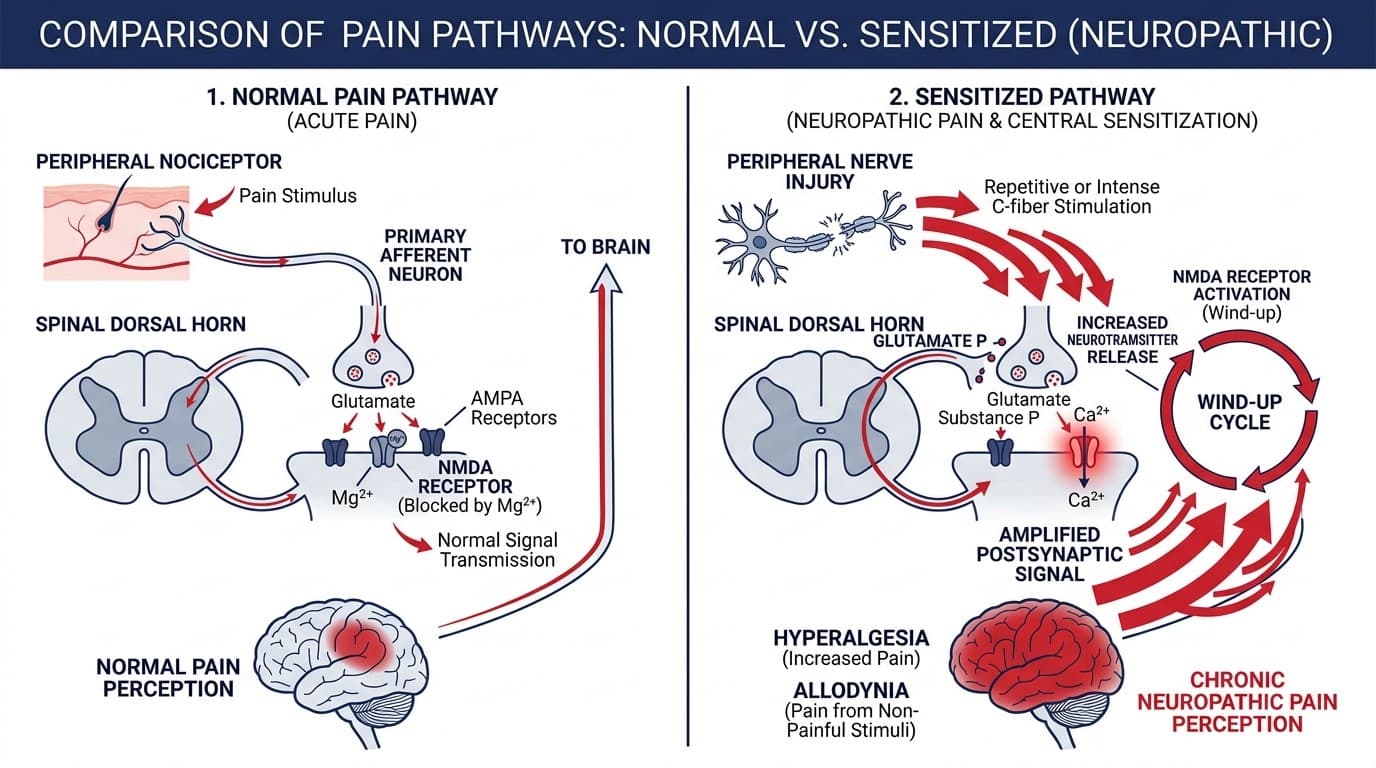
Neuropathic pain arises from damage to or dysfunction of the peripheral or central nervous system itself, rather than from ongoing tissue injury. It is chronic, often disproportionate to apparent injury, and poorly responsive to traditional NSAIDs alone.
Peripheral Sensitization
- Hyperalgesia: Exaggerated pain response to normally painful stimuli
- Allodynia: Pain in response to normally non-painful stimuli (e.g., light touch causes pain)
Central Sensitization (Wind-Up)
- NMDA (N-methyl-D-aspartate) receptor activation calcium influx intracellular cascade long-term potentiation of pain pathways
- Reduced descending inhibitory pathways (serotonin, norepinephrine)
- Microglial activation neuroinflammation
Clinical result: Pain that persists and amplifies even after the original injury has healed. This is why some post-surgical dogs remain painful, and why chronic OA pain often becomes disproportionate to radiographic changes.
Conditions Associated with Neuropathic Pain in Dogs
- Intervertebral disc disease (IVDD) spinal cord compression/injury
- Degenerative myelopathy
- Chronic osteoarthritis (central sensitization component)
- Post-surgical pain (thoracotomy, amputation, orthopedic)
- Diabetic polyneuropathy
- Cancer-related pain (nerve invasion, bone pain)
- Syringomyelia (especially Cavalier King Charles Spaniels)
Recognizing Neuropathic Pain Clinically
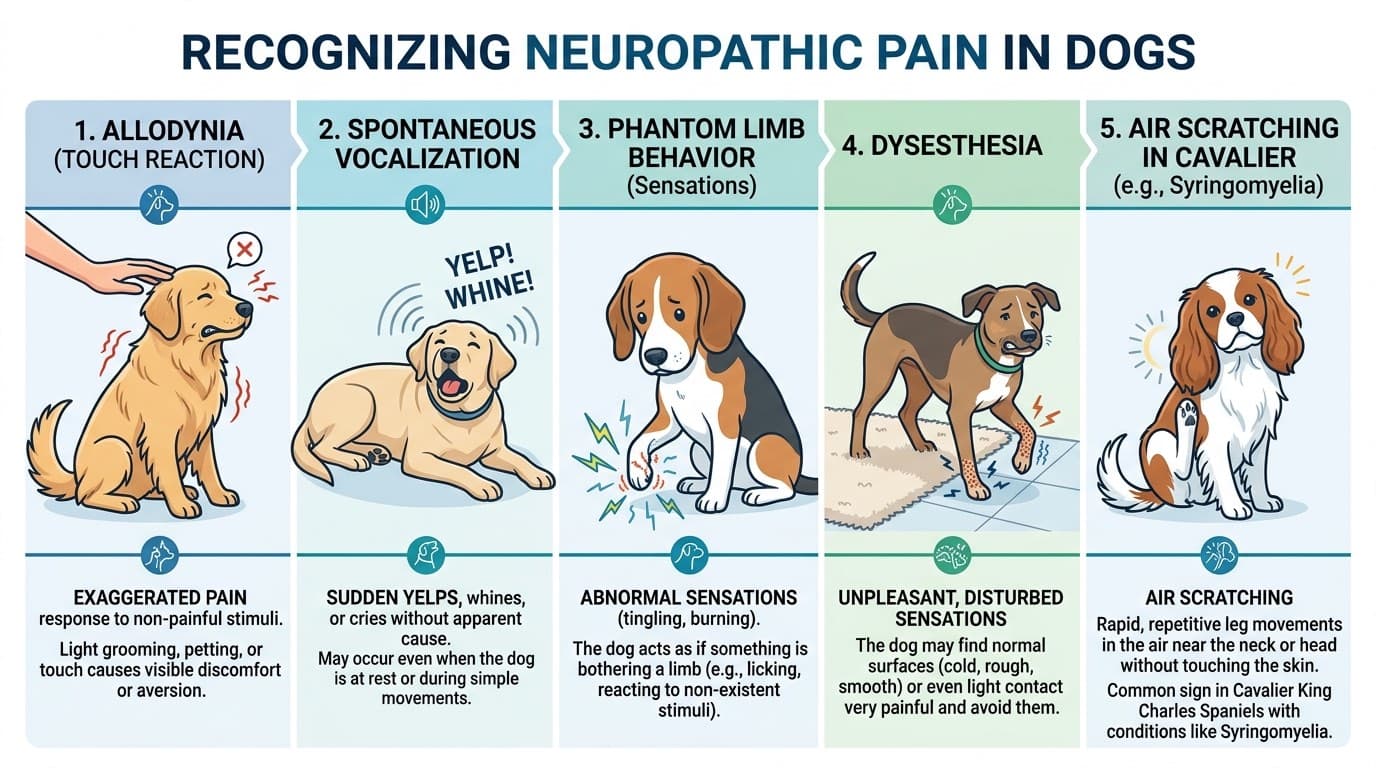
Clinical Signs Suggesting Neuropathic Component Unlike straightforward nociceptive pain, neuropathic pain presents with atypical features:
- Dysesthesia/allodynia: Dog reacts painfully to light touch over an area that appears healed (e.g., pain at dorsum of neck in Cavaliers with syringomyelia)
- Spontaneous vocalization: Unpredictable crying/yelping unrelated to movement or palpation
- Phantom pain: Post-amputation vocalization/self-directed behavior at stump
- Disproportionate response: Severe pain behavior relative to degree of injury visible on imaging
- Stereotypic scratching: Cavaliers scratch at neck/ear without contact (air scratching) classic syringomyelia sign
- Burning/electric quality: Dogs may look at or bite a limb, drag it, or excessively lick despite no wound
Assessment Tools
- [Glasgow CMPS-SF](/articles/pain-assessment-veterinary): Score 5/24 indicates need for intervention
- Flinch-fear-frustration (FFF) scale for chronic pain
- Functional mobility scoring (15 for mobility impairment)
- Owner-based chronic pain questionnaire (Helsinki Chronic Pain Index for dogs validated)
When to Suspect Central Sensitization
- NSAID therapy providing <50% pain relief
- Pain out of proportion to radiographic findings
- Spontaneous pain episodes (unprovoked vocalization)
- Waxing-waning pain pattern that doesn't correlate with activity level
- Pain continuing >3 months after initial injury
Multimodal Treatment: Gabapentin + Amantadine and Beyond
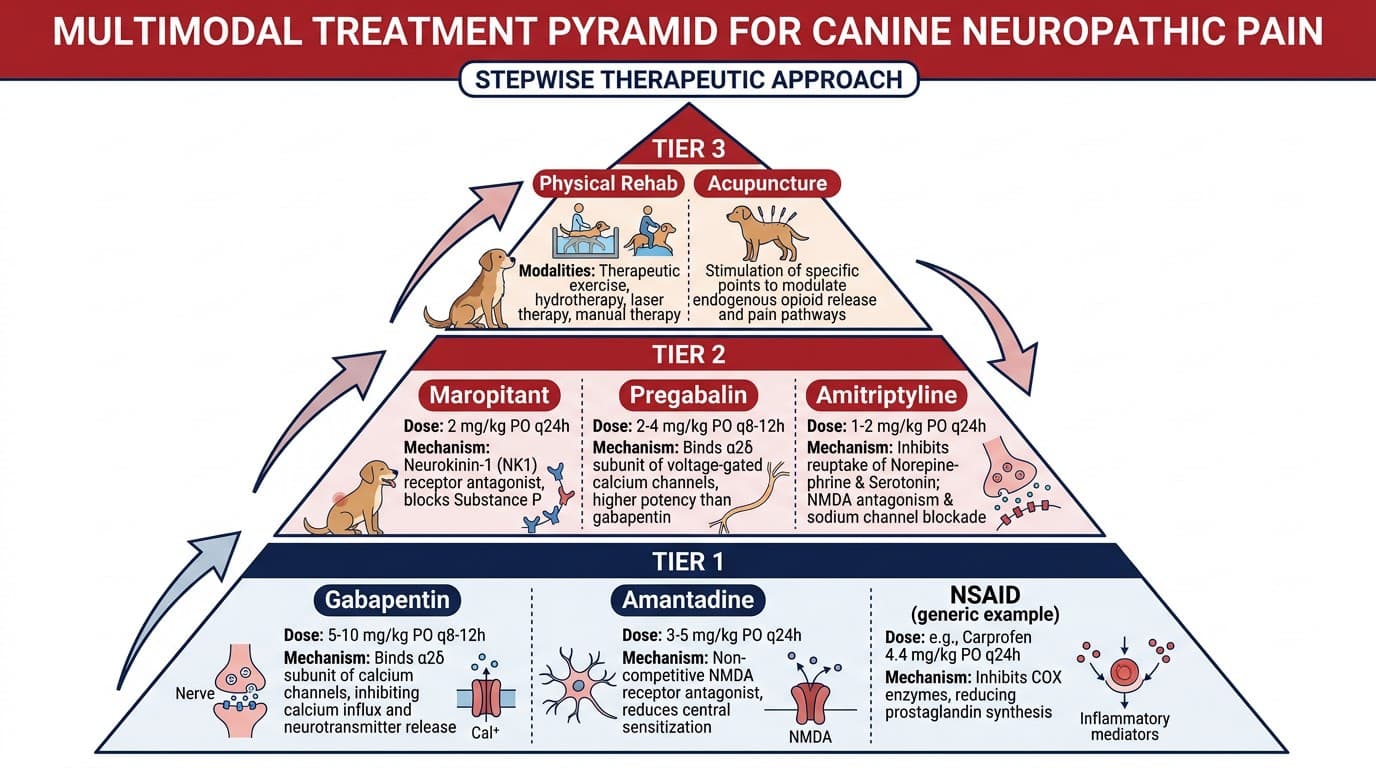
Neuropathic pain requires a multimodal approach targeting multiple pathways simultaneously.
Tier 1: First-Line Neuropathic Agents
Gabapentin
- Dose: 515 mg/kg PO TID
- Mechanism: Alpha-2-delta calcium channel binding reduced excitatory neurotransmitter release
- Titrate slowly over 24 weeks; do not abruptly discontinue
Amantadine
- Dose: 35 mg/kg PO SID (once daily) simpler dosing schedule than gabapentin
- Mechanism: NMDA receptor antagonist directly blocks the wind-up cycle
- Evidence: Lascelles et al. (2008) showed significant improvement in mobility and owner-assessed pain when amantadine was added to NSAID therapy in dogs with chronic OA
- Gabapentin + amantadine combination: One of the most evidence-supported neuropathic pain protocols in dogs; targets both pre-synaptic (gabapentin) and post-synaptic (amantadine) aspects of central sensitization
Pregabalin
- Dose: 24 mg/kg PO BID
- Same mechanism as gabapentin but more consistent bioavailability
- More expensive; use when gabapentin provides insufficient response or requires TID dosing that owners cannot manage
Tier 2: Adjunctive Agents
NSAIDs (baseline anti-inflammatory):
- Meloxicam 0.1 mg/kg/day or carprofen 2.2 mg/kg BID
- Reduce peripheral sensitization component
Maropitant (Cerenia)
- 2 mg/kg SQ or PO q24h
- Beyond anti-emetic effects, maropitant antagonizes NK1 (neurokinin-1/substance P) receptors in the spinal cord genuine central analgesic effect demonstrated in feline and canine studies
Tricyclic antidepressants (amitriptyline)
- 12 mg/kg PO BID
- Norepinephrine/serotonin reuptake inhibition enhanced descending inhibitory pathways
- Used in refractory neuropathic pain
Physical Rehabilitation
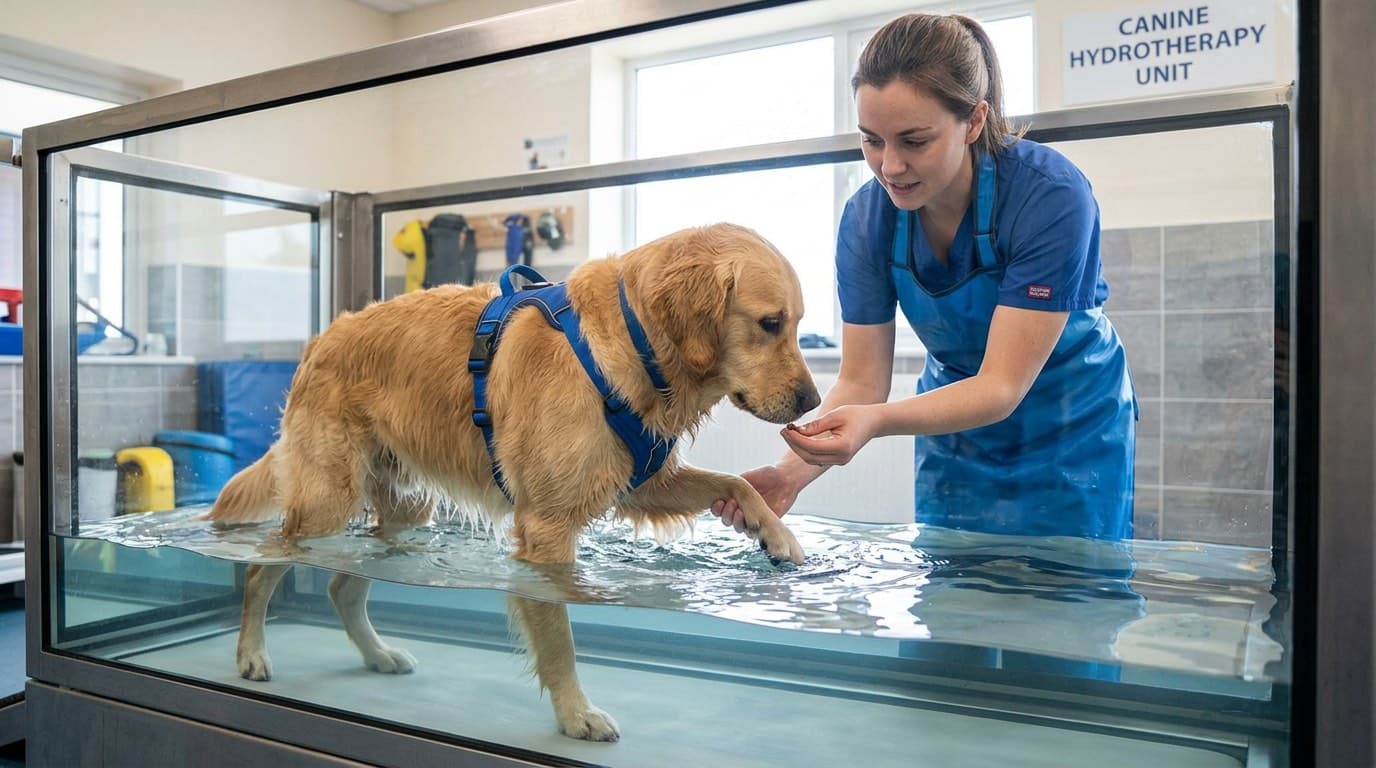
- Underwater treadmill: Reduces weight-bearing while maintaining muscle activation neuroplasticity benefits
- Neuromuscular electrical stimulation (NMES): Activates motor units, reduces central sensitization via gate-control mechanism
- Acupuncture: Reasonable evidence for spinal pain and OA-related neuropathic component
Example Clinical Protocol (IVDD post-decompression with residual neuropathic pain)
- Meloxicam 0.1 mg/kg/day PO
- Gabapentin 10 mg/kg TID PO
- Amantadine 5 mg/kg SID PO
- Maropitant 2 mg/kg SID PO (if NK1 component suspected)
- Underwater treadmill twice weekly
- Reassess at 4 weeks using Glasgow CMPS-SF
Frequently Asked Questions
What is the best treatment for neuropathic pain in dogs?
The most evidence-supported protocol combines gabapentin (10 mg/kg TID) with amantadine (3-5 mg/kg SID) plus an NSAID. This combination targets multiple pain pathways simultaneously. Adding maropitant for NK1/substance P blockade and physical rehabilitation provides additional benefit for refractory cases.
How do I know if my dog has neuropathic pain vs. normal pain?
Signs suggesting neuropathic pain include: exaggerated response to light touch (allodynia), spontaneous unprovoked vocalization, pain out of proportion to visible injury/imaging findings, and inadequate response (<50%) to NSAID-only therapy. Chronic conditions like IVDD, degenerative myelopathy, and long-standing OA are common causes.
What does amantadine do for dogs in pain?
Amantadine is an NMDA receptor antagonist that blocks the "wind-up" mechanism at the spinal dorsal horn the process by which chronic pain amplifies itself. At 3-5 mg/kg once daily, it significantly improves mobility and reduces pain in dogs where NSAIDs alone are insufficient, according to clinical trial data (Lascelles 2008).
How long does gabapentin take to work for nerve pain in dogs?
For neuropathic pain, gabapentin requires 12 weeks of consistent dosing to reach full therapeutic effect. Clinical improvement is typically assessed at the 24 week mark. Some owners notice mild improvement within the first week, with maximum benefit over 46 weeks of continuous therapy.
Can neuropathic pain in dogs be cured?
Neuropathic pain from reversible causes (e.g., resolving IVDD compression) can substantially improve with time and treatment. Central sensitization that has been established for months to years may never fully resolve but can be managed effectively to maintain quality of life. The goal is functional improvement, pain score reduction, and quality-of-life optimization rather than complete cure.
References
- Lascelles BD, et al. Evaluation of a therapeutic diet for cats with degenerative joint disease. JAVMA. 2010.
- Lascelles BD, et al. Amantadine in a multimodal analgesic regimen for alleviation of refractory osteoarthritis pain in dogs. JAVMA. 2008.
- Woolf CJ. Central sensitization: Implications for the diagnosis and treatment of pain. Pain. 2011.