Quick Answer
Osteosarcoma (OSA) is the most common primary bone tumor in dogs. This guide covers appendicular versus axial OSA, amputation plus carboplatin chemotherapy (MST 10-12 months), bisphosphonate therapy with pamidronate, palliative radiation, and limb-sparing surgery options.
Key Takeaways
- ✓OSA most common in large/giant breeds at the distal radius (50%), proximal humerus, distal femur, proximal tibia
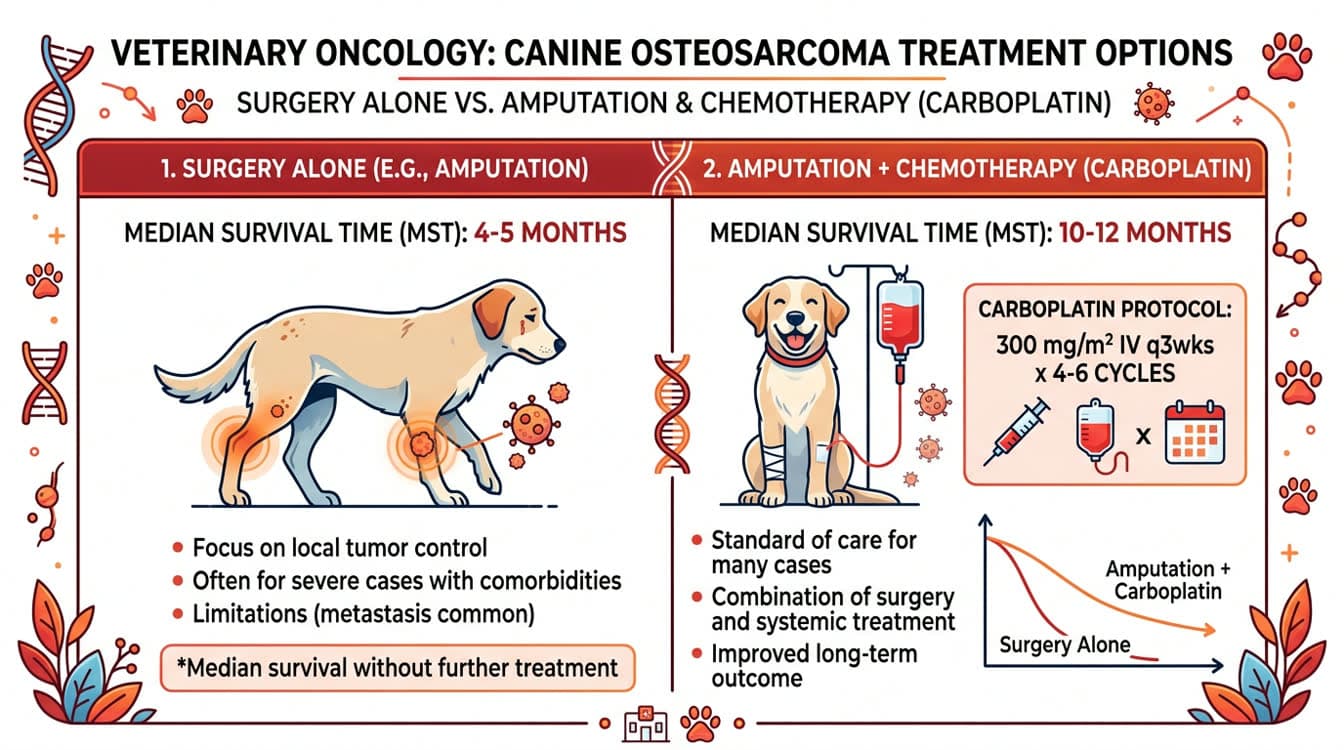
- ✓Standard of care: amputation + carboplatin 300 mg/m² IV q3wks x4-6 cycles = MST 10-12 months
- ✓~90% of dogs achieve acceptable quality of life as tripods — amputation = immediate pain relief
- ✓Palliative RT (2-4 fractions): 70-80% pain response, 2-4 months duration; no cure but meaningful QOL benefit
- ✓Pamidronate 1-2 mg/kg IV q4 weeks: reduces bone pain and pathological bone resorption
- ✓Staging: 3-view thoracic radiographs (CT more sensitive); 90% have micrometastases at diagnosis
Appendicular vs Axial OSA: Diagnosis, Staging and Signalment
Osteosarcoma (OSA) is the most common primary bone tumor in dogs, accounting for approximately 85% of all primary bone tumors.
Signalment:
- Large and giant breeds predominantly: German Shepherd, Rottweiler, Irish Setter, Saint Bernard, Great Dane, Golden Retriever
- Risk increases with body weight: dogs >40 kg at 8x higher risk
- Mean age at diagnosis: 7–9 years
- Males slightly over-represented
Appendicular OSA (75–80% of cases)
- Distal radius (most common site — 50% of appendicular OSA)
- Proximal humerus ("away from the elbow, close to the knee" — mnemonic)
- Distal femur, proximal tibia
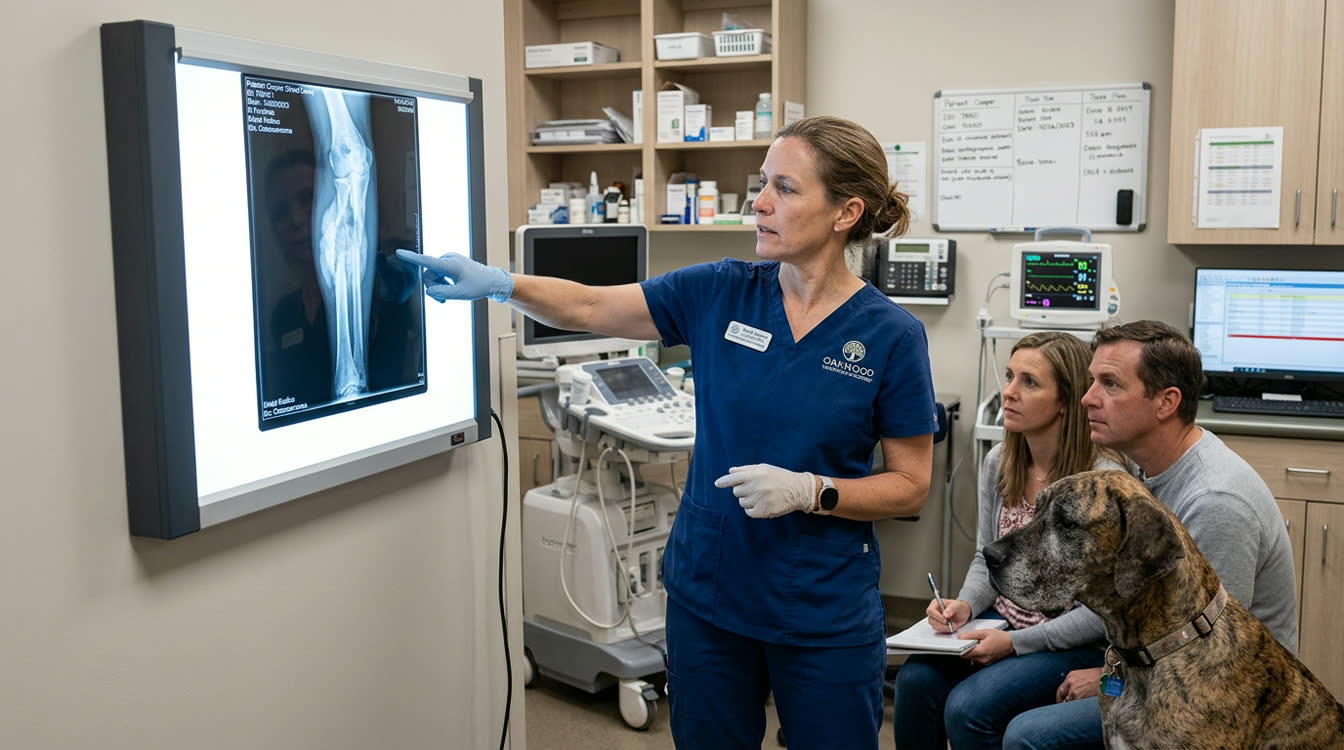
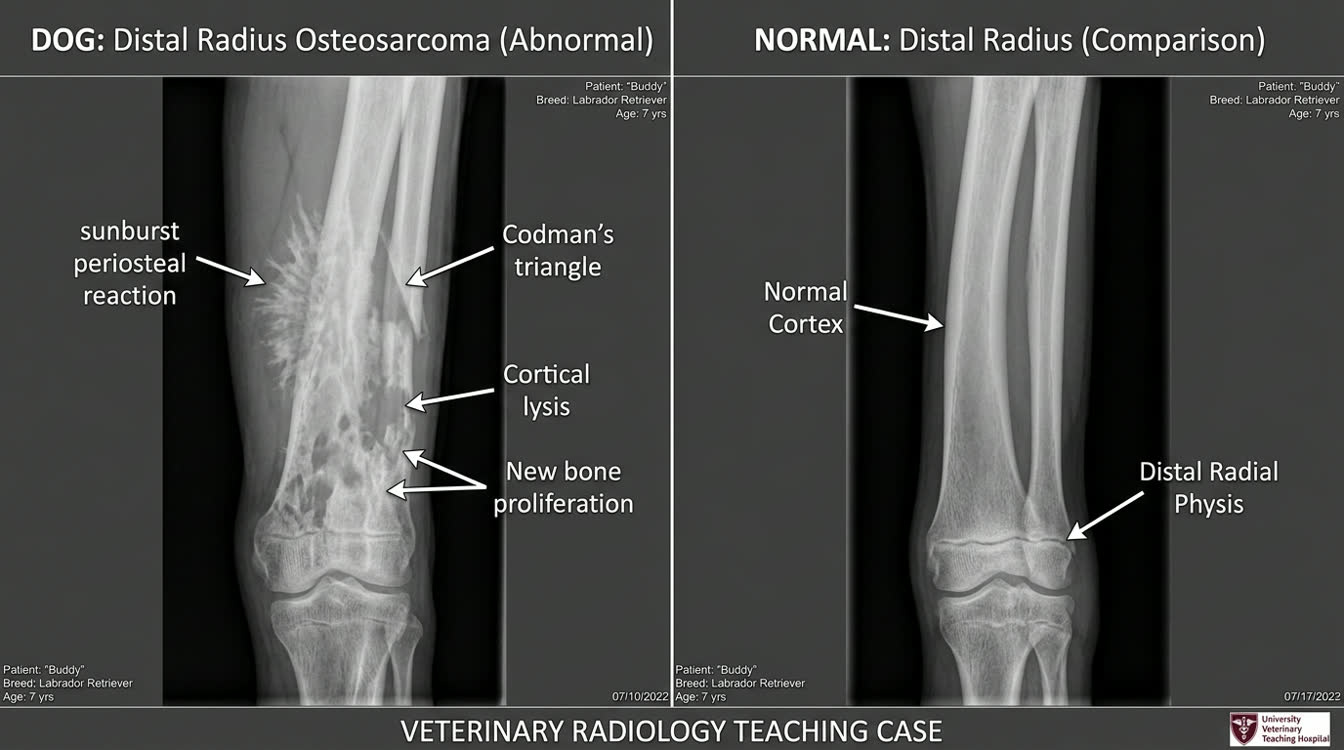
- Classic radiographic appearance: aggressive periosteal reaction ("sunburst" pattern), Codman's triangle, cortical lysis and proliferation
Axial OSA (20–25% of cases)
- Prognosis generally worse than appendicular (more difficult to achieve clean surgical margins)
- Mandibular OSA: better prognosis than other axial sites (>5–6 months MST)
- Rib OSA: often presents as palpable chest wall mass
Staging:
- Thoracic radiographs (3 views) — micrometastases present in ~90% at diagnosis but radiographically occult
- CT chest — more sensitive than radiographs for pulmonary metastases
- Bone scintigraphy (nuclear) — detects bone metastases
- Bone biopsy: Jamshidi needle core biopsy — confirms histologic diagnosis before treatment
Pain Assessment: OSA causes severe bone pain. Patients commonly present lame or non-weight-bearing. Pain scoring and aggressive analgesia before and during treatment planning are essential.
Amputation + Carboplatin Chemotherapy: Protocol and Median Survival Times
Standard of Care: Amputation + Adjuvant Chemotherapy
Why Amputation?
- Achieves complete tumor removal with clean margins
- Eliminates severe bone pain immediately
- Dogs adapt remarkably well to tripod life: >90% quality of life acceptable to owners
- Limb amputation is NOT appropriate for all patients (severe obesity, concurrent orthopedic disease in other limbs)
Carboplatin Chemotherapy Protocol: Carboplatin is the preferred adjuvant chemotherapy agent for canine OSA.
| Protocol | Drug | Dose | Schedule |
|---|---|---|---|
| Standard | Carboplatin | 300 mg/m² IV | Every 3 weeks × 4–6 cycles |
| Alternative | Doxorubicin | 30 mg/m² IV | Every 2–3 weeks × 5 cycles |
| Combination | Carboplatin + Doxorubicin | Alternating | Oncologist-directed |
Median Survival Times (MST):
- Surgery alone (amputation without chemo): 4–5 months
- Amputation + carboplatin: 10–12 months (range 10–13 months in studies)
- Amputation + doxorubicin: 8–12 months
- ~20–30% of dogs live beyond 2 years with amputation + chemotherapy
Monitoring During Chemotherapy:
- CBC before each cycle (neutropenia, thrombocytopenia)
- Renal function (carboplatin is nephrotoxic — creatinine, BUN before each dose)
- Thoracic imaging every 2 cycles to assess for metastasis
- Delay dose if ANC <3,000/μL or platelets <50,000/μL
Pre-surgical Pain Management:
- NSAIDs (carprofen, meloxicam) at full doses
- Gabapentin 5–10 mg/kg PO q8–12h (neuropathic/bone pain component)
- Tramadol 5 mg/kg PO q8h as adjunct
- Pamidronate (see below)
Palliative Radiation, Bisphosphonates (Pamidronate), Limb-Sparing and Pain Management
Palliative Radiation Therapy
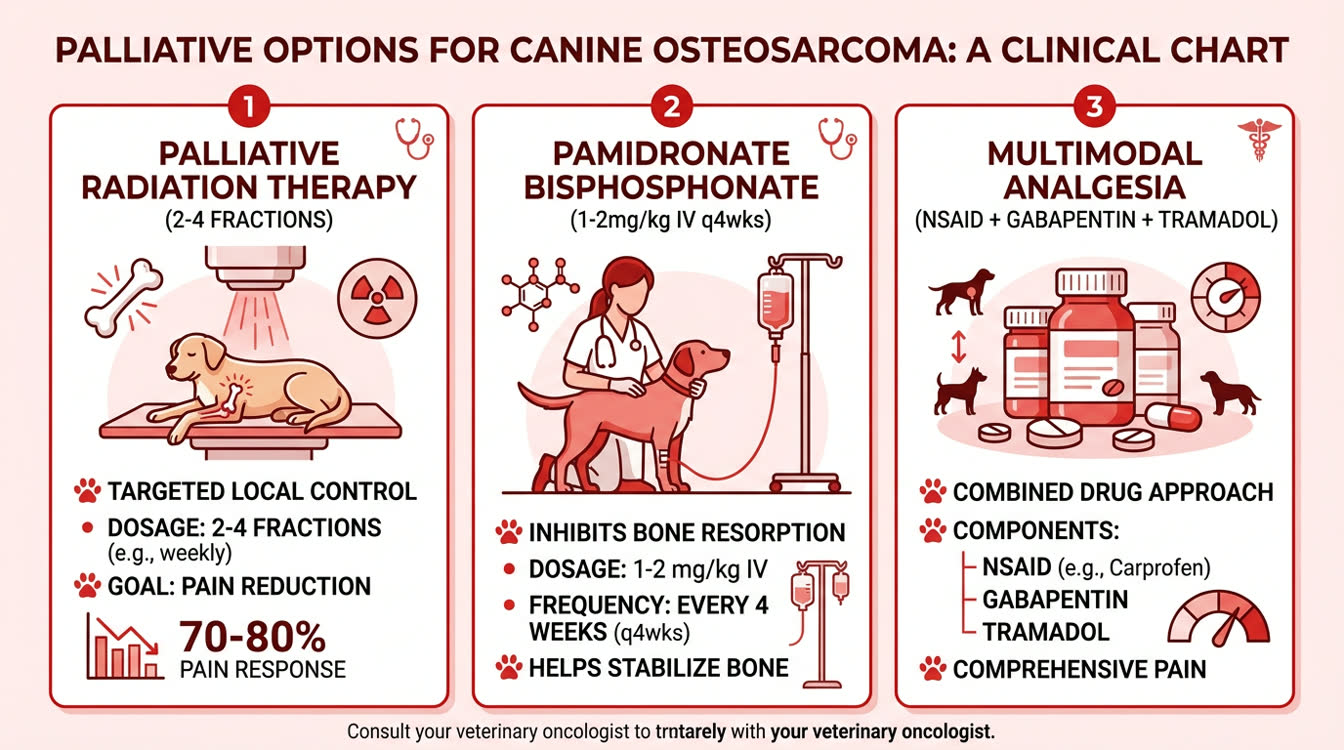
- Palliative radiation: 2–4 large fractions targeting the bone lesion
- Goal: pain relief, NOT cure — does not address metastatic disease
- Response rates: 70–80% experience meaningful pain relief
- Duration of response: 2–4 months typically
- Protocols: 2 × 8 Gy (2 fractions) or 4 × 6 Gy (4 fractions)
---
Bisphosphonate Therapy — Pamidronate Bisphosphonates inhibit osteoclast activity, reduce bone resorption, and provide analgesic benefit.
Pamidronate Protocol:
- 1–2 mg/kg IV slow infusion over 2–4 hours in 0.9% saline, every 4 weeks
- Dilute in 250 mL 0.9% NaCl for IV infusion
- Monitor renal function before each dose
- Can be combined with palliative radiation for additive pain relief
- Zoledronate (0.1 mg/kg IV q4wk) — more potent alternative, evidence growing in dogs
---
Limb-Sparing Surgery
- Resection of tumor-affected bone, reconstruction with cortical allograft and bone plate
- Avoids amputation; maintains limb function
- Complication rate high: infection (50%+), implant failure, local recurrence
- MST comparable to amputation + chemo in appropriate candidates
- Not widely available — requires specialist referral
---
Palliative-Only Management (No Surgery):
- NSAID (meloxicam, carprofen) + gabapentin + tramadol + pamidronate + palliative RT
- Median survival: 4–6 months with good quality palliative care
- Quality of life discussion with owners is essential
Related articles: [Transitional Cell Carcinoma in Dogs](/articles/transitional-cell-carcinoma-dogs) | [Pain Management in Dogs](/articles/pain-management-dogs)
Frequently Asked Questions
What is the survival time for dogs with osteosarcoma?
With amputation alone: 4-5 months MST. Amputation + carboplatin chemotherapy: 10-12 months MST. Approximately 20-30% of treated dogs live beyond 2 years. Palliative care without surgery: 4-6 months. Early diagnosis before radiographic metastases improves prognosis.
Can dogs live well as tripods after leg amputation for osteosarcoma?
Yes — over 90% of owners report acceptable to excellent quality of life in tripod dogs. Dogs adapt remarkably quickly to three-legged life, often within 1-2 weeks. Key considerations: body weight (obese dogs struggle more), concurrent orthopedic disease in other limbs, and cardiovascular fitness.
What is carboplatin and how is it used for osteosarcoma in dogs?
Carboplatin is a platinum-based chemotherapy drug given IV after amputation. Standard dose: 300 mg/m² IV every 3 weeks for 4-6 cycles. It is the preferred agent as it is better tolerated than cisplatin (no nephrotoxicity with IV fluid protocol) and can be given in most veterinary oncology centers. Monitor CBC and renal function before each dose.
What is pamidronate and does it help dogs with osteosarcoma?
Pamidronate is a bisphosphonate drug that inhibits osteoclasts (bone-destroying cells), reducing pathological bone resorption and providing analgesia. Dose: 1-2 mg/kg IV over 2-4 hours in saline, every 4 weeks. It is used for pain control in palliative cases and as an adjunct to chemotherapy.
Is limb-sparing surgery an option for osteosarcoma in dogs?
Limb-sparing surgery is an option for distal radius OSA specifically, involving tumor resection and bone allograft reconstruction. Survival times are comparable to amputation + chemotherapy in good candidates, but complication rates are high (>50% develop infection or implant failure). Specialist referral required.
References
- Bergman PJ, et al. Long-term survival of dogs with osteosarcoma after surgery and chemotherapy with doxorubicin and cisplatin. J Vet Intern Med. 1996.
- Shapiro W, et al. Use of carboplatin for treatment of dogs with malignant tumors: 48 cases (1994-2004). JAVMA. 2000.
- Dernell WS, et al. Canine appendicular osteosarcoma: a review of 656 previously untreated cases. J Vet Intern Med. 1998.