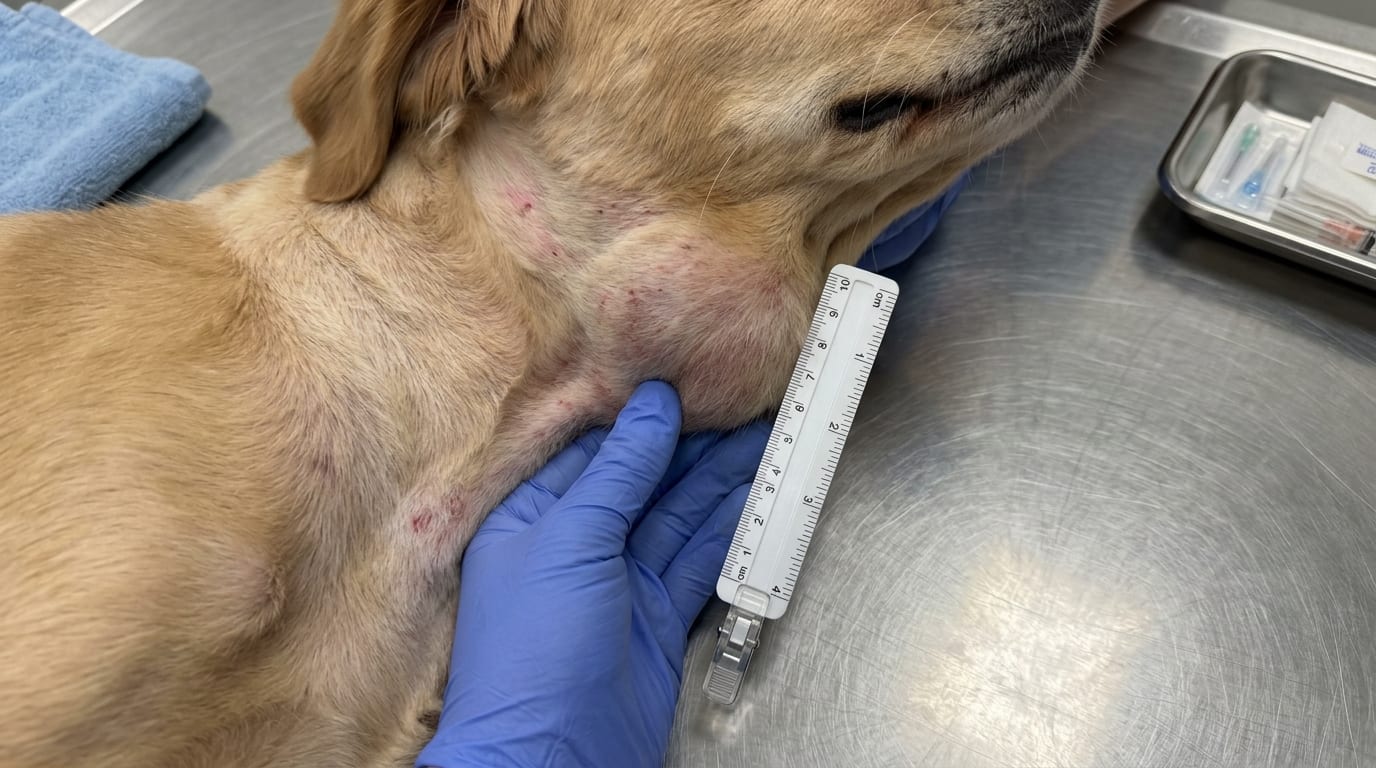
Quick Answer
Canine lymphoma is highly responsive to chemotherapy. This guide covers the CHOP combination protocol, L-asparaginase for induction and rescue, remission rates, B-cell vs T-cell immunophenotyping for prognosis, and rescue protocols for relapsed disease.
Key Takeaways
- ✓CHOP achieves 85-90% complete remission in B-cell and 55-70% in T-cell lymphoma
- ✓Immunophenotyping (B vs T cell) is essential -- dramatically changes prognosis discussion
- ✓L-asparaginase 400-600 IU/kg IM (NEVER IV) is excellent for induction and rescue
- ✓Monitor CBC before each appointment -- hold if ANC <3000/uL
- ✓Hypercalcemia in lymphoma suggests T-cell PTHrP production -- worse prognosis
Diagnosis, Staging, and Immunophenotyping
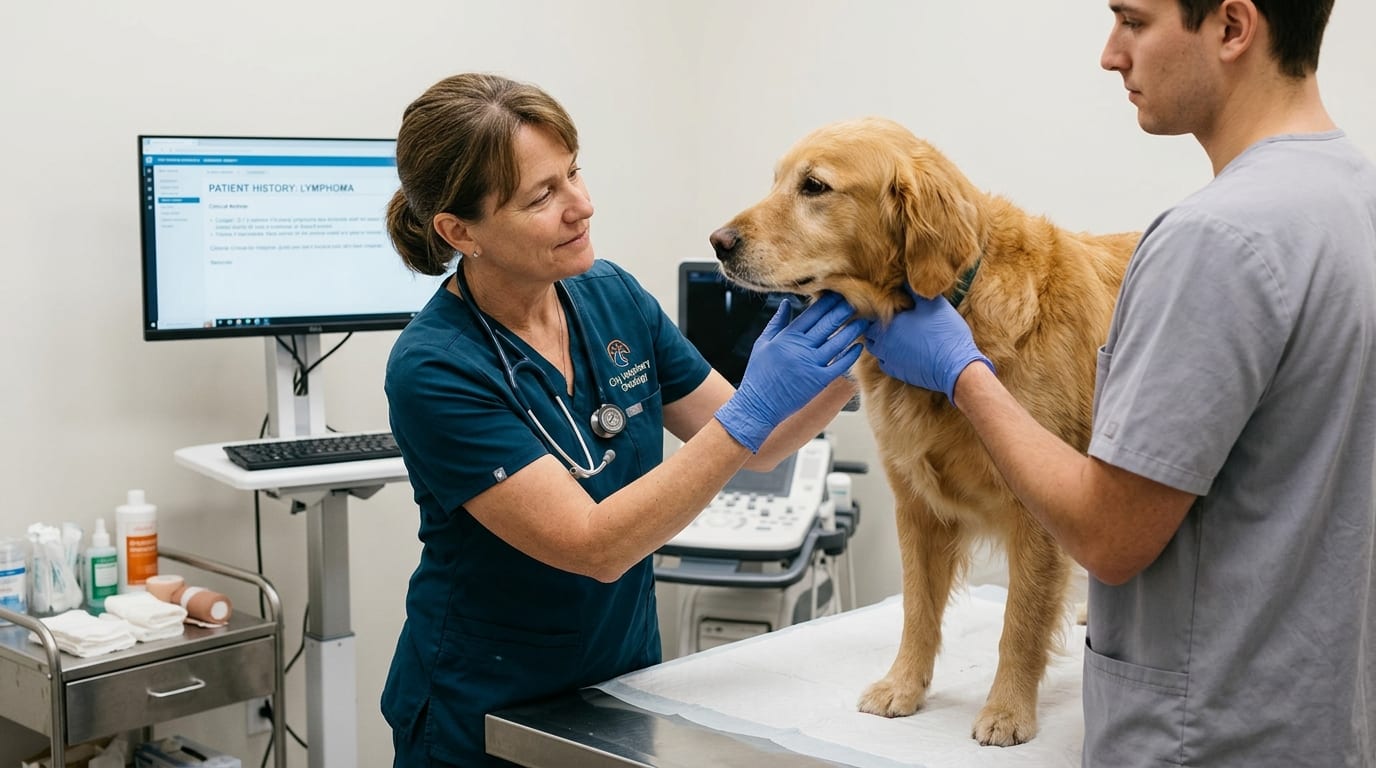
Forms of Canine Lymphoma
| Form | Frequency | Presentation |
|---|---|---|
| Multicentric | 80-85% | Generalized lymphadenopathy |
| Alimentary | 5-7% | Vomiting, diarrhea, weight loss |
| Mediastinal | 3-5% | Dyspnea, pleural effusion |
| Cutaneous | 3-5% | Erythematous/ulcerated skin |
Diagnosis and Immunophenotyping
- FNA: rapid diagnosis in most cases; send for cytology
- Biopsy: for alimentary and cutaneous types; architectural assessment
- Flow cytometry or PARR: immunophenotyping (B vs T cell) -- critical for prognosis
B-cell vs T-cell Prognosis
| Feature | B-cell | T-cell |
|---|---|---|
| Frequency | 60-70% | 30-40% |
| CR rate (CHOP) | 85-90% | 55-70% |
| Median first remission | 9-12 months | 3-6 months |
| Median survival | 12-14 months | 4-8 months |
- Hypercalcemia in lymphoma: suggests T-cell immunophenotype (PTHrP production); worse prognosis
WHO Staging
- Stage I-III: nodal disease only (better prognosis)
- Stage IV-V: liver/spleen/bone marrow involvement
- Substage a (no signs) vs substage b (clinical signs): substage b has shorter remission times
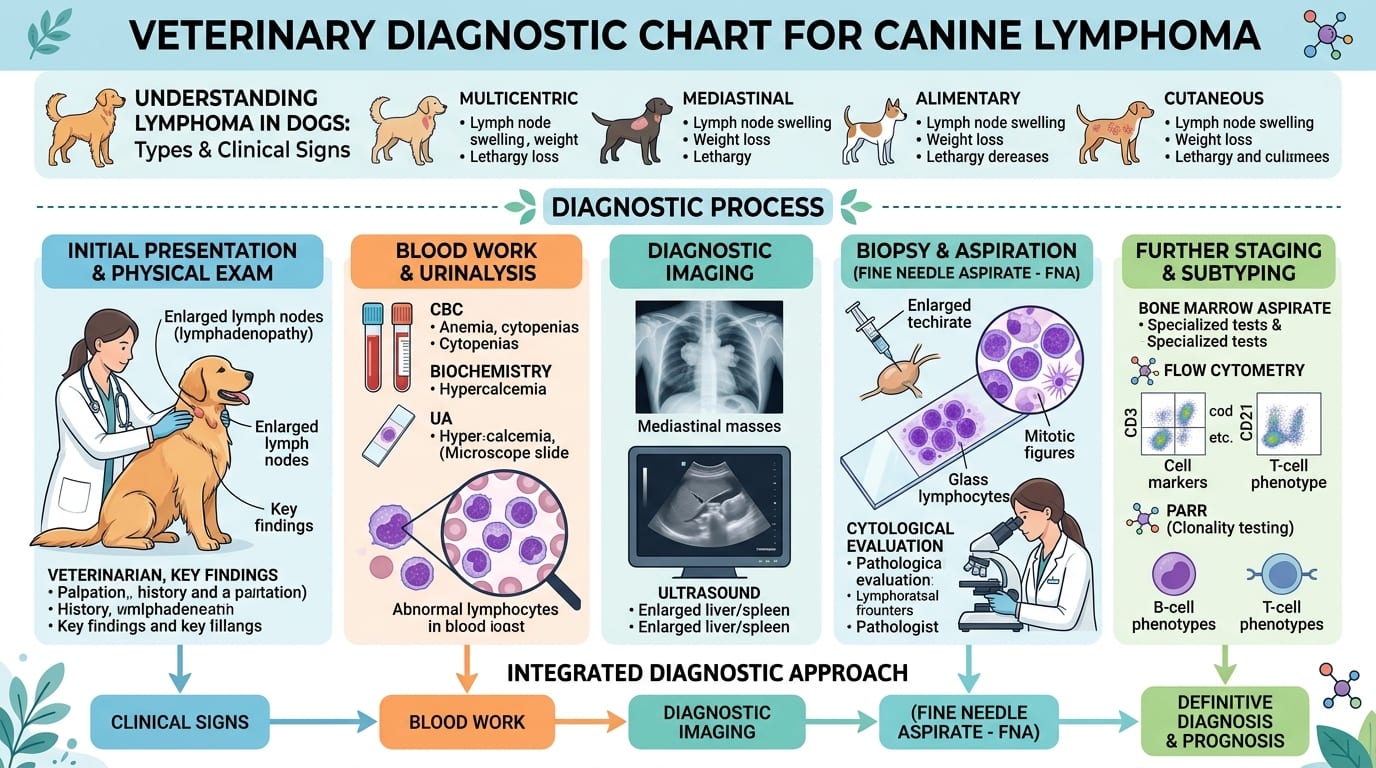
CHOP Protocol: Schedule, Drugs, and Side Effect Management
CHOP Protocol -- Standard of Care CHOP (Cyclophosphamide, Hydroxydoxorubicin/doxorubicin, Oncovin/vincristine, Prednisone) achieves highest remission rates.
UW-25 CHOP Protocol (Selected Weeks)
| Week | Drug(s) | Dose |
|---|---|---|
| 1 | Vincristine + Prednisone (2 mg/kg q24h) | 0.7 mg/m2 IV (max 1 mg) |
| 2 | Cyclophosphamide + Prednisone (1.5 mg/kg) | 250 mg/m2 IV or PO |
| 3 | Vincristine + Prednisone (1 mg/kg) | 0.7 mg/m2 IV |
| 4 | Doxorubicin + Prednisone (0.5 mg/kg q48h) | 30 mg/m2 IV over 20-30 min |
| 6+ | Cycles repeat... |
- Full protocol: 25 weeks
- Doxorubicin cumulative max: dogs 180-200 mg/m2; cats 170 mg/m2
- Require CBC before each appointment; hold if ANC <3000/uL
L-Asparaginase (Elspar)
- 400-600 IU/kg IM or SQ -- NEVER IV (anaphylaxis risk)
- Added at week 1 for aggressive disease
- Rapidly cytoreductive within 48-72h
- Keep epinephrine on hand; not repeated due to antibody formation
Cyclophosphamide -- Hemorrhagic Cystitis Prevention
- IV: furosemide 1 mg/kg IV concurrently
- Oral: adequate hydration; empty stomach
Side Effect Management
| Side Effect | Management |
|---|---|
| Febrile neutropenia | Hospitalize; IV enrofloxacin + ampicillin |
| Neutropenia (ANC <1500, no fever) | Delay 1 week; prophylactic amoxicillin-clavulanate |
| Vomiting | Maropitant 1 mg/kg SQ; ondansetron 0.1-0.2 mg/kg IV |
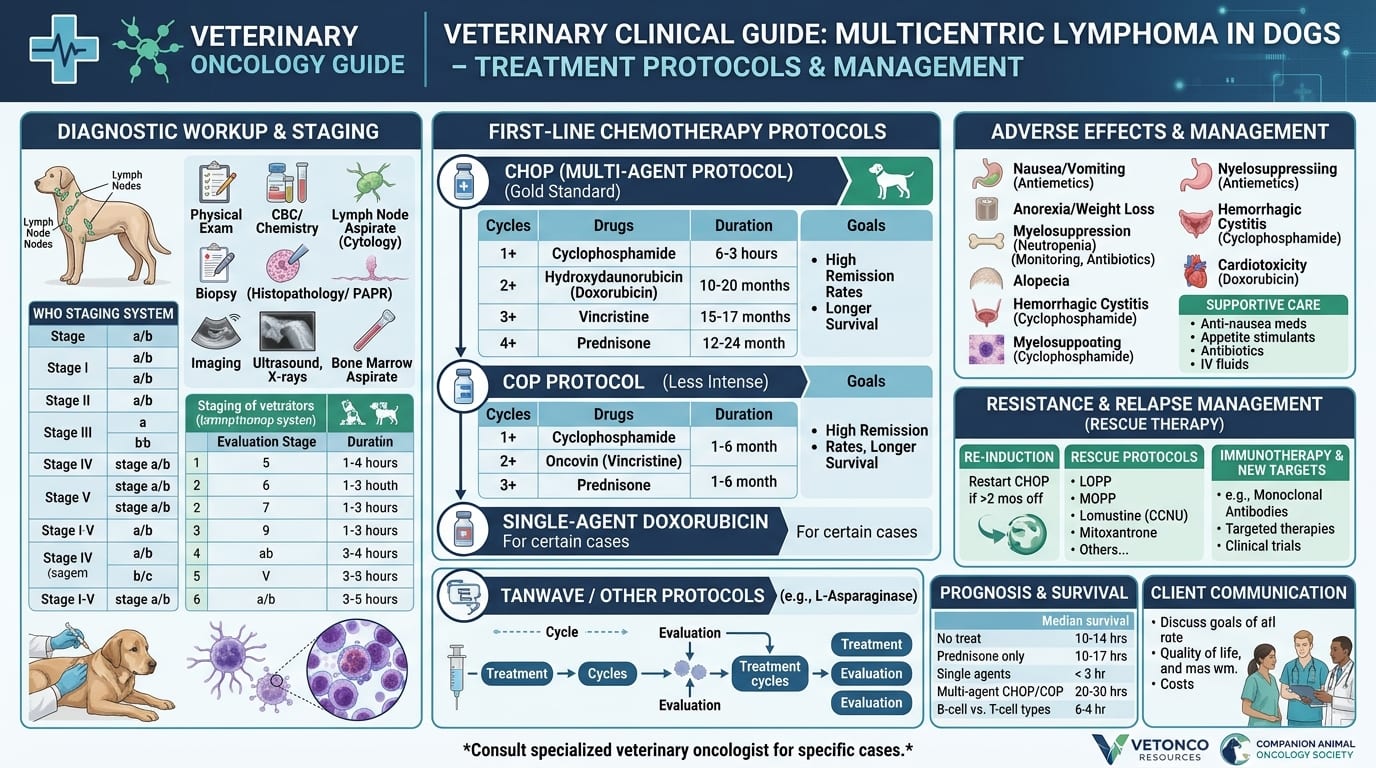
Rescue Protocols and Prognosis
Rescue Therapy for Relapsed Disease
| Protocol | Drugs | Remission Rate |
|---|---|---|
| LOPP | Lomustine + Vincristine + Prednisone + Procarbazine | 40-60% |
| L-asparaginase | 400-600 IU/kg IM | 40-60% B-cell |
| Rabacfosadine (Tanovea) | 1 mg/kg IV q21 days x5 | 70-80% B-cell |
| Actinomycin-D | 0.5 mg/m2 IV q3 weeks | 30-50% |
| Mitoxantrone | 5-6 mg/m2 IV q3 weeks | 25-40% |
Rabacfosadine (Tanovea, VetDC)
- FDA-approved for multicentric canine lymphoma; excellent B-cell activity
- Monitor for pulmonary fibrosis (chest radiographs q treatment)
B-cell Prognosis
- Median survival: 12-14 months; 2-year survival ~20-25%
T-cell Prognosis
- Median survival: 4-8 months; poor rescue response
Feline Lymphoma
- GI small cell lymphoma (most common): chlorambucil 2 mg PO q48-72h + prednisolone 1-2 mg/kg q24h; 2-3 years median survival
- Mediastinal large cell T-cell: aggressive; 3-6 months median with CHOP/COP
Related Articles:
- [Mast Cell Tumor Treatment in Dogs](/articles/mast-cell-tumor-dogs-treatment)
- [Spironolactone in Dogs and Cats](/articles/spironolactone-dogs-cats)
Frequently Asked Questions
What is the CHOP protocol and how long does it last?
CHOP (Cyclophosphamide, Hydroxydoxorubicin, Oncovin, Prednisone) takes 25 weeks with weekly or biweekly appointments. It achieves 85-90% complete remission in B-cell lymphoma.
Is B-cell or T-cell lymphoma better in dogs?
B-cell: 85-90% remission rate, median survival 12-14 months. T-cell: 55-70% remission, median survival 4-8 months. Immunophenotyping is essential for accurate prognosis.
What happens when lymphoma relapses?
Rescue protocols re-induce remission in 40-70%. Best options: L-asparaginase IM for B-cell relapse, LOPP protocol, or rabacfosadine (Tanovea) with ~70-80% B-cell response rate.
Can I use prednisone alone for lymphoma?
Prednisone alone extends survival 1-3 months -- appropriate for palliative care. However, it can reduce chemotherapy effectiveness later. If CHOP is being considered, minimize prednisone beforehand.
How do I monitor during CHOP?
A CBC is required before each appointment. ANC must be >3000/uL to proceed. Febrile neutropenia (fever + ANC <1000) requires immediate hospitalization and IV antibiotics.
References
- Garrett LD, et al. Evaluation of 6-month CHOP protocol for dogs with lymphoma. J Vet Intern Med. 2002;16(6):704-709.
- Rebhun RB, et al. Rabacfosadine for relapsed canine B cell lymphoma. Vet Comp Oncol. 2018;16(3):E116-E122.
- Vail DM, Thamm DH, Liptak JM, eds. Small Animal Clinical Oncology. 6th ed. Elsevier; 2020.