Quick Answer
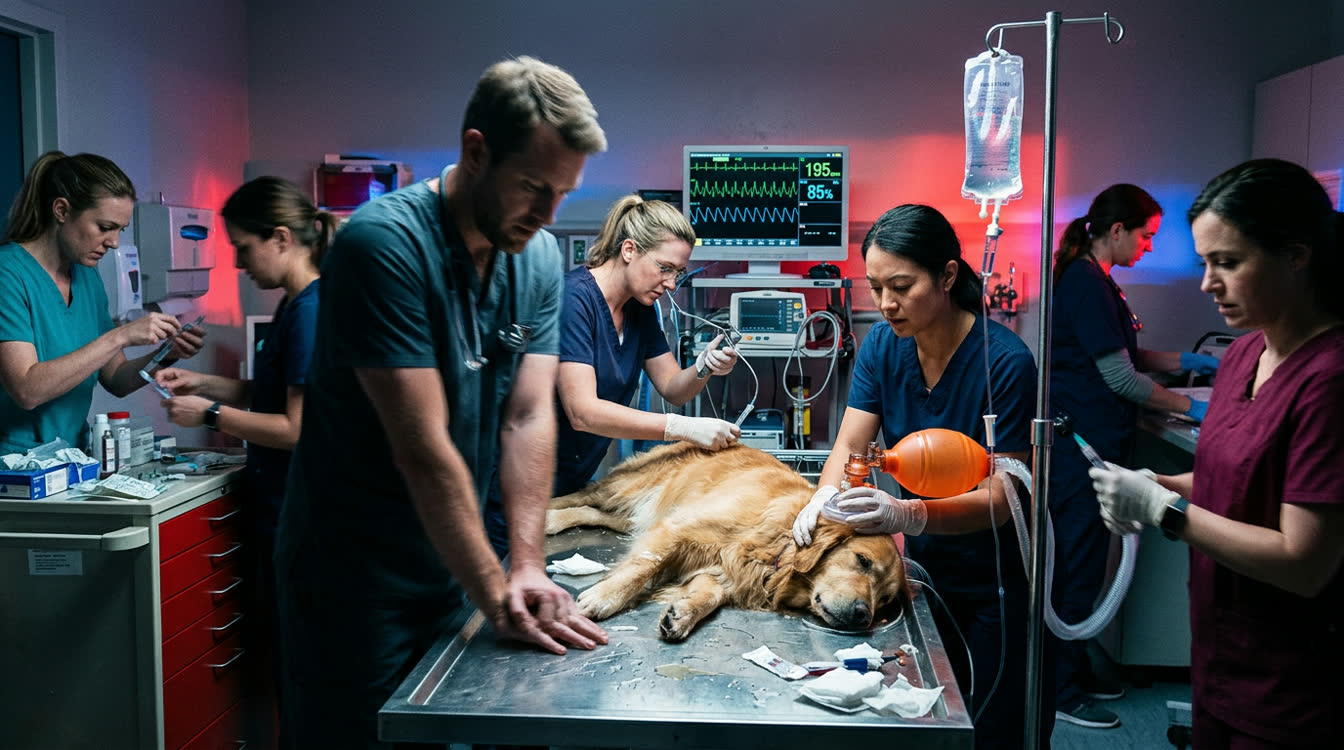
Shock is a life-threatening emergency requiring rapid recognition and targeted fluid resuscitation. This guide covers classification of shock (hypovolemic, distributive, obstructive, cardiogenic), isotonic crystalloid dosing, colloid considerations, vasopressor selection, and resuscitation end-points for dogs and cats in emergency practice.
Key Takeaways
- ✓Shock is classified as hypovolemic, distributive, cardiogenic, or obstructive — identification of type guides therapy; cardiogenic shock requires fluid restriction, not boluses.
- ✓Dogs receive initial crystalloid boluses of 20–30 mL/kg IV over 15–20 minutes; cats receive 10–15 mL/kg due to higher volume overload sensitivity.
- ✓Cats paradoxically develop bradycardia (not tachycardia) in shock; a heart rate below 140 bpm in a distressed cat is a shock warning sign.
- ✓Norepinephrine 0.1–2 mcg/kg/min IV CRI is first-line vasopressor for distributive shock when MAP remains below 65 mmHg post-fluid resuscitation.
- ✓Dobutamine 2–15 mcg/kg/min is the preferred inotrope for cardiogenic shock (DCM, post-arrest); it lowers SVR and must not be used as a pure vasopressor.
- ✓Serial lactate measurement (target <2.5 mmol/L, declining >10%/hour) and urine output (>1 mL/kg/hr) are the most reliable resuscitation endpoints.
Shock Classification, Recognition and Initial Physical Examination
Shock is defined as inadequate oxygen delivery to tissues relative to metabolic demand, resulting in cellular hypoxia, anaerobic metabolism, and — if untreated — multi-organ failure and death.
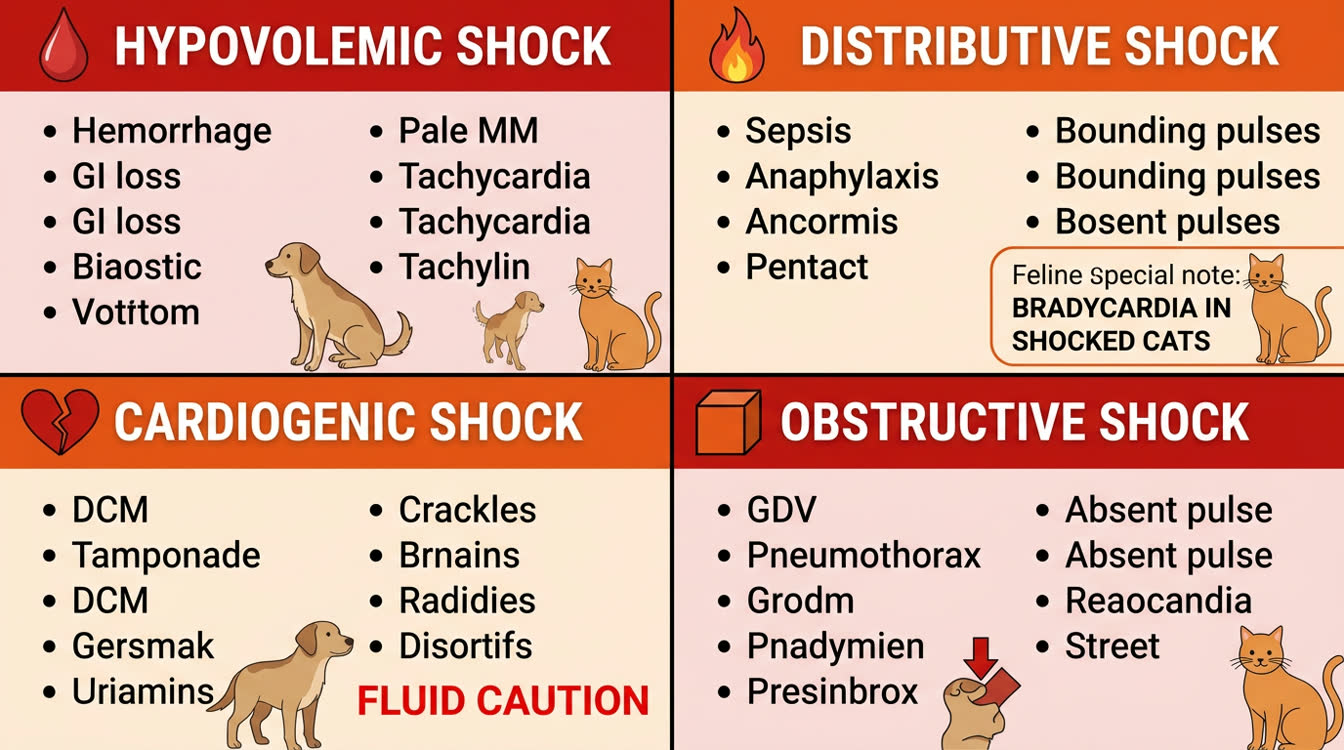
Four Categories of Shock:
1. Hypovolemic Shock (most common in veterinary emergency practice)
- Cause: Hemorrhage, dehydration, GI fluid loss (vomiting/diarrhea), third-spacing (peritonitis, pancreatitis)
- Pathophysiology: Reduced preload → decreased stroke volume → compensatory tachycardia and vasoconstriction
- Clinical signs: Tachycardia, weak/thready pulses, pale/grey mucous membranes, prolonged CRT (>2 sec), cold extremities, collapsed veins
2. Distributive Shock (second most common; septic and anaphylactic)
- Cause: SIRS/sepsis, anaphylaxis, SIRS from pancreatitis or heat stroke
- Pathophysiology: Massive vasodilation → profound hypotension despite normal or elevated cardiac output; maldistribution of blood flow
- Clinical signs (septic): Fever or hypothermia, tachycardia, bounding pulses (early hyperdynamic) or weak pulses (late), prolonged CRT or bounding CRT, mentation depression
3. Cardiogenic Shock
- Cause: Severe myocardial failure (DCM, acute myocarditis), massive pericardial effusion (cardiac tamponade), severe arrhythmias
- Pathophysiology: Reduced pump function → reduced forward flow; fluid therapy CONTRAINDICATED or severely limited
- Clinical signs: Tachycardia or arrhythmia, bilateral crackles (pulmonary edema), jugular distension, muffled heart sounds (tamponade)
4. Obstructive Shock
- Cause: Gastric dilatation-volvulus (GDV), tension pneumothorax, pulmonary thromboembolism, urethral obstruction
- Pathophysiology: Mechanical obstruction to cardiac output
- Clinical signs: Abdominal distension (GDV), increased respiratory effort (pneumothorax), absent femoral pulses
Physical Examination Shock Scoring (DECAF protocol):
- Depression: mentation (alert → obtunded → stuporous → comatose)
- Extremities: temperature of distal limbs
- Capillary Refill Time: normal 1–2 sec; >2 sec = peripheral hypoperfusion
- Abdominal palpation: pain, distension, fluid wave
- Femoral pulse quality: strong, weak, bounding, absent
Shock in Cats — Special Considerations:
- Cats mount bradycardia in shock (vagal dominance), NOT tachycardia
- Heart rate <140 bpm in a distressed cat = severe sympathetic override → shock
- Hypothermia is pronounced; rectal temperature <37°C in a shocked cat
- Mucous membrane pallor (grey) is the most consistent finding
Isotonic Crystalloid Bolus Dosing, Colloid Therapy and Resuscitation Endpoints
Fluid resuscitation in hypovolemic and distributive shock is the cornerstone of emergency stabilization. Modern resuscitation favors titrated goal-directed therapy over historical large-volume bolus protocols.
Isotonic Crystalloid First-Line Therapy:
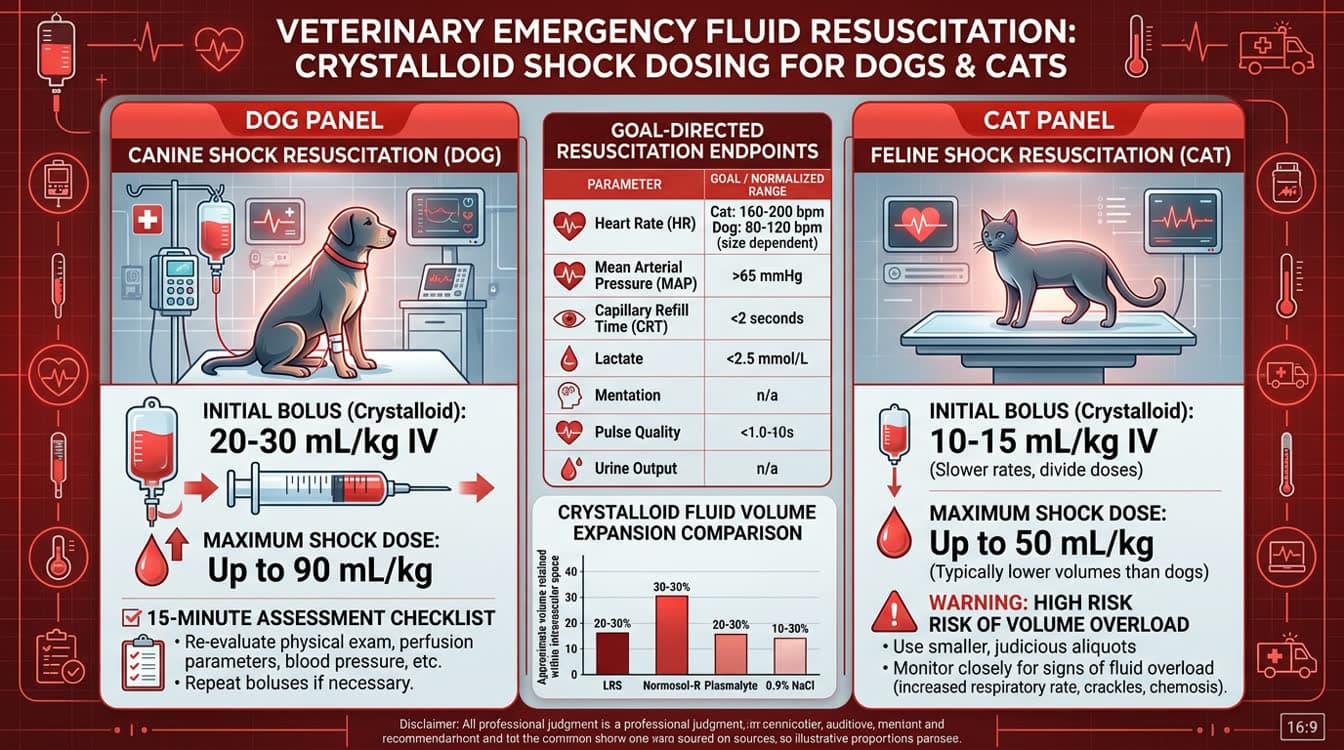
Dogs — Isotonic Crystalloid Bolus:
- Shock dose (dogs): 90 mL/kg = 1 blood volume; this is the maximum total
- Titrated approach (preferred): Give 20–30 mL/kg IV bolus over 15–20 minutes; reassess
- Assess: CRT, MM color, pulse quality, HR, mentation, blood pressure
- Repeat boluses: Additional 10–20 mL/kg increments q15 min until target endpoints achieved or total 80–90 mL/kg reached
Cats — Isotonic Crystalloid Bolus:
- Shock dose (cats): 50–60 mL/kg = 1 blood volume
- Titrated approach: Give 10–15 mL/kg IV bolus over 15–20 minutes; reassess
- Cats are MUCH more sensitive to volume overload; avoid large rapid boluses; monitor for respiratory signs
Fluid Selection:
| Fluid | Use | Notes |
|---|---|---|
| Lactated Ringer's (LRS) | First-line crystalloid | Buffered; balanced; preferred in most shock presentations |
| 0.9% NaCl | Dilutional acidosis correction; hyperkalemia | Risk of hyperchloremic acidosis with large volumes |
| Plasmalyte-A | Balanced; minimal acidosis risk | Ideal for large-volume resuscitation |
| 7% NaCl (hypertonic saline) | Hemorrhagic shock/head trauma | Single bolus 4–7 mL/kg; pull fluid from intracellular space |
Colloid Therapy:
- Hetastarch (6% HES 130/0.4): 5–10 mL/kg IV bolus over 15–20 minutes (dogs); 5 mL/kg (cats)
- Maximum daily dose: 20 mL/kg/day (dogs); 10 mL/kg/day (cats)
- Indications: Hypoalbuminemia (<1.5 g/dL), protein-losing states, sustained oncotic pressure support
- Avoid in: Oliguric renal failure, coagulopathy, thrombocytopenia
Resuscitation Endpoints (Goal-Directed Therapy):
| Parameter | Target (Dogs) | Target (Cats) |
|---|---|---|
| Heart rate | 80–140 bpm | 140–200 bpm |
| MAP | >65 mmHg | >65 mmHg |
| Systolic BP | >90 mmHg | >100 mmHg |
| CRT | <2 sec | <2 sec |
| Mentation | Alert, responsive | Alert, responsive |
| Urine output | >1 mL/kg/hr | >1 mL/kg/hr |
| Lactate | <2.5 mmol/L | <2.5 mmol/L |
Hemorrhagic Shock — Special Protocol:
- Blood transfusion (pRBC) target: PCV <20% (dogs), <15% (cats) in decompensated hemorrhagic shock
- Fresh frozen plasma: coagulopathy (PT/aPTT >1.5x normal); 6–10 mL/kg IV
- Whole blood: if pRBC and FFP unavailable; 10–20 mL/kg IV over 1–4 hours
- Tranexamic acid: 15–30 mg/kg IV slowly for acute hemorrhage coagulopathy
Vasopressor Selection, Monitoring Protocols and ICU Management
When fluid resuscitation fails to achieve target blood pressure and tissue perfusion endpoints, vasopressor therapy is indicated. Vasopressors act on adrenergic and vasopressin receptors to restore vascular tone and cardiac output.
Indications for Vasopressor Initiation:
- MAP <65 mmHg after appropriate fluid resuscitation (20–30 mL/kg crystalloid in dogs; 10–15 mL/kg in cats)
- Distributive/septic shock with persistent hypotension
- Cardiogenic shock (inotrope use; not pure vasopressors)
Vasopressor Options:
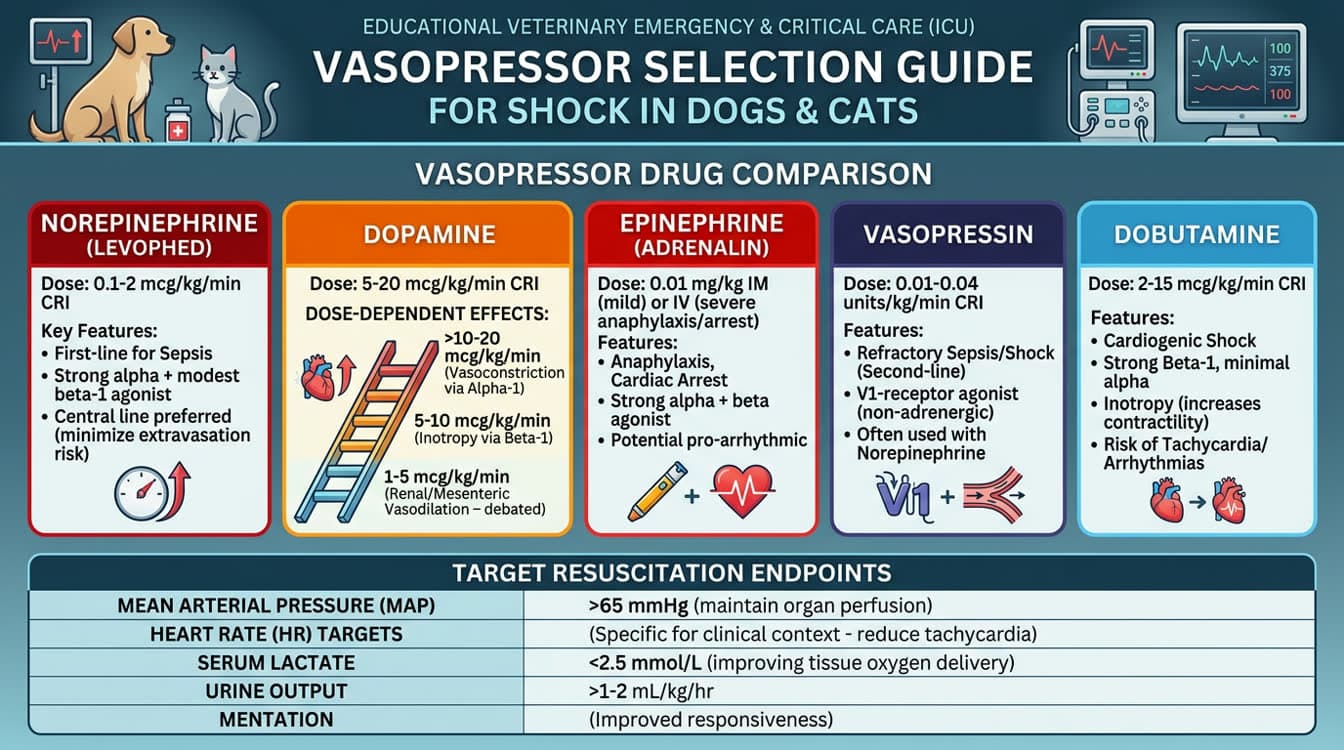
1. Norepinephrine (Noradrenaline) — First-Line Vasopressor:
- Mechanism: Alpha-1 >> beta-1 agonist; potent vasoconstriction with moderate positive inotropy
- Dose: 0.1–2 mcg/kg/min IV CRI (titrate to MAP target ≥65 mmHg)
- Requires: Central venous access preferred; peripheral IV is used in emergencies
- Indicated: Distributive (septic) shock; anaphylactic shock unresponsive to epinephrine
2. Dopamine — Second-Line:
- Dose: 5–20 mcg/kg/min IV CRI
- Caution: Arrhythmogenic at higher doses; avoid if existing tachyarrhythmias
3. Epinephrine (Adrenaline) — Cardiac Arrest and Anaphylaxis:
- Anaphylaxis: 0.01–0.02 mg/kg IM or IV; can repeat q5–15 min
- CPR (cardiac arrest): 0.01 mg/kg IV q3–5 min per RECOVER guidelines
- Vasopressor CRI: 0.01–0.5 mcg/kg/min
4. Vasopressin — Refractory Septic Shock:
- Dose: 0.01–0.04 units/kg/min IV CRI
- Mechanism: V1 receptor-mediated vasoconstriction; spares catecholamine receptors that down-regulate in prolonged shock
- Use: Adjunct to norepinephrine in refractory distributive shock; reduces norepinephrine requirements
5. Dobutamine — Cardiogenic Shock and Low Output States:
- Mechanism: Beta-1 >> beta-2; positive inotropy and mild vasodilation
- Dose: 2–15 mcg/kg/min IV CRI; titrate to improved cardiac output and MAP
- Indicated: Myocardial failure (DCM, post-arrest); NOT pure vasopressor — lowers SVR
- Caution: Tachyarrhythmias
Monitoring During Resuscitation:
- Blood pressure: Doppler or oscillometric every 5–15 min; arterial catheter for continuous monitoring in critical patients
- Lactate clearance: Serial measurements every 1–2 hours; lactate should decrease by >10% per hour with adequate resuscitation
- Urinary output: Urinary catheter in all critical shock patients; target >1 mL/kg/hr
- Central venous pressure (CVP): Assess volume status; target 5–10 cmH2O
- Echocardiography (FAST/point-of-care): Assess cardiac function and volume status at bedside
When to Reassess and Escalate:
- No improvement after 3 fluid boluses and vasopressor initiation → advanced diagnostics (echo, abdominal FAST, CT)
- Cardiogenic shock identified: switch to dobutamine; strict fluid restriction; consider emergency pericardiocentesis if tamponade
- Suspected GDV: immediate surgical consultation; do not delay with prolonged resuscitation
Frequently Asked Questions
What is the initial fluid bolus dose for a dog in hypovolemic shock?
The initial isotonic crystalloid bolus for a dog in hypovolemic shock is 20–30 mL/kg IV over 15–20 minutes, using Lactated Ringer's solution or Plasmalyte-A. Reassess heart rate, CRT, mucous membrane color, and blood pressure after each bolus. Repeat boluses of 10–20 mL/kg may be given up to a maximum of 80–90 mL/kg total (one blood volume).
Why do cats develop bradycardia rather than tachycardia in shock?
Cats have strong vagal (parasympathetic) tone that predominates during severe stress or pain responses. In shock, cats often develop bradycardia (heart rate below 140 bpm) rather than the compensatory tachycardia seen in dogs. A heart rate below 140 bpm in a visibly distressed or painful cat should be treated as a potential shock state rather than a normal finding.
What is the first-line vasopressor for septic shock in dogs and cats?
Norepinephrine (noradrenaline) at 0.1–2 mcg/kg/min IV CRI is the first-line vasopressor for distributive (septic) shock in dogs and cats. It provides potent alpha-1 mediated vasoconstriction with moderate beta-1 inotropy. It is initiated when MAP remains below 65 mmHg after appropriate fluid resuscitation (20–30 mL/kg crystalloids in dogs).
When should colloid therapy (hetastarch) be used in shock resuscitation?
Hetastarch (6% HES) at 5–10 mL/kg IV in dogs and 5 mL/kg in cats is indicated when plasma albumin is below 1.5 g/dL, as isotonic crystalloids alone cannot restore oncotic pressure. It is also used as a volume-sparing strategy when large crystalloid volumes would be detrimental (cardiac or pulmonary compromise). Avoid in oliguric renal failure or severe coagulopathy.
What are the resuscitation endpoints to confirm adequate shock treatment?
Target resuscitation endpoints include: heart rate 80–140 bpm (dogs) or 140–200 bpm (cats), MAP above 65 mmHg, CRT under 2 seconds, pink moist mucous membranes, alert mentation, urine output above 1 mL/kg/hour, and serial lactate below 2.5 mmol/L or declining by more than 10% per hour with continued resuscitation.
References
- Boag AK, Hughes D. "Assessment and treatment of perfusion abnormalities in the emergency patient." Vet Clin North Am Small Anim Pract. 2005;35(2):319-342.
- Silverstein DC, Santoro Beer KA. "Controversies regarding choice of vasopressor therapy for management of septic shock in animals." J Vet Emerg Crit Care. 2015;25(1):48-54.
- Fletcher DJ, et al. "RECOVER evidence and knowledge gap analysis on veterinary CPR. Part 7: Clinical guidelines." J Vet Emerg Crit Care. 2012;22(S1):S102-S131.