Quick Answer
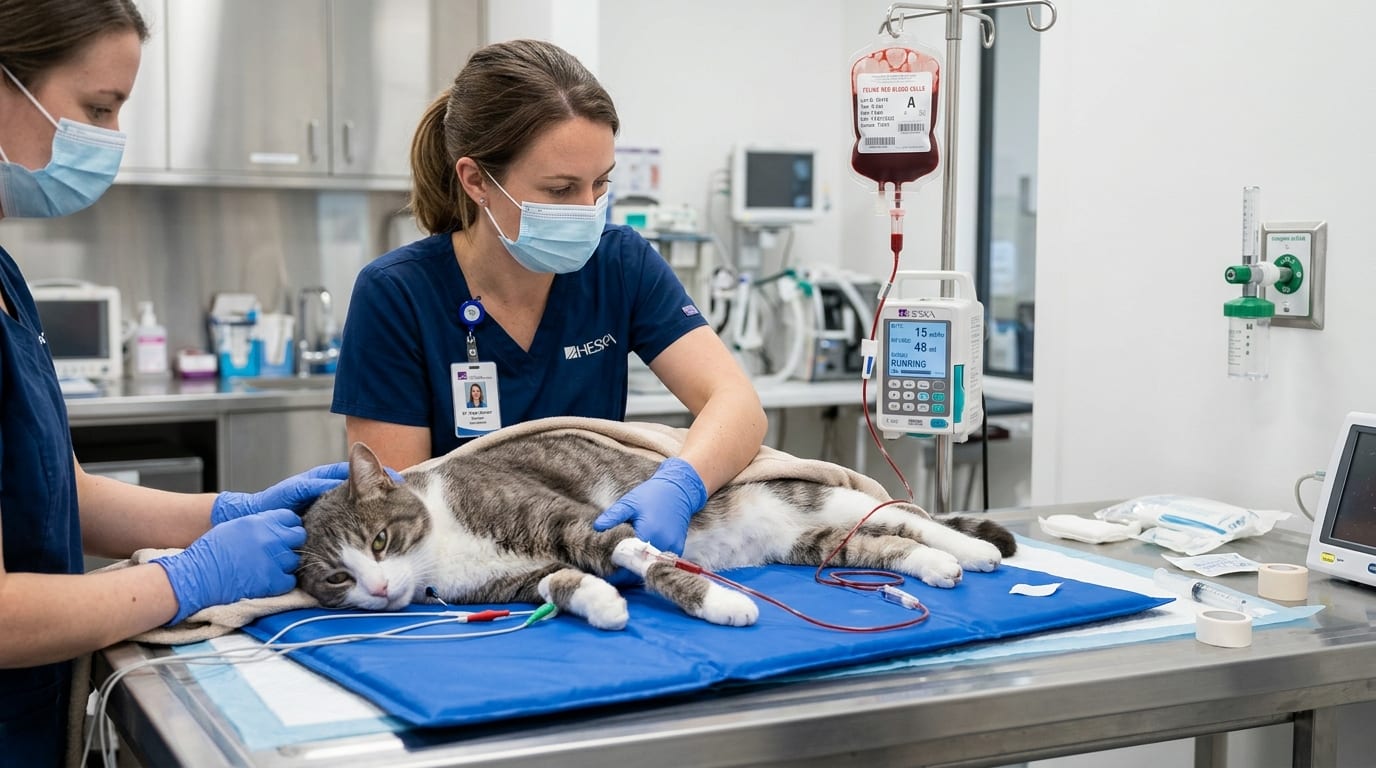
A clinical guide to blood transfusion in dogs and cats covering blood type systems (DEA 1, AB system in cats), transfusion triggers, pre-transfusion compatibility testing, blood component selection, administration rates, and recognition and management of acute and delayed transfusion reactions.
Key Takeaways
- ✓Always blood type dogs (DEA 1) and cats (AB system) before transfusion; DEA 1-negative dogs and Type AB cats are universal recipients within their respective systems.
- ✓Crossmatch is mandatory for all previously transfused dogs and all cats; naturally occurring anti-A antibodies in Type B cats cause fatal haemolysis if given Type A blood.
- ✓Transfusion trigger in dogs is PCV <20% with clinical signs; in cats PCV <12-15% with signs. Acute haemorrhage may require transfusion at higher PCV values based on blood loss volume.
- ✓Begin transfusion at 1-2 mL/kg/h for the first 15-30 minutes; increase to 5-10 mL/kg/h if no reaction occurs; complete within 4 hours.
- ✓Stop transfusion immediately if any reaction is suspected; the first step in managing any transfusion reaction is to discontinue the infusion while maintaining IV access.
- ✓Routine pre-medication with antihistamines before transfusion is not evidence-based and may mask early reaction signs.
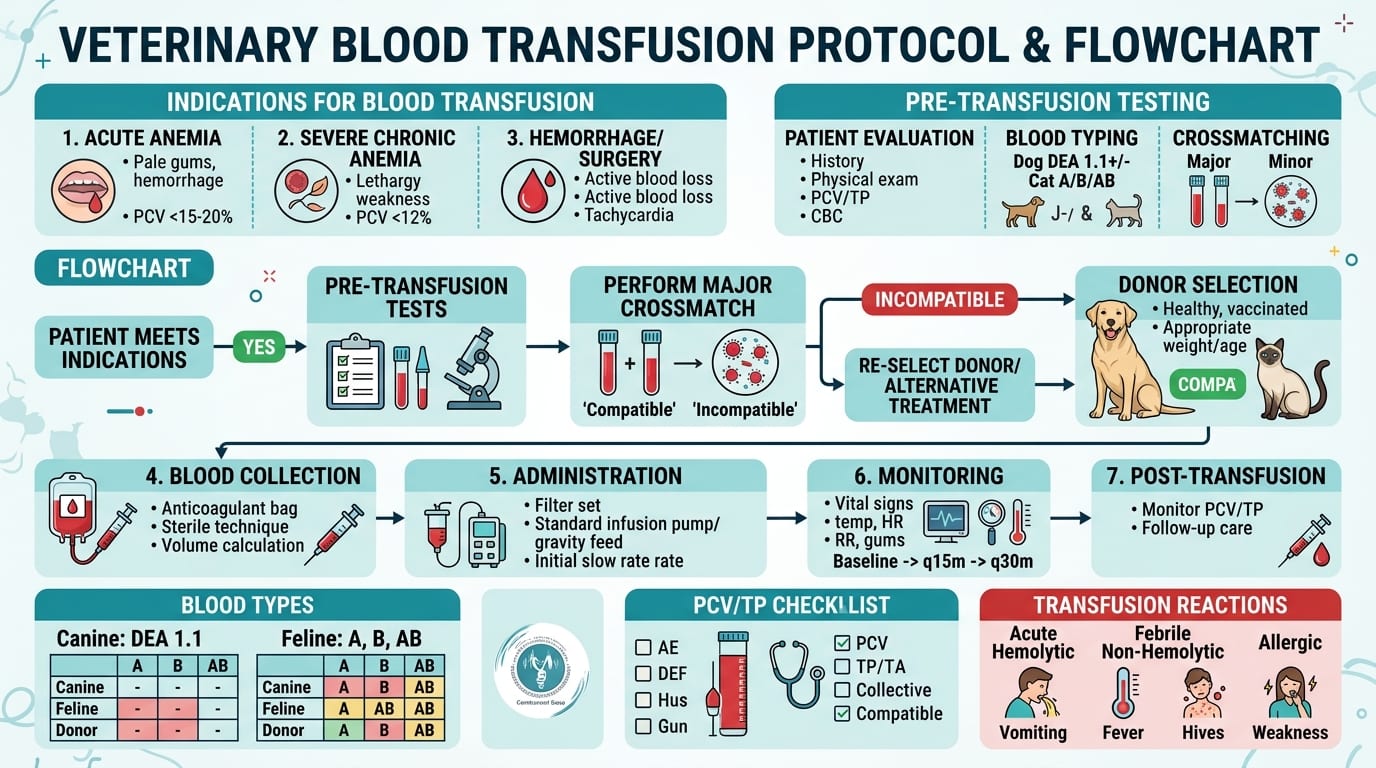
Blood Type Systems and Pre-Transfusion Testing
Understanding canine and feline blood group systems is essential before administering any blood product.
Canine blood types — Dog Erythrocyte Antigen (DEA) system:
- DEA 1 (formerly DEA 1.1 and 1.2) is the most clinically significant antigen: DEA 1-positive dogs carry the antigen; DEA 1-negative dogs lack it.
- DEA 1-negative dogs do NOT have naturally occurring antibodies against DEA 1 (unlike cats). First transfusion of DEA 1-positive blood into a DEA 1-negative recipient is typically tolerated (though sensitisation occurs).
- Sensitisation: After a first incompatible transfusion, the DEA 1-negative dog develops anti-DEA 1 antibodies. Subsequent transfusions with DEA 1-positive blood cause acute haemolytic transfusion reactions (AHTR).
- Clinical implication: Always blood type before transfusion. DEA 1-negative donors are preferred for all first-time transfusion recipients (universal donor status).
- Other DEA antigens (DEA 3, 4, 5, 7) have variable clinical significance; DEA 4 is common but rarely clinically significant.
Dal antigen in Dalmatians: Dalmatians can lack the Dal antigen; Dal-negative Dalmatians that receive Dal-positive blood develop life-threatening reactions. Always crossmatch Dalmatians.
Feline blood types — AB blood group system:
- Type A: Most common (95-99% of domestic cats in UK/US); have naturally occurring anti-B antibodies (titre is low to moderate).
- Type B: Less common (1-5% in most domestic breeds; higher in British Shorthair, Devon Rex, Cornish Rex, Ragdoll, Birman, Himalayan — up to 25-59%). Have strong naturally occurring anti-A antibodies.
- Type AB: Rare (<1%). Universal recipient within the feline AB system; no naturally occurring antibodies.
Neonatal isoerythrolysis (NI) in kittens: Type A kittens born to Type B queens absorb anti-A antibodies through colostrum. This causes life-threatening haemolysis in the first 24-72 hours of life (fading kitten syndrome, haemolytic anaemia, tail tip necrosis). Remove kittens from nursing for 48 hours if type mismatch is confirmed.
Pre-transfusion testing:
- Blood typing: In-clinic card agglutination tests available for rapid DEA 1 typing (dogs) and AB typing (cats). Send to external lab for rare antigen typing.
- Crossmatch: Major crossmatch (donor RBC + recipient serum) and minor crossmatch (donor serum + recipient RBC). Detects pre-formed antibodies. Essential: (1) all cats (naturally occurring alloantibodies); (2) all previously transfused dogs; (3) dogs with unknown transfusion history; (4) Dalmatians; (5) any dog where reaction is clinically critical.
- A positive crossmatch (agglutination or haemolysis) indicates incompatibility — do not transfuse. Seek compatible donor.
Transfusion Triggers and Blood Component Selection
When to transfuse — transfusion triggers:
Transfusion decisions are clinical, not solely based on haematocrit values. Assess clinical signs of anaemia alongside PCV:
Dogs:
- Packed Red Blood Cells (pRBC) or whole blood: PCV <20% with clinical signs (tachycardia, weakness, pale mucous membranes, dyspnoea); or acute haemorrhage with estimated blood loss >25-30% of blood volume regardless of PCV (PCV lags behind acute blood loss).
- Consider transfusion at PCV 20-25% if: cardiac or respiratory compromise, ongoing uncontrolled haemorrhage, pre-operative for major surgery, haemolytic disease with rapidly falling PCV.
- Transfusion rarely indicated at PCV >30% unless acute severe haemorrhage.
Cats:
- Transfusion at PCV <12-15% with clinical signs; some clinically compensated cats tolerate PCV of 10-12%.
- Non-regenerative anaemia (CKD, neoplasia): transfusion threshold often lower — PCV <12% in cats.
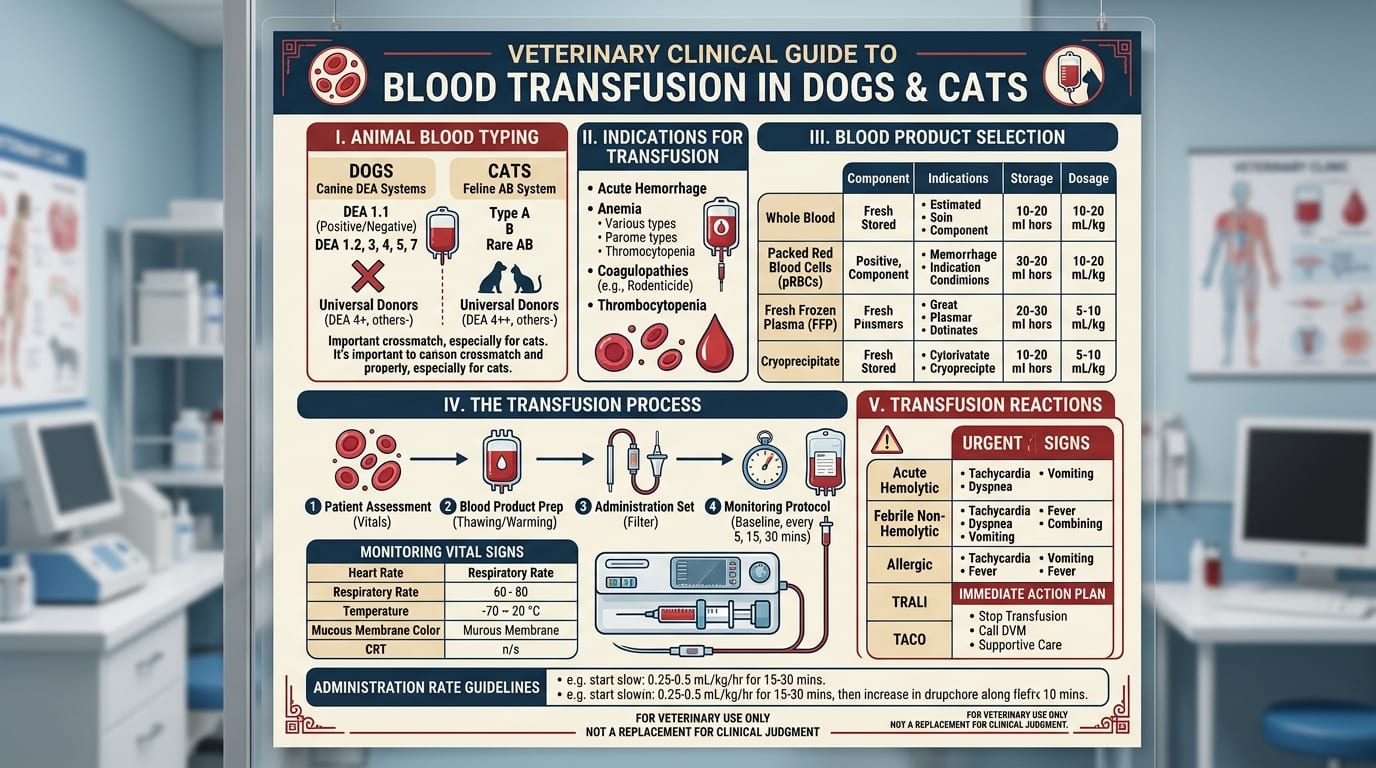
Blood components and their indications:
| Component | Indication | Approximate dose |
|---|---|---|
| Packed RBCs (pRBC) | Anaemia (normovolaemic or hypervolaemic) | 10-15 mL/kg dog; 5-10 mL/kg cat |
| Fresh whole blood | Acute haemorrhage, coagulopathy + anaemia | 10-20 mL/kg dog |
| Stored whole blood | Anaemia (functional coagulation factors limited) | 10-20 mL/kg dog |
| Fresh frozen plasma (FFP) | Coagulopathy (rodenticide, DIC, haemophilia), low albumin | 10-20 mL/kg |
| Cryoprecipitate | Factor VIII, vWF, fibrinogen deficiency (vWD, haemophilia A) | 1 unit/10 kg |
| Platelet-rich plasma | Thrombocytopenia with active haemorrhage | 1 unit/10 kg |
Calculating pRBC dose:
- Dog: target PCV increase = (desired PCV - current PCV) x body weight (kg) x 90 / donor PCV
- Cat: (desired PCV - current PCV) x body weight (kg) x 70 / donor PCV
- A practical rule: 10 mL/kg pRBC raises PCV approximately 10% in dogs.
Administration:
- Use blood administration set with 170-260 micron in-line filter.
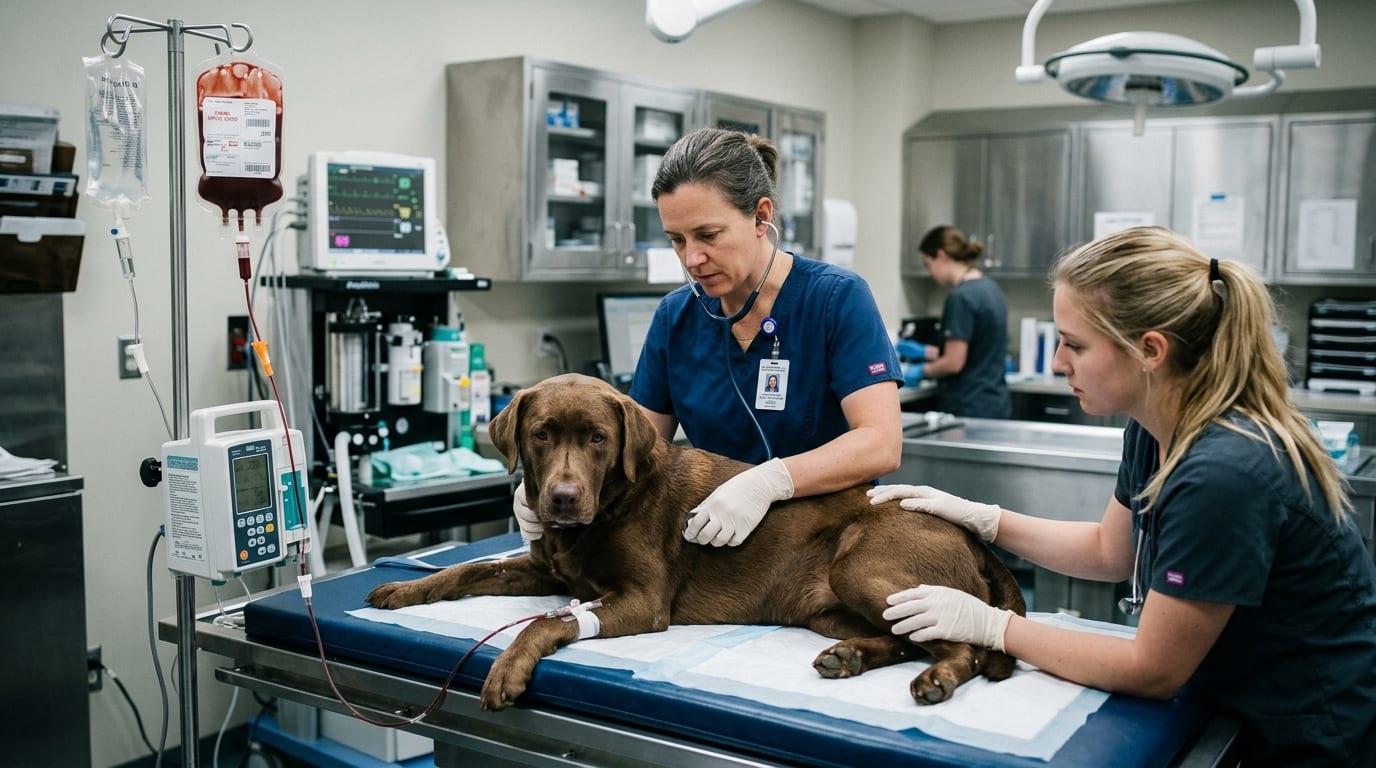
- Initial rate: 1-2 mL/kg/h for first 15-30 minutes (observation period for acute reactions).
- If no reaction: increase to 5-10 mL/kg/h. Maximum: 20 mL/kg/h in acute haemorrhage.
- Complete transfusion within 4 hours (once opened/warmed).
- Warm blood to 37°C using warm water bath (NOT microwave). Cold blood can cause cardiac arrhythmias.
- Do NOT add medications to blood product bag.
Recognising and Managing Transfusion Reactions
Transfusion reactions range from mild febrile reactions to life-threatening haemolytic emergencies. All transfusions require close patient monitoring.
Monitoring protocol during transfusion:
- Record baseline vital signs (HR, RR, temperature, blood pressure, MM colour, CRT) before starting.
- Recheck every 15 minutes for first hour, then every 30-60 minutes.
- Perform observation period at low rate (1-2 mL/kg/h) for first 15-30 minutes.
Types of transfusion reactions:
1. Acute haemolytic transfusion reaction (AHTR) — most dangerous:
- Mechanism: recipient antibodies destroy donor RBCs (complement-mediated intravascular haemolysis).
- Clinical signs: occur within minutes to 1 hour; fever, tachycardia, hypotension, haemoglobinaemia, haemoglobinuria (red-brown urine), facial swelling, vomiting, muscle tremors, collapse, DIC.
- Feline AHTR: Type B cat receiving Type A blood develops severe, often fatal reaction within minutes — haemoglobin drops precipitously, cardiac arrhythmias, death.
- Management: STOP transfusion immediately. Maintain IV access. Saline bolus for hypotension. Diphenhydramine 2 mg/kg IM. Dexamethasone SP 0.1-0.25 mg/kg IV for anaphylaxis component. Furosemide 1-2 mg/kg IV to promote diuresis and prevent renal tubular haemoglobin deposition. Treat DIC if present (FFP). Monitor renal function (BUN, creatinine, urinalysis).
2. Febrile non-haemolytic transfusion reaction (FNHTR):
- Temperature increase >/= 1°C during transfusion. Most common transfusion reaction.
- Mechanism: recipient antibodies against donor WBC antigens, or cytokines accumulated during blood storage.
- Management: slow or pause transfusion. Diphenhydramine 2 mg/kg IM. If fever resolves and haemolysis excluded: restart at slower rate.
3. Allergic/urticarial reaction:
- Pruritus, urticaria, erythema, facial oedema — especially in dogs.
- Management: pause transfusion. Diphenhydramine 2 mg/kg IM. Restart at slower rate after 15-20 minutes if reaction resolves.
4. Anaphylaxis:
- Severe systemic allergic reaction: hypotension, bronchospasm, cardiovascular collapse.
- Management: STOP transfusion. Epinephrine 0.01 mg/kg IV or IM. IV fluids for shock. Diphenhydramine + dexamethasone.
5. Transfusion-associated circulatory overload (TACO):
- Pulmonary oedema from volume overload — risk in cats, hypertensive patients, cardiac disease.
- Management: pause transfusion. Furosemide 1-2 mg/kg IV. Oxygen supplementation. Resume at lower rate when stable.
6. Delayed haemolytic transfusion reaction:
- Occurs 1-14 days post-transfusion due to anamnestic antibody response.
- Signs: PCV fails to increase as expected or unexpectedly declines; mild haemoglobinaemia.
- Management: supportive; typically less severe than AHTR.
Pre-medication: Routine pre-medication with diphenhydramine or corticosteroids before transfusion is NOT recommended in evidence-based practice — does not prevent AHTR and may mask early reaction signs. Reserve for patients with prior documented reactions.
Frequently Asked Questions
What happens if a Type B cat receives Type A blood?
This is immediately life-threatening. Type B cats have strong naturally occurring anti-A antibodies that cause rapid intravascular haemolysis of transfused Type A red blood cells. Clinical signs develop within minutes: acute haemoglobinaemia, haemoglobinuria, bradycardia, cardiac arrhythmias, hypotension, apnoea, and death. The reaction is so severe that even a small volume (1-2 mL) of incompatible blood can be fatal in cats. ALWAYS blood type cats before transfusion — this is non-negotiable.
Is crossmatching always necessary in dogs?
Crossmatching is mandatory in: all previously transfused dogs (sensitisation may have occurred), dogs with unknown transfusion history, Dalmatians (Dal antigen system), and any situation where a reaction would be clinically catastrophic. For a first-time transfusion recipient with known DEA 1-negative donor blood and no prior transfusion history, crossmatch is technically optional but strongly recommended. Blood typing alone is not sufficient to detect all incompatibilities (DEA 3, 5, 7, Dal).
What is the transfusion trigger PCV for dogs?
The standard transfusion trigger in dogs is PCV below 20% with clinical signs of anaemia (tachycardia, weakness, pale mucous membranes, dyspnoea, altered mentation). Transfusion should also be considered at PCV 20-25% with concurrent cardiac or respiratory compromise, pre-operative for major surgery, or rapidly declining PCV from haemolysis or haemorrhage. In acute haemorrhage, transfuse based on estimated blood loss (>25-30% blood volume) even if PCV appears normal (PCV lags behind acute haemorrhage).
How quickly does pRBC raise PCV in dogs?
As a practical guide, 10 mL/kg of pRBC raises PCV by approximately 10% in a dog. For example, a 20 kg dog with PCV of 15% receiving 200 mL pRBC would be expected to reach approximately 25%. The formula is: volume needed (mL) = (desired PCV - current PCV) x body weight (kg) x 90 / donor PCV. Recheck PCV 1 hour post-transfusion to assess response and determine if additional blood products are needed.
What are the first steps when a transfusion reaction is suspected?
STOP the transfusion immediately — disconnect the blood product but keep IV access open with saline. Assess clinical status (HR, BP, mucous membranes, respiratory rate, temperature, urine colour). Administer diphenhydramine 2 mg/kg IM for allergic/urticarial reactions. For haemolytic reaction (haemoglobinuria, hypotension, collapse): saline bolus, furosemide 1-2 mg/kg IV, dexamethasone SP 0.1-0.25 mg/kg IV, and treat DIC with FFP if present. Save the blood bag and administration set for laboratory investigation.
References
- Tocci LJ. Transfusion medicine in small animal practice. Vet Clin North Am Small Anim Pract. 2010;40(3):485-494.
- Weingart C, et al. Pre-transfusion testing and transfusion in cats: a standardised protocol. J Feline Med Surg. 2004;6(2):61-68.
- Callan MB, et al. Canine red blood cell transfusion practice. J Am Anim Hosp Assoc. 1996;32(4):303-311.