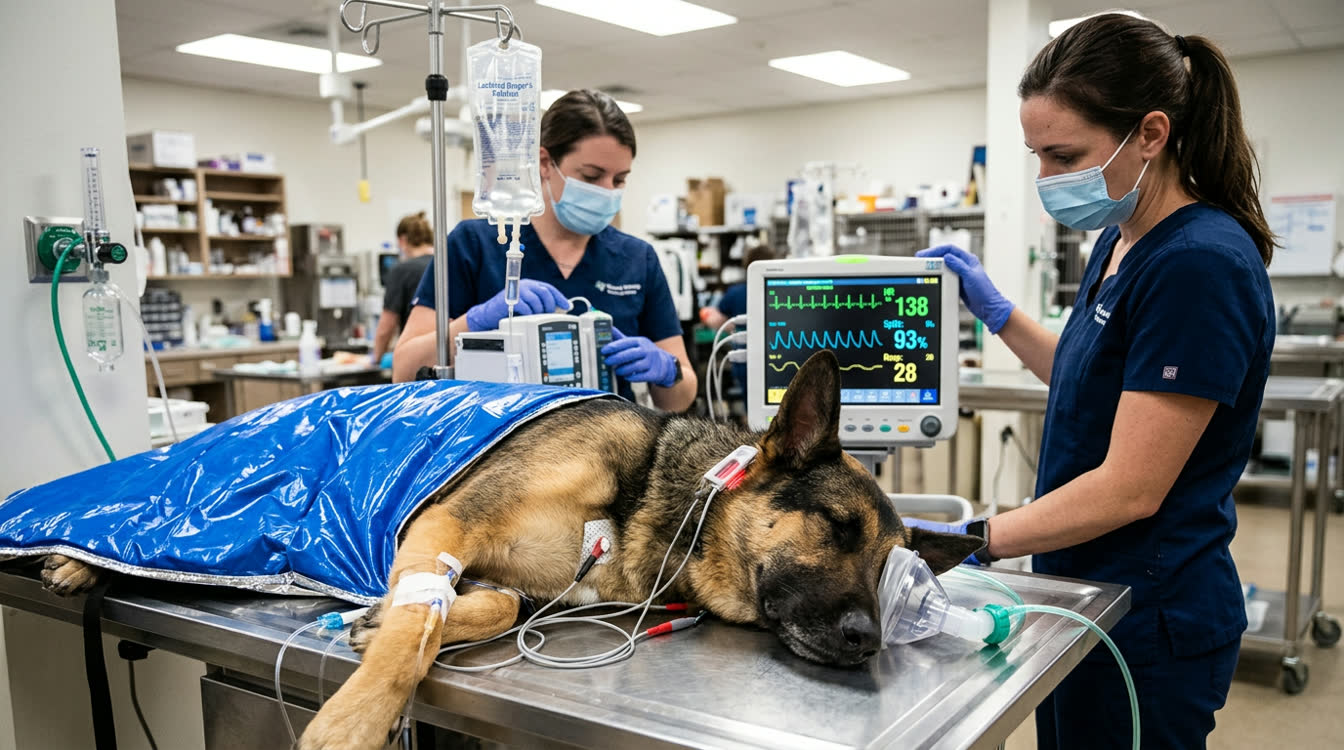
Quick Answer
A comprehensive veterinary critical care guide to recognising and managing sepsis and SIRS in dogs and cats, covering diagnostic criteria, blood cultures, early goal-directed therapy with IV fluids, antibiotic selection, vasopressor use (norepinephrine, dopamine), and septic shock management.
Key Takeaways
- ✓SIRS diagnosis requires 2 of 4 criteria in dogs and 3 of 4 in cats; bradycardia is an ominous sign in feline sepsis.
- ✓Blood cultures must be drawn BEFORE administering antibiotics; draw 2 sets from separate sites for optimal yield.
- ✓Lactate measurement is essential — target normalisation to <2 mmol/L within 6 hours; lactate >/=4 mmol/L indicates septic shock.
- ✓Isotonic crystalloid boluses (10-20 mL/kg, repeated) form the foundation of resuscitation; norepinephrine 0.1-1.0 mcg/kg/min CRI is first-line vasopressor for refractory hypotension.
- ✓Empiric antibiotics should be started within 60 minutes of sepsis recognition, targeted to the suspected source organism spectrum.
- ✓Source control (drainage, surgical repair) is mandatory and should not be delayed beyond 6-12 hours — delayed source control dramatically worsens prognosis.
Defining SIRS and Sepsis: Diagnostic Criteria
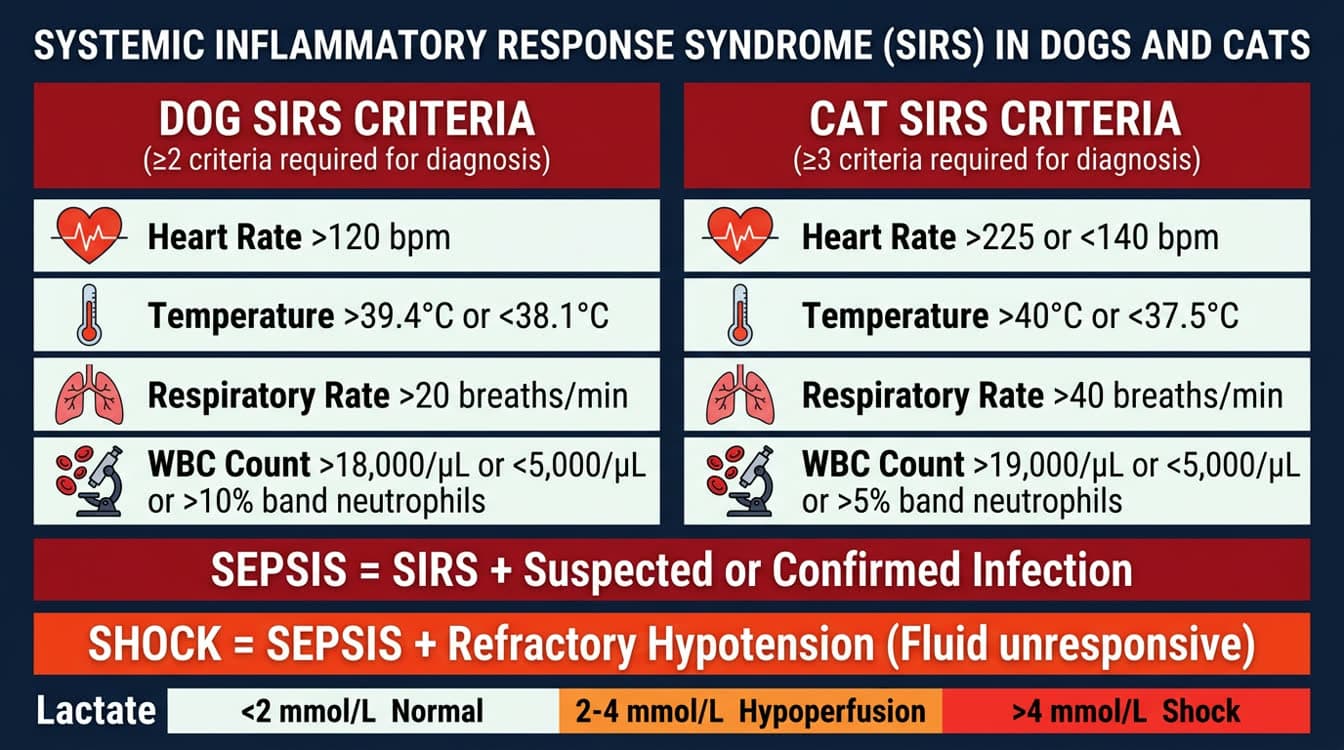
Systemic Inflammatory Response Syndrome (SIRS) is a dysregulated inflammatory response that can occur with both infectious (sepsis) and non-infectious causes (pancreatitis, trauma, ischaemia-reperfusion, immune-mediated disease).
Canine SIRS criteria (>/=2 of 4 required):
- Temperature: >39.4°C or <38.1°C
- Heart rate: >120 bpm
- Respiratory rate: >20 breaths/min, or PaCO2 <32 mmHg
- White blood cell count: >18,000/microL or <5,000/microL, or >10% band neutrophils
Feline SIRS criteria (>/=3 of 4 required — cats compensate better initially):
- Temperature: >40°C or <37.5°C
- Heart rate: >225 bpm or <140 bpm (bradycardia in cats is ominous)
- Respiratory rate: >40 breaths/min
- White blood cell count: >19,000/microL or <5,000/microL or >5% band neutrophils
Definitions:
- SIRS: Two or more SIRS criteria (dogs) / three or more (cats)
- Sepsis: SIRS + confirmed or suspected infection source
- Septic shock: Sepsis + cardiovascular dysfunction (hypotension unresponsive to fluid resuscitation, requiring vasopressors)
- MODS (multi-organ dysfunction syndrome): Sepsis with evidence of organ dysfunction (AKI, hepatic failure, DIC, respiratory failure, encephalopathy)
Common sources of sepsis in small animals:
- Gastrointestinal: perforated ulcer, pyometra, septic peritonitis (post-GDV, post-FBO, anastomotic dehiscence)
- Respiratory: bacterial pneumonia, pyothorax
- Urinary: ascending pyelonephritis, ruptured bladder
- Cardiovascular: bacterial endocarditis
- Skin/soft tissue: bite wounds, cellulitis, necrotising fasciitis
- Haematogenous/intravascular: line sepsis, discospondylitis
Lactate as a biomarker:
- Blood lactate >/= 2 mmol/L indicates tissue hypoperfusion (type A lactic acidosis from anaerobic metabolism).
- Lactate >/= 4 mmol/L: septic shock; high mortality if not rapidly corrected.
- Serial lactate measurement (every 2-4 hours) tracks response to resuscitation — target lactate normalisation (<2 mmol/L) within 6-8 hours.
Early Goal-Directed Resuscitation and Blood Cultures
The Surviving Sepsis Campaign principles adapted for veterinary practice emphasise rapid, goal-directed resuscitation within the first 1-6 hours ("golden hour" concept).
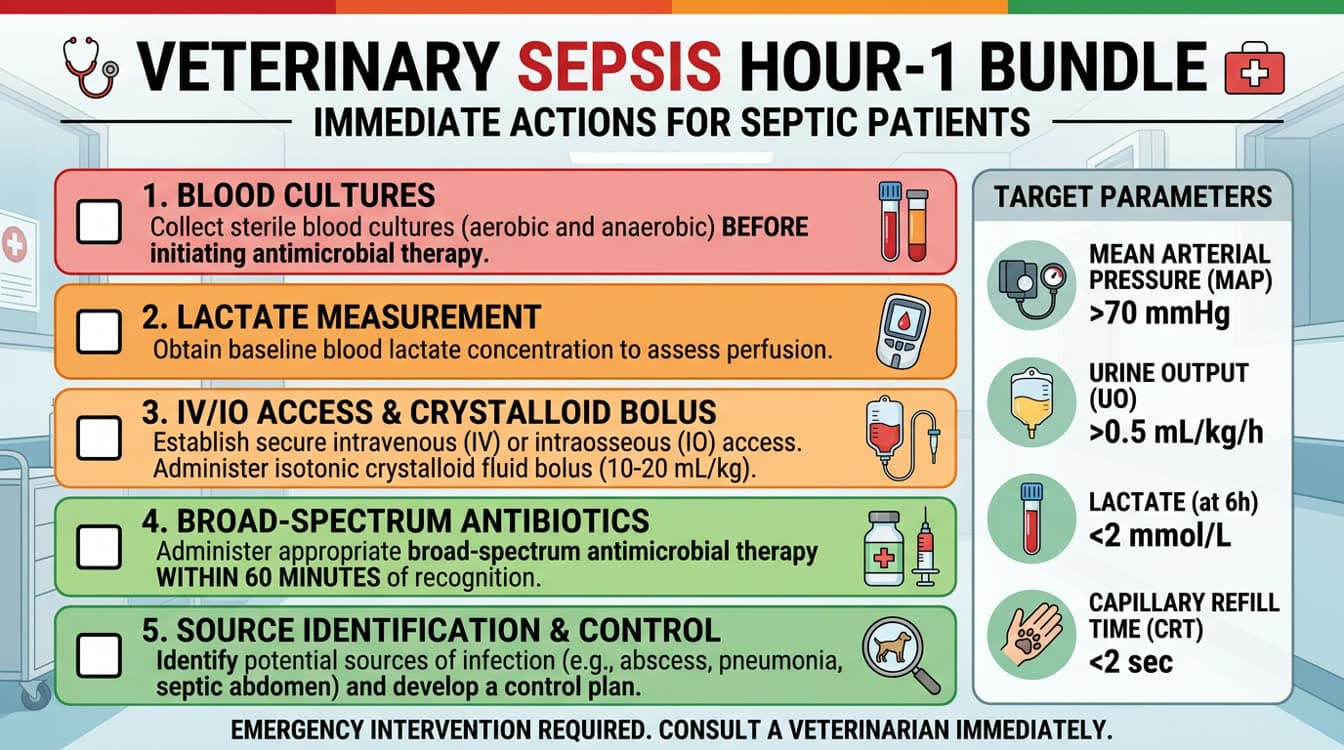
Immediate actions (within 30 minutes of recognition): 1. Establish large-bore IV or IO access 2. Draw blood: CBC, biochemistry, blood gas (lactate, pH, bicarbonate), coagulation (PT, aPTT, fibrinogen), blood culture (aerobic and anaerobic) BEFORE administering antibiotics 3. Urine culture if urinary source suspected 4. Begin fluid resuscitation immediately
Blood cultures — critical for antimicrobial stewardship:
- Draw 2 sets from separate sites (peripheral vein + IV catheter, or two separate venepunctures) before antibiotics.
- Volume: 5-10 mL per culture bottle in dogs; 1-5 mL in cats. Use both aerobic and anaerobic bottles.
- Yields 30-50% positive in confirmed septic peritonitis cases. Always attempt even if likelihood seems low.
Fluid resuscitation for sepsis:
- Isotonic crystalloid bolus: 10-20 mL/kg IV over 15 minutes. Reassess after each bolus.
- Maximum crystalloid bolus: 60-90 mL/kg in the first hour (dogs); 40-60 mL/kg (cats — more cautious).
- Reassessment parameters: HR, MAP (target >70 mmHg), pulse quality, CRT, mentation, urine output (target >0.5 mL/kg/h).
- Synthetic colloid (HES 6%): 5-10 mL/kg IV bolus if inadequate response after 30 mL/kg crystalloids, or if significant hypoproteinaemia. Maximum 20 mL/kg/day.
- Fresh frozen plasma (FFP): For documented coagulopathy (DIC) or severe hypoproteinaemia (albumin <15 g/L). Dose: 10-20 mL/kg IV.
Monitoring targets during resuscitation:
- MAP >/= 70 mmHg (dogs); >/= 80 mmHg (cats — cats require higher MAP)
- HR <120 bpm (dogs); <200 bpm (cats)
- CRT <2 seconds, pink mucous membranes
- Urine output >/= 0.5 mL/kg/h
- Lactate decreasing toward <2 mmol/L at 6 hours
- Haematocrit >/= 25% (consider packed red blood cell transfusion if below)
Source control — critical:
- Remove source of infection as rapidly as possible: drain pyometra, repair perforated viscus, drain pyothorax, remove infected catheter.
- Delayed source control (>6-12 hours) is associated with dramatically increased mortality.
Antimicrobial Selection and Vasopressor Therapy
Antimicrobial therapy — initiate within 60 minutes of sepsis recognition:
Empiric broad-spectrum coverage targeting the most likely source organisms is initiated while awaiting blood and wound culture results.
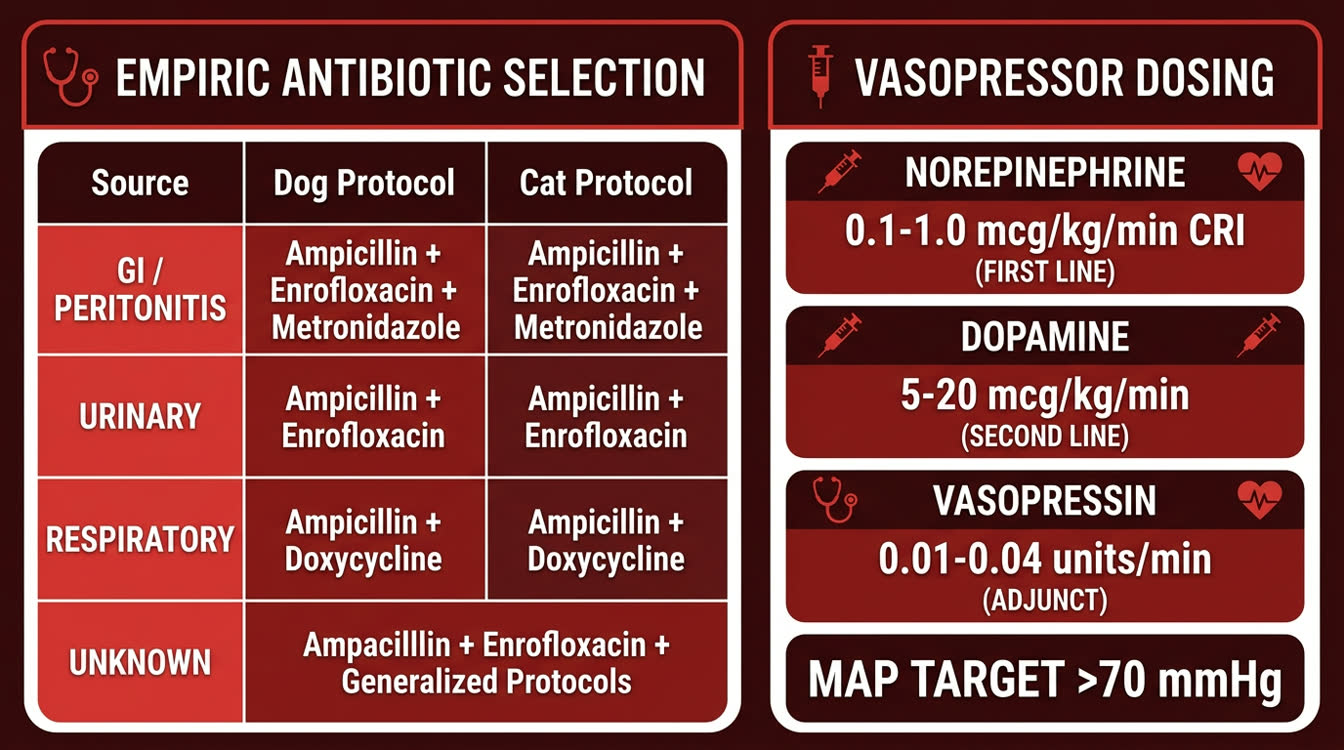
Dogs — empiric antibiotic protocols:
- GI source (peritonitis): Ampicillin 22 mg/kg IV Q6h + enrofloxacin 5 mg/kg IV Q24h (slow infusion over 30 min; avoid rapid IV bolus due to retinal toxicity risk) + metronidazole 15 mg/kg IV Q12h (anaerobic cover).
- Urinary source: Ampicillin 22 mg/kg IV Q6h + enrofloxacin 5 mg/kg IV Q24h. Culture-directed therapy at 48-72 hours.
- Respiratory source (pneumonia): Ampicillin 22 mg/kg IV Q6h + enrofloxacin 5 mg/kg IV Q24h or doxycycline 5 mg/kg IV Q12h.
- Unknown source: Ampicillin-sulbactam 22 mg/kg IV Q8h + enrofloxacin 5 mg/kg IV Q24h.
Cats — empiric antibiotic protocols:
- Ampicillin 22 mg/kg IV Q6h + amikacin 15 mg/kg IV Q24h (ensure adequate hydration before aminoglycoside; renal monitoring essential).
- Enrofloxacin doses in cats must not exceed 5 mg/kg/day (retinal toxicity risk); marbofloxacin 2 mg/kg IV Q24h is a safer alternative in cats.
- Pyothorax in cats: Ampicillin 22 mg/kg IV Q6h + metronidazole 15 mg/kg IV Q12h (Pasteurella, anaerobes); chest drain placement essential.
Culture-directed therapy at 48-72 hours: De-escalate or narrow antibiotic spectrum based on culture/sensitivity results. Continue IV antibiotics until clinically stable, then transition to oral.
Vasopressor therapy for septic shock: Used when MAP remains <70 mmHg despite adequate fluid resuscitation (crystalloid >/= 60 mL/kg in dogs, >/=40 mL/kg in cats).
- Norepinephrine (noradrenaline) 0.1-1.0 mcg/kg/min IV CRI: preferred vasopressor; alpha-1 agonist with some beta-1 effect; maintains MAP without excessive tachycardia. First-line recommendation in human and veterinary critical care.
- Dopamine 5-20 mcg/kg/min IV CRI: at medium doses (5-10) has beta-1 effects (increased HR and contractility); at high doses (10-20) predominantly alpha-1 (vasoconstriction). Risk of tachyarrhythmia at higher doses; less preferred than norepinephrine.
- Vasopressin 0.01-0.04 units/min IV CRI: adjunct vasopressor when norepinephrine doses exceed 0.5 mcg/kg/min. V1 receptor agonist, does not cause tachycardia.
Corticosteroids in septic shock:
- Hydrocortisone 0.5 mg/kg/h IV CRI or 1 mg/kg Q8h if refractory vasopressor-dependent shock (relative adrenal insufficiency). Not for routine sepsis without shock.
Prognosis: Survival in small animal sepsis ranges from 20-75% depending on severity, source, and timeliness of treatment. Septic peritonitis mortality in dogs: 50-70%. Early recognition and hour-1 bundle adherence dramatically improve outcomes.
Frequently Asked Questions
What are the SIRS criteria for cats and how do they differ from dogs?
Cats require 3 of 4 SIRS criteria (dogs only 2 of 4) because cats compensate more effectively initially. Feline SIRS criteria: temperature >40°C or <37.5°C; heart rate >225 bpm or <140 bpm (bradycardia is an ominous sign in cats); respiratory rate >40 breaths/min; WBC >19,000/microL or <5,000/microL or >5% bands. Cat-specific nuances: cats often present in the decompensatory phase more suddenly; bradycardia rather than tachycardia is common in critical feline sepsis.
When should blood cultures be drawn in a septic patient?
Blood cultures must be drawn BEFORE the first antibiotic dose — this is critical. Even a single dose of antibiotics significantly reduces culture positivity. Draw 2 sets from separate sites (e.g., cephalic and saphenous veins) simultaneously. Use both aerobic and anaerobic culture bottles. In septic peritonitis, peritoneal fluid culture from abdominocentesis should also be submitted. Culture results at 48-72 hours allow de-escalation or targeted antibiotic therapy.
What is the first-line vasopressor for septic shock in dogs?
Norepinephrine (noradrenaline) at 0.1-1.0 mcg/kg/min IV continuous rate infusion is the first-line vasopressor for septic shock in dogs and cats, consistent with human Surviving Sepsis Campaign guidelines. It maintains MAP with predominantly alpha-1 vasoconstriction and modest beta-1 cardiac stimulation, without the tachyarrhythmia risk of dopamine at high doses. Vasopressin (0.01-0.04 units/min) can be added as an adjunct if norepinephrine requirements are high.
What is the lactate target during sepsis resuscitation?
The target is lactate normalisation to below 2 mmol/L within 6 hours of initiating resuscitation. An initial lactate of 4 mmol/L or greater indicates septic shock with high mortality risk. Serial lactate measurements every 2-4 hours are used to assess tissue perfusion and guide fluid therapy. Lactate clearance of 10% or more per hour is associated with improved survival. Persistent hyperlactataemia despite fluid resuscitation suggests either ongoing tissue hypoperfusion (under-resuscitation), vasopressor need, or irreversible cellular injury.
What is the maximum safe enrofloxacin dose for cats with sepsis?
The maximum safe dose of enrofloxacin in cats is 5 mg/kg/day IV or PO. Doses exceeding this threshold (particularly historical doses of 20 mg/kg) cause acute blindness from fluoroquinolone-induced retinal degeneration. For septic cats, marbofloxacin 2 mg/kg IV Q24h is a safer fluoroquinolone alternative. Pradofloxacin (Veraflox) 7.5 mg/kg PO Q24h has an excellent feline safety profile. Always verify feline-specific dosing before administering fluoroquinolones to cats.
References
- Hopper K, et al. Packed red blood cells transfusion in 12 cats: 11 with septic peritonitis. J Vet Emerg Crit Care. 2014;24(6):702-712.
- Prescott JF. Antimicrobial therapy. In: Ettinger SJ, Feldman EC (eds). Textbook of Veterinary Internal Medicine. 8th ed. Elsevier; 2017:568-580.
- de Laforcade A, et al. Consensus recommendations from the ACVECC Veterinary Committee on Trauma and Critical Care (VCRC) regarding sepsis management in veterinary patients. J Vet Emerg Crit Care. 2014;24(6):618-630.