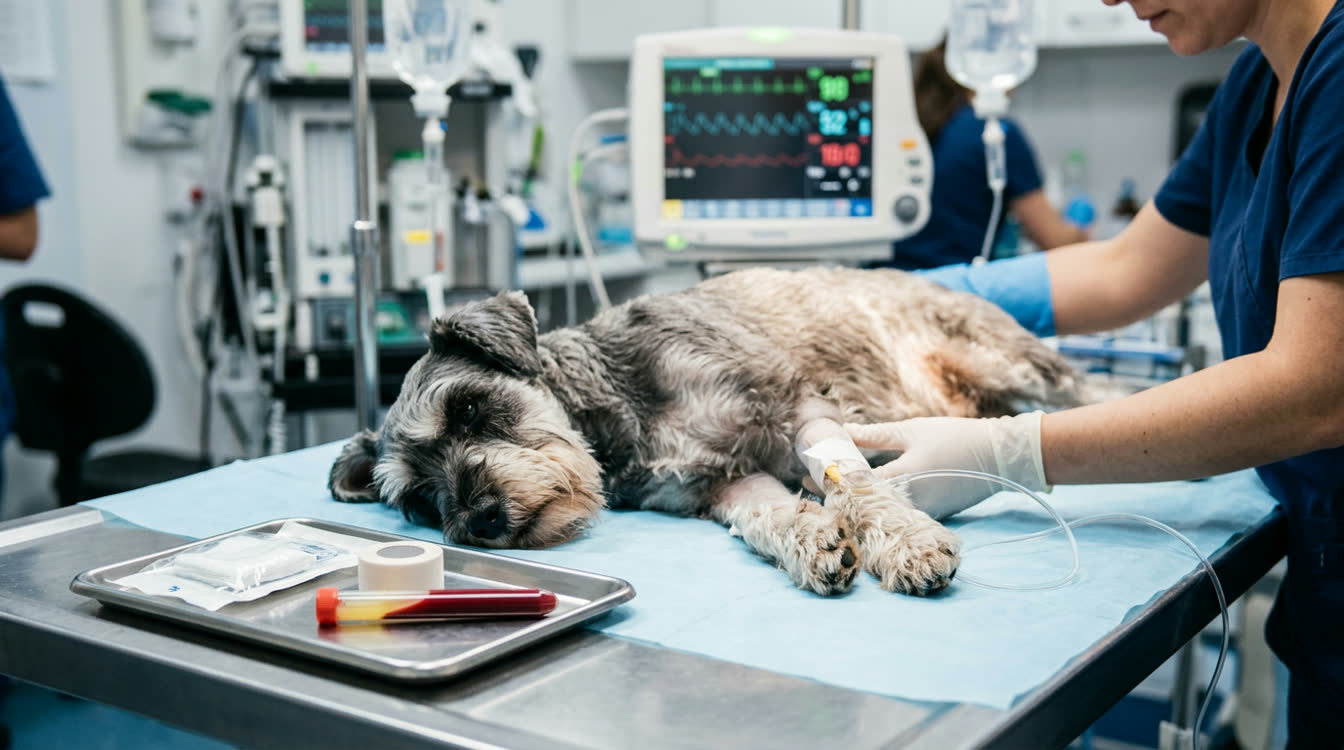
Quick Answer
A clinical guide to diagnosing and managing acute hemorrhagic diarrhea syndrome (previously hemorrhagic gastroenteritis, HGE) in dogs, covering rapid clinical recognition, aggressive fluid resuscitation protocols, antibiotic stewardship principles, and differentiation from parvovirus and other hemorrhagic causes.
Key Takeaways
- ✓AHDS is characterised by sudden-onset profuse bloody diarrhea with a disproportionately elevated PCV (>55-60%) relative to total protein in toy and miniature breed dogs.
- ✓Aggressive IV fluid resuscitation (LRS 20 mL/kg shock bolus, repeated as needed) is the single most critical treatment — most dogs recover dramatically within 24 hours.
- ✓Parvovirus SNAP antigen test should be performed on all dogs with hemorrhagic diarrhea regardless of vaccination history.
- ✓Antibiotics are NOT routinely indicated in uncomplicated AHDS — evidence shows no benefit over supportive care alone (Unterer et al., JVIM 2011).
- ✓Monitor PCV every 4-6 hours; target reduction toward 45-50%; supplement potassium for hypokalaemia.
- ✓Prognosis is excellent (>95% survival) with prompt aggressive fluid therapy; discharge when PCV <55% and tolerating oral intake.
Clinical Recognition and Diagnosis
Acute hemorrhagic diarrhea syndrome (AHDS) — previously termed hemorrhagic gastroenteritis (HGE) — is an acute, life-threatening gastrointestinal emergency characterised by the sudden onset of profuse, grossly bloody diarrhea (raspberry jam appearance), haemoconcentration, and rapidly deteriorating clinical status.
Hallmark presentation:
- Sudden onset of profuse bright red bloody diarrhea (large volume, raspberry jam or frank blood consistency)
- Rapid dehydration and haemoconcentration: packed cell volume (PCV) typically >/= 55-60% (often 60-75%) — disproportionately elevated relative to total protein (TP), which remains near-normal or only mildly elevated
- Vomiting is common (often bloody)
- Depression, weakness, tachycardia, weak peripheral pulses (hypovolaemic shock)
- Breed predisposition: miniature and toy breeds (Yorkshire Terrier, Miniature Schnauzer, Toy Poodle, Miniature Dachshund, Maltese) — though any breed can be affected
Aetiopathogenesis: The exact cause remains incompletely understood. Clostridium perfringens Type A (specifically strains producing NetF toxin) is strongly implicated in many cases — this pore-forming toxin disrupts intestinal epithelial tight junctions causing massive fluid and blood loss. Dietary indiscretion, stress, and intestinal hypersensitivity may trigger episodes. Most cases are self-limiting with appropriate treatment.
Differential diagnoses to rule out rapidly:
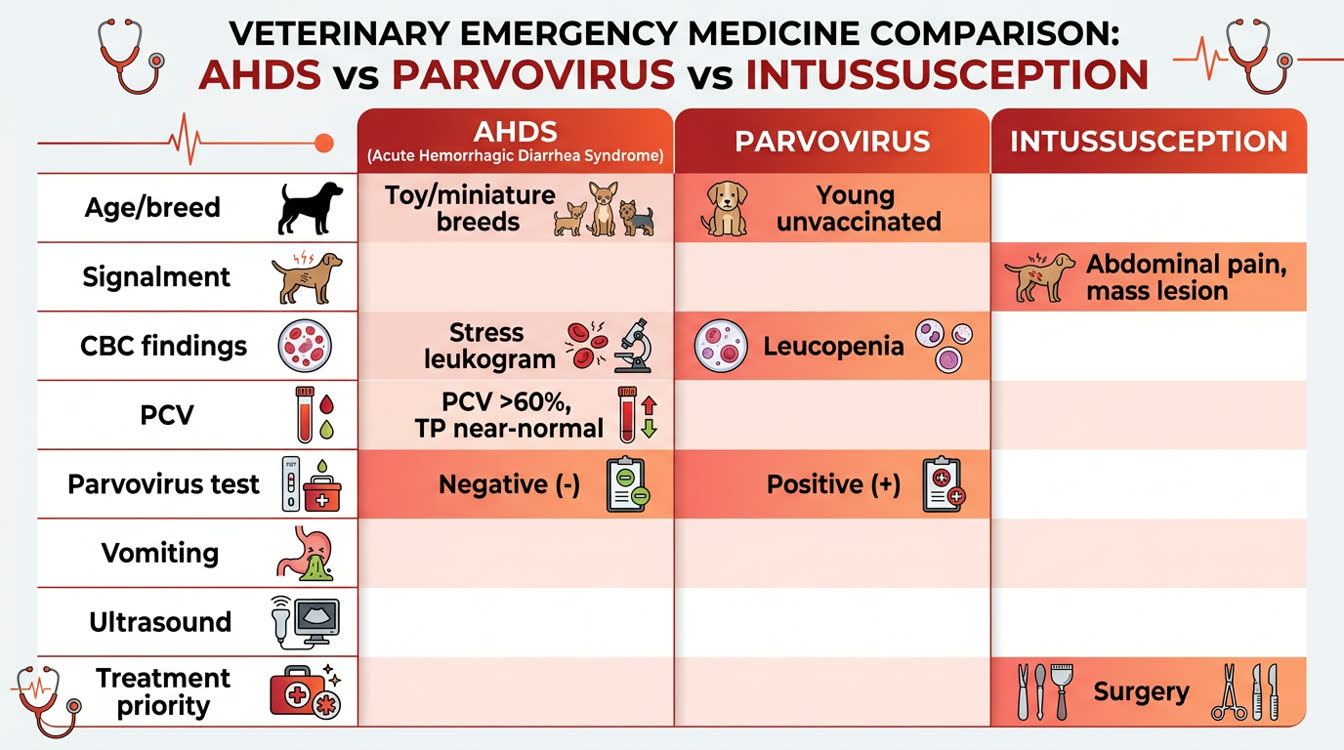
- Parvoviral enteritis: Typically younger (<1 year) or unvaccinated dogs; leucopenia (neutropenia) is characteristic; parvovirus SNAP test positive. AHDS: normal to elevated WBC (stress leukogram — neutrophilia, lymphopaenia).
- Intussusception: Pain on palpation; cylindrical abdominal mass; confirmed by ultrasound.
- Coagulopathy (rodenticide toxicity): Prolonged PT/aPTT; ask for exposure history.
- GI foreign body: Intestinal obstruction; radiograph/ultrasound.
- Haemorrhagic neoplasia: Older dogs; imaging for mass lesions.
Minimum diagnostic database:
- PCV and TP (the hallmark disproportionate haemoconcentration)
- CBC with differential (leucopenia → parvovirus; neutrophilia + left shift → sepsis/other)
- Serum biochemistry (electrolytes, glucose, BUN, creatinine)
- Parvovirus SNAP antigen test (all dogs with bloody diarrhea, regardless of vaccination)
- Blood pressure
- Abdominal radiographs or point-of-care ultrasound (POCUS)
Fluid Resuscitation Protocol
Aggressive intravenous fluid therapy is the most critical intervention in AHDS — the haemoconcentration and hypovolaemia are life-threatening if not corrected promptly.
IV catheter placement: Large-bore peripheral catheter (20G or 18G) as quickly as possible. If peripheral access is difficult due to collapse, consider intraosseous route.
Fluid resuscitation — shock bolus:
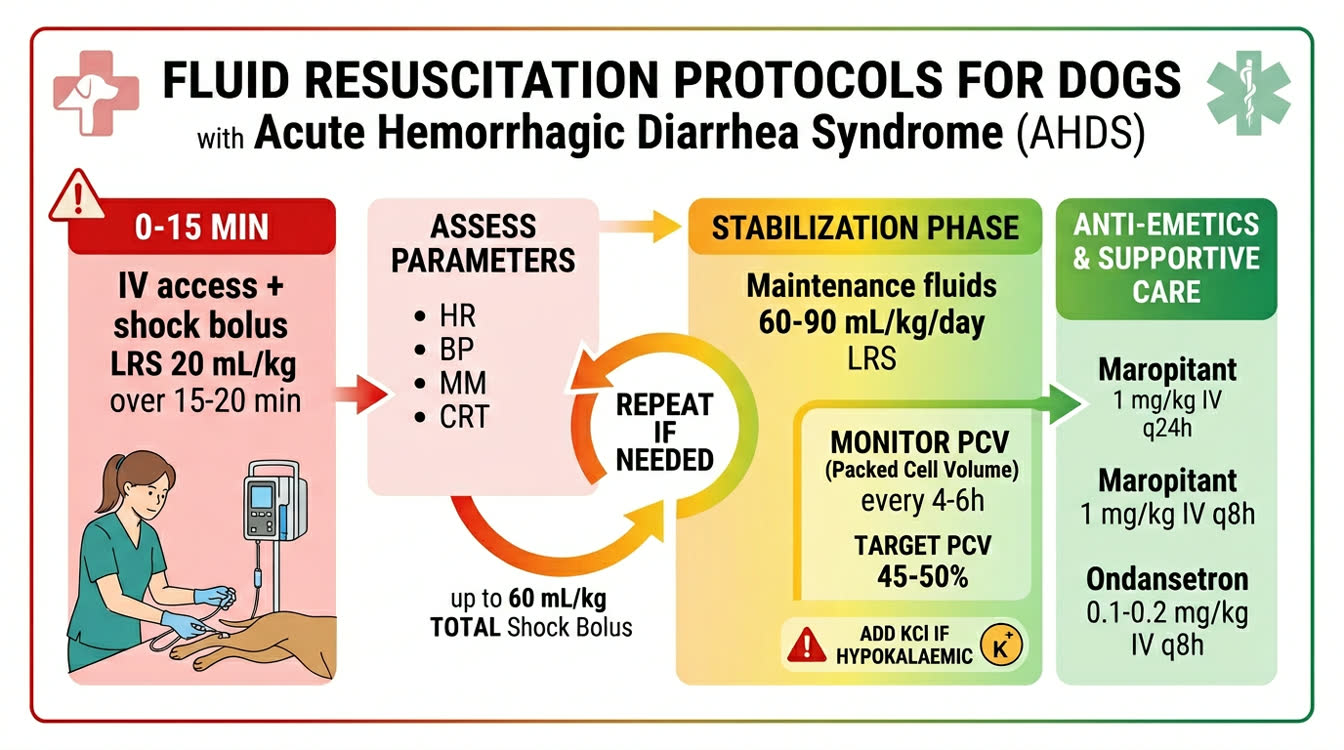
- Isotonic crystalloid (lactated Ringer's solution or 0.9% NaCl): 20 mL/kg IV over 15-20 minutes. Reassess heart rate, blood pressure, mucous membrane colour, CRT.
- Repeat shock bolus as needed: up to 60-90 mL/kg total in first hour for severe hypovolaemic shock, guided by haemodynamic response.
- Synthetic colloids (hydroxyethyl starch, Hetastarch 6%): 5 mL/kg IV bolus over 15 minutes in dogs with severely reduced oncotic pressure or inadequate response to crystalloids alone. Maximum 20 mL/kg/day. Note: colloid use is increasingly cautious given concerns about coagulopathy at higher doses.
Maintenance fluid therapy:
- After initial resuscitation, switch to a maintenance rate: typically 2-3x maintenance rate initially (60-90 mL/kg/day), adjusted based on PCV trends, urine output, and clinical status.
- Monitor PCV and TP every 4-6 hours initially.
- Target PCV: reduce from presentation levels toward 45-50%. Rapid PCV decrease toward 35% or below may indicate occult haemorrhage or haemodilution — investigate.
- Electrolyte supplementation: hypokalaemia is common in severe cases from losses in vomit and diarrhoea. Add KCl to fluids per sliding scale (maximum 0.5 mEq/kg/h IV).
Anti-emetic therapy:
- Maropitant (Cerenia) 1 mg/kg SQ or IV Q24h: NK1 receptor antagonist; first-line anti-emetic; also has visceral analgesic effect.
- Ondansetron 0.1-0.2 mg/kg IV slow push Q8-12h: 5-HT3 antagonist for refractory vomiting.
- Metoclopramide 0.2-0.5 mg/kg SQ or IM Q8h: D2 antagonist; prokinetic effect. CRI at 1-2 mg/kg/day if frequent vomiting.
Nutritional support:
- Withhold food for 6-12 hours until vomiting is controlled, then reintroduce low-fat bland diet in small frequent meals.
- Early enteral nutrition (12-24 hours) is preferred over prolonged fasting — supports intestinal epithelial healing and gut barrier function.
- Parenteral nutrition is rarely needed but considered if oral intake impossible for >48-72 hours.
Antibiotic Stewardship and Prognosis
Should antibiotics be used in AHDS?
This is one of the most important antibiotic stewardship questions in small animal emergency medicine. Current evidence and consensus guidelines support a conservative approach to antibiotic use in uncomplicated AHDS:
Antibiotics are NOT routinely indicated in uncomplicated AHDS. A randomised controlled trial (Unterer et al., 2011, JVIM) found that amoxicillin-clavulanate did not improve clinical outcomes compared to no antibiotics in dogs with AHDS. Both groups recovered at similar rates with supportive fluid therapy.
Reasons to avoid routine antibiotics:
- Bacterial translocation is not consistently demonstrated in AHDS
- Antibiotics (especially ampicillin, amoxicillin-clavulanate) may paradoxically disrupt the intestinal microbiome and delay recovery
- Antibiotic resistance selection pressure
- Clostridium perfringens is part of the normal canine flora — "treating" it with antibiotics may worsen dysbiosis
Indications for antibiotics in AHDS:
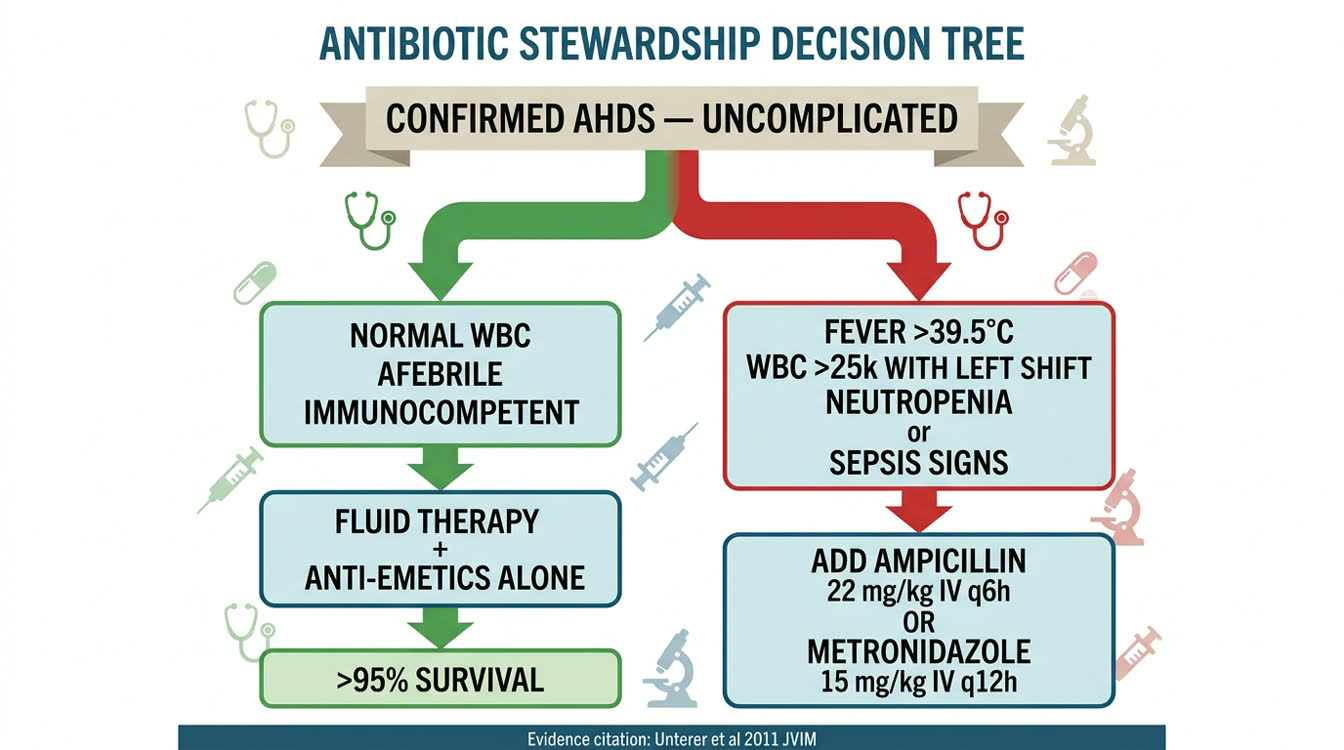
- Evidence of systemic infection or sepsis: fever >39.5°C or hypothermia, severe leucocytosis (>25,000/microL) with left shift, positive blood culture
- Neutropenia (white cell count <3,000/microL) — concern for bacterial translocation
- Immunocompromised patient
- Confirmed concurrent condition requiring antibiotics
If antibiotics are indicated:
- Ampicillin 22 mg/kg IV Q6-8h or metronidazole 15 mg/kg IV Q12h (for anaerobic cover, including Clostridium)
- Avoid fluoroquinolones as sole agents for Gram-positive anaerobic coverage
Prognosis:
- Excellent with prompt, aggressive fluid therapy: >95% survival in uncomplicated cases
- Most dogs respond dramatically within 12-24 hours of IV fluid resuscitation
- Complete clinical recovery typically within 2-4 days
- Recurrence is possible (estimated 10-15% of cases)
- Poor prognostic indicators: severe hypoglycaemia, sepsis/SIRS signs, failure to respond to 24 hours of aggressive IV fluids, underlying comorbidities
Discharge criteria: PCV <55%, clinically hydrated, keeping down oral intake, active and alert. Discharge with bland diet instructions for 5-7 days. No antibiotics needed unless indicated as above.
Frequently Asked Questions
What PCV level is diagnostic of AHDS in dogs?
A PCV of 55% or greater — especially 60-75% — with grossly bloody diarrhea and disproportionately normal or mildly elevated total protein is the hallmark of AHDS. The disproportionate haemoconcentration (very high PCV relative to TP) occurs because protein is retained while water and electrolytes are lost massively into the gastrointestinal tract. Normal total protein with a PCV above 60% strongly supports AHDS over other causes of haemoconcentration.
How quickly should an AHDS dog respond to IV fluids?
Most dogs with uncomplicated AHDS show dramatic improvement within 12-24 hours of aggressive intravenous fluid resuscitation. Heart rate, peripheral pulse quality, mucous membrane colour, and CRT typically improve within 1-4 hours of initial shock bolus. PCV should begin declining within 4-8 hours. A dog failing to improve within 24 hours of appropriate fluid therapy should be reassessed — consider sepsis, hypoproteinaemia, haemorrhagic neoplasia, or another diagnosis.
Do dogs with AHDS need antibiotics?
No, in uncomplicated AHDS antibiotics are not routinely indicated. A randomised controlled trial showed no benefit of amoxicillin-clavulanate over supportive care alone. Antibiotics may even worsen outcomes by disrupting the intestinal microbiome. Reserve antibiotics for dogs with signs of systemic sepsis (fever, severe leucocytosis with left shift, hypothermia, neutropenia) or confirmed bacterial translocation.
How do you distinguish AHDS from parvoviral enteritis?
Key distinguishing features: AHDS typically occurs in middle-aged toy/miniature breed dogs with sudden-onset profuse hemorrhagic diarrhea, normal to elevated white blood cell count (stress leukogram), and negative parvovirus SNAP test. Parvoviral enteritis typically affects young (<1 year) or unvaccinated dogs, shows characteristic leucopenia (neutropenia), and tests positive on parvovirus SNAP antigen test. Both can cause hemorrhagic diarrhea and haemoconcentration, so parvovirus testing should be performed on all affected dogs regardless of vaccination history.
What is the recurrence rate of AHDS in dogs?
Recurrence is estimated in approximately 10-15% of affected dogs. There are no reliable predictors of which dogs will experience recurrences. Long-term dietary management (consistent high-quality diet, avoidance of dietary indiscretion, high-fat treats, and sudden diet changes) may reduce recurrence risk in predisposed individuals. No preventive drug therapy has been shown to be effective.
References
- Unterer S, et al. Treatment of aseptic dogs with hemorrhagic gastroenteritis with amoxicillin/clavulanic acid: a prospective blinded study. J Vet Intern Med. 2011;25(5):973-979.
- Mortier F, et al. Acute hemorrhagic diarrhea syndrome in dogs: 108 cases. Can Vet J. 2015;56(10):1049-1055.
- Buber T, et al. Evidence for involvement of Clostridium perfringens in the pathogenesis of acute hemorrhagic diarrhea syndrome in dogs. Vet Microbiol. 2011;149(1-2):193-198.