Quick Answer
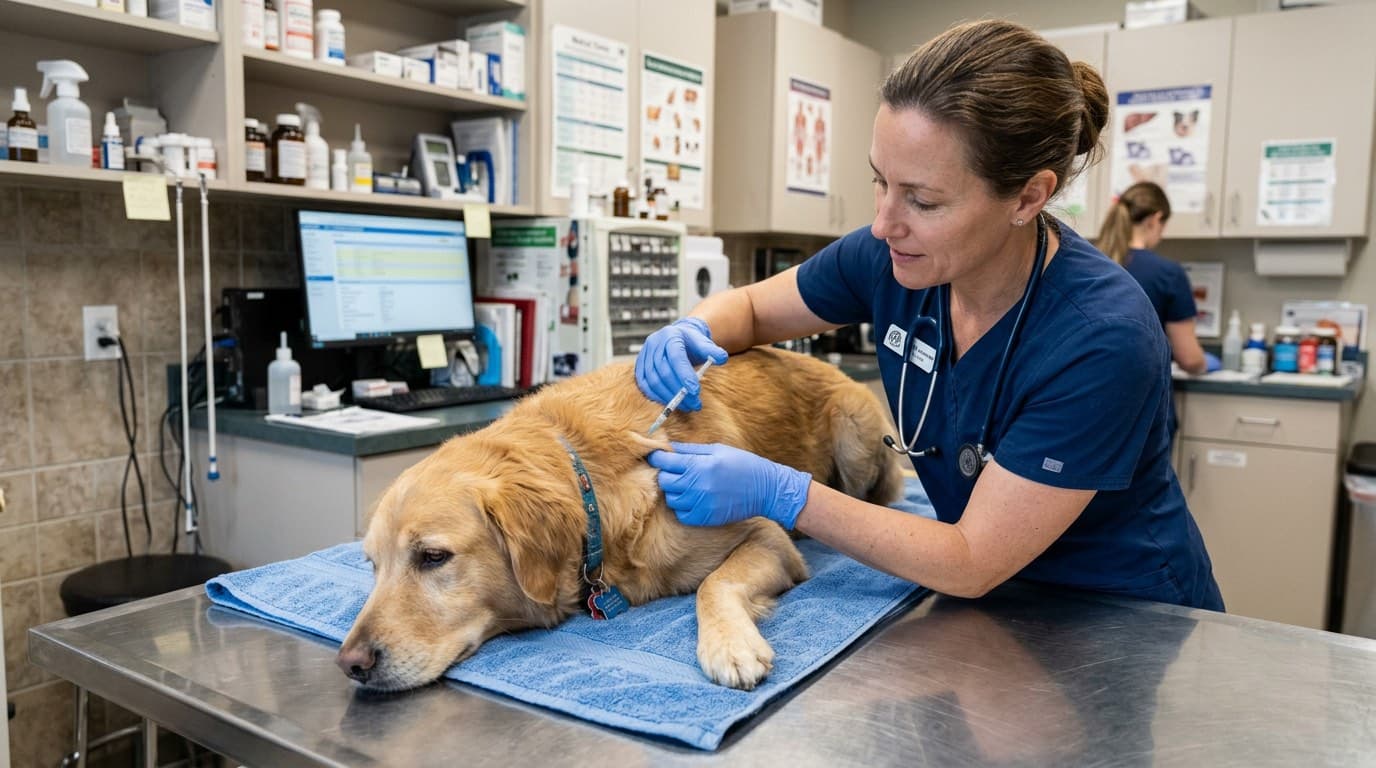
Maropitant (Cerenia) is the most effective veterinary anti-emetic available. This guide covers mechanism, dosing by route and indication, analgesic properties, safety in puppies/kittens, and clinical protocols.
Key Takeaways
- ✓Maropitant blocks NK1 receptors — the final common vomiting pathway; effective against all causes of acute vomiting
- ✓Dose: 1 mg/kg SQ/PO q24h (vomiting); 8 mg/kg PO 2 hours before travel (motion sickness dogs only)
- ✓Provides visceral analgesia — reduces inhalant MAC ~24%, useful adjunct in pancreatitis and perioperative protocols
- ✓Always warm injection solution to room temperature before SQ administration
- ✓Cats: SQ only (not oral tablets, not IV); minimum age 16 weeks
- ✓Pre-anaesthetic maropitant (1 mg/kg SQ 30 min pre-op) is now standard of care at evidence-based practices
Mechanism: NK1 Receptor Antagonism and Dual Anti-emetic/Analgesic Action
Maropitant citrate (Cerenia, Zoetis) is the first veterinary-specific anti-emetic drug and remains the most potent available for dogs and cats.
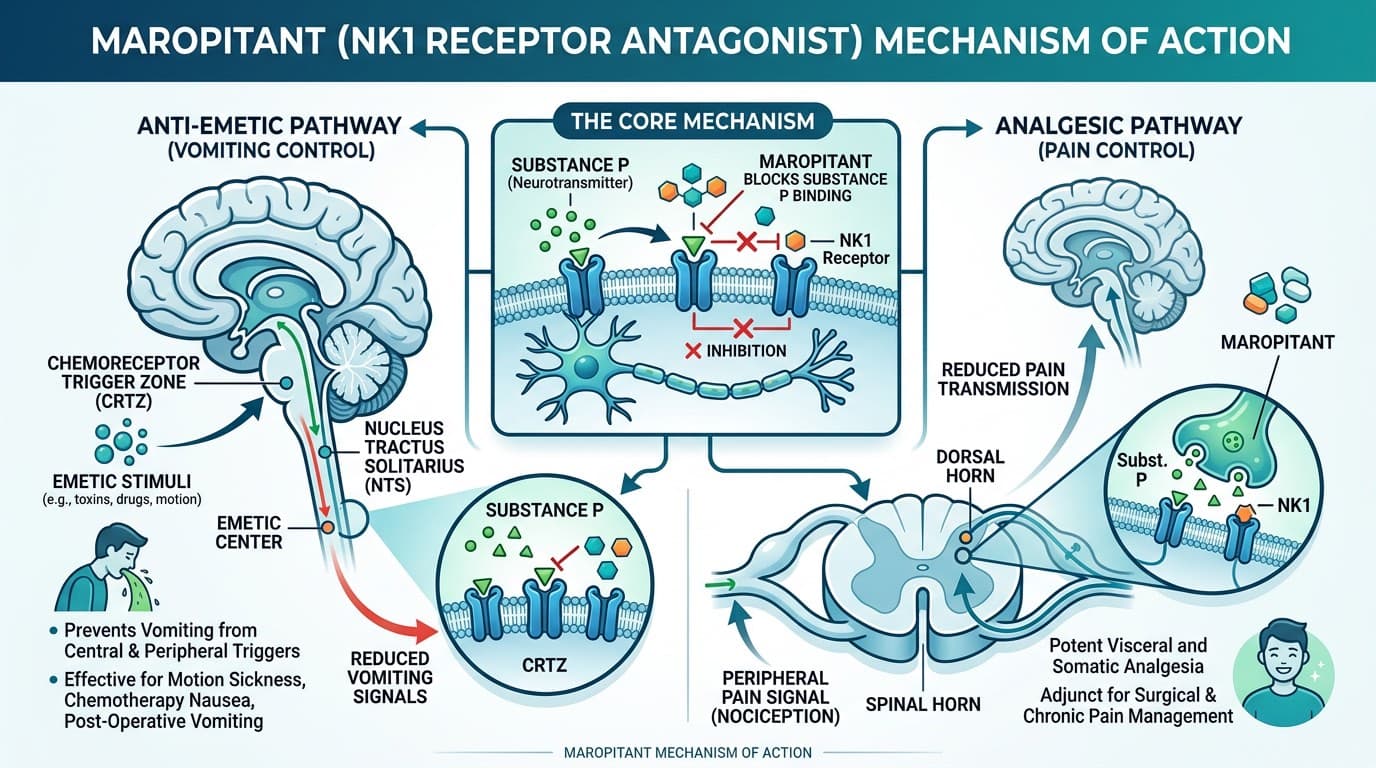
Mechanism of Action Maropitant is a neurokinin-1 (NK1) receptor antagonist. It blocks substance P from binding to NK1 receptors in the vomiting center (CRTZ) and the emetic center in the medulla oblongata.
Unlike metoclopramide (dopamine antagonist) or ondansetron (5-HT3 antagonist), maropitant blocks the final common pathway of vomiting — making it effective against virtually all causes of acute vomiting.
Analgesic Properties (Clinically Important)
- Visceral analgesia (especially useful in pancreatitis, GI obstruction, peritonitis)
- Reduction in intraoperative anesthetic requirements (MAC reduction ~24% demonstrated in cats)
- Additive analgesic effect in multimodal pain protocols
Bioavailability
- SQ: ~90% bioavailability; faster onset (~30 min)
- PO: ~37% bioavailability in dogs (first-pass effect); slower onset (~2 hrs)
- IV: 100%; use only in hospital — must be given slowly over 1–2 min
Dosing Guide by Species, Route and Indication
| Indication | Dogs | Cats | Route | Frequency |
|---|---|---|---|---|
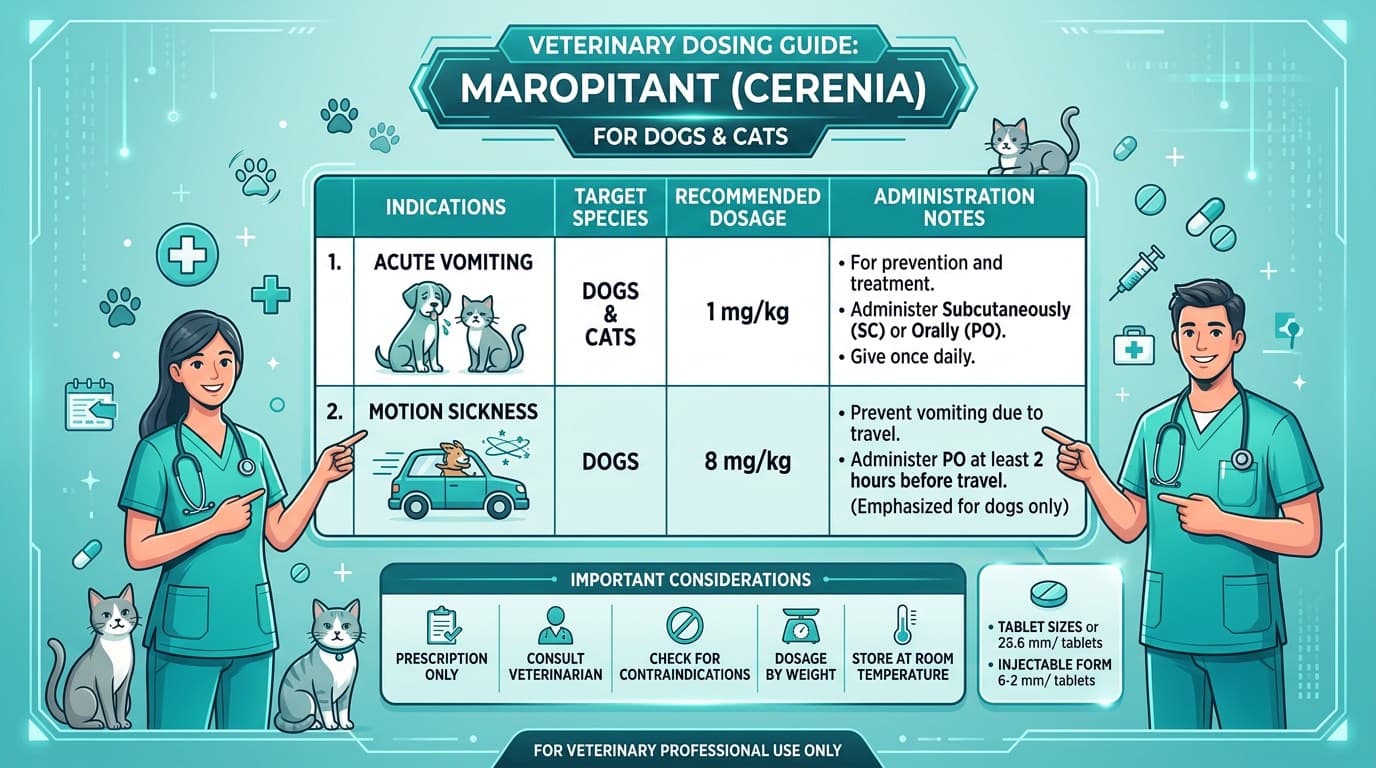
| Acute vomiting | 1 mg/kg | 1 mg/kg | SQ or PO | q24h |
| Motion sickness prevention | 8 mg/kg PO | 1 mg/kg SQ | PO (dogs) / SQ (cats) | 2h before travel |
| Perioperative anti-emetic | 1 mg/kg | 1 mg/kg | SQ or IV (slow) | q24h |
| Chemotherapy-induced vomiting | 1 mg/kg | 1 mg/kg | SQ | q24h × 5 days |
| Visceral analgesia (pancreatitis) | 1–2 mg/kg | 1 mg/kg | SQ | q24h |
Maximum duration approved: 5 consecutive days (SQ), 14 days (PO tablets in dogs)
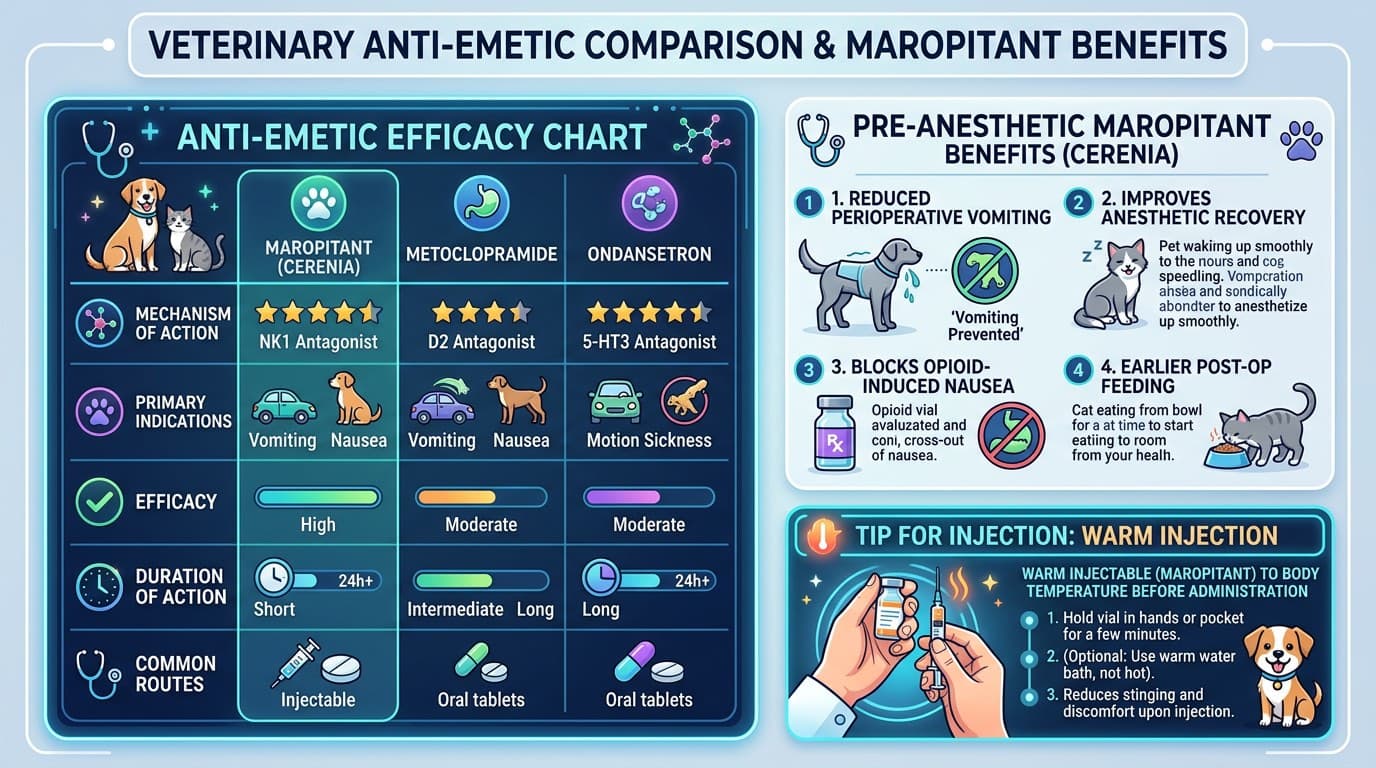
Refrigeration requirement: Maropitant injection (10 mg/mL) must be refrigerated at 2–8°C. Cold solution causes pain on SQ injection — warm to room temperature before use.
IV Administration When given IV (in-hospital only): dilute in saline, administer over ≥1–2 minutes. Rapid IV bolus has been associated with transient hypotension and bradycardia.
Tablets (Cerenia Chewable) Dogs only for motion sickness: 8 mg/kg PO given 2 hours before travel, with a small amount of food. For acute vomiting in dogs: 2 mg/kg PO q24h.
Safety Profile, Puppies/Kittens and Clinical Tips
Side Effects
- Hypersalivation, lethargy, anorexia (mild, transient)
- Pain at SQ injection site (due to low pH when cold — always warm before injection)
- Transient ataxia reported in some cats at higher doses
Safety in Young Animals
- Dogs ≥8 weeks (SQ/PO), ≥16 weeks (IV)
- Cats ≥16 weeks (SQ only) — IV not approved in cats
- Puppies <16 weeks: Use 1 mg/kg SQ only
Hepatic Disease Maropitant is extensively hepatically metabolized. In patients with severe hepatic disease, half-life is prolonged. Use with caution; monitor for excessive sedation.
Efficacy vs. Other Anti-emetics
| Drug | Mechanism | Efficacy | Best For |
|---|---|---|---|
| Maropitant | NK1 antagonist | Excellent (all causes) | First-line for all vomiting |
| Ondansetron | 5-HT3 antagonist | Moderate-Good | CRI anti-emetic, chemotherapy |
| Metoclopramide | D2/5-HT3/4 antagonist | Moderate | Gastric motility + CRI |
Clinical Pearl: Maropitant Before Anaesthesia
- Peri-operative vomiting/regurgitation
- Inhalant anaesthetic requirement (MAC reduction)
- Post-operative nausea
Frequently Asked Questions
What is maropitant (Cerenia) used for in dogs and cats?
Maropitant is the most effective veterinary anti-emetic, used for acute vomiting, motion sickness, perioperative nausea, and chemotherapy-induced vomiting. It also provides visceral analgesia via NK1 receptor blockade in the spinal cord. Dose: 1 mg/kg SQ or PO q24h for vomiting; 8 mg/kg PO for motion sickness in dogs.
How quickly does maropitant work in dogs?
SQ injection works within 30–60 minutes. Oral tablets take approximately 2 hours for full effect. Duration of action is approximately 24 hours for both routes.
Is maropitant safe for cats?
Yes, maropitant is approved for cats ≥16 weeks of age via the SQ route at 1 mg/kg SQ q24h. It is NOT approved for IV use in cats or as oral tablets.
Can maropitant be used as a pain reliever?
Maropitant has genuine analgesic properties via NK1 receptor antagonism in the spinal dorsal horn. Clinical trials show it reduces inhalant MAC by ~24% in cats. It is used as an adjunct in multimodal analgesic protocols for pancreatitis and post-surgical pain.
Why does maropitant injection hurt dogs?
The solution has a low pH that causes stinging, especially when cold. Always warm to room temperature before injection. Pre-filling syringes and allowing 15–30 minutes to warm significantly reduces injection site pain.
References
- de la Puente-Redondo VA, et al. Efficacy of maropitant for the prevention of acute vomiting after administration of hydromorphone. JAVMA. 2007.
- Sedlacek HS, et al. Clinical efficacy of maropitant in preventing vomiting during isoflurane anesthesia. Vet Anaesth Analg. 2008.
- Plumb DC. Maropitant Citrate. In: Plumb's Veterinary Drug Handbook. 10th ed. Wiley-Blackwell; 2023.