Quick Answer
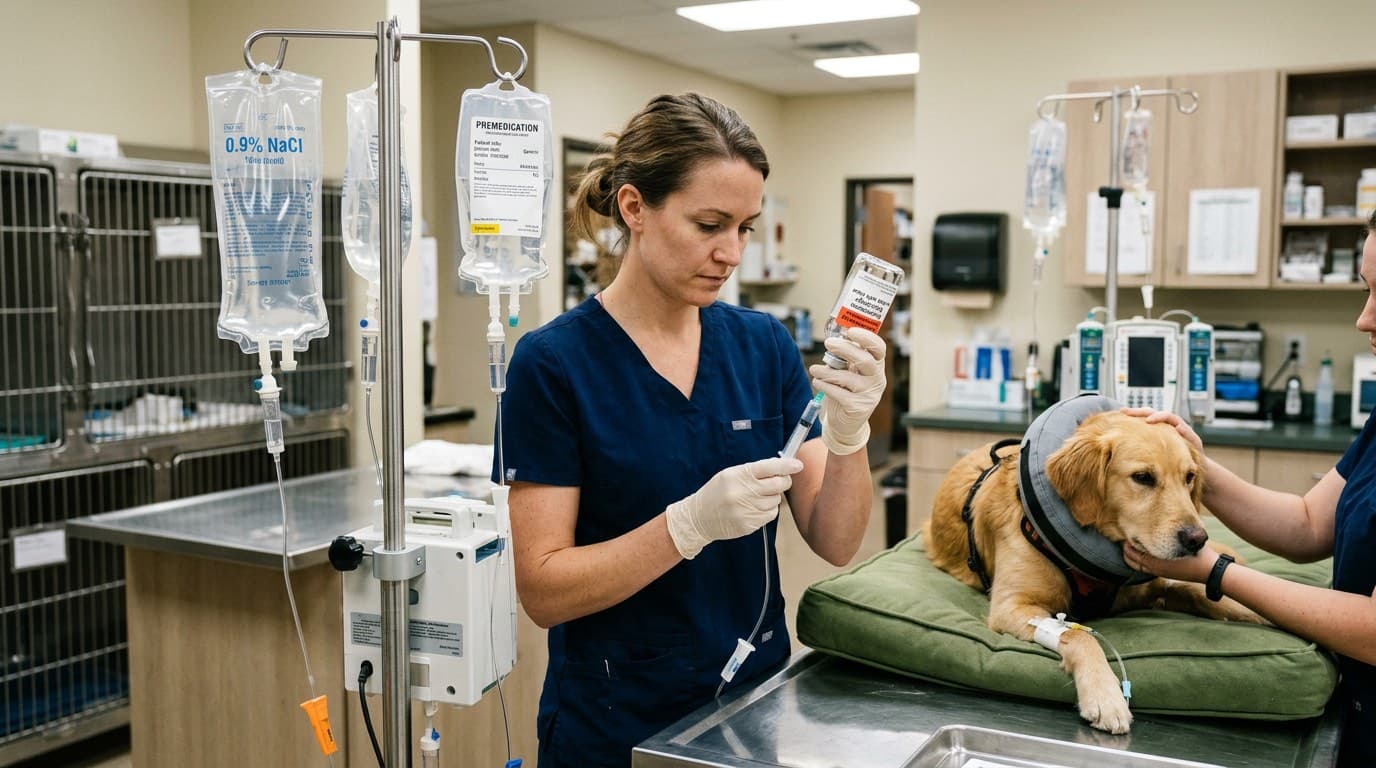
Ondansetron is a 5-HT3 serotonin receptor antagonist used as a second-line or combination anti-emetic in dogs and cats. This guide covers mechanism, dosing, CRI protocols, combination with maropitant, and indications.
Key Takeaways
- ✓Ondansetron blocks 5-HT3 receptors — complementary to maropitant (NK1); combine for severe/refractory vomiting
- ✓Dose: dogs 0.5-1 mg/kg IV (slow) or PO q12-24h; cats 0.1-1 mg/kg IV/PO q12h
- ✓CRI: 0.5 mg/kg loading dose then 0.5 mg/kg/hr (dogs) — preferred for sustained coverage in critical patients
- ✓Always administer IV slowly over 2-5 minutes — rapid bolus causes bradycardia/hypotension
- ✓QT prolongation risk in cats — avoid in cardiac disease and with cisapride
- ✓No GI prokinetic effect — add metoclopramide CRI if gastric motility is also impaired
Mechanism and When to Choose Ondansetron
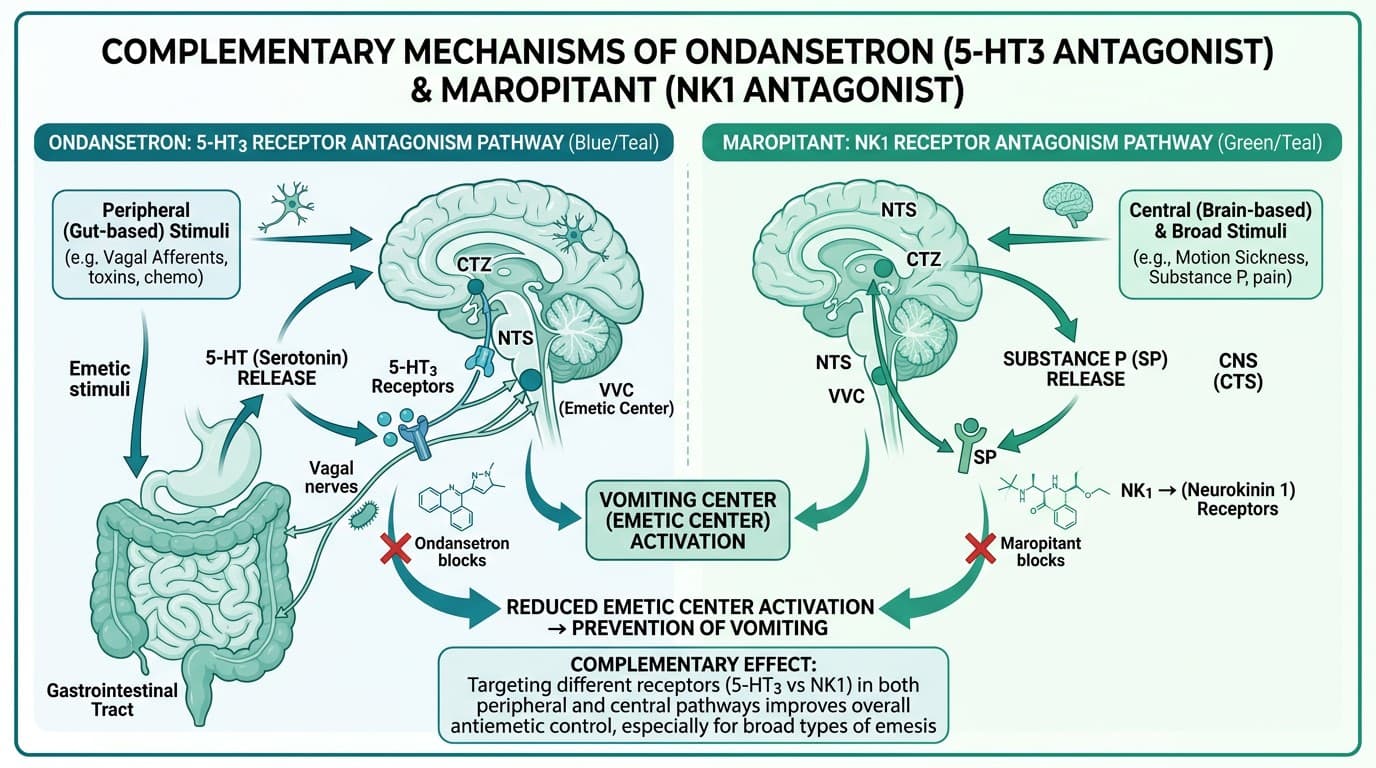
Ondansetron (Zofran) is a selective 5-HT3 (serotonin type 3) receptor antagonist. It blocks serotonin binding at vagal afferents in the GI tract and at the chemoreceptor trigger zone (CRTZ), reducing vomiting signals from both peripheral and central pathways.
How It Differs from Maropitant
- Maropitant blocks NK1 (substance P) receptors — the final common pathway
- Ondansetron blocks 5-HT3 receptors — particularly important for serotonin-mediated vomiting (chemotherapy, enteritis)
- Their mechanisms are complementary — combining both provides superior anti-emetic coverage for severe or refractory vomiting
Primary Indications
- Chemotherapy-induced vomiting (especially cisplatin, doxorubicin)
- Refractory vomiting not controlled by maropitant alone
- CRI anti-emetic therapy in critically ill patients
- Acute gastroenteritis with profuse vomiting
- Vestibular disease with severe nausea
Formulations
- Oral tablets: 4 mg, 8 mg (human formulation — compounded liquid may be needed for small patients)
- IV solution: 2 mg/mL
Dosing: Bolus and CRI Protocols
Bolus Dosing
| Species | Dose | Route | Frequency |
|---|---|---|---|
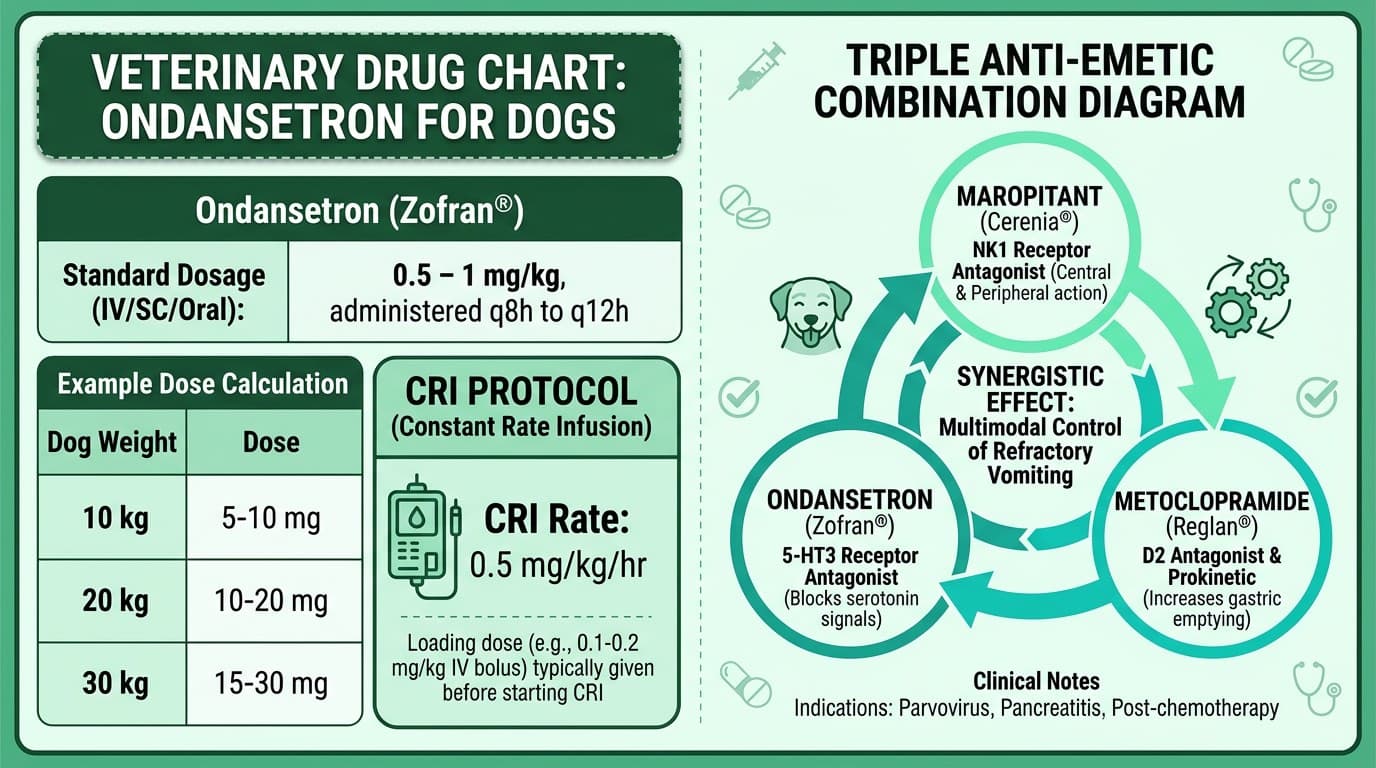
| Dogs | 0.5–1 mg/kg | IV (slow), PO | q12–24h |
| Cats | 0.1–1 mg/kg | IV (slow), PO | q12h |
Important: Give IV ondansetron slowly over 2–5 minutes. Rapid bolus causes transient bradycardia and hypotension.
CRI (Continuous Rate Infusion) Protocols CRI provides steady-state anti-emetic coverage without peaks and troughs.
- Dogs CRI: 0.5 mg/kg IV loading dose over 15 min, then 0.5 mg/kg/hr CRI
- Cats CRI: 0.1–0.2 mg/kg IV loading dose, then 0.1–0.2 mg/kg/hr CRI
Add to 0.9% NaCl or LRS. Check compatibility before adding other drugs.
Combination Protocol (Severe/Refractory Vomiting) Maropitant 1 mg/kg SQ/IV q24h + Ondansetron 0.5 mg/kg IV q12h ± Metoclopramide CRI 1–2 mg/kg/day
This triple combination targets NK1, 5-HT3, and D2 receptors — used in AHDS, pancreatitis, and post-operative patients.
Safety, Drug Interactions and Comparison to Metoclopramide
Side Effects
- Generally very well tolerated
- Constipation (5-HT3 blockade slows GI motility)
- Transient bradycardia/hypotension with rapid IV (always give slowly)
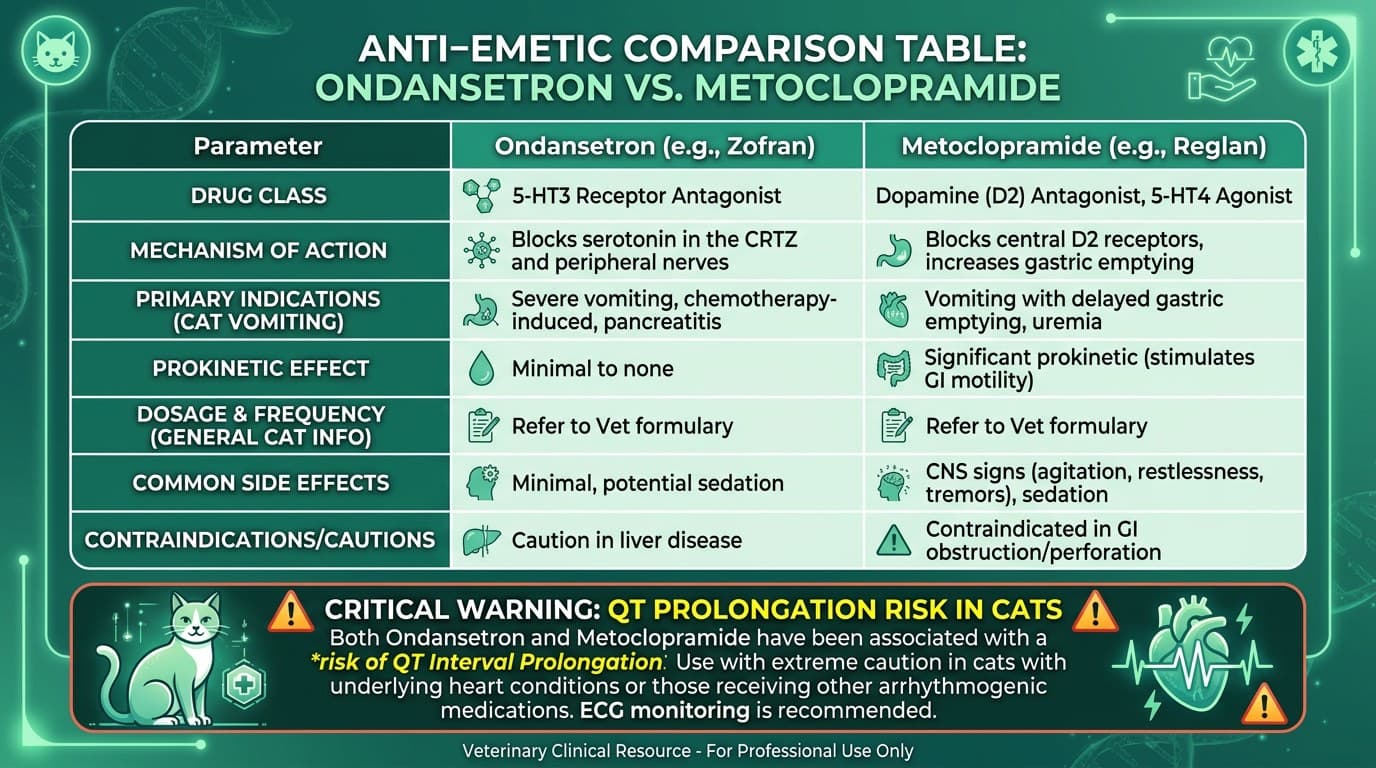
QT Prolongation (Important in Cats) Ondansetron prolongs the cardiac QT interval. Use with caution in cats with cardiac disease. Avoid with cisapride and other QT-prolonging drugs.
Ondansetron vs. Metoclopramide
| Feature | Ondansetron | Metoclopramide |
|---|---|---|
| Anti-emetic potency | High | Moderate |
| GI prokinetic effect | No | Yes (gastric) |
| Extrapyramidal SE risk | None | Yes (high dose) |
| Best use | Refractory vomiting, chemo | Gastric dysmotility + vomiting |
Drug Interactions
- Tramadol: Both can lower seizure threshold
- Cisapride/QT-prolonging drugs: Additive QT risk — avoid
- Hepatic disease: Reduce dose by 50% in severe impairment
Metoclopramide CRI (1–2 mg/kg/day) adds gastric prokinetic benefit — use when gastric motility is also impaired.
Frequently Asked Questions
What is ondansetron used for in dogs and cats?
Ondansetron is a 5-HT3 anti-emetic used for chemotherapy-induced vomiting, refractory vomiting, and as a CRI anti-emetic in critically ill patients. It works on different receptors than maropitant, so the two drugs are often combined for superior coverage in severe cases.
What is the ondansetron dose for dogs?
Dogs: 0.5–1 mg/kg IV (slow, over 2–5 minutes) or PO every 12–24 hours. For CRI: 0.5 mg/kg loading dose then 0.5 mg/kg/hr infusion. Cats: 0.1–1 mg/kg IV or PO every 12 hours.
Can ondansetron and maropitant be given together?
Yes — this is a common and effective combination for severe or refractory vomiting. They work on different receptor pathways, providing broader anti-emetic coverage. Adding metoclopramide CRI creates a triple anti-emetic protocol.
Is ondansetron safe for cats with heart disease?
Use with caution. Ondansetron prolongs the QT interval. Avoid in cats with known arrhythmias or concurrent QT-prolonging medications.
Why must ondansetron be given slowly IV?
Rapid IV bolus causes vagally-mediated bradycardia and transient hypotension. Always administer over 2–5 minutes minimum.
References
- Quimby JM, Brock WT, et al. Chronic use of maropitant in cats with chronic kidney disease. J Feline Med Surg. 2015.
- Plumb DC. Ondansetron Hydrochloride. In: Plumb's Veterinary Drug Handbook. 10th ed. Wiley-Blackwell; 2023.
- Trepanier L. Acute vomiting in cats. Vet Clin North Am Small Anim Pract. 2010.