Quick Answer
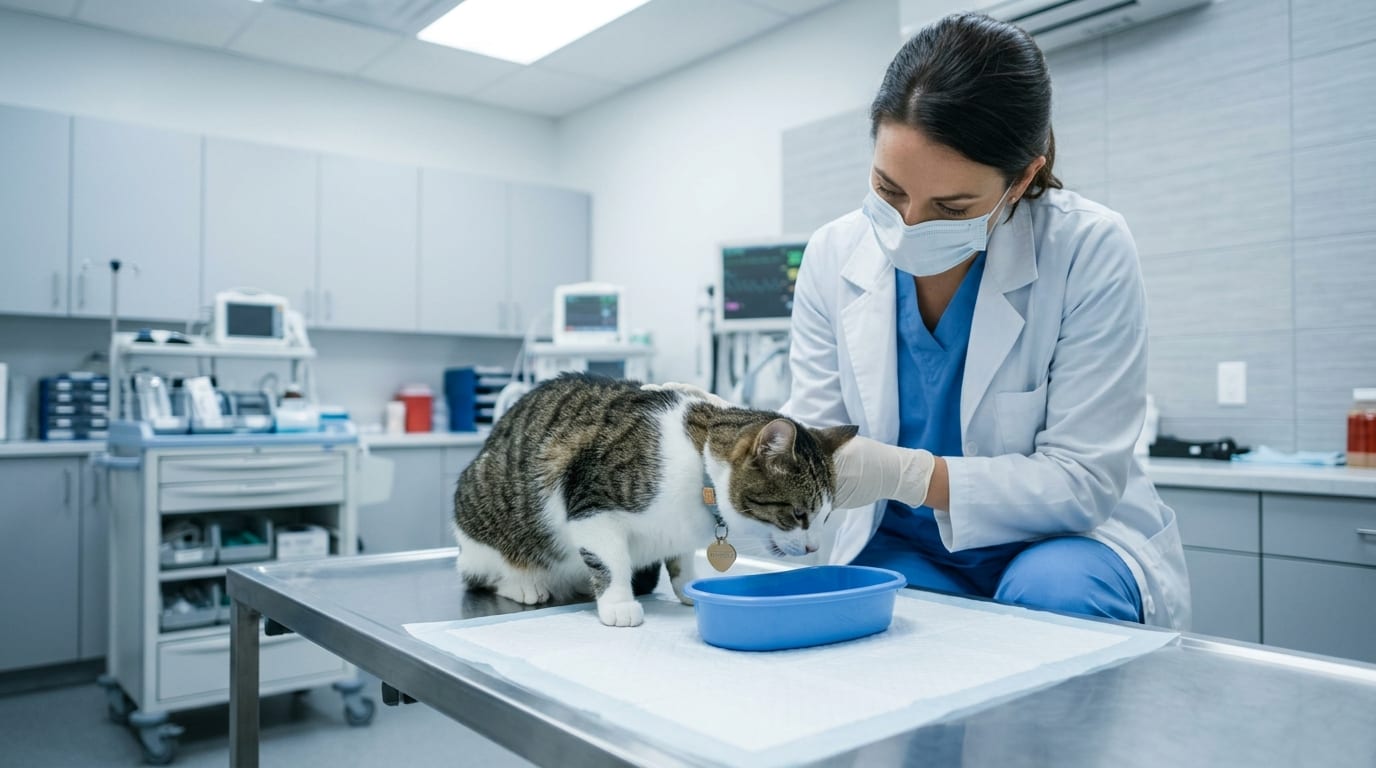
Vomiting is the most common presenting complaint in canine general practice. This guide provides a diagnostic framework, red-flag identification, evidence-based treatment protocols, and guidance on when imaging and endoscopy are indicated.
Key Takeaways
- ✓Red flags: GDV (bloated abdomen), hematemesis, collapse, pale gums, suspected obstruction or toxin — emergency triage
- ✓Na:K ratio <27 in a vomiting dog = Addisonian crisis until proven otherwise
- ✓Mild vomiting: 12-24h food rest → bland diet → maropitant PO; do NOT prescribe metronidazole routinely
- ✓AHDS: IV fluids at shock rate (60-90 mL/kg/hr) is the cornerstone; maropitant IV + ondansetron for anti-emesis
- ✓Spec cPL elevated in ~70-80% of pancreatitis — use SNAP cPL for in-clinic screening
- ✓Abdominal ultrasound is superior to radiographs for pancreatitis, intussusception, and masses
Acute vs. Chronic Vomiting and Red Flag Recognition
STOP — Red Flags Requiring Emergency Evaluation
If ANY of the following are present, the patient needs urgent assessment:
- Bloated/distended abdomen → GDV (life-threatening emergency)
- Bloody vomit (hematemesis) or coffee-ground appearance
- Foreign body ingestion or suspected intoxication
- Severe systemic illness (collapse, pale gums, tachycardia, weak pulses)
- Repeated vomiting with complete anorexia >48 hours in a puppy
- Projectile vomiting without prodromal nausea (pyloric obstruction)
- Jaundice + vomiting
Acute vs. Chronic Vomiting
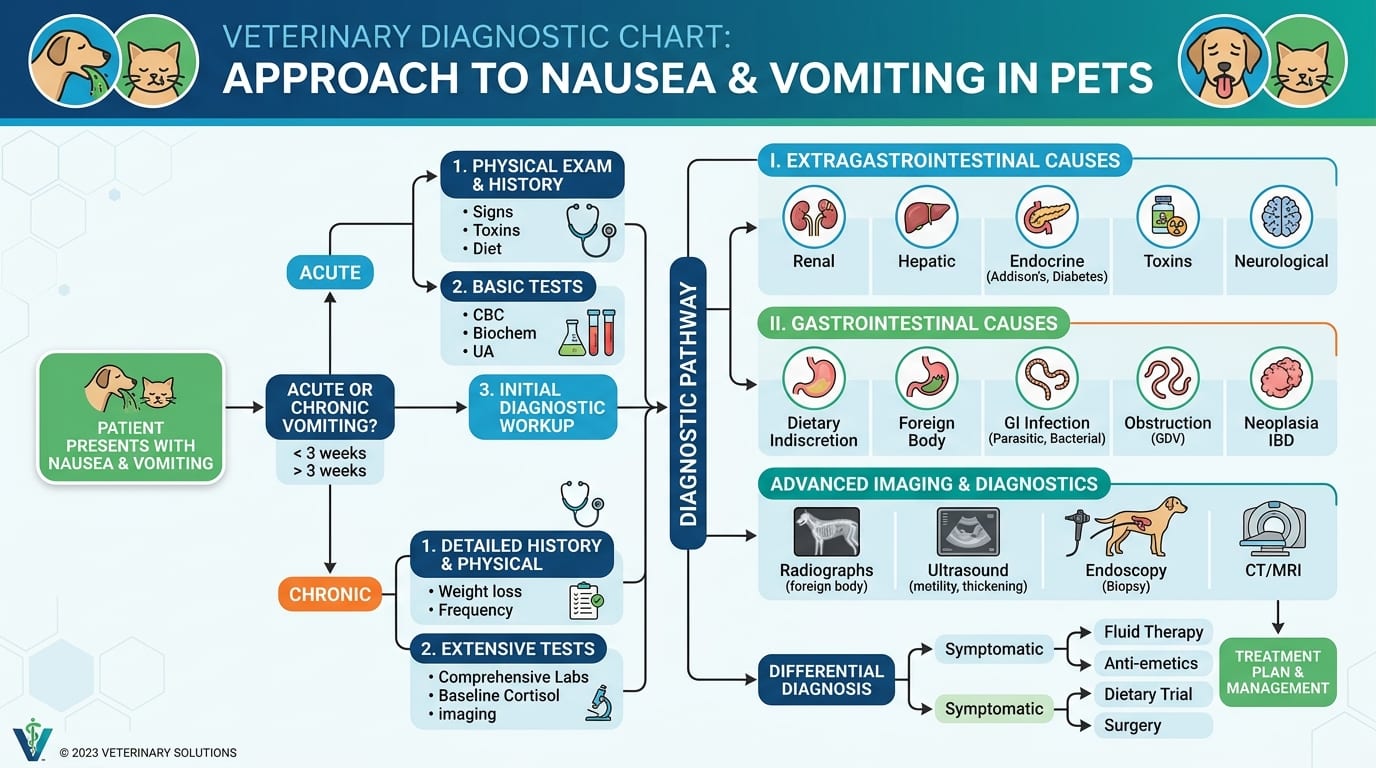
- Acute vomiting (<3–5 days): Often dietary, infectious, or toxin-related. Frequently self-limiting.
- Chronic vomiting (>3 weeks, or recurrent episodic): Usually indicates underlying disease.
Common Causes of Acute Vomiting in Dogs 1. Dietary indiscretion (most common) 2. Acute gastroenteritis — viral, bacterial, parasitic 3. Acute pancreatitis 4. Foreign body obstruction 5. Parvoviral enteritis (unvaccinated) 6. Toxin ingestion 7. Systemic disease (renal failure, hepatic disease, hypoadrenocorticism, DKA)
Diagnostic Approach: Minimum Database and Imaging
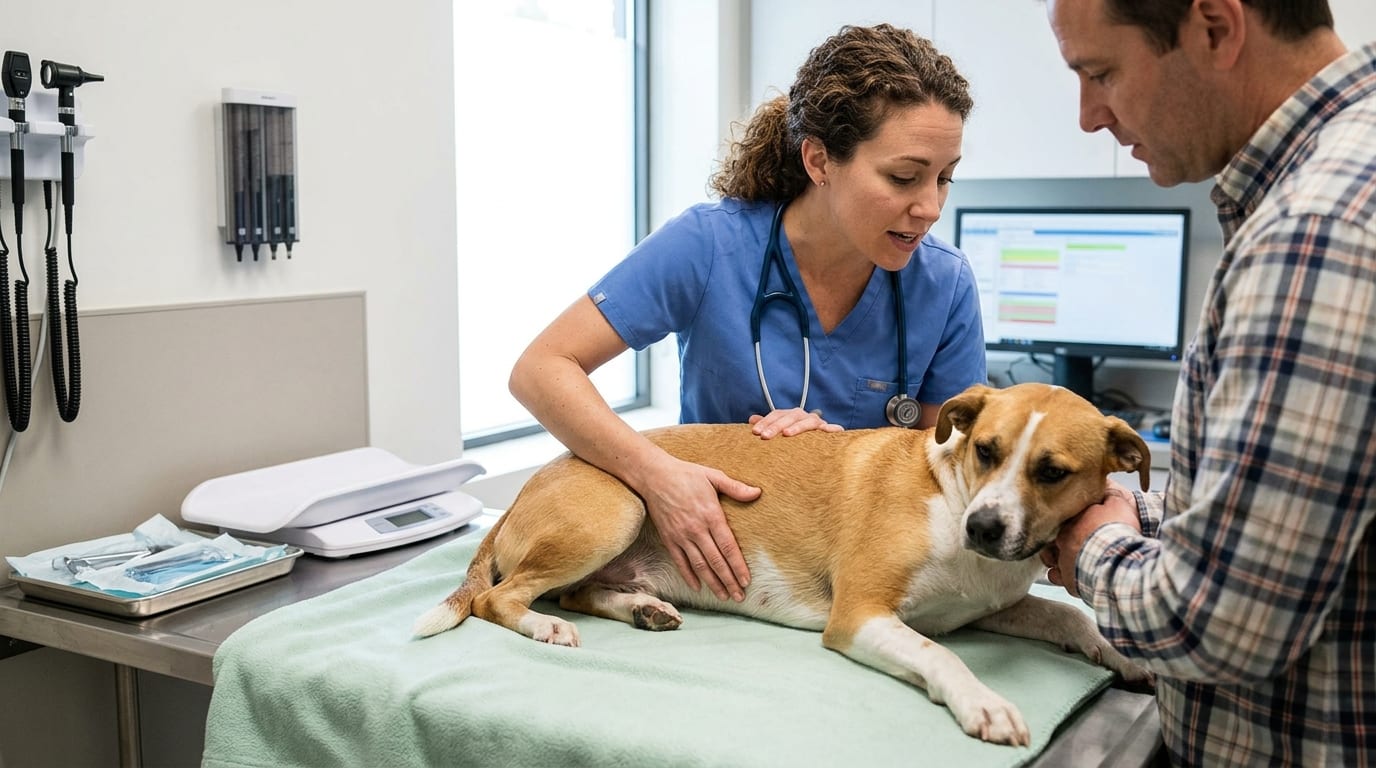
Minimum Database for Moderate-Severe or Recurrent Vomiting
- CBC: Leukocytosis (infection/inflammation), leukopenia (parvovirus), anemia
- Chemistry: BUN/creatinine (AKI), ALP/ALT (liver), glucose (DKA/Addisonian), calcium
- Electrolytes: Na:K ratio <27 → Addisonian crisis
- Urinalysis: SG, glucose, ketones (DKA), casts
- Abdominal radiographs: GDV, obstruction, free air (perforation)
Abdominal Ultrasound Indications
- Palpable mass, suspected foreign body, intussusception (target sign), pancreatitis evaluation, adrenal gland assessment
Spec cPL (Canine Pancreatic Lipase)
- Elevated in ~70–80% of acute pancreatitis
- Use SNAP cPL for in-clinic screening; positive result → send Spec cPL
- Not 100% specific — requires clinical correlation
Na:K Ratio Pearl A vomiting dog with Na:K ratio <27 should be considered Addisonian until proven otherwise. An ACTH stimulation test confirms.
Evidence-Based Treatment Protocols
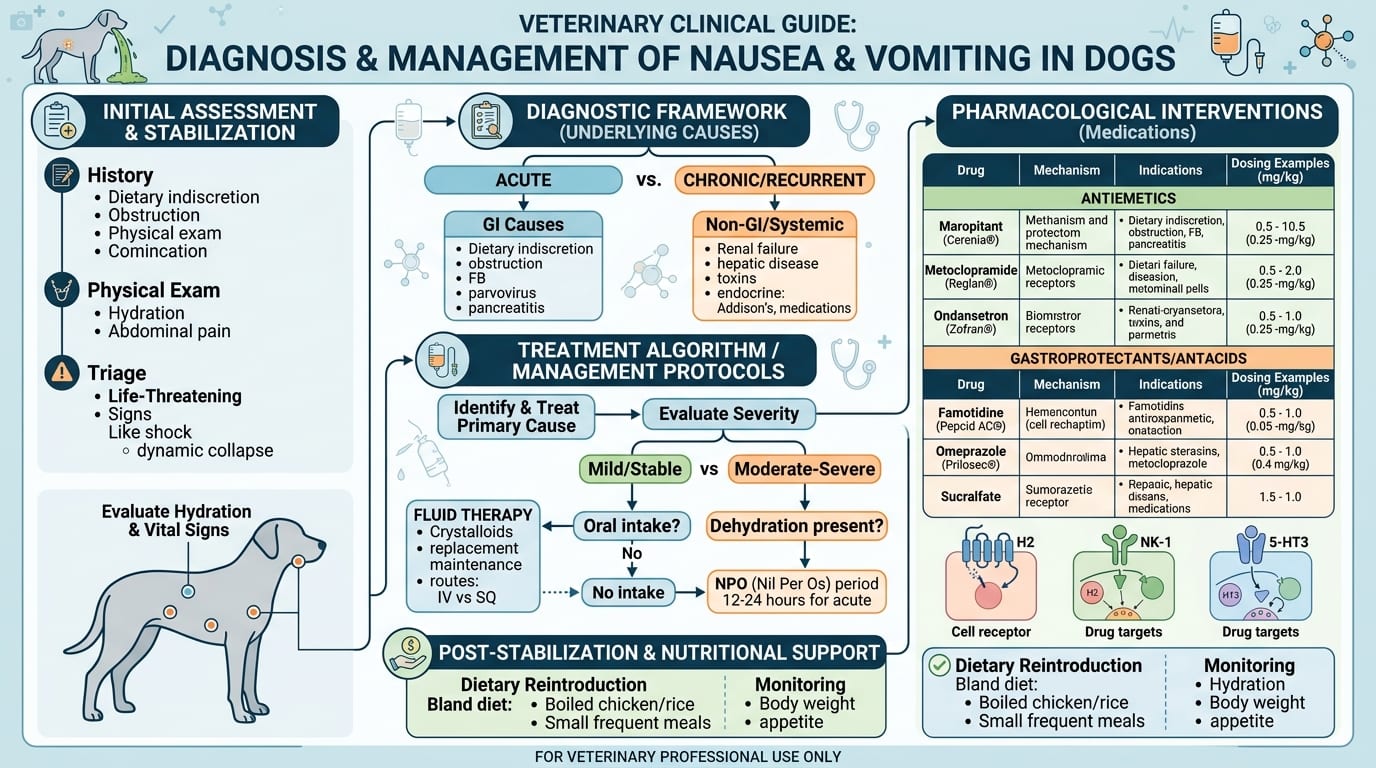
Mild Uncomplicated Acute Vomiting
- Food withholding: 12–24 hours (adults only — not puppies)
- Small frequent meals of bland diet (boiled chicken + rice, or Hill's i/d) × 3–5 days
- Maropitant 1 mg/kg PO q24h if vomiting >2 episodes/day
- Probiotics: FortiFlora once daily — moderate evidence for reducing duration
- If not improved in 48 hours → vet evaluation
Moderate-Severe Acute Vomiting / AHDS
- IV catheter + fluid resuscitation: LRS or PlasmaLyte at 60–90 mL/kg over first hour (shock rate) then reassess
- Maropitant 1 mg/kg IV q24h (first-line)
- Ondansetron 0.5 mg/kg IV q12h if vomiting continues
- Metoclopramide 1–2 mg/kg/day CRI (if gastric motility impairment suspected)
- NPO until vomiting controlled >4–6 hours; then gradual reintroduction
- Pantoprazole 0.7–1 mg/kg IV/PO if hematemesis or gastric ulceration suspected
- Metronidazole 15 mg/kg IV/PO BID × 5 days (only if Clostridial/anaerobic cause suspected)
- Cefazolin 22 mg/kg IV q8h (only if bacterial translocation suspected)
Monitoring Targets
- Vomiting frequency decreasing within 12–24 hours
- HR returning toward normal
- Pink mucous membranes, CRT <2 sec
- First urination within 4–6 hours of fluid resuscitation = good renal perfusion
Frequently Asked Questions
When should I take my dog to the vet for vomiting?
See a vet immediately for: bloated abdomen (GDV emergency), blood in vomit, pale gums or collapse, suspected foreign body or toxin, or vomiting with no urine production. For mild vomiting (1-2 episodes, otherwise well adult dog), a 24-hour bland diet trial is reasonable. No improvement in 48 hours → vet evaluation.
What is the best treatment for a dog with acute vomiting?
Mild cases: 12-24h food rest, bland diet, maropitant 1 mg/kg PO if frequent vomiting. Severe vomiting/AHDS: IV fluids at 60-90 mL/kg/hr + IV maropitant + ondansetron + NPO. Always rule out GDV, foreign body, and pancreatitis first.
What is AHDS in dogs?
Acute Hemorrhagic Diarrhea Syndrome (AHDS), formerly HGE, presents with explosive bloody diarrhea (sometimes vomiting), elevated PCV (>55%), and rapid fluid loss. Life-threatening without IV fluid resuscitation. Most dogs recover within 24-48 hours with aggressive fluid therapy.
Should I feed my dog when they are vomiting?
Withhold food 12-24 hours in adult dogs (never in puppies). Offer small amounts of water frequently. After vomiting stops for 4-6 hours, reintroduce small amounts of bland diet gradually over 5-7 days.
What does Na:K ratio <27 mean in a vomiting dog?
A sodium-to-potassium ratio below 27 in a vomiting dog strongly suggests hypoadrenocorticism (Addison's disease). This is a life-threatening endocrine emergency requiring dexamethasone IV + aggressive fluid resuscitation. Confirm with ACTH stimulation test after initial stabilization.
References
- Unterer S, et al. Treatment of aseptic dogs with hemorrhagic gastroenteritis. J Vet Intern Med. 2011.
- Suchodolski JS. Diagnosis and interpretation of intestinal dysbiosis in dogs and cats. Vet J. 2016.
- Plumb DC. Metoclopramide. In: Plumb's Veterinary Drug Handbook. 10th ed. Wiley-Blackwell; 2023.