Quick Answer
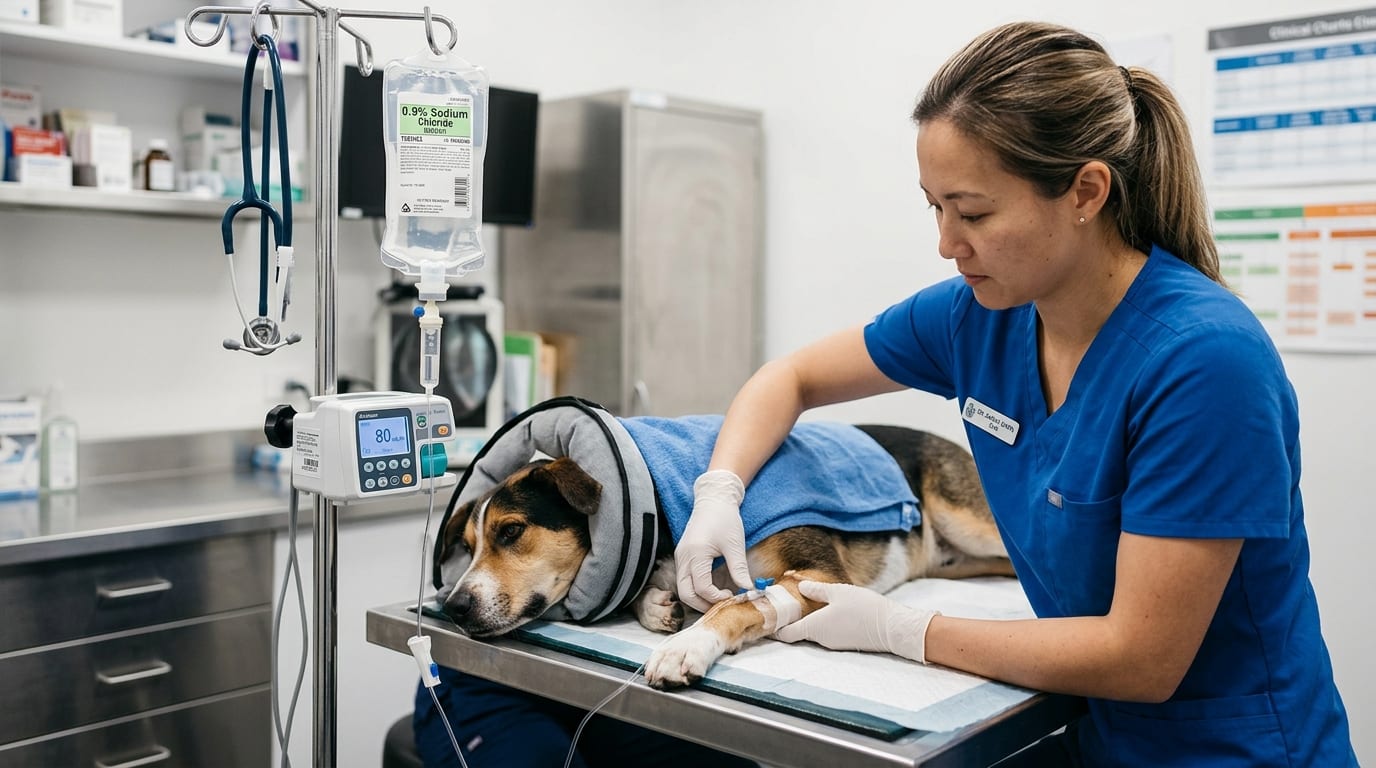
Intravenous fluid therapy is the most common treatment in veterinary medicine yet remains frequently underdosed or poorly targeted. This guide covers fluid type selection, maintenance and dehydration calculations, shock protocols, monitoring endpoints, and common fluid therapy errors.
Key Takeaways
- ✓Fluid selection matters: Use balanced crystalloids (LRS, PlasmaLyte) for most cases; 0.9% NaCl for hyperkalemia and hyponatremia
- ✓Total fluid rate = Maintenance (60 mL/kg/day dogs, 50 mL/kg/day cats) + Deficit + Ongoing losses
- ✓Deficit calculation: body weight (kg) % dehydration 1000 = mL, replaced over 12-24 hours
- ✓Shock boluses: dogs 10-30 mL/kg over 15-30 min; cats 10-20 mL/kg always reassess between aliquots
- ✓Cats are highly susceptible to fluid overload chemosis is the earliest sign; auscultate lungs frequently
- ✓Add KCl supplementation when K <4.0 hypokalemia develops within 24-48 hours on plain fluids
Fluid Type Selection: Crystalloids, Colloids and Hypertonic Saline
Choosing the right fluid is as important as calculating the right rate. Each fluid type has distinct indications and limitations.
Isotonic Crystalloids (Most Common)
| Fluid | Na (mEq/L) | Cl (mEq/L) | K | Other | Best Use |
|---|---|---|---|---|---|
| 0.9% NaCl (Normal Saline) | 154 | 154 | 0 | Hyponatremia, hypochloremia, hyperkalemia, Addisonian crisis | |
| Lactated Ringer's (LRS) | 130 | 109 | 4 | Lactate 28, Ca 3 | Balanced crystalloid for most indications |
| Normosol-R / PlasmaLyte A | 140 | 98 | 5 | Acetate, gluconate | Preferred balanced crystalloid; avoids acidifying chloride load |
| 0.45% NaCl + 2.5% Dextrose | 77 | 77 | 0 | Glucose | Hyperosmolar states, maintenance fluids |
Key selection rules:
- Hyperkalemia (urethral obstruction, oliguric AKI, Addisonian crisis): Use 0.9% NaCl avoid LRS (contains K) and PlasmaLyte (contains K)
- Hyponatremia: Use 0.9% NaCl to correct slowly (no more than 0.5 mEq/L/hr to avoid osmotic demyelination)
- General resuscitation/rehydration: LRS or Normosol-R/PlasmaLyte preferred less hyperchloremic acidosis than 0.9% NaCl
- Cats: PlasmaLyte 148 or LRS are preferred over 0.9% NaCl for routine rehydration
Colloids
- Hydroxyethyl starch (HES, VetStarch): 1020 mL/kg bolus dogs; 510 mL/kg cats. Use when crystalloids alone cannot maintain oncotic pressure. Controversial synthetic colloids associated with AKI in human studies; use cautiously.
- Albumin (25% human albumin): 1.252.5 mL/kg IV slowly. Used in severe hypoalbuminemia (<1.5 g/dL) when crystalloids are insufficient.
- Fresh frozen plasma: 1015 mL/kg for coagulopathy, protein support
Hypertonic Saline (7.27.5% NaCl)
- Dose: 4 mL/kg dogs IV over 510 min; 2 mL/kg cats
- Pulls interstitial fluid into intravascular space rapid intravascular volume expansion with small volume
- Excellent for initial resuscitation of hemorrhagic shock (head trauma, active bleeding) when followed by isotonic fluids
- Contraindicated: hypernatremia, dehydration, renal failure
Rate Calculations: Maintenance, Deficit and Ongoing Losses
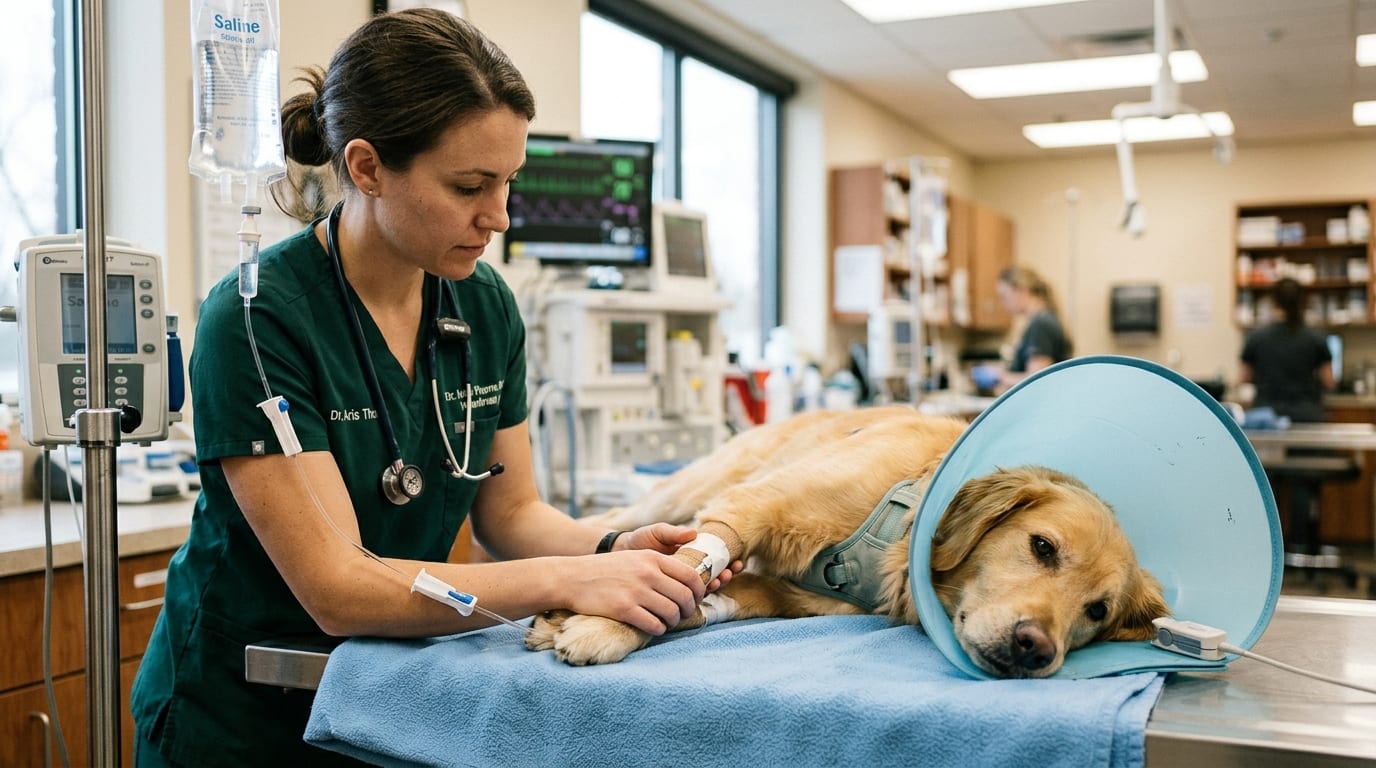
Fluid therapy involves three components calculated separately and summed:
Total Fluid Rate = Maintenance + Deficit Replacement + Ongoing Losses
1. Maintenance Rate
*Dogs:* 60 mL/kg/day (2.5 mL/kg/hr) *Alternatively:* 132 (body weight in kg)^0.75 = mL/day (more accurate for non-average sizes) *Cats:* 50 mL/kg/day (2.1 mL/kg/hr)
2. Dehydration Deficit
- Estimate % dehydration from physical exam:
Deficit volume (mL) = Body weight (kg) % dehydration 1000 *Example: 20 kg dog, 8% dehydrated = 20 0.08 1000 = 1,600 mL deficit*
Replace deficit over 1224 hours (longer for chronic dehydration to avoid rapid shifts).
3. Ongoing Losses
- Vomiting: ~45 mL/kg per vomiting episode
- Diarrhea: ~46 mL/kg per episode
- Fever: add 1015% to maintenance per degree >39.5C
- Third-space losses (peritonitis, pancreatitis): variable; monitor carefully
4. Shock Bolus (if needed)
- Dogs: 1030 mL/kg isotonic crystalloid over 1530 min; reassess and repeat to max 6090 mL/kg
- Cats: 1020 mL/kg over 1530 min; reassess; max 4060 mL/kg (cats much more sensitive to fluid overload)
- Administer in small aliquots and reassess after each bolus
Practical Example
- Maintenance: 60 25 = 1,500 mL/24h = 62.5 mL/hr
- Deficit: 25 0.08 1000 = 2,000 mL over 24h = 83 mL/hr
- Ongoing losses (vomiting, ~3/day): 3 4 mL/kg 25 = 300 mL/day = 12.5 mL/hr
- Total: 62.5 + 83 + 12.5 = 158 mL/hr for first 24 hours
Monitoring Fluid Therapy and Avoiding Overload
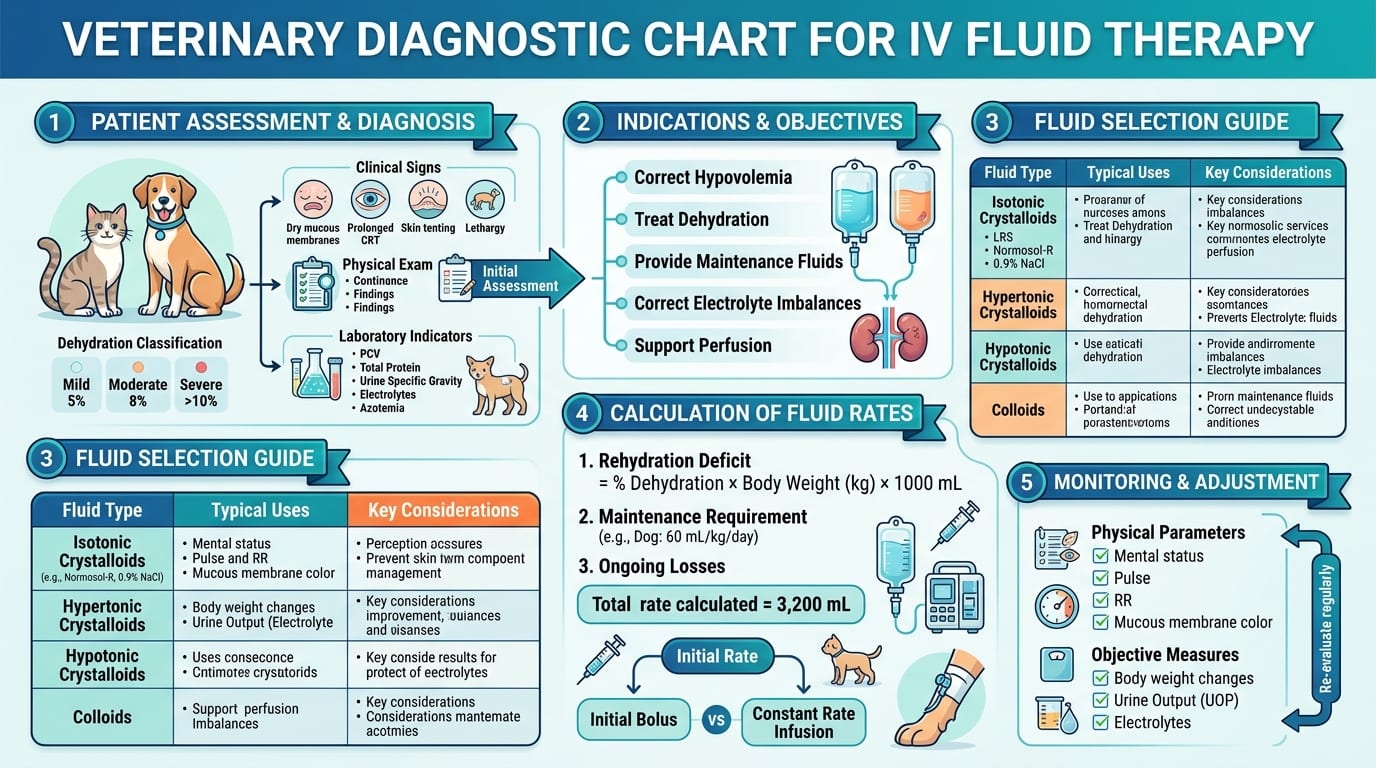
Monitoring Endpoints (Reassess Every 14 Hours in Acutely Ill Patients)
*Perfusion parameters (goal: normal):*
- Heart rate: dogs 60120 bpm; cats 140200 bpm
- Mucous membrane color: pink (not pale, white, or brick red)
- Capillary refill time: 2 seconds
- Blood pressure: MAP 65 mmHg; systolic 80 mmHg (Doppler)
- Mentation: alert and responsive
*Hydration parameters:*
- Skin turgor: normal snap-back
- Body weight: weigh daily (1 kg = ~1 L of water)
- PCV/total solids: trending toward normal
- Urine output: target 12 mL/kg/hr
*Laboratory:*
- Electrolytes q612h in critical patients
- Lactate: >2 mmol/L = inadequate perfusion; should normalize with fluid therapy
- BUN/creatinine: trending down in pre-renal azotemia
- Albumin: monitor oncotic pressure
Fluid Overload Recognize Early
- Chemosis (conjunctival edema) earliest sign in dogs
- Serous nasal discharge
- Peripheral edema (pitting edema of limbs/ventrum)
- Tachypnea, increased respiratory effort
- Ascites
- Pulmonary edema (crackles on auscultation) life-threatening
Cats are particularly susceptible to fluid overload their smaller cardiovascular reserve means overhydration causes pulmonary edema faster than dogs. In cats:
- Use lower maintenance rates (50 mL/kg/day)
- Give shock boluses in 510 mL/kg increments with frequent reassessment
- Consider furosemide 12 mg/kg IV immediately if pulmonary crackles develop
Potassium Supplementation Most hospitalized patients become hypokalemic within 2448 hours on plain isotonic fluids. Supplement KCl based on serum K:
| Serum K (mEq/L) | KCl to add per 500 mL bag |
|---|---|
| 3.54.0 | 5 mEq |
| 3.03.5 | 7 mEq |
| 2.53.0 | 10 mEq |
| 2.02.5 | 15 mEq |
| <2.0 | 20 mEq (do not exceed 0.5 mEq/kg/hr) |
Frequently Asked Questions
What IV fluid is best for dogs?
For most indications, a balanced isotonic crystalloid (Lactated Ringer's or PlasmaLyte/Normosol-R) is preferred over 0.9% NaCl because they avoid the hyperchloremic acidosis associated with large volumes of saline. Use 0.9% NaCl specifically for hyperkalemia (urethral obstruction, Addisonian crisis) and hyponatremia correction.
How do you calculate fluid rates for dogs and cats?
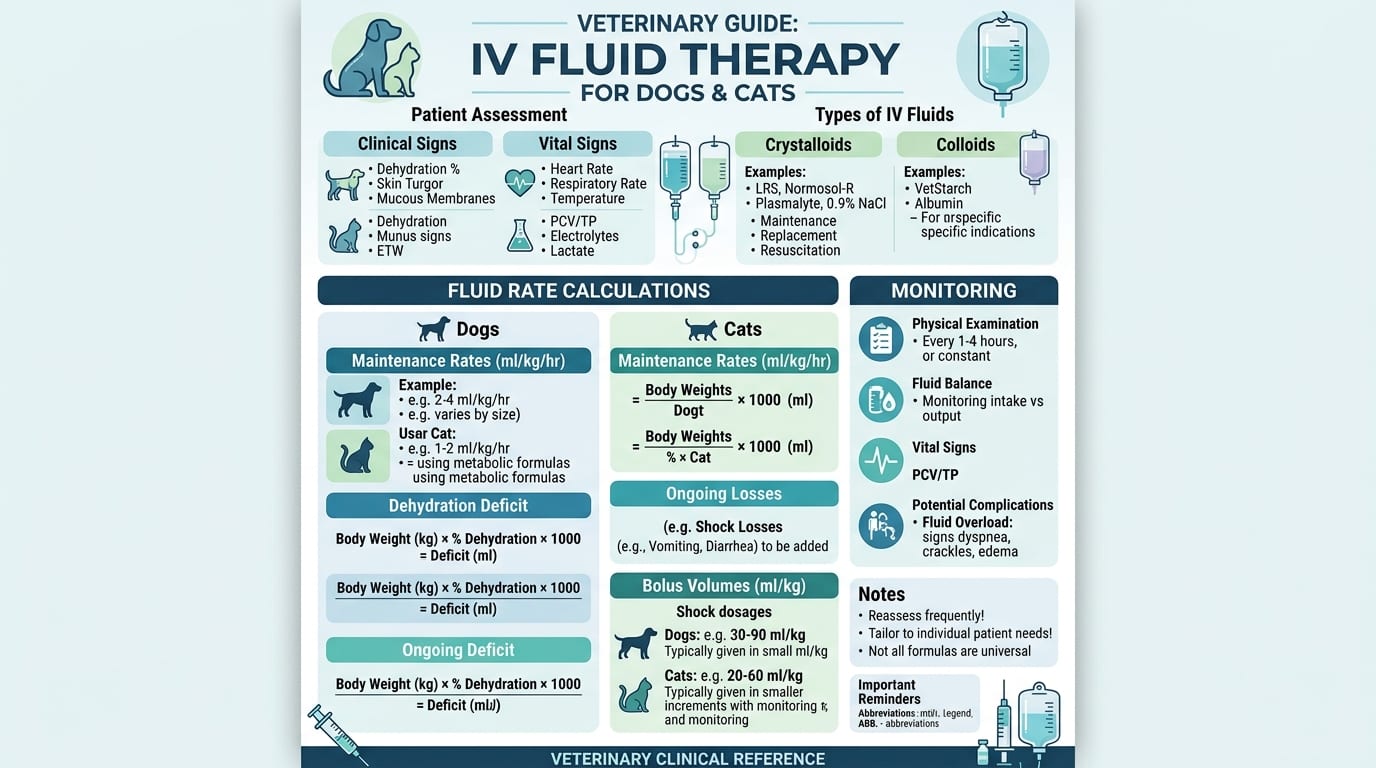
Total fluid rate = Maintenance + Dehydration Deficit + Ongoing Losses. Maintenance: 60 mL/kg/day in dogs, 50 mL/kg/day in cats. Deficit: body weight (kg) % dehydration 1000 = mL, replaced over 12-24 hours. Add estimates for vomiting/diarrhea losses (~4-6 mL/kg/episode). Sum all three for total hourly rate.
What is the shock bolus dose for dogs and cats?
Dogs: 10-30 mL/kg isotonic crystalloid over 15-30 minutes, reassess and repeat up to 60-90 mL/kg total. Cats: 10-20 mL/kg over 15-30 minutes, reassess carefully, max 40-60 mL/kg. Always administer in small aliquots and reassess perfusion parameters (HR, MM color, CRT, BP) after each bolus.
What are the signs of fluid overload in cats and dogs?
Early: chemosis (conjunctival edema), serous nasal discharge. Progressive: peripheral pitting edema, ascites, tachypnea. Severe: pulmonary edema (crackles on auscultation), respiratory distress. Cats develop pulmonary edema much faster than dogs weigh cats daily and reassess frequently. Treat with furosemide 1-2 mg/kg IV if pulmonary signs develop.
When should potassium be added to IV fluids?
Potassium supplementation should be added when serum K falls below 4.0 mEq/L in hospitalized patients, as hypokalemia develops within 24-48 hours on plain fluids. Supplement KCl based on measured K: 5 mEq/500 mL for K 3.5-4.0, up to 20 mEq/500 mL for K <2.0. Never exceed 0.5 mEq/kg/hr infusion rate.
References
- Hughes D, Boag AK. Fluid therapy with macromolecular plasma volume expanders. In: DiBartola SP, ed. Fluid, Electrolyte, and Acid-Base Disorders. 4th ed. Elsevier; 2011.
- DiBartola SP. Introduction to fluid therapy. In: Fluid, Electrolyte, and Acid-Base Disorders in Small Animal Practice. 4th ed. Elsevier; 2011.
- Rudloff E, Kirby R. Fluid resuscitation and the trauma patient. Vet Clin North Am Small Anim Pract. 2008.