Quick Answer
GDV — commonly called bloat — is one of the most rapidly fatal conditions in veterinary medicine. This guide explains why the stomach twists, which breeds are most at risk, the warning signs that demand immediate emergency care, what happens during surgery, and how prophylactic gastropexy can save your dog's life.
Key Takeaways
- ✓GDV (bloat) is a rapidly fatal emergency — the stomach fills with gas and twists, cutting off blood supply
- ✓Unproductive retching + distended abdomen = go to emergency vet immediately, do not wait
- ✓Surgery (derotation + gastropexy) is the only cure; overall survival is 80–85% with prompt treatment
- ✓High-risk breeds include Great Danes, German Shepherds, Standard Poodles, and Weimaraners
- ✓Prophylactic laparoscopic gastropexy for high-risk breeds can eliminate GDV mortality risk entirely
What Is GDV — and Why Is It So Deadly?
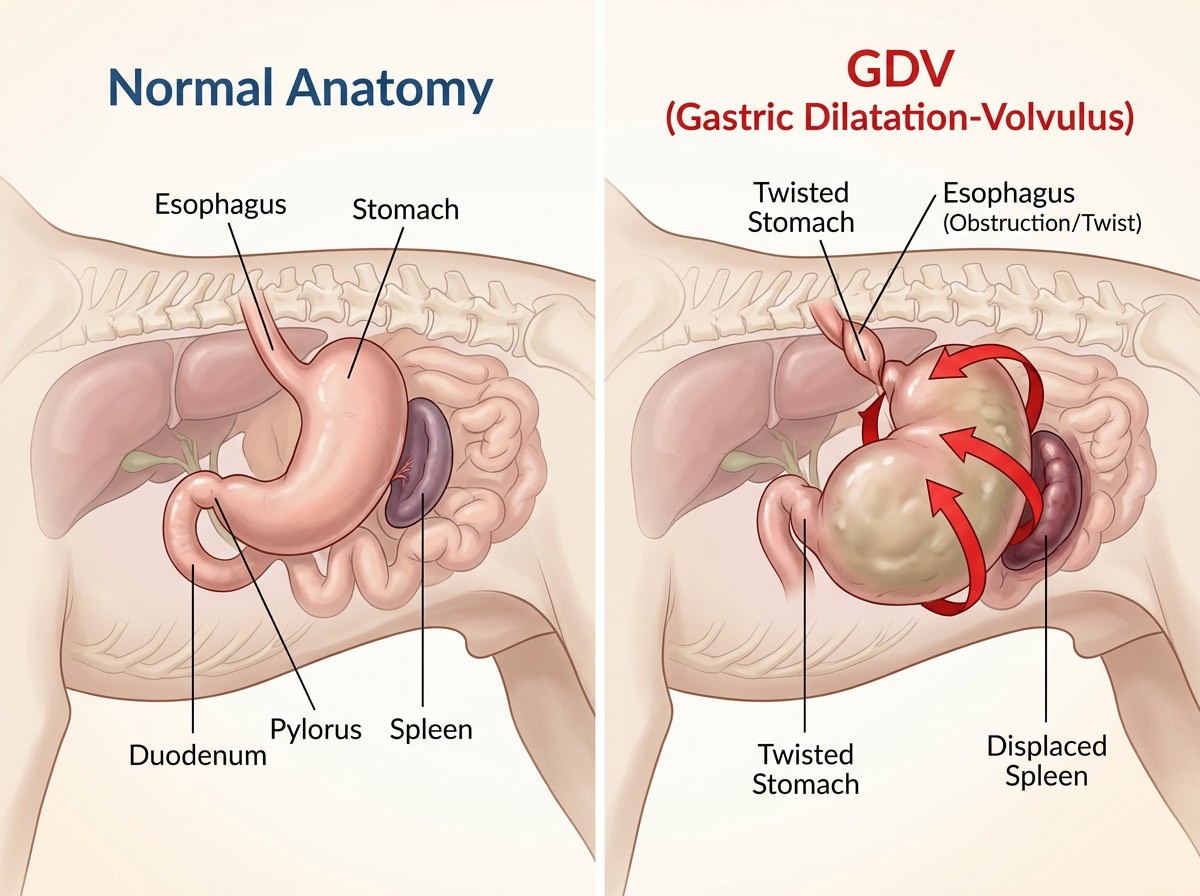
Gastric dilatation-volvulus (GDV) is a two-stage catastrophe. First, the stomach fills with gas, fluid, or food and dramatically distends — this is the "dilatation" phase. Then, the distended stomach rotates on its axis, twisting the esophagus and the outlet to the small intestine shut — this is the "volvulus." Once torsion occurs, gas and ingested material cannot escape, the stomach continues to expand, and a cascade of life-threatening events follows.
Why the Twist Is So Dangerous
When the stomach rotates, it traps the spleen (which is attached to the stomach's greater curvature) and drags it out of position. The blood supply to the stomach wall is cut off — within hours, the gastric tissue begins to die. The massively dilated stomach compresses the caudal vena cava, the large vein that returns blood to the heart. Cardiac output falls. Blood pressure crashes. Toxins from dying gut tissue flood the bloodstream. Abnormal heart rhythms (arrhythmias) develop. Without emergency intervention, most dogs die within 4 to 8 hours.
Dilatation Without Volvulus
Some dogs experience gastric dilatation without torsion. The stomach distends with gas but does not rotate. This is still a medical emergency requiring immediate decompression, but the prognosis is significantly better than true GDV. The distinction can only be confirmed by x-ray.
GDV is not a condition to "watch and see." If your dog's abdomen looks distended and your dog is unproductive retching, treat every minute as critical.
Which Dogs Are Most at Risk?
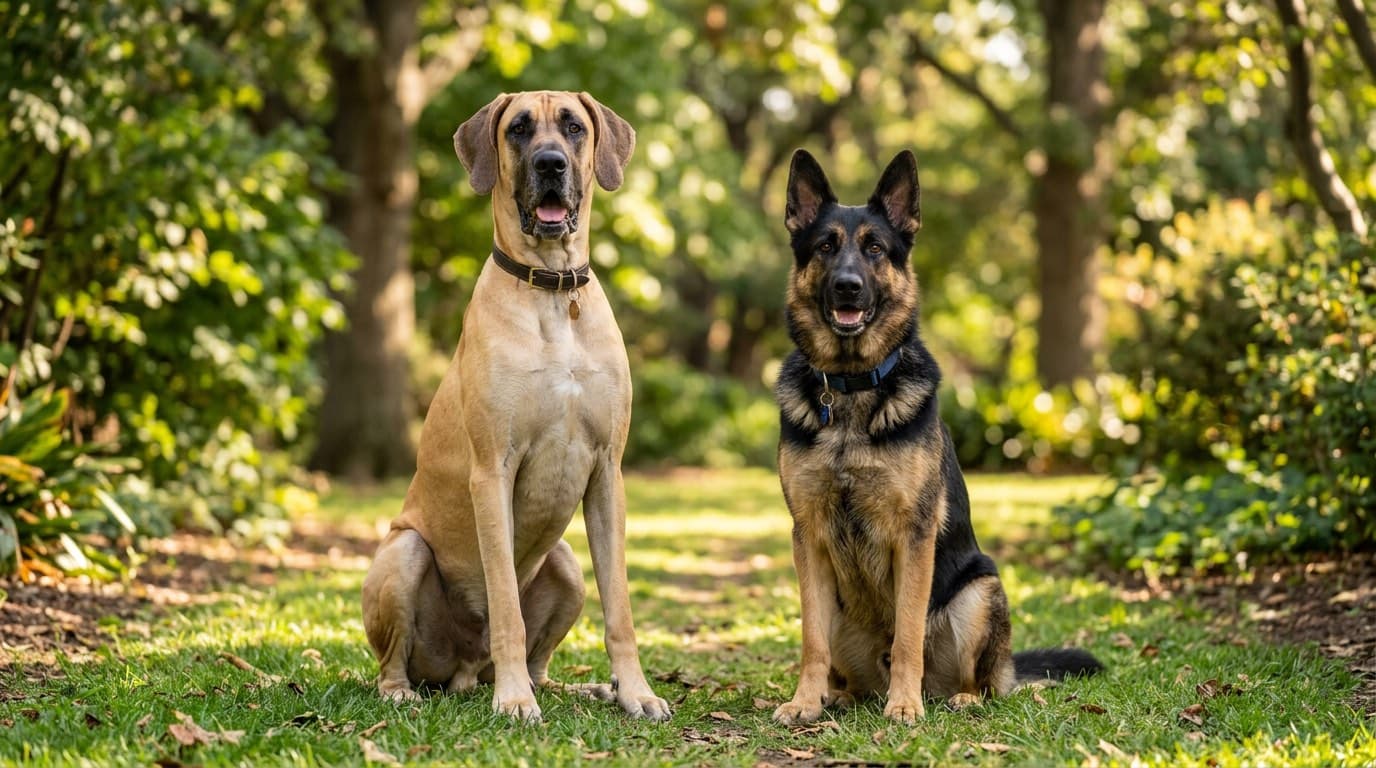
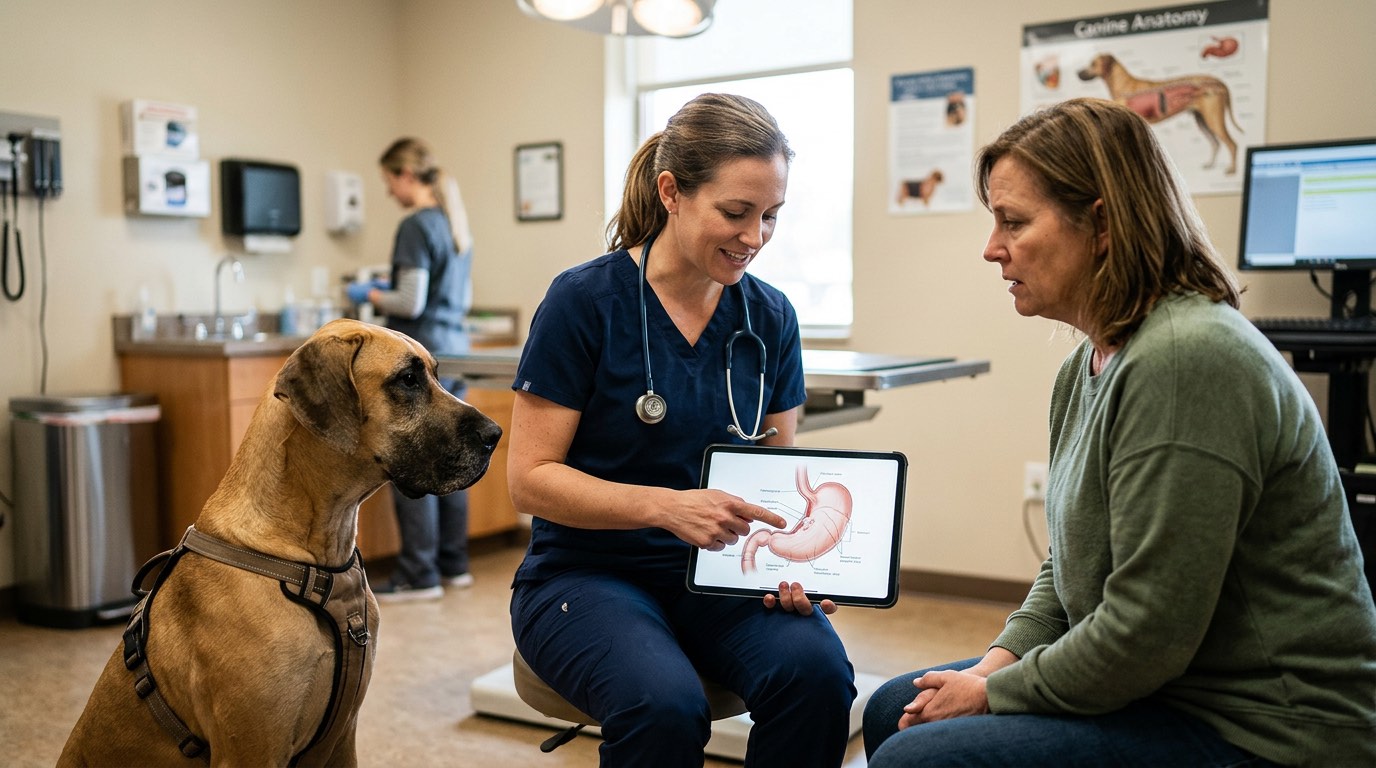
GDV is overwhelmingly a disease of large and giant breeds with deep, narrow chests. The anatomy matters: in these dogs, the stomach hangs more freely in the abdominal cavity, giving it more room to swing and rotate than in barrel-chested or small-bodied dogs.
Highest-Risk Breeds
- Great Danes — lifetime risk as high as 42% in some studies
- German Shepherds
- Standard Poodles
- Weimaraners
- Irish Setters and Irish Wolfhounds
- Doberman Pinschers
- Gordon Setters
- Saint Bernards
Risk Factors Beyond Breed
- Age: Dogs over 7 years have significantly higher risk
- Sex: Male dogs are at slightly higher risk than females
- Body condition: Underweight dogs (lower body condition score) have higher risk than obese dogs — a lean, deep-chested dog has more room for the stomach to move
- Temperament: Dogs with anxious, fearful, or stressed temperaments appear to have higher risk — stress affects gastric motility
- Eating habits: Eating one large meal per day, eating rapidly, or eating from an elevated bowl (this remains debated in the literature)
- Exercise timing: Vigorous exercise immediately before or after eating
- Family history: First-degree relatives with GDV history increase individual risk
A Critical Note on Elevated Bowls
The popular belief that elevated food bowls prevent GDV has been contradicted by at least one large retrospective study which found elevated bowls actually increased risk in large breeds. This recommendation should be discussed with your veterinarian based on your specific dog.
Warning Signs — Act Before It's Too Late
GDV is one of the veterinary emergencies where owner recognition speed directly determines survival. The window between first signs and death can be as short as 4 hours.
Classic Signs of GDV
- Unproductive retching — the dog heaves, gags, or tries to vomit but produces nothing (or only small amounts of foam). This is the most characteristic sign.
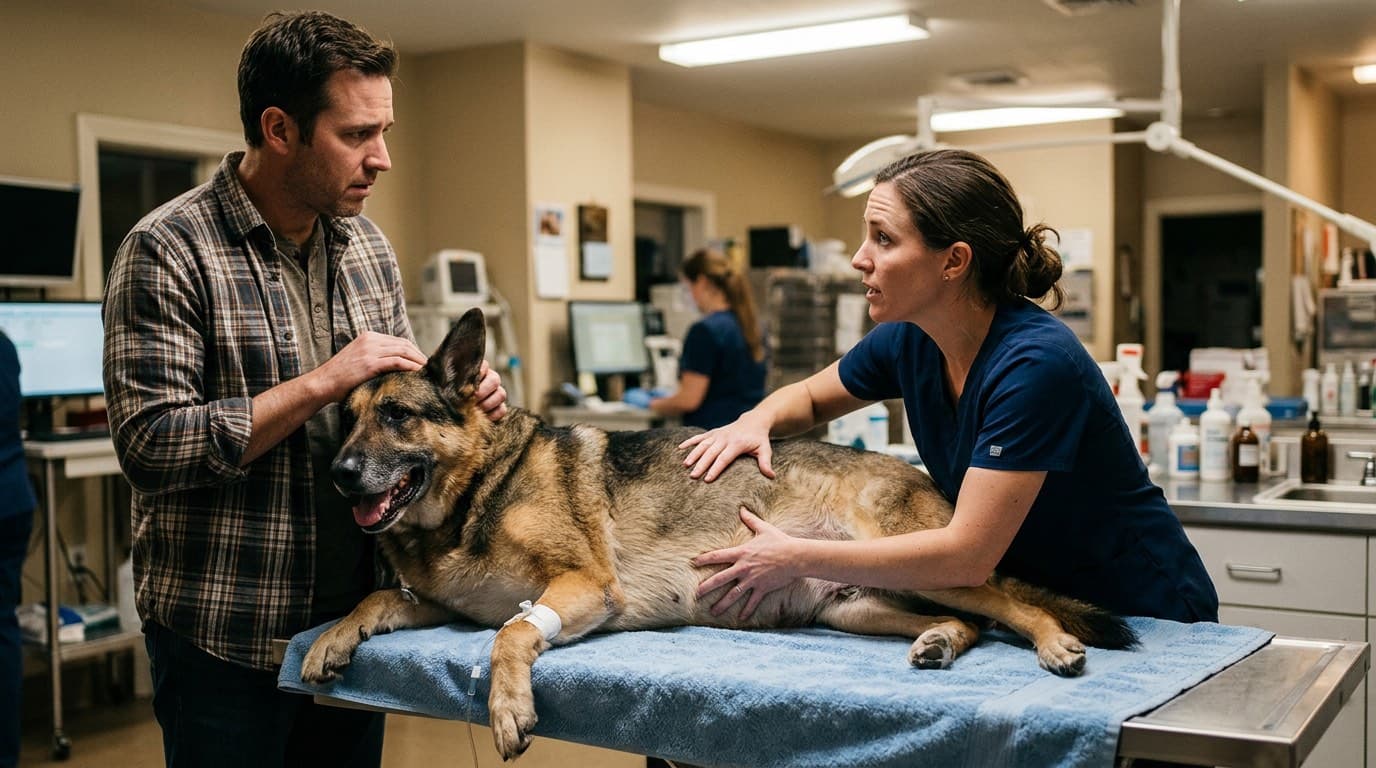
- Rapidly enlarging abdomen — the belly visibly swells, particularly behind the ribcage on the left side
- Extreme restlessness — the dog cannot get comfortable, paces, changes positions repeatedly
- Drooling excessively
- Pain on abdominal palpation
- Hunched posture
Signs of Cardiovascular Collapse (Late Stage)
As the condition progresses, signs of shock appear:
- Pale or white gums
- Rapid, weak pulse
- Collapse or inability to stand
- Labored breathing
- Cold extremities
If your dog is showing unproductive retching with a distended abdomen — do not call your regular vet to leave a message. Drive immediately to the nearest emergency veterinary hospital and call ahead so they can prepare. Every minute counts.
What GDV Is NOT
GDV does not cause profuse vomiting. If your dog is actually vomiting food or bile, the stomach is still connected and functioning — this still warrants a vet visit, but it is not classic GDV presentation.
Emergency Treatment — Surgery Is the Only Cure
When a GDV dog arrives at the emergency clinic, the team works simultaneously on stabilization and preparation for surgery. There is no medical cure for GDV — the stomach must be physically derotated and anchored.
Step 1: Stabilization
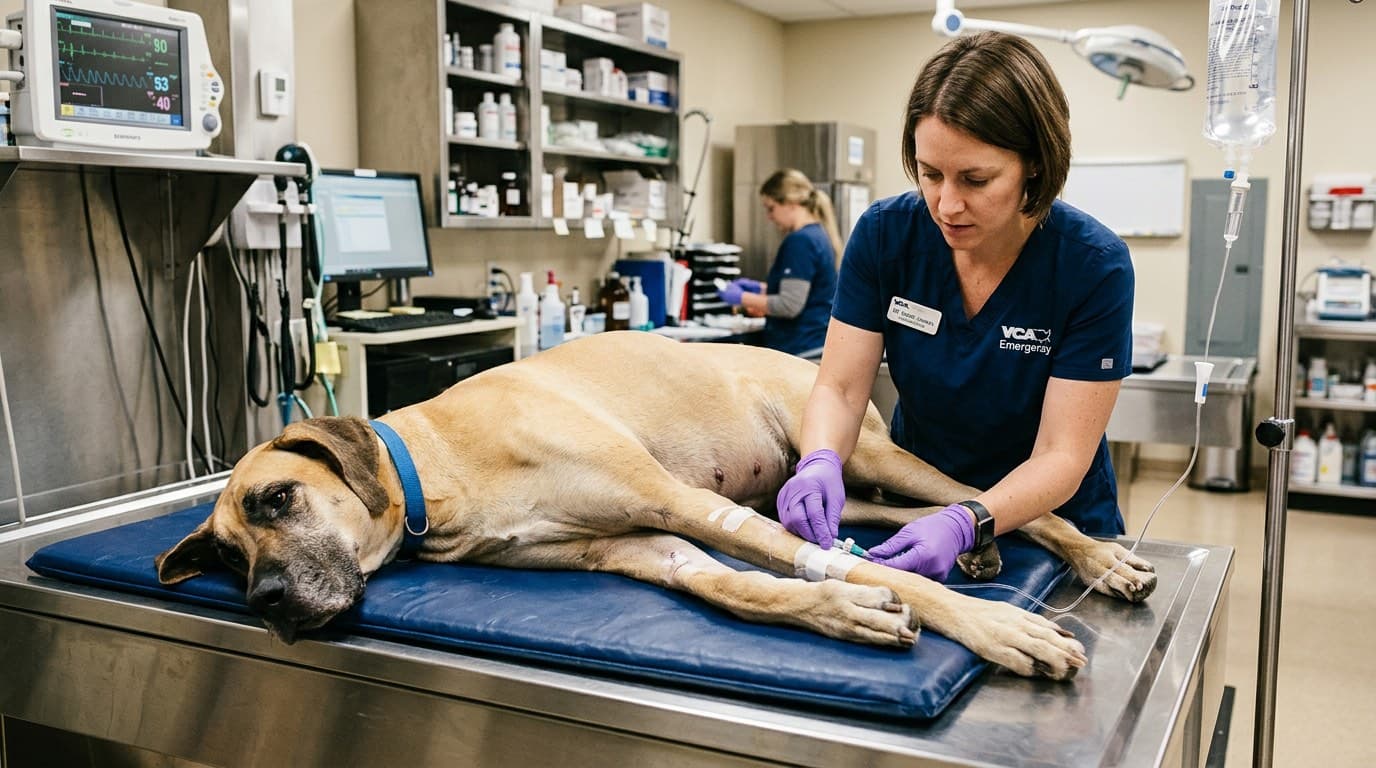
Large-bore IV catheters are placed immediately — often two simultaneously — and aggressive IV fluid resuscitation begins to treat shock. Supplemental oxygen is administered. Blood is drawn for emergency bloodwork (electrolytes, blood gas, lactate, complete blood count, coagulation panel). A stomach tube may be passed to decompress the stomach if the anatomy allows; if the esophagus is blocked by the twist, trocharization (a large needle placed through the body wall into the stomach) provides emergency gas relief.
Step 2: Surgery — Derotation and Gastropexy
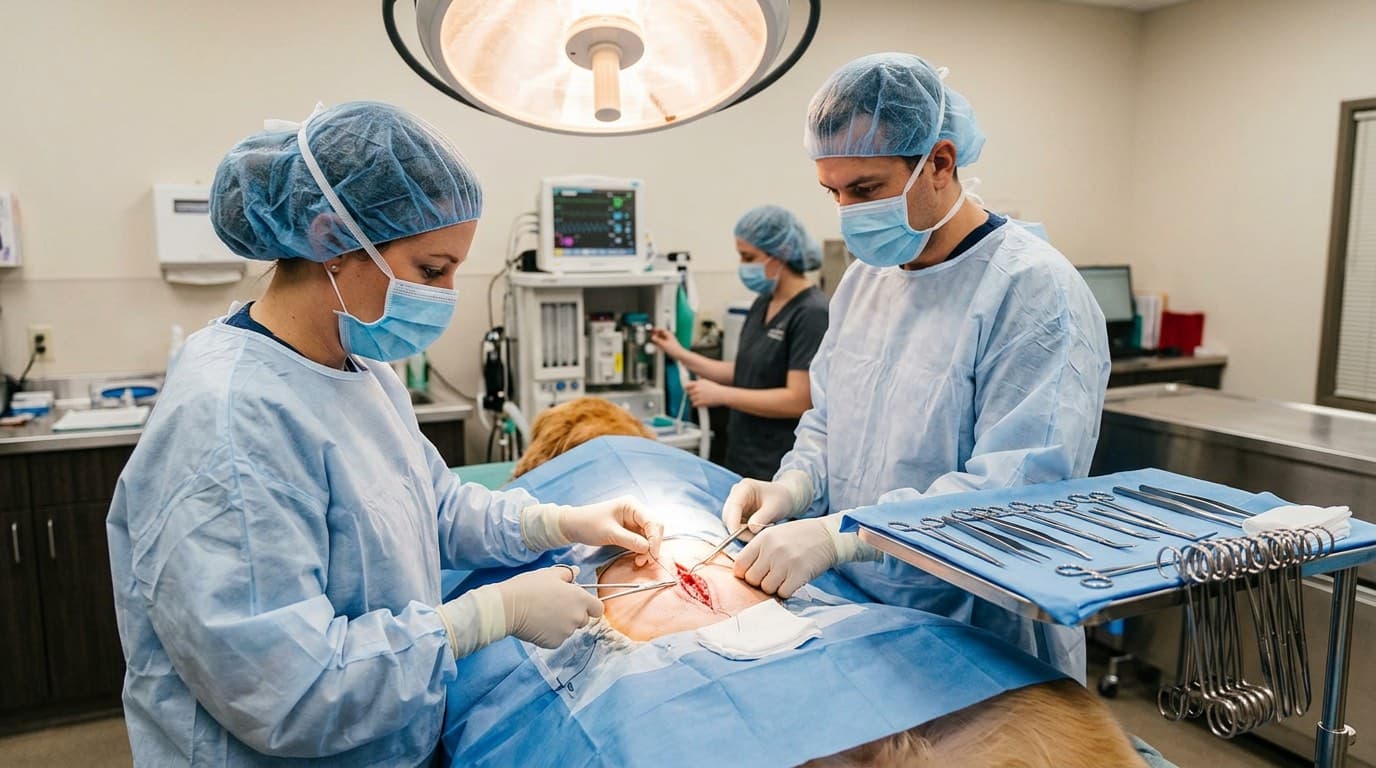
Surgery is performed as soon as the dog is stable enough to survive anesthesia. The surgeon:
- Opens the abdomen and manually derotates the stomach to its correct position
- Assesses the stomach wall for areas of necrosis (dead tissue) — affected portions must be removed
- Assesses the spleen — if the spleen is damaged, it may be removed (splenectomy)
- Performs a gastropexy — permanently suturing the stomach to the right body wall so it cannot rotate again
Step 3: Monitoring Post-Surgery
The 24–72 hours after surgery are critical. Cardiac arrhythmias, particularly ventricular premature contractions (VPCs), are common as reperfusion injury affects the heart. Continuous ECG monitoring is essential. Repeat bloodwork monitors for delayed organ damage.
Survival Rates
Overall survival for GDV treated surgically is approximately 80–85%. Dogs that require partial gastrectomy (stomach wall removal) have higher mortality rates of 30–60%. Early intervention — before cardiovascular collapse — dramatically improves outcomes.
Prevention — The Case for Prophylactic Gastropexy
For high-risk breeds, preventive measures — and specifically prophylactic gastropexy — offer the best protection against GDV mortality.
Prophylactic Gastropexy
A prophylactic gastropexy permanently attaches the stomach to the right body wall before GDV ever occurs. It does not prevent gastric dilatation (the stomach can still accumulate gas), but it prevents the life-threatening torsion.
Laparoscopic-assisted gastropexy is now widely available and offers:
- Small incisions and faster recovery
- Can be done at the same time as spay/neuter in high-risk puppies (6–12 months)
- Eliminates GDV mortality risk: gastropexied dogs who develop dilatation can be treated with simple decompression
The American College of Veterinary Surgeons recommends discussing prophylactic gastropexy with owners of high-risk breeds. Given the 42% lifetime GDV risk in Great Danes and the 20–30% mortality rate of GDV even with treatment, prophylactic gastropexy is a strongly defensible choice for many large-breed dogs.
Lifestyle Modifications (Supporting, Not Sufficient)
- Feed 2–3 smaller meals per day rather than one large meal
- Avoid vigorous exercise for 1–2 hours before and after eating
- Consider slow-feeder bowls to reduce rapid ingestion
- Monitor temperament and reduce chronic stress
- Know the nearest 24-hour emergency veterinary clinic's location and phone number before you ever need it
Do not rely solely on lifestyle modifications for high-risk breeds — they reduce but do not eliminate GDV risk.
Frequently Asked Questions
Can bloat in dogs resolve on its own?
No. Gastric dilatation-volvulus (GDV) will not resolve without emergency veterinary care. Even simple gastric dilatation without torsion requires veterinary decompression. Any dog showing unproductive retching and abdominal distension must be seen immediately — waiting even a few hours significantly worsens the prognosis.
Is GDV the same as bloat?
"Bloat" is a colloquial term that can refer to either gastric dilatation alone or gastric dilatation-volvulus (GDV). GDV specifically means the stomach has also rotated, which is far more dangerous. Veterinarians use the term GDV to describe the full emergency; the distinction matters because GDV requires surgery while simple dilatation without torsion can sometimes be managed without surgery.
How much does GDV surgery cost?
GDV emergency surgery typically ranges from $3,000 to $7,000 or more depending on the geographic location, severity of the case, and required concurrent procedures such as partial gastrectomy or splenectomy. Pet insurance that covers emergencies and surgeries can significantly reduce out-of-pocket costs for owners of high-risk breeds.
At what age should I get a prophylactic gastropexy?
Most veterinary surgeons recommend performing prophylactic gastropexy in high-risk breeds at the time of spay or neuter, typically around 6–12 months of age. This timing minimizes anesthetic risk (one procedure instead of two) and provides lifelong protection before the dog enters its higher-risk adult years.
References
- Glickman LT, et al. "Incidence of and breed-related risk factors for gastric dilatation-volvulus in dogs." J Am Vet Med Assoc. 2000;216(1):40-45.
- Brockman DJ, et al. "A retrospective study of 23 cases of canine gastric dilatation-volvulus." Vet Surg. 1995.
- Ward MP, et al. "Can the dilation-volvulus complex in Great Danes be reduced by a permanent prophylactic gastropexy?" Aust Vet J. 2003.