Quick Answer
An evidence-based guide to pet obesity covering body condition scoring, caloric needs calculation, veterinary weight loss protocols, therapeutic diets, and safe exercise plans for overweight dogs and cats.
Key Takeaways
- ✓Over 50% of dogs and cats are overweight or obese, making it the most common nutritional disorder in pets.
- ✓Body condition scoring on a 9-point scale is the standard clinical assessment — each point above 5 represents approximately 10% excess weight.
- ✓Feed 80% of the resting energy requirement (RER) at ideal body weight using a therapeutic weight loss diet, not simply less of the regular food.
- ✓Safe weight loss targets are 1–2% per week for dogs and 0.5–1% per week for cats — rapid loss risks muscle wasting and hepatic lipidosis in cats.
- ✓Treats and table scraps are the most commonly underestimated caloric contributors — they must be tracked and included in the daily calorie budget.
The Pet Obesity Epidemic
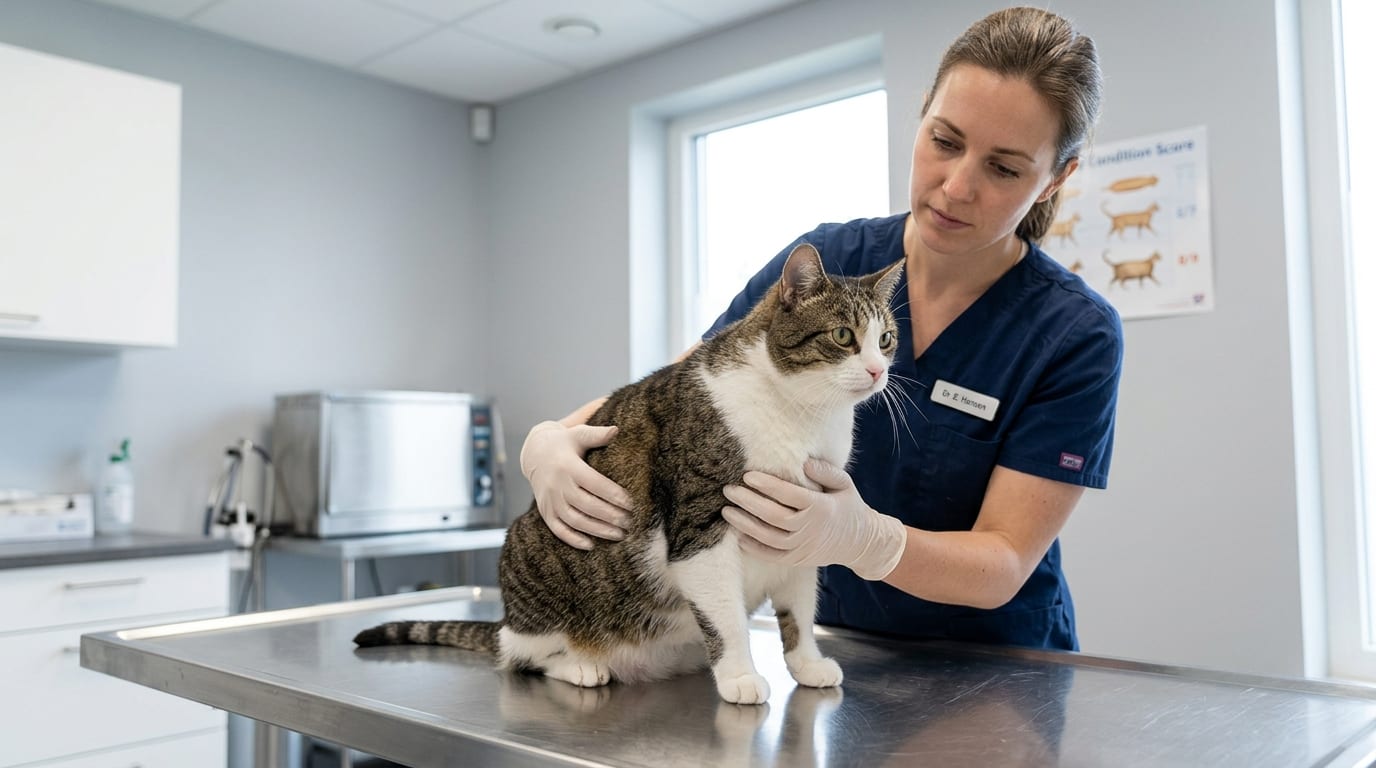
Obesity is the most common nutritional disorder affecting companion animals in developed countries. Current surveys consistently show that over 50 percent of dogs and cats in North America are classified as overweight or obese — a prevalence that has risen steadily over the past two decades and mirrors the human obesity epidemic. Despite this, many pet owners do not recognize that their pet is overweight, a phenomenon researchers call the "fat pet gap."
Obesity is defined as body weight exceeding the ideal by 15 to 20 percent or more, while overweight describes animals 10 to 15 percent above ideal. These seemingly modest numbers translate into significant health consequences. Overweight dogs live an average of 1.8 years less than their lean counterparts — data from a landmark lifetime study in Labrador Retrievers demonstrated this with remarkable clarity.
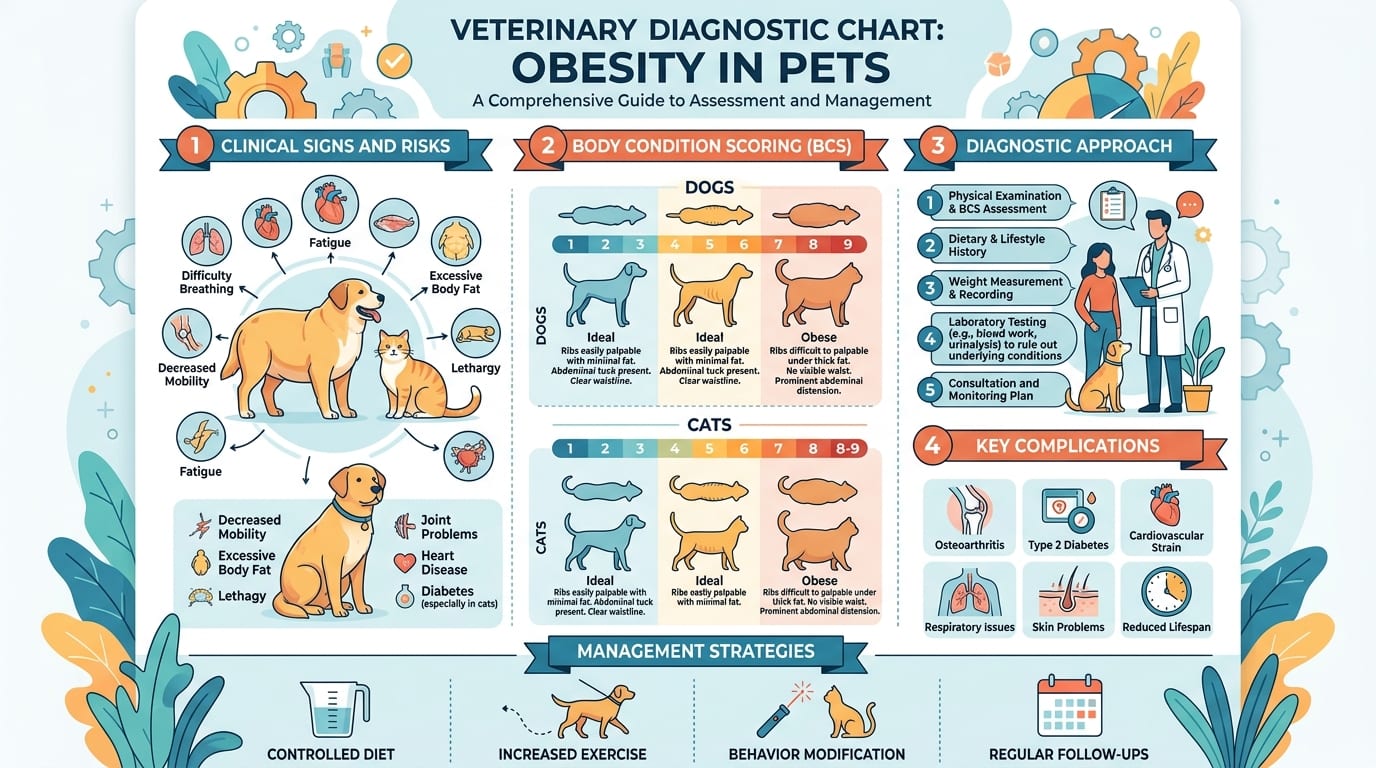
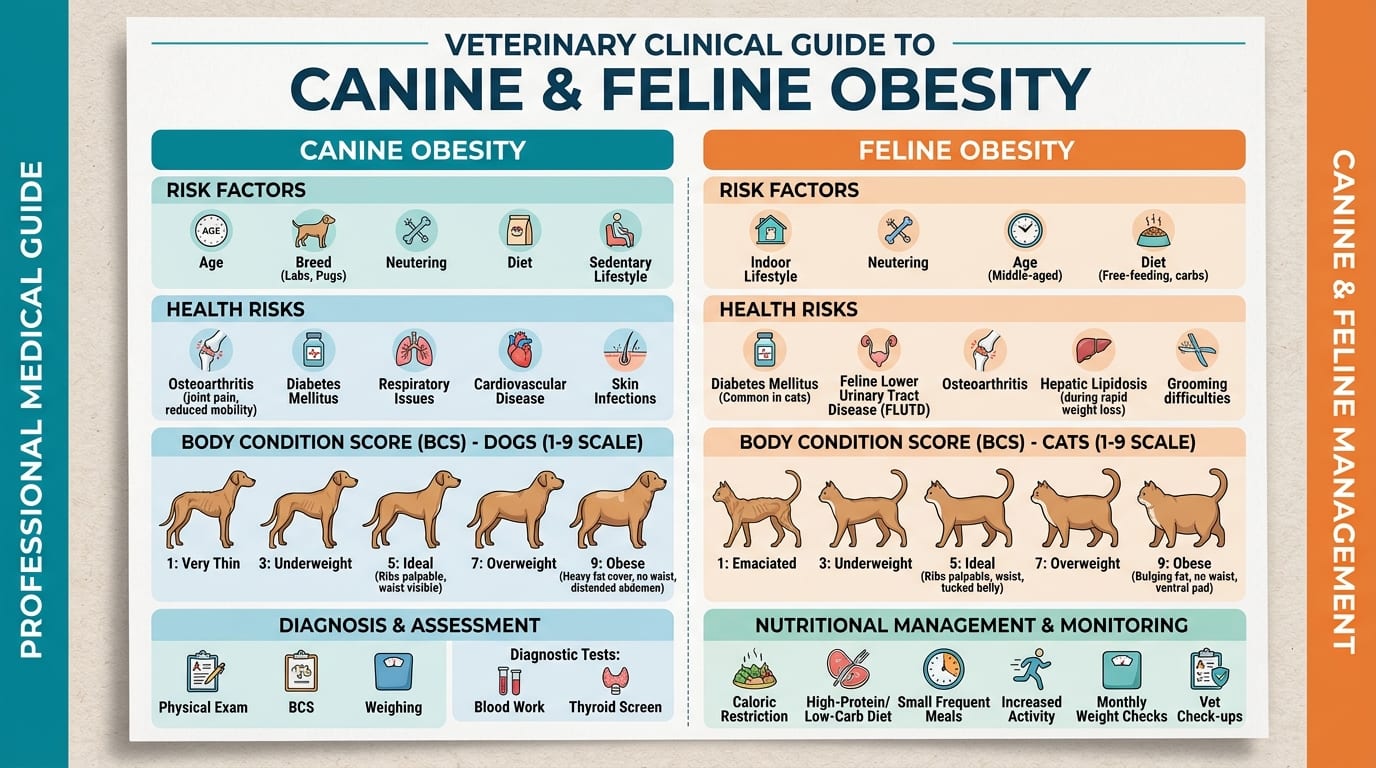
The health risks associated with excess weight are extensive and well-documented. Obesity increases the risk of osteoarthritis, cruciate ligament rupture, intervertebral disc disease, diabetes mellitus (especially in cats), respiratory compromise, heat intolerance, urinary tract disease, certain cancers, and decreased immune function. It also complicates anesthesia and surgical procedures, increasing both perioperative risk and recovery time.
Addressing pet obesity requires a partnership between veterinary teams and pet owners, combining accurate assessment, realistic goal-setting, dietary modification, and appropriate physical activity.
Body Condition Scoring
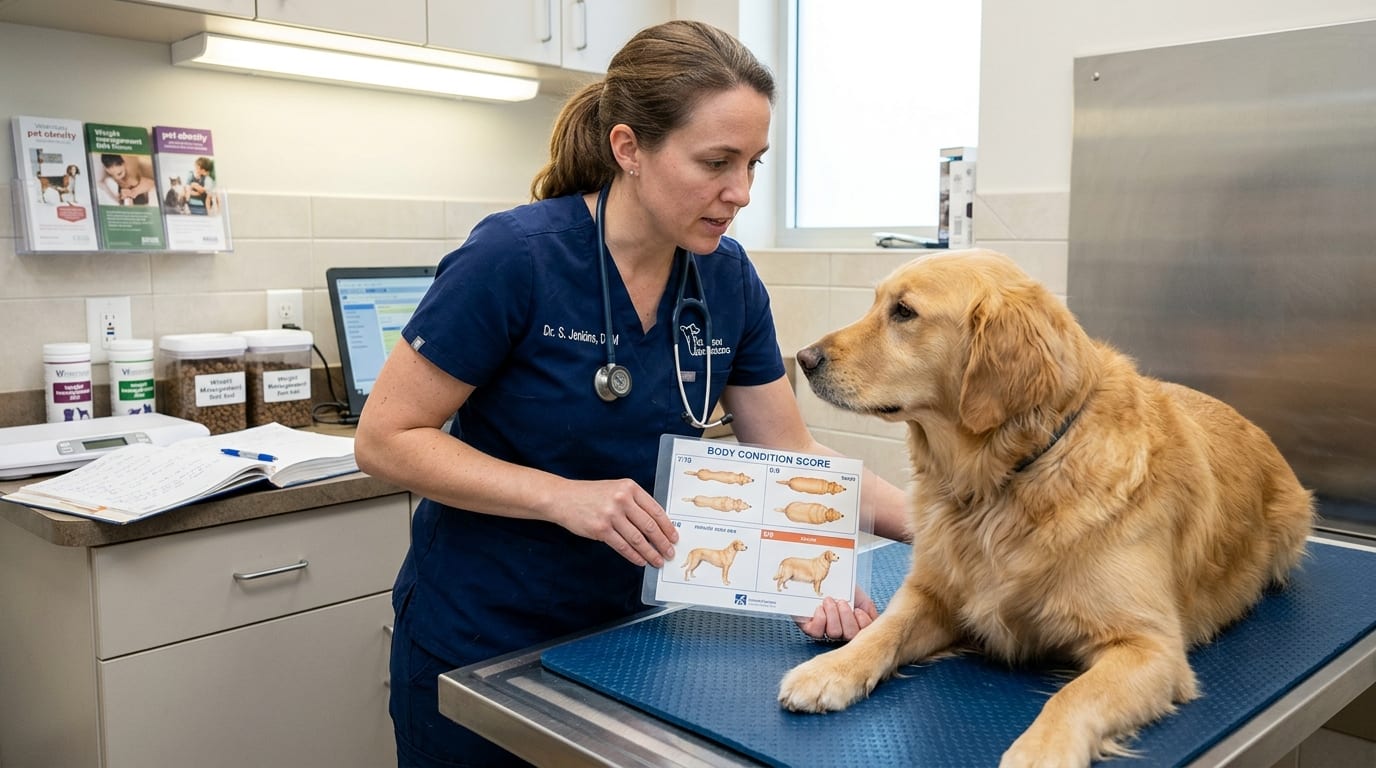
Body condition scoring (BCS) is the primary clinical tool for assessing whether a pet is at ideal weight, underweight, or overweight. Two scales are commonly used: a 5-point scale and a 9-point scale, with the 9-point scale being preferred in most clinical settings because it provides finer discrimination.
The 9-Point BCS Scale
On the 9-point scale, 4–5 represents ideal body condition. Each point above 5 represents approximately 10 percent excess body weight — so a dog scoring 7/9 is roughly 20 percent overweight, and a dog at 9/9 is approximately 40 percent above ideal.
How to Assess BCS at Home
Owners can learn to perform a basic body condition assessment using three key landmarks:
- Ribs — you should be able to feel individual ribs easily with light fingertip pressure, similar to running your fingers over your knuckles. If you have to press firmly to feel them, your pet is carrying excess fat
- Waist — viewed from above, your pet should have a visible waist (a narrowing behind the rib cage). An absent waist indicates overweight condition
- Abdominal tuck — viewed from the side, the belly should tuck upward from the chest toward the hind legs. A pendulous or sagging belly suggests excess weight
Muscle Condition Score
Separate from body fat, muscle condition scoring evaluates lean muscle mass over the spine, hips, and skull. An obese pet can simultaneously have excess fat and muscle wasting (sarcopenic obesity), which is particularly common in older cats. This distinction matters because weight loss programs must preserve lean muscle while reducing fat stores.
Ideal Weight Calculation
Once BCS is determined, the ideal weight can be estimated. For a dog weighing 30 kg with a BCS of 7/9 (approximately 20 percent overweight), the estimated ideal weight would be 30 ÷ 1.20 = 25 kg. This calculation provides the target weight for the weight loss program.
Designing a Weight Loss Plan
A successful weight loss program requires careful caloric calculation, appropriate food selection, and consistent monitoring. The goal is safe, gradual weight loss — typically 1 to 2 percent of body weight per week for dogs and 0.5 to 1 percent per week for cats.
Calculating Caloric Requirements
The starting point is calculating the resting energy requirement (RER) at the pet's ideal weight using the formula: RER = 70 × (ideal weight in kg)^0.75. For weight loss, most veterinary nutritionists recommend feeding 80 percent of the RER calculated at the ideal body weight. This creates a caloric deficit sufficient for fat loss while meeting essential nutrient requirements.
For example, a dog with an ideal weight of 25 kg: RER = 70 × 25^0.75 = 70 × 11.18 = 783 kcal/day. At 80 percent: 783 × 0.80 = approximately 627 kcal/day.
Choosing the Right Diet
Therapeutic weight loss diets are specifically formulated to be lower in calories and fat while maintaining adequate protein, vitamins, and minerals at reduced feeding volumes. These diets typically contain:
- Higher protein — to preserve lean muscle mass during caloric restriction (a critical advantage over simply feeding less of the regular diet)
- Higher fiber — to promote satiety and reduce begging behavior
- Controlled fat — the primary caloric reduction comes from fat restriction
- Complete nutrients — vitamins and minerals remain adequate even at reduced portions
Simply feeding less of a regular maintenance diet is not recommended because this can lead to nutrient deficiencies and does not provide the protein levels needed to preserve muscle.
Treating: The Hidden Calories
Treats, table scraps, and dental chews can constitute 20 to 30 percent of a pet's daily caloric intake — often without owners realizing it. A single pig ear contains roughly 230 calories, which for a small dog represents nearly half a day's caloric allowance. During weight loss, treat calories must be accounted for and subtracted from the daily food ration. Low-calorie alternatives include baby carrots, green beans, blueberries, and small pieces of lean cooked chicken.
Exercise & Activity Strategies
While dietary modification drives the majority of weight loss, exercise plays an important supporting role by increasing caloric expenditure, preserving lean muscle mass, and improving cardiovascular fitness and joint mobility.
Exercise for Overweight Dogs
The key principle is to start slowly and increase gradually. Overweight dogs are at higher risk for heat exhaustion, joint injury, and cardiovascular strain during vigorous exercise.
- Walking — begin with two 10–15 minute leash walks daily and increase by 5 minutes per week as fitness improves
- Swimming — an excellent low-impact option that reduces joint stress while providing full-body exercise. Hydrotherapy is particularly beneficial for dogs with concurrent arthritis
- Interactive play — short sessions of fetch, tug, or flirt pole play provide mental and physical stimulation
- Food puzzles — slow feeders, snuffle mats, and Kong toys increase activity during meal times
Avoid high-impact activities (jumping, aggressive fetch on hard surfaces) in obese dogs until significant weight loss has occurred, as excess weight dramatically increases forces on joints and ligaments.
Exercise for Overweight Cats
Getting cats to exercise requires creativity and environmental design:
- Interactive play sessions — wand toys, laser pointers (always end with a tangible reward), and feather toys for 10–15 minutes twice daily
- Vertical space — cat trees, wall-mounted shelves, and climbing structures encourage natural climbing behavior
- Food puzzles and foraging toys — spreading kibble across puzzle feeders mimics natural hunting behavior and slows eating
- Environmental enrichment — rotating toys, window perches with bird feeders outside, and cardboard box mazes keep indoor cats mentally and physically active
Monitoring Progress
Weigh-ins should occur every 2 to 4 weeks. If weight loss exceeds 2 percent per week in dogs, caloric intake should be slightly increased to prevent excessive lean muscle loss. If no weight loss is achieved after 4 weeks at the calculated caloric target, reduce intake by an additional 10 percent and reassess treat consumption. Reaching ideal weight typically takes 6 to 12 months for most pets.

Tips for Owners & Long-Term Success
Weight management is a lifelong commitment, not a temporary diet. Research shows that most pets that successfully lose weight regain some or all of it within two years unless the changes that produced the weight loss are maintained permanently.
Common Pitfalls to Avoid
- Free-feeding — leaving food available at all times makes caloric control impossible. Transition to measured, scheduled meals
- Multiple feeders in the household — ensure everyone follows the same plan. One family member secretly giving extra treats can undermine an entire program
- Equating food with love — this is one of the most deeply ingrained human-pet dynamic patterns. Redirecting affection through play, grooming, and training can be powerfully effective
- Crash dieting — severe caloric restriction, especially in cats, can trigger hepatic lipidosis (fatty liver disease), a potentially life-threatening condition. Weight loss must be gradual and supervised
The Veterinary Team's Role
Regular veterinary weight checks provide accountability and allow for protocol adjustments. Many veterinary clinics offer free weight check appointments and dedicated weight management programs with technician support. Body condition scoring at every visit normalizes the conversation about weight and helps owners calibrate their perception of ideal body condition.
When Weight Loss Stalls
If a pet has stopped losing weight despite adherence to the caloric plan, metabolic testing may be warranted. Hypothyroidism in dogs and hyperadrenocorticism (Cushing's disease) can impair weight loss. In cats, insulin resistance associated with early diabetes can make weight reduction particularly challenging and may require concurrent medical management.
Celebrating milestones — each kilogram lost, each BCS point decrease — helps maintain owner motivation throughout what can be a lengthy process. The health benefits of even modest weight loss (10 percent of starting body weight) are clinically significant and often visible in improved mobility, energy, and overall quality of life.

Frequently Asked Questions
How do I know if my dog or cat is overweight?
Perform a simple body condition check: you should easily feel your pet's ribs with light pressure, see a visible waist from above, and notice an abdominal tuck from the side. If you cannot feel the ribs or see a waist, your pet is likely overweight. Your veterinarian can assign a precise body condition score.
Can I just feed my pet less of their regular food to help them lose weight?
Simply reducing the amount of regular food can lead to nutrient deficiencies because the pet receives less of everything — including essential vitamins, minerals, and protein. Therapeutic weight loss diets are formulated to provide complete nutrition at reduced calorie levels while maintaining higher protein to preserve muscle mass.
How many calories does my dog need per day to lose weight?
Calculate the resting energy requirement at your dog's ideal weight using RER = 70 × (ideal weight in kg)^0.75, then feed 80% of that value. For example, a dog with a 25 kg ideal weight needs approximately 627 kcal/day for weight loss. Your veterinarian can help calculate this precisely.
Is rapid weight loss dangerous for cats?
Yes. Cats that lose weight too quickly — especially if they stop eating suddenly — are at risk for hepatic lipidosis (fatty liver disease), a life-threatening condition. Feline weight loss should not exceed 1% of body weight per week and must always be supervised by a veterinarian.
What are the best low-calorie treats for dogs on a diet?
Excellent low-calorie treat options include baby carrots, green beans, cucumber slices, blueberries, watermelon (seedless), and small pieces of lean cooked chicken breast. Always account for treat calories within the daily caloric budget, keeping treats under 10% of total intake.
References
- German AJ. The growing problem of obesity in dogs and cats. Journal of Nutrition. 2006;136(7):1940S-1946S.
- Kealy RD, et al. Effects of diet restriction on life span and age-related changes in dogs. Journal of the American Veterinary Medical Association. 2002;220(9):1315-1320.
- Brooks D, et al. 2014 AAHA weight management guidelines for dogs and cats. Journal of the American Animal Hospital Association. 2014;50(1):1-11.
- Lund EM, et al. Prevalence and risk factors for obesity in adult dogs from private US veterinary practices. International Journal of Applied Research in Veterinary Medicine. 2006;4(2):177-186.