Quick Answer
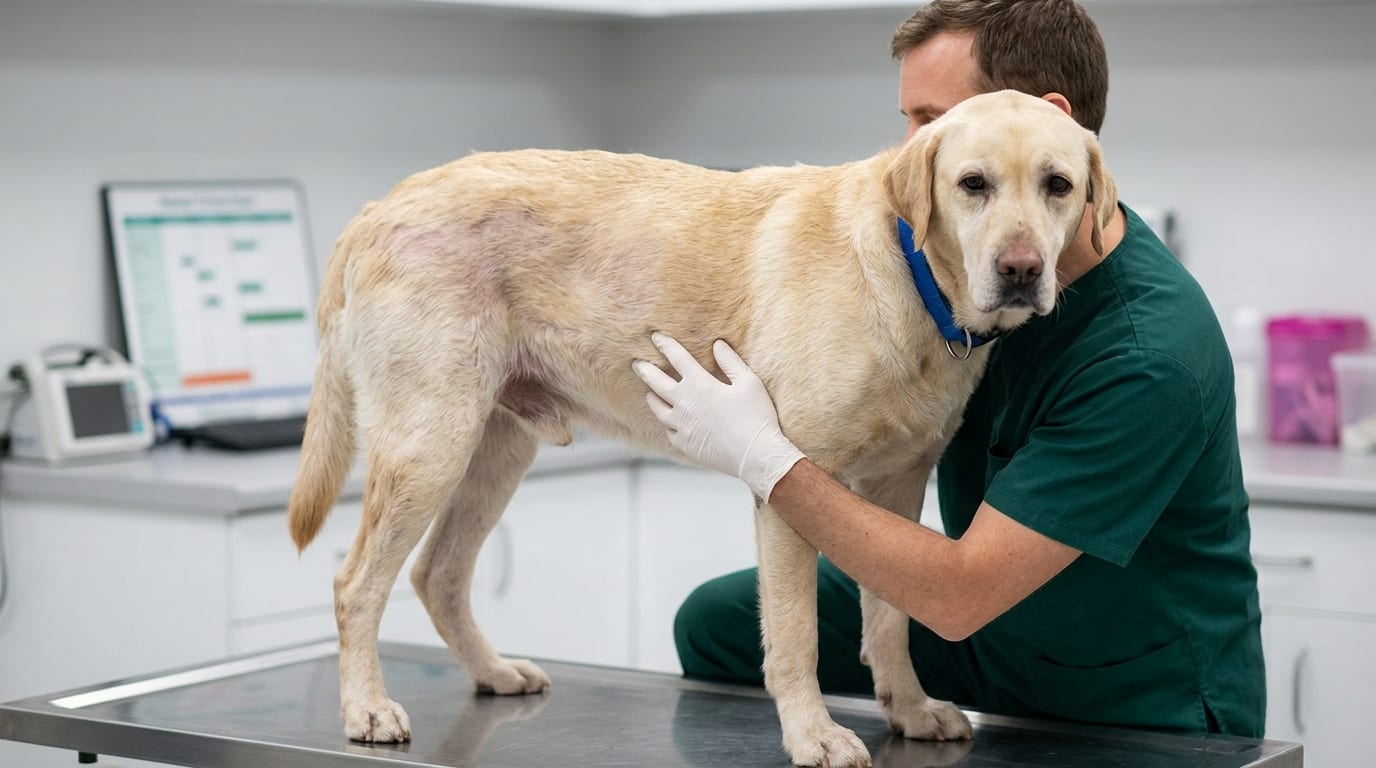
A comprehensive guide to canine hypothyroidism covering the thyroid gland's role, clinical signs, T4/fT4/TSH diagnostic testing, levothyroxine treatment, dose adjustments, and long-term management.
Key Takeaways
- ✓Hypothyroidism is the most common endocrine disorder in dogs, typically affecting middle-aged medium-to-large breeds.
- ✓Classic signs include weight gain without increased appetite, lethargy, bilateral symmetric hair loss, and recurrent skin infections.
- ✓Diagnosis requires a combination of TT4, fT4 by equilibrium dialysis, and cTSH — no single test is definitive.
- ✓Levothyroxine at 0.02 mg/kg twice daily is the standard treatment, with monitoring at 4–6 weeks post-pill.
- ✓With lifelong daily medication, hypothyroid dogs have an excellent prognosis and normal life expectancy.
What Is Hypothyroidism?
Hypothyroidism is the most common endocrine (hormonal) disorder in dogs, resulting from insufficient production of thyroid hormones by the thyroid gland. The thyroid gland, located in the neck alongside the trachea, produces two primary hormones — thyroxine (T4) and triiodothyronine (T3) — that regulate virtually every metabolic process in the body, from energy production and heat generation to skin and coat health, cardiac function, and neurological activity.
When thyroid hormone levels fall below normal, the entire metabolism slows down. This produces a constellation of clinical signs that often develop so gradually that owners attribute them to normal aging rather than recognizing a treatable medical condition.
In approximately 95 percent of cases, hypothyroidism results from destruction of the thyroid gland itself — a condition called primary hypothyroidism. The two main causes are lymphocytic thyroiditis (an immune-mediated process where the body's own immune system attacks the thyroid tissue) and idiopathic thyroid atrophy (where functional thyroid tissue is replaced by fat for unknown reasons). Lymphocytic thyroiditis accounts for roughly half of all cases and has a suspected hereditary component, with certain breeds showing significantly higher prevalence.
The typical hypothyroid dog is a middle-aged to older (4–10 years) medium-to-large breed. Breeds with increased risk include Golden Retrievers, Doberman Pinschers, Irish Setters, Dachshunds, Cocker Spaniels, Boxers, and Great Danes. The condition is rare in toy and miniature breeds.
Clinical Signs & Symptoms
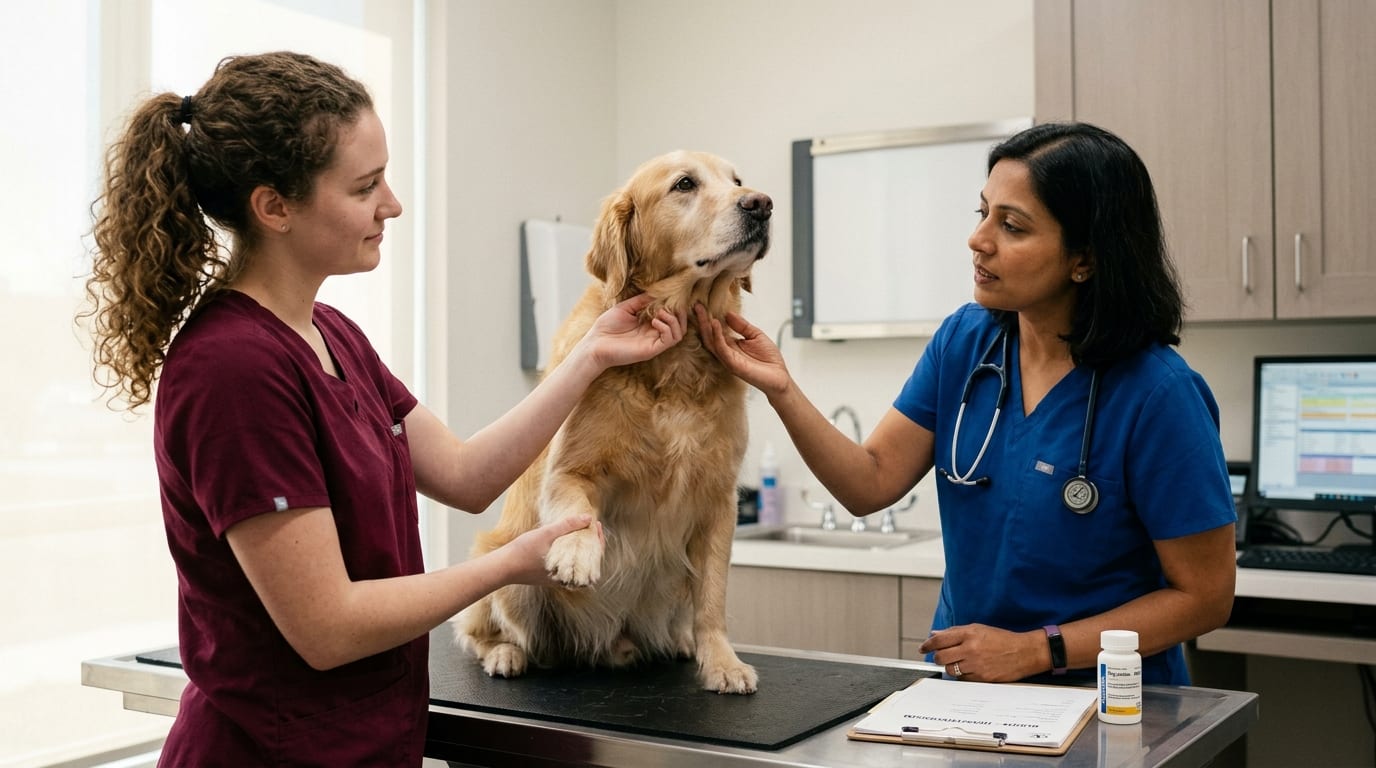
The clinical presentation of hypothyroidism is remarkably variable because thyroid hormones influence so many body systems. Signs typically develop insidiously over months to years.
Metabolic & General Signs
- Weight gain without increased appetite — this is one of the most characteristic findings. The metabolic rate slows, so dogs gain weight even on the same or reduced caloric intake
- Lethargy and exercise intolerance — owners often describe their dog as "not themselves," sleeping more, reluctant to play or walk
- Cold intolerance — seeking warm spots, shivering at moderate temperatures
- Mental dullness — a "tragic facial expression" with droopy eyelids and apparent apathy
Dermatological Signs
Skin and coat changes are present in the majority of hypothyroid dogs and are often the primary reason owners seek veterinary attention:
- Bilateral symmetric alopecia — hair loss that is symmetrical on both sides of the body, typically sparing the head and extremities. The trunk, flanks, and tail ("rat tail" appearance) are most commonly affected
- Dry, dull coat — loss of the normal luster, excessive shedding
- Hyperpigmentation — darkening of the skin, especially in areas of hair loss
- Recurrent skin infections — bacterial pyoderma and Malassezia dermatitis that respond to treatment but keep returning
- Thickened skin (myxedema) — accumulation of mucopolysaccharides in the skin gives it a puffy, doughy feel
Less Common Signs
In some cases, hypothyroidism can cause peripheral neuropathy (facial nerve paralysis, head tilt, laryngeal paralysis), reproductive abnormalities (failure to cycle, infertility), and cardiovascular changes (bradycardia). These neurological and cardiac manifestations, while less frequent, can be clinically significant and resolve with appropriate thyroid supplementation.
Diagnostic Testing
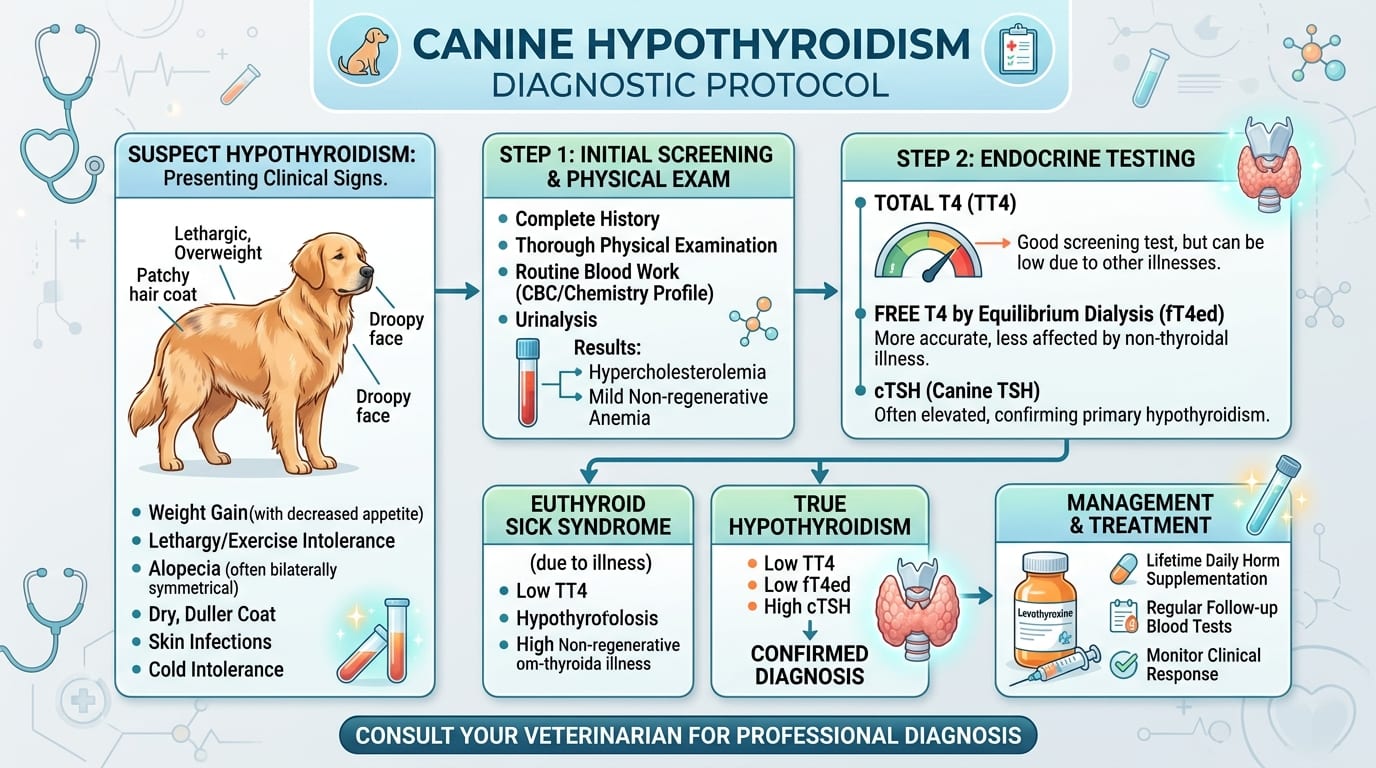
Diagnosing hypothyroidism requires careful interpretation of thyroid function tests in the context of clinical signs and breed. No single test is definitive — a combination approach provides the most accurate diagnosis.
Total T4 (TT4)
Total T4 is the most common initial screening test. A normal TT4 effectively rules out hypothyroidism in most cases. However, a low TT4 does not confirm hypothyroidism because many non-thyroidal factors can suppress T4 levels — a phenomenon called "euthyroid sick syndrome" or "sick euthyroid." Concurrent illness, certain medications (corticosteroids, NSAIDs, anticonvulsants, sulfonamides), and even breed variation (Greyhounds and other sighthounds normally run lower T4 levels) can all produce falsely low results.
Free T4 by Equilibrium Dialysis (fT4ed)
Free T4 measured by equilibrium dialysis is more accurate than total T4 because it measures only the biologically active, unbound fraction of thyroxine. It is less affected by non-thyroidal illness and concurrent medications, making it the preferred confirmatory test when the TT4 is low or borderline. The equilibrium dialysis methodology is important — other fT4 assay methods are less reliable in dogs.
Canine TSH (cTSH)
Thyroid-stimulating hormone, produced by the pituitary gland, rises when thyroid hormone levels are low (the pituitary is trying to stimulate the thyroid to produce more). An elevated cTSH combined with a low TT4 and/or low fT4ed strongly supports a diagnosis of primary hypothyroidism. However, approximately 20–30 percent of hypothyroid dogs have a normal TSH, so a normal result does not rule out the disease.
Thyroglobulin Autoantibodies (TgAA)
Testing for antibodies against thyroglobulin can identify dogs with lymphocytic thyroiditis, even before clinical hypothyroidism develops. This test is particularly useful in breeding programs for predisposed breeds.
The Ideal Diagnostic Panel
The most reliable approach combines TT4, fT4ed, and cTSH. When all three are concordant (low T4, low fT4, elevated TSH), the diagnosis is highly confident. When results are discordant, clinical context, breed, and concurrent illness must guide interpretation.
Levothyroxine Treatment
Hypothyroidism is one of the most satisfying conditions to treat because the response to appropriate thyroid supplementation is typically dramatic and gratifying.
Levothyroxine Sodium (Synthroid/Thyro-Tabs/Soloxine)
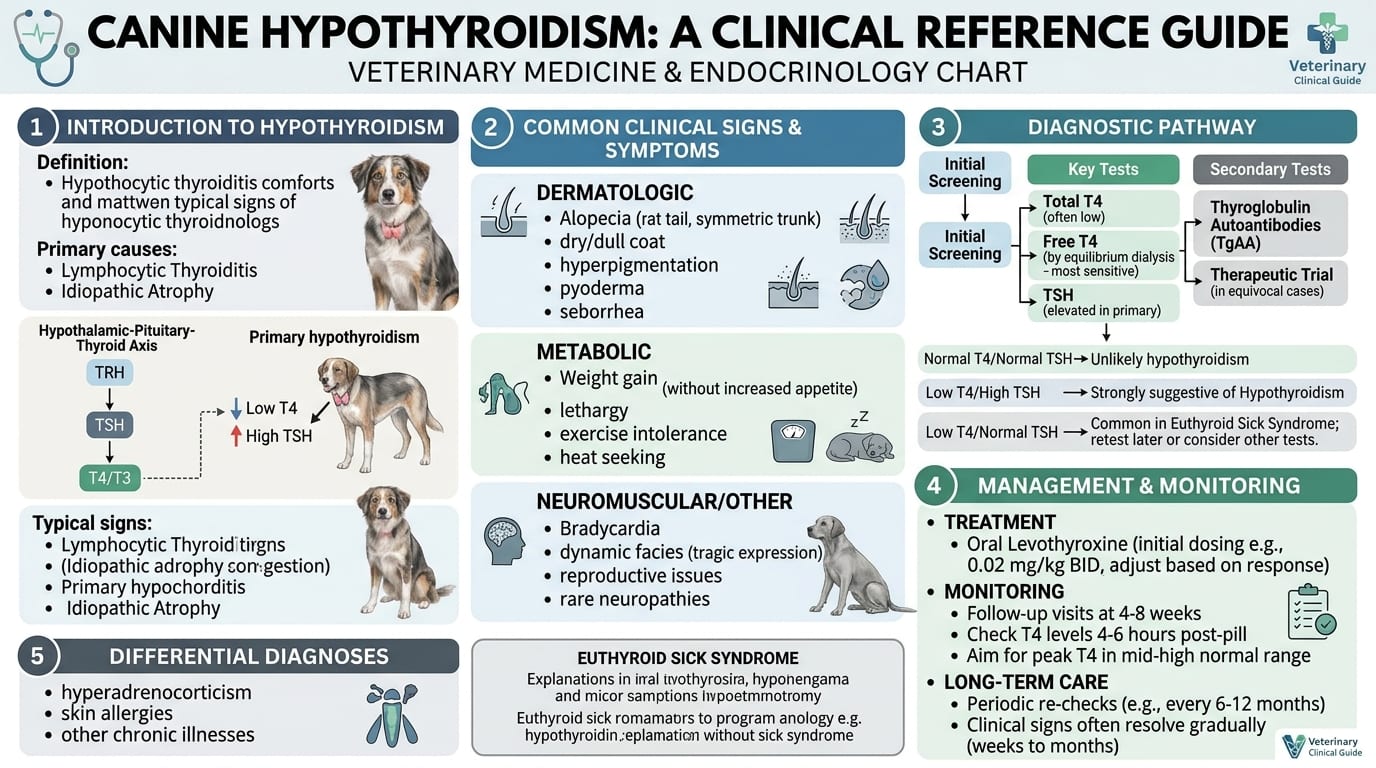
Synthetic levothyroxine (T4) is the standard treatment. The typical starting dose is 0.02 mg/kg (20 mcg/kg) given orally twice daily. Some dogs can eventually be managed with once-daily dosing, but twice-daily administration is recommended initially to maintain more consistent blood levels.
Levothyroxine should be given on an empty stomach or at least 1 hour before feeding for optimal absorption. Certain foods, calcium supplements, and antacids can interfere with absorption and should be separated from dosing.
Expected Response Timeline
The clinical response follows a predictable timeline that can be shared with owners to set expectations:
- 1–2 weeks — improved mental alertness and energy levels
- 4–6 weeks — weight loss begins, activity level normalizes
- 6–12 weeks — coat regrowth initiates, skin quality improves
- 3–6 months — full coat regrowth, skin pigmentation normalizes, complete neurological recovery (if applicable)
Monitoring and Dose Adjustment
Therapeutic monitoring is performed 4 to 6 weeks after starting levothyroxine and after any dose change. Blood should be drawn 4 to 6 hours post-pill (the approximate peak). The target post-pill T4 level is in the upper half of the normal reference range to slightly above normal (typically 2.5–5.0 µg/dL depending on the laboratory).
If the T4 level at peak is below the target range, the dose is increased by 10–25 percent. If signs of hyperthyroidism develop (restlessness, panting, increased thirst, rapid heart rate), the dose is reduced. Once the patient is stable, monitoring can decrease to every 6–12 months.
Lifelong Therapy
Hypothyroidism requires lifelong daily medication. Stopping levothyroxine will result in return of clinical signs, typically within several weeks. Fortunately, the medication is inexpensive, well-tolerated, and side effects at appropriate doses are rare.

Prognosis & Living with Hypothyroidism
The prognosis for dogs with hypothyroidism is excellent. With consistent levothyroxine supplementation, hypothyroid dogs return to their normal energy levels, regain healthy coats, lose excess weight, and live normal lifespans. Many owners report that their dog "becomes a puppy again" after starting treatment — a testament to how profoundly thyroid hormones influence quality of life.
What Owners Should Know
Consistency is key. Levothyroxine should be given at approximately the same time(s) each day, ideally on an empty stomach. Missing occasional doses is unlikely to cause immediate problems, but chronic inconsistency will result in fluctuating hormone levels and suboptimal control.
If a dose is missed, give it as soon as remembered unless it is almost time for the next dose — in that case, skip the missed dose and resume the regular schedule. Never double up doses.
Breed Screening Considerations
For breeds with high hypothyroidism prevalence, thyroid screening (TT4 and TgAA) can be included in annual wellness panels starting at 3–4 years of age. This is especially relevant for breeding animals, as lymphocytic thyroiditis has a heritable component and affected dogs should be removed from breeding programs.
Interactions with Other Conditions
Hypothyroidism can coexist with and complicate other conditions. Hypothyroid dogs are predisposed to hyperlipidemia (elevated cholesterol and triglycerides), which resolves with thyroid supplementation. They may also have an increased risk of corneal lipid deposits, megaesophagus (rare), and behavioral changes including aggression — though the aggression link remains debated in the literature. If your dog is being evaluated for any of these conditions, thyroid testing should be part of the diagnostic workup.

Frequently Asked Questions
What are the first signs of hypothyroidism in dogs?
The earliest signs are often subtle: gradual weight gain despite normal appetite, decreased energy and exercise tolerance, and seeking warm spots. Skin and coat changes — dry coat, excessive shedding, and thinning hair on the flanks or tail — typically develop over months and are frequently the signs that prompt veterinary evaluation.
How much does it cost to treat hypothyroidism in dogs?
Hypothyroidism treatment is one of the most affordable long-term medications in veterinary medicine. Levothyroxine typically costs $15–$40 per month depending on the dog's size and dose. Monitoring blood tests (thyroid levels) are needed every 6–12 months once stabilized and typically cost $50–$150.
Can hypothyroidism in dogs be cured?
Hypothyroidism cannot be cured because the thyroid gland destruction that causes it is permanent. However, it is easily managed with daily levothyroxine supplementation. Dogs on appropriate therapy live completely normal lives with no reduction in quality of life or lifespan.
What happens if hypothyroidism is left untreated in dogs?
Untreated hypothyroidism leads to progressive weight gain, chronic skin infections, hair loss, lethargy, and potentially more serious complications including hyperlipidemia (high cholesterol), peripheral neuropathy, and myxedema coma in extreme cases. Early treatment prevents these complications and dramatically improves quality of life.
Can hypothyroidism cause behavioral changes in dogs?
Yes. Some hypothyroid dogs exhibit mental dullness, depression, or anxiety. There are case reports linking hypothyroidism to aggression, though this association remains debated. Behavioral changes typically improve significantly within the first few weeks of levothyroxine supplementation.
References
- Scott-Moncrieff JC. Hypothyroidism. In: Feldman EC, Nelson RW, Reusch CE, Scott-Moncrieff JC, eds. Canine and Feline Endocrinology. 4th ed. Elsevier; 2015:77-135.
- Dixon RM, et al. Epidemiological, clinical, haematological and biochemical characteristics of canine hypothyroidism. Veterinary Record. 1999;145(17):481-487.
- Nachreiner RF, et al. Prevalence of serum thyroid hormone autoantibodies in dogs with clinical signs of hypothyroidism. Journal of the American Veterinary Medical Association. 2002;220(4):466-471.