Quick Answer
A complete guide to urethral obstruction in cats — one of the most common and life-threatening emergencies in male cats. Covers why male cats are at risk, what causes blockages (urethral plugs, crystals, urospasms), how to recognize the signs before it becomes fatal, emergency treatment including catheterization, and strategies to prevent recurrence.
Key Takeaways
- ✓A blocked male cat is a same-day veterinary emergency — do not wait overnight if your cat is straining without producing urine
- ✓Death can occur within 24–48 hours from cardiac arrhythmia (hyperkalemia) or bladder rupture
- ✓Urethral plugs (not stones) are the most common cause — they form from inflammation, mucus, and crystals in FIC-affected cats
- ✓Switching to wet food and reducing environmental stress are the two highest-impact preventive interventions
- ✓Cats with multiple blockages may benefit from perineal urethrostomy (PU surgery) to permanently widen the urethra
Why Male Cats Are at Risk
Urethral obstruction — commonly called a "blocked cat" — occurs when the narrow urethra becomes physically obstructed, preventing urine from leaving the bladder. It is one of the most critical feline emergencies, requiring same-day veterinary intervention. Without treatment, a completely blocked cat can die within 24–48 hours from a combination of bladder rupture, severe electrolyte imbalances (particularly hyperkalemia, which causes potentially fatal cardiac arrhythmias), and uremic toxin buildup.
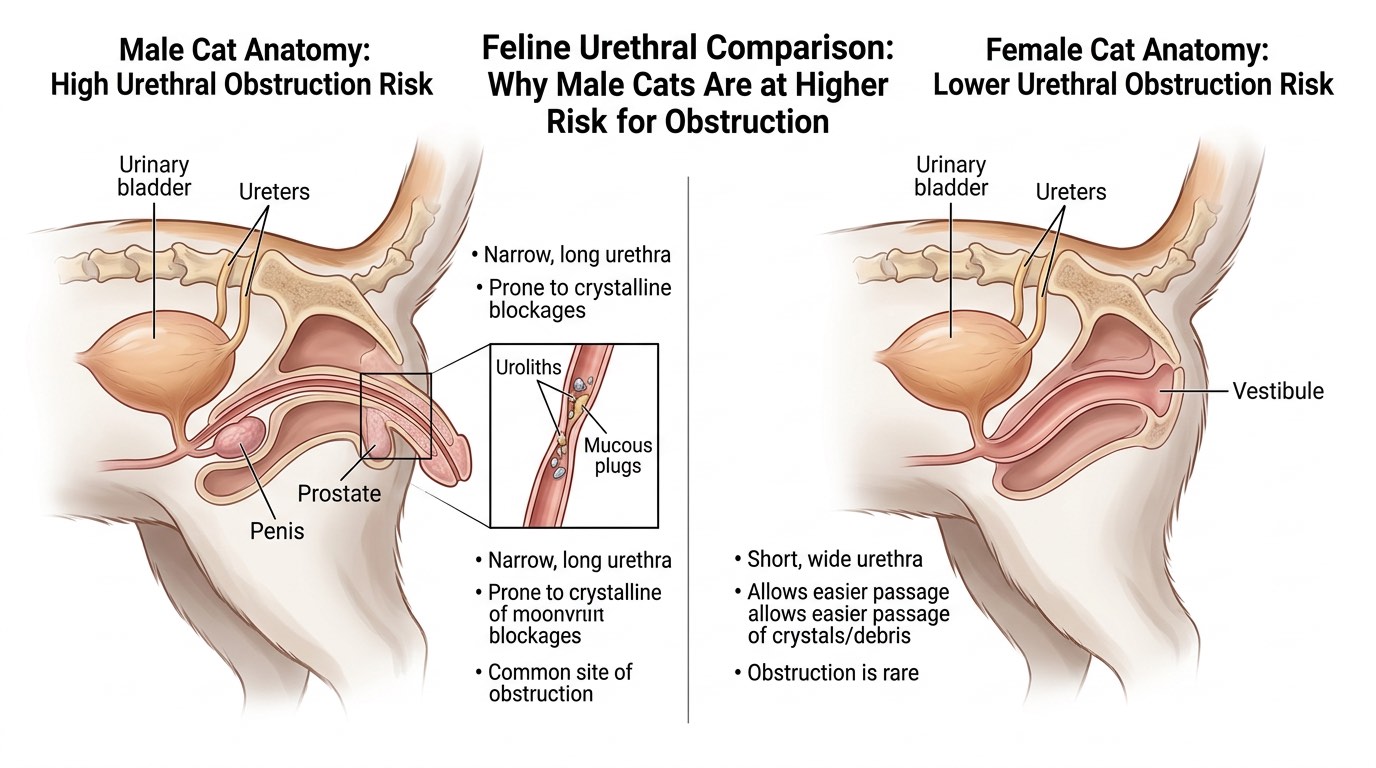
Male cats are dramatically over-represented because their urethra is significantly narrower and longer than the female's — measuring just 1–2 mm in diameter through its penile portion. This narrow caliber makes it highly susceptible to blockage by even small amounts of debris. Neutered males have a slightly narrower penile urethra than intact males, though neutering overall reduces the risk of other urinary conditions. Female cats can develop obstructions but it is far less common due to their wider, shorter urethra.
Certain factors increase risk: male cats between 1 and 10 years old are most commonly affected, indoor-only cats on dry food diets have higher incidence (concentrated urine promotes crystal formation), and cats with stress-related lower urinary tract disease or prior history of urinary problems are at elevated risk. Overweight cats are also more susceptible.
What Causes the Blockage?
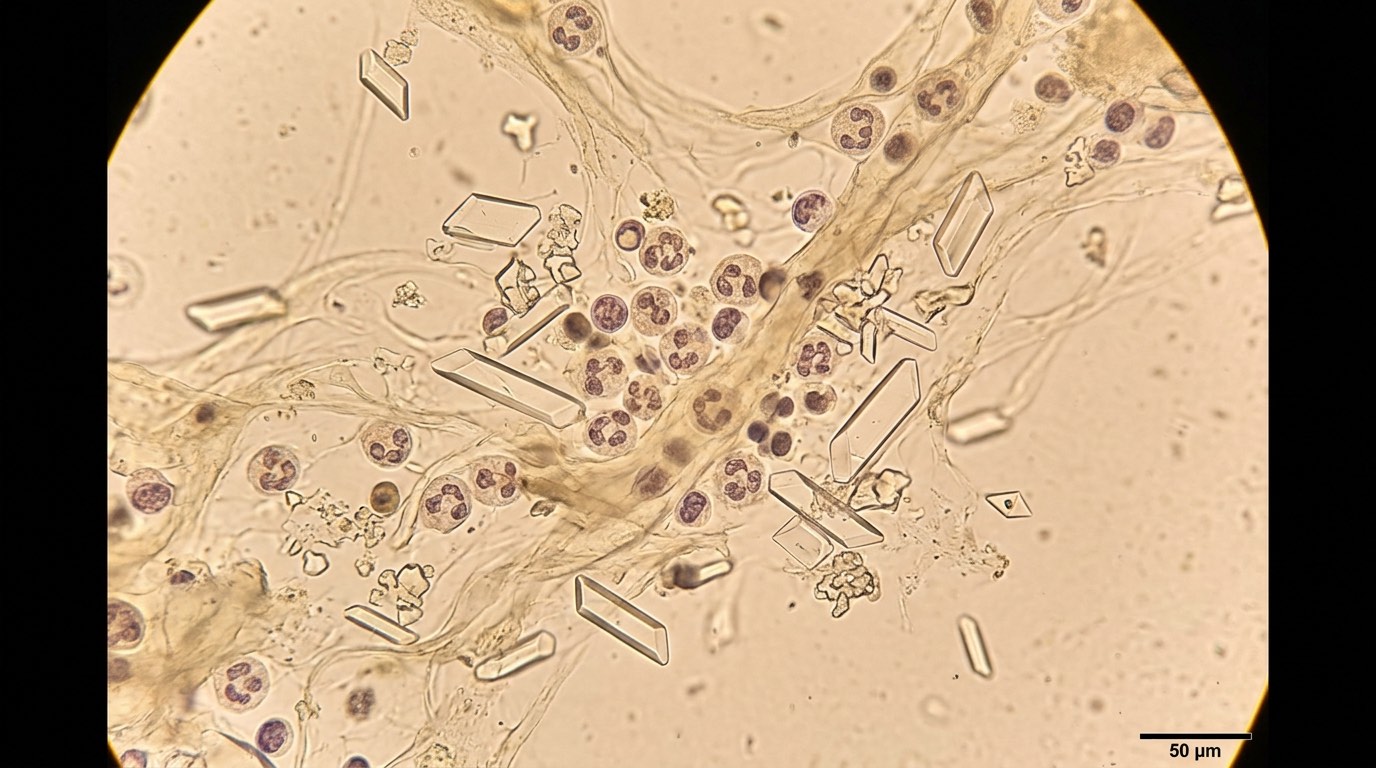
The most common cause of urethral obstruction in cats is a urethral plug — a soft, compressible accumulation of inflammatory cells, mucus, protein, and sometimes crystals that physically lodges in the narrow penile urethra. Plugs are not the same as uroliths (bladder stones), though stones can occasionally cause obstruction. Plugs form as a consequence of lower urinary tract inflammation (feline idiopathic cystitis or FIC) and are the culprit in the majority of first-time blockages.
Struvite (magnesium ammonium phosphate) and calcium oxalate crystals form in concentrated, pH-imbalanced urine and can contribute to plugs or, more rarely, cause stone-based obstruction. Diet and hydration strongly influence crystal formation — dry food diets promote concentrated urine and slightly alkaline pH favorable for struvite crystal formation. Stress is increasingly recognized as a major contributor to FIC-related obstruction through complex neurogenic inflammatory pathways.
Functional (urospasm) obstruction — where the urethra is anatomically clear but intense muscular spasm prevents urine flow — is a distinct entity that is more common after catheterization or repeated blockages. Urethral strictures (scar tissue narrowing) can develop as a complication of repeated trauma from catheterization and are a cause of recurrent obstruction.
Recognizing the Signs: This Cannot Wait
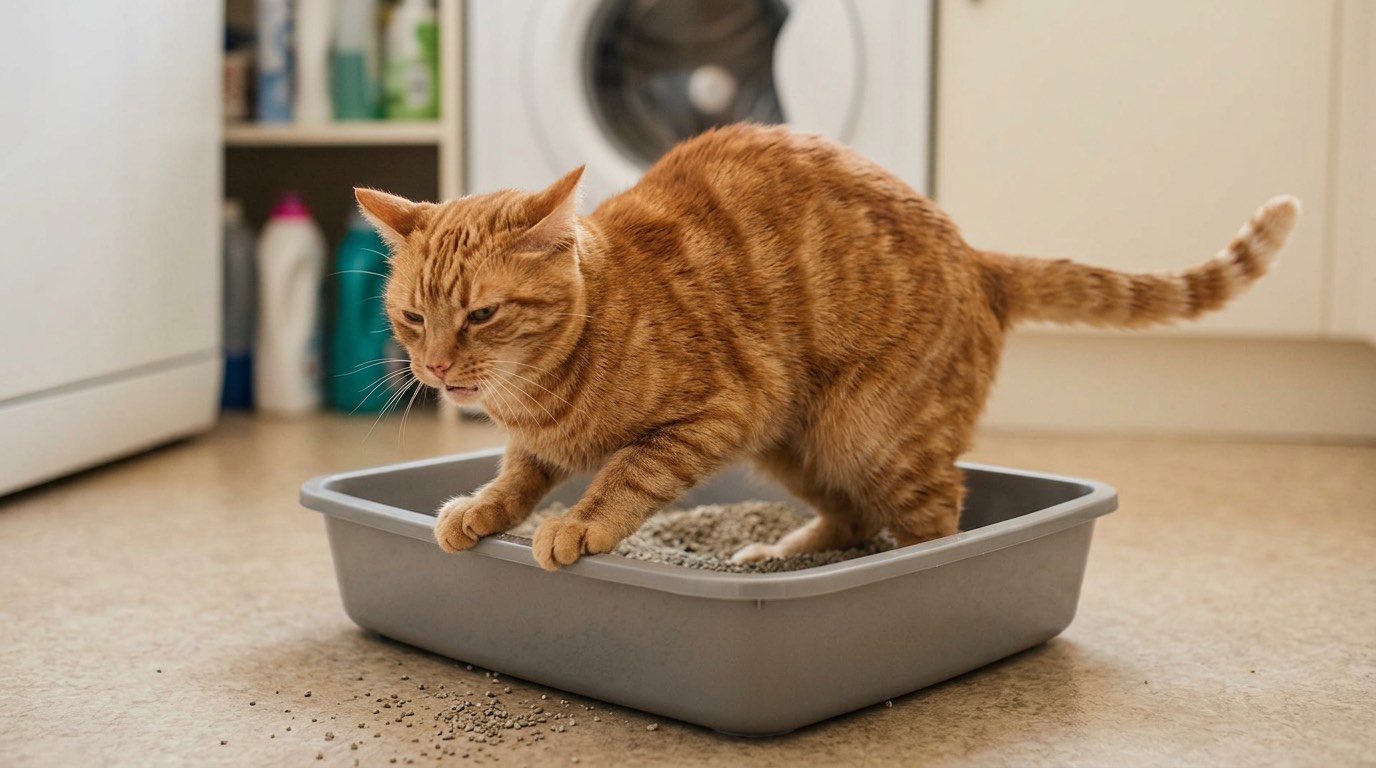
The clinical signs of urethral obstruction follow a consistent pattern that every cat owner should know. Early signs — often mistaken for constipation — include frequent trips to the litter box with little or no urine produced, straining and vocalizing in the litter box, excessive licking of the genital area, and small spots of blood in the litter. The cat appears uncomfortable and restless.
As the obstruction persists and the bladder distends, systemic signs develop: the cat becomes lethargic, stops eating, and may vomit. The bladder grows increasingly firm and painful. Over the next 12–24 hours, rising potassium levels cause cardiac effects — heart rate slows and rhythm becomes abnormal. In the terminal phase, the cat becomes obtunded, hypothermic, and collapses. This progression can happen within 24–48 hours of complete obstruction.
Critically: a cat straining in the litter box without producing urine should be assumed to be obstructed until proven otherwise. Do not wait overnight to see if it resolves — a few hours' delay in a fully blocked cat can mean the difference between straightforward treatment and a life-threatening emergency with metabolic crisis. If your male cat goes to the litter box repeatedly without producing urine, call a veterinary emergency clinic immediately.
Emergency Treatment and Hospitalization
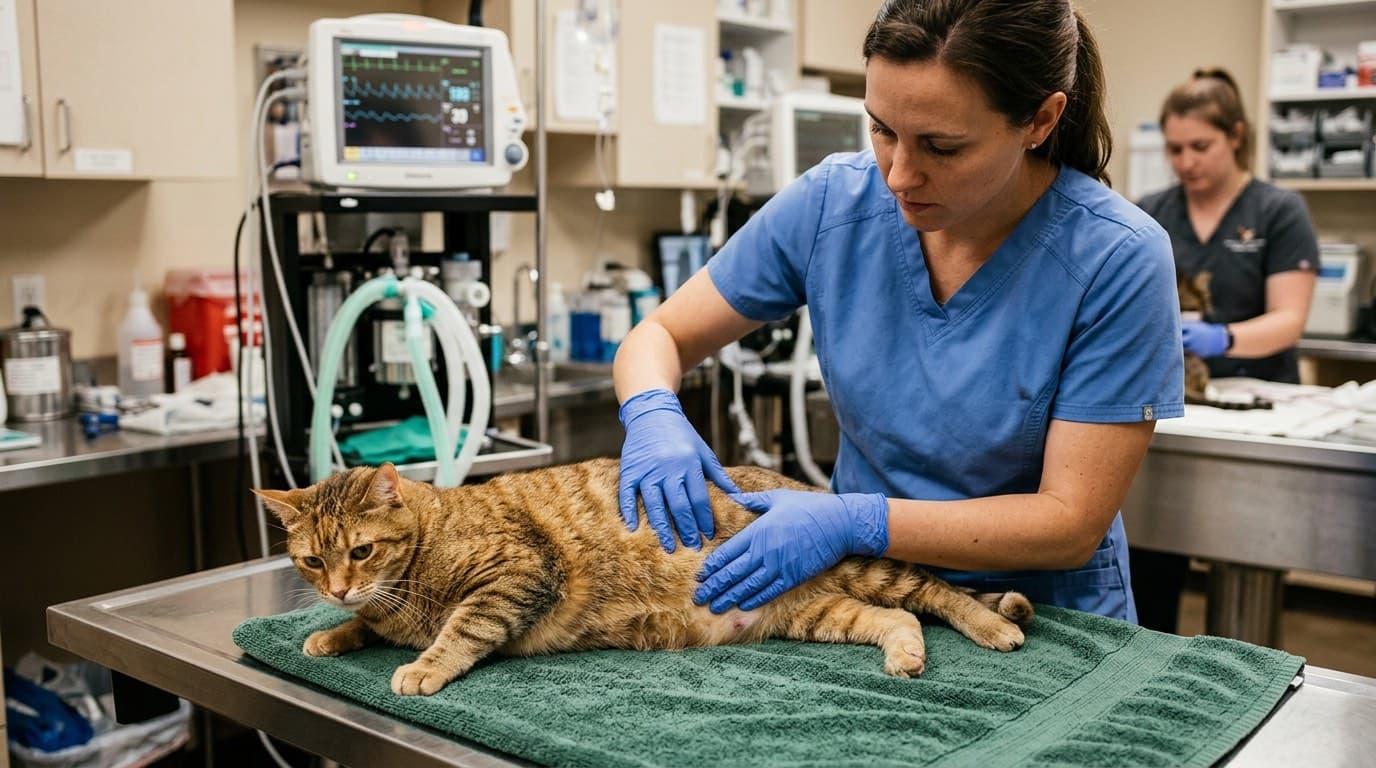
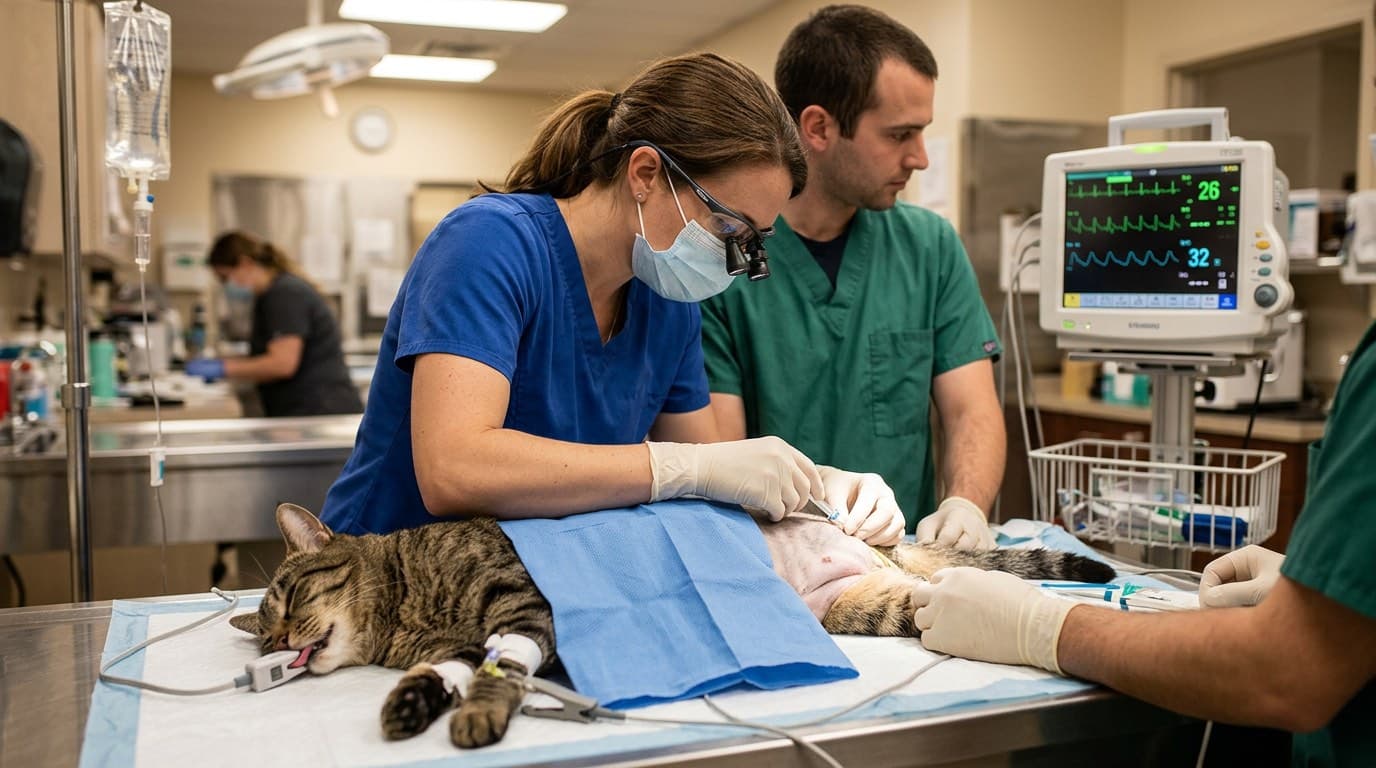
A blocked cat is an emergency that requires immediate hospitalization. Initial assessment includes bloodwork to evaluate kidney values (BUN, creatinine), electrolytes (particularly potassium — values above 7 mEq/L can cause fatal cardiac arrhythmias), and blood glucose. An ECG evaluates cardiac rhythm. IV catheter placement and fluid resuscitation begin immediately.
If hyperkalemia is severe (bradycardia, ECG changes), emergency treatment with calcium gluconate (cardiac protection), insulin/dextrose, and sodium bicarbonate is initiated before anesthesia. Once the cat is sufficiently stabilized, a urinary catheter is placed under sedation or anesthesia to relieve the obstruction — this may require gentle flushing of the urethra to dislodge a plug. The urinary catheter is typically left indwelling for 24–48 hours to allow the urethra to rest and post-obstructive diuresis to occur (cats frequently produce enormous volumes of urine as the kidneys recover).
Hospitalization of 2–3 days is typical, with IV fluid support, pain management (buprenorphine), muscle relaxants (prazosin to reduce urethral spasm), and monitoring of kidney values and electrolytes. The urinary catheter is removed and the cat is monitored for 12–24 hours before discharge to ensure spontaneous urination. Re-obstruction rates within the first 48 hours after catheter removal are approximately 20%, requiring owner vigilance and follow-up.
Prevention: Diet, Stress, and Perineal Urethrostomy
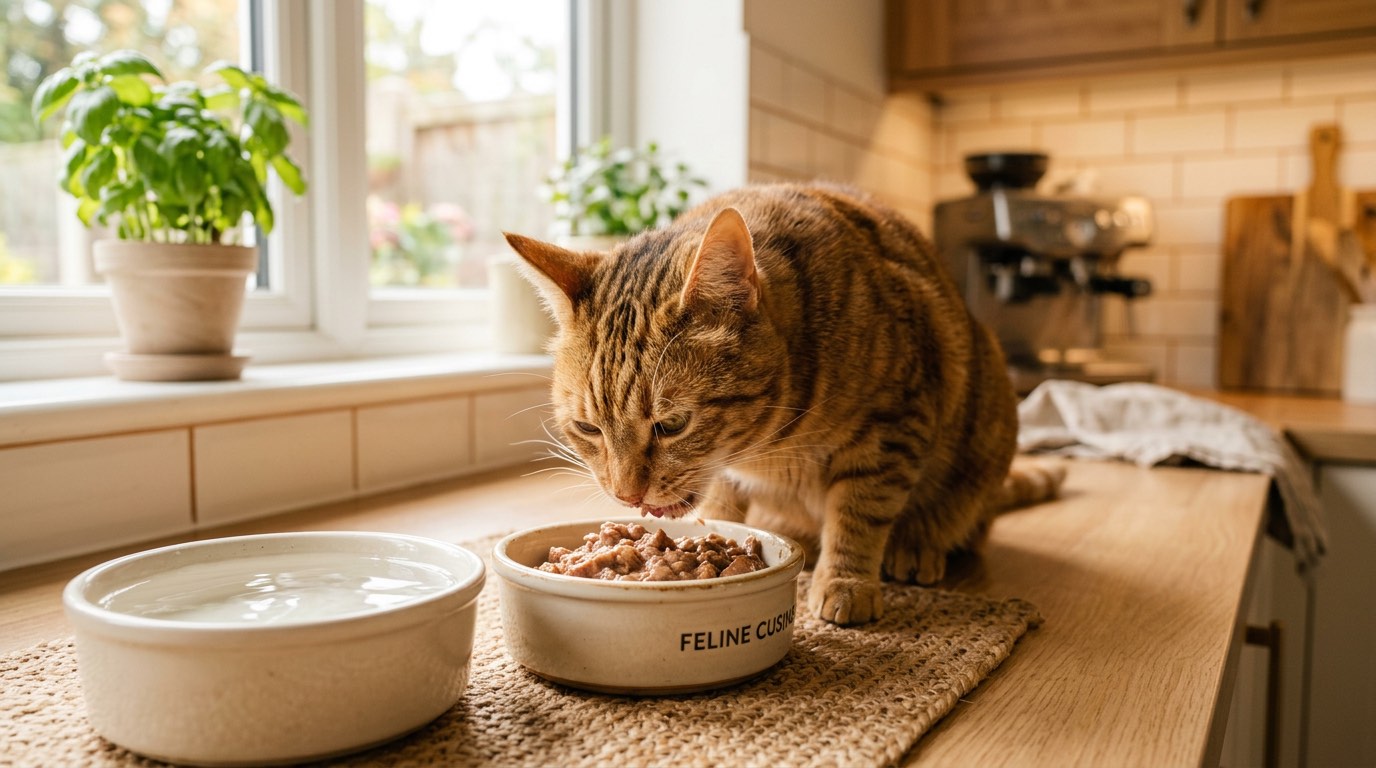
Preventing recurrence requires a multiprong approach addressing the underlying contributors. Hydration is the cornerstone: increasing water intake dilutes urine, reduces crystal formation, and flushes the bladder. Wet food (canned) diets dramatically increase water intake compared to dry food — switching a previously dry-food-only cat to an all-wet or predominantly-wet diet is one of the most impactful preventive interventions. Prescription urinary diets (Hill's c/d, Royal Canin Urinary S/O) are specifically formulated to reduce crystal formation and maintain optimal urine pH.
Stress reduction is increasingly important given the strong link between stress and feline idiopathic cystitis. Evaluate the home environment: litter box number and cleanliness (one box per cat plus one), multi-cat household dynamics, hiding spots, vertical space, and predictable routine all reduce stress. Feliway (feline pheromone) diffusers have evidence for reducing FIC episodes. Prazosin (an alpha-blocker) is often prescribed after unblocking to reduce urethral tone and help prevent early re-obstruction.
For cats that block repeatedly despite medical management, perineal urethrostomy (PU surgery) — where the narrow penile urethra is surgically widened by creating a new, broader urethral opening — significantly reduces re-obstruction risk. It is not a first-line option but a highly effective surgery for chronic re-blockers.
Frequently Asked Questions
How do I know if my cat is blocked or just constipated?
Both conditions involve straining in the litter box, but there are distinguishing clues. A blocked cat strains with no urine output, often vocalizes from pain, licks the genital area excessively, and may have a very firm abdomen. Constipated cats may produce some small, hard fecal matter. Since a blocked cat is a life-threatening emergency and constipation is not, when in doubt — especially in a male cat — treat it as a possible blockage and call your vet immediately.
How long can a blocked cat survive without treatment?
A completely blocked cat can develop life-threatening cardiac arrhythmias from hyperkalemia within 24–36 hours and may die within 48 hours without treatment. Partial blockages may survive longer but cause significant kidney damage. Time matters enormously — earlier treatment means faster recovery, less kidney damage, shorter hospitalization, and lower cost.
Will my cat block again after treatment?
Re-obstruction rates within the first 48 hours after catheter removal are around 20%. Long-term recurrence rates are approximately 35–40% within 2 years without preventive measures. This is why dietary changes (wet food, prescription urinary diet), stress management, and sometimes medication (prazosin) are recommended after each blockage. Cats that block repeatedly may be candidates for perineal urethrostomy.
Is perineal urethrostomy a good option for my cat?
Perineal urethrostomy (PU surgery) is an effective option for cats with multiple recurrent obstructions that have not responded to medical management. It significantly reduces re-obstruction rates by creating a wider urethral opening. It does not eliminate the underlying lower urinary tract disease but removes the anatomical bottleneck. Cats still need dietary and environmental management after PU surgery.
Can female cats get urethral obstructions?
Yes, but it is much less common due to their wider, shorter urethra. When females do obstruct, it is more often from bladder stones (uroliths) or a mass compressing the urethra. The clinical signs are the same — straining without urine production — and it is equally urgent. Female cats with suspected obstruction need the same emergency evaluation as males.
References
- Kruger JM, Osborne CA. The role of urinary obstruction in the pathogenesis of urolithiasis. Vet Clin North Am Small Anim Pract. 1993.
- Gerber B, et al. Evaluation of clinical signs and causes of lower urinary tract disease in European cats. J Small Anim Pract. 2005.
- Bass M, et al. Prevalence of urinary tract infection in cats with subclinical renal disease. J Feline Med Surg. 2005.
- Segev G, et al. Urethral obstruction in cats: predisposing factors, clinical findings, and short-term outcome. J Vet Intern Med. 2011.