
Quick Answer
A comprehensive guide to urinary tract infections in dogs and cats covering bacterial cystitis, feline idiopathic cystitis (FIC), diagnostic workup, antibiotic therapy, and prevention strategies.
Key Takeaways
- ✓True bacterial UTIs are common in dogs but uncommon in young cats — most feline lower urinary tract signs stem from feline idiopathic cystitis (FIC).
- ✓Urine culture is the gold standard for confirming bacterial UTIs and guiding antibiotic selection.
- ✓Uncomplicated canine UTIs often resolve with just 3–5 days of targeted antibiotics per current ISCAID guidelines.
- ✓FIC management centers on stress reduction, increased water intake, and environmental modification — not antibiotics.
- ✓Male cats with urinary signs require urgent evaluation to rule out life-threatening urethral obstruction.
What Is a Urinary Tract Infection?
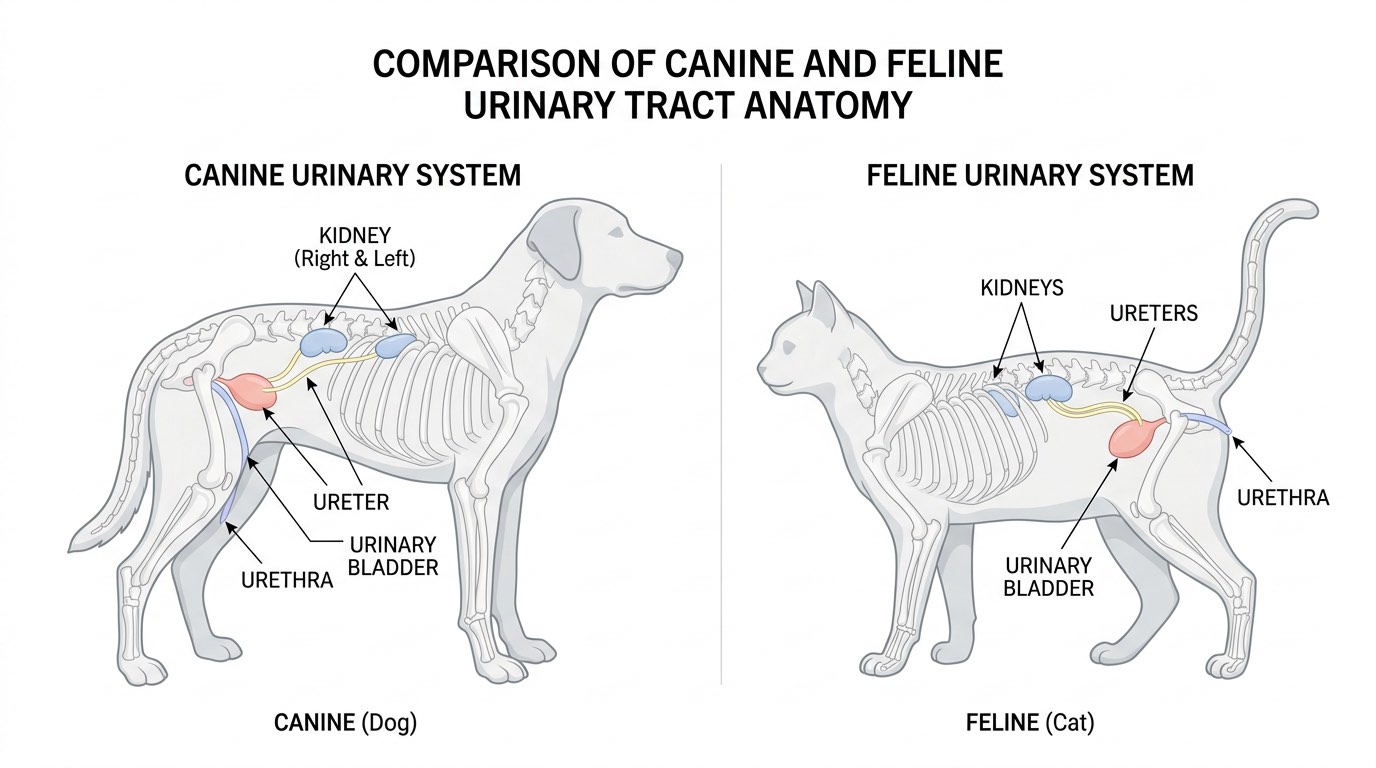
A urinary tract infection (UTI) occurs when bacteria colonize part of the urinary system — most commonly the bladder (cystitis), though the kidneys, ureters, and urethra can also be involved. In dogs, true bacterial UTIs are relatively common, particularly in females because their shorter urethra provides an easier route for ascending bacteria. In cats, the picture is more nuanced: bacterial UTIs account for only a small fraction of lower urinary tract signs in young to middle-aged cats. Most feline cases fall under a frustrating condition called feline idiopathic cystitis (FIC), which produces identical symptoms without an identifiable bacterial cause.
The clinical signs of lower urinary tract disease — straining to urinate, frequent small voids, blood-tinged urine, urinating outside the litter box, and vocalization during urination — overlap across bacterial and non-bacterial causes. This overlap makes a proper diagnostic workup essential before starting treatment, because antibiotics are only beneficial when bacteria are genuinely present.
Understanding the difference between a straightforward UTI and conditions that mimic one is crucial for effective treatment and for avoiding the unnecessary use of antibiotics, which contributes to antimicrobial resistance.
Causes & Risk Factors
Bacterial UTI in Dogs
The most common organism isolated from canine UTIs is Escherichia coli, accounting for roughly half of all cases. Other frequent culprits include Staphylococcus, Proteus, Klebsiella, Enterococcus, and Streptococcus species. Bacteria typically ascend from the perineal area through the urethra and into the bladder.
Risk factors for canine UTIs include:
- Female sex — the short, wide female urethra is more easily colonized
- Endocrine disorders — diabetes mellitus, hyperadrenocorticism (Cushing's disease), and hypothyroidism all impair immune defenses
- Urinary retention — neurological conditions, anatomical abnormalities, or prostatic disease that prevent complete bladder emptying
- Immunosuppressive therapy — corticosteroids and chemotherapy agents reduce the body's ability to clear bacteria
- Urinary stones — calculi provide a surface for bacterial biofilm formation and can obstruct normal urine flow
Feline Idiopathic Cystitis (FIC)
In cats under ten years of age, FIC is the most common diagnosis when lower urinary tract signs are present. The exact cause remains incompletely understood, but current evidence points to a complex interaction between a defective bladder lining (glycosaminoglycan layer), an exaggerated stress response mediated by the sympathetic nervous system, and local neurogenic inflammation. Stress — from environmental changes, multi-cat household tension, or disrupted routines — is a well-documented trigger.
True bacterial UTIs become more common in cats over ten years of age, often secondary to conditions like chronic kidney disease, diabetes mellitus, or hyperthyroidism that alter urine concentration or immune function.
Diagnostic Workup
A thorough diagnostic approach prevents misdiagnosis and ensures appropriate treatment. The gold standard workup includes:
Urinalysis
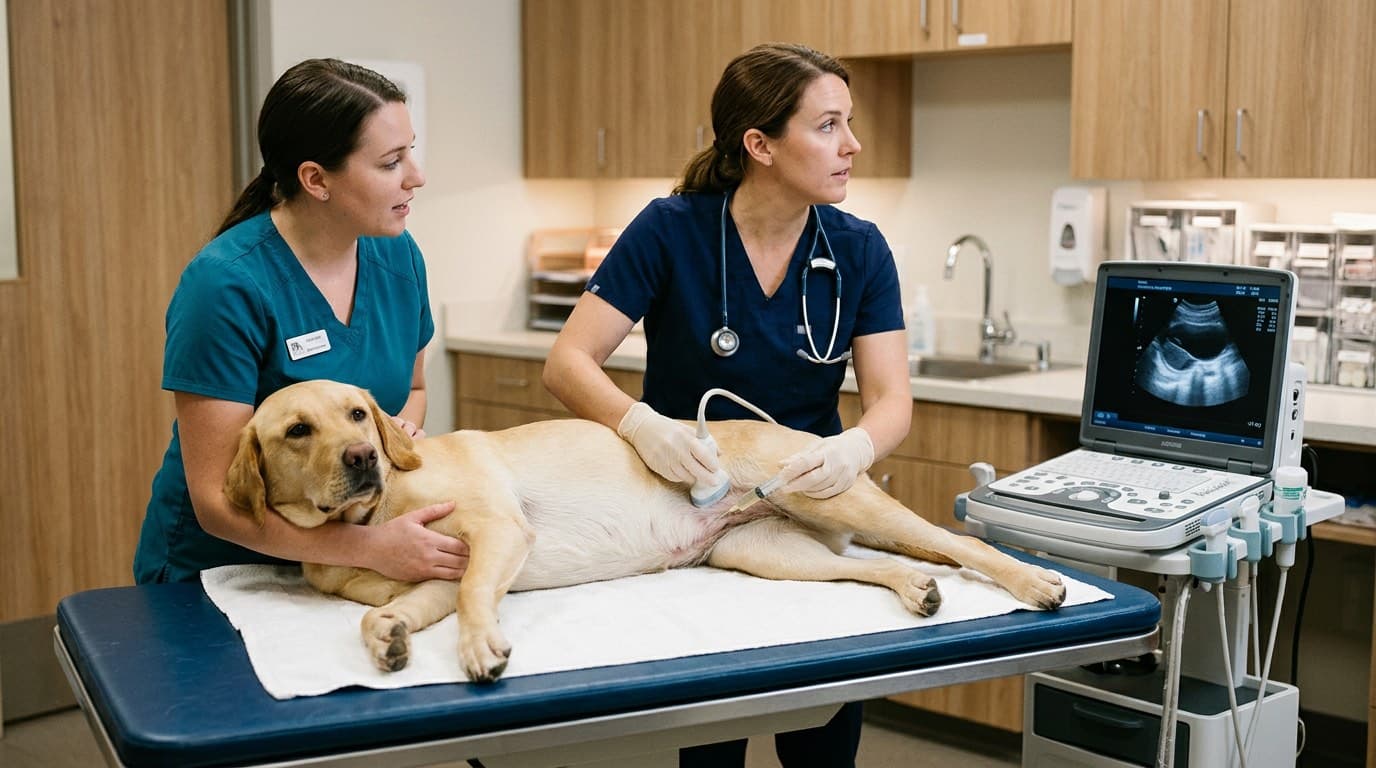
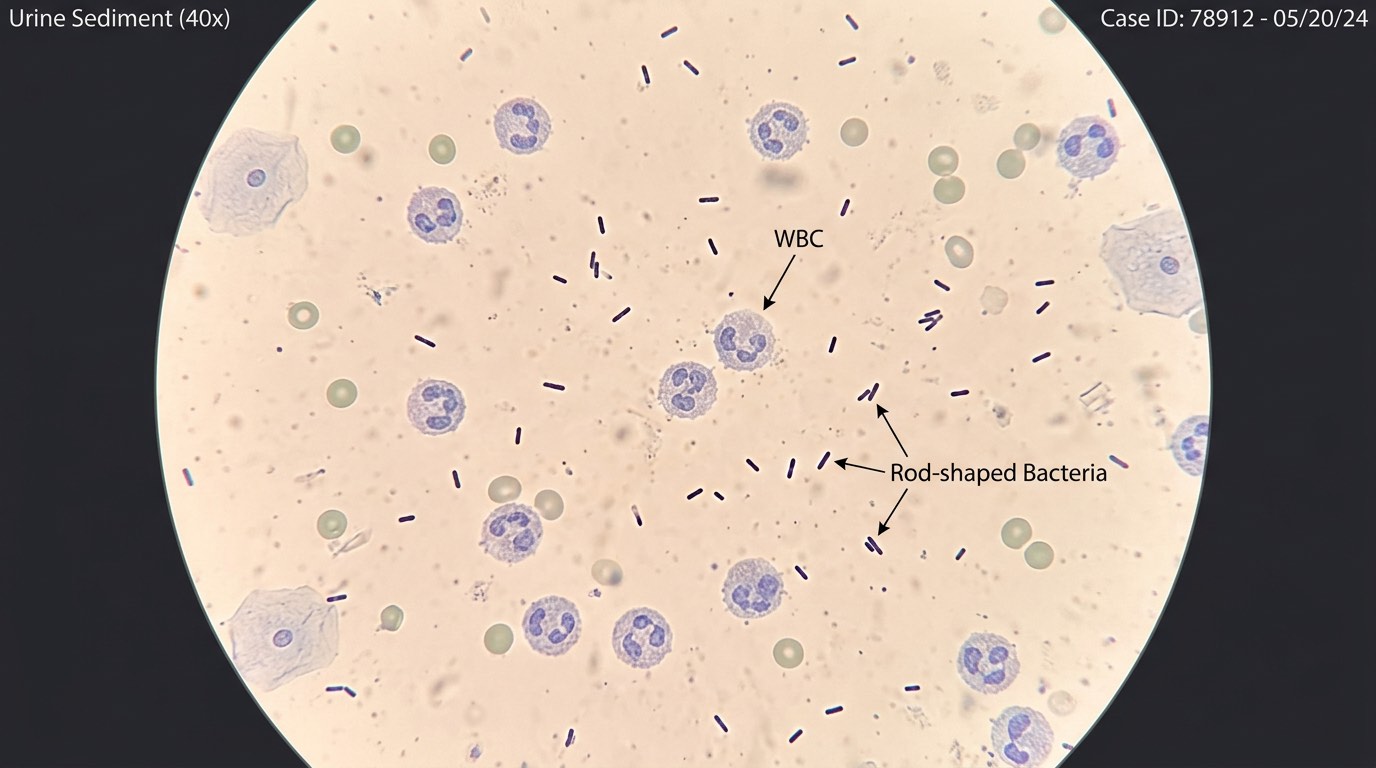
A complete urinalysis is the cornerstone of UTI diagnosis. The sample should ideally be collected by cystocentesis (a needle inserted directly into the bladder, often with ultrasound guidance) to avoid contamination from the lower urinary tract. Key findings include pyuria (white blood cells in the urine), bacteriuria (bacteria visible on sediment examination), hematuria (red blood cells), and changes in urine pH or specific gravity.
Urine Culture and Sensitivity
A urine culture identifies the specific bacteria present and determines which antibiotics will be effective against them. This step is especially important for recurrent infections, complicated UTIs (those occurring alongside predisposing conditions), and any case where initial antibiotic therapy has failed. The International Society for Companion Animal Infectious Diseases (ISCAID) guidelines recommend culture for all confirmed bacterial UTIs to guide targeted antibiotic selection.
Imaging
Abdominal radiographs and ultrasound help rule out urinary stones, masses, or anatomical abnormalities. Bladder ultrasound can reveal wall thickening (consistent with chronic inflammation), sediment or debris, and the presence of calculi that may not be visible on radiographs (such as urate stones).
Additional Tests
For recurrent UTIs, screening bloodwork (complete blood count, chemistry panel, thyroid levels) helps identify underlying diseases. In cats with suspected FIC, the diagnosis is one of exclusion — meaning other causes must be systematically ruled out before the label is applied.
Treatment Approaches
Treating Bacterial UTIs
For a simple, uncomplicated UTI in an otherwise healthy dog, a short course of an appropriate antibiotic — typically amoxicillin, amoxicillin-clavulanate, or trimethoprim-sulfonamide — is usually effective. Current ISCAID guidelines recommend 3–5 days of therapy for uncomplicated cases, a significant reduction from the traditional 10–14 day courses. This shorter duration has been shown to be equally effective while reducing antibiotic exposure.
Complicated UTIs — those occurring in patients with underlying disease, anatomical abnormalities, or recurrent episodes — require longer courses (often 4–6 weeks) guided by culture and sensitivity results. A follow-up urine culture 5–7 days after completing antibiotics confirms clearance.
Managing Recurrent UTIs
When UTIs recur frequently, it is essential to investigate and address the underlying cause. This may involve managing diabetes or Cushing's disease, surgically correcting anatomical defects like recessed vulvas (vulvoplasty), or removing bladder stones. Prophylactic strategies such as cranberry supplements or probiotics have limited clinical evidence but are sometimes used as adjuncts.
Managing Feline Idiopathic Cystitis
Since FIC is not caused by bacteria, antibiotics are not appropriate and do not improve outcomes. The cornerstone of FIC management is multimodal environmental modification (MEMO):
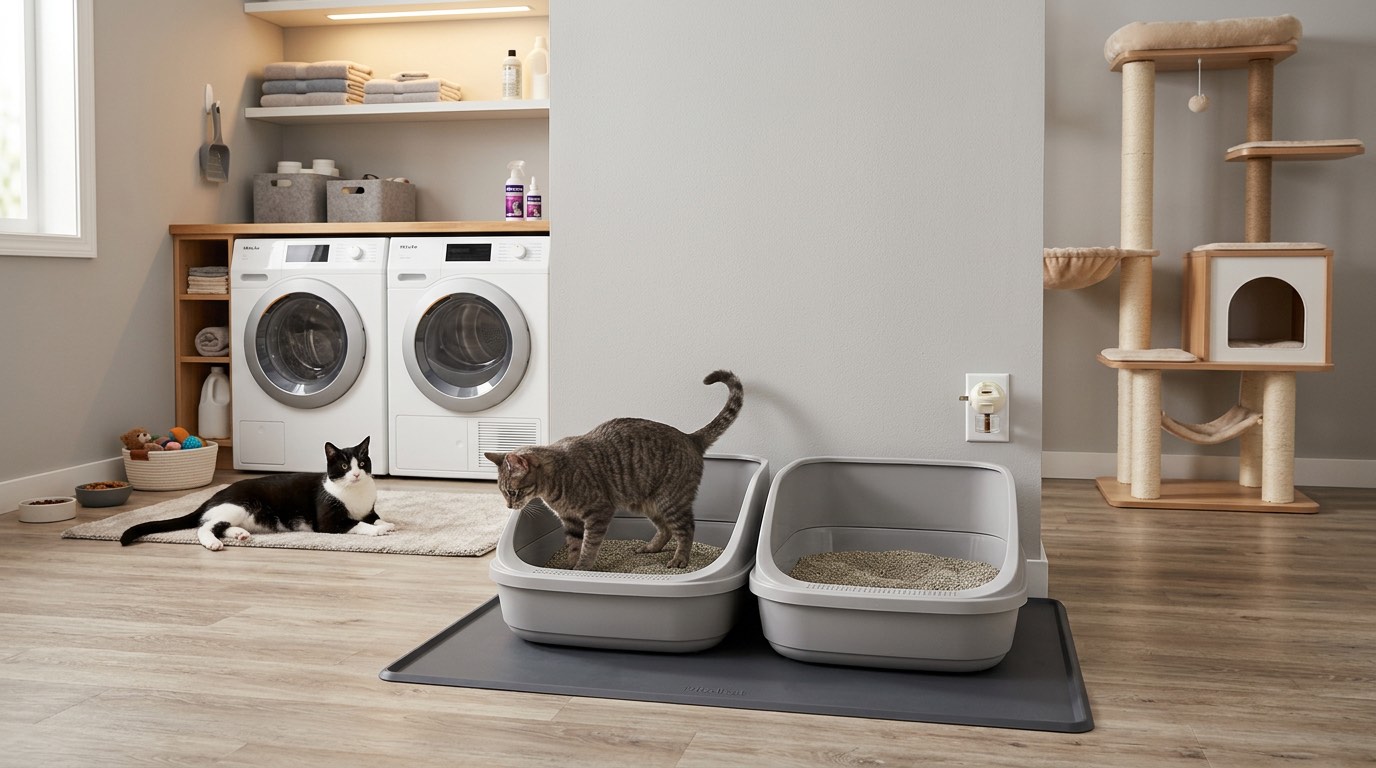
- Stress reduction — providing multiple litter boxes (one per cat plus one extra), maintaining a predictable routine, using feline pheromone diffusers (Feliway), and ensuring adequate vertical space and hiding spots
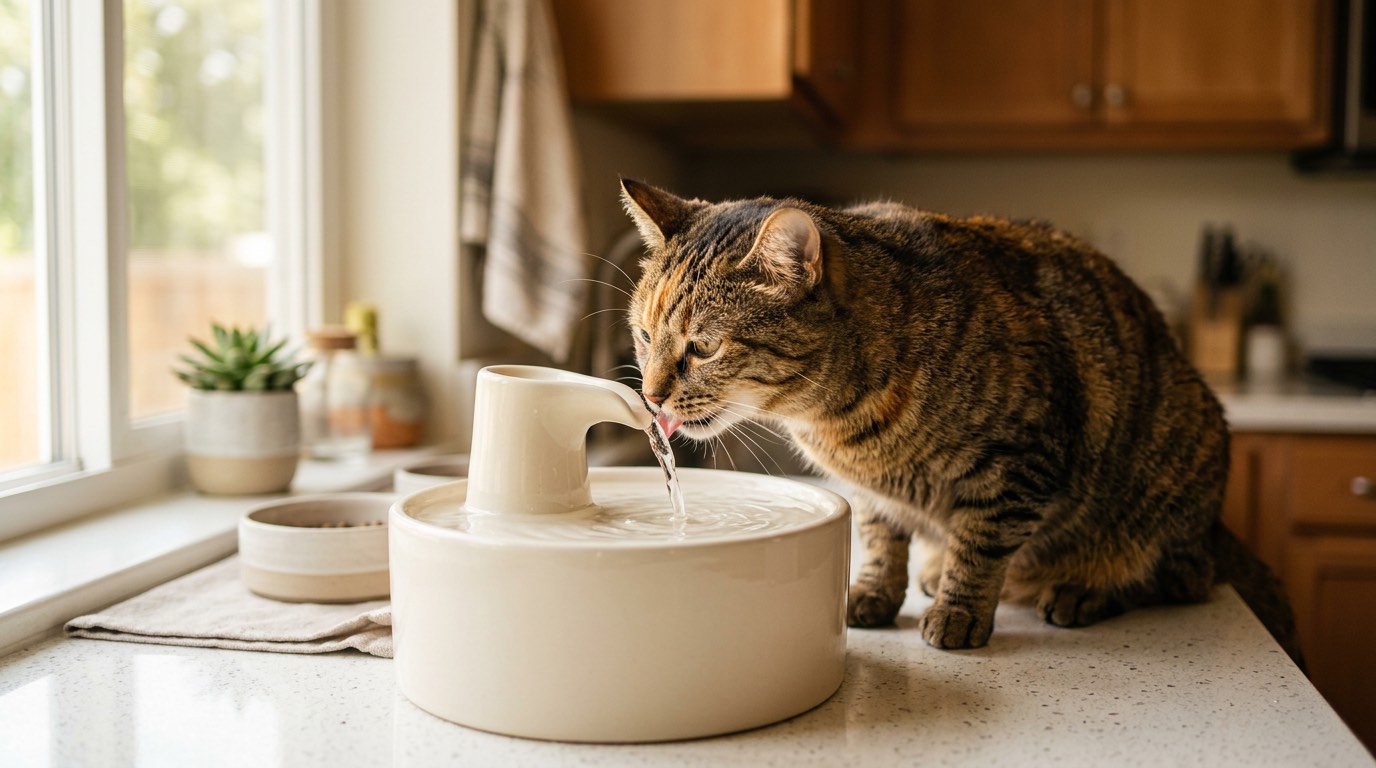
- Increasing water intake — offering wet food, water fountains, and multiple water stations to dilute urine
- Pain management — buprenorphine or gabapentin for acute painful episodes
- Glycosaminoglycan supplements — products like Adequan or oral glucosamine may help restore the protective bladder lining, though clinical evidence is mixed
- Anxiolytic medications — amitriptyline or fluoxetine may be considered for cats with frequent, severe recurrences
Prevention & Long-Term Management
Preventing urinary tract problems involves addressing the factors that predispose pets to infection or inflammation. For dogs prone to recurrent bacterial UTIs, maintaining good perineal hygiene, ensuring complete bladder emptying through regular outdoor access, and managing any underlying endocrine or immune disorders are fundamental steps. Monitoring urine with periodic urinalyses can catch subclinical infections before they become symptomatic.
For cats with a history of FIC, environmental enrichment is the single most impactful intervention. Research has shown that comprehensive environmental modification reduces recurrence rates by over 70 percent in some studies. Key strategies include maintaining a clean, accessible litter box environment, minimizing household stressors, and ensuring adequate hydration through dietary moisture.
When to Seek Emergency Care
Male cats presenting with urinary signs deserve urgent attention. Urethral obstruction — a life-threatening emergency where a mucus or crystal plug blocks the narrow male urethra — can develop rapidly. Signs include repeated unsuccessful attempts to urinate, vocalizing in the litter box, lethargy, vomiting, and a distended painful abdomen. Urethral obstruction can cause fatal electrolyte imbalances (hyperkalemia) within 24–48 hours if untreated.
Any pet that has not urinated in more than 12 hours, appears to be in significant pain while attempting to urinate, or develops vomiting and lethargy alongside urinary signs should be evaluated by a veterinarian immediately.
Frequently Asked Questions
How do I know if my cat has a UTI?
Signs include frequent trips to the litter box with small or no urine output, straining, blood in the urine, and urinating outside the box. However, these same signs occur with feline idiopathic cystitis and bladder stones, so a veterinary exam with urinalysis is needed to determine the actual cause.
Can I treat my dog's UTI at home without antibiotics?
A confirmed bacterial UTI requires veterinary-prescribed antibiotics for effective treatment. Home remedies like cranberry supplements have not been proven to cure active infections. Delaying appropriate treatment can allow bacteria to ascend to the kidneys, causing a far more serious pyelonephritis.
Why does my dog keep getting urinary tract infections?
Recurrent UTIs often signal an underlying predisposing condition such as diabetes, Cushing's disease, bladder stones, or anatomical abnormalities like a recessed vulva. A thorough workup including bloodwork, imaging, and urine culture is essential to identify and address the root cause.
Is blood in my cat's urine always an emergency?
Blood in urine (hematuria) is not always an emergency, but it always warrants veterinary evaluation. In male cats, any urinary signs should be treated urgently because urethral obstruction — which can be fatal within 24–48 hours — must be ruled out.
What is the difference between a UTI and feline idiopathic cystitis?
A UTI is caused by bacteria colonizing the bladder and is confirmed by a positive urine culture. Feline idiopathic cystitis (FIC) produces identical symptoms — straining, blood, frequency — but has no bacterial cause. FIC is linked to stress and a defective bladder lining, and it does not respond to antibiotics.
References
- Weese JS, et al. International Society for Companion Animal Infectious Diseases (ISCAID) guidelines for the diagnosis and management of bacterial urinary tract infections in dogs and cats. Veterinary Journal. 2019;247:8-25.
- Buffington CAT. Idiopathic cystitis in domestic cats — beyond the lower urinary tract. Journal of Veterinary Internal Medicine. 2011;25(4):784-796.
- Byron JK. Urinary Tract Infection. Veterinary Clinics of North America: Small Animal Practice. 2019;49(2):211-221.
- Dorsch R, et al. Feline lower urinary tract disease in a German cat population: A retrospective analysis of demographic data, causes, and clinical signs. Tierärztliche Praxis. 2014;42(4):231-239.