
Quick Answer
Metronidazole is one of the most commonly prescribed antibiotics/antiprotozoals in small animal practice. This guide covers dosing by indication, duration, side effects, drug interactions, and when NOT to use it.
Key Takeaways
- ✓Metronidazole is active against anaerobic bacteria and protozoa (Giardia, Trichomonas); it has limited aerobic antibacterial activity
- ✓Standard dose: 1525 mg/kg PO BID; maximum 65 mg/kg/day exceeding this markedly increases neurotoxicity risk
- ✓Neurotoxicity (vestibular signs, tremors) is the most serious adverse effect; treat with metronidazole discontinuation diazepam 0.5 mg/kg IV
- ✓Avoid in pregnant dogs (teratogen) and dogs with severe hepatic disease (reduce dose 50% or avoid)
- ✓Current evidence does not support routine use in uncomplicated acute diarrhea may disrupt microbiome for 4+ weeks
- ✓Anti-inflammatory properties at lower doses (1015 mg/kg BID) make it useful in IBD as a steroid-sparing agent
What Is Metronidazole and How Does It Work?
Metronidazole (brand names: Flagyl, Metizol) is a nitroimidazole antimicrobial with dual activity as both an antibiotic and antiprotozoal agent. It is one of the most widely prescribed drugs in small animal veterinary medicine.
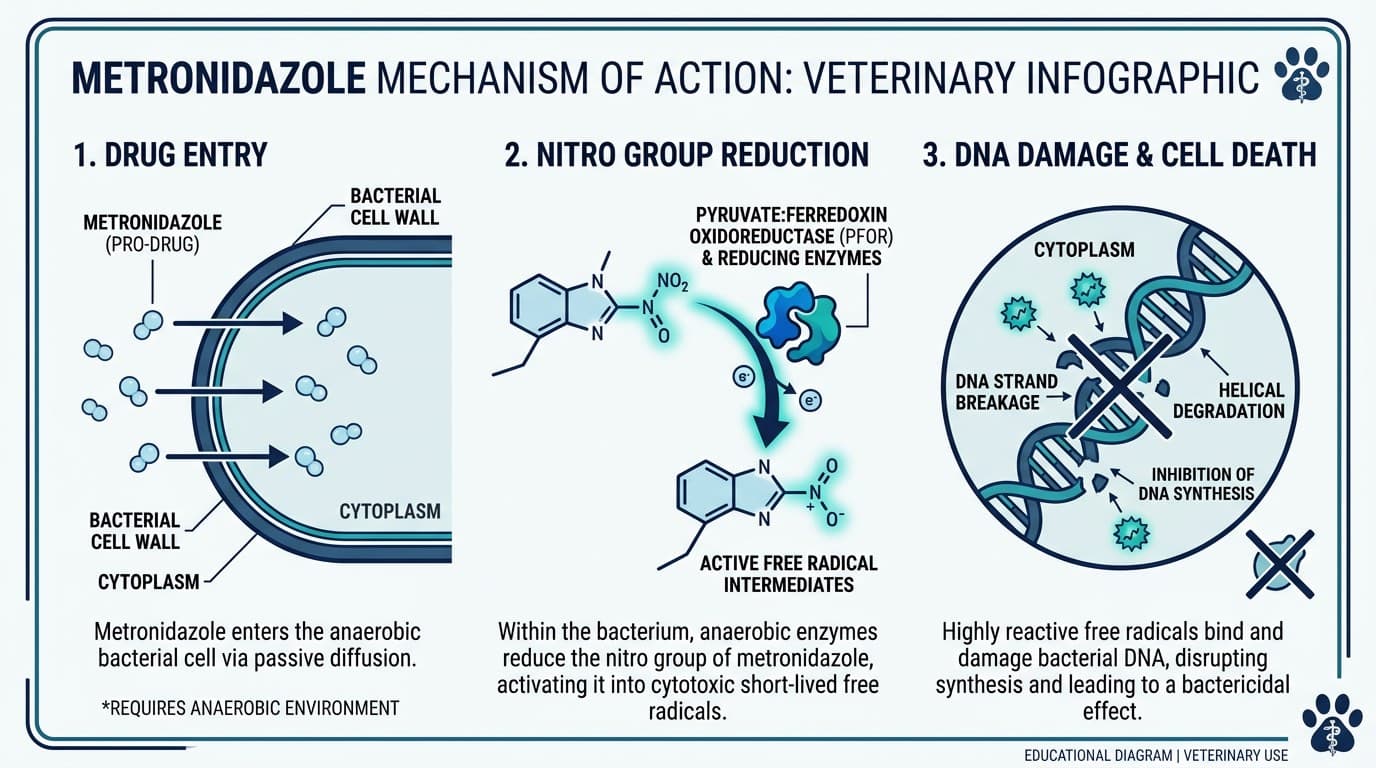
Mechanism of Action Metronidazole enters susceptible organisms and undergoes reductive activation the nitro group is reduced by intracellular electron transport proteins, generating cytotoxic free radicals that damage DNA and disrupt nucleic acid synthesis. This mechanism is highly effective against:
- Anaerobic bacteria (Clostridium spp., Bacteroides fragilis, Fusobacterium, Peptostreptococcus)
- Protozoa: Giardia duodenalis, Trichomonas, Pentatrichomonas, Histomonas
- Limited activity against aerobic bacteria (requires anaerobic conditions for activation)
Anti-inflammatory Properties Beyond its antimicrobial effects, metronidazole has direct anti-inflammatory properties on the GI mucosa it modulates cell-mediated immunity, reduces neutrophil infiltration, and down-regulates pro-inflammatory cytokines. This makes it useful in inflammatory bowel disease (IBD) even as a steroid-sparing agent.
Pharmacokinetics in Dogs
- Bioavailability: ~85% oral (well-absorbed)
- Peak plasma: 12 hours post-oral dose
- Half-life: ~4.5 hours in dogs
- Distribution: Excellent tissue penetration including CNS, bone, abscesses
- Metabolism: Hepatic (cytochrome P450)
- Excretion: ~6080% hepatic, ~20% renal
Metronidazole Dosing in Dogs by Indication
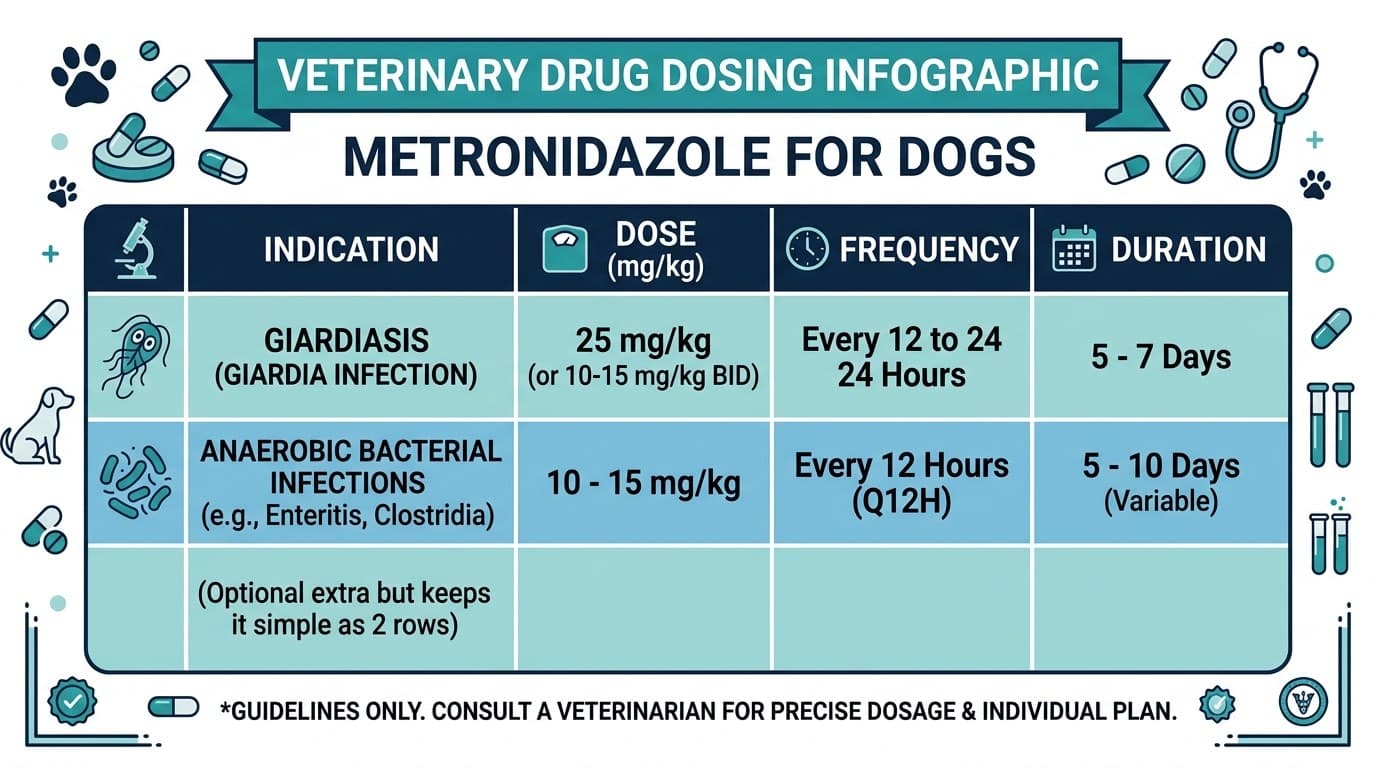
Dosing is indication-specific the dose and duration vary considerably depending on the condition being treated.
| Indication | Dose | Frequency | Duration |
|---|---|---|---|
| Acute diarrhea / Clostridial overgrowth | 1525 mg/kg PO | BID | 57 days |
| Giardia | 1525 mg/kg PO | BID | 57 days |
| Anaerobic infections / abscesses | 15 mg/kg PO/IV | BIDTID | 714 days |
| IBD (anti-inflammatory dose) | 1015 mg/kg PO | BID | 48 weeks (with gradual taper) |
| Hepatic encephalopathy | 7.510 mg/kg PO | BIDTID | Chronic / as needed |
| CNS anaerobic infection | 15 mg/kg IV | TID | 46 weeks (minimum) |
Maximum Dose: Do not exceed 65 mg/kg/day higher doses increase neurotoxicity risk substantially.
IV Formulation: Metronidazole IV is available at 5 mg/mL. Infuse slowly over 3060 minutes. IV use is reserved for hospitalized patients unable to tolerate oral medication.
Available Formulations
- Tablets: 250 mg, 500 mg (most common)
- Compounded oral suspension: useful for small dogs and precise dosing
- IV solution: 5 mg/mL in 100 mL, 500 mL bags
Side Effects and Neurotoxicity Warning
Common Side Effects (dose-dependent)
- Nausea, vomiting, hypersalivation (most common, especially on empty stomach)
- Anorexia
- Metallic/bitter taste (may cause food refusal in some dogs)
- Diarrhea (paradoxically can cause the condition it is treating)
Neurotoxicity (Metronidazole Neurotoxicity Syndrome) The most clinically significant adverse effect. Occurs with high doses (>65 mg/kg/day) or prolonged therapy, though idiosyncratic cases occur at normal doses.
Signs of neurotoxicity:
- Vestibular signs: head tilt, nystagmus, ataxia
- Tremors, seizures
- Opisthotonos (rare, severe)
- Mental dullness, disorientation
Onset: Usually 12 weeks after starting therapy. Dogs on long-term IBD protocols are most at risk.
Treatment of neurotoxicity: 1. Discontinue metronidazole immediately 2. Diazepam 0.5 mg/kg IV once several case reports show diazepam accelerates neurological recovery (may antagonize GABA-inhibitory effect of metronidazole) 3. Supportive care; full recovery expected in most dogs within 12 weeks
Drug Interactions
- Phenobarbital: Reduces metronidazole plasma levels (enzyme induction); may need dose increase
- Cimetidine: Increases metronidazole levels; reduce dose
- Warfarin: Potentiates anticoagulant effect avoid combination
- Cyclosporine: May increase cyclosporine toxicity
Clinical Tips and When Not to Use Metronidazole
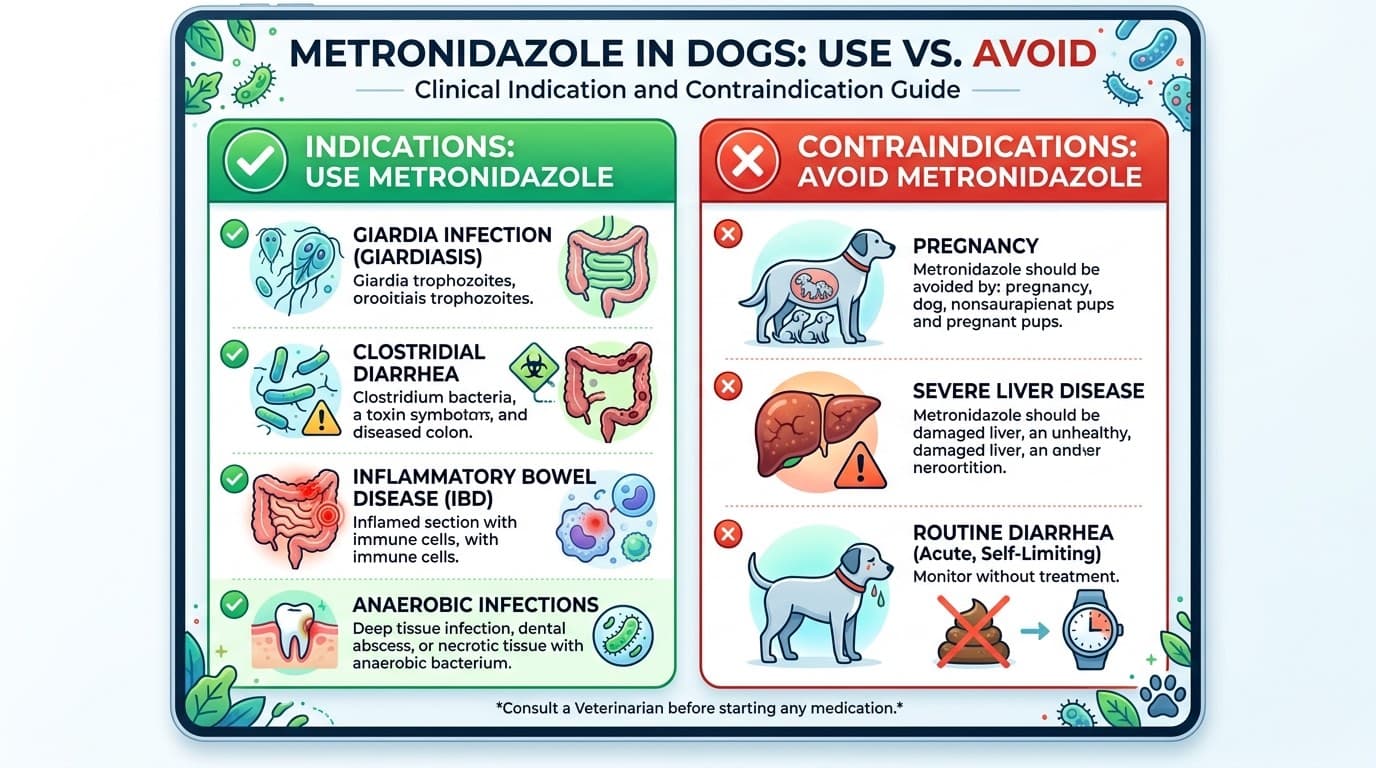
When NOT to Use Metronidazole
- Routine acute diarrhea without specific indication Current evidence suggests metronidazole is overused in acute self-limiting diarrhea. A 2022 study showed metronidazole did not improve outcomes vs. placebo in uncomplicated acute diarrhea and may disrupt the gut microbiome for 4+ weeks post-treatment. Reserve for confirmed/suspected Clostridial or protozoal cause.
- Pregnancy Category D teratogen. Causes fetal abnormalities in rodent models. Avoid especially in the first trimester; use with extreme caution and only when benefits clearly outweigh risks.
- Severe hepatic disease Half-life is significantly prolonged; accumulation leads to toxicity. Reduce dose by 50% or avoid entirely.
- Known sensitivity to nitroimidazole drugs
Administration Tips
- Give with food to reduce GI side effects
- If a dose is missed and less than 12 hours have passed, give the missed dose; otherwise skip
- Compounding into a palatable flavored liquid (chicken, beef) improves compliance in difficult patients
- For long-term IBD use: monitor for early neurological signs at each recheck
Combination Therapy For acute hemorrhagic diarrhea syndrome (AHDS/HGE), metronidazole + tylosin is sometimes used, though evidence for combination superiority over metronidazole alone is limited. Fluid therapy is the primary intervention for AHDS.
Frequently Asked Questions
What is the standard metronidazole dose for dogs?
The most common dose is 1525 mg/kg orally twice daily (BID). For giardia and acute diarrhea, 25 mg/kg BID for 57 days. For IBD, a lower anti-inflammatory dose of 1015 mg/kg BID is used. Never exceed 65 mg/kg/day due to neurotoxicity risk.
How long should a dog take metronidazole for diarrhea?
For acute diarrhea and Giardia, 57 days is the standard course. For inflammatory bowel disease, treatment may continue for 48 weeks with a gradual taper. Prolonged use beyond this increases neurotoxicity risk.
What are the signs of metronidazole toxicity in dogs?
Metronidazole neurotoxicity presents as vestibular signs (head tilt, nystagmus), ataxia, tremors, and in severe cases seizures. Stop the medication immediately and contact your veterinarian. Diazepam 0.5 mg/kg IV may accelerate recovery. Most dogs recover fully within 12 weeks.
Can metronidazole be given with food to dogs?
Yes giving metronidazole with food significantly reduces nausea and vomiting, which are the most common side effects. A small meal or treat at the time of dosing is recommended.
Is metronidazole safe for pregnant dogs?
No. Metronidazole is a known teratogen and should be avoided during pregnancy, especially in the first trimester. It causes DNA damage in rapidly dividing cells and has been shown to cause fetal abnormalities in animal studies. Use safer alternatives when possible.
References
- Langlois DK, et al. Metronidazole neurotoxicity in dogs: retrospective study. J Vet Intern Med. 2020.
- Suchodolski JS, et al. The fecal microbiome in dogs with acute diarrhea and idiopathic inflammatory bowel disease. PLoS One. 2012.
- Plumb DC. Metronidazole. In: Plumb's Veterinary Drug Handbook. 10th ed. Wiley-Blackwell; 2023.