
Quick Answer
A comprehensive guide to metronidazole adverse effects in dogs and cats, including the neurotoxicity syndrome, hepatotoxicity risk, microbiome disruption, drug interactions, and management of toxicity cases.
Key Takeaways
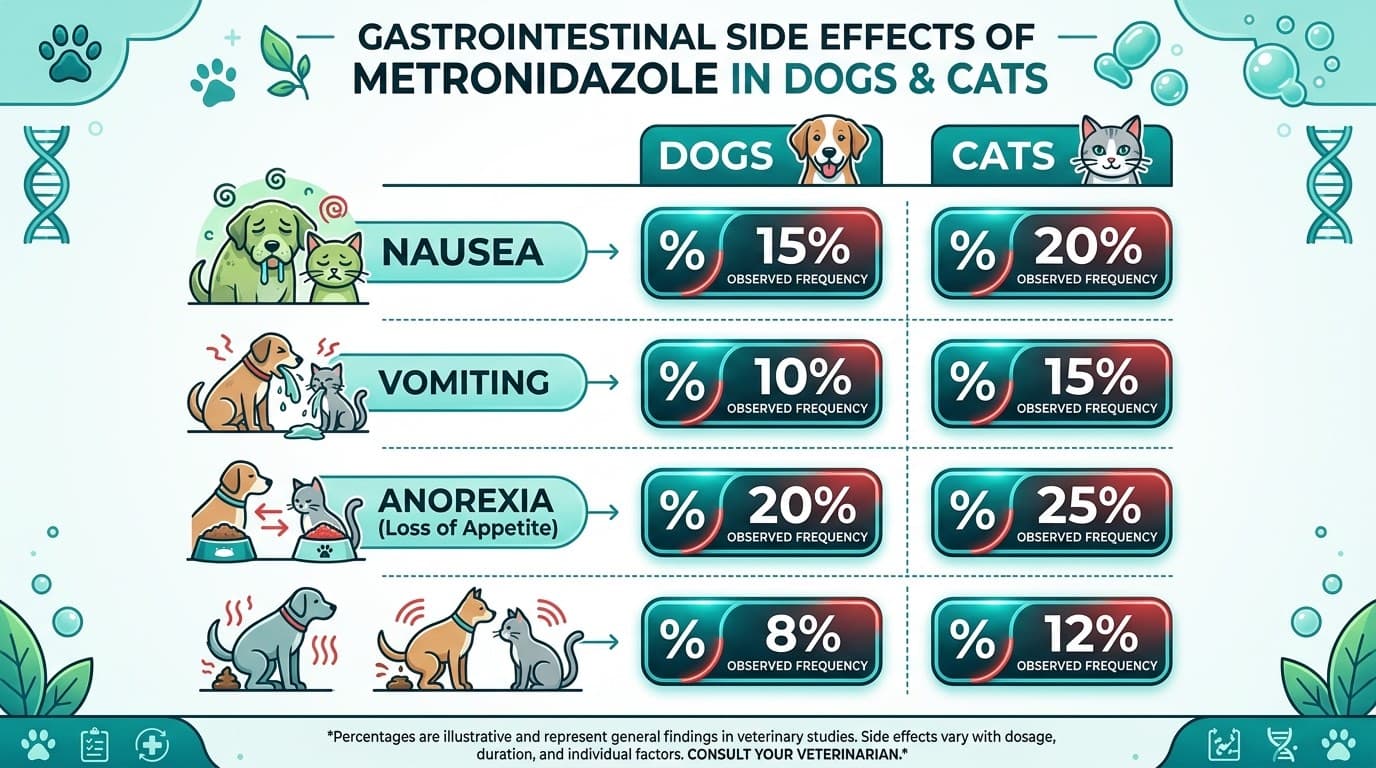
- ✓GI side effects (nausea, vomiting, anorexia) occur in ~20-30% of patients always give with food and consider compounded flavored preparations
- ✓Neurotoxicity (vestibular signs, tremors) is dose-dependent; risk increases above 65 mg/kg/day in dogs. Treat with drug discontinuation diazepam 0.5 mg/kg IV
- ✓Microbiome disruption persists 4+ weeks post-treatment supports judicious use, not routine prescribing for self-limiting diarrhea
- ✓Teratogenic avoid in pregnant dogs and cats; use fenbendazole for Giardia during pregnancy
- ✓Reduce dose 50% in hepatic disease; monitor liver enzymes during long-term therapy
- ✓Cats are more GI-sensitive; transdermal compounded gel improves compliance but has ~20% bioavailability
Gastrointestinal Side Effects (Most Common)
GI adverse effects are the most common side effects of metronidazole in dogs and cats, occurring in up to 2030% of treated animals at standard doses.
Common GI Signs
- Nausea and hypersalivation: Often the first sign. May precede vomiting. Cats frequently show lip-licking and facial rubbing as nausea indicators.
- Vomiting: More common in cats than dogs. Usually occurs within 12 hours of dosing, particularly on an empty stomach.
- Anorexia: Especially in cats, who may completely refuse food if tablets are not hidden effectively
- Diarrhea: Paradoxically, metronidazole can worsen diarrhea in some patients particularly when it disrupts the microbiome
Managing GI Side Effects
- Always administer with food (small meal or treat)
- Bitter/metallic taste is the biggest obstacle in cats compounding into a palatable flavored suspension (chicken, tuna) or transdermal gel dramatically improves compliance
- If vomiting is persistent, consider switching to IV formulation temporarily for hospitalized patients
- Split the daily dose into smaller fractions if necessary (e.g., TID instead of BID at same total daily dose)
Microbiome Disruption A 2022 JAVMA study demonstrated that standard 7-day metronidazole courses in healthy dogs caused significant fecal microbiome dysbiosis (decreased Fusobacteria, Blautia, Prevotella; increased Enterococcus) persisting for 4+ weeks post-treatment. This raises clinical questions about routine use for self-limiting diarrhea and supports the trend toward more judicious prescribing.
Metronidazole Neurotoxicity Syndrome
Neurotoxicity is the most clinically significant adverse effect of metronidazole and represents a true emergency when severe.
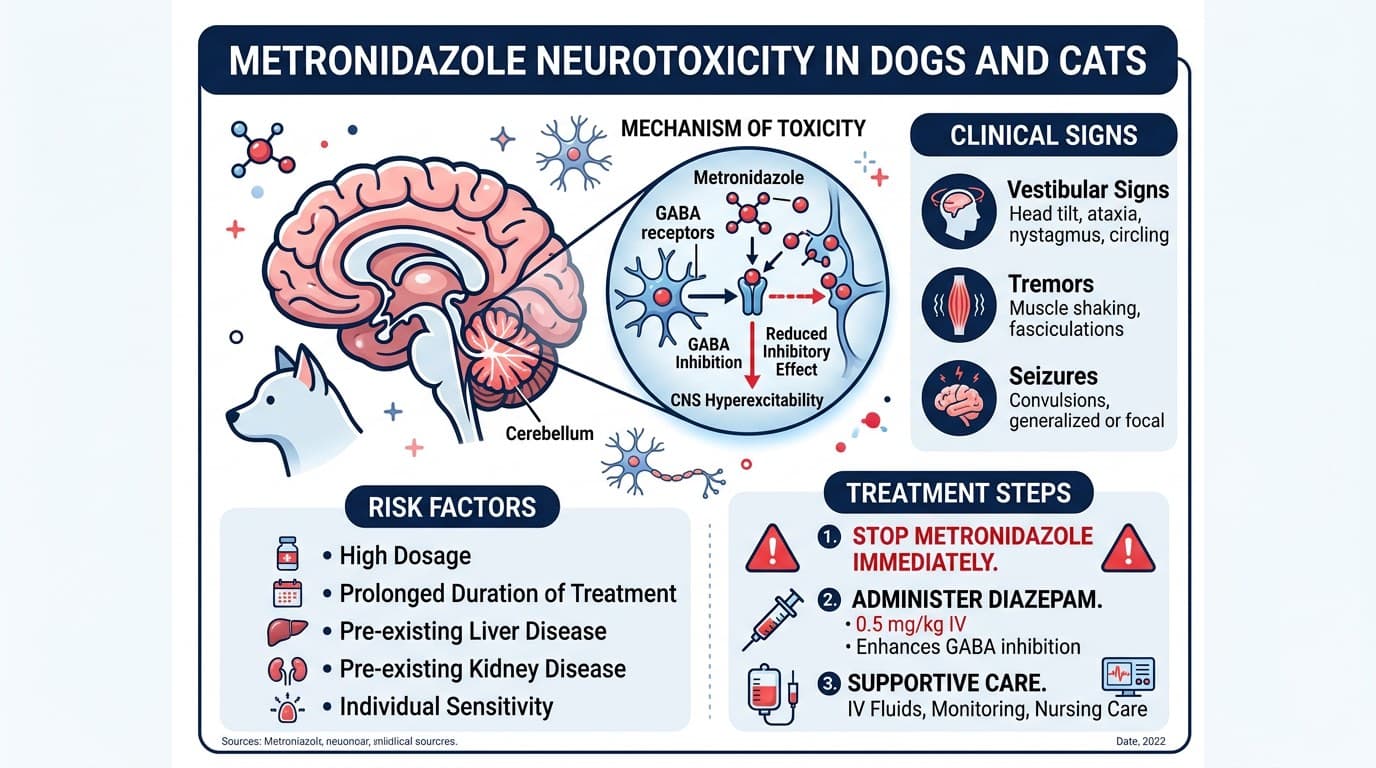
Pathophysiology Metronidazole inhibits GABA (gamma-aminobutyric acid) receptors in the cerebellum and vestibular system. This is dose-dependent but can occur idiosyncratically at standard doses in sensitive individuals.
Clinical Signs
| Sign | Dogs | Cats |
|---|---|---|
| Vestibular: head tilt, nystagmus | Common | Common |
| Ataxia, falling, rolling | Common | Common |
| Tremors (fine to coarse) | Moderate | Less common |
| Seizures | Rare | Rare |
| Opisthotonos | Rare | Rare |
| Mental depression/disorientation | Common | Common |
Risk Factors for Neurotoxicity
- Total daily dose >65 mg/kg/day (dogs) or >62.5 mg/kg/day (cats)
- Duration of therapy >2 weeks
- Pre-existing hepatic disease (reduced clearance)
- Pre-existing CNS disease (lower seizure threshold)
- Concurrent CNS-active drugs (phenobarbital, benzodiazepines)
Onset: Typically 112 days after starting therapy.
Treatment Protocol 1. Discontinue metronidazole immediately the single most important step 2. Diazepam 0.5 mg/kg IV multiple case reports and a retrospective study demonstrate significantly faster neurological recovery when diazepam is given (proposed mechanism: competitive GABA receptor re-stimulation) 3. Supportive care: IV fluids if unable to eat/drink; anti-emetics for nausea; padding to prevent self-injury during ataxia phase 4. Prognosis: Excellent in most cases. Complete recovery expected within 12 weeks (median 710 days). Permanent deficits are rare.
Important: The vestibular signs of metronidazole toxicity can mimic idiopathic vestibular disease, otitis interna, and cerebellar disease. Always rule out drug toxicity first when a patient on metronidazole presents with acute vestibular signs.
Hepatotoxicity and Reproductive Toxicity
Hepatotoxicity Metronidazole is primarily hepatically metabolized. In patients with pre-existing liver disease, the drug accumulates and the risk of both hepatotoxicity and neurotoxicity is substantially elevated.
Hepatotoxicity signs: Elevated ALT/ALP, vomiting, icterus, hepatic encephalopathy. Rare in patients with normal liver function at standard doses.
Clinical rule: In dogs with hepatic disease or elevated liver enzymes at baseline:
- Reduce dose by 50% (e.g., 7.5 mg/kg BID instead of 15 mg/kg BID)
- Monitor liver values weekly
- Consider alternative agents when possible
Reproductive Toxicity (Teratogenicity)
- Dogs: Avoid in pregnant females, especially first trimester (organogenesis)
- Cats: Avoid during pregnancy and lactation
- Crosses the placental barrier readily; enters milk
Safe alternatives during pregnancy (when antiprotozoal/anaerobic cover needed):
- Giardia: Fenbendazole 50 mg/kg/day 3 days (preferred in pregnancy)
- Anaerobic infections: Amoxicillin-clavulanate (limited gram-negative anaerobic cover)
Drug Interactions
| Drug | Interaction | Management |
|---|---|---|
| Phenobarbital | Reduces metronidazole levels 3050% | May need dose increase; monitor response |
| Cyclosporine | Increased cyclosporine toxicity | Monitor cyclosporine levels closely |
| Warfarin/anticoagulants | Potentiates anticoagulant effect | Avoid or monitor INR closely |
| Alcohol-containing products | Disulfiram-like reaction | Avoid |
Monitoring Protocol and Species Differences
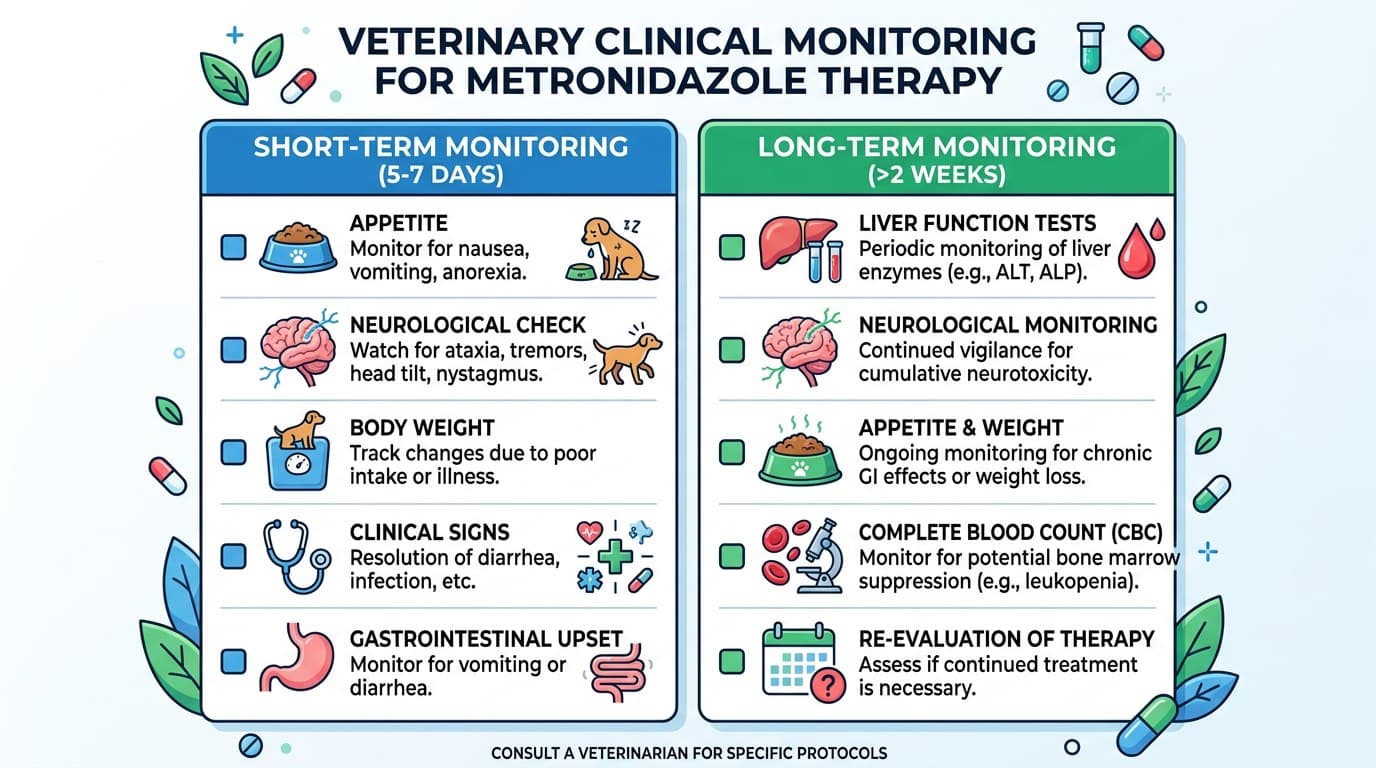
Recommended Monitoring During Metronidazole Therapy
*Short courses (57 days):*
- Monitor appetite and GI tolerance at 4872 hours
- Owner education: report vestibular signs, tremors, or worsening neurological status immediately
*Long-term therapy (IBD, >2 weeks):*
- Liver enzymes (ALT, ALP, total bilirubin) at baseline and every 4 weeks
- Neurological assessment at each visit (cerebellar/vestibular exam)
- Body weight and appetite scores
- Fecal consistency scoring (using Bristol or clinical scale)
Cat-Specific Considerations
- Lower threshold for GI side effects (taste aversion is a major compliance issue)
- Maximum dose in cats: 25 mg/kg/day (some sources 30 mg/kg/day) more conservative than dogs
- Transdermal metronidazole gel (compounded PLO gel applied to ear pinna): lower bioavailability (~20%) but dramatically improves compliance in difficult-to-pill cats. Reduce dose accordingly.
- Cats on metronidazole may show abrupt behavioral changes as an early sign of neurotoxicity watch for hiding, aggression, apparent blindness
Differentiating GI Side Effects from Disease Progression When a patient on metronidazole for diarrhea develops worsening GI signs: 1. Confirm compliance (owner administering correctly) 2. Consider metronidazole-associated diarrhea (microbiome disruption) 3. Rule out inadequate dose for infection burden 4. Consider switching to fenbendazole for Giardia if refractory
Frequently Asked Questions
How do I know if my dog is having a bad reaction to metronidazole?
The main warning signs are vestibular symptoms (head tilt, walking in circles, nystagmus), tremors, or seizures indicating neurotoxicity. For GI side effects, watch for persistent vomiting, severe anorexia, or worsening diarrhea. Stop the drug and call your veterinarian immediately if neurological signs appear.
Can metronidazole cause neurological problems in cats?
Yes. Cats can develop metronidazole neurotoxicity characterized by vestibular signs (head tilt, nystagmus), ataxia, and tremors. Cats are more sensitive than dogs. The maximum safe daily dose in cats is approximately 25 mg/kg/day. Treatment involves immediate drug discontinuation and supportive care.
How long do metronidazole side effects last in dogs?
GI side effects (nausea, vomiting) typically resolve within 2448 hours of stopping the drug. Neurotoxicity may take 714 days to fully resolve after drug discontinuation. Microbiome disruption can persist for 46 weeks after a standard 7-day course.
Why does my dog refuse to eat metronidazole tablets?
Metronidazole has a distinctly bitter/metallic taste that many dogs and especially cats find aversive. Solutions include hiding tablets in a pill pocket or food, using compounded flavored liquid suspension (chicken, beef, or bacon flavored), or using compounded transdermal gel applied to the ear pinna in cats.
Can metronidazole damage a dog's liver?
Metronidazole is hepatically metabolized and can cause hepatotoxicity, particularly in dogs with pre-existing liver disease. In dogs with normal liver function at standard doses, hepatotoxicity is rare. Dogs with hepatic disease should receive a 50% dose reduction. Monitor liver enzymes (ALT, ALP) during prolonged courses.
References
- Langlois DK, et al. Retrospective evaluation of metronidazole neurotoxicity in dogs. J Vet Intern Med. 2020.
- Pilla R, Suchodolski JS. The gut microbiome of dogs and its role in health and disease. Front Vet Sci. 2020.
- Plumb DC. Metronidazole. In: Plumb's Veterinary Drug Handbook. 10th ed. Wiley-Blackwell; 2023.