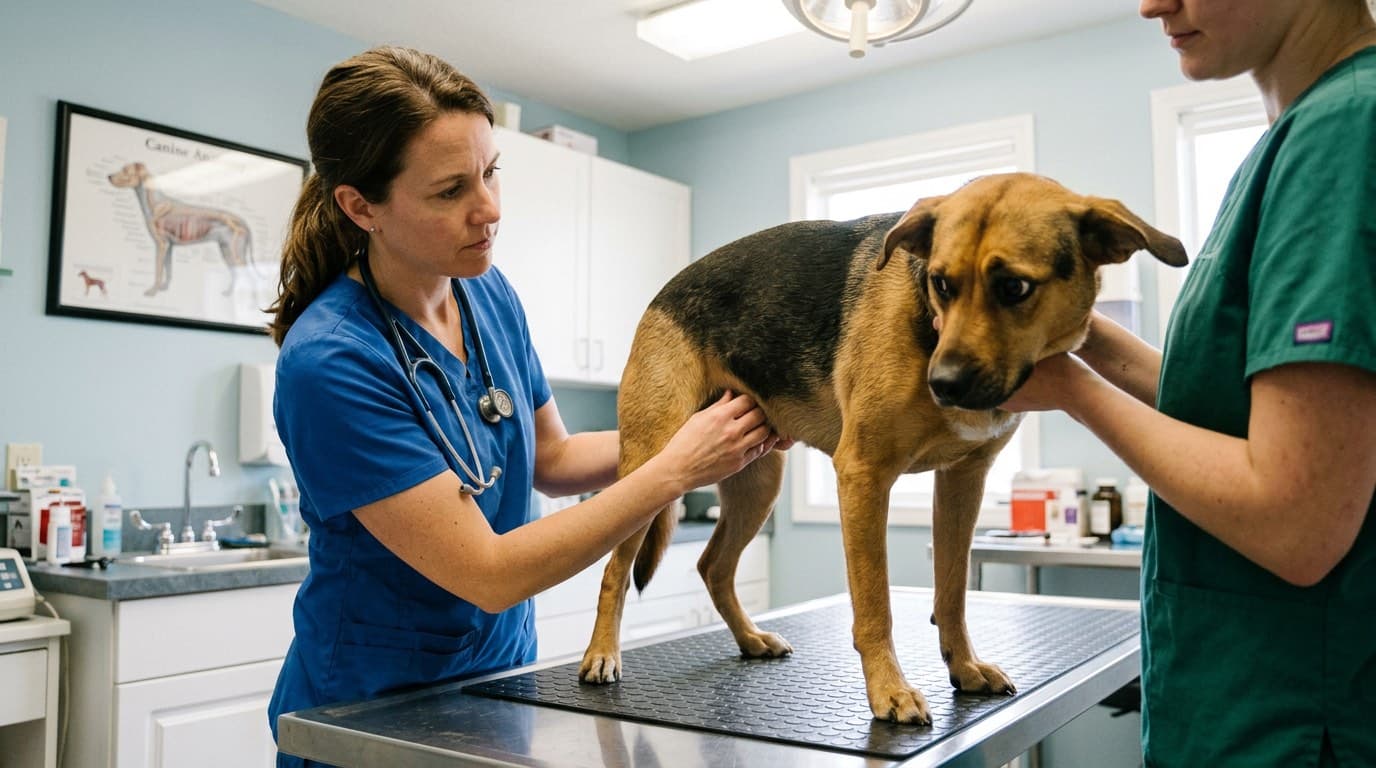
Quick Answer
Metronidazole is the most prescribed drug for canine diarrhea, but evidence for its routine use in uncomplicated cases is weak. This guide covers when it is genuinely indicated, the specific protocols for Giardia, Clostridial diarrhea, AHDS, and IBD, and the case against reflexive prescribing.
Key Takeaways
- ✓Evidence shows metronidazole offers no benefit over placebo in uncomplicated acute canine diarrhea use dietary management first
- ✓Genuine indications: Giardia (25 mg/kg BID 5-7d), Clostridial diarrhea (15-25 mg/kg BID 7-14d), AHDS (supportive role), IBD (anti-inflammatory)
- ✓Metronidazole disrupts the gut microbiome for 46 weeks post-treatment this is clinically significant when prescribing to already-dysbiotic diarrhea patients
- ✓Fenbendazole 50 mg/kg/day 3-5 days is preferred over metronidazole for Giardia in pregnant dogs and refractory cases
- ✓FortiFlora (Enterococcus faecium SF68) and bland diet achieve equivalent outcomes to metronidazole in mild acute diarrhea
- ✓AHDS: IV fluids are the cornerstone of therapy metronidazole is adjunctive for moderate-severe cases
The Evidence Question: Is Metronidazole Overused for Diarrhea?
Metronidazole is the most commonly prescribed drug for diarrhea in dogs in small animal practice. But an accumulating body of evidence questions its value in uncomplicated acute diarrhea.
Key studies:
Langlois et al. (2020, JAVMA): Randomized controlled trial of dogs with acute diarrhea no significant difference in time to resolution between metronidazole-treated and placebo groups. Metronidazole-treated dogs had measurably worse fecal microbiome diversity at 30 days.
Suchodolski et al. (2022): Dogs receiving a 7-day metronidazole course showed significant depletion of beneficial anaerobes (Fusobacteria, Blautia) and enrichment of potentially pathogenic Enterococcus for up to 6 weeks post-treatment.
What this means clinically:
- Uncomplicated acute diarrhea (self-limiting, mild systemic signs, no blood, no parasites identified) does NOT require metronidazole
- Dietary management (bland diet, fasting, fiber supplementation) achieves equivalent outcomes in most mild-moderate acute diarrhea
- Indiscriminate use may worsen long-term gut health
When metronidazole IS indicated (genuine indications):
- Confirmed or suspected Giardia
- Suspected Clostridial overgrowth (acute large-bowel diarrhea with mucus/blood, not self-resolving)
- Acute hemorrhagic diarrhea syndrome (AHDS/HGE) component of supportive care
- Inflammatory bowel disease (anti-inflammatory role, not antimicrobial)
- Anaerobic infections with GI involvement
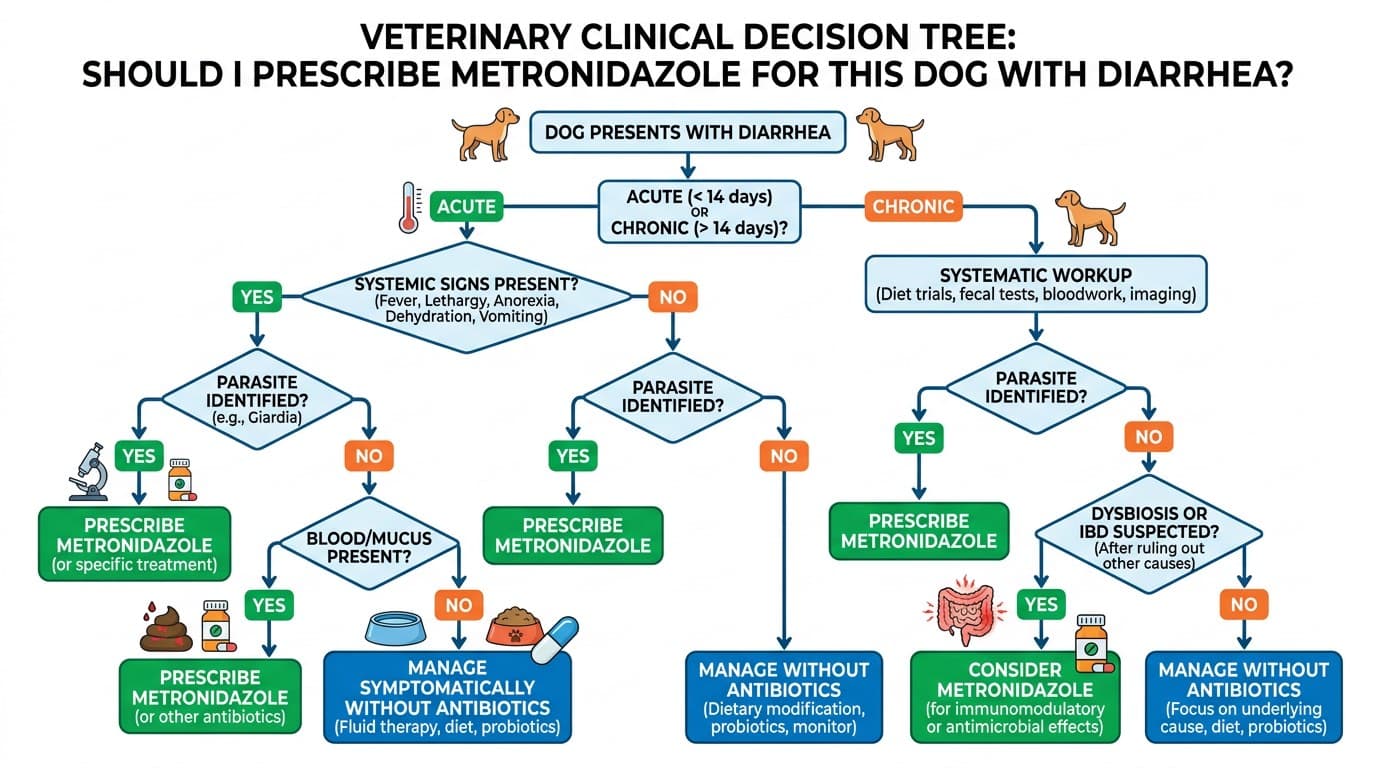
Specific Diarrhea Conditions and Metronidazole Protocols
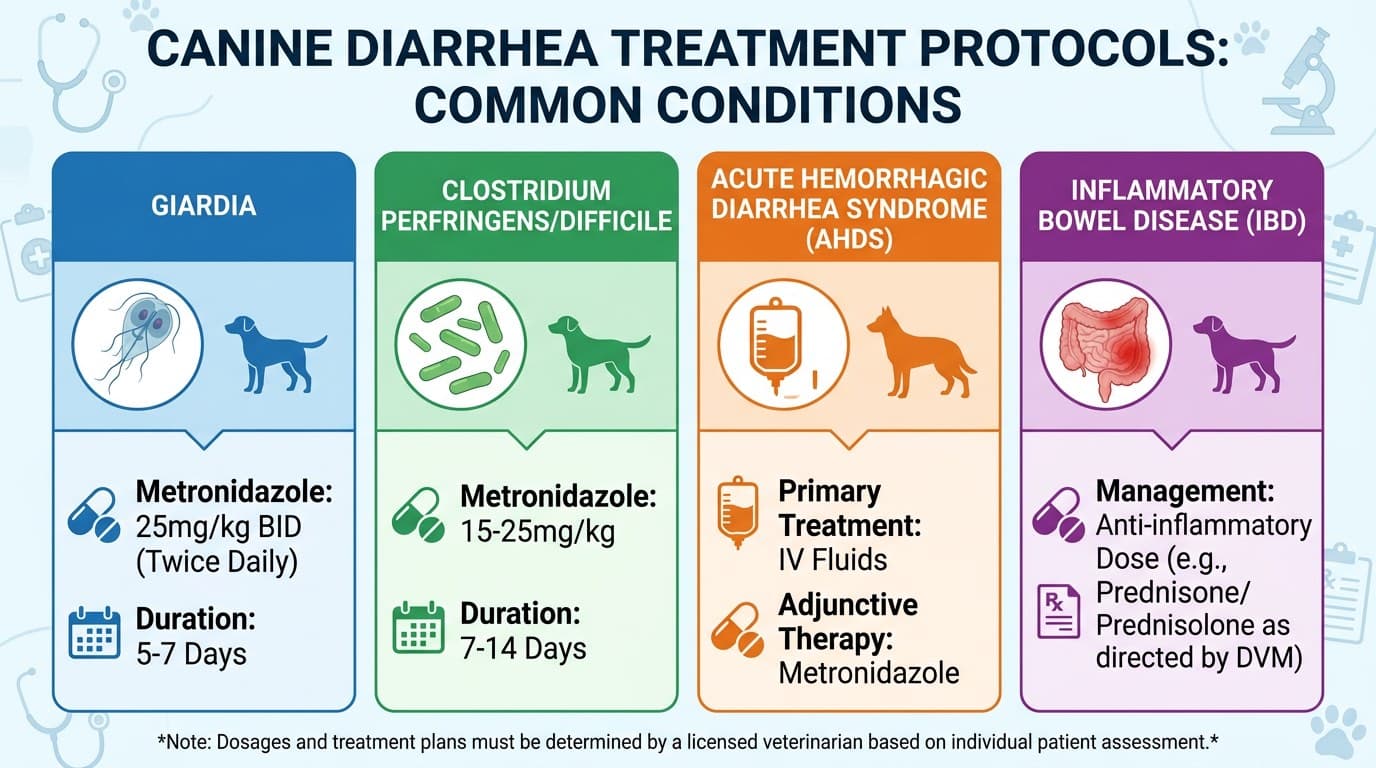
1. Giardia duodenalis Giardia is the most common intestinal protozoan in dogs (prevalence 515% in pet dogs; 30%+ in shelter populations).
*Protocol:*
- Metronidazole 25 mg/kg PO BID 57 days efficacy ~70% (single course)
- OR Fenbendazole 50 mg/kg/day 35 days comparable efficacy, preferred in pregnant dogs
- OR Combination: metronidazole + fenbendazole simultaneously for refractory cases
*Important*: Treat all dogs in the household simultaneously. Environment decontamination with quaternary ammonium compounds. Retest fecal antigen 24 weeks after treatment.
2. Clostridium perfringens / difficile Large-bowel diarrhea with characteristic mucus-streaked or hemorrhagic stools, tenesmus, hematochezia. Often episodic and recurrent. Diagnosis by fecal PCR or culture + enterotoxin assay (Clostridiaceae PCR is oversensitive; look for clinical correlation).
*Protocol:*
- Metronidazole 1525 mg/kg PO BID 714 days
- Add tylosin 1525 mg/kg/day PO in refractory cases
- Identify and address dietary/environmental triggers (dietary indiscretion, stress)
3. Acute Hemorrhagic Diarrhea Syndrome (AHDS/HGE) Characterized by PCV >55%, explosive hemorrhagic diarrhea, rapid clinical deterioration. IV fluid therapy is the cornerstone; antibiotic role is debated.
*Protocol:*
- First line: Aggressive IV isotonic crystalloid resuscitation (dogs: up to shock dose 90 mL/kg)
- Metronidazole 15 mg/kg IV/PO BID 57 days used in moderate-severe cases for anaerobic bacterial translocation risk; not proven essential in mild cases
- Anti-emetics (maropitant 1 mg/kg IV/SQ q24h)
- Withhold oral intake until vomiting resolves, then bland diet introduction
4. Inflammatory Bowel Disease (IBD) See [Inflammatory Bowel Disease Guide](/articles/inflammatory-bowel-disease-dogs-cats) for full protocol.
Metronidazole 1015 mg/kg BID as steroid-sparing anti-inflammatory agent. Often used in combination with tylosin, budesonide, or prednisone. Long-term protocols require regular neurological monitoring.
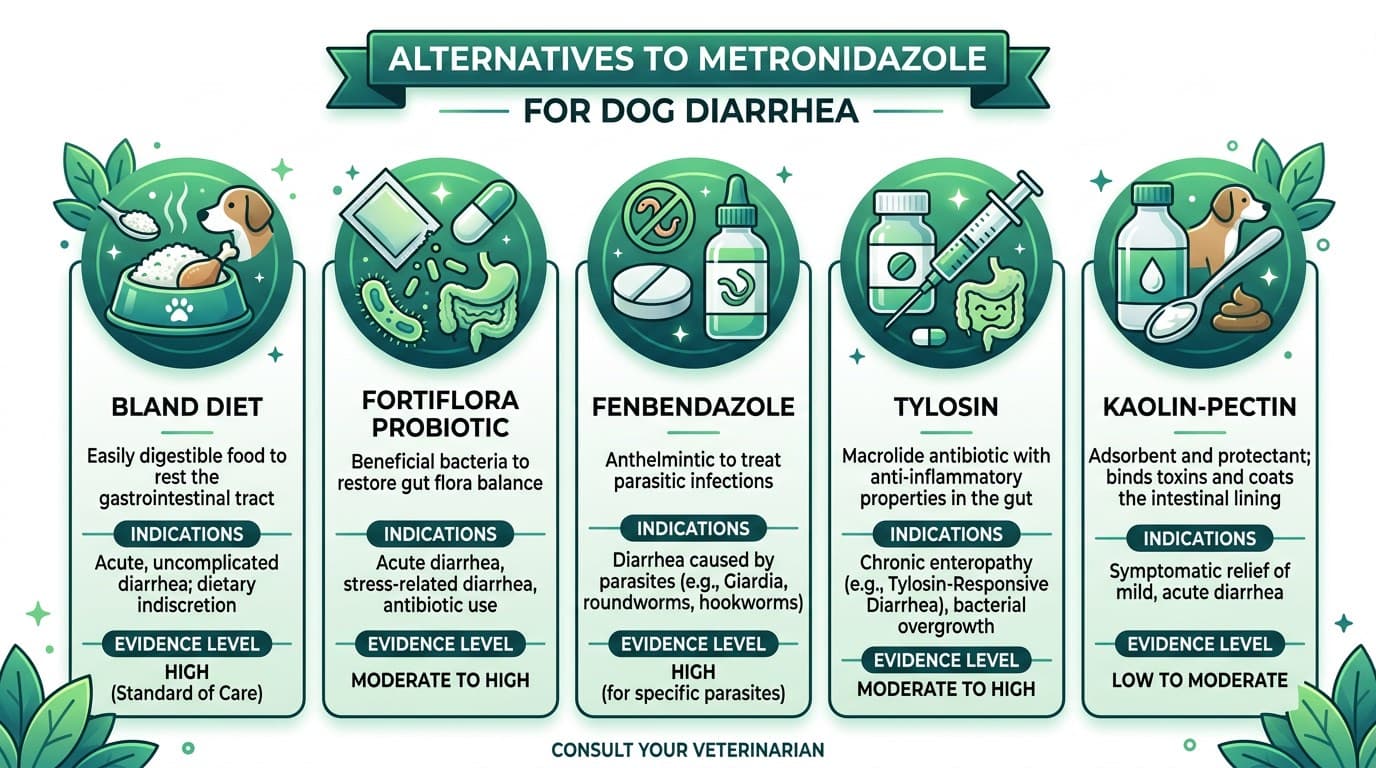
Alternatives to Metronidazole for Diarrhea Management
For uncomplicated acute diarrhea, evidence supports non-antibiotic management first:
Dietary Management (First-Line for Mild-Moderate Acute Diarrhea)
- Short-term fast (1224 hours for adults) or very small bland meals allows GI rest
- Bland diet: Boiled white chicken + white rice (1:2 ratio) or commercial GI diet (Hill's i/d, Royal Canin GI) 35 days, then transition back to regular food over 57 days
- Efficacy: 6080% of uncomplicated acute diarrhea resolves within 57 days on dietary management alone
Probiotics and Prebiotics
- FortiFlora (Enterococcus faecium SF68): Reduces duration of acute diarrhea in clinical trials (1 sachet/day PO)
- Proviable-DC: Multi-strain probiotic + prebiotic
- Evidence base is moderate; benefit in microbiome restoration after antibiotic use
Fenbendazole (Panacur)
- Superior to metronidazole for Giardia in pregnant dogs and in refractory cases
- Dose: 50 mg/kg/day PO 35 days
- Safe in pregnancy, puppies, and immunocompromised dogs
Tylosin (Tylan)
- Effective for Clostridial diarrhea, especially chronic/recurrent cases
- Dose: 1525 mg/kg/day mixed in food
- Available in powder form; lower microbiome disruption profile than metronidazole for long-term use
Kaolin-Pectin / Smectite
- Adsorbent and mucosal protective agents
- Useful as adjunct supportive care; no antimicrobial effect
Frequently Asked Questions
Does metronidazole cure diarrhea in dogs?
Metronidazole is effective for diarrhea caused by specific organisms Giardia, Clostridium, and anaerobic bacteria. For uncomplicated acute diarrhea without a specific pathogen identified, clinical trials show metronidazole offers no benefit over placebo. Bland diet and probiotics are appropriate first-line management for mild acute diarrhea.
How quickly does metronidazole work for dog diarrhea?
When effective, improvement is typically seen within 2448 hours of starting treatment. For Giardia, full resolution of diarrhea may take the full 57 day course. For AHDS, clinical improvement usually begins within 1224 hours of IV fluid therapy (not metronidazole specifically).
What if metronidazole doesn't help my dog's diarrhea?
If diarrhea doesn't improve after 4872 hours of metronidazole, re-evaluate the diagnosis. Consider: wrong pathogen (viral, other parasites), inadequate dose, poor compliance, or underlying disease (IBD, EPI, lymphoma). Fecal PCR panel, abdominal ultrasound, and GI diagnostics may be warranted.
Can I give my dog metronidazole without a vet visit?
Metronidazole is a prescription medication in the US and most countries. It should not be given without veterinary guidance. Using it without diagnosis may mask serious conditions, expose your dog to unnecessary side effects, and contributes to antimicrobial resistance. Mild acute diarrhea in an otherwise healthy adult dog can often be managed with bland diet and probiotics first.
What is the best antibiotic for dog diarrhea?
The "best" antibiotic depends on the cause. Metronidazole for anaerobic bacteria and protozoa; fenbendazole for Giardia (especially in pregnant dogs); tylosin for chronic Clostridial diarrhea. For most acute diarrhea without systemic illness, no antibiotic is needed dietary management and probiotics are appropriate first-line therapy.
References
- Langlois DK, et al. Efficacy of metronidazole vs. placebo in acute canine diarrhea. JAVMA. 2020.
- Suchodolski JS. Diagnosis and interpretation of intestinal dysbiosis in dogs and cats. Vet J. 2016.
- Scorza AV, Lappin MR. Metronidazole for the treatment of feline giardiasis. J Feline Med Surg. 2004.