
Quick Answer
Intestinal parasites are among the most common health problems in dogs and cats worldwide. This comprehensive guide covers the five most clinically important parasite types — their biology, how pets become infected, symptoms, zoonotic risks to humans, diagnosis, and evidence-based treatment and prevention protocols.
Key Takeaways
- ✓Intestinal parasites affect 20–35% of dogs and cats; puppies and kittens are at highest risk and should begin deworming at 2 weeks of age
- ✓Roundworms (Toxocara) and hookworms (Ancylostoma) are the most common and clinically important; both can be transmitted to humans (zoonotic)
- ✓Tapeworms require flea intermediate hosts — effective flea control is essential for tapeworm prevention and to prevent reinfection after treatment
- ✓Giardia requires fenbendazole treatment AND rigorous environmental decontamination (dilute bleach, bathing the pet) to prevent reinfection
- ✓Annual fecal examinations are recommended for all adult dogs and cats; twice yearly for high-risk individuals
- ✓Monthly heartworm preventatives (Heartgard Plus, Interceptor Plus) provide simultaneous protection against multiple intestinal parasites
Why Intestinal Parasites Matter: Prevalence and Zoonotic Risk
Intestinal parasites are an underappreciated public health concern as well as a major cause of morbidity in dogs and cats. Surveys consistently find that 20–35% of dogs and cats in the United States carry at least one intestinal parasite, with rates significantly higher in puppies and kittens, shelter animals, and outdoor pets.
The Zoonotic Dimension
Several common pet intestinal parasites pose direct or indirect health risks to humans:
- *Toxocara canis/cati* (roundworms): Second most common zoonosis in the US after toxoplasmosis. The larval forms cause visceral larva migrans (internal organ damage) and ocular larva migrans (vision loss and blindness in children). An estimated 14% of the US population has antibodies to *Toxocara* — evidence of past exposure.
- *Ancylostoma* species (hookworms): Cause cutaneous larva migrans (creeping eruption) in humans — larvae penetrate skin, migrate under the surface causing intensely itchy, winding tracks. Also cause eosinophilic enteritis in humans.
- *Dipylidium caninum* (tapeworm): Humans (especially children) can be accidentally infected by ingesting an infected flea.
- *Giardia duodenalis*: Some assemblages of Giardia are zoonotic — though the evidence for pet-to-human transmission via normal household contact is debated; the risk is real in immunocompromised individuals.
- *Echinococcus* species (tapeworm): Rare in US companion animals, but capable of causing hydatid cysts in humans — potentially fatal.
Why Puppies and Kittens Need Early Treatment
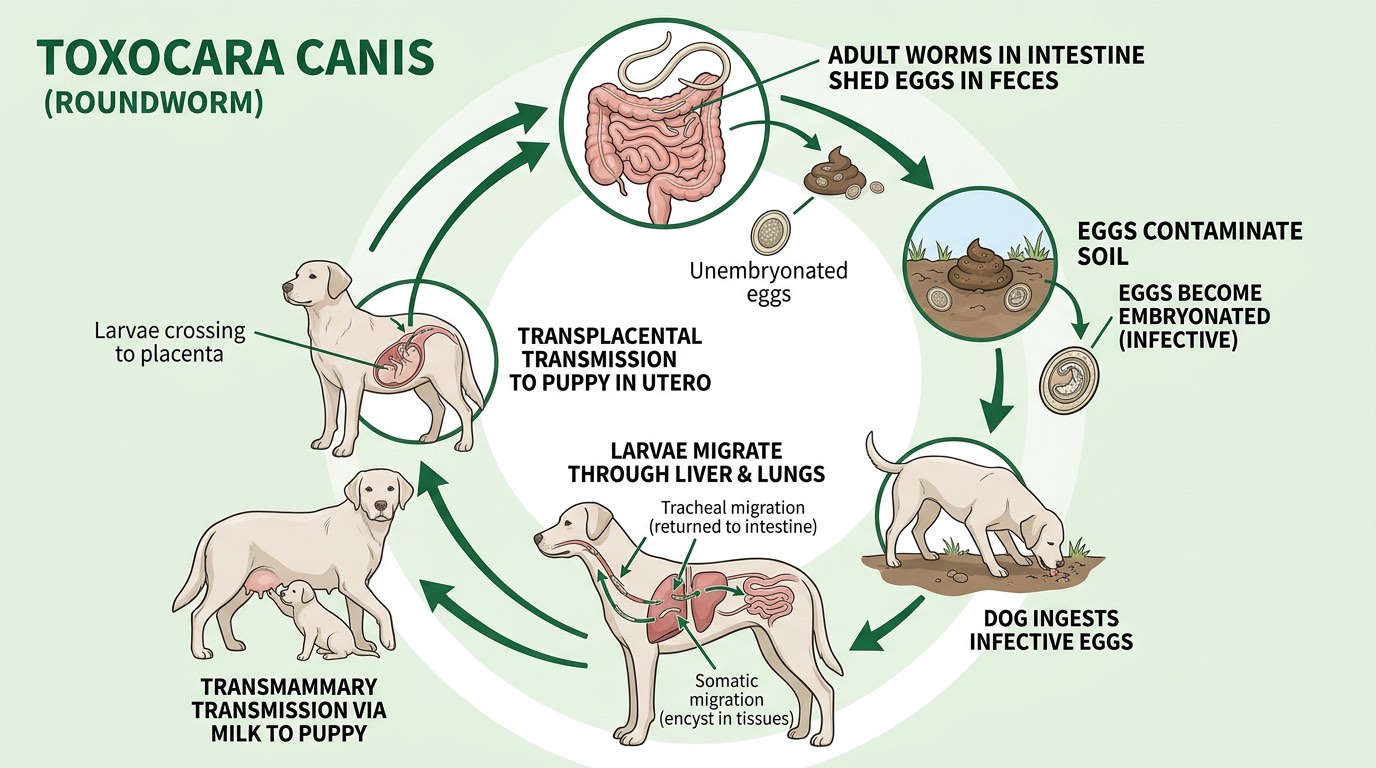
Puppies can be born infected with *Toxocara canis* (transplacental transmission) and can acquire hookworms via milk. Kittens acquire *Toxocara cati* via milk. Without treatment, heavily infected neonates can develop life-threatening infections with anemia (hookworms), GI obstruction (large roundworm burdens), and failure to thrive. The Centers for Disease Control and Prevention (CDC) and CAPC (Companion Animal Parasite Council) recommend deworming puppies and kittens beginning at 2 weeks of age.
Roundworms and Hookworms: The Most Common Worms
Roundworms (Toxocara canis, Toxocara cati, Toxascaris leonina)
Appearance: Large, spaghetti-like worms visible to the naked eye in vomitus or feces; adult worms 3–7 inches long, whitish-cream colored.
Transmission:
- Transplacental (in utero) — *T. canis* in puppies
- Transmammary (via milk) — both *T. canis* and *T. cati*
- Ingestion of embryonated eggs from contaminated soil
- Ingestion of paratenic hosts (rodents, birds carrying larvae)
Clinical signs:
- Mild infections: often asymptomatic
- Heavy infections: "pot belly" appearance, poor growth, rough coat, diarrhea, vomiting
- Severe infections in neonates: intestinal obstruction, respiratory signs if larvae migrate through lungs (coughing)
Diagnosis: Fecal flotation — eggs are spherical with a thick, pitted shell; light brown in color
Treatment: Pyrantel pamoate (most common), fenbendazole, milbemycin oxime, piperazine. Multiple treatments required: typically at 2, 4, 6, 8 weeks in puppies/kittens; adult animals at diagnosis and follow-up.
Hookworms (Ancylostoma caninum, Ancylostoma tubaeforme, Uncinaria stenocephala)
Hookworms are small (0.5–2 cm), thin worms that attach to the intestinal wall and feed on blood. Despite their small size, heavy infections cause severe, life-threatening anemia, especially in young animals.
Transmission:
- Ingestion of larvae from contaminated soil
- Skin penetration (larvae actively penetrate through paw pads and underbelly)
- Transmammary in nursing puppies
- Transplacental: minor but documented for *A. caninum*
Clinical signs:
- Pale gums, weakness, lethargy (from blood loss anemia)
- Melena (dark, tarry stools) — digested blood
- Diarrhea with bloody stools
- Rapid weight loss
- Death in severe neonatal infections from hemorrhagic anemia
Diagnosis: Fecal flotation — eggs are oval with thin shell, contain morula-stage embryo; require fresh sample (eggs hatch quickly in warm conditions)
Treatment: Pyrantel, fenbendazole, milbemycin, moxidectin. Severely anemic animals may require blood transfusions. The environment must be addressed: hookworm larvae survive for weeks in moist soil and can re-infect treated animals.
Tapeworms, Whipworms, and Other Intestinal Worms
Tapeworms (Dipylidium caninum, Taenia species, Echinococcus species)
*Dipylidium caninum* is the most common tapeworm in dogs and cats. Unlike other intestinal worms, it is transmitted exclusively via ingestion of an infected intermediate host — the flea. Dogs and cats ingest fleas during grooming; flea larvae that have ingested tapeworm eggs develop into infectious cysticercoids that develop into adult tapeworms in the intestine.
Appearance: Proglottids (tapeworm segments) passed in the stool or visible around the anal area — often described as "rice-like" or "sesame seed" shaped. Fresh segments may be motile.
Clinical signs: Usually minimal — owners notice segments near the tail or in feces; occasional scooting (dragging the rear), perianal irritation, pruritus.
Diagnosis: Identification of proglottids or eggs in fresh feces; standard fecal flotation often misses tapeworm eggs (proglottids must be observed).
Treatment: Praziquantel (injection, oral, or topical) — highly effective and well tolerated; single dose usually curative. Flea control is ESSENTIAL to prevent reinfection — without eliminating fleas, re-infection occurs within weeks.
*Taenia species*: Intermediate hosts are rodents, rabbits, and other small mammals. More common in hunting dogs and cats. Treated with praziquantel or fenbendazole.
*Echinococcus multilocularis*: A small tapeworm of foxes/coyotes; dogs can serve as definitive hosts; causes alveolar hydatid disease in humans — a serious zoonosis. More prevalent in north-central US, Canada, and Europe.
Whipworms (Trichuris vulpis) — Dogs Only
Whipworms are thread-like parasites that inhabit the cecum (large intestine) of dogs. They are rarely found in cats in North America.
Transmission: Ingestion of embryonated eggs from contaminated soil; eggs are extremely hardy, surviving in soil for several years.
Clinical signs:
- Mild infections: often asymptomatic
- Moderate-heavy: chronic, watery or mucoid diarrhea; may have blood
- Large bowel pattern: straining, urgency, small frequent stools with mucus and blood
- Rarely: electrolyte imbalance mimicking Addison's disease (hyponatremia, hyperkalemia)
Diagnosis: Fecal flotation with zinc sulfate centrifugation (eggs shed intermittently and in small numbers — multiple samples may be needed). Eggs are "football-shaped" with bipolar plugs (distinctive).
Treatment: Fenbendazole (3 days) or febantel; repeat at 3 and 6 months to eliminate re-infection from long-lived eggs in the environment. Milbemycin and oxantel also effective.
Giardia and Coccidia: Protozoan Parasites
Unlike the worm parasites above, Giardia and coccidia are single-celled organisms (protozoa) that cause distinct intestinal disease and require different treatments.
Giardia (Giardia duodenalis)
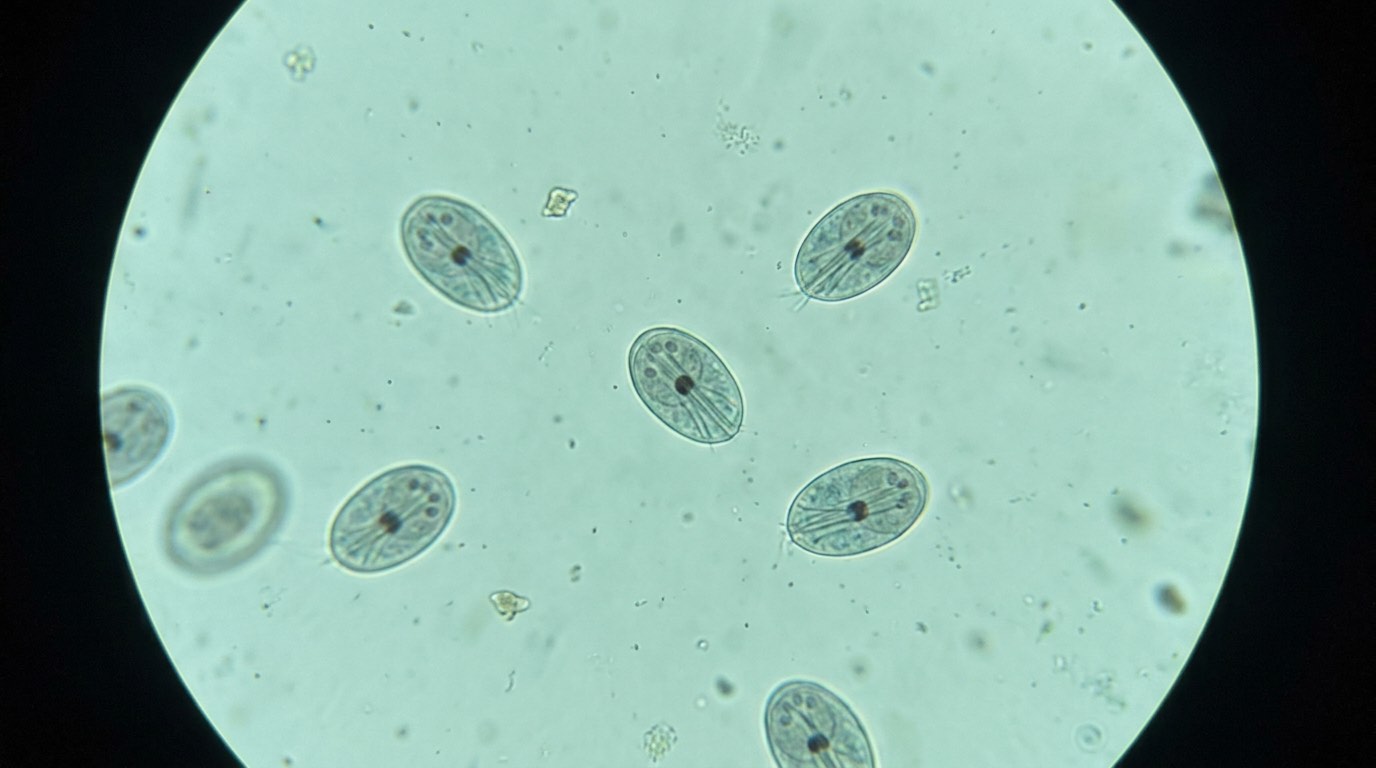
Giardia is one of the most commonly identified intestinal parasites in dogs and cats worldwide. It infects the small intestine, causing disruption of absorptive function.
Transmission: Ingestion of infectious cysts from contaminated water (puddles, streams, dog parks), soil, or fomites. Cysts are environmentally hardy and resistant to standard chlorine disinfection.
Clinical signs:
- Many infected animals are asymptomatic carriers
- Symptomatic: acute or chronic soft, pale, greasy, malodorous diarrhea ("cow-pat" consistency)
- Flatulence and increased borborygmi (gut sounds)
- Weight loss in chronic cases
- Rarely vomiting
Diagnosis:
- Fecal flotation with zinc sulfate: detects cysts; not highly sensitive with single sample
- Giardia antigen ELISA or SNAP test: More sensitive; detects Giardia antigen in fresh feces
- Combination fecal PCR: Gold standard for sensitivity; used in reference labs
- Direct smear with wet mount: Motile trophozoites (pear-shaped, "falling leaf" motility) visible in very fresh diarrheal samples
Treatment:
- Fenbendazole (Panacur®) at 50 mg/kg daily for 5–7 days: first-line
- Metronidazole (Flagyl®) 25 mg/kg twice daily for 5–7 days: second-line; less effective as sole treatment; significant nausea side effect
- Combination: concurrent fenbendazole + metronidazole is recommended by ESCCAP for refractory cases
- Environmental decontamination is CRITICAL: Giardia cysts are resistant to quaternary ammonium disinfectants; use dilute bleach (1:20) or steam cleaning. Bathe animals after treatment to remove cysts from fur (re-ingestion during grooming causes treatment failure).
Zoonotic concerns: Giardia assemblages A and B infect both humans and animals. While direct transmission from household pets is likely uncommon, immunocompromised individuals should take precautions when handling infected animals.
Coccidia (Isospora / Cystoisospora species)
Coccidia are obligate intracellular protozoa that infect the epithelium of the small intestine. Host-specific: canine species do not infect cats and vice versa. *Cryptosporidium* is a separate, zoonotic coccidian.
Transmission: Ingestion of oocysts from contaminated environments; also via predation in cats (Toxoplasma).
Clinical signs: Most common and most severe in young, stressed, or immunocompromised animals — weaned puppies and kittens in crowded conditions.
- Watery, profuse diarrhea — may be bloody
- Dehydration, weight loss
- Death in severe neonatal cases
Diagnosis: Fecal flotation — oocysts are small, oval; best seen with zinc sulfate
Treatment: Sulfadimethoxine (Albon®) for 5–21 days; ponazuril (Marquis®, off-label in dogs/cats) is highly effective and shorter course (1–3 days at high dose).
Prevention, Deworming Protocols, and Owner Action Guide
CAPC / AVMA Deworming Recommendations
The Companion Animal Parasite Council (CAPC) provides the most current, evidence-based guidelines for parasite prevention in dogs and cats in the US:
*Puppies and kittens*:
- Begin deworming at 2 weeks of age; repeat every 2 weeks until 8 weeks
- Then monthly through 6 months of age
- Pyrantel pamoate covers roundworms and hookworms; fenbendazole is broader-spectrum (also covers whipworms and Giardia)
- Fecal examination at each puppy/kitten visit (8, 12, 16 weeks)
*Adult dogs and cats*:
- Annual fecal examination minimum; twice yearly for high-risk individuals (outdoor, hunting, in tick-endemic areas)
- Year-round heartworm preventatives that also provide intestinal parasite coverage: milbemycin oxime (in most combination products) covers hookworms, roundworms, and whipworms
- Monthly deworming with pyrantel-containing heartworm prevention is a practical strategy for dogs
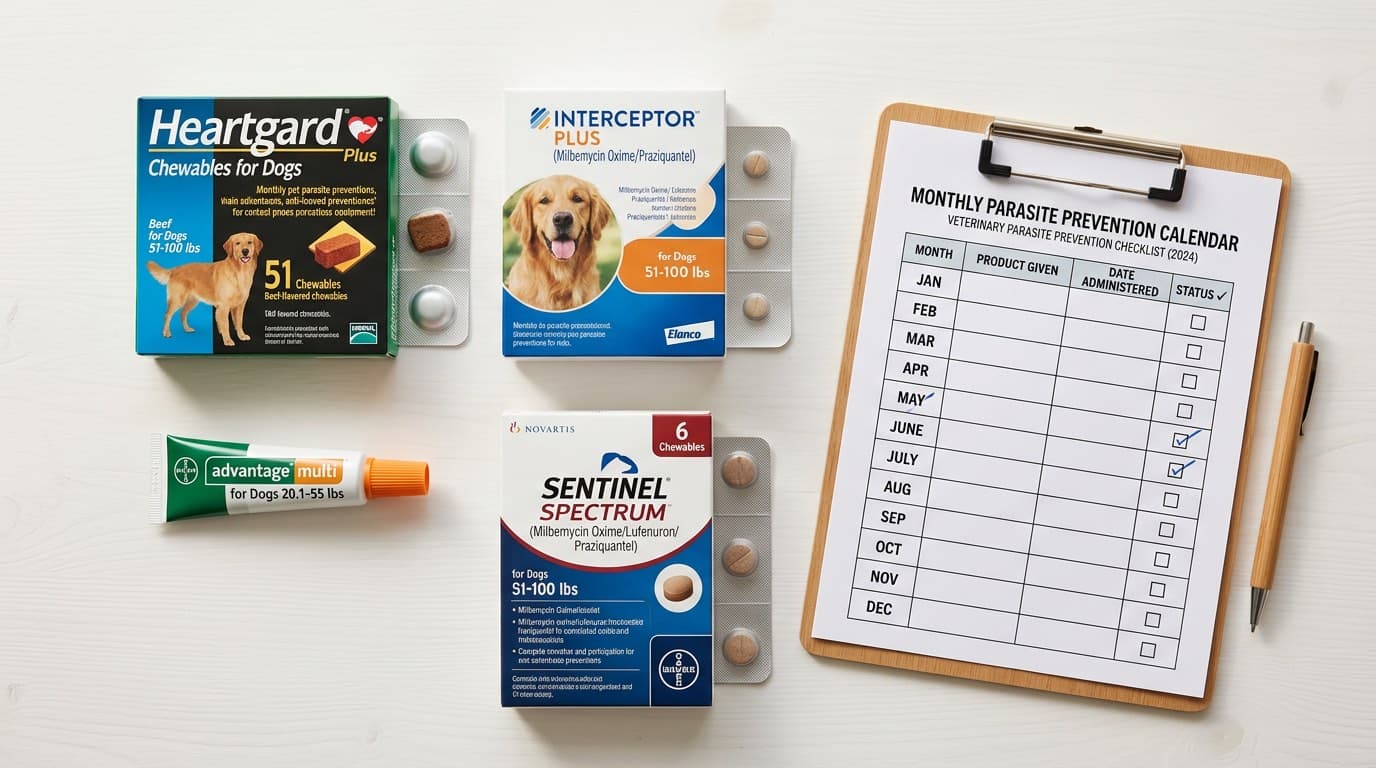
Monthly Preventive Products That Cover Intestinal Parasites
- Heartgard Plus (ivermectin + pyrantel): hookworms and roundworms
- Interceptor Plus (milbemycin + praziquantel): roundworms, hookworms, whipworms, tapeworms
- Advantage Multi (imidacloprid + moxidectin): roundworms, hookworms; also fleas and heartworm
- Sentinel Spectrum (milbemycin + praziquantel + lufenuron): comprehensive coverage
Environmental Hygiene
- Remove feces from yard immediately — eggs become infectious in soil within days in warm weather; hookworm larvae survive in moist soil for weeks
- Avoid "dog parks" for puppies until fully vaccinated and dewormed
- Sandboxes: cover when not in use (cats defecate in sandboxes; toxocara eggs can accumulate)
- Wash hands after handling pets and before eating — simple hand hygiene is one of the most effective zoonosis prevention tools
Fecal Testing Schedule
Fecal examinations should be performed:
- At every puppy/kitten wellness visit
- Any time GI symptoms are present
- Annually in adult dogs and cats
- Twice yearly in high-risk animals
A "negative" fecal exam does not guarantee a parasite-free animal — some parasites shed eggs intermittently or in low numbers; use clinical judgment alongside test results.
Frequently Asked Questions
Can I get worms from my dog or cat?
Yes — several intestinal parasites are zoonotic. Roundworms (*Toxocara*) can cause visceral larva migrans and ocular larva migrans in humans, especially children. Hookworms cause cutaneous larva migrans (skin creeping eruption). Tapeworms (*Dipylidium*) can infect humans who ingest infected fleas. Giardia has some zoonotic potential. Simple handwashing after handling pets and prompt removal of feces from the environment dramatically reduces risk.
Can I deworm my dog at home with over-the-counter products?
Some OTC products (pyrantel, fenbendazole) are effective against certain parasites. However, OTC products do not cover all common parasites (especially tapeworms and whipworms), and without a fecal exam, you don't know what you're treating. Veterinary-prescribed combination products are more comprehensive and cost-effective. Always confirm with a fecal exam what parasite is present.
How do I know if my dog has worms?
Many dogs and cats with intestinal parasites show no symptoms (asymptomatic carriers). When present, signs include diarrhea, vomiting, poor hair coat, pot-belly appearance in puppies, scooting (tapeworms), bloody stools (hookworms), and visible worm segments in feces. The only way to confirm intestinal parasites and identify the species is a fecal examination performed by your veterinarian.
How often should I deworm my adult dog?
CAPC recommends annual fecal examination minimum for adult dogs, with deworming based on findings. For dogs on monthly preventatives (Heartgard Plus, Interceptor Plus), continuous protection against roundworms and hookworms is provided. Dogs with outdoor access, hunting behavior, or flea exposure should have twice-yearly fecal checks. High-risk dogs (multiple pets, rural/wildlife exposure) may benefit from quarterly preventive deworming.
References
- CAPC. "CAPC Parasite Prevalence Maps and Recommendations." Companion Animal Parasite Council, 2024. capcvet.org.
- Bowman DD. "Georgis' Parasitology for Veterinarians." 11th Edition. Elsevier, 2021.
- Overgaauw PA, van Knapen F. "Veterinary and Public Health Aspects of Toxocara spp." Veterinary Parasitology, 2013.
- ESCCAP. "Guideline 01: Worm Control in Dogs and Cats." European Scientific Counsel Companion Animal Parasites, 2021.
- Lappin MR, et al. "ACVIM Consensus Statement: Guidelines for the Testing, Prevention, and Treatment of Heartworm Infection in Dogs and Cats." Journal of Veterinary Internal Medicine, 2017.