Quick Answer
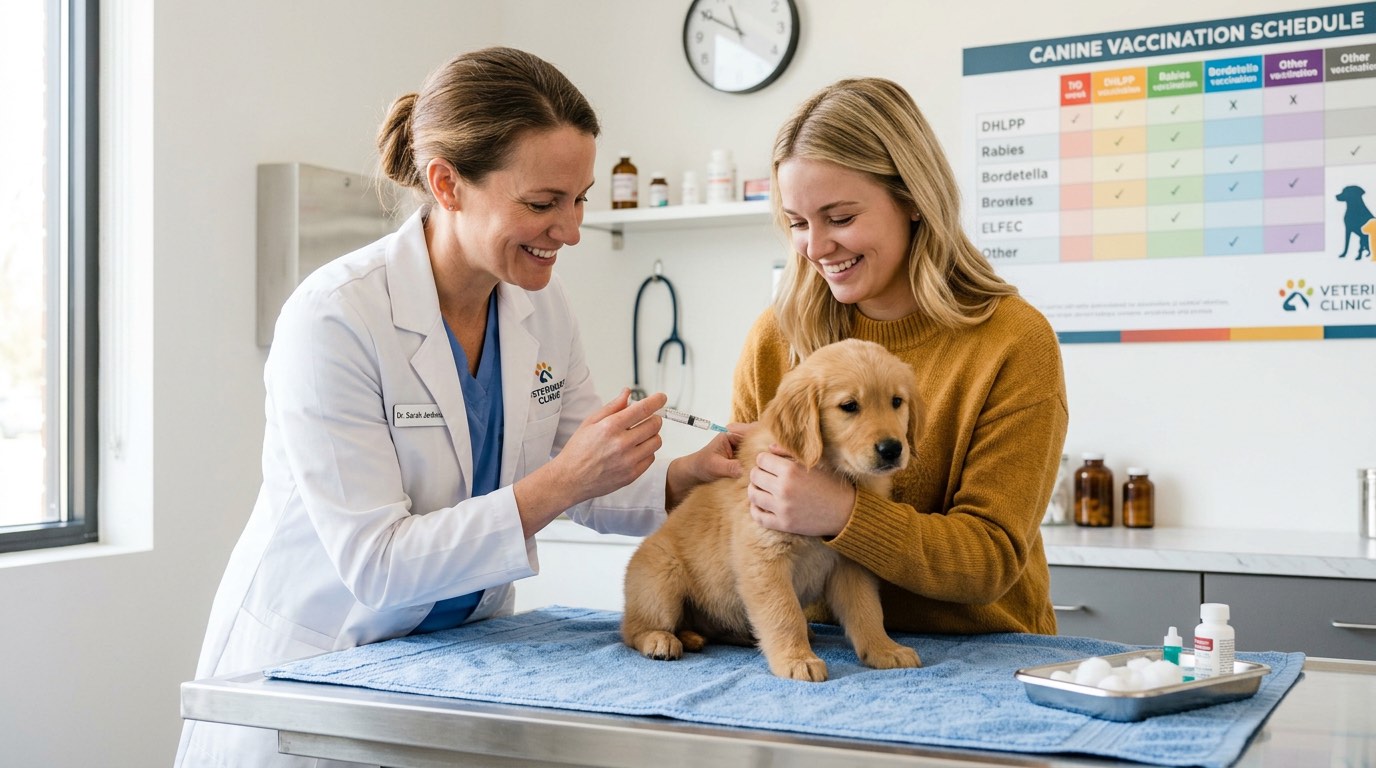
A complete, WSAVA and AVMA-aligned guide to puppy and kitten vaccination schedules. Learn which vaccines are core vs. non-core, why the timing of shots matters, how maternal antibodies affect immunity, when your pet is fully protected, and what to expect after vaccination.
Key Takeaways
- ✓Core vaccines for puppies: DA2PP series (6, 10–12, 14–16 weeks) + Rabies (12–16 weeks); complete the series through 16 weeks for reliable protection
- ✓Core vaccines for kittens: FVRCP series + FeLV + Rabies; follow AAFP guidelines for timing
- ✓Maternal antibodies (MDA) interfere with early vaccination; the series approach ensures at least one shot reaches the puppy when MDA is low enough
- ✓Non-core vaccines (Bordetella, Leptospira, Lyme, CIV) depend on lifestyle and geographic risk — discuss with your veterinarian
- ✓Triennial (every 3 years) revaccination or titer testing is appropriate for core vaccines in adults; annual revaccination is not supported by current guidelines for core vaccines
- ✓Vaccine reactions are uncommon; watch for facial swelling or vomiting within 30–60 min (anaphylaxis); report lumps at injection sites in cats persisting beyond 4 weeks
Why Vaccination Timing Matters
Vaccines are one of the most impactful preventive health tools in veterinary medicine. They have virtually eliminated diseases like canine distemper and feline panleukopenia from vaccinated populations, and they protect individual animals and contribute to herd immunity in communities.
The challenge with puppy and kitten vaccination is not the vaccines themselves — it is timing. Newborn puppies and kittens receive passive immunity from their mothers through colostrum (the first milk produced after birth). These maternal antibodies (MDA) protect the neonate during the first weeks of life but also neutralize vaccines given during that window — making early vaccination ineffective. The problem is that the precise level and duration of MDA varies between individuals, based on the mother's immune status, the quality of colostrum intake, and genetic factors.
MDA wanes over weeks — generally by 8–12 weeks of age in most puppies, somewhat earlier in some, later in others. The "window of vulnerability" is the period when MDA has declined enough that the animal is susceptible to disease, but hasn't yet received a successful vaccine response. This window is the reason puppies need a *series* of vaccines — each shot is an attempt to catch the puppy at the right immunological moment. By 16 weeks, MDA should be low enough in virtually all puppies that the final shot produces reliable immunity.
Kittens follow a similar pattern, though feline MDA tends to wane somewhat earlier (typically by 8–10 weeks), and the protection window is more consistent.
This is also why the rule of "fully vaccinated" matters: a puppy with only one or two vaccines in its series is not reliably protected. Full protection requires completing the primary series AND allowing 7–14 days after the final dose for the immune response to mature. Until then, exposure to parvovirus-contaminated environments, dog parks, pet stores, and grooming salons carries real risk.
Core Vaccines for Puppies (Dogs)
The WSAVA (World Small Animal Veterinary Association) and AAHA (American Animal Hospital Association) define "core" vaccines as those recommended for all dogs in all geographic regions, based on the severity of the disease, universal exposure risk, or zoonotic potential.
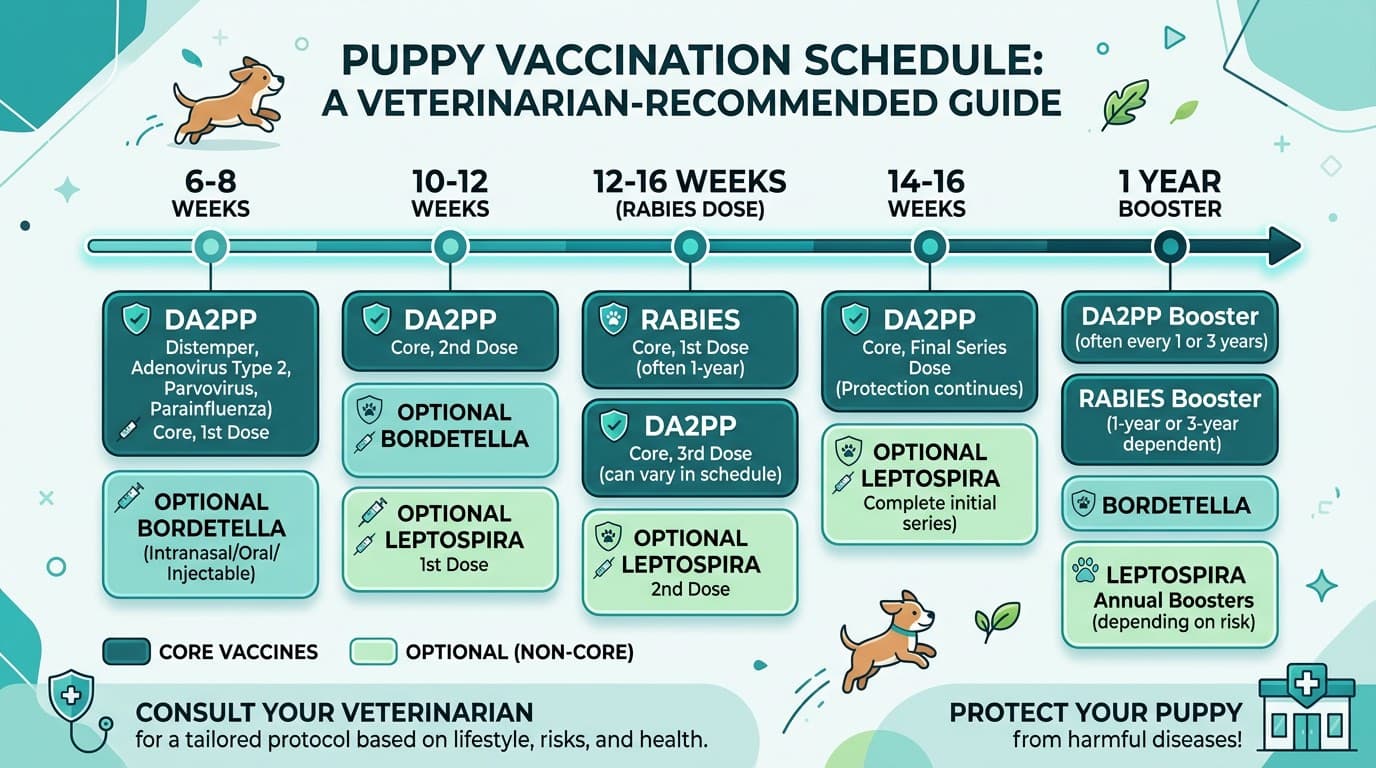
DA2PP (Distemper/Adenovirus/Parvovirus/Parainfluenza) — also called DHPP, DAP
The cornerstone puppy vaccine. Given as a combination:
- Canine distemper virus (CDV): A devastating multi-system disease causing respiratory, GI, and neurological signs; often fatal
- Canine adenovirus type 2 (CAV-2): Cross-protects against CAV-1 (hepatitis); also contributes to respiratory protection
- Canine parvovirus type 2 (CPV-2): An acutely life-threatening GI disease, especially in young unvaccinated puppies; highly contagious, environmentally persistent
- Canine parainfluenza virus: A component of infectious tracheobronchitis (kennel cough complex)
Standard AAHA Schedule:
- First dose: 6–8 weeks
- Second dose: 10–12 weeks (minimum 3–4 weeks after first)
- Third dose: 14–16 weeks (critical — given after most puppies' MDA has waned)
- Booster: 1 year after completing the series
- Adults: Every 3 years (or per titer testing)
Rabies
Required by law in virtually all US states and many countries. A zoonotic disease with 100% fatality in unvaccinated animals and humans once clinical signs develop.
- First dose: 12–16 weeks (depending on state law and product label)
- Booster: 1 year after first dose
- Adults: Every 1 or 3 years depending on product and local regulations
WSAVA Guidance on Vaccine Intervals
The WSAVA Vaccination Guidelines Group (VGG) has consistently emphasized: 1. Never vaccinate more frequently than every 2–4 weeks during the puppy series 2. The final dose in the puppy series is the most critical — given at 14–16 weeks minimum 3. Over-vaccination (annual boosters for core vaccines) is unnecessary and potentially harmful; triennial revaccination (or titer testing) is appropriate for core vaccines after the first booster
Titer Testing
Vaccine titer tests measure circulating antibody levels to distemper and parvovirus. A positive titer indicates protective immunity and can be used (in many states and countries) in lieu of revaccination for dogs with documented adverse vaccine reactions or owner preference. Discuss titers with your veterinarian as an alternative to automatic triennial revaccination.',
Core Vaccines for Kittens (Cats)
Kittens have their own core vaccine recommendations distinct from dogs. The AAFP (American Association of Feline Practitioners) and WSAVA provide feline-specific guidance.
FVRCP — Feline Viral Rhinotracheitis / Calicivirus / Panleukopenia
The feline core combination vaccine:
- Feline herpesvirus-1 (FHV-1, Rhinotracheitis): Highly contagious upper respiratory virus; causes sneezing, nasal discharge, and conjunctivitis; lifelong latency after infection
- Feline calicivirus (FCV): Another common upper respiratory pathogen; also associated with oral ulcers
- Feline panleukopenia virus (FPV): Also called feline distemper; a parvovirus-related disease causing severe, often fatal GI and bone marrow disease
AAFP Schedule:
- First dose: 6–8 weeks
- Second dose: 10–12 weeks
- Third dose: 14–16 weeks
- Booster: 1 year after completing the series
- Adults: Every 3 years for indoor cats; annually for cats with outdoor access or high-risk environments
Rabies (Cats)
Core in most US states and many countries; legally required in many jurisdictions. Cats are the most common domestic animal reported with rabies in the US.
- First dose: 12–16 weeks
- Booster: 1 year
- Adults: Every 1–3 years depending on product
Feline Leukemia Virus (FeLV)
FeLV vaccination is classified as core for all kittens by AAFP (2020 guidelines), as infection risk is highest in young cats and many kittens become outdoor cats as adults even if indoor-only initially.
- First dose: 8–12 weeks
- Second dose: 3–4 weeks later
- Annual booster for cats with outdoor access or at-risk situations
- Re-evaluation for adult indoor-only cats
Note: Test for FeLV and FIV before vaccinating with FeLV vaccine; vaccinating an already-infected cat provides no benefit.
Non-Core (Lifestyle) Vaccines
Non-core vaccines are recommended based on individual risk assessment — geographic location, lifestyle, exposure risk, and environment. Your veterinarian will help determine which apply to your pet.
Dogs — Non-Core Vaccines
*Bordetella bronchiseptica (Kennel Cough)*
- Recommended for dogs who board, attend daycare, dog parks, grooming, or training classes
- Available in injectable, intranasal, and oral forms; intranasal and oral produce faster protection (3–5 days vs 4 weeks for injectable)
- Frequency: annually or every 6 months for high-risk dogs; some boarding facilities require it within 6 months of visit
*Leptospirosis*
- Caused by Leptospira bacterial serovars shed in urine of wildlife (raccoons, rodents, deer)
- Zoonotic: can infect humans causing serious illness
- Recommended for dogs with outdoor access, rural/suburban environments, contact with wildlife or standing water
- Two-dose initial series 3–4 weeks apart; annual booster
- Protection is serovar-specific; ensure the product used covers serovars in your region
*Canine Influenza (CIV H3N8 and H3N2)*
- Particularly recommended for dogs in high-density social settings (boarding, competitions, shelters)
- Two strains currently circulate; bivalent vaccines cover both
- Two-dose initial series; annual booster
*Lyme disease (Borrelia burgdorferi)*
- Recommended for dogs in Lyme-endemic areas (Northeast, upper Midwest, Pacific Northwest)
- Two-dose initial series; annual booster
- Not a substitute for tick prevention — used in addition to tick preventatives, not instead
Cats — Non-Core Vaccines
*Feline Chlamydia felis*: For cats in multi-cat environments with chronic conjunctivitis; limited duration of protection
*Feline Bordetella bronchiseptica*: For cats in shelter situations or multi-cat households with respiratory disease
*Feline Immunodeficiency Virus (FIV)*: Limited efficacy; complicates FIV testing; not widely recommended in current US practice
*Ringworm (Microsporum canis)*: Used in shelter settings; limited availability in North America
What to Expect After Vaccination
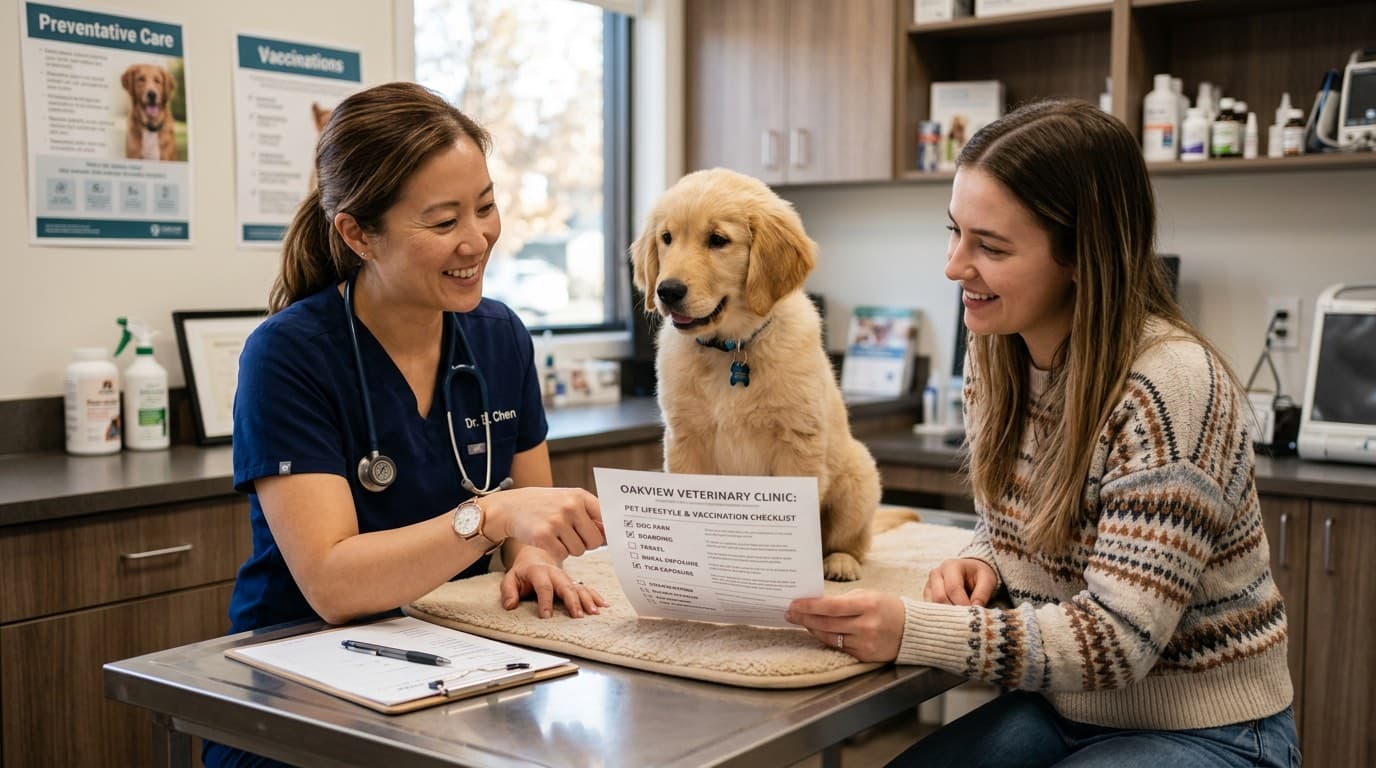
Most puppies and kittens tolerate vaccines very well with no or minor reactions. However, owners should be aware of normal vs. concerning responses.
Normal Post-Vaccine Responses (Common)
- Mild lethargy for 12–24 hours
- Slight fever (low-grade, self-limiting)
- Soreness at injection site — mild swelling or sensitivity to touch for 1–2 days
- Reduced appetite for the day of vaccination
These are normal immune activation responses and resolve without treatment.
Uncommon but Monitored Reactions
*Injection site reactions*:
- A small, firm, non-painful lump may develop at the subcutaneous injection site; this is typically a granuloma from vaccine adjuvant and should be monitored. Report lumps that persist beyond 4 weeks, grow larger than 2 cm, or feel firm and attached to underlying tissue — these require veterinary evaluation, especially in cats due to the rare risk of injection-site sarcoma (FISS).
Vaccine-Associated Sarcoma (FISS) in Cats
Feline injection site sarcomas occur at an estimated rate of 1–3.5 per 10,000 vaccinations. This rare but aggressive tumor can occur months to years after vaccination. Modern protocols recommend:
- Using non-adjuvanted vaccines where available (recombinant or modified-live)
- Administering vaccines in specific anatomical locations (right hindlimb for rabies, right forelimb for FeLV) to enable early wide surgical excision if a tumor develops
- The AAFP recommends: "Any lump at a vaccine site persisting >4 weeks, or growing >2 cm, or growing at >4 weeks post-vaccination should be biopsied"
Anaphylactic Reactions (Rare, 0.01–0.05%)
- Facial swelling, urticaria (hives), vomiting, collapse, difficulty breathing within 30–60 minutes of vaccination
- Veterinary emergency — epinephrine, IV fluids, corticosteroids
- Dogs with prior anaphylactic reactions should be pre-medicated (antihistamines) and observed for 30 minutes post-injection; discuss using a split protocol or individual antigens rather than combination vaccines
Kitten Safety After Vaccines
Until the puppy/kitten series is complete (typically at 16 weeks) AND 7–14 days have passed after the final shot, your pet is not fully protected against parvovirus, distemper, or panleukopenia. During this period:
- Avoid unvaccinated dogs or high-risk areas (dog parks, pet stores with unknown animals)
- Socialization remains critical — prioritize vaccinated, healthy, known dogs and controlled, clean environments
- Carry your puppy in areas where unknown animals may have defecated
Frequently Asked Questions
When is a puppy fully protected after vaccines?
A puppy is considered fully protected 7–14 days after completing the primary series, which means receiving the final DA2PP dose at 14–16 weeks of age (and the final dose must be at 16 weeks for maximum reliability). Until then, the puppy is not fully protected regardless of how many shots they have had.
Do indoor cats need vaccines?
Yes. The AAFP recommends core vaccines (FVRCP, Rabies, and an initial FeLV series) even for strictly indoor cats, because exposure risk still exists — from humans carrying pathogens in, windows, escapes, or new animals being introduced. Rabies vaccination is also legally required in most jurisdictions regardless of indoor status.
How often do adult dogs need boosters?
Core vaccines (DA2PP, Rabies) require a booster 1 year after the puppy series, then every 3 years (or per titer testing for DA2PP). Rabies frequency depends on local law and the product used. Non-core vaccines (Bordetella, Leptospirosis, Lyme) are typically boosted annually. Annual wellness visits are still recommended even if vaccines are on a triennial schedule — they are not just for shots.
Can I give my puppy vaccines at home?
Some DA2PP and Bordetella vaccines are available over the counter, but this approach is strongly discouraged. Veterinary administration ensures proper storage, handling, route, and response to adverse reactions. It also ensures the vaccination is legally documented (essential for Rabies). Many boarding facilities and dog parks require veterinarian-documented vaccination records.
References
- WSAVA Vaccination Guidelines Group. "WSAVA Guidelines for the Vaccination of Dogs and Cats." Journal of Small Animal Practice, 2016.
- AAHA. "2022 AAHA Canine Vaccination Guidelines." American Animal Hospital Association, 2022.
- AAFP. "2020 AAFP Feline Vaccination Guidelines." Journal of Feline Medicine and Surgery, 2020.
- Schultz RD. "Duration of Immunity for Canine and Feline Vaccines: A Review." Veterinary Microbiology, 2006.
- Richards JR, et al. "The Vaccine-Associated Feline Sarcoma Task Force and the AVMA Panel on Euthanasia." Journal of the American Veterinary Medical Association, 2001.