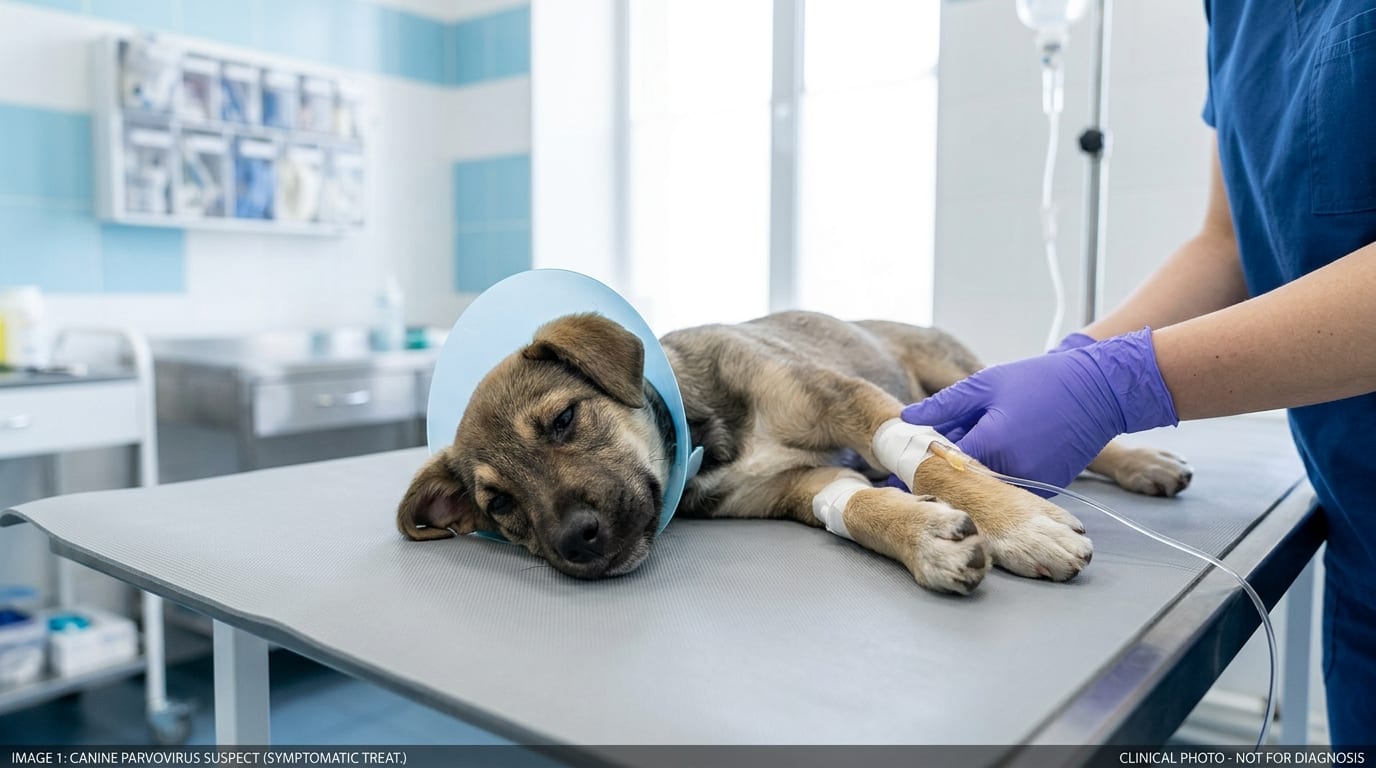
Quick Answer
An in-depth guide to canine parvovirus — covering fecal-oral transmission, the devastating gastrointestinal signs of infection, diagnostic tools like the SNAP test and PCR, aggressive fluid therapy and supportive care protocols, and the DHPP vaccination schedule that prevents this deadly disease.
Key Takeaways
- ✓Canine parvovirus is extremely contagious, spreads through the fecal-oral route, and can survive in the environment for months to years — only bleach effectively inactivates it on surfaces.
- ✓Puppies between 6 weeks and 6 months are most vulnerable, and certain breeds including Rottweilers and Doberman Pinschers may face higher risk of severe disease.
- ✓Diagnosis relies on the SNAP fecal antigen test for rapid results and PCR for higher sensitivity, while a low white blood cell count on CBC supports the diagnosis and carries prognostic value.
- ✓Treatment is aggressive supportive care — IV fluids, antiemetics, antibiotics, and nutritional support — with survival rates of 70-90% with prompt hospitalization versus over 90% mortality without treatment.
- ✓The DHPP vaccination series is the most effective prevention and should be completed by 16 weeks of age, with boosters at one year and every three years thereafter.
What Is Canine Parvovirus?
Canine parvovirus type 2 (CPV-2) is one of the most contagious and potentially fatal viral diseases affecting dogs worldwide. First identified in the late 1970s, parvovirus rapidly became a global threat due to its extraordinary environmental resilience and its ability to spread explosively through canine populations. The virus primarily attacks rapidly dividing cells — targeting the intestinal lining, bone marrow, and in very young puppies, the heart muscle — leading to severe hemorrhagic gastroenteritis, profound immunosuppression, and dangerously rapid dehydration.
Puppies between 6 weeks and 6 months of age are the most vulnerable, particularly during the window when maternal antibodies are waning but the vaccination series is not yet complete. Unvaccinated adult dogs are also at significant risk. Certain breeds, including Rottweilers, Doberman Pinschers, American Pit Bull Terriers, German Shepherds, and Labrador Retrievers, have historically shown higher susceptibility and more severe disease, though the exact reasons remain under investigation.
Despite being a devastating illness, parvovirus is almost entirely preventable through proper vaccination. The survival rate for dogs that receive aggressive, early veterinary treatment is approximately 70 to 90 percent, but without treatment, mortality can exceed 90 percent. Understanding how parvovirus spreads, recognizing its early signs, and adhering to vaccination protocols are the most powerful tools owners have against this disease.
How Parvovirus Spreads
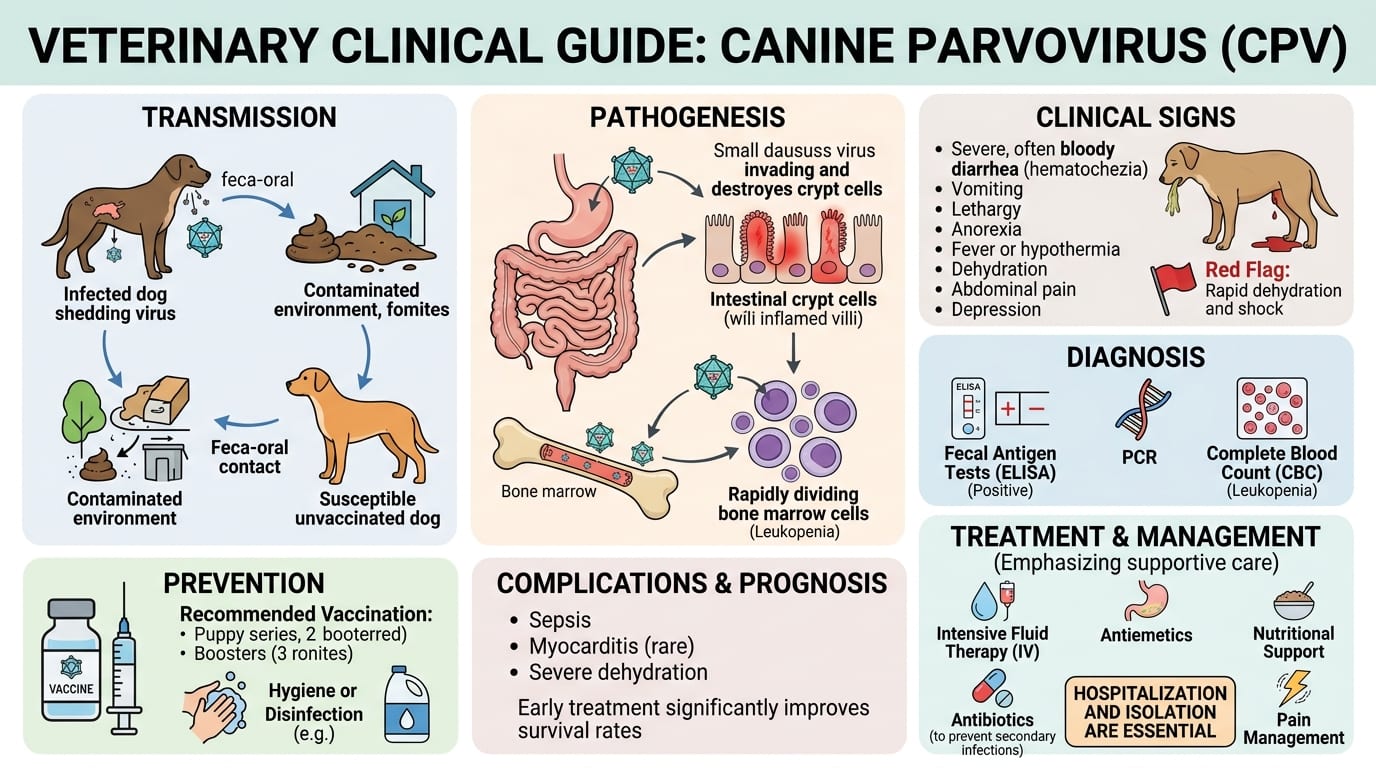
Canine parvovirus spreads primarily through the fecal-oral route — a susceptible dog becomes infected by ingesting viral particles shed in the feces of an infected animal. What makes parvovirus exceptionally dangerous is the sheer volume of virus shed (billions of viral particles per gram of feces) and the virus's remarkable environmental stability. CPV-2 can survive in soil, on surfaces, and on objects (fomites) for months to years under favorable conditions, resisting most common household disinfectants, temperature extremes, and humidity changes.
Dogs do not need direct contact with an infected animal to contract the virus. Contaminated environments — parks, sidewalks, kennels, pet stores, and even veterinary clinic waiting rooms — can serve as sources of infection. The virus can be carried on shoes, clothing, leashes, food bowls, and hands, making indirect transmission a significant concern. An infected dog typically begins shedding the virus in its feces 3 to 4 days after exposure, often before any clinical signs are apparent, and continues shedding for up to 2 to 3 weeks after recovery.
The only disinfectant proven to reliably inactivate parvovirus on surfaces is a dilute bleach solution (one part household bleach to 30 parts water), applied with a contact time of at least 10 minutes. Porous materials such as carpet, soil, and grass cannot be effectively decontaminated and may harbor the virus for a year or longer. This environmental persistence is why veterinarians strongly advise against walking unvaccinated puppies in public areas where other dogs have been — the risk of encountering parvovirus in the environment is real and the consequences are severe.
Clinical Signs and Diagnosis
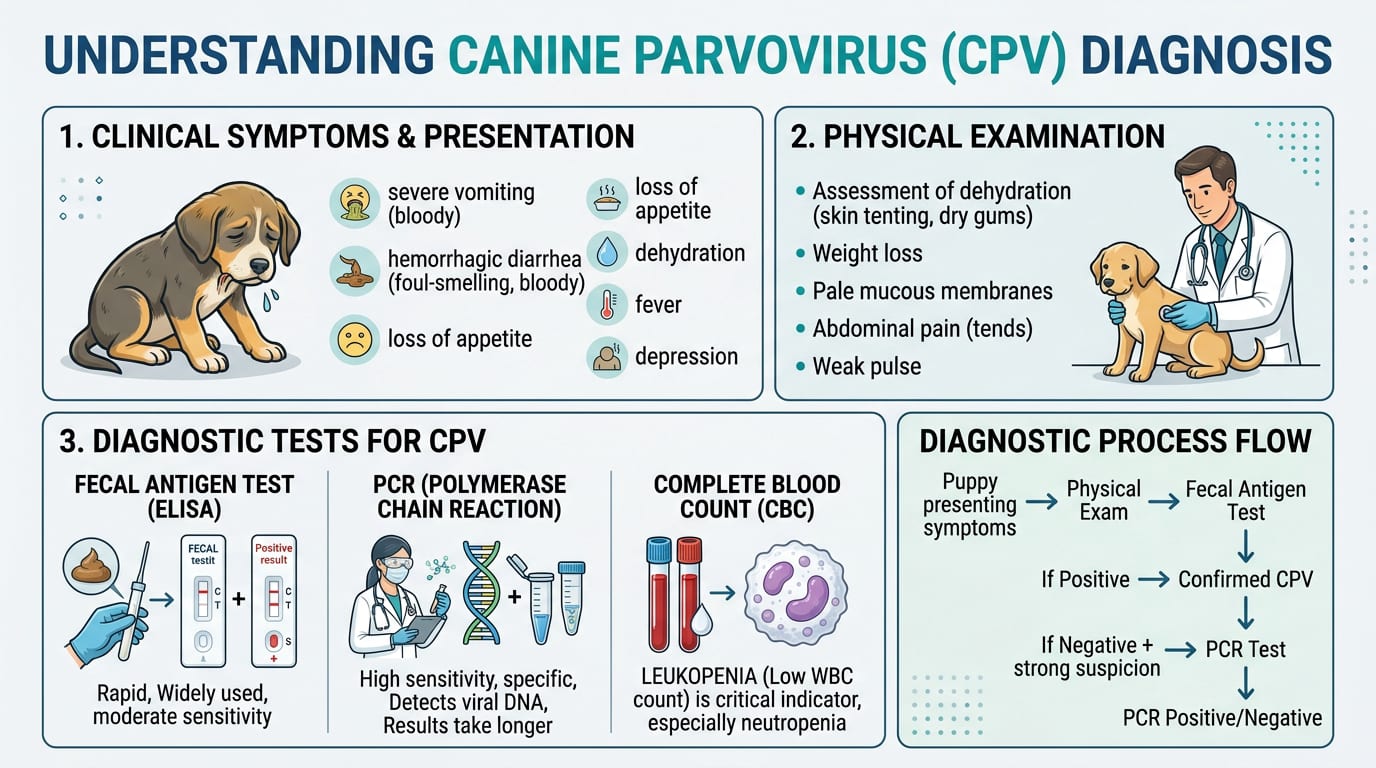
The incubation period for canine parvovirus is typically 3 to 7 days after exposure, after which clinical signs develop rapidly and often progress within 24 to 48 hours. The hallmark presentation includes severe, profuse, often bloody diarrhea with a distinctively foul odor; persistent vomiting; complete loss of appetite (anorexia); profound lethargy and depression; fever (though hypothermia can occur in advanced cases); and rapid, progressive dehydration. The combination of fluid loss from vomiting and diarrhea, destruction of the intestinal barrier, and immunosuppression from bone marrow damage creates a perfect storm that can be fatal without intervention.
Diagnosis in the veterinary clinic typically begins with a point-of-care fecal antigen test — the SNAP Parvo Test (IDEXX) — which detects CPV-2 antigen in a fecal sample and provides results in approximately 10 minutes. This test is highly specific, meaning a positive result is very reliable, but it can produce false negatives early in the disease course or in recently vaccinated dogs. When the clinical suspicion is high but the SNAP test is negative, polymerase chain reaction (PCR) testing offers greater sensitivity and can detect viral DNA even in cases with low antigen levels.
A complete blood count (CBC) is an important part of the diagnostic workup. Parvovirus characteristically causes leukopenia — a dangerously low white blood cell count — particularly a severe drop in neutrophils and lymphocytes. A very low white blood cell count (below 2,000 cells per microliter) in a vomiting, hemorrhagic puppy is strongly suggestive of parvovirus and also carries prognostic significance, as dogs with profoundly suppressed immune systems face a higher risk of secondary bacterial sepsis. Serum biochemistry may reveal hypoglycemia, hypoalbuminemia, and electrolyte imbalances that guide fluid therapy decisions.
Treatment: Aggressive Supportive Care
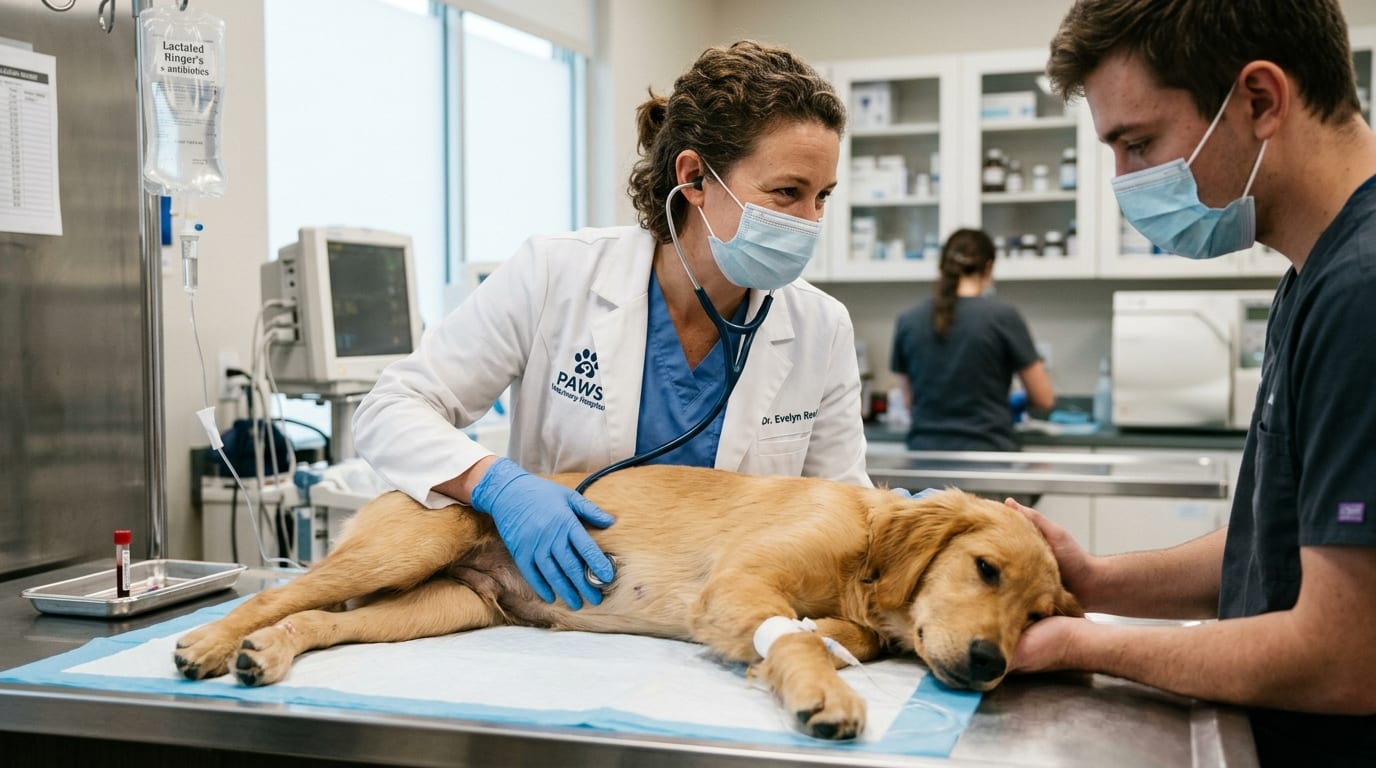
There is no antiviral drug that directly kills canine parvovirus — treatment is entirely supportive, aimed at keeping the dog alive and managing complications while its immune system mounts a response to clear the infection. The cornerstone of parvovirus treatment is aggressive intravenous (IV) fluid therapy to combat the severe dehydration caused by relentless vomiting and diarrhea. Crystalloid fluids such as lactated Ringer's solution or Normosol-R are administered at rates tailored to the patient's dehydration status, ongoing losses, and maintenance needs, often requiring fluid rates two to three times normal maintenance in the initial stabilization period.
Anti-nausea medications (antiemetics) such as maropitant (Cerenia) and ondansetron are essential for controlling vomiting, which both prevents further fluid loss and allows earlier reintroduction of nutrition. Broad-spectrum intravenous antibiotics — typically a combination such as ampicillin and enrofloxacin, or cefoxitin — are administered to combat secondary bacterial infections, which can invade the bloodstream through the damaged intestinal wall and cause life-threatening sepsis. Pain management, nutritional support (early enteral feeding via a nasogastric tube has been shown to improve outcomes), glucose supplementation for hypoglycemia, and anti-parasitic treatment are also standard components of care.
Hospitalization in an isolation ward typically lasts 3 to 7 days, and the total cost of treatment commonly ranges from $1,500 to $5,000 or more depending on the severity of illness and the hospital. A newer treatment, canine parvovirus monoclonal antibody therapy (CPMA, marketed as Canine Parvovirus Monoclonal Antibody by Elanco), received USDA conditional approval and has shown promise in reducing hospitalization time and improving survival rates when administered early in the disease course. Outpatient treatment protocols exist for cases where hospitalization is not financially feasible, though they carry higher mortality risk.

Vaccination: The Best Prevention
Vaccination against canine parvovirus is extraordinarily effective and remains the single most important step any dog owner can take to prevent this disease. The parvovirus vaccine is included in the core DHPP combination vaccine (Distemper, Hepatitis/Adenovirus, Parainfluenza, and Parvovirus), which is recommended for all dogs regardless of lifestyle. The American Animal Hospital Association (AAHA) canine vaccination guidelines recommend that puppies receive their first DHPP vaccine at 6 to 8 weeks of age, with booster doses administered every 2 to 4 weeks until the puppy is at least 16 weeks old — this extended series is necessary because maternal antibodies can interfere with vaccination in younger puppies, and the exact age at which they wane varies between individuals.
A booster is given one year after the final puppy dose, and subsequent boosters are administered every three years for the remainder of the dog's life. It is critical that puppies not be considered fully protected until at least two weeks after their final vaccine in the puppy series — this means avoiding dog parks, pet stores, and areas where unvaccinated dogs congregate until the series is complete. Socialization during this period should be limited to controlled environments with known, fully vaccinated dogs.
For adult dogs with an unknown vaccination history — such as rescued or rehomed animals — veterinarians typically administer two DHPP vaccines, 3 to 4 weeks apart, followed by the standard triennial booster schedule. Titer testing (measuring antibody levels in the blood) is available as an alternative to routine boosters and can confirm whether a dog has protective immunity against parvovirus. The parvovirus vaccine has an excellent safety profile, and the risk of serious adverse reactions is extremely low compared to the devastating consequences of the disease itself.

What You Can Do at Home
If your puppy or dog has been diagnosed with parvovirus, strict biosecurity measures at home are essential to protect other animals and prevent environmental contamination. Isolate the infected dog completely from all other dogs in the household and from any communal areas. Wear dedicated clothing and gloves when caring for the sick animal, and wash your hands thoroughly with soap and water after every interaction — remember that parvovirus can be carried on skin, clothing, and shoes.
Disinfect all hard surfaces, food bowls, water dishes, leashes, and crates with a bleach solution (one part household bleach to 30 parts water) with a minimum 10-minute contact time. Soft materials such as bedding, blankets, and plush toys that have been in contact with an infected dog should be discarded rather than washed, as the virus is extremely difficult to remove from porous materials. Be aware that your yard, if contaminated with infected feces, may harbor the virus for 6 to 12 months or longer — no unvaccinated dog should be allowed into a contaminated outdoor area during this period.
For prevention, the most impactful step is completing your puppy's full vaccination series on schedule and avoiding high-risk environments until your veterinarian confirms the series is complete. Do not bring an unvaccinated or partially vaccinated puppy to dog parks, pet stores, boarding facilities, or areas with heavy dog traffic. When you welcome a new puppy into your home, verify that all resident dogs are current on their DHPP boosters. If you are fostering or rescuing dogs, ask about vaccination status and keep new arrivals separated until they have been examined and vaccinated. These precautions are simple, inexpensive, and profoundly effective at keeping your dogs safe from one of the most dangerous infectious diseases in veterinary medicine.

Frequently Asked Questions
How does a dog get parvovirus?
Dogs contract parvovirus by ingesting the virus, typically through contact with contaminated feces or environments where an infected dog has been. The virus can persist on surfaces, soil, shoes, and clothing for months. Direct contact with an infected dog is not required — simply walking through a contaminated area or sniffing contaminated ground is enough for a susceptible dog to become infected.
Can an adult dog get parvovirus if it has been vaccinated?
It is extremely rare for a properly vaccinated adult dog to contract parvovirus. The DHPP vaccine produces robust, long-lasting immunity in the vast majority of dogs. Breakthrough infections occasionally occur in immunocompromised individuals, but for healthy dogs that have completed their vaccination series and receive timely boosters, the vaccine is highly protective. Titer testing can confirm whether your dog has adequate antibody levels.
What are the first signs of parvovirus in a puppy?
The earliest signs are typically lethargy, loss of appetite, and fever, which can appear 3 to 7 days after exposure. Within 24 to 48 hours, these progress to severe vomiting, profuse watery or bloody diarrhea with a characteristically foul odor, and rapid dehydration. If your unvaccinated or partially vaccinated puppy shows any combination of these signs, seek veterinary care immediately — early treatment dramatically improves survival.
How long does it take for a dog to recover from parvovirus?
With aggressive veterinary treatment, most dogs begin to improve within 3 to 5 days and are discharged from the hospital within 5 to 7 days. Full recovery, including regaining weight, energy, and normal digestive function, typically takes 1 to 2 weeks after discharge. The dog may continue to shed the virus in its feces for up to 2 to 3 weeks after clinical recovery, so isolation from unvaccinated dogs should be maintained during this period.
How long does parvovirus survive in the environment?
Canine parvovirus is extraordinarily resilient and can survive in soil and on surfaces for 6 months to over a year under favorable conditions. The virus resists most household cleaners, temperature extremes, and drying. Only a dilute bleach solution (1 part bleach to 30 parts water) with at least 10 minutes of contact time is proven to inactivate it on hard, non-porous surfaces. Contaminated grass, soil, and carpeting cannot be reliably disinfected.
References
- American Animal Hospital Association (AAHA). 2022 AAHA Canine Vaccination Guidelines. https://www.aaha.org/aaha-guidelines/2022-aaha-canine-vaccination-guidelines/
- Merck Veterinary Manual. Canine Parvovirus. https://www.merckvetmanual.com/digestive-system/diseases-of-the-stomach-and-intestines-in-small-animals/canine-parvoviral-enteritis
- Goddard, A. & Leisewitz, A.L. (2010). Canine Parvovirus. Veterinary Clinics of North America: Small Animal Practice, 40(6), 1041–1053.
- American Veterinary Medical Association (AVMA). Canine Parvovirus — Disease Information. https://www.avma.org/resources-tools/pet-owners/petcare/canine-parvovirus