Quick Answer
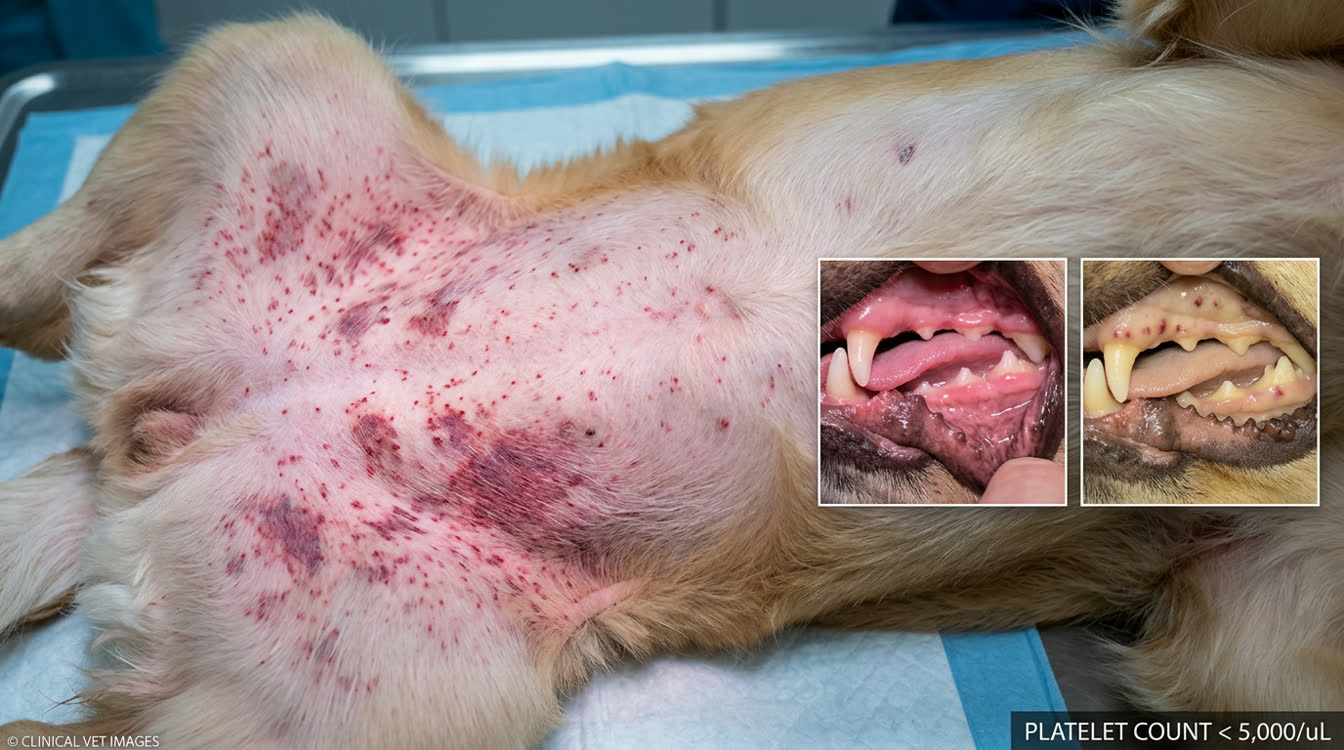
Immune-mediated thrombocytopenia (ITP) in dogs involves autoantibody-mediated platelet destruction by the mononuclear phagocyte system. This guide covers the diagnostic approach, bleeding risk stratification by platelet count, first-line prednisolone dosing, vincristine for rapid platelet release, and management of refractory ITP.
Key Takeaways
- ✓ITP is diagnosed by exclusion — always test for tick-borne disease, drug causes, neoplasia, and DIC before diagnosing primary ITP.
- ✓Platelet counts < 10,000/uL carry life-threatening hemorrhage risk; < 20,000/uL warrants hospitalization and urgent immunosuppression.
- ✓Prednisolone 1-2 mg/kg/day is first-line; add vincristine 0.02 mg/kg IV for rapid platelet release in acute hemorrhage.
- ✓Mycophenolate mofetil (10-20 mg/kg PO q12h) is the preferred second-line steroid-sparing agent with faster onset than azathioprine.
- ✓Complete taper of immunosuppression over 3-6 months; relapse occurs in 20-40% of dogs, typically during tapering.
- ✓Evans syndrome (concurrent IMHA + ITP) carries up to 40% mortality and requires aggressive multi-drug immunosuppression.
Diagnosis: Platelet Count Interpretation and Bleeding Risk Stratification
Immune-mediated thrombocytopenia (ITP, also called primary immune-mediated thrombocytopenia or IMT) results from autoantibody-mediated opsonization of platelets and/or megakaryocytes, leading to destruction by macrophages in the spleen and liver.
Predisposed Breeds
- Cocker Spaniels, Poodles, Old English Sheepdogs
- Bichon Frises, German Shepherds
- Females more frequently affected
- Possible association with previous vaccination (within 4 weeks)
Bleeding Risk Stratification by Platelet Count
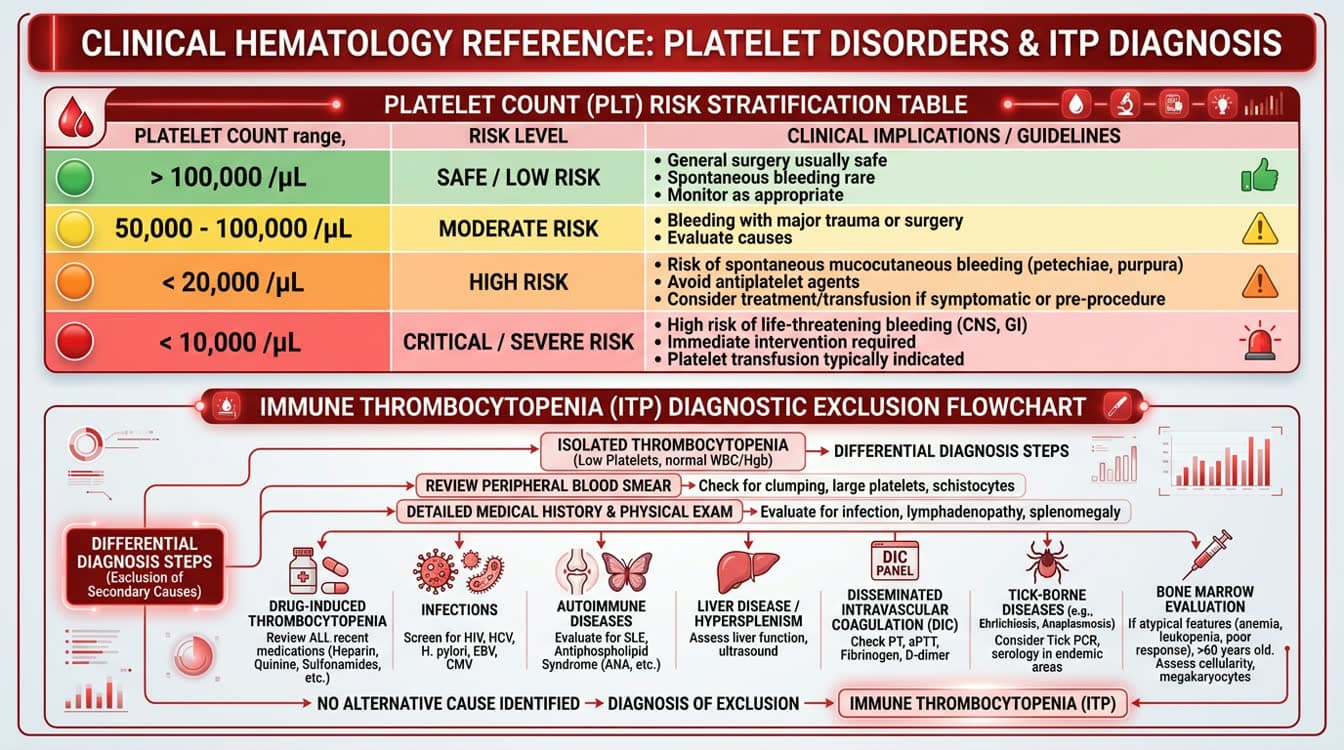
| Platelet Count | Bleeding Risk | Clinical Significance |
|---|---|---|
| 100,000-150,000/uL | Minimal | No spontaneous bleeding |
| 50,000-100,000/uL | Low | Bleeding with trauma only |
| 20,000-50,000/uL | Moderate | Petechiae, ecchymoses possible |
| 10,000-20,000/uL | High | Spontaneous hemorrhage likely |
| < 10,000/uL | Critical | Life-threatening hemorrhage risk |
Differentiating ITP from Other Thrombocytopenias
- Tick-borne disease: Ehrlichia, Anaplasma, Rickettsia (PCR and serology)
- Drug-induced: sulfonamides, cephalosporins, methimazole, gold salts
- Neoplasia: lymphoma, leukemia (bone marrow aspiration)
- DIC: PT/aPTT prolonged, fibrinogen decreased, multiple cell lines affected
- Bone marrow aplasia: thrombocytopenia with non-regenerative anemia and neutropenia
Diagnostic Workup
- CBC with manual differential: platelet count confirmation; giant platelets suggest regeneration
- Blood smear: platelet evaluation (clumping, giant platelets, schistocytes if DIC)
- PT, aPTT: normal in isolated ITP (unlike DIC)
- Bone marrow aspirate: increased megakaryocytes (normal or increased production with peripheral destruction)
- Anti-platelet antibody testing: limited sensitivity and specificity; not routinely recommended
- Tick-borne disease PCR panel, thoracic radiographs, abdominal ultrasound (lymphadenopathy, organomegaly)
Immunosuppressive Treatment: Prednisolone, Vincristine and Second-Line Options
First-Line: Prednisolone
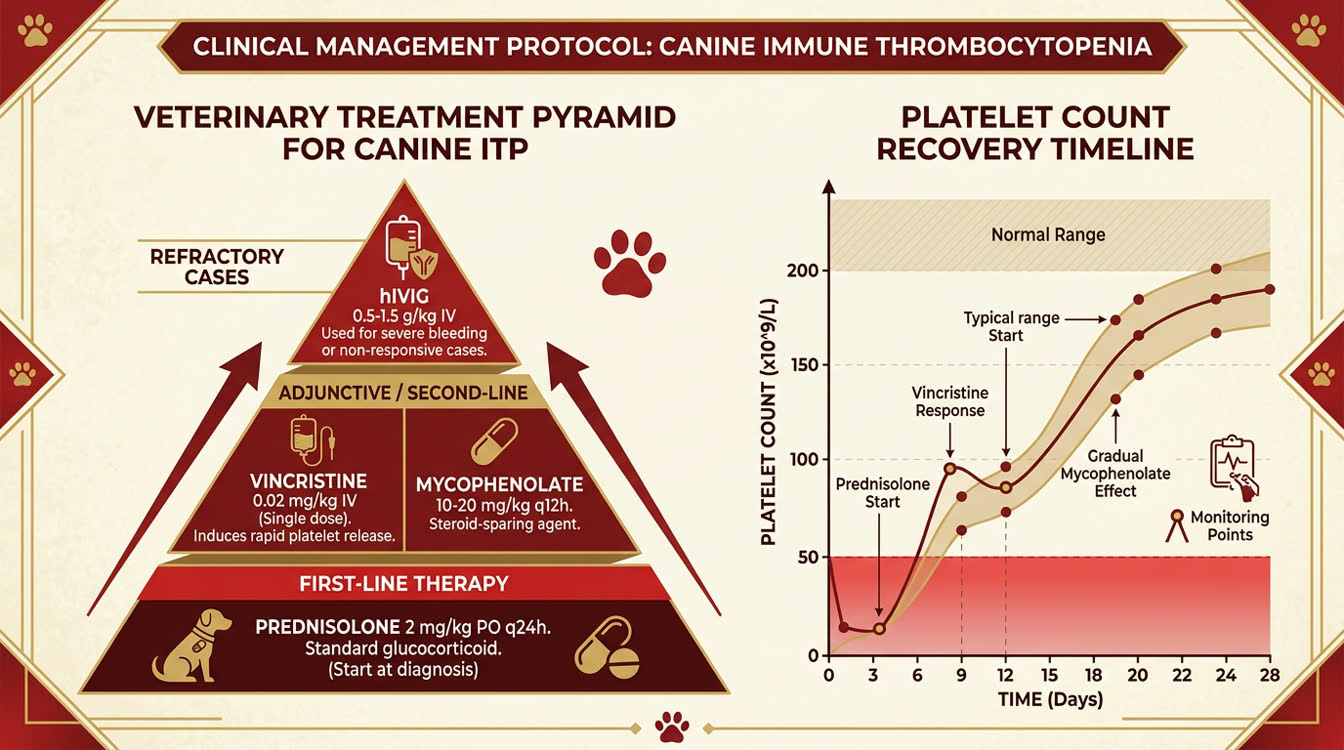
- Dose: 1-2 mg/kg PO or IV q12-24h
- Mechanism: reduces splenic macrophage destruction of antibody-coated platelets; decreases autoantibody production
- Platelet count should begin rising within 5-7 days in responsive cases
- Target > 50,000/uL within 7-10 days; > 100,000/uL within 2-3 weeks
Vincristine for Rapid Platelet Release
- Dose: 0.02 mg/kg IV (maximum 0.025 mg/kg; maximum dose 1 mg total) once
- Formulation: Vincristine sulfate 1 mg/mL solution; must be handled with cytotoxic precautions
- Onset: platelet count rise typically within 4-7 days
- Repeat in 1 week if insufficient response
- Adverse effects: peripheral neuropathy (rare at low single doses), local tissue necrosis if perivascular extravasation
- Preferred for active hemorrhage requiring rapid platelet response
Second-Line: Mycophenolate Mofetil
- Dose: 10-20 mg/kg PO q12h — preferred steroid-sparing agent; faster onset than azathioprine
- Give with food to reduce GI adverse effects (vomiting, diarrhea)
Azathioprine
- Dose: 2 mg/kg PO q24h for 2 weeks, then 1-2 mg/kg every other day
- Delayed onset (4-6 weeks); monitor hepatotoxicity monthly (ALT/ALP)
- Combined with prednisolone for moderate-severe ITP
Human IV Immunoglobulin (hIVIG)
- Dose: 0.5-1.5 g/kg IV over 12 hours
- Blocks splenic macrophage Fc receptors; platelet count rises within 24-72 hours
- Expensive; reserved for life-threatening hemorrhage or refractory cases
Danazol (Androgen)
- Dose: 5-10 mg/kg PO q12h
- Modulates Fc receptor expression and platelet autoantibody levels
- Slow onset (4-8 weeks); adjunct for refractory maintenance
Monitoring, Relapse Prevention and Prognosis
Monitoring During Treatment
- Platelet count every 24-48 hours during hospitalization
- Target platelet count > 50,000/uL before discharge
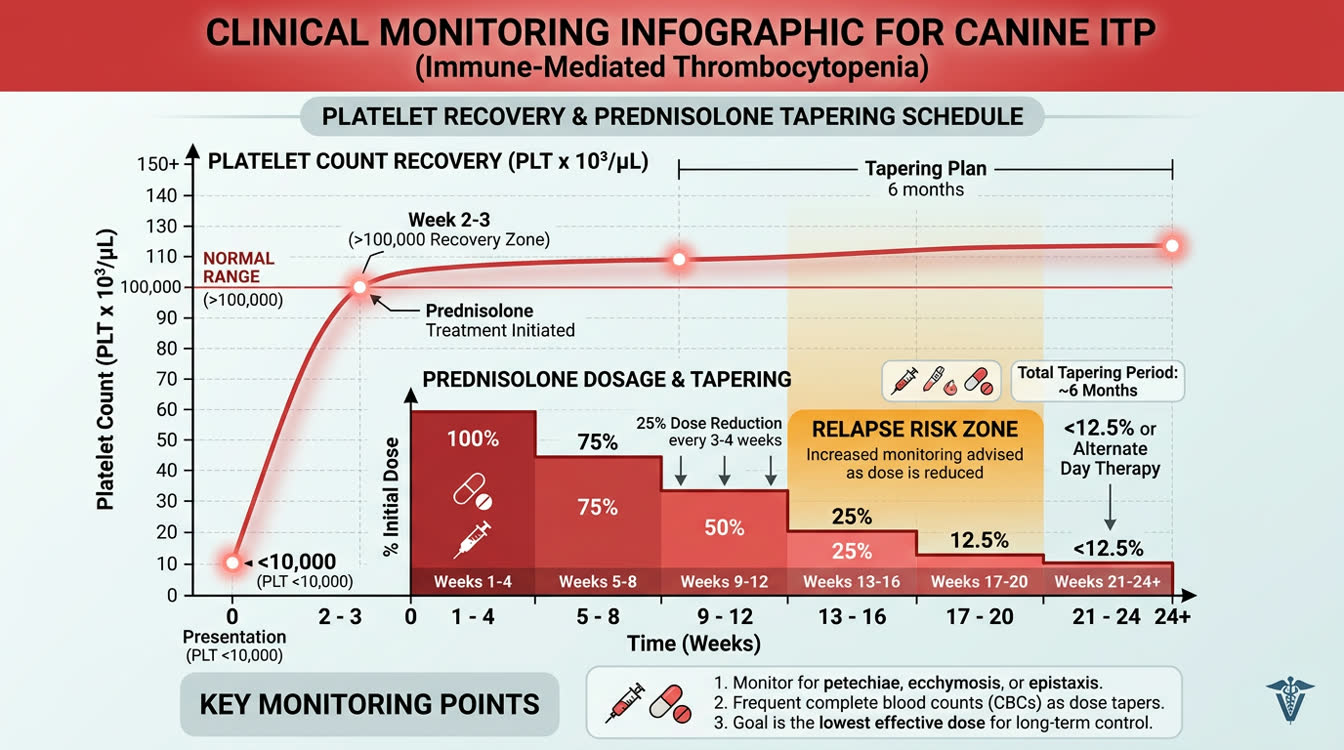
- Once > 100,000/uL, begin prednisolone taper (25% reduction every 3-4 weeks)
- Full taper completed over 3-6 months; monitor CBC at each taper step
Activity Restriction During Thrombocytopenia
- Strict rest when platelets < 30,000/uL
- Avoid IM injections, vigorous play, pressure on IV sites
- Soft food only if oral/GI petechiae are present
- Minimize venipuncture; apply pressure for minimum 3-5 minutes after blood draws
When to Splenectomy
- Refractory ITP not responding to 2+ immunosuppressive agents over 8-12 weeks
- Splenectomy removes primary site of platelet destruction
- Response rate approximately 50-60%; not universally successful
- Screen for underlying splenic disease (ultrasound, cytology) before surgery
Prognosis
- Overall good prognosis with appropriate immunosuppression: 70-80% achieve remission
- Relapse occurs in 20-40% of dogs, typically during or after prednisolone taper
- Poor prognostic factors: platelet count < 5,000/uL on presentation, retinal hemorrhage (CNS/ocular bleeding), concurrent IMHA (Evans syndrome)
- Evans syndrome (ITP + IMHA): mortality up to 40%; requires aggressive dual immunosuppression
Preventing Relapse Triggers
- Avoid vaccination during active disease and for 3-6 months post-remission
- Minimize NSAID use (can worsen platelet function)
- Document drug history; avoid causative drugs permanently
- Report signs of relapse: petechiae, bruising, blood in urine or stool
Frequently Asked Questions
What platelet count is dangerous in a dog with ITP?
Platelet counts below 10,000/uL carry a critical risk of life-threatening spontaneous hemorrhage, including intracranial, pulmonary, and GI bleeding. Counts between 10,000-20,000/uL warrant hospitalization and immediate immunosuppressive therapy. Spontaneous petechiae typically occur when platelets fall below 20,000-30,000/uL.
What is vincristine used for in ITP?
Vincristine (0.02 mg/kg IV once) stimulates megakaryocytes to release platelets rapidly and may reduce macrophage Fc receptor activity, decreasing platelet destruction. It is used when a rapid platelet response is needed (active hemorrhage), with platelet count rises typically seen within 4-7 days. It is a cytotoxic drug requiring proper handling precautions.
How long does it take for platelets to respond to prednisolone in ITP?
Platelet counts typically begin rising within 5-7 days of initiating prednisolone at 1-2 mg/kg/day. The target is > 50,000/uL within 7-10 days and > 100,000/uL within 2-3 weeks. Failure to respond by day 7-10 should prompt adding a second immunosuppressant (mycophenolate or vincristine) or investigating for secondary causes.
Can vaccines cause immune-mediated thrombocytopenia in dogs?
Yes. Vaccine-associated ITP has been reported, typically occurring within 4 weeks of vaccination. Certain core vaccines (MLV or adjuvanted vaccines) have been associated with ITP onset. Dogs with a history of ITP should have vaccination status carefully evaluated; annual vaccines may be deferred or minimized based on titer testing and individual risk-benefit assessment.
What is Evans syndrome in dogs?
Evans syndrome is the concurrent occurrence of immune-mediated hemolytic anemia (IMHA) and immune-mediated thrombocytopenia (ITP). It carries a worse prognosis than either condition alone, with mortality up to 40%. Management requires aggressive dual immunosuppression targeting both RBC destruction and platelet destruction simultaneously.
References
- Putsche JC, Kohn B. Primary immune-mediated thrombocytopenia in 30 dogs (2000-2006). J Am Anim Hosp Assoc. 2008;44(5):250-257.
- Bianco D, et al. A prospective, randomized trial comparing laser versus traditional ovariohysterectomy for dogs with immune-mediated thrombocytopenia. J Vet Intern Med. 2011.
- Williams DA, Maggio-Price L. Canine idiopathic thrombocytopenia: clinical observations and long-term follow-up in 54 cases. J Am Vet Med Assoc. 1984;185(6):660-663.