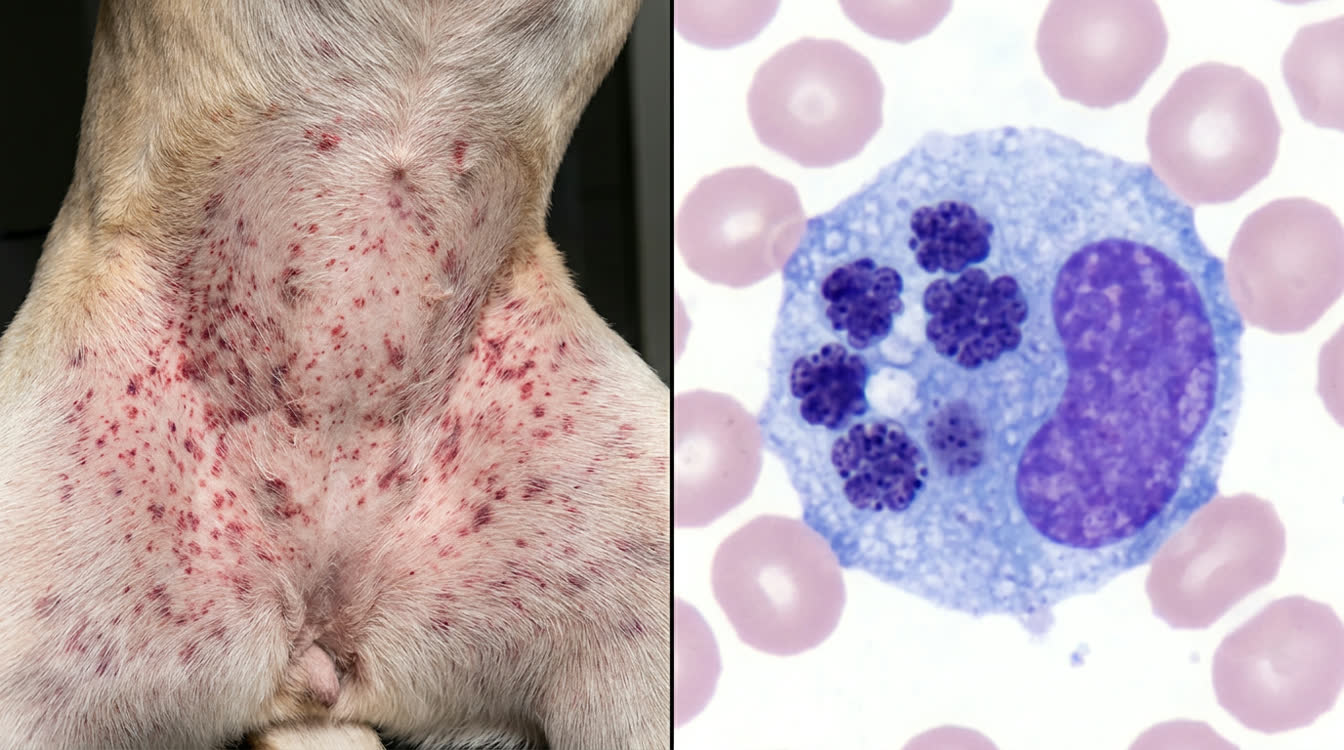
Quick Answer
Canine ehrlichiosis caused by Ehrlichia canis is a tick-borne disease transmitted by the brown dog tick (Rhipicephalus sanguineus). This guide covers the three clinical phases, CBC and serologic diagnosis, doxycycline dosing protocols, bone marrow hypoplasia in chronic disease, and monitoring parameters.
Key Takeaways
- ✓Ehrlichia canis causes three phases: acute (fever, thrombocytopenia), subclinical (persistent low platelets), and chronic (pancytopenia, bone marrow aplasia).
- ✓Doxycycline 10 mg/kg PO q24h for 28 days (minimum) is first-line treatment; chronic cases require 6-8 weeks.
- ✓Platelet counts should rise within 24-72 hours of treatment initiation in acute/subclinical disease; failure to respond warrants CBC recheck and co-infection testing.
- ✓Bone marrow biopsy is indicated for pancytopenia; hypocellular marrow indicates bone marrow aplasia and poor prognosis.
- ✓IFA serology remains positive for months after cure; use CBC and clinical signs (not serology) to assess treatment response.
- ✓Year-round isoxazoline tick prevention kills ticks within 8-12 hours, before Ehrlichia transmission (which requires > 12-24h attachment).
Three Phases of Ehrlichiosis and Diagnostic Workup
Ehrlichia canis is an obligate intracellular bacterium transmitted by the brown dog tick (Rhipicephalus sanguineus). It infects mononuclear cells (monocytes and lymphocytes) causing monocytic ehrlichiosis (CME). Ehrlichia ewingii infects granulocytes (granulocytic ehrlichiosis), presenting similarly.
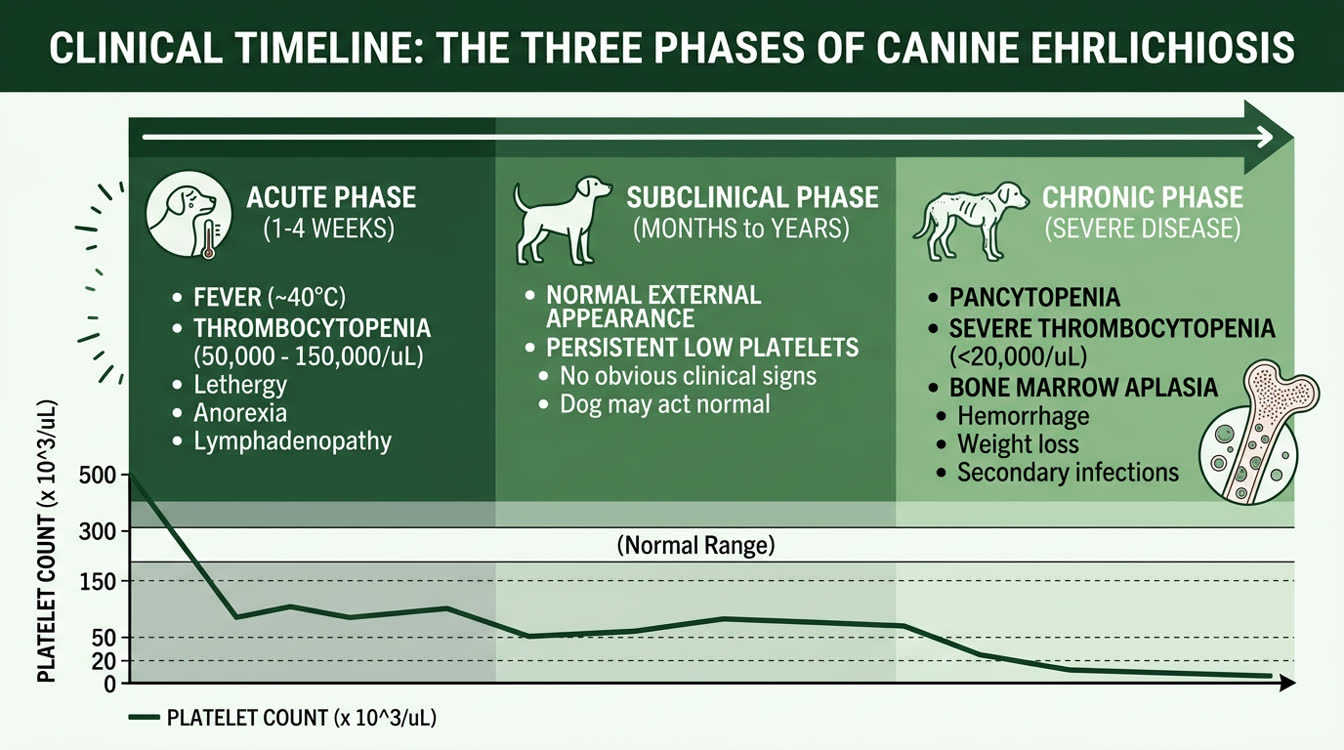
Three Clinical Phases
Acute Phase (1-4 weeks post-infection)
- Fever (39.5-41.5 C / 103-107 F), lethargy, anorexia
- Lymphadenopathy, splenomegaly
- Thrombocytopenia (platelet count 50,000-150,000/uL)
- Mild anemia, leukopenia
- Morulae (intracellular inclusions) visible in monocytes on blood smear in <5% of cases
Subclinical Phase (1-4 months)
- Dog appears clinically normal
- Persistent thrombocytopenia on CBC
- Hypergammaglobulinemia on serum protein electrophoresis
- Organism remains intracellular; can persist for years
Chronic Phase
- Severe thrombocytopenia (< 20,000/uL); spontaneous hemorrhage risk
- Pancytopenia from bone marrow hypoplasia/aplasia
- Polyarthritis, uveitis, glomerulonephritis
- Hypoalbuminemia (protein-losing nephropathy)
- Neurologic signs (meningitis, peripheral neuropathy)
- German Shepherds disproportionately affected by severe chronic disease
Diagnostic Approach
- CBC: thrombocytopenia is the hallmark; anemia (normocytic normochromic), leukopenia in acute; pancytopenia in chronic
- Serology (IFA): IgG antibody titer >= 1:64 considered positive; may be seronegative in acute infection (< 1 week)
- PCR: highly sensitive and specific; detects active infection; positive during acute and early chronic phases
- Blood smear: morulae rarely seen; monocyte inclusions in CME
- Bone marrow aspirate: indicated for pancytopenia — hypocellular marrow indicates poor prognosis
Doxycycline Treatment Protocol and Response Assessment
Doxycycline is the treatment of choice for all forms of canine ehrlichiosis.
Doxycycline Dosing
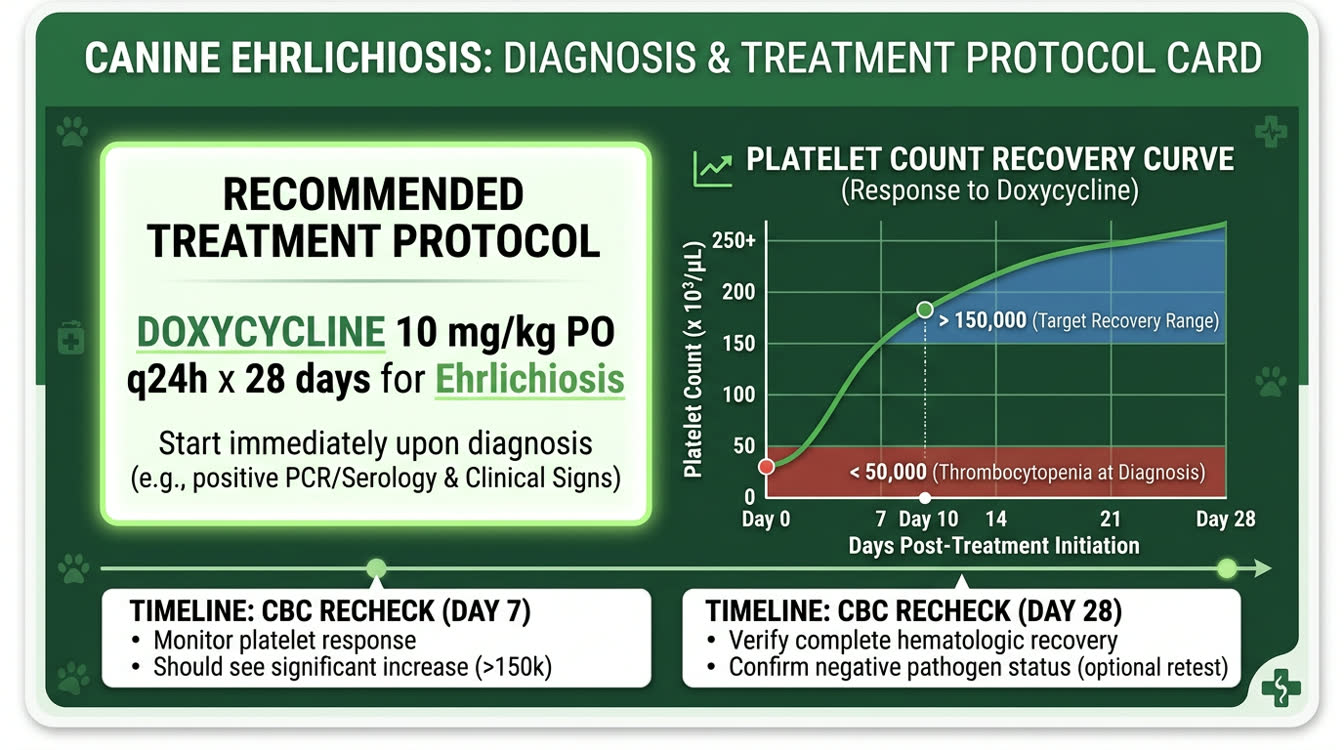
- Dose: 5-10 mg/kg PO q12h or 10 mg/kg PO q24h
- Duration: minimum 28 days (4 weeks) for acute and subclinical phases
- Chronic phase: 6-8 weeks minimum; may require longer if pancytopenia persists
- Formulation: doxycycline hyclate 100 mg tablets; doxycycline monohydrate preferred for oral suspension
Administration Tips
- Always give with food (water immediately after) to prevent esophageal irritation
- Doxycycline calcium chelation: avoid giving with dairy, antacids, or iron supplements within 2 hours
- In vomiting dogs: doxycycline IV (5 mg/kg IV q12h diluted in 0.9% NaCl, administered over 1 hour)
Response Monitoring
- Platelet count should begin rising within 24-48 hours of initiating treatment in acute/subclinical phase
- CBC recheck at 7 days and 28 days after starting therapy
- If no platelet improvement at 7 days: consider co-infection (Anaplasma, Babesia), immune-mediated thrombocytopenia, or resistance
- Serology may remain positive for months after successful treatment — do not retest to assess cure; use clinical signs and CBC
Supportive Care
- Transfusion: platelet-rich plasma or whole blood if platelet count < 20,000/uL with active hemorrhage
- Activity restriction during thrombocytopenic phase (avoid trauma)
- Prednisolone 0.5-1 mg/kg PO q24h may be added for immune-mediated thrombocytopenia component if no improvement with doxycycline alone — controversial; use only after ruling out Babesia
- IV fluids if dehydrated or febrile with anorexia
Chronic Ehrlichiosis, Bone Marrow Failure and Prognosis
Chronic ehrlichiosis with bone marrow hypoplasia carries a significantly worse prognosis than acute or subclinical disease.
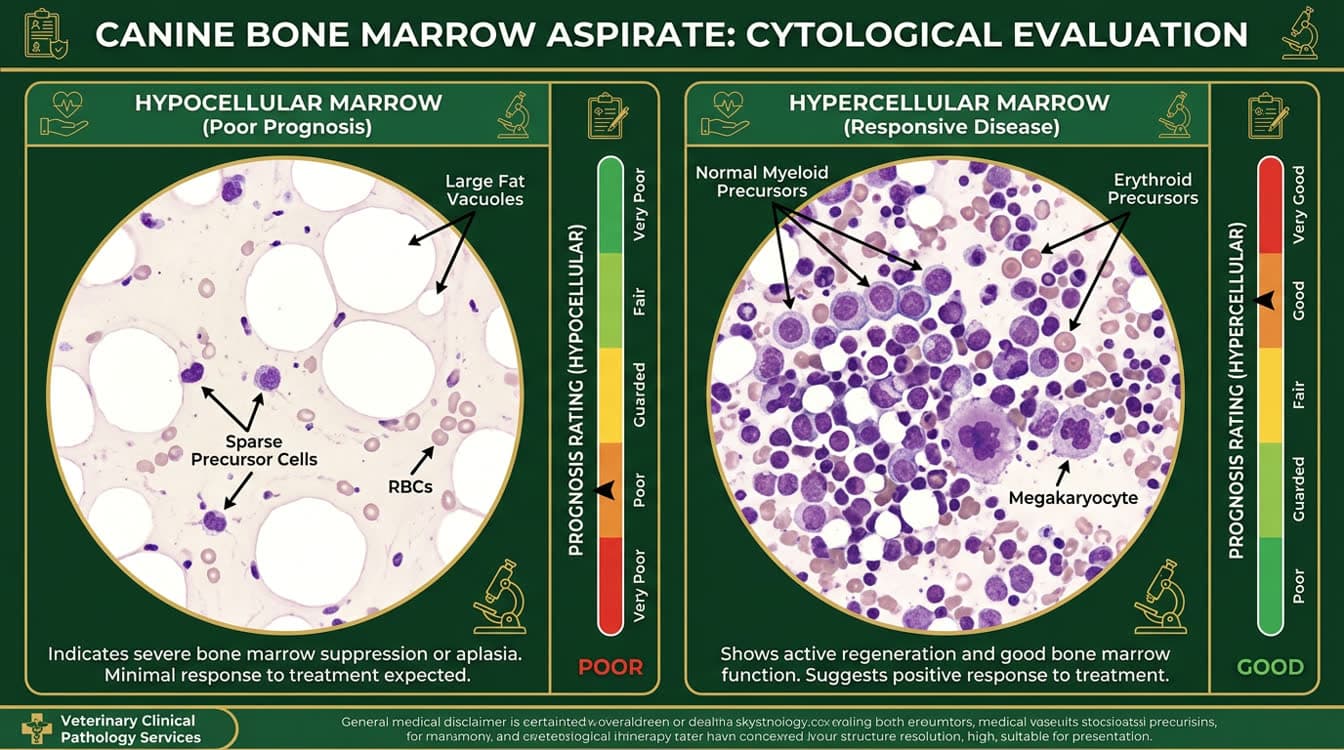
Bone Marrow Assessment
- Bone marrow aspirate/core biopsy indicated when pancytopenia is present
- Hypocellular marrow with fat replacement = aplastic anemia; poor prognosis
- Hypercellular marrow with dysplasia = active immune-mediated suppression; may respond to treatment
- Hypercellular marrow with normal cellularity = peripheral destruction; better prognosis
Poor Prognostic Indicators in Chronic Ehrlichiosis
- PCV < 15% with hypocellular marrow
- Platelet count < 10,000/uL persistent after 2 weeks of therapy
- Profound hypoalbuminemia (< 1.5 g/dL) from protein-losing nephropathy
- CNS signs
- German Shepherd breed (disproportionately severe chronic disease)
Management of Complications
- Uveitis: topical prednisolone acetate 1% q6-8h; systemic anti-inflammatory if severe
- Glomerulonephritis: benazepril 0.25-0.5 mg/kg PO q24h; low-protein diet; avoid NSAIDs
- Polyarthritis: doxycycline alone usually resolves; short course prednisone if severe joint pain
Prevention
- Year-round tick prevention: isoxazoline products (fluralaner, afoxolaner, sarolaner) provide tick kill within 8-12 hours, before transmission (E. canis requires > 12-24h attachment)
- Regular tick checks and removal
- Tick vaccines not commercially available for E. canis in North America
Follow-Up After Treatment
- Recheck CBC and serum chemistry at 1-3 months post-treatment
- IFA serology may remain elevated for 6-9 months; declining titers suggest treatment success
- PCR retest 30-60 days post-treatment if clinical concern for persistent infection
Frequently Asked Questions
What is the doxycycline dose for ehrlichiosis in dogs?
The standard dose is 10 mg/kg PO once daily or 5-10 mg/kg PO every 12 hours for a minimum of 28 days. Chronic ehrlichiosis with pancytopenia may require 6-8 weeks of treatment. Doxycycline should always be given with food to prevent esophageal irritation.
How quickly do platelets recover after starting doxycycline for ehrlichiosis?
In acute and subclinical ehrlichiosis, platelet counts typically begin rising within 24-72 hours of initiating doxycycline, with normalization by days 7-14. Chronic ehrlichiosis with bone marrow aplasia may show little or no improvement, which carries a poor prognosis.
Can you use a serology titer to confirm cure of ehrlichiosis?
No. IFA serology titers can remain positive for 6-9 months after successful treatment, making them unreliable for cure assessment. Clinical signs, CBC normalization, and if needed, PCR retest 30-60 days after treatment completion are better indicators of treatment success.
Which tick species transmits Ehrlichia canis?
Ehrlichia canis is transmitted by the brown dog tick (Rhipicephalus sanguineus). Ehrlichia ewingii (granulocytic ehrlichiosis) is transmitted by Amblyomma americanum (lone star tick). Transmission typically requires tick attachment for more than 12-24 hours.
Why do German Shepherds get more severe ehrlichiosis than other breeds?
German Shepherds are genetically predisposed to developing severe chronic ehrlichiosis with bone marrow aplasia, likely due to exaggerated immune complex deposition and a disproportionate B-cell response. They often develop severe thrombocytopenia, pancytopenia, polyarthritis, and glomerulonephritis.
References
- Harrus S, Waner T. Diagnosis of canine monocytotropic ehrlichiosis (Ehrlichia canis): an overview. Vet J. 2011;187(3):292-296.
- Neer TM, et al. Consensus statement on ehrlichial disease of small animals from the infectious disease study group of the ACVIM. J Vet Intern Med. 2002;16(3):309-315.
- Breitschwerdt EB, et al. Clinicopathological abnormalities and treatment response in 24 dogs seroreactive to Ehrlichia canis. J Am Vet Med Assoc. 1987;190(9):1207-1212.