Quick Answer
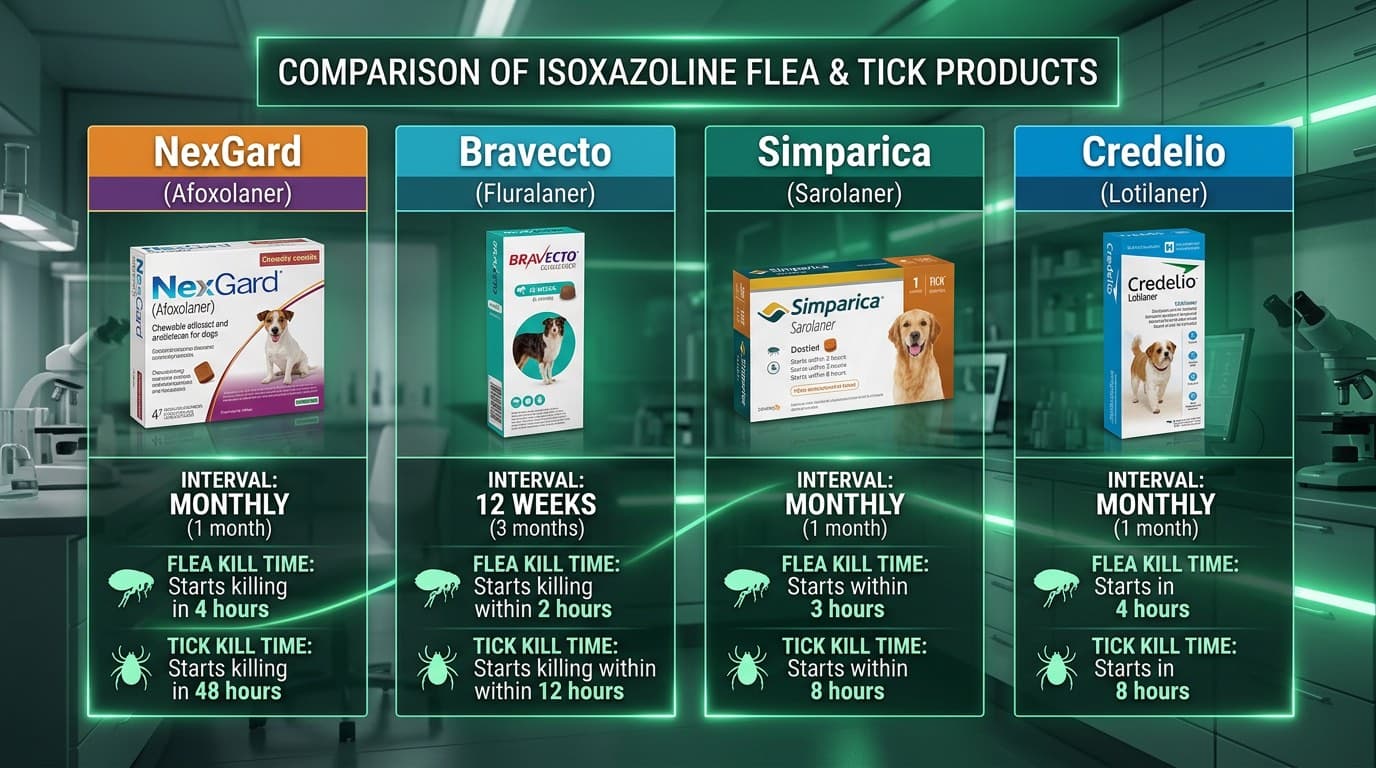
Isoxazoline flea and tick preventatives (afoxolaner, fluralaner, sarolaner, lotilaner) are the most effective antiparasitic drugs available for dogs and select cats. This guide covers mechanism, kill times by species, dosing, FDA 2018 neurological alert, and critical cat safety information.
Key Takeaways
- ✓Isoxazolines (NexGard, Bravecto, Simparica, Credelio) block GABA-gated chloride channels in arthropods, killing fleas within 8 hours and ticks within 12-48 hours
- ✓FDA 2018 alert: neurological adverse events (tremors, ataxia, seizures) are real but rare (<0.01%) — do not withhold in healthy animals as tick disease risk is far greater
- ✓Use with caution in animals with active seizure disorders; discuss risk/benefit with owners of epileptic pets
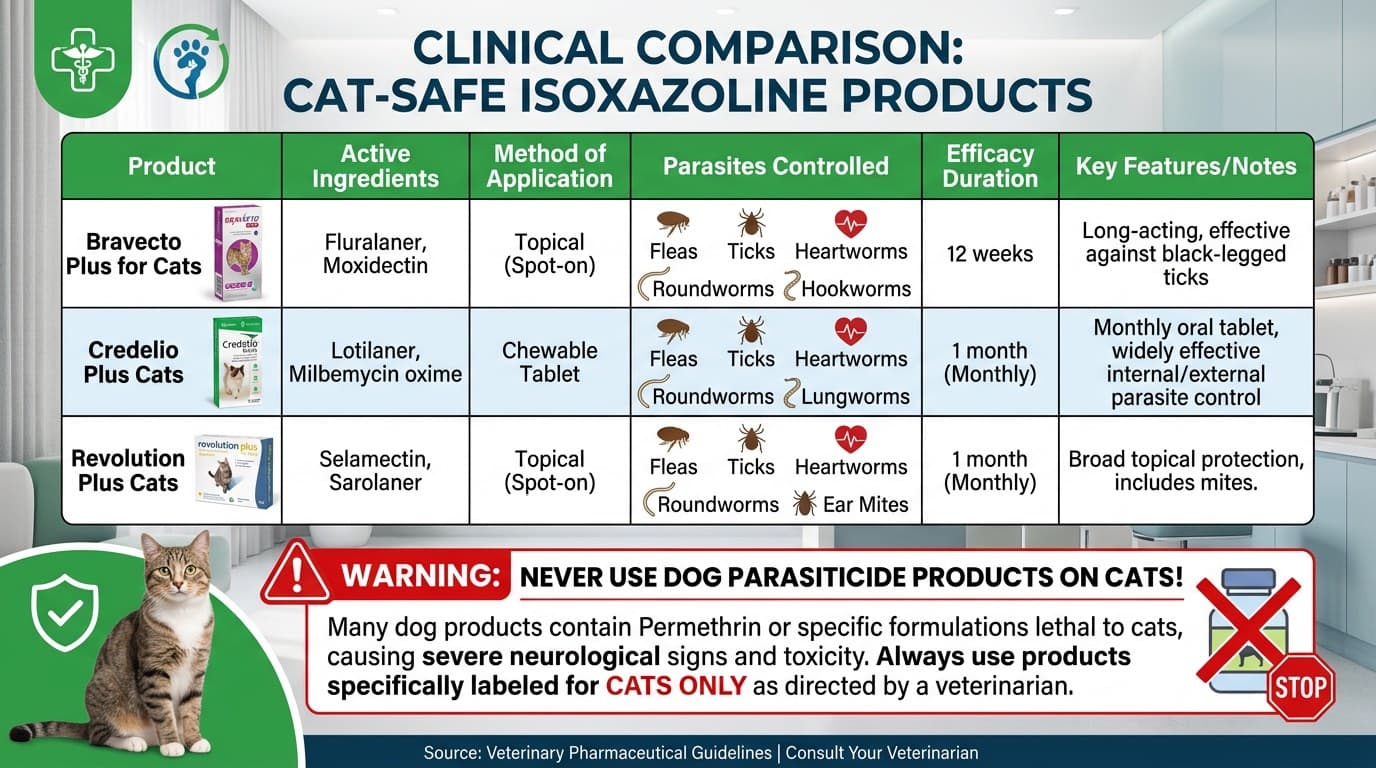
- ✓NEVER give dog isoxazoline products to cats — only Bravecto Plus (topical), Credelio Plus, and Revolution Plus are approved for feline use
- ✓Cat-approved minimum ages: Credelio Plus (8 weeks), Bravecto Plus (6 months) — do not use below minimum age or weight
- ✓Bravecto provides the longest duration (12 weeks per dose) of any oral flea/tick preventative, improving compliance
GABA Mechanism, Kill Times, and Product Comparison
Isoxazolines are a novel class of insecticides and acaricides that act as potent antagonists of GABA-gated chloride channels (GluCl) in invertebrate nervous systems. This mechanism is highly selective for arthropods over mammals at therapeutic doses.
Mechanism of Action
- Bind GABA-gated and glutamate-gated chloride channels in arthropod nervous system
- Sustained channel blockade → uninhibited nerve firing → hyperexcitation
- Irreversible seizures and death in fleas, ticks, and mites
- Selectivity for invertebrate vs mammalian channels: 100-fold at therapeutic doses
Kill Times
| Parasite | Kill Time (after drug exposure) |
|---|---|
| Fleas (Ctenocephalides felis) | 8 hours or less |
| Black-legged tick (Ixodes scapularis) | 12 hours |
| American dog tick (Dermacentor variabilis) | 24 hours |
| Lone star tick (Amblyomma americanum) | 24–48 hours |
| Brown dog tick (Rhipicephalus sanguineus) | 24–48 hours |
| Gulf Coast tick | 24–48 hours |
| Sarcoptes scabiei (mange mites) | Off-label; 2–4 weeks |
| Demodex canis (off-label) | 4–8 weeks treatment |
Product-by-Product Comparison
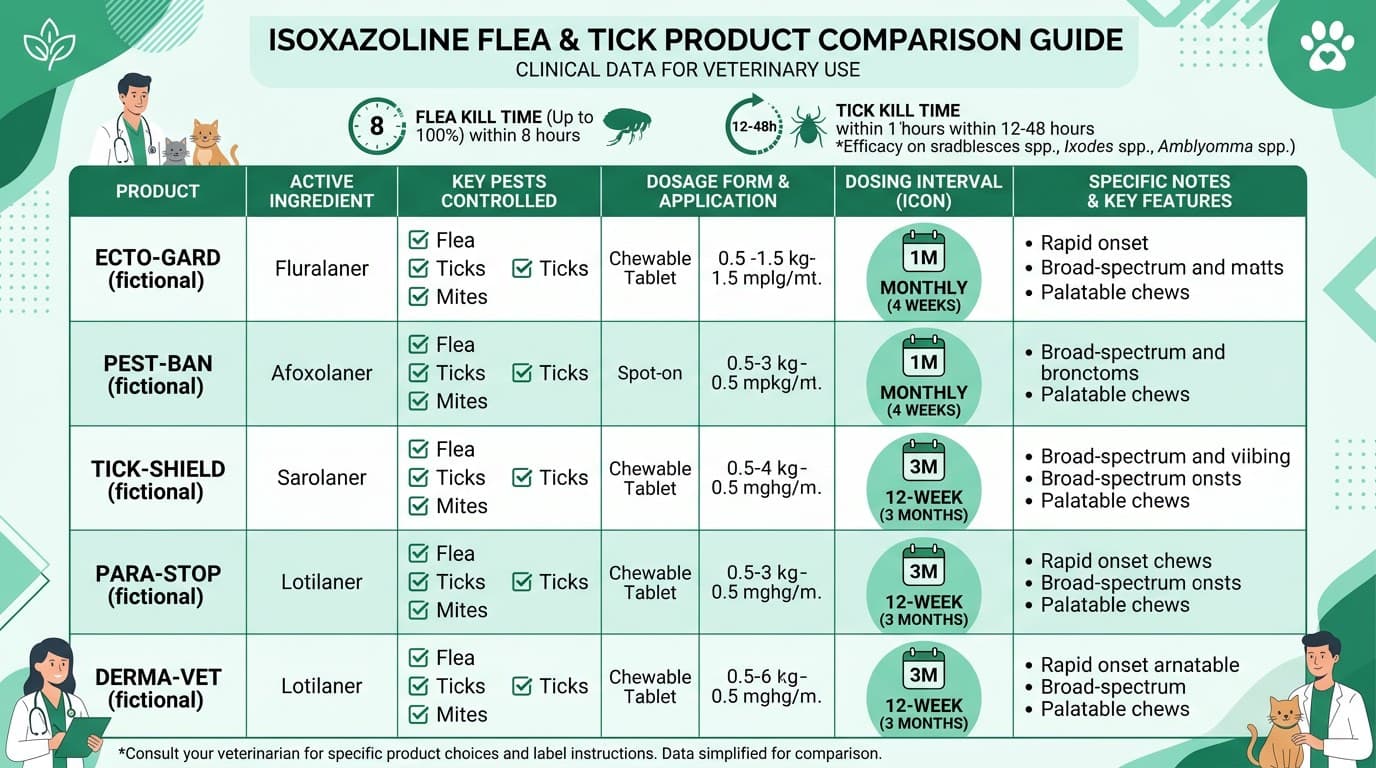
| Product | Active Ingredient | Dog Dose | Frequency | Available for Cats |
|---|---|---|---|---|
| NexGard (Boehringer) | Afoxolaner | 2.5–13.3 mg/kg PO | Monthly | No |
| Bravecto (MSD/Merck) | Fluralaner | 25–56 mg/kg PO | Every 12 weeks | Bravecto Plus (cats, topical) |
| Simparica (Zoetis) | Sarolaner | 1–3 mg/kg PO | Monthly | Simparica Trio (dogs only) |
| Credelio (Elanco) | Lotilaner | 20–43 mg/kg PO | Monthly | Credelio Plus (cats) |
| Nexgard Spectra | Afoxolaner + milbemycin | Per weight | Monthly | No |
| Bravecto Plus (cats) | Fluralaner + moxidectin | 40 mg/kg topical | Every 8–12 weeks | Yes — CATS ONLY version |
| Credelio Plus (cats) | Lotilaner + milbemycin | Per weight | Monthly | Yes — CATS ONLY version |
Flea Kill Speed Comparison (practical)
- vs Spinosad (Comfortis): Similar at 4h for fleas
- vs Nitenpyram (Capstar): Nitenpyram faster onset (30 min) but shorter duration (24h)
- vs Fipronil (Frontline): Isoxazolines significantly faster on fleas
FDA 2018 Neurological Alert and Risk Management in Seizure-Prone Animals
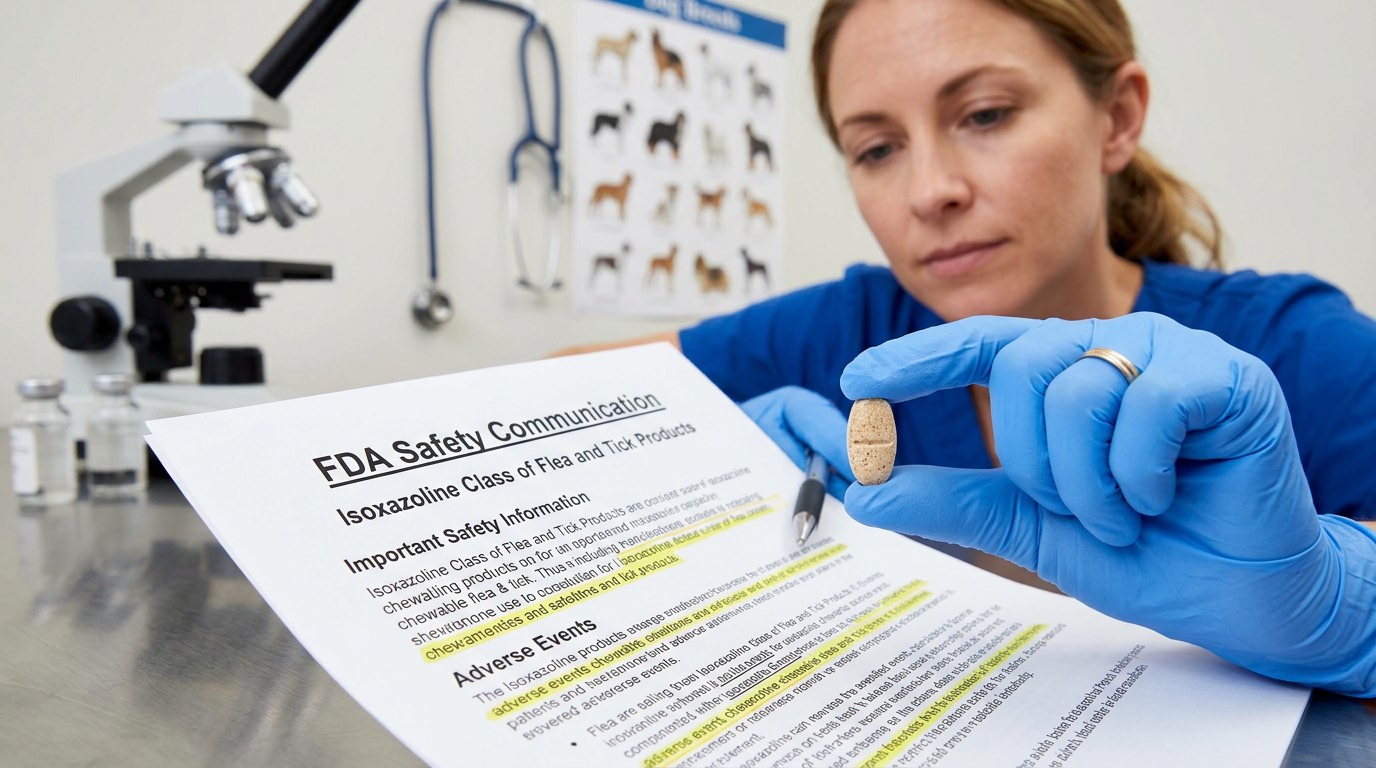
In September 2018, the FDA issued a drug safety communication alerting veterinarians and owners to neurological adverse events associated with isoxazoline-class products. Understanding this alert is critical for appropriate use.
FDA 2018 Alert Summary The FDA required label updates for all isoxazoline products to include a new Warnings and Precautions section describing neurological adverse events including muscle tremors, ataxia, and seizures.
Reported Adverse Events
| Event | Estimated Incidence | Severity |
|---|---|---|
| Muscle tremors | Rare (<0.01%) | Usually mild, self-limiting |
| Ataxia (incoordination) | Rare (<0.01%) | Mild, resolves within days |
| Seizures | Very rare (<0.001%) | Potentially serious |
| Vomiting/diarrhea | 1–3% | Mild, transient |
| Lethargy | 1–2% | Mild, transient |
Who Is at Risk?
- Dogs/cats with history of epilepsy or seizure disorders
- Animals on drugs affecting GABAergic neurotransmission (phenobarbital, potassium bromide)
- Animals with underlying brain disease
Risk Management Protocol
| Situation | Recommendation |
|---|---|
| Healthy dog/cat with no seizure history | Use isoxazolines freely — benefit far outweighs risk |
| Dog/cat with history of single seizure (idiopathic epilepsy) | Discuss risk/benefit; many neurologists still recommend isoxazolines as benefits outweigh risk |
| Active, poorly controlled epilepsy | Use alternative product (fluralaner topical for cats; spinosad or topical for dogs) |
| Currently on phenobarbital/KBr | Discuss with neurologist; isoxazolines can generally still be used with monitoring |
Practical Note on Magnitude of Risk Millions of doses administered annually with extremely rare adverse events. The risk of tick-borne diseases (Lyme, anaplasmosis, Rocky Mountain spotted fever, ehrlichiosis) in unprotected dogs in endemic areas vastly outweighs the neurological adverse event risk of isoxazolines. Do not withhold in healthy animals based on label warning alone.
If Adverse Event Occurs 1. Discontinue isoxazoline 2. Initiate symptomatic support (anti-seizure medication if needed) 3. Report to FDA MedWatch and manufacturer 4. Document in medical record and discuss alternative flea/tick products
Cat-Approved Isoxazolines: Bravecto Plus and Credelio Plus
This section addresses the critical safety distinction between isoxazoline products approved for cats versus those approved for dogs only. This is one of the most important drug safety rules in small animal practice.
CRITICAL SAFETY RULE NEVER use dog isoxazoline products in cats. Dog formulations (NexGard, Bravecto chewable for dogs, Simparica, Credelio for dogs) are dosed for canine body weight and metabolic rate. Giving dog-dose isoxazoline products to cats causes severe toxicity and death.
Cat-Approved Isoxazoline Products
| Product | Ingredient | Dose | Route | Frequency | Parasites |
|---|---|---|---|---|---|
| Bravecto Plus (cats) | Fluralaner + moxidectin | 40 mg/kg fluralaner | Topical spot-on | Every 8–12 weeks | Fleas, ticks, ear mites, roundworms, hookworms |
| Credelio Plus (cats) | Lotilaner + milbemycin | 6 mg/kg lotilaner | PO chewable | Monthly | Fleas, ticks, roundworms, hookworms |
| Revolution Plus (cats) | Selamectin + sarolaner | Per weight | Topical | Monthly | Fleas, ticks, ear mites, roundworms, hookworms |
Bravecto Plus for Cats — Dosing by Weight
| Cat Weight | Volume | Active Ingredients |
|---|---|---|
| 1.2–2.8 kg | 0.4 mL | 112.5 mg fluralaner + 2.5 mg moxidectin |
| 2.8–6.25 kg | 0.9 mL | 250 mg fluralaner + 5 mg moxidectin |
| 6.25–12.5 kg | 1.8 mL | 500 mg fluralaner + 10 mg moxidectin |
Minimum Age and Weight Requirements
| Product | Minimum Age | Minimum Weight |
|---|---|---|
| Bravecto Plus (cats) | 6 months | 1.2 kg |
| Credelio Plus (cats) | 8 weeks | 0.7 kg |
| Revolution Plus (cats) | 8 weeks | 1.25 kg |
Why Cats Are Different
- Lower hepatic cytochrome P450 activity (reduced drug metabolism)
- Higher CNS sensitivity to certain insecticides
- Different body composition affecting drug distribution
- Grooming behavior that can increase oral exposure to topical products
Environmental Flea Control
- Treat all pets in household simultaneously
- Vacuum frequently (stimulates pupae to hatch)
- Environmental spray with IGR (insect growth regulator — methoprene or pyriproxyfen)
- All cats in household must be on approved feline product
Frequently Asked Questions
How fast do isoxazolines kill fleas?
Isoxazoline products kill fleas within 8 hours of exposure, which is faster than most older products. This rapid kill time is clinically significant for alleviating allergic flea bite dermatitis. The fleas must bite and ingest the drug from the pet's blood before dying.
Are isoxazolines safe for dogs with epilepsy?
The FDA 2018 warning requires caution in animals with seizure history. For dogs with well-controlled epilepsy, most veterinary neurologists still recommend isoxazolines because the risk of tick-borne disease (Lyme, RMSF, anaplasmosis) in unprotected dogs in endemic areas outweighs the very low risk of drug-triggered seizures. Discuss with your neurologist.
Can I use NexGard or Bravecto (dog) on my cat?
No — this is extremely dangerous. Dog isoxazoline formulations are dosed for canine body weight and metabolism. Giving dog flea/tick products to cats causes severe toxicity and can be fatal. Only use Bravecto Plus, Credelio Plus, or Revolution Plus — products specifically formulated and approved for cats.
How long does Bravecto last?
Bravecto (fluralaner) provides flea and tick protection for 12 weeks (3 months) per dose in dogs. Bravecto Plus for cats provides 8-12 weeks of protection. This makes it the longest-acting oral flea/tick preventative available, which improves compliance for owners who forget monthly dosing.
Do isoxazolines kill tick eggs and larvae?
No. Isoxazolines kill adult fleas and ticks that bite the treated animal but do not directly kill eggs or larvae in the environment. For heavy flea infestations, environmental treatment with an insect growth regulator (IGR) and frequent vacuuming is needed alongside treating all pets in the household.
References
- FDA Drug Safety Communication: FDA Identifies Potential Neurological Risks with Isoxazoline Flea and Tick Products. September 2018.
- Becskei C et al. Efficacy and safety of afoxolaner (NexGard) in dogs. Parasit Vectors. 2016;9(1):1-8.
- Meadows C et al. Fluralaner (Bravecto) pharmacokinetics in dogs. Vet Parasitol. 2014;201(1-2):78-84.