
Quick Answer
Effective deworming of dogs and cats requires matching the drug to the parasite. This guide covers pyrantel pamoate, fenbendazole, praziquantel, and milbemycin — with puppy/kitten protocols from 2 weeks, adult fecal float-based treatment, and zoonotic public health guidance for Toxocara and Ancylostoma.
Key Takeaways
- ✓Match anthelmintic to parasite: pyrantel covers roundworms/hookworms; fenbendazole covers roundworms/hookworms/whipworms/Giardia; praziquantel covers tapeworms only
- ✓Puppies should be dewormed at 2, 4, 6, 8, 10, and 12 weeks of age — virtually all puppies are born infected with Toxocara via transplacental or transmammary transmission
- ✓Kittens should be dewormed at 2, 4, 6, 8, and 12 weeks — transmammary Toxocara cati transmission infects most nursing kittens
- ✓Toxocara and Ancylostoma are significant zoonotic risks — daily feces removal and regular deworming reduce human exposure risk substantially
- ✓Dipylidium tapeworm reinfection is guaranteed without concurrent flea control — praziquantel alone is not sufficient; treat the flea problem
- ✓Adult pets: annual fecal float with treatment based on results; quarterly deworming for hunting dogs, kennel dogs, or heavy flea exposure environments
Anthelmintic Selection by Parasite Species and Dosing
Effective deworming requires knowing which parasites are present and which drugs cover them. No single anthelmintic kills all common intestinal helminths — correct drug selection based on diagnosis is essential.
Parasite Coverage by Drug
| Anthelmintic | Roundworms | Hookworms | Whipworms | Tapeworms | Giardia | Heartworm Prev. |
|---|---|---|---|---|---|---|
| Pyrantel pamoate | ✓ | ✓ | ✗ | ✗ | ✗ | ✗ |
| Fenbendazole (Panacur) | ✓ | ✓ | ✓ | ✗ | ✓ | ✗ |
| Praziquantel | ✗ | ✗ | ✗ | ✓ | ✗ | ✗ |
| Milbemycin oxime | ✓ | ✓ | ✓ | ✗ | ✗ | ✓ |
| Epsiprantel | ✗ | ✗ | ✗ | ✓ | ✗ | ✗ |
| Ivermectin | ✓* | ✓* | ✗ | ✗ | ✗ | ✓ |
| Selamectin | ✓ | ✓* | ✗ | ✗ | ✗ | ✓ |
*At standard prevention doses; limited efficacy for active infestations.
Pyrantel Pamoate
| Species | Dose | Route | Frequency | Target Parasites |
|---|---|---|---|---|
| Dogs | 5–10 mg/kg | PO | Once; repeat in 2 weeks | Toxocara canis, Ancylostoma spp. |
| Cats | 5–20 mg/kg | PO | Once; repeat in 2 weeks | Toxocara cati, Ancylostoma spp. |
- Available OTC and by prescription
- Safe in pregnant females and nursing animals
- Mechanism: depolarizing neuromuscular blocker (spastic paralysis)
Fenbendazole (Panacur)
| Indication | Dose | Route | Duration |
|---|---|---|---|
| Roundworms/hookworms/whipworms | 50 mg/kg | PO SID | 3 consecutive days |
| Giardia | 50 mg/kg | PO SID | 5 consecutive days |
| Lungworms (dogs) | 50 mg/kg | PO SID | 7–14 days |
| Repeat treatment | Same dose | PO SID | Repeat in 3 weeks |
- Available as 10% granules (Panacur) or 22.2% paste
- Safe in pregnant females (label-approved)
- Mechanism: tubulin polymerization inhibitor
- NOTE: Fenbendazole does NOT kill tapeworms — always combine with praziquantel if tapeworms present
Praziquantel
| Species | Dose | Route | Frequency | Target |
|---|---|---|---|---|
| Dogs | 5–10 mg/kg | PO or SQ | Single dose | Dipylidium caninum, Taenia spp., Echinococcus |
| Cats | 5–10 mg/kg | PO | Single dose | Dipylidium caninum, Taenia taeniaeformis |
- Mechanism: disrupts calcium ion transport → worm spasm, tegumental disruption
- Highly effective single-dose tapeworm treatment
- Available standalone or in combination products (Drontal, Interceptor Plus)
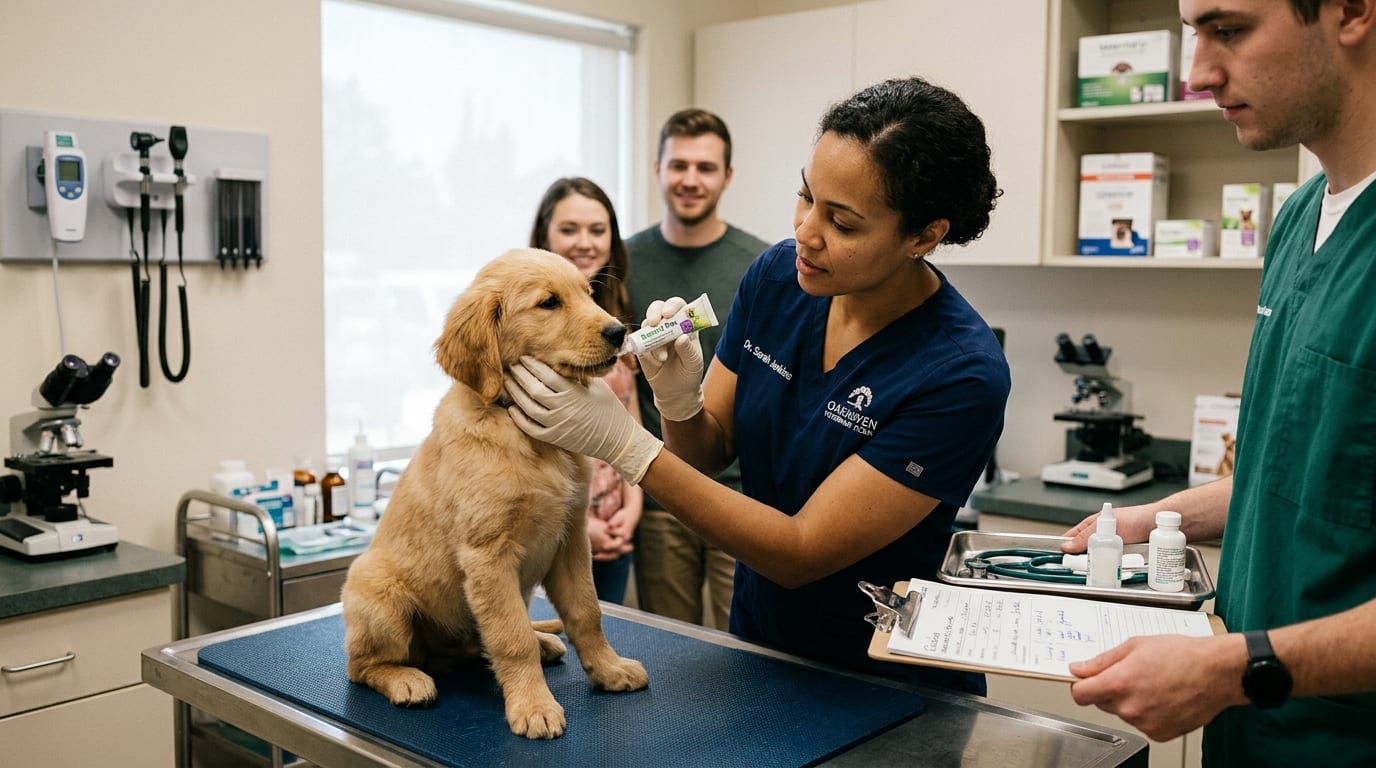
Puppy and Kitten Deworming Schedule from 2 Weeks of Age
Puppies and kittens are born with or rapidly acquire intestinal parasite burdens through transmammary and transplacental transmission. Early and systematic deworming is critical for animal health and public health.
Why Puppies and Kittens Need Early Deworming
- Toxocara canis: transmammary (milk) AND transplacental transmission — virtually all puppies born infected
- Toxocara cati: transmammary transmission — most kittens exposed via nursing
- Ancylostoma caninum: transmammary transmission in puppies
- High worm burdens at 2–4 weeks can cause life-threatening anemia, protein-losing enteropathy, and death
- Puppies/kittens are major environmental contamination sources for zoonotic transmission
Puppy Deworming Schedule
| Age | Treatment | Drug | Notes |
|---|---|---|---|
| 2 weeks | Pyrantel 5 mg/kg PO | Pyrantel pamoate | Start early regardless of fecal results |
| 4 weeks | Pyrantel 5 mg/kg PO | Pyrantel pamoate | Repeat; worms may not be patent yet at 2wk |
| 6 weeks | Pyrantel 5 mg/kg PO | Pyrantel pamoate | Continue |
| 8 weeks | Pyrantel 5 mg/kg PO | Pyrantel pamoate | Fecal float at this visit |
| 10 weeks | Pyrantel 5 mg/kg PO | Pyrantel pamoate | |
| 12 weeks | Fenbendazole 50 mg/kg PO SID x3d | Panacur | Add whipworm and Giardia coverage |
| Monthly | ML heartworm prevention | Heartgard/Interceptor | Continue to 6 months |
| 6 months | Fecal float | Microscopy | Adjust based on results |
Kitten Deworming Schedule
| Age | Treatment | Drug |
|---|---|---|
| 2 weeks | Pyrantel 20 mg/kg PO | Pyrantel pamoate |
| 4 weeks | Pyrantel 20 mg/kg PO | Pyrantel pamoate |
| 6 weeks | Pyrantel 20 mg/kg PO | Pyrantel pamoate |
| 8 weeks | Pyrantel 20 mg/kg PO + fecal float | Pyrantel pamoate |
| 12 weeks | Pyrantel 20 mg/kg PO | Pyrantel pamoate |
| 4 months | Fecal float; treat based on results | As indicated |
Treating the Nursing Mother
- Deworm the dam/queen at same time as offspring
- Reduces environmental egg contamination
- Use pyrantel (safe in nursing) or fenbendazole
- Do NOT use ivermectin or macrocyclic lactones in nursing animals with very young neonates
Fecal Exam Results Interpretation
| Finding | Recommended Treatment |
|---|---|
| Toxocara eggs | Pyrantel or fenbendazole; repeat in 2–3 weeks |
| Ancylostoma eggs | Pyrantel or fenbendazole |
| Trichuris eggs | Fenbendazole 50 mg/kg PO SID × 3 days; repeat in 3 weeks and again 3 months |
| Dipylidium (tapeworm) segments | Praziquantel 5–10 mg/kg; treat for fleas (intermediate host) |
| Taenia eggs | Praziquantel 5–10 mg/kg; limit predator access |
| Giardia cysts | Fenbendazole 50 mg/kg PO SID × 5 days; metronidazole alternative |
| Coccidia oocysts | Ponazuril 50 mg/kg PO SID × 1–3 days; sulfadimethoxine |
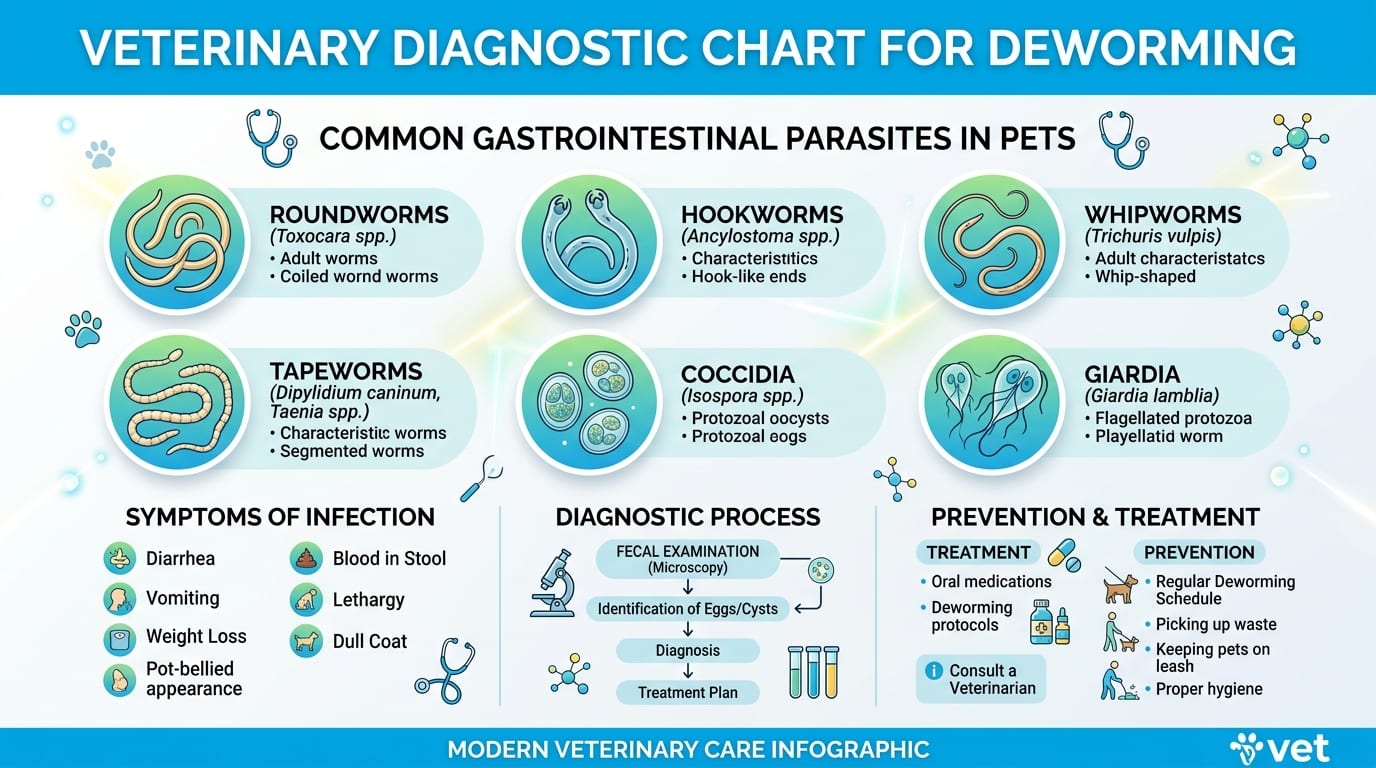
Zoonotic Risks: Toxocara, Ancylostoma, and Public Health Guidance
Intestinal parasites of dogs and cats represent significant zoonotic risks to human health, particularly to children, immunocompromised individuals, and sandpit/garden users in contact with animal feces.
Primary Zoonotic Parasites
1. Toxocara canis / Toxocara cati (Visceral Larva Migrans)
- Humans infected by accidental ingestion of embryonated Toxocara eggs from contaminated soil
- Eggs are NOT immediately infective when shed — require 2–4 weeks in soil to embryonate
- Once embryonated, eggs persist in soil for years (resistant to cold, desiccation)
- In humans: larvae migrate through liver, lungs, eyes, brain (visceral larva migrans, ocular larva migrans)
- Most common in children 1–4 years old (pica behavior, sandpit play)
- Estimated prevalence: 5–14% seropositivity in US children
2. Ancylostoma caninum (Cutaneous Larva Migrans)
- L3 larvae in contaminated soil penetrate human skin (bare feet on beach, garden soil)
- Larvae migrate subcutaneously causing intensely pruritic serpiginous tracks (creeping eruption)
- Cannot complete life cycle in humans — self-limiting but uncomfortable
- Most common in warm, sandy environments (beaches, playgrounds)
Public Health Risk Factors
| Risk Factor | Mitigation |
|---|---|
| Children playing in soil | Regular deworming of all pets; sandbox covers |
| Eating unwashed vegetables from gardens | Prevent pet defecation in vegetable gardens |
| Puppies/kittens in household | Strict deworming schedule; handwashing after handling |
| Outdoor cats defecating in playgrounds | Sandpit covers; responsible pet ownership |
| Immunocompromised individuals | More frequent deworming; extra handwashing protocols |
Client Education Messages 1. Regular fecal exams and deworming reduce environmental contamination 2. Scoop feces promptly — eggs require 2–4 weeks to become infective; daily removal prevents transmission 3. Teach children to wash hands after touching dogs/cats 4. Cover sandboxes when not in use 5. Deworm new puppies/kittens immediately — before fecal exams even if eggs not yet patent
Adult Dog/Cat Protocol
- Annual fecal float (centrifugation preferred over direct smear for sensitivity)
- Treat based on results — routine prophylactic deworming without testing not generally recommended in adult pets
- Exception: hunting dogs, dogs with heavy flea exposure (tapeworm risk), dogs in kennels — deworm every 3 months
- CDC recommends deworming all dogs and cats quarterly in high-risk environments
Why Tapeworms Require Flea Control Dipylidium caninum (double-pored tapeworm) uses the cat flea as intermediate host. Dogs and cats are infected by grooming and swallowing infected fleas. Treating the tapeworm without controlling fleas leads to rapid reinfection. Always combine praziquantel with flea control when Dipylidium is diagnosed.
Frequently Asked Questions
How often should puppies be dewormed?
Puppies should be dewormed at 2, 4, 6, 8, 10, and 12 weeks of age, then monthly until 6 months old. This intensive protocol is necessary because virtually all puppies are born infected with Toxocara canis via transplacental transmission, and worm burdens can be life-threatening at this age.
What is the best dewormer for dogs?
There is no single best dewormer because different drugs target different parasites. Fenbendazole (Panacur) has the broadest spectrum — covering roundworms, hookworms, whipworms, and Giardia — but does not kill tapeworms. Add praziquantel for tapeworms. Monthly milbemycin-based heartworm prevention (Interceptor Plus) also provides roundworm, hookworm, and whipworm control.
Can humans get worms from dogs and cats?
Yes. Toxocara canis and T. cati from dogs and cats can cause visceral and ocular larva migrans in humans, primarily children. Ancylostoma caninum causes cutaneous larva migrans (creeping eruption). Infection requires contact with embryonated eggs in soil. Regular deworming of pets and daily feces removal are the most effective prevention measures.
Does fenbendazole (Panacur) kill tapeworms?
No. Fenbendazole does NOT kill tapeworms. It covers roundworms, hookworms, whipworms, and Giardia. Tapeworms (Dipylidium and Taenia species) require praziquantel for treatment. Many combination products (Drontal Plus, Interceptor Plus) include both fenbendazole or pyrantel AND praziquantel to provide broad-spectrum coverage.
My dog has tapeworms — how do I treat them?
Praziquantel (5-10 mg/kg PO single dose) is highly effective for both Dipylidium caninum and Taenia species tapeworms. Critically, if the tapeworms are Dipylidium (most common; rice grain segments), you must also control fleas — the flea is the intermediate host and the dog will reinfect immediately if fleas are not eliminated.
References
- Companion Animal Parasite Council (CAPC). Roundworms (Toxocara). Available at: capcvet.org. 2023.
- Traversa D. Are we paying too little attention to zoonotic helminths in companion animals? Vet Parasitol. 2011;182(1):36-45.
- Bowman DD et al. Hookworms of dogs and cats as agents of cutaneous larva migrans. Trends Parasitol. 2010;26(4):162-167.