Quick Answer
A thorough guide to canine Lyme disease covering Borrelia burgdorferi transmission by Ixodes ticks, clinical signs, C6 antibody testing, antibiotic therapy, the devastating complication of Lyme nephritis, and vaccine recommendations.
Key Takeaways
- ✓Lyme disease is transmitted by Ixodes ticks and requires 36–48 hours of tick attachment — daily tick checks can prevent infection.
- ✓Only 5–10% of dogs with Lyme antibodies develop clinical disease; the most common sign is shifting-leg lameness.
- ✓The C6 antibody test detects natural infection (not vaccination) and is included in the routine SNAP 4Dx screening.
- ✓Doxycycline for 28–30 days is the standard treatment, with most dogs improving within 24–48 hours.
- ✓Lyme nephritis is a rare but often fatal kidney complication — all Lyme-positive dogs should have urine protein monitoring.
What Is Lyme Disease?
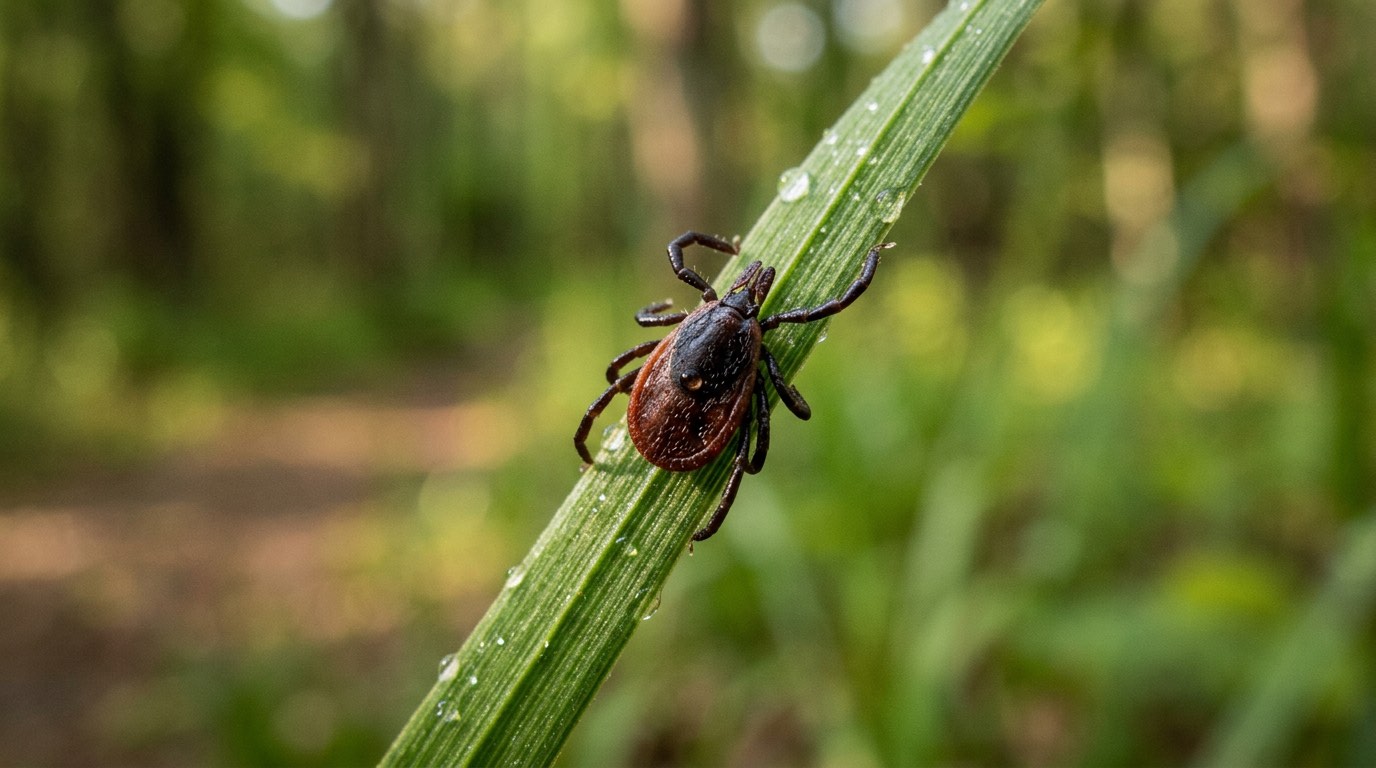
Lyme disease — technically known as Lyme borreliosis — is caused by the spirochete bacterium Borrelia burgdorferi and is the most common tick-borne disease in dogs in North America and Europe. The disease is transmitted exclusively through the bite of infected Ixodes ticks: the black-legged tick (Ixodes scapularis) in the eastern and central United States, and the western black-legged tick (Ixodes pacificus) along the Pacific coast.
Unlike in humans, where Lyme disease frequently causes a characteristic "bull's-eye" rash and early flu-like symptoms, the majority of dogs exposed to Borrelia burgdorferi never develop clinical illness. Studies suggest that only 5 to 10 percent of seropositive dogs (those with detectable antibodies) actually show clinical signs. When clinical disease does develop, it most commonly manifests as shifting-leg lameness, joint swelling, fever, lethargy, and decreased appetite.
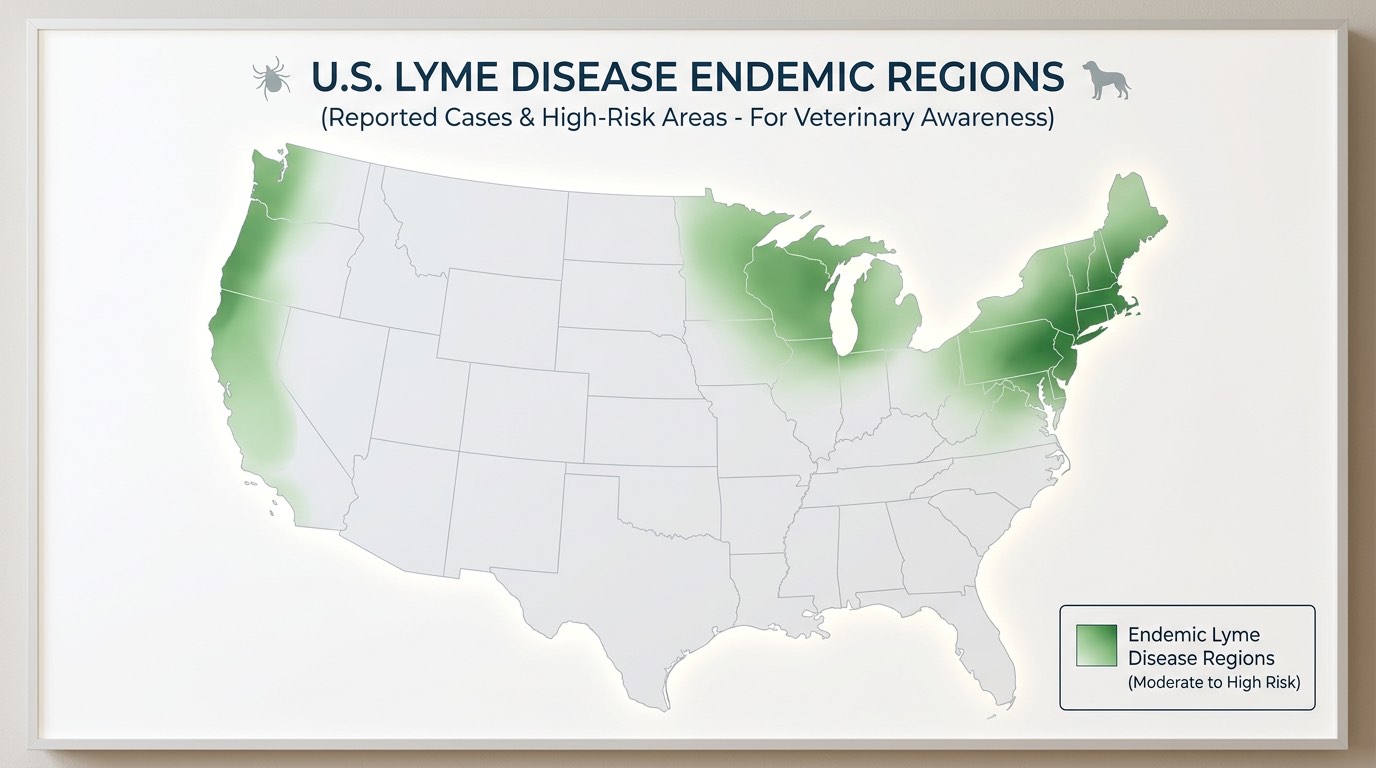
The geographic distribution of Lyme disease closely mirrors tick habitat. The highest prevalence in the United States is concentrated in the Northeast (Connecticut through Maine), the upper Midwest (Wisconsin, Minnesota), and increasingly mid-Atlantic states. However, climate change and wildlife migration are expanding tick populations into previously unaffected regions, making awareness important even in areas not traditionally considered endemic.
How Lyme Disease Is Transmitted
Understanding the transmission cycle is key to prevention. Borrelia burgdorferi is maintained in nature through a complex cycle involving Ixodes ticks and wildlife reservoir hosts — primarily the white-footed mouse and other small rodents.
The Tick Feeding Timeline
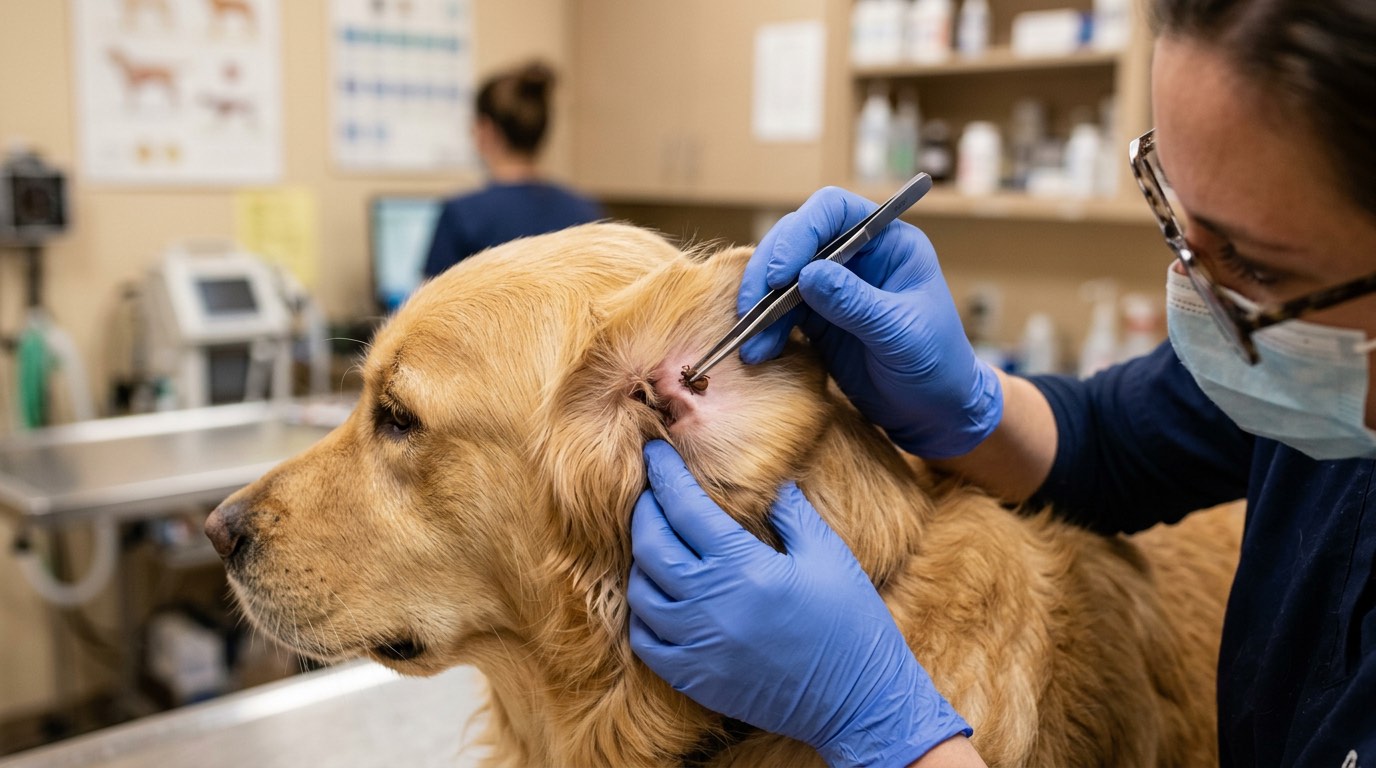
A critical fact for prevention: an infected tick must be attached and feeding for approximately 36 to 48 hours before Borrelia organisms are transmitted to the host. This delay occurs because the spirochetes reside in the tick's midgut and must undergo a process of replication and migration to the salivary glands before they can be injected into the host during feeding. This window provides an opportunity for tick removal to prevent transmission — which is why daily tick checks after outdoor activity are so valuable.
The Lifecycle Connection
Ixodes ticks have a two-year lifecycle spanning four stages: egg, larva, nymph, and adult. Larvae acquire Borrelia by feeding on infected rodents. After molting to the nymph stage, the tick can transmit the bacterium to its next host. Both nymphs and adult females feed on dogs, but nymphs are particularly dangerous because their tiny size (poppy seed-sized) makes them extremely difficult to detect.
Seasonal Risk
In most endemic areas, the highest risk of transmission occurs in late spring through early fall when nymph activity peaks. However, adult ticks can remain active on milder winter days when temperatures rise above freezing, meaning year-round tick prevention is recommended in endemic regions.
Dogs cannot transmit Lyme disease directly to humans or other dogs. However, a dog that carries ticks into the home can serve as a transport host, bringing infected ticks into proximity with family members.
Testing & Diagnosis
Diagnosing Lyme disease in dogs involves correlating clinical signs with serological testing. The challenge lies in the fact that antibody-positive status alone does not confirm clinical disease, since most seropositive dogs remain healthy.
The C6 Antibody Test (SNAP 4Dx)
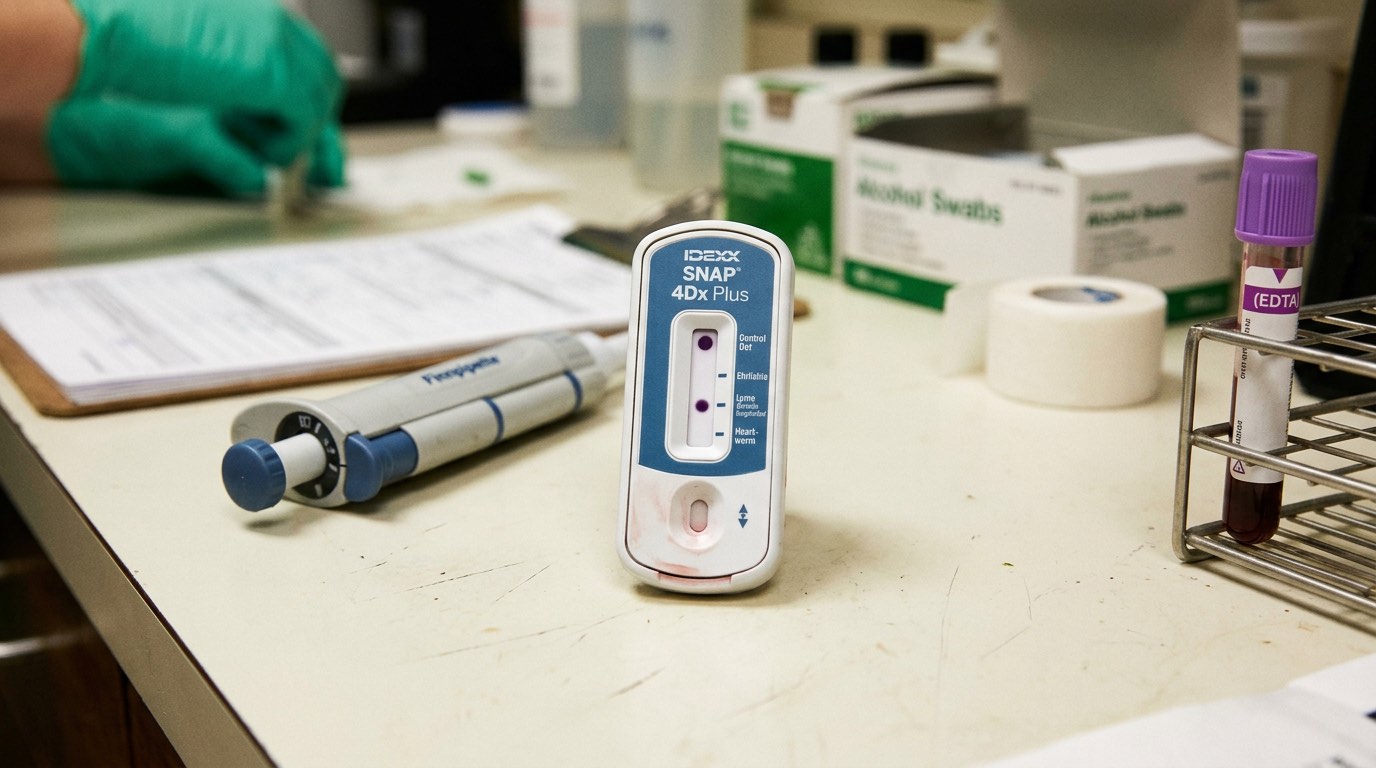
The most widely used screening test is the C6 ELISA, available as part of the in-clinic SNAP 4Dx Plus test that simultaneously screens for heartworm, Lyme, Ehrlichia, and Anaplasma. The C6 antibody targets a specific protein (VlsE) on the Borrelia spirochete that is expressed only during active mammalian infection — not from vaccination. This distinction is critically important because it means a positive C6 result indicates natural exposure, not a vaccine response.
Quantitative C6 (Lyme Quant C6)
When a dog tests positive on the SNAP screening, a quantitative C6 test can measure the exact antibody level in units per milliliter. Values above 30 U/mL combined with clinical signs strongly support active infection. Post-treatment, declining C6 levels confirm successful antibiotic therapy. Levels that fail to decrease may indicate persistent infection or reinfection.
Urine Protein:Creatinine Ratio (UPC)
Every Lyme-positive dog should have a UPC ratio checked to screen for protein-losing nephropathy (Lyme nephritis). A UPC above 0.5 in a non-azotemic dog warrants further investigation, including a complete urinalysis and renal function assessment.
Joint Fluid Analysis
In dogs presenting with lameness and joint effusion, arthrocentesis (joint tap) typically reveals a neutrophilic or mixed inflammatory response. While Borrelia organisms are rarely visualized directly, the cytology pattern combined with a positive C6 test and response to treatment supports the diagnosis.
Treatment & Lyme Nephritis
Standard Antibiotic Therapy
Doxycycline is the antibiotic of choice for canine Lyme disease, prescribed at 10 mg/kg orally once daily (or 5 mg/kg twice daily) for 28 to 30 days. Most dogs with Lyme arthritis show dramatic clinical improvement within 24 to 48 hours of starting treatment — this rapid response is itself considered diagnostically supportive. Dogs that do not improve within 3 to 5 days should be re-evaluated for alternative diagnoses.
Amoxicillin (20 mg/kg twice daily for 30 days) is an alternative for dogs that cannot tolerate doxycycline, though it is generally considered slightly less effective. Azithromycin has also been used but lacks robust evidence supporting its efficacy against Borrelia.
Should Seropositive Healthy Dogs Be Treated?
This remains a debated question in veterinary medicine. Current ACVIM consensus guidelines recommend treating clinically ill dogs and monitoring asymptomatic seropositive dogs with regular rechecks and urine protein monitoring. Some practitioners elect to treat all seropositive dogs prophylactically, particularly those with high quantitative C6 levels, though the evidence for this approach is not definitive.
Lyme Nephritis — The Most Serious Complication
Lyme nephritis (protein-losing nephropathy) is a devastating immune-mediated kidney disease that occurs in a small percentage of Lyme-infected dogs. It involves immune complex deposition in the glomeruli, leading to massive protein loss in the urine, progressive kidney failure, edema, and ultimately death in many cases. Certain breeds appear predisposed, including Labrador Retrievers, Golden Retrievers, Shetland Sheepdogs, and Bernese Mountain Dogs.
Treatment of Lyme nephritis involves aggressive antibiotic therapy, immunosuppressive medications (mycophenolate or azathioprine), ACE inhibitors to reduce proteinuria, and supportive care including fluid therapy and anti-nausea medications. Despite treatment, the prognosis for advanced Lyme nephritis remains guarded to poor, underscoring the importance of early detection through routine urine screening of Lyme-positive dogs.
Prevention & Vaccination
Prevention of Lyme disease relies on a two-pronged approach: tick control and vaccination.
Tick Prevention Products
Year-round tick prevention is essential in endemic areas. Effective options include:
- Isoxazoline oral products — fluralaner (Bravecto), afoxolaner (NexGard), sarolaner (Simparica Trio), and lotilaner (Credelio) are highly effective, palatable chewables that kill ticks within hours of attachment
- Topical products — fipronil-based spot-on treatments provide an alternative for dogs that cannot take oral medications
- Tick collars — the Seresto collar provides sustained tick repellency and kill for up to 8 months
No single product provides 100 percent protection, so combining chemical prevention with environmental and behavioral strategies provides the best defense.
Environmental and Behavioral Strategies
Avoiding tall grass, leaf litter, and wooded edges during peak tick season reduces exposure. Performing daily tick checks — focusing on the ears, face, axillae, and between the toes — allows removal before the 36–48 hour transmission window closes. Keeping lawns mowed short and creating gravel or wood chip barriers between yards and wooded areas reduces tick habitat around the home.
Lyme Vaccination
Several Lyme vaccines are available for dogs, including killed whole-cell bacterins and recombinant OspA vaccines. Vaccination is recommended by the AAHA for dogs living in or traveling to endemic areas. The recombinant OspA vaccine (Recombitek Lyme) works by a unique mechanism — antibodies produced by the dog enter the feeding tick and neutralize Borrelia in the tick's midgut before transmission can occur.
Vaccination is not a substitute for tick prevention and should be used as an additional layer of protection. Dogs should ideally be tested for existing Lyme exposure before initial vaccination. The vaccine is given as a two-dose primary series followed by annual boosters.

Frequently Asked Questions
Can my dog give me Lyme disease?
Dogs cannot transmit Lyme disease directly to humans. However, dogs can carry infected ticks into your home and yard, which may then attach to people. Using tick prevention on your dog protects both your pet and your household.
Should I treat my dog if the Lyme test is positive but there are no symptoms?
This is debated among veterinarians. Current guidelines recommend monitoring asymptomatic Lyme-positive dogs with regular rechecks, urine protein testing, and quantitative C6 levels rather than automatically treating. Discuss the best approach with your veterinarian based on your dog's individual risk factors.
How long after a tick bite does it take for Lyme disease to develop?
Clinical signs of Lyme disease typically appear 2 to 5 months after an infected tick bite. This delay is why dogs can test positive on screening tests months after tick exposure, even if they appeared healthy at the time of the bite.
Is the Lyme vaccine safe and effective for dogs?
Lyme vaccines are generally safe and recommended for dogs in endemic areas. The recombinant OspA vaccine has an excellent safety profile. However, vaccination should supplement — not replace — tick prevention products. Dogs should be tested for existing exposure before their first vaccination.
Can Lyme disease in dogs be cured completely?
Antibiotic therapy effectively resolves clinical signs in most dogs, and quantitative C6 antibody levels typically decline after treatment. However, complete elimination of all Borrelia organisms from the body has not been definitively proven, and some dogs may experience recurrent episodes. Lyme nephritis, when it occurs, carries a much more guarded prognosis.
References
- Littman MP, et al. ACVIM consensus update on Lyme borreliosis in dogs and cats. Journal of Veterinary Internal Medicine. 2018;32(3):887-903.
- Levy SA, Magnarelli LA. Relationship between development of antibodies to Borrelia burgdorferi in dogs and the subsequent development of limb/joint borreliosis. Journal of the American Veterinary Medical Association. 1992;200(3):344-347.
- Chandrashekar R, et al. Performance of a commercially available in-clinic ELISA for the detection of antibodies against Anaplasma phagocytophilum, Ehrlichia canis, and Borrelia burgdorferi. American Journal of Veterinary Research. 2010;71(12):1443-1450.