
Quick Answer
Doxycycline is essential for treating tick-borne diseases, Mycoplasma, and respiratory infections. This guide covers spectrum, dosing by indication, the critical esophageal stricture prevention protocol for cats, and drug interactions.
Key Takeaways
- ✓First-line for tick-borne diseases: Ehrlichia (28 days), RMSF (start empirically), Lyme disease (28-30 days)
- ✓RMSF: begin empirically — do NOT wait for serology; acute titers often negative; delay increases mortality
- ✓CRITICAL in cats: follow every tablet with 5-6 mL water bolus — prevents life-changing esophageal stricture
- ✓Stricture signs: regurgitation, dysphagia, food refusal 1-3 weeks after antibiotic — permanent if untreated
- ✓Avoid in puppies/kittens <6 months (tooth discoloration) unless no alternative for tick-borne disease
- ✓Antacids, dairy, iron reduce absorption significantly — separate by 2 hours
Spectrum of Activity and Key Indications
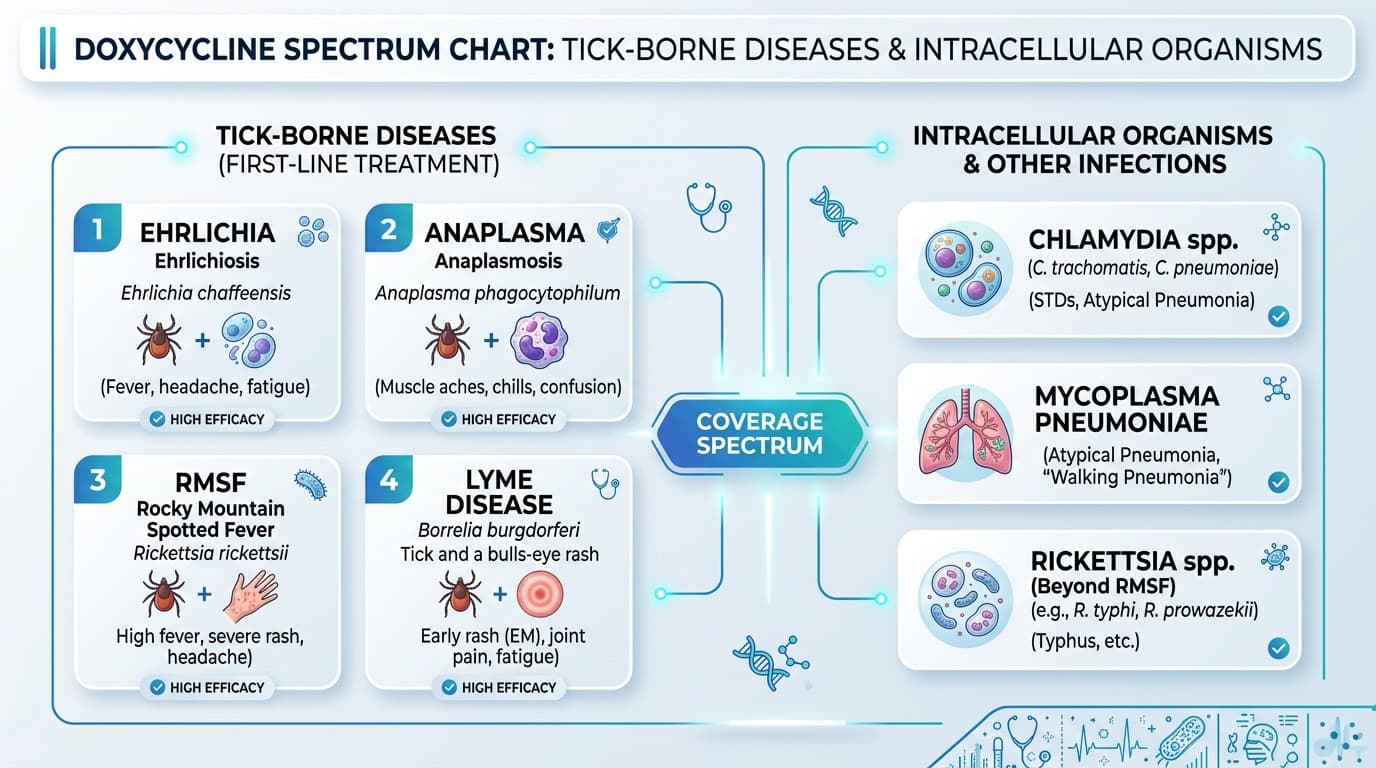
Doxycycline is a second-generation tetracycline with broad-spectrum activity against intracellular and atypical organisms that other antibiotics miss.
Key Clinical Indications
| Condition | Species | Doxycycline Role |
|---|---|---|
| Ehrlichiosis / Anaplasmosis | Dog, Cat | First-line treatment |
| Rocky Mountain Spotted Fever | Dog | First-line; start empirically before results |
| Lyme disease (Borrelia) | Dog | First-line |
| Mycoplasma haemofelis | Cat | First-line |
| Chlamydophila felis | Cat | First-line (URI, conjunctivitis) |
| Brucella canis | Dog | Component of combination therapy |
| Kennel cough (Bordetella) | Dog | Alternative to amoxicillin |
| Feline URI (bacterial component) | Cat | First or second-line |
Organisms Covered
- Obligate intracellular: Anaplasma phagocytophilum, Ehrlichia canis, Rickettsia rickettsii, Coxiella
- Atypical: Mycoplasma spp., Chlamydophila felis
- Spirochetes: Borrelia burgdorferi, Leptospira spp.
- Some gram-positives, Pasteurella, Brucella
NOT reliable for: Pseudomonas, most gram-negative enteric bacteria
Dosing by Indication and Species
Standard Dosing
| Indication | Dose | Frequency | Duration |
|---|---|---|---|
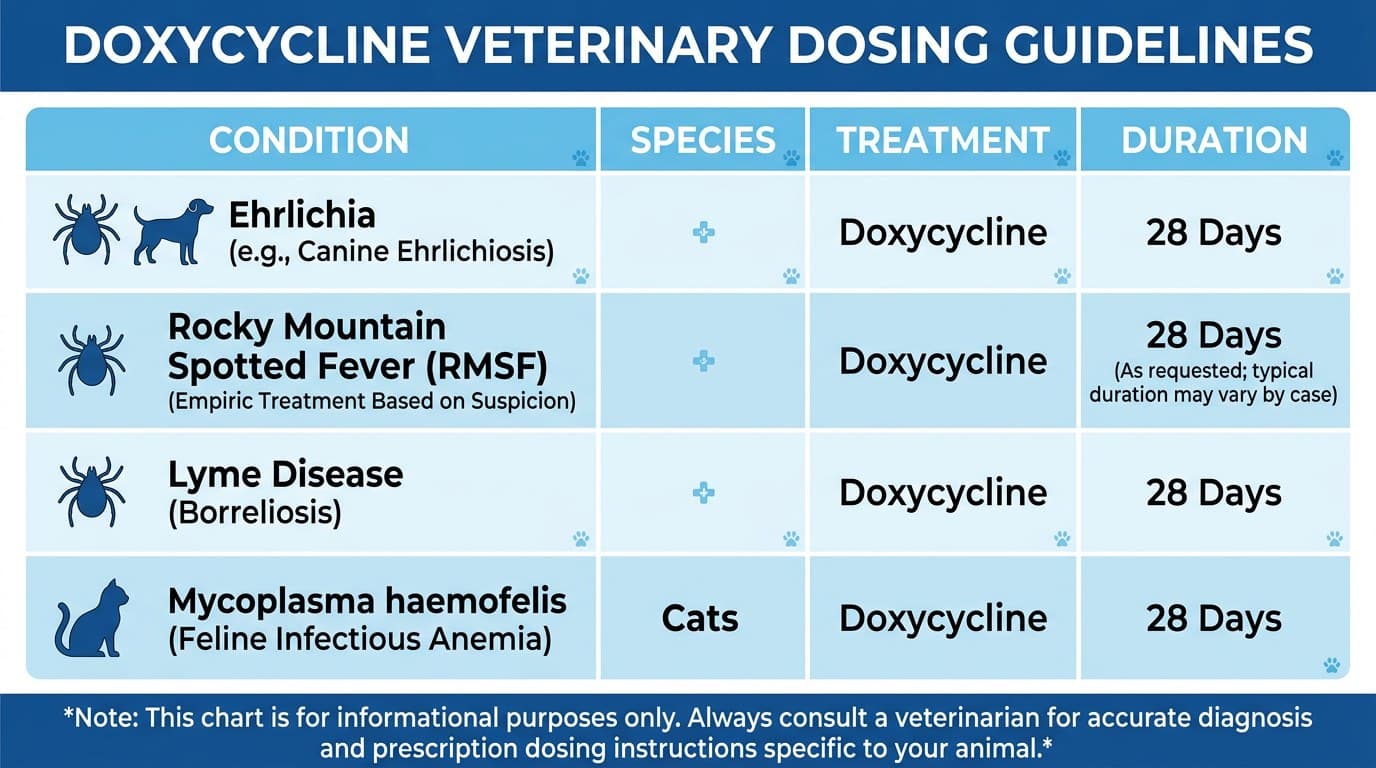
| Ehrlichia / Anaplasma (dogs) | 5–10 mg/kg | PO BID or 10 mg/kg SID | Minimum 28 days |
| Rocky Mountain Spotted Fever | 5–10 mg/kg | PO BID | 7–14 days minimum |
| Lyme disease (Borrelia) | 10 mg/kg | PO BID | 28–30 days |
| Mycoplasma haemofelis (cats) | 10 mg/kg | PO SID | 28 days minimum |
| Chlamydophila felis (cats) | 5–10 mg/kg | PO BID | 28 days |
| Kennel cough / respiratory | 5 mg/kg | PO BID | 10–14 days |
| Feline URI (bacterial) | 5–10 mg/kg | PO BID | 10–21 days |
RMSF Emergency Protocol Rocky Mountain Spotted Fever is potentially fatal. Start doxycycline empirically based on clinical signs and tick exposure — do NOT wait for confirmatory serology (titers may be negative in acute phase). Delay in treatment significantly increases mortality.
IV Doxycycline
- Dose: 5 mg/kg IV over 60 minutes (slow infusion required — phlebitis with rapid IV)
- Use when oral administration is not possible
Critical Safety: Esophageal Stricture Prevention in Cats
Esophageal Stricture — Entirely Preventable
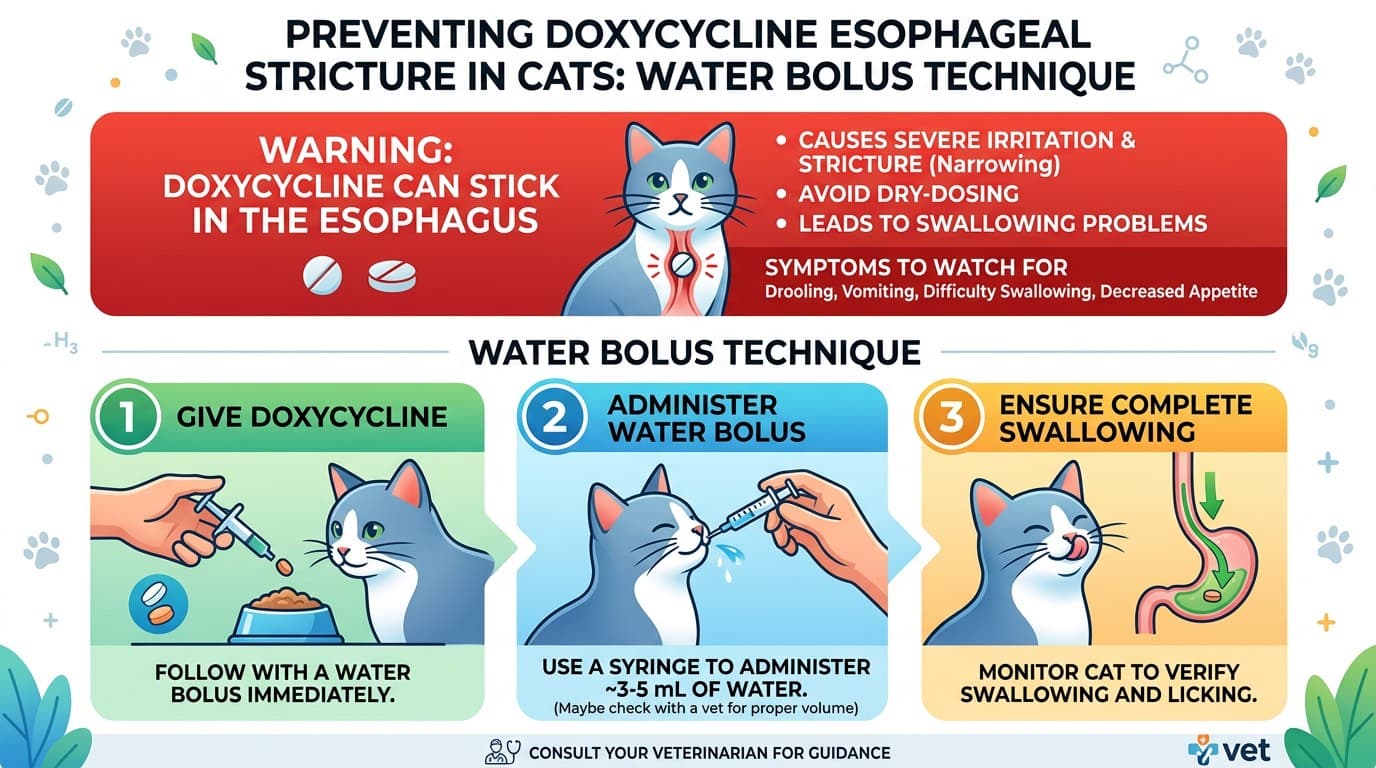
Doxycycline tablets and capsules can lodge in the feline esophagus and cause severe chemical esophagitis and stricture formation. This is a permanently debilitating complication that is entirely preventable.
Why cats are at risk: Reduced esophageal peristaltic clearance compared to dogs. Tablets commonly lodge at the thoracic inlet or base of the heart.
Clinical signs of esophageal stricture: Regurgitation (not vomiting), dysphagia, odynophagia, hypersalivation, food refusal 1–2 weeks after antibiotic therapy. Stricture typically forms 2–3 weeks post-exposure.
MANDATORY prevention protocol for cats: 1. Follow every tablet/capsule with a 5–6 mL water bolus via syringe 2. OR give tablet immediately followed by a small food bolus (wet food) 3. Compounded liquid formulations eliminate the risk entirely 4. Never administer doxycycline to a cat already showing esophageal signs 5. Demonstrate the water bolus technique to every owner
Other Side Effects
- GI upset: Give with small amount of food (minimal absorption impact)
- Tooth discoloration: Chelates calcium — avoid in puppies/kittens <6 months unless no alternative for tick-borne disease
- Hepatotoxicity: Rare at standard doses
Drug Interactions
- Antacids, dairy, iron: Reduce absorption significantly — separate by 2 hours
- Phenobarbital: Reduced doxycycline plasma levels
- Warfarin: Enhanced anticoagulant effect
Frequently Asked Questions
What is doxycycline used for in dogs?
First-line for all major tick-borne diseases: Ehrlichiosis (28-day minimum), Anaplasmosis, Rocky Mountain Spotted Fever (start empirically), and Lyme disease (28-30 days). Also used for Brucella, kennel cough, and leptospirosis.
Can doxycycline cause esophageal problems in cats?
Yes — tablets can lodge in the feline esophagus causing chemical burns and permanent stricture formation. Always follow every tablet with a 5-6 mL water bolus via syringe, or use a compounded liquid. This complication is entirely preventable.
How long should a dog take doxycycline for tick disease?
Minimum 28 days for Ehrlichiosis and Anaplasmosis. RMSF: 7-14 days minimum (start empirically). Lyme disease: 28-30 days. Severe Ehrlichia with bone marrow involvement: 6-8 weeks.
What is the doxycycline dose for cats?
Mycoplasma haemofelis: 10 mg/kg PO once daily × 28 days. Chlamydophila/respiratory: 5-10 mg/kg PO BID × 10-28 days. Always follow every dose with a 5-6 mL water bolus.
Can doxycycline be given with food?
Yes — giving with a small food amount reduces GI upset without significantly reducing absorption. For cats, hiding the tablet in wet food and following with a water syringe provides both compliance and esophageal protection.
References
- Lappin MR, et al. Antimicrobial use guidelines for treatment of respiratory tract disease in dogs and cats. J Vet Intern Med. 2017.
- German AJ, et al. Oesophageal strictures in cats associated with doxycycline therapy. J Feline Med Surg. 2005.
- Plumb DC. Doxycycline. In: Plumb's Veterinary Drug Handbook. 10th ed. Wiley-Blackwell; 2023.