Quick Answer
Feline hemotropic mycoplasmosis (formerly hemobartonellosis) is caused by obligate red blood cell parasites transmitted by fleas, ticks, and cat bites. This guide covers species differentiation, PCR diagnosis, doxycycline treatment protocol, and the carrier state.
Key Takeaways
- ✓PCR is the gold standard for diagnosis — blood smear sensitivity is only 35–65% and species differentiation is impossible
- ✓M. haemofelis causes clinically significant hemolytic anemia; CMhm is often subclinical in immunocompetent cats
- ✓Doxycycline 10 mg/kg PO q24h × 28 days is first-line treatment; always give with food and water bolus to prevent esophageal stricture
- ✓Add prednisolone when Coombs positive or significant autoagglutination — immune-mediated hemolysis is a major contributor to anemia severity
- ✓Blood transfusion indicated when PCV <12–15% with clinical decompensation
- ✓Most cats remain PCR-positive carriers after treatment — clinical cure does not mean microbiological cure; strict ectoparasite control is essential
Hemotropic Mycoplasmas: Species and Pathogenicity
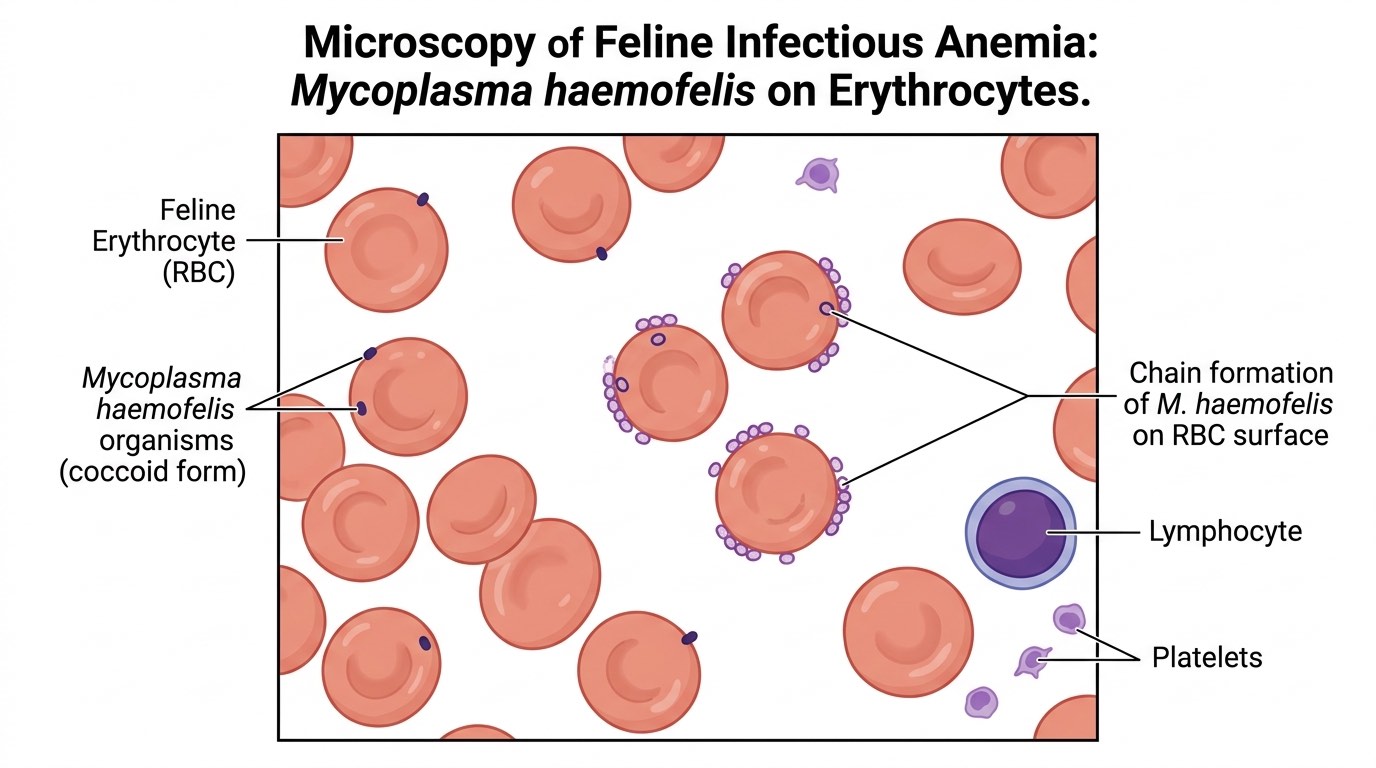
Hemotropic mycoplasmas are small, obligate epicellular parasites that attach to the surface of red blood cells. Three species infect cats in North America and Europe:
Mycoplasma haemofelis (Mhf)
- Largest species; most pathogenic
- Causes significant hemolytic anemia in immunocompetent cats
- Previously classified as Haemobartonella felis (large form)
Candidatus Mycoplasma haemominutum (CMhm)
- Smaller organism; less pathogenic
- Often subclinical in immunocompetent cats; can cause mild anemia or exacerbate other conditions
- Most common hemoplasma detected in cats worldwide
Candidatus Mycoplasma turicensis (CMt)
- Rare; intermediate pathogenicity
- Reported in Europe and some other regions
Why pathogenicity differs: M. haemofelis induces direct erythrocyte injury and immune-mediated hemolytic anemia (the immune system attacks parasitized and non-parasitized RBCs). CMhm typically causes minimal erythrocyte damage in immunocompetent hosts.
Transmission, Risk Factors and Clinical Signs
Transmission Routes
- Fleas (Ctenocephalides felis): primary vector; transmission by flea bites or ingestion of infected fleas
- Ticks: reported as vectors; less well-documented than fleas
- Cat bites: direct transmission during fighting (explains higher prevalence in outdoor male cats)
- Blood transfusions: infected donor cats transmit to immunocompromised recipients — universal blood screening recommended
- Vertical transmission (queen to kittens): suspected, not definitively proven
Risk factors for clinical disease: Outdoor access, male gender, multi-cat households, immunosuppression (FIV, FeLV, concurrent disease, corticosteroids), splenectomy.
Clinical Signs of M. haemofelis Infection Severity depends on pathogen species, immune status, concurrent disease, and chronicity.
Acute severe disease:
- Profound lethargy, weakness, recumbency
- Pallor (pale mucous membranes) — most consistent sign
- Anorexia, weight loss
- Dyspnea (anemia-induced)
- Splenomegaly (often palpable)
- Icterus (jaundice) — variable; indicates hemolysis
- Tachycardia, tachypnea, systolic heart murmur (anemia murmur)
Hematologic findings:
- Moderate to severe regenerative anemia (PCV often 10–20%; can drop below 10%)
- Macrocytosis, polychromasia, reticulocytosis
- Autoagglutination (immune-mediated component)
- Positive Coombs' test in ~50% — confirms immune-mediated hemolysis
Diagnosis: PCR vs Blood Smear
PCR (Polymerase Chain Reaction) — Gold Standard PCR testing on EDTA blood is significantly more sensitive than blood smear examination and can differentiate species.
Sensitivity: >90% for Mhf during acute phase; can detect subclinical carriers Specificity: >99% Available from: IDEXX (Feline Hemoplasma PCR panel), Antech, university diagnostic laboratories
Species differentiation by PCR is clinically important: M. haemofelis infection warrants treatment; CMhm infection in an immunocompetent cat may not require treatment.
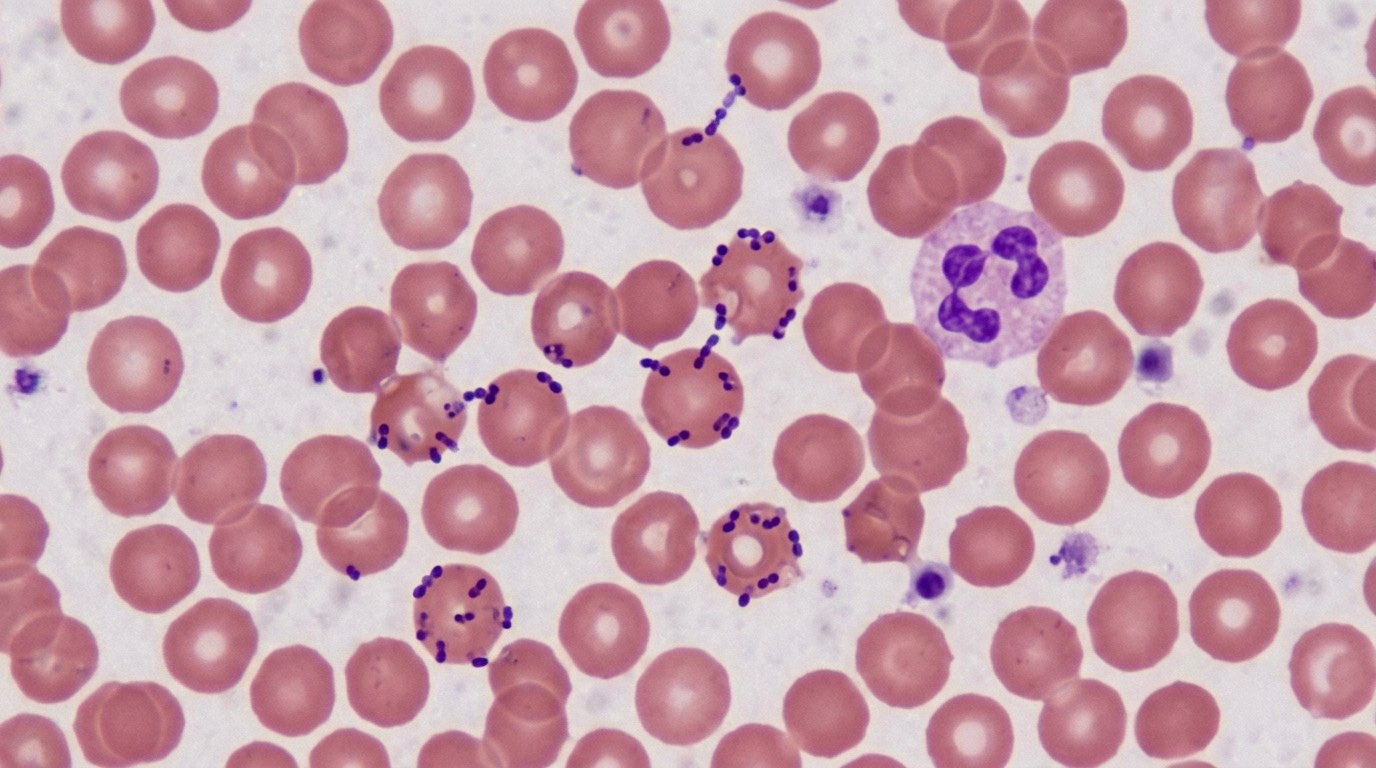
Blood Smear Examination — Limitations Small, pleomorphic blue-staining organisms visible on the surface or at the periphery of erythrocytes. Sensitivity: 35–65% (highly variable; organisms cycle on and off RBCs and may be absent during low-parasitemia periods).
False negatives are common. A negative blood smear does NOT rule out hemoplasma infection. PCR is required for definitive diagnosis.
Misidentification pitfall: Stain precipitate, Howell-Jolly bodies, and discocytes can be misidentified as hemoplasmas by inexperienced evaluators.
Additional Diagnostics
- CBC with reticulocyte count (assess regenerative response, severity)
- Serum chemistry (bilirubinemia, liver enzymes if icterus)
- FIV/FeLV testing (all infected cats)
- Coombs test (identifies immune-mediated component)
- Blood pressure measurement
Treatment: Doxycycline, Supportive Care and Carrier Management
Doxycycline — First-Line Treatment Doxycycline 10 mg/kg PO once daily × 28 days (minimum; some clinicians extend to 42 days)
Alternatively: 5 mg/kg PO BID × 28 days
Always administer with food and follow with a water bolus (0.5–1 mL) — doxycycline causes esophageal strictures in cats when tablets lodge in the esophagus. Liquid formulations or compounded doxycycline oral suspension reduce this risk.
Side effects: nausea, anorexia, esophageal stricture (if tablets administered without food/water bolus), photosensitization (rare)
Marbofloxacin (Marbocyl): 2 mg/kg PO q24h × 28 days. Alternative when doxycycline is not tolerated. Fluoroquinolones are second-line agents.
Prednisolone (for immune-mediated component) When Coombs positive or significant autoagglutination, add prednisolone 2 mg/kg PO q24h × 7–14 days, then taper.
This immunosuppression is paradoxical-seeming (treating an infectious disease with immunosuppression) but the immune-mediated destruction is often the primary cause of anemia severity.
Blood Transfusion Indications
- PCV <12–15% with clinical decompensation (collapse, severe dyspnea, syncope)
- Rapidly declining PCV with inadequate reticulocyte response
- Use feline-specific type-matched blood (type A, B, or AB); universal donor screening for hemoplasmas required
Carrier State
- Transmit infection to other cats via arthropod vectors or fighting
- Relapse during periods of immunosuppression
- Remain a reservoir for infection
Inform owners: "Clinical cure ≠ microbiological cure." Ectoparasite control is essential for carrier cats.
References
- Tasker S. Haemotropic mycoplasmas: what's their real significance in cats? J Feline Med Surg. 2010.
- Dean RS, et al. Use of quantitative real-time PCR to monitor the response of Mycoplasma haemofelis infection to antibiotic treatment. J Clin Microbiol. 2008.
- Barker EN, et al. PCR for the diagnosis and differentiation of hemoplasma species in naturally infected cats. J Clin Microbiol. 2010.