Quick Answer
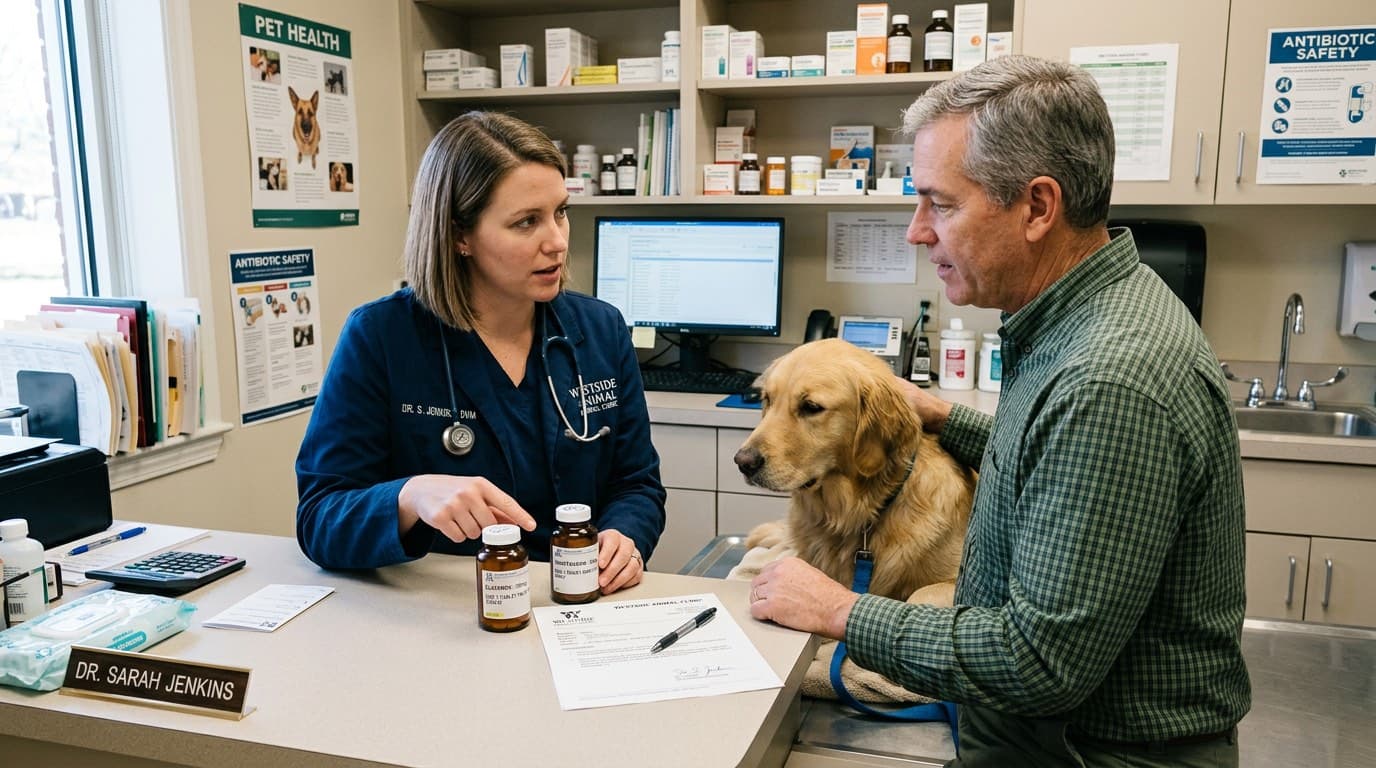
Amoxicillin-clavulanate (Clavamox) is the most widely prescribed antibiotic in small animal practice. This guide covers mechanism, spectrum, dosing by indication, resistance patterns, and appropriate prescribing.
Key Takeaways
- ✓Covers gram-positives, many gram-negatives, and anaerobes — excellent for skin, wounds, UTI, and oral infections
- ✓NOT effective against Pseudomonas, MRSP, or ESBL-producing organisms — culture when therapy fails
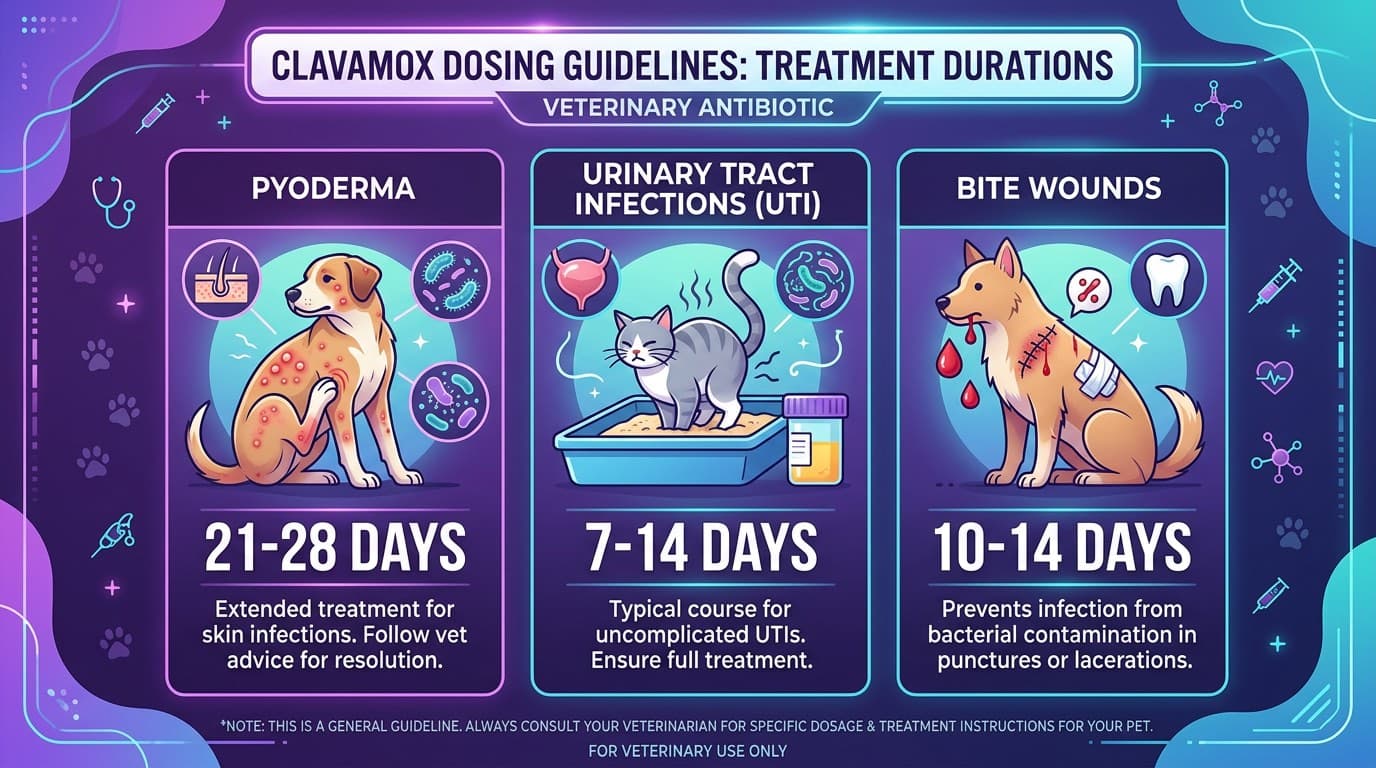
- ✓Superficial pyoderma: 21-28 days minimum; deep pyoderma: 42-56 days; UTI: 7-14 days
- ✓MRSP is increasingly common in recurrent pyoderma — always culture before retreating
- ✓Cat bite wounds: amox-clavulanate is first-line (Pasteurella + anaerobic coverage)
- ✓Stewardship: culture before second course, avoid for viral infections, always complete full course
Mechanism: Beta-Lactamase Inhibition and Spectrum
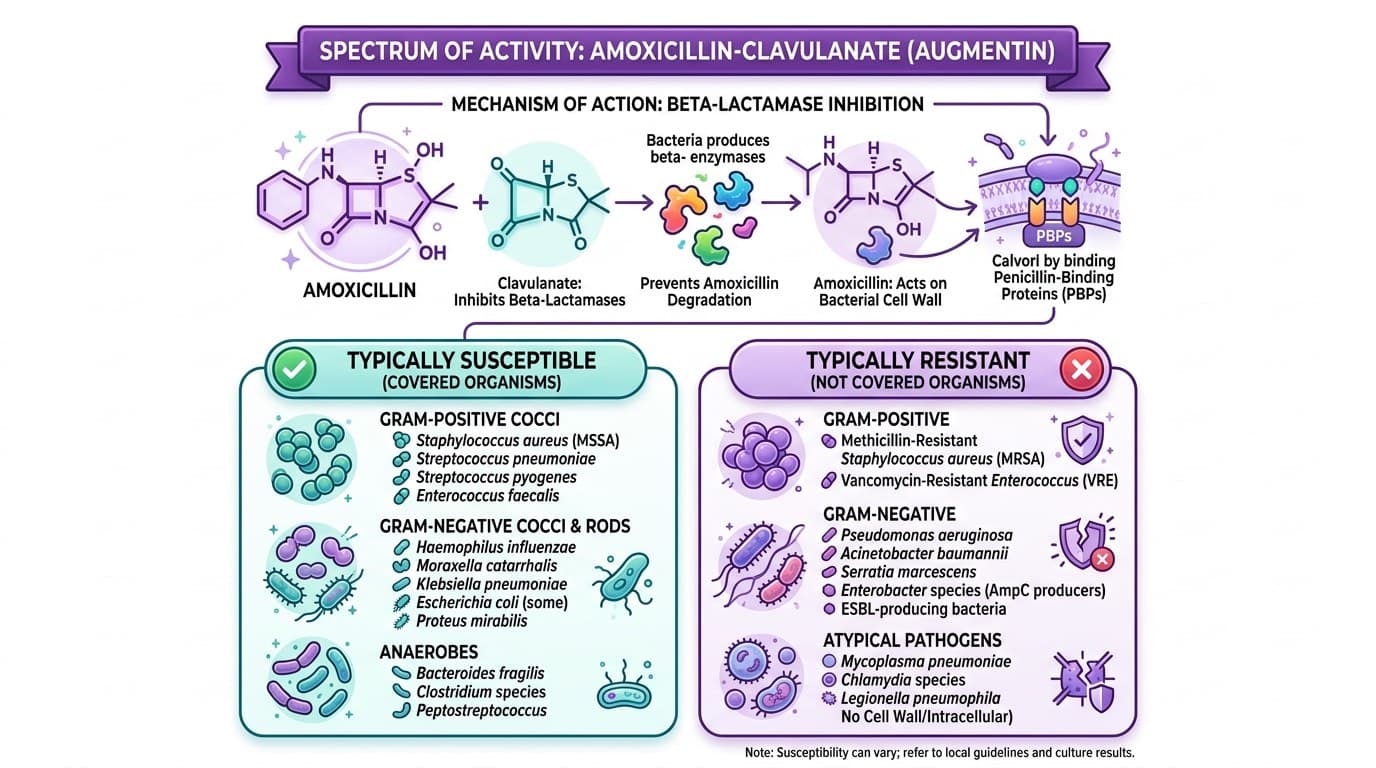
Amoxicillin-clavulanate is a fixed-ratio combination of amoxicillin (a beta-lactam antibiotic) and clavulanic acid (a beta-lactamase inhibitor).
Why the Combination? Amoxicillin alone is hydrolyzed by beta-lactamase enzymes produced by many bacteria. Clavulanic acid binds irreversibly to beta-lactamases, protecting amoxicillin from degradation and dramatically expanding its spectrum.
Spectrum of Activity
- Gram-positive aerobes: Staphylococcus pseudintermedius, Streptococcus spp., Enterococcus (variable)
- Gram-negative aerobes: E. coli (beta-lactamase producing), Pasteurella multocida, Proteus mirabilis
- Anaerobes: Excellent — Bacteroides fragilis, Clostridium spp., Fusobacterium
NOT effective against:
- Pseudomonas aeruginosa (intrinsic resistance)
- MRSA/MRSP (methicillin-resistant Staph)
- ESBL-producing Enterobacteriaceae
Formulations (Clavamox)
- Tablets: 62.5 mg, 125 mg, 250 mg, 375 mg (amoxicillin:clavulanate ratio = 4:1)
- Oral suspension: 62.5 mg/mL
- Refrigerate suspension after reconstitution; use within 10 days
Dosing by Indication and Species
Standard Dosing
| Indication | Dose | Frequency | Duration |
|---|---|---|---|
| Superficial pyoderma (dogs) | 12.5–25 mg/kg | BID | 21–28 days (7+ days past resolution) |
| Deep pyoderma/furunculosis | 12.5–25 mg/kg | BID | 42–56 days minimum |
| UTI uncomplicated (dogs) | 12.5–25 mg/kg | BID | 7–14 days |
| Periodontal/oral infections | 12.5–25 mg/kg | BID | 7–14 days |
| Bite wounds / infected wounds | 12.5–25 mg/kg | BID | 10–14 days |
| Cats skin/soft tissue | 12.5 mg/kg | BID | 7–14 days |
| Cats cat bite wounds | 12.5–25 mg/kg | BID | 10–14 days |
Notes on Duration
- Always complete the full course regardless of clinical improvement
- UTI in male dogs: 14 days. Uncomplicated female dogs: 7 days
- Cats: Give with food — more sensitive to GI side effects
Cats — Key Notes
- First-line for cat bite wounds (Pasteurella multocida + anaerobic coverage)
- Most feline URIs are viral — confirm bacterial component before prescribing
- Some cats intensely dislike the suspension flavor — pilling or compounding may improve compliance
Culture and Sensitivity For recurrent pyoderma, refractory UTI, or deep infections: always obtain C&S before prescribing. Empiric therapy is appropriate for first-episode, typical presentations.
Resistance, Side Effects and Antimicrobial Stewardship
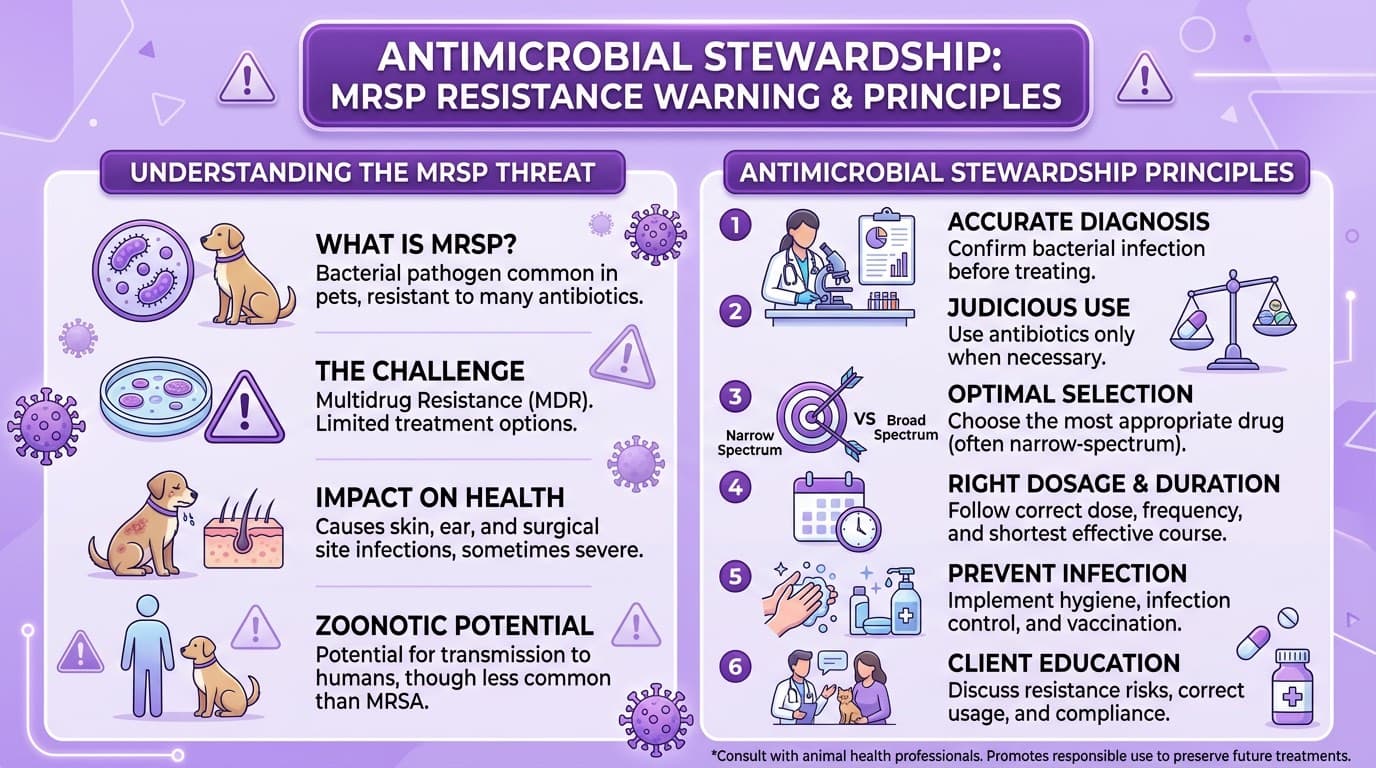
Resistance — The Growing Problem Amoxicillin-clavulanate resistance in veterinary pathogens is increasing due to overprescribing.
- MRSP (Methicillin-Resistant Staphylococcus pseudintermedius): Increasingly common in dogs with recurrent skin infections. All beta-lactams ineffective. Requires culture-guided therapy.
- ESBL-producing E. coli: Common in recurrent UTIs with prior antibiotic exposure. Culture before retreating.
- Stopping early selects for resistant survivors — always complete the prescribed course.
Antimicrobial Stewardship Principles 1. Culture before prescribing for recurrent infections 2. Do not prescribe for viral infections 3. Complete prescribed courses 4. Avoid broad-spectrum antibiotics when narrow-spectrum alternatives work 5. Treat minimum effective duration
Side Effects
- GI effects: Vomiting, diarrhea, anorexia — give with food
- Hypersensitivity: Rare; cross-reactivity possible with penicillin/cephalosporin allergy
- Cats: Profuse salivation when tasting suspension
Contraindications
- Known penicillin/cephalosporin hypersensitivity
- Rabbits, guinea pigs, hamsters, chinchillas: Fatal dysbiosis risk with beta-lactam antibiotics
Frequently Asked Questions
What is the dose of amoxicillin-clavulanate for dogs?
Standard dose: 12.5–25 mg/kg orally BID with food. Duration varies: superficial skin infections 21-28 days, UTI 7-14 days, bite wounds 10-14 days, deep pyoderma 42-56 days minimum.
Is Clavamox the same as amoxicillin-clavulanate?
Yes — Clavamox (Zoetis) is the veterinary brand for amoxicillin-clavulanate. Human Augmentin contains the same combination at different ratios. Refrigerate reconstituted suspension and use within 10 days.
Can amoxicillin-clavulanate treat MRSP in dogs?
No. MRSP is resistant to all beta-lactam antibiotics including amoxicillin-clavulanate. Dogs with recurrent skin infections not responding need a culture and sensitivity. Treatment requires culture-guided alternatives (chloramphenicol, doxycycline, rifampin combinations).
How long should a dog take Clavamox for a skin infection?
Superficial pyoderma: 21-28 days minimum (at least 7 days past clinical resolution). Deep pyoderma/furunculosis: 42-56 days. Stopping early leads to relapse and resistance. The most common mistake is stopping too soon.
Can cats take amoxicillin-clavulanate?
Yes, safe and effective in cats at 12.5 mg/kg BID with food. Particularly useful for cat bite wounds (Pasteurella + anaerobic coverage). Some cats dislike the suspension — tablet or compounded flavored formulation may be needed.
References
- Hillier A, et al. Guidelines for the diagnosis and antimicrobial therapy of canine superficial bacterial folliculitis. Vet Dermatol. 2014.
- Weese JS, et al. ISCAID guidelines for diagnosis and management of UTI in dogs and cats. Vet J. 2019.
- Plumb DC. Amoxicillin Trihydrate/Clavulanate Potassium. In: Plumb's Veterinary Drug Handbook. 10th ed. Wiley-Blackwell; 2023.