Quick Answer
Pre-visit sedation dramatically reduces feline stress during veterinary examinations and reduces staff injury. This guide covers evidence-based protocols using gabapentin (100 mg PO), trazodone, and oral dexmedetomidine (Sileo) with dosing, timing, owner instructions, and combination protocols for cats.
Key Takeaways
- ✓Gabapentin 100 mg PO given 90–120 minutes before veterinary visits is the first-line, evidence-based pre-visit sedation protocol for cats.
- ✓Pre-visit sedation reduces stress behavior scores by 60–80% and normalizes stress hyperglycemia, tachycardia, and hypertension artifacts.
- ✓Oromucosal dexmedetomidine gel (Sileo) at 20–40 mcg/kg is an effective alternative for highly reactive cats, with onset in 30–45 minutes.
- ✓Owner instructions must specify exact timing (90 minutes before), expected normal effects (drowsiness, ataxia), and monitoring for over-sedation.
- ✓Gabapentin dose should be reduced by 25–50% in cats with renal impairment or over age 14; dexmedetomidine is avoided in cardiac disease.
- ✓Pre-visit sedation is part of a Fear-Free practice framework that also includes pheromone use, minimal restraint techniques, and positive conditioning.
Feline Stress Physiology, Fear-Free Rationale and Clinical Benefits
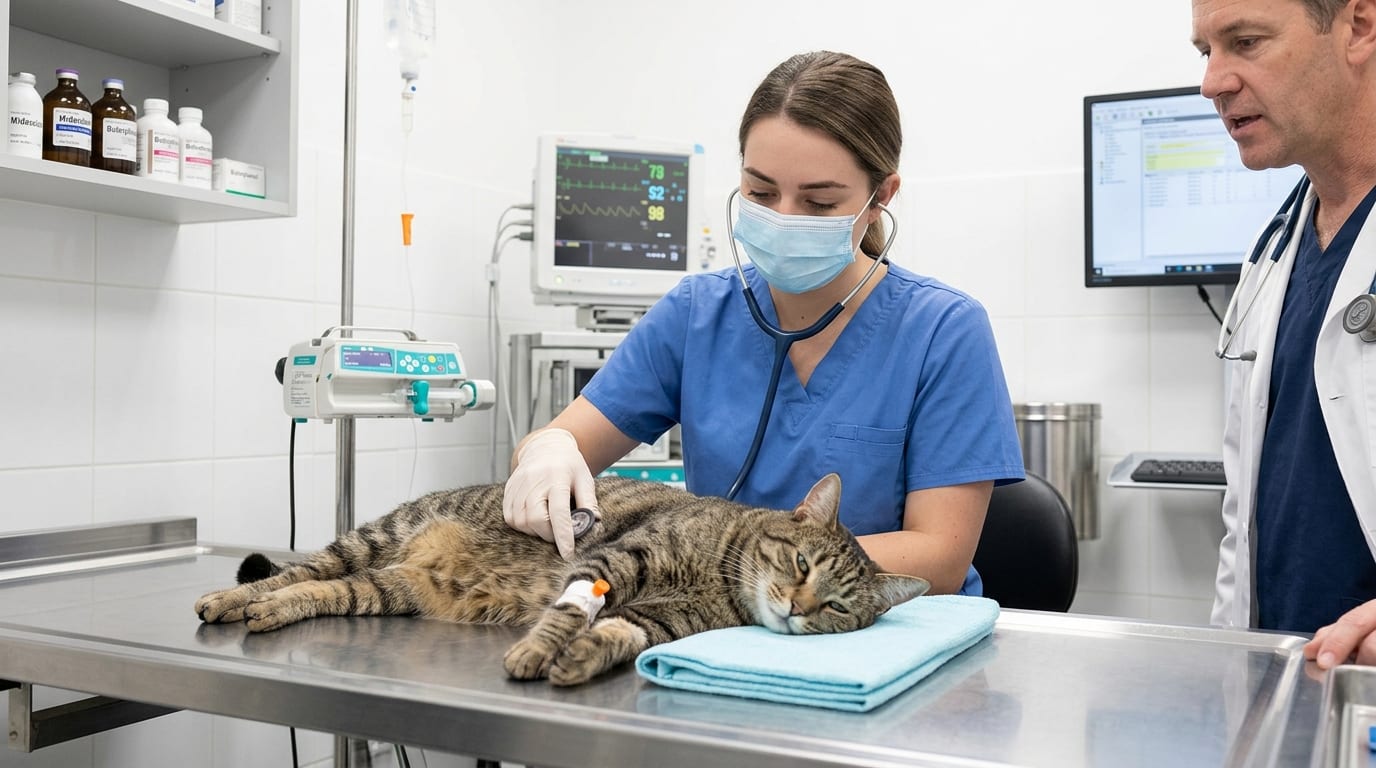
Cats exhibit profound physiological and behavioral stress responses during veterinary visits that compromise examination quality, elevate diagnostic parameters (heart rate, blood pressure, blood glucose), and increase staff injury risk. Pre-visit sedation (PVS) is an evidence-based strategy to reduce this stress.
Physiological Effects of Feline Stress in the Clinic:
- Catecholamine surge: Epinephrine/norepinephrine release elevates heart rate (180–250+ bpm), blood pressure (systolic >200 mmHg), and respiratory rate
- Stress hyperglycemia: Blood glucose 200–400 mg/dL in stressed cats; can mimic diabetic emergency and complicate diabetic monitoring
- Fear-induced aggression: Defensive aggression increases staff scratch and bite injuries; restraint escalation worsens stress
- Sensitization effect: Repeated stressful visits create lasting fear conditioning; cats become progressively harder to examine
Benefits of Pre-Visit Sedation:
- Reduction in stress behaviors (cat-friendly practice scoring): 60–80% improvement in examination compliance
- Accurate vital signs and diagnostic data (true resting heart rate, undistorted blood pressure)
- Safer blood collection, injections, and examination for staff and cat
- Positive conditioning — cats associate clinic with neutral/calm experience over time
- Reduced owner guilt and anxiety about "traumatic" vet visits
Fear-Free Veterinary Practice Integration:
- Pre-visit pheromone spraying (Feliway Classic) of carrier 30 minutes before transport
- Carrier training at home (open carrier as permanent furniture)
- Feline-only waiting areas or separate entrances
- Minimal restraint techniques (towel wraps, e-collar alternatives)
- Examination from inside carrier or on warm, non-slip table surfaces
Key Consideration — Timing: Most oral sedatives require 60–90 minutes to reach peak effect. Owner communication about drug administration timing at home is critical for success.
Gabapentin, Trazodone and Dexmedetomidine Dosing Protocols for Cats
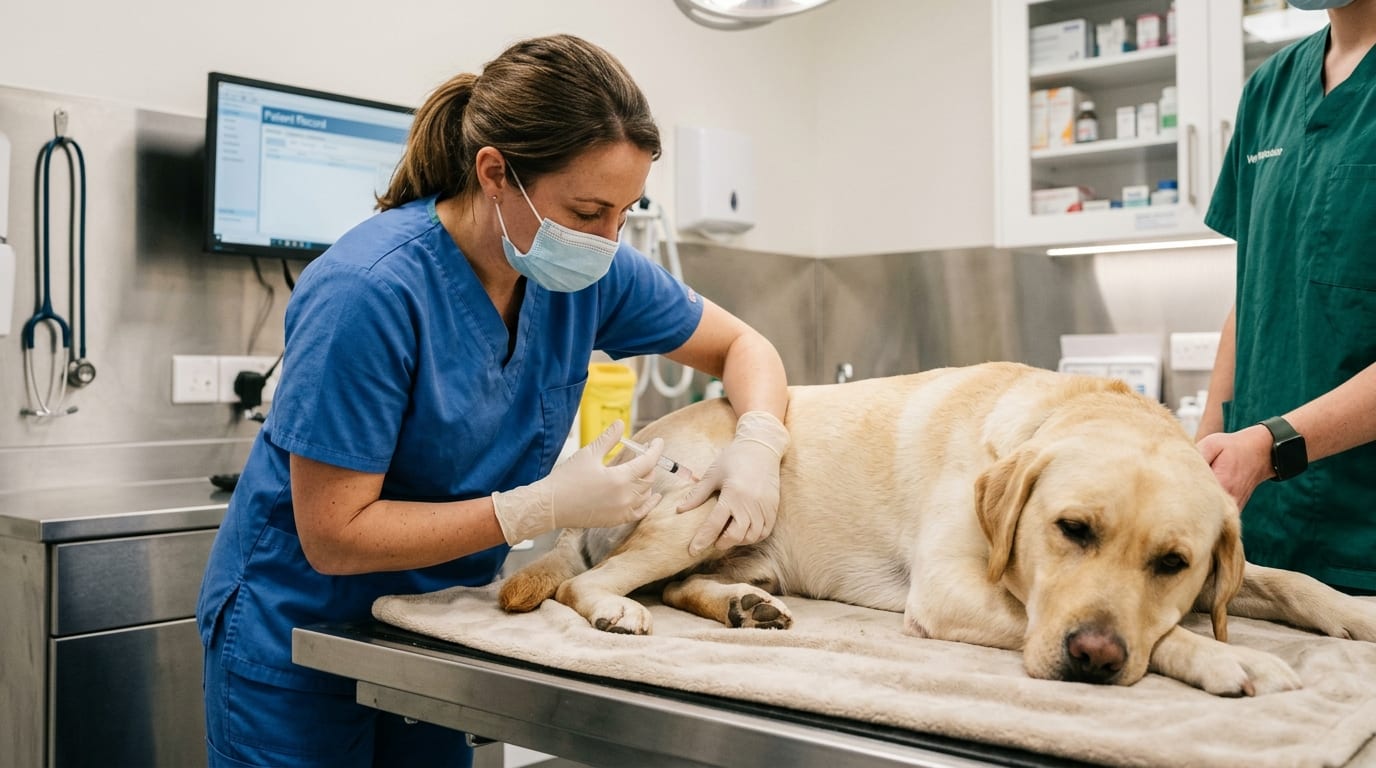
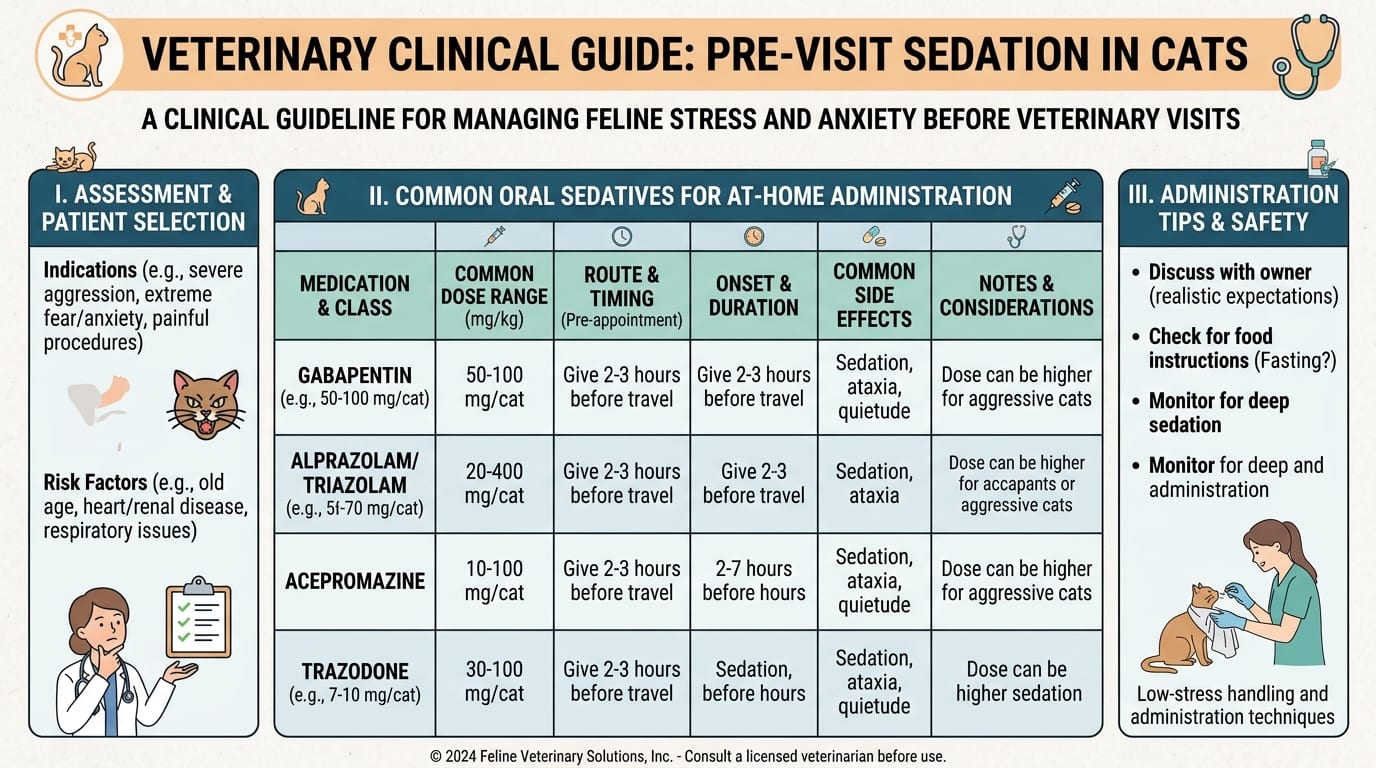
Three drugs are commonly used for pre-visit sedation in cats. Each has distinct pharmacology, onset timing, and clinical profile.
Drug 1: Gabapentin — First-Line Pre-Visit Sedative for Cats Gabapentin binds voltage-gated calcium channels (alpha-2-delta subunit) in the CNS, reducing excitatory neurotransmitter release and producing sedation, anxiolysis, and mild analgesia.
- Dose: 100 mg PO per cat (for most average-sized adult cats 3–7 kg)
- Timing: Administer 90–120 minutes before appointment
- Formulation: 100 mg capsules (human gabapentin); open capsule into small amount of palatable food (tuna water, baby food purée); or compound into 50 mg/mL liquid
- Onset: 60–90 minutes; peak effect at 90–120 minutes
- Duration: 4–6 hours
- Evidence: Van Haaften et al. (2017) randomized controlled trial in cats: gabapentin 100 mg significantly reduced fear, aggression, and ease of handling scores vs placebo
- Adverse effects: Mild sedation, ataxia (expected); rare paradoxical excitation; do not drive cats home unsedated if heavily sedated (monitor for 2–4 hours)
Drug 2: Trazodone — Alternative or Combination Option Trazodone blocks 5-HT2A serotonin receptors and histamine H1 receptors, producing sedation and anxiolysis.
- Dose: 50–100 mg/cat PO (5–12 mg/kg range)
- Timing: 90 minutes before appointment
- Evidence: Less studied than gabapentin in cats; used more frequently in dogs; may be added to gabapentin for severely fearful cats
- Adverse effects: Sedation, vomiting, rare priapism in male cats (discontinue if occurs); avoid in cats on MAOIs or SSRIs
Drug 3: Dexmedetomidine Buccal Gel (Sileo/OroMucosalGel) — For Highly Reactive Cats Dexmedetomidine is an alpha-2 adrenoreceptor agonist; oromucosal gel avoids the stress of oral pilling.
- Dose: 20–40 mcg/kg oromucosal (inside cheek pouch using prefilled syringe)
- Timing: 30–60 minutes before appointment
- Advantages: No pilling needed; rapid onset 30–45 minutes; excellent sedation depth
- Adverse effects: Bradycardia, pale mucous membranes, hypothermia; avoid in cats with cardiac disease
- Reversal: Atipamezole 50 mcg/kg IM if needed (partial reversal with oromucosal route)
Combination Protocol for Severely Fearful Cats:
- Gabapentin 100 mg PO + Dexmedetomidine 20 mcg/kg oromucosal gel given 60–90 minutes before visit
- Provides deep anxiolysis and sedation without significant cardiorespiratory compromise in healthy cats
Owner Communication, Safety Monitoring and Clinic Implementation
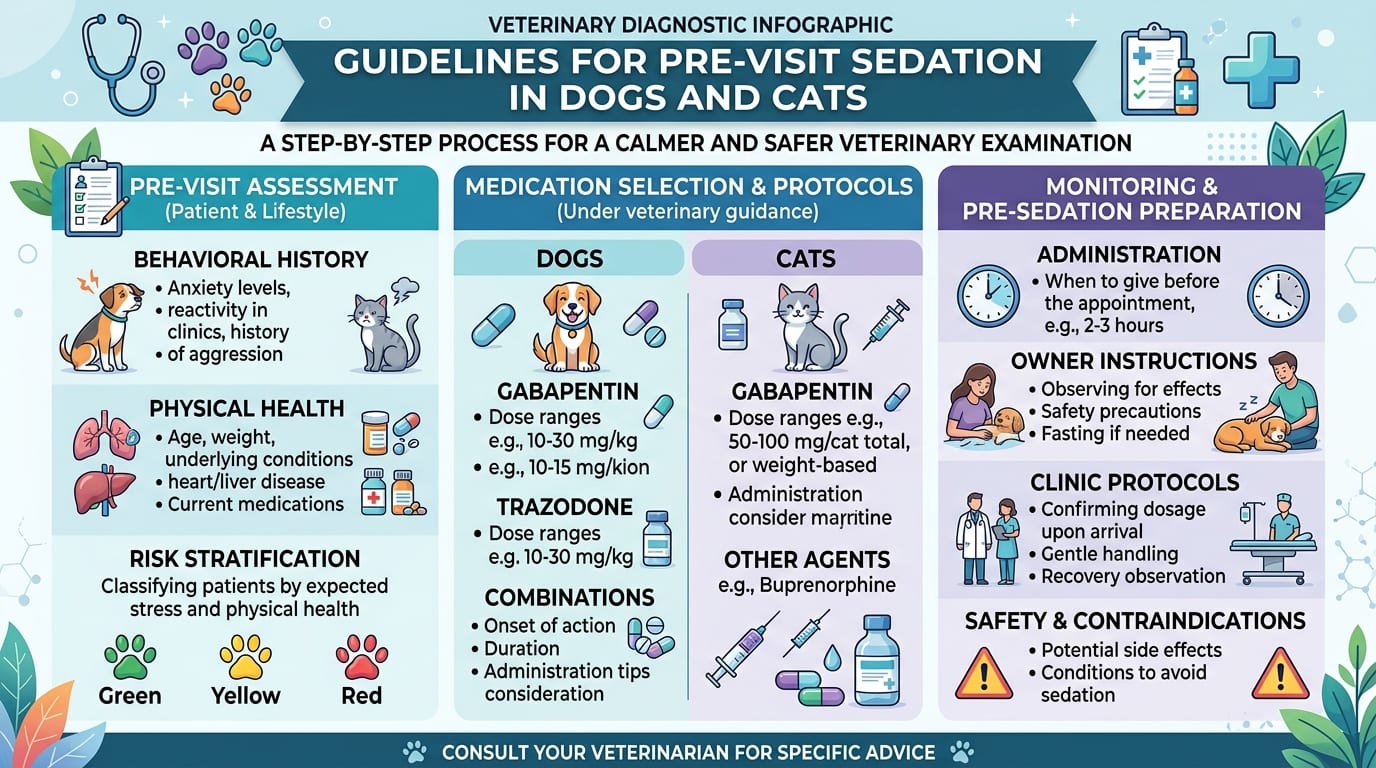
Successful pre-visit sedation requires clear owner communication, proper drug handling instructions, and a standardized clinic implementation protocol.
Owner Instructions to Provide at Scheduling (Script-Style): 1. Gabapentin administration: "Give one 100 mg gabapentin capsule opened into a small amount of tuna water or baby food (meat only, no onion) exactly 90 minutes before your appointment time. Do not feed a full meal within 1 hour before giving the medication." 2. Transport: "After giving the medication, let your cat rest quietly at home. Use a soft carrier or line the carrier with a worn T-shirt for scent comfort. Minimize car radio and noise." 3. Normal effects to expect: "Your cat will likely be sleepy and may be wobbly on its feet — this is expected and normal. It will resolve over 4–6 hours." 4. If excessive sedation occurs: "If your cat cannot stand, is breathing very slowly, or is unresponsive, contact us immediately or proceed to an emergency clinic." 5. Post-visit monitoring: "Keep your cat warm and confined indoors for 4–6 hours after the visit. Do not leave an ataxic cat near stairs or high surfaces. Ensure access to water."
Cats Who Should NOT Receive Pre-Visit Sedation Without Veterinary Clearance:
- Cats with known severe cardiac disease (HCM with CHF, severe arrhythmias) — gabapentin is generally safe; avoid dexmedetomidine
- Geriatric cats (>14 years) with unknown renal function — reduce gabapentin dose by 50%
- Cats already on CNS medications (phenobarbital, diazepam) — potential additive sedation
- Cats with respiratory compromise — avoid deep sedation protocols
Clinic Protocol Checklist:
- Phone script at time of scheduling: offer PVS to all feline patients
- Email/text pre-visit instructions with medication dispensed at previous visit or called-in to pharmacy
- Confirm administration time at appointment reminder call
- Greet sedated cats with minimal stimulation; dim exam room lighting; warm blanket on table
- Document sedation level using Fear-Free stress scoring (0–5 scale) in medical record
Efficacy Data:
- Van Haaften et al. (2017): 63% of gabapentin-treated cats had significantly lower stress scores vs 9% of placebo controls during examination
- Gabapentin-treated cats were 5.8x more likely to be classified as "calm" on handling assessment
- Staff-reported ease of examination: significantly improved in 70–80% of cases
Billing and Compliance:
- PVS dispensing generates a pharmacy revenue opportunity; stock 100 mg gabapentin capsules
- Consider a pre-visit protocol fee included in exam charge to cover drug cost and scripting time
Frequently Asked Questions
What is the recommended gabapentin dose for pre-visit sedation in cats?
The standard dose is 100 mg per cat orally, given 90–120 minutes before the veterinary appointment. This is administered by opening a 100 mg gabapentin capsule into a small amount of palatable food (tuna water, meat-only baby food). Cats under 3 kg may receive 50 mg; larger cats over 7 kg may receive 150 mg.
Is gabapentin safe for pre-visit sedation in geriatric cats?
Gabapentin is generally safe in geriatric cats, but the dose should be reduced by 25–50% in cats over 14 years or with known renal impairment, as gabapentin is renally excreted and accumulates with reduced GFR. Avoid dexmedetomidine protocols in cats with significant cardiac or renal disease.
How does pre-visit sedation affect diagnostic test results in cats?
Gabapentin pre-visit sedation reduces stress-related artifacts. It normalizes stress hyperglycemia (eliminating false glucose elevations of 200–400 mg/dL), lowers stress-elevated heart rates toward resting values (100–140 bpm), and allows more accurate blood pressure measurement by reducing white-coat hypertension artifact.
Can trazodone and gabapentin be combined for feline pre-visit sedation?
Yes, the combination of gabapentin (100 mg PO) and trazodone (50 mg PO) given 90 minutes before the visit is used in severely fearful cats and can provide deeper anxiolysis than either drug alone. Monitor for additive sedation; avoid this combination in cats already on SSRIs or MAOIs due to serotonin interaction risk.
What is the oromucosal dexmedetomidine dose for cats before veterinary visits?
Dexmedetomidine oromucosal gel (Sileo, 300 mcg/mL) is administered at 20–40 mcg/kg into the buccal pouch using the prefilled syringe 30–60 minutes before the appointment. For an average 4–5 kg cat, this is approximately 125–200 mcg (0.4–0.7 mL). Avoid in cats with cardiac disease or significant hemodynamic compromise.
References
- Van Haaften KA, et al. "Effects of a single presurgical dose of gabapentin on anesthetic requirements and physiologic parameters in healthy dogs." J Am Vet Med Assoc. 2017;251(10):1175-1184.
- Hopfensperger MJ, et al. "Oral transmucosal detomidine gel reduces the need for butorphanol in feline patients." Vet Dermatol. 2013;24:39.
- Herron ME, Shreyer T. "The pet-friendly veterinary practice: a guide for practitioners." Vet Clin North Am Small Anim Pract. 2014;44(3):451-481.