Quick Answer
Trazodone is a serotonin antagonist/reuptake inhibitor (SARI) widely used for situational anxiety in dogs and cats. This guide covers dosing for veterinary visits and sedation, timing (90-120 minutes pre-event), the gabapentin combination protocol, serotonin syndrome risk, and side effect management.
Key Takeaways
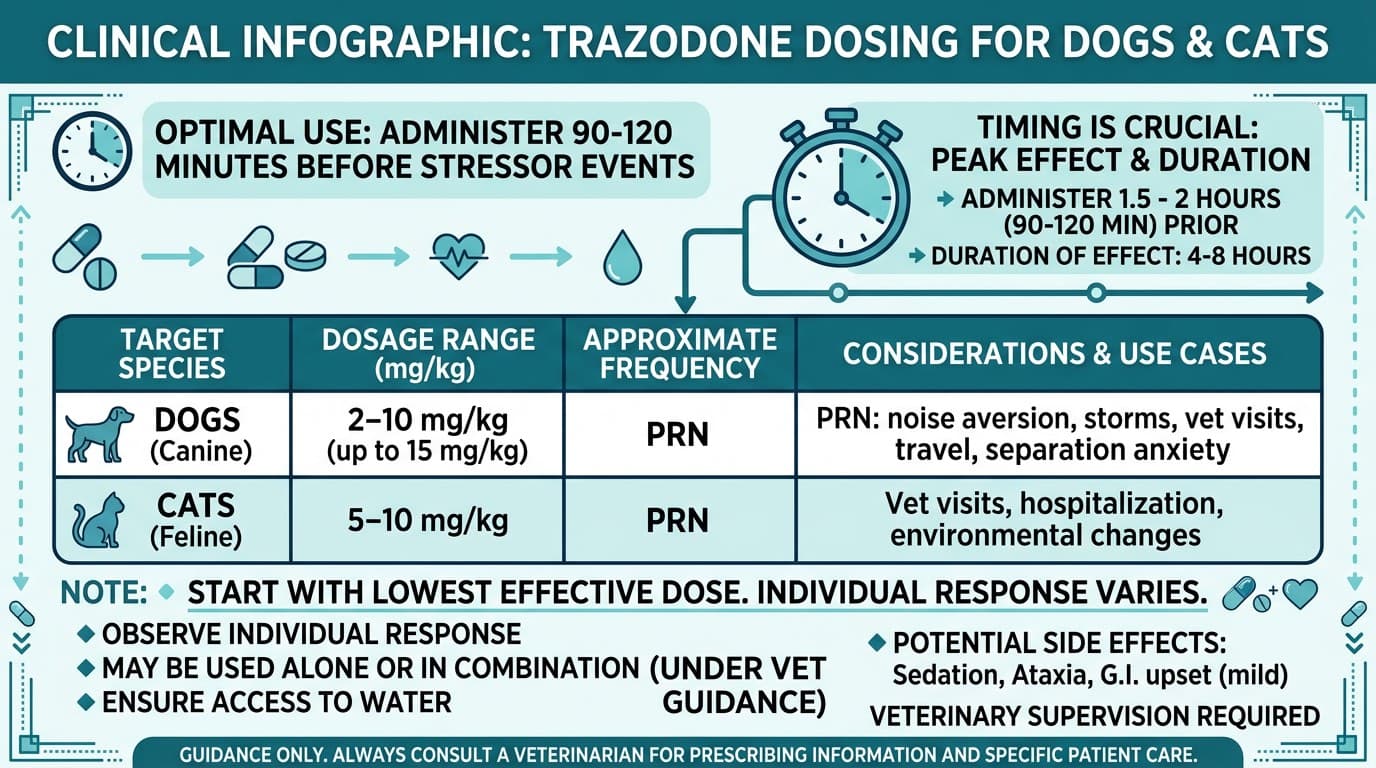
- ✓Dogs: 2–5 mg/kg PO for situational anxiety; 7–10 mg/kg for sedation protocols — give 90–120 min before event.
- ✓Cats: 50–100 mg total dose PO — not weight-based; give 90 minutes before the stressor.
- ✓The trazodone + gabapentin combination (dogs: 10–20 mg/kg gabapentin + 5–7 mg/kg trazodone) provides additive anxiolytic and sedative effects.
- ✓CONTRAINDICATED with MAOIs (selegiline, amitraz) — serotonin syndrome risk; 14-day washout required.
- ✓Use with caution when combining with SSRIs (fluoxetine) or tramadol — moderate serotonin syndrome risk.
- ✓Side effects: sedation and ataxia are expected and dose-dependent; GI upset minimized by giving with food.
Mechanism, Dosing, and Pre-Event Timing
Trazodone is a serotonin antagonist and reuptake inhibitor (SARI) — distinct from selective serotonin reuptake inhibitors (SSRIs) like fluoxetine. It blocks 5-HT2A receptors (anxiolytic, sedative) and weakly inhibits serotonin reuptake. At veterinary doses, it primarily functions as an anxiolytic and mild sedative rather than an antidepressant.
Mechanism of Action
- Serotonin 5-HT2A receptor antagonism — primary anxiolytic effect
- Weak serotonin reuptake inhibition — minor contribution at veterinary doses
- Alpha-1 adrenergic blockade — mild sedation and hypotension
- Histamine H1 receptor antagonism — sedation
Dog Dosing
| Indication | Dose | Route | Timing |
|---|---|---|---|
| Situational anxiety (vet visit, travel, grooming) | 2–5 mg/kg | PO | 90–120 min before event |
| Noise phobia (fireworks, thunderstorms) | 5–7 mg/kg | PO | 90–120 min before |
| Hospital sedation protocol (combined) | 7–10 mg/kg | PO | 2 hours before procedure |
| Chronic anxiety (daily) | 2–3 mg/kg | PO BID–TID | Ongoing |
Cat Dosing
| Indication | Dose | Route | Timing |
|---|---|---|---|
| Situational anxiety | 50–100 mg total dose | PO | 90–120 min before event |
| Hospitalized cats | 50 mg total dose | PO | At admission |
Note: Cat dosing is given as a total dose (not mg/kg) because the available tablet sizes make weight-based dosing impractical and unnecessarily complex for the therapeutic range.
Critical Timing Trazodone requires 90–120 minutes to reach peak plasma concentrations. Administering at the clinic has minimal effect. Owners must medicate at home before transport. For maximum effect with needle-phobic or travel-anxious pets, prescribe a test dose to evaluate individual response before the actual procedure.
Available Formulations
- Human tablets: 50 mg, 100 mg, 150 mg, 300 mg
- Compounded: flavored chews, liquid formulations
- Generic trazodone HCl widely available and cost-effective
Gabapentin + Trazodone Combination Protocol
The trazodone + gabapentin combination produces additive anxiolytic and sedative effects by targeting complementary receptor systems. This protocol is widely used in veterinary behavioral medicine and emergency settings for procedural sedation without injectables.
Why This Combination Works
- Trazodone: serotonergic + alpha-1 blockade — anxiolysis and mild sedation
- Gabapentin: voltage-gated calcium channel alpha-2-delta subunit modulation — anxiolytic, analgesic, and sedative
These mechanisms are complementary — they do not share pathways, allowing additive benefit without proportionally additive adverse effects at standard doses.
Gabapentin + Trazodone Pre-Visit Protocol for Dogs
| Drug | Dose | Route | Timing Before Event |
|---|---|---|---|
| Gabapentin | 10–20 mg/kg | PO | 2–3 hours before |
| Trazodone | 5–7 mg/kg | PO | 90–120 min before |
*Both can be given together at the same time (2 hours before event for convenience).*
Pre-Visit Protocol for Cats
| Drug | Dose | Route | Timing |
|---|---|---|---|
| Gabapentin | 50–100 mg total | PO | 90 min before |
| Trazodone | 50 mg total | PO | 90 min before |
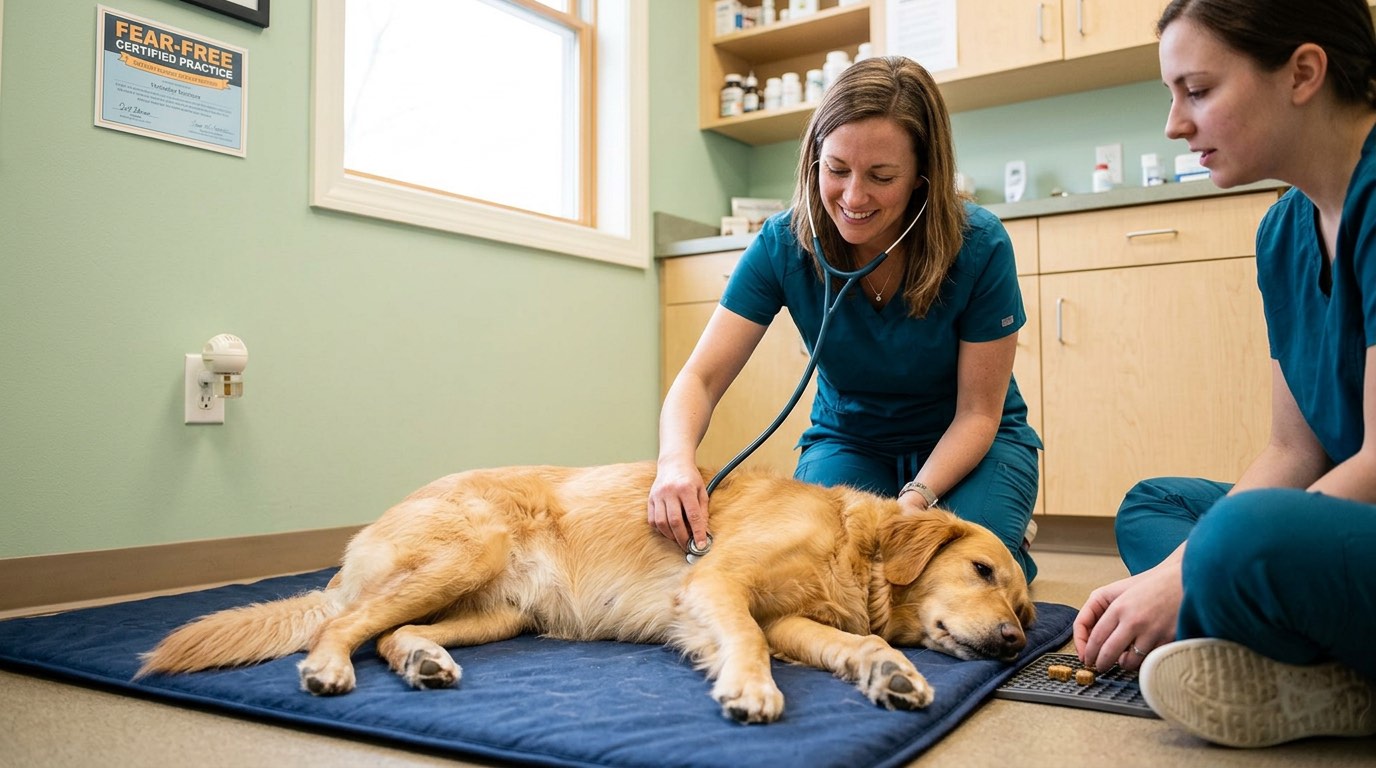
Clinical Application: "Fear-Free" Pre-Visit Medications
- Oral administration at home — no needle required to start sedation
- Both drugs are available in flavored/compounded form
- Cost-effective (both generic)
- Titratable response based on patient weight and anxiety severity
Monitoring After Combination Use
- Expect moderate sedation lasting 4–6 hours
- Patients may have ataxia — counsel owners not to leave the animal near stairs
- Monitor for paradoxical excitement (rare, more common in cats at higher doses)
- Ensure patient is able to eat and drink before discharge
Serotonin Syndrome Risk, Drug Interactions, and Side Effects
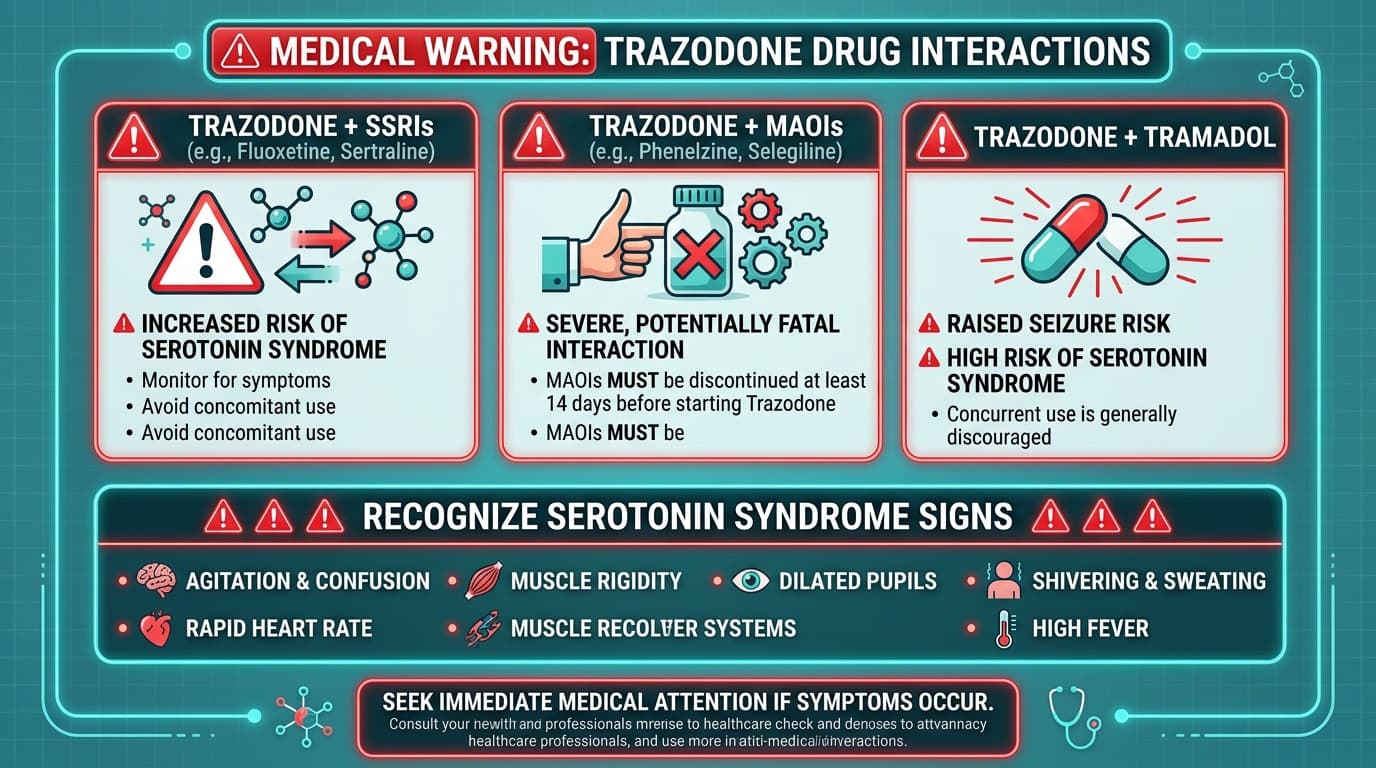
Serotonin Syndrome — A Critical Drug Interaction Warning Serotonin syndrome (serotonin toxicity) is a potentially life-threatening adverse drug reaction caused by excess serotonergic activity. Trazodone increases serotonergic tone — combining it with other serotonergic drugs multiplies the risk.
Drugs That Increase Serotonin Syndrome Risk with Trazodone
| Drug Class | Examples | Risk Level |
|---|---|---|
| MAOIs | Selegiline (Anipryl), amitraz | CONTRAINDICATED |
| SSRIs | Fluoxetine (Reconcile), paroxetine | HIGH RISK |
| SNRIs | Venlafaxine | HIGH RISK |
| Tramadol | Tramadol | MODERATE RISK |
| Tricyclic antidepressants | Clomipramine (Clomicalm), amitriptyline | MODERATE RISK |
MAOI Washout Requirements
- Selegiline to trazodone: 14-day washout required
- Trazodone to selegiline: 5 half-life washout (approximately 14 days for trazodone)
- Amitraz (tick collar/dip): 3-day washout minimum
Signs of Serotonin Syndrome in Dogs and Cats Mild: agitation, mydriasis, tachycardia, hyperthermia Moderate: hyperthermia >40°C (104°F), muscle rigidity/tremors, vocalization Severe: hyperthermia >41°C (106°F), seizures, cardiovascular collapse, death
Treatment of Serotonin Syndrome
- Discontinue all serotonergic drugs immediately
- Cyproheptadine (serotonin antagonist): dogs 1.1 mg/kg PO/PR; cats 2–4 mg total PO/PR
- IV fluids for hypotension
- Cooling measures for hyperthermia (>40°C)
- Benzodiazepines for muscle rigidity/seizures: diazepam 0.5 mg/kg IV
Common Side Effects of Trazodone (Without Serotonin Syndrome)
- Sedation (most common, dose-dependent, expected)
- Ataxia — especially at higher doses (7–10 mg/kg in dogs)
- Vomiting/GI upset — give with food to minimize
- Hypotension (alpha-1 blockade) — monitor in patients with cardiovascular disease
- Paradoxical excitement — more common in cats, rare in dogs; reduce dose or discontinue
Frequently Asked Questions
How far in advance should I give my dog trazodone before a vet visit?
Trazodone should be given 90–120 minutes before the stressor event. For a veterinary appointment, administer at home before travel. The drug takes time to reach peak plasma concentrations — giving it at the clinic is too late to be effective. A test dose trial at home before the actual appointment is strongly recommended to assess individual response.
Can trazodone be used for separation anxiety in dogs?
Trazodone can be used as part of a separation anxiety management protocol, typically at 2–3 mg/kg PO BID–TID as a daily medication. However, it is generally most effective as a situational medication. Long-term management of separation anxiety typically involves behavior modification and may include SSRIs like fluoxetine as the primary pharmacological approach.
Is trazodone safe to give with other anxiety medications my dog is already taking?
It depends on the specific medication. Trazodone can be safely combined with gabapentin (additive benefit). However, it should NOT be combined with MAOIs (selegiline/Anipryl) or used cautiously with SSRIs (fluoxetine) due to serotonin syndrome risk. Always disclose all current medications to your veterinarian before prescribing trazodone.
What is the cat trazodone dose?
Cats typically receive 50–100 mg as a total dose (not mg/kg) PO 90 minutes before the stressor. At 50 mg, most cats achieve mild anxiolysis; 100 mg provides deeper sedation. Use the lower end (50 mg) for the first trial and adjust based on response. Often combined with gabapentin 50–100 mg total for better effect.
Can trazodone cause seizures in dogs?
Trazodone itself does not cause seizures at recommended doses. However, it should be used cautiously in dogs with epilepsy because serotonergic drugs can lower the seizure threshold in susceptible individuals. Additionally, serotonin syndrome (caused by drug interactions with trazodone) can include seizures as a severe manifestation.
References
- Gruen ME, Sherman BL. "Use of trazodone as an adjunctive agent in the treatment of canine anxiety disorders." J Am Vet Med Assoc. 2008;233(12):1902-1907.
- Stevens BJ, Frantz EM, Orlando JM, et al. "Efficacy of a single dose of trazodone hydrochloride given to cats prior to veterinary visits to reduce signs of transport- and examination-related anxiety." J Am Vet Med Assoc. 2016;249(2):202-207.
- Plumb DC. "Trazodone." In: Plumb's Veterinary Drug Handbook. 10th ed. Wiley-Blackwell; 2023.