Quick Answer
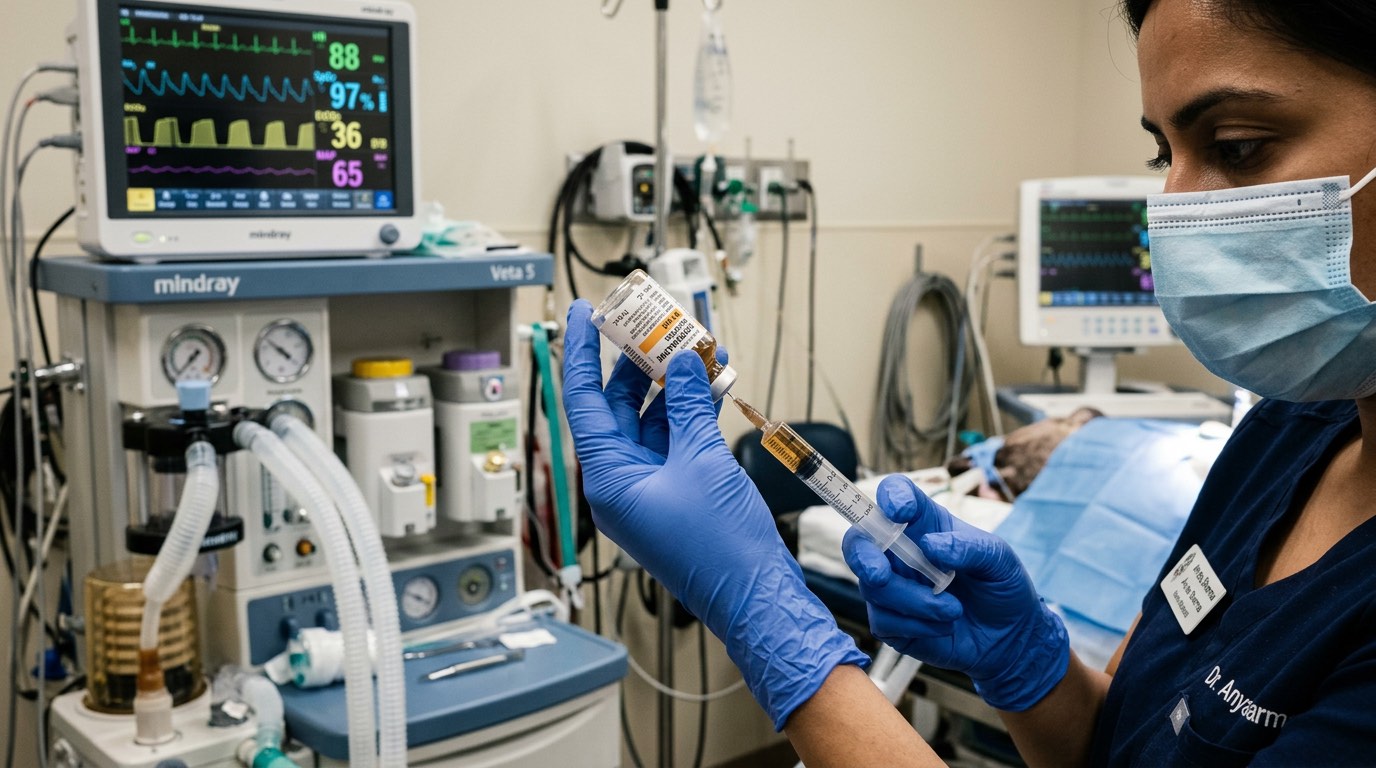
Acepromazine is a phenothiazine sedative widely used in veterinary medicine for pre-anesthetic sedation and restraint. This guide covers correct dosing for dogs and cats, absolute and relative contraindications including cardiovascular disease and epilepsy, brachycephalic breed considerations, and MDR1 mutation sensitivity.
Key Takeaways
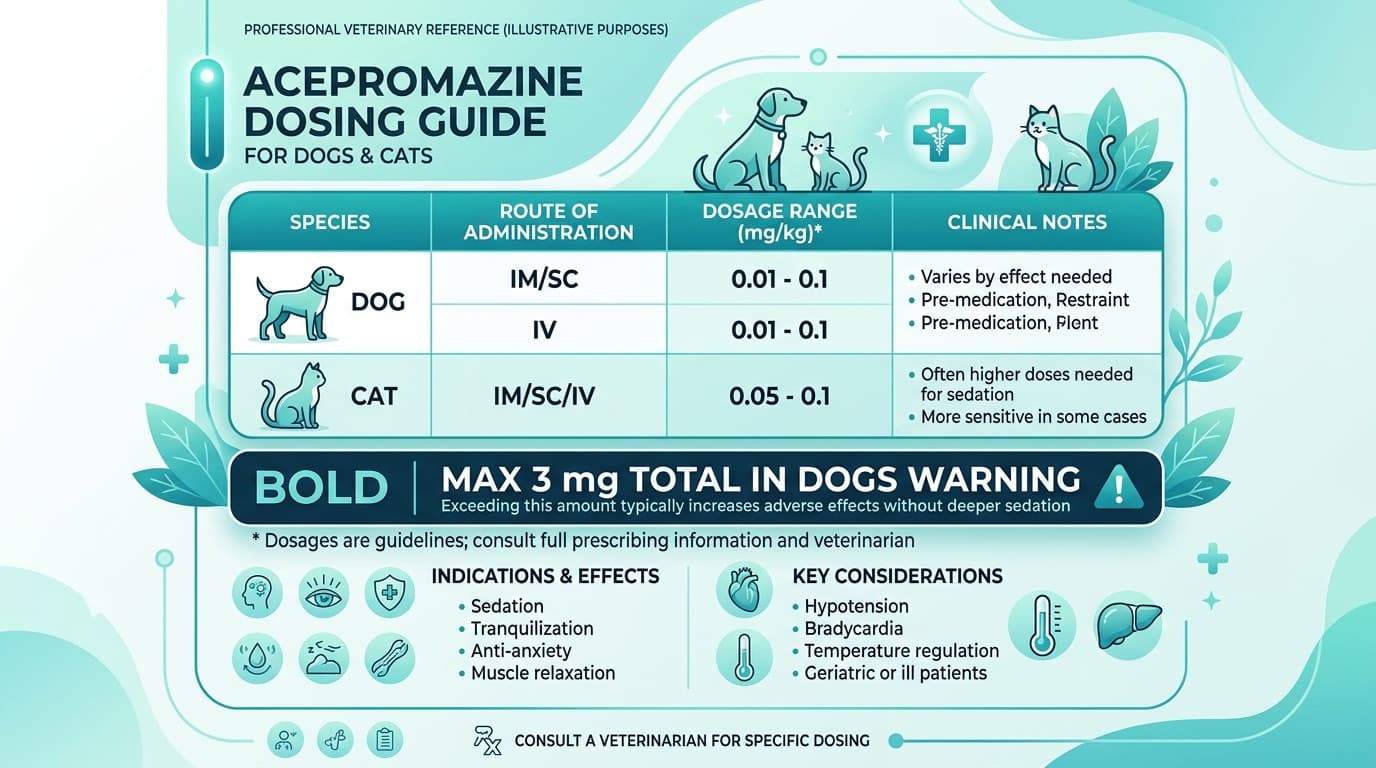
- ✓Dogs: 0.025–0.05 mg/kg IM/SQ with a hard maximum of 3 mg total regardless of body weight.
- ✓Cats: 0.025–0.05 mg/kg IM — no IV route due to severe hypotension risk.
- ✓NO reversal agent exists — adverse effects require supportive care only.
- ✓Absolute contraindications: shock/hypovolemia, active seizures/epilepsy history, severe cardiovascular disease.
- ✓Brachycephalic breeds: use lowest dose (0.025 mg/kg), pre-oxygenate, have intubation ready.
- ✓MDR1/ABCB1-positive herding breeds (Collies, Aussies) require 25–50% dose reduction due to increased CNS sensitivity.
Mechanism and Dosing: Dogs 0.025–0.05 mg/kg IM/SQ (Max 3 mg)
Acepromazine maleate is a phenothiazine derivative that acts as a central dopamine antagonist. It produces sedation, reduces anxiety, and potentiates the effects of other anesthetics. It is not an analgesic and does not provide pain relief.
Mechanism of Action
- Dopamine D2 receptor antagonism in the reticular activating system — sedation and reduced arousal
- Alpha-1 adrenergic blockade — peripheral vasodilation and hypotension
- Antihistamine and mild anticholinergic properties
- Antiemetic effect (useful adjunct in nauseated patients)
IMPORTANT: No Reversal Agent Exists Unlike opioids (reversed by naloxone) or benzodiazepines (reversed by flumazenil), there is no pharmacological reversal for acepromazine. Once administered, effects must be managed supportively. Duration of sedation: 4–8 hours.
Dosing
| Species | Dose | Route | Max Dose |
|---|---|---|---|
| Dog | 0.025–0.05 mg/kg | IM or SQ | 3 mg total |
| Cat | 0.025–0.05 mg/kg | IM | 0.1 mg/kg |
The 3 mg maximum total dose in dogs is critical — large breed dogs should NOT receive weight-based doses without applying this ceiling. A 60 kg Great Dane at 0.05 mg/kg would receive 3 mg maximum, not 3 mg/kg.
Available Formulation
- 10 mg/mL injectable solution (requires dilution for small patients to allow accurate dosing)
- For cats and small dogs: dilute to 1 mg/mL for accurate volume administration
Onset and Duration
- IM: Onset 15–30 minutes; peak 30–60 minutes; duration 4–8 hours
- SQ: Slower onset (30–45 min); similar duration
- IV: Not recommended (risk of severe hypotension)
Absolute and Relative Contraindications: Cardiovascular Disease, Epilepsy, Shock
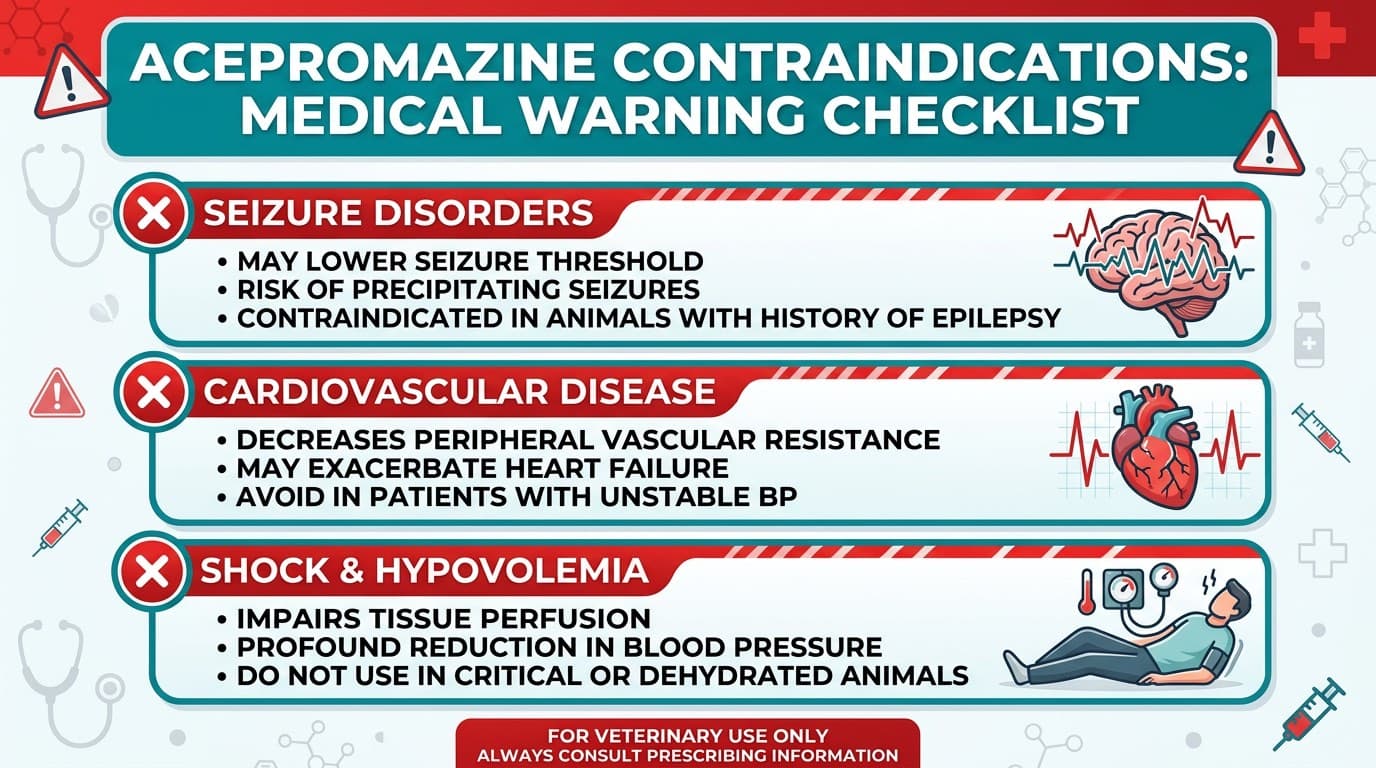
Absolute Contraindications
*1. Hemodynamic Instability or Shock*
- Hypovolemic shock
- Septic shock
- Hemorrhagic shock
- Severe dehydration (>8%)
*2. Epilepsy or Seizure History*
- Dogs or cats with known seizure disorders
- Patients with recent seizure activity (<2 weeks)
- Breeds with high epilepsy prevalence (Belgian Tervuren, Beagles, Labrador Retrievers) if neurological workup is incomplete
*3. Cardiovascular Disease*
- Dilated cardiomyopathy (acepromazine-induced tachycardia is compensatory and should not be blocked)
- Third-degree AV block
- Severe pulmonary hypertension
- Pheochromocytoma (paradoxical hypertension via alpha-2 stimulation is possible)
Relative Contraindications (Use Lowest Dose, Monitor Closely)
*Brachycephalic Breeds*
- Use lowest effective dose (0.025 mg/kg)
- Pre-oxygenate before and after administration
- Have intubation equipment immediately available
- Never leave unattended
*Geriatric Patients* Reduced hepatic metabolism prolongs duration; use 50% of standard dose in dogs >10 years.
*Anemia* Acepromazine-induced vasodilation can exacerbate hypotension in anemic patients; use with caution and monitor SpO2.
MDR1/ABCB1 Mutation: Increased Sensitivity in Herding Breeds
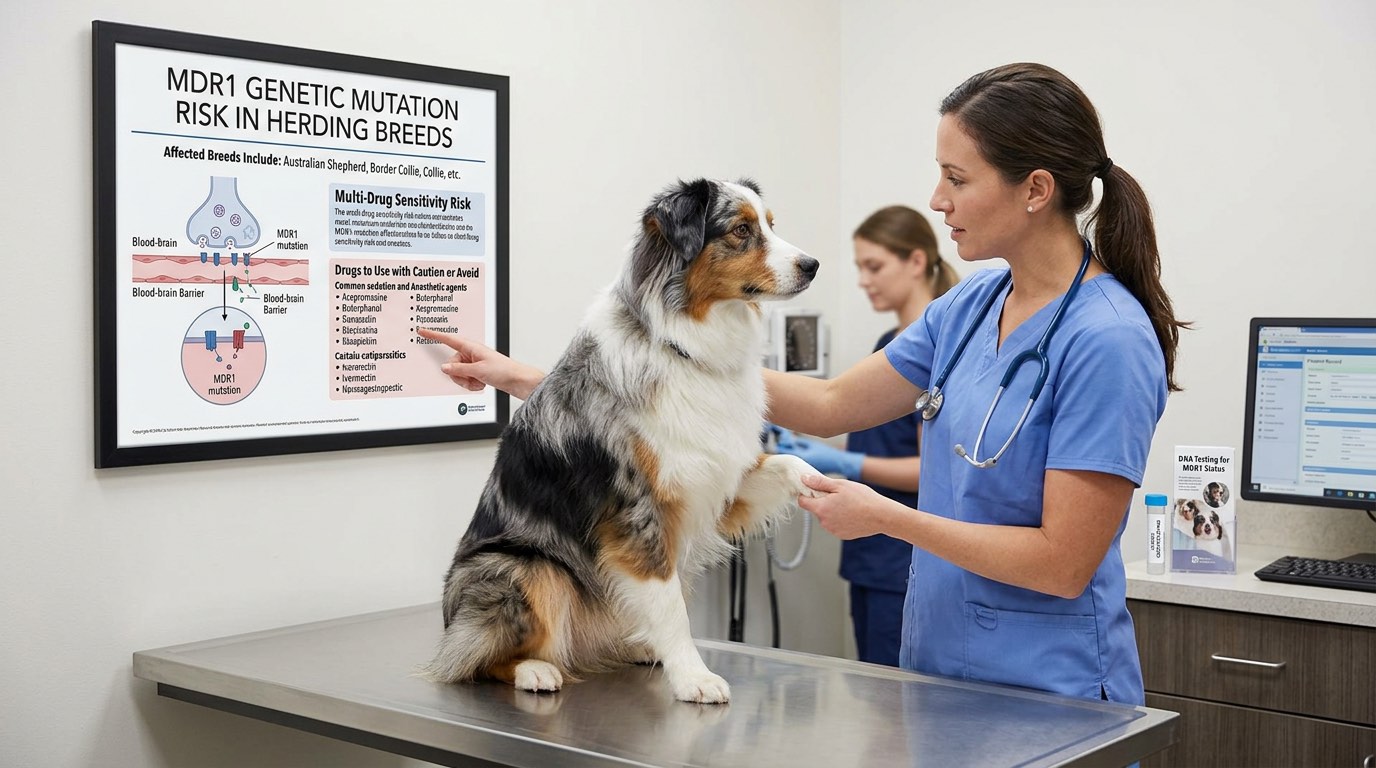
MDR1/ABCB1 Mutation Overview The MDR1 (multidrug resistance 1) gene encodes P-glycoprotein, a drug efflux pump in the blood-brain barrier. Dogs homozygous for the ABCB1 mutation have a non-functional P-glycoprotein, leading to increased CNS drug accumulation.
Breeds at Risk
| Breed | MDR1 Mutation Frequency |
|---|---|
| Rough Collie | ~65% affected |
| Smooth Collie | ~65% affected |
| Australian Shepherd | ~50% affected |
| Miniature Australian Shepherd | ~50% affected |
| Shetland Sheepdog | ~15% affected |
| Border Collie | ~5% affected |
| McNab | ~30% affected |
| Old English Sheepdog | ~5% affected |
Clinical Implications for Acepromazine
- Prolonged or deeper sedation than expected
- Increased hypotension risk
- Slower recovery
Recommended Protocol for MDR1-Suspect or Positive Dogs
- Reduce acepromazine dose by 25–50% (use 0.01–0.025 mg/kg)
- Consider alternative premedicants: dexmedetomidine + opioid protocol may be preferred
- MDR1 genetic testing recommended before elective procedures in at-risk breeds
Monitoring During Acepromazine Sedation
- Heart rate and rhythm (SpO2, ECG if available)
- Blood pressure (MAP should remain >65 mmHg; systolic >90 mmHg)
- Respiratory rate and depth
- Mucous membrane color and capillary refill time
- Temperature (vasodilation causes heat loss — provide warming support)
Managing Acepromazine-Induced Hypotension
- IV crystalloid bolus: 10–20 mL/kg LRS over 10–15 min
- Vasopressor if fluid-unresponsive: norepinephrine 0.1–0.3 mcg/kg/min CRI, or dopamine 5–10 mcg/kg/min
- Avoid epinephrine (epinephrine reversal with acepromazine is a real phenomenon — beta-2 effects unopposed)
Frequently Asked Questions
Can acepromazine be reversed if the dog has a bad reaction?
No. There is no pharmacological reversal agent for acepromazine. If adverse effects occur (severe hypotension, cardiovascular depression), treatment is supportive: IV fluids for hypotension, warming for hypothermia, and vasopressors if fluid-unresponsive. This is why careful patient selection before administration is critical.
Why is the maximum dose of acepromazine in dogs capped at 3 mg?
The 3 mg maximum total dose exists because large dogs are disproportionately sensitive to the cardiovascular effects of acepromazine. Weight-based dosing at 0.05 mg/kg in a 100 kg dog would result in 5 mg — a dose associated with severe hypotension and prolonged sedation. The 3 mg ceiling prevents this.
Is acepromazine safe for brachycephalic dogs?
Acepromazine can be used in brachycephalic dogs with caution at the lowest dose (0.025 mg/kg). The main risk is upper airway obstruction during sedation. Pre-oxygenation, immediate intubation capability, and constant monitoring are mandatory. Many anesthesiologists prefer dexmedetomidine-based protocols for brachycephalic patients.
Can acepromazine be used in cats?
Yes. Cats receive 0.025–0.05 mg/kg IM. Acepromazine is often combined with ketamine or opioids for pre-anesthetic sedation in cats. The same contraindications apply: avoid in cardiovascular disease, seizure history, and dehydrated/hypotensive patients.
How do I test if my dog has the MDR1 mutation?
Genetic testing for the ABCB1 (MDR1) mutation is available through Washington State University Veterinary Clinical Pharmacology Lab and several commercial labs. A simple cheek swab or blood sample is required. Testing is recommended for all at-risk herding breeds before elective procedures.
References
- Plumb DC. "Acepromazine maleate." In: Plumb's Veterinary Drug Handbook. 10th ed. Wiley-Blackwell; 2023.
- Mealey KL. "Pharmacogenetics." Vet Clin North Am Small Anim Pract. 2006;36(5):1133-1152.
- Dyson DH. "Acepromazine — its use in veterinary medicine." Can Vet J. 2008;49(2):130.