Quick Answer
Fluoxetine is the most widely used SSRI in veterinary behavioral medicine, with FDA approval for canine separation anxiety (Reconcile). This guide covers dosing for dogs and cats, indications for anxiety disorders and compulsive behaviors, onset of action, drug interactions with serotonin syndrome risk, and behavioral medicine protocols.
Key Takeaways
- ✓Fluoxetine (Reconcile) is FDA-approved for canine separation anxiety at 1–2 mg/kg PO once daily; full effect requires 6–8 weeks.
- ✓Cats are typically started at 5 mg/cat PO q24h; lower doses and slower titration are appropriate due to slower hepatic metabolism.
- ✓Amitraz and selegiline are MAOIs absolutely contraindicated with fluoxetine; require 14-day washout periods on either side.
- ✓Tramadol and fluoxetine combination increases serotonin syndrome risk; use buprenorphine as an alternative opioid when possible.
- ✓Serotonin syndrome is treated with cyproheptadine (1.1 mg/kg dogs; 2–4 mg cats), immediate drug discontinuation, and ICU supportive care.
- ✓Behavioral modification must accompany pharmacotherapy for sustainable improvement in anxiety and compulsive disorders.
Pharmacology, FDA Approval and Behavioral Indications
Fluoxetine is a selective serotonin reuptake inhibitor (SSRI) that blocks the serotonin transporter (SERT), increasing synaptic serotonin concentrations in limbic regions that modulate fear, anxiety, and impulsivity.
Mechanism of Action:
- Blocks SERT pre-synaptically; increases 5-HT in amygdala, prefrontal cortex, and hypothalamus
- Long-acting active metabolite: norfluoxetine (half-life 5–14 days in dogs, 7–9 days in cats)
- Requires 4–6 weeks to achieve full therapeutic effect due to receptor downregulation and neuroplasticity
- Has weak norepinephrine reuptake inhibition at higher doses; 5-HT2 receptor blockade properties
FDA Approval:
- Reconcile (Eli Lilly): FDA-approved for canine separation anxiety (2007); first veterinary-labeled behavioral drug in the United States
- Reconcile is flavored (beef) for palatability
- Generic fluoxetine capsules/tablets are commonly used off-label for all other indications
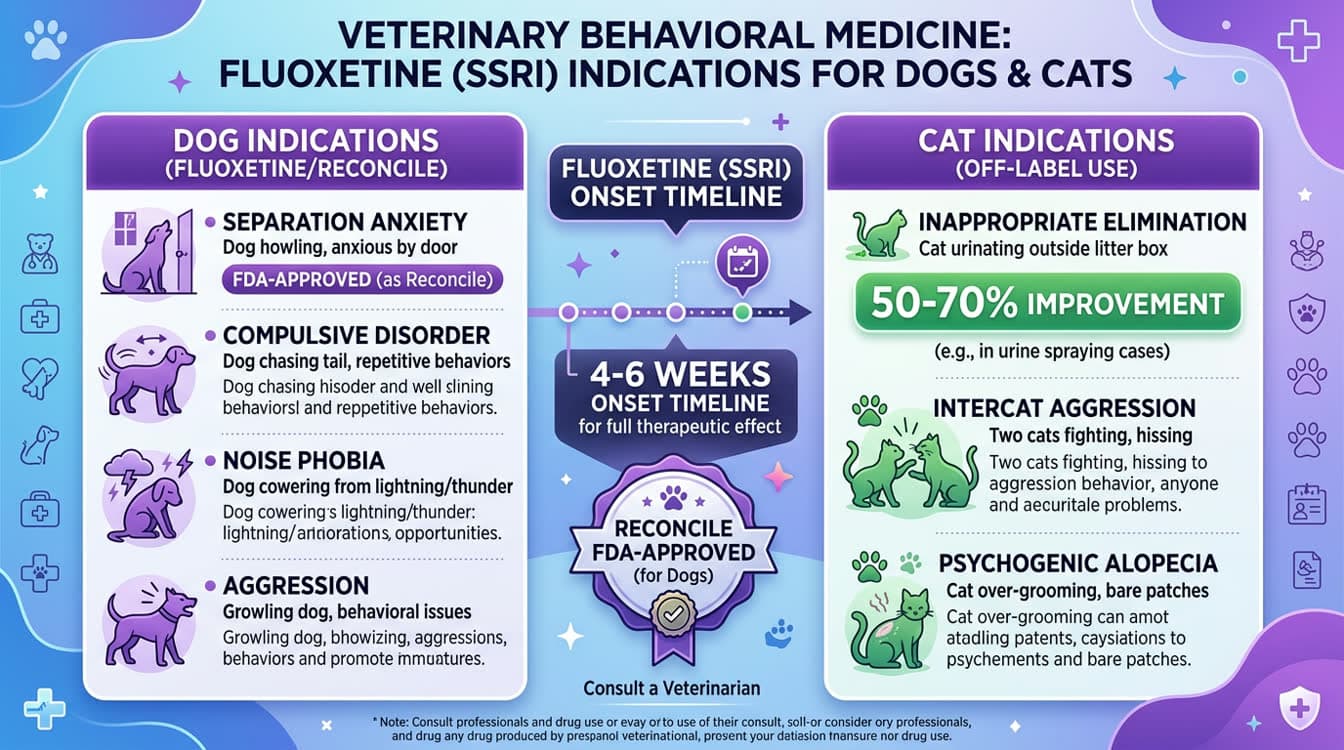
Indications in Dogs:
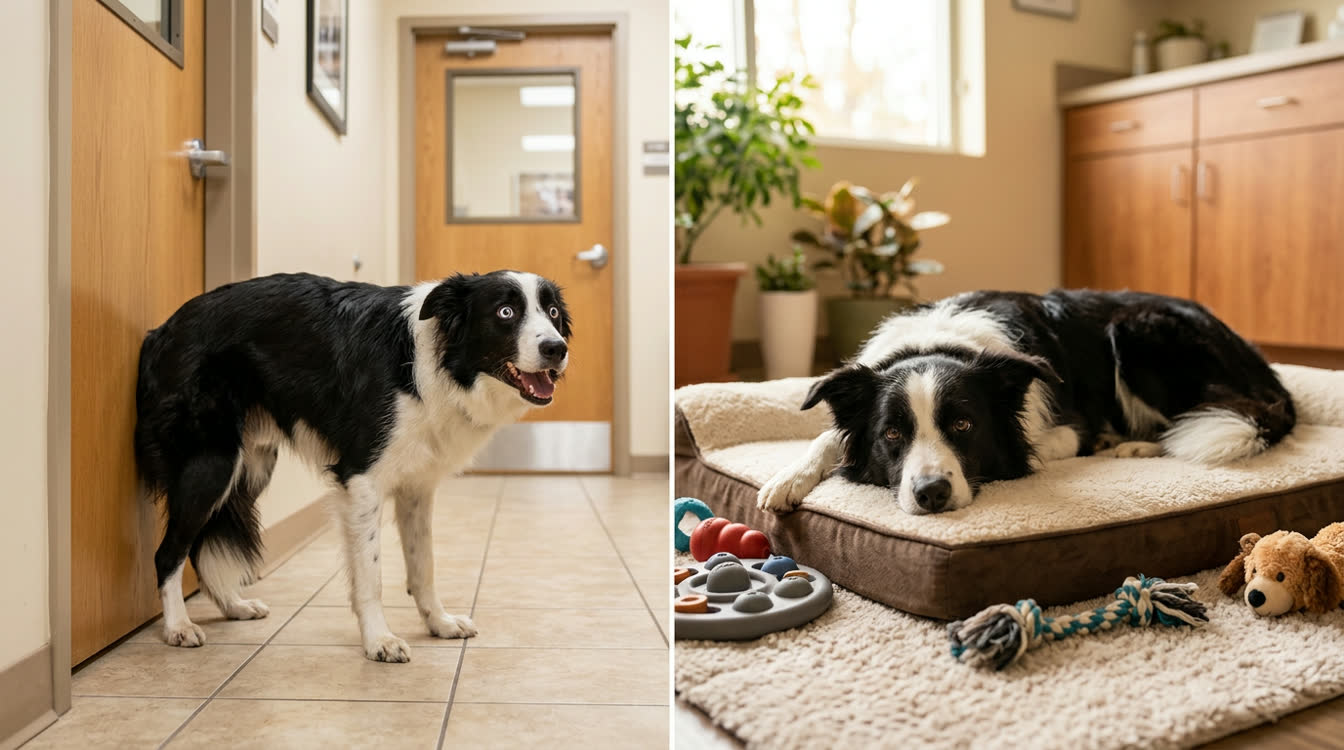
- Separation anxiety (FDA-approved): howling, destruction, elimination, panting when owner absent
- Generalized anxiety disorder
- Noise phobia (thunderstorm, fireworks) — as baseline maintenance; combine with situational anxiolytics (trazodone, clonidine, gabapentin)
- Canine compulsive disorder (OCD): tail chasing, flank sucking, repetitive pacing, acral lick dermatitis
- Interdog aggression and fear-based aggression
- Stereotypic behavior in working/sporting breeds
Indications in Cats:
- Inappropriate elimination (urine spraying, periuria): reduces marking behavior in 50–70% of cases
- Feline intercat aggression
- Compulsive behaviors: excessive grooming (psychogenic alopecia), repetitive vocalization
- Generalized anxiety and hypervigilance
Behavioral Medicine Principle:
- Systematic desensitization and counter-conditioning protocols
- Environmental enrichment
- Owner education (avoid punishment; use positive reinforcement)
Dosing Guidelines for Dogs and Cats with Titration Protocols
Fluoxetine dosing differs between dogs and cats due to pharmacokinetic differences. Cats have slower hepatic metabolism and longer norfluoxetine half-lives, so lower doses and slower titration are appropriate.
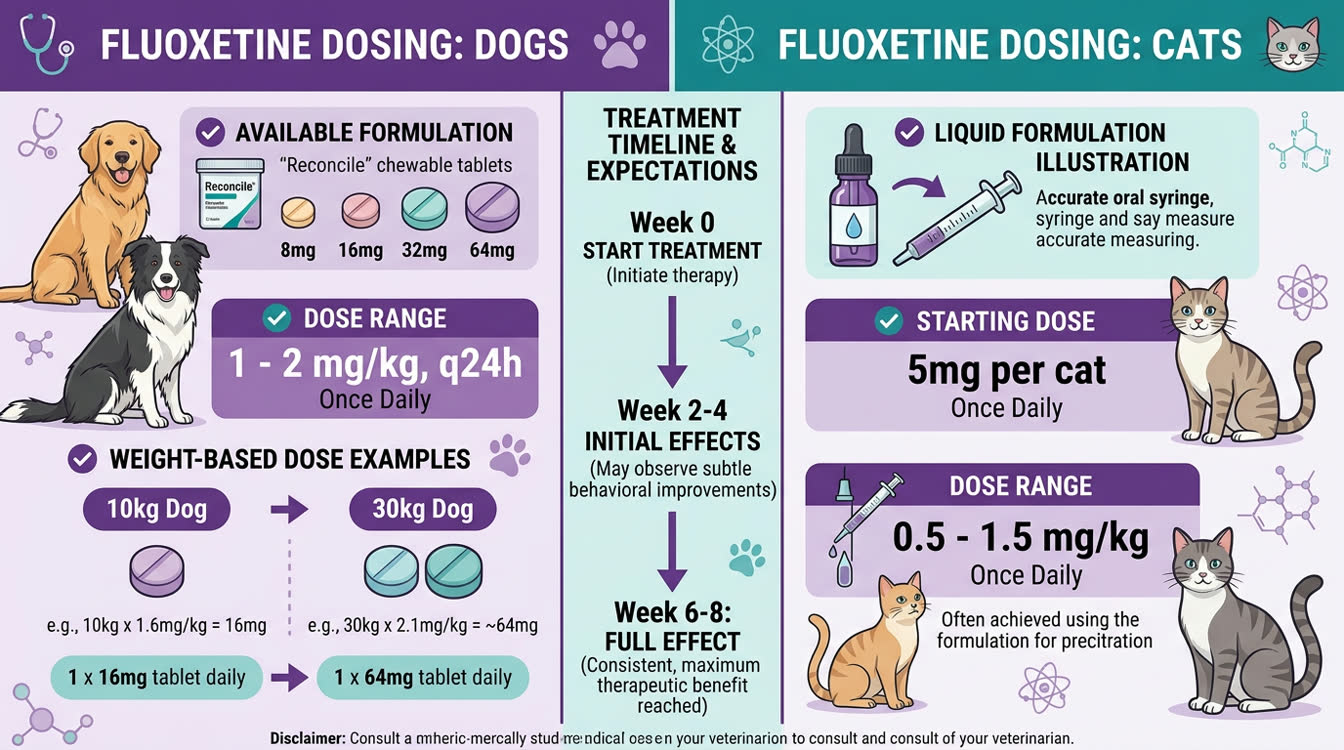
Canine Dosing:
- Starting dose: 1 mg/kg PO once daily
- Therapeutic range: 1–2 mg/kg PO once daily
- Maximum dose: 2 mg/kg/day (doses above this increase adverse effect risk without additional benefit in most dogs)
- Reconcile formulation: 8 mg, 16 mg, 32 mg, and 64 mg scored tablets given once daily
Dose titration in dogs:
- Start at 1 mg/kg PO q24h for 4–6 weeks
- If partial response with acceptable tolerability: increase to 1.5–2 mg/kg PO q24h
- Allow 4–6 weeks at each dose before assessing response (due to neuroadaptation lag)
Feline Dosing:
- Starting dose: 0.5–1 mg/kg PO once daily (or 5 mg/cat/day in most average-sized cats)
- Therapeutic range: 0.5–1.5 mg/kg PO once daily
- Many cats respond at 5 mg PO q24h regardless of exact body weight
- Use liquid formulation (Prozac solution 20 mg/5 mL) or compounded chicken-flavored liquid for palatability
Titration in cats:
- Start at 5 mg/cat PO q24h; reassess in 4–6 weeks
- If insufficient response: increase to 7.5–10 mg/cat/day
- Some cats respond to every-other-day dosing if side effects limit daily use
Tablet Splitting and Compounding:
- Human 10 mg and 20 mg capsules can be used; split carefully or open capsule into food
- Compounded liquid formulations: convenient for cats; confirm concentration with pharmacy
- Chewable beef-flavored Reconcile tablets are preferred for dogs with pill refusal
Discontinuation Protocol:
- Taper over 4–6 weeks rather than abrupt discontinuation to avoid discontinuation syndrome (anxiety rebound, GI upset)
- Reduce by 25–50% per week during tapering
When to Expect Response:
- Initial behavioral changes: 2–4 weeks
- Full therapeutic effect: 6–8 weeks at therapeutic dose
- Inform owners of delayed onset to improve compliance
- If no response at 8 weeks at maximum dose: reassess diagnosis; consider combination therapy
Adverse Effects, Drug Interactions and Serotonin Syndrome
Fluoxetine is generally well-tolerated in dogs and cats, but specific adverse effects and critical drug interactions must be recognized.
Common Adverse Effects:
- GI effects (most common): Anorexia (10–20%), nausea, vomiting, diarrhea; typically transient in first 1–2 weeks
- Sedation or behavioral activation: Initial lethargy or paradoxical agitation/anxiety in first 1–2 weeks
- Urinary retention: Rare; reported in cats with prior lower urinary tract disease
- Weight changes: Mild weight loss in some dogs at higher doses
- Tremors or ataxia: Rare; if persistent, reduce dose
Adverse Effects Specific to Cats:
- Anorexia: Can be significant in cats; monitor closely in first 2 weeks
- Increased vocalization or agitation in some cats (switch to buspirone if this occurs)
- Hypersalivation or nausea after compounded liquid doses (formulation-related; try different flavoring)
Serotonin Syndrome — Critical Drug Interaction: Serotonin syndrome is a rare but potentially fatal complication of excessive serotonergic stimulation. Risk is highest with combinations of serotonergic drugs.
High-risk combinations with fluoxetine:
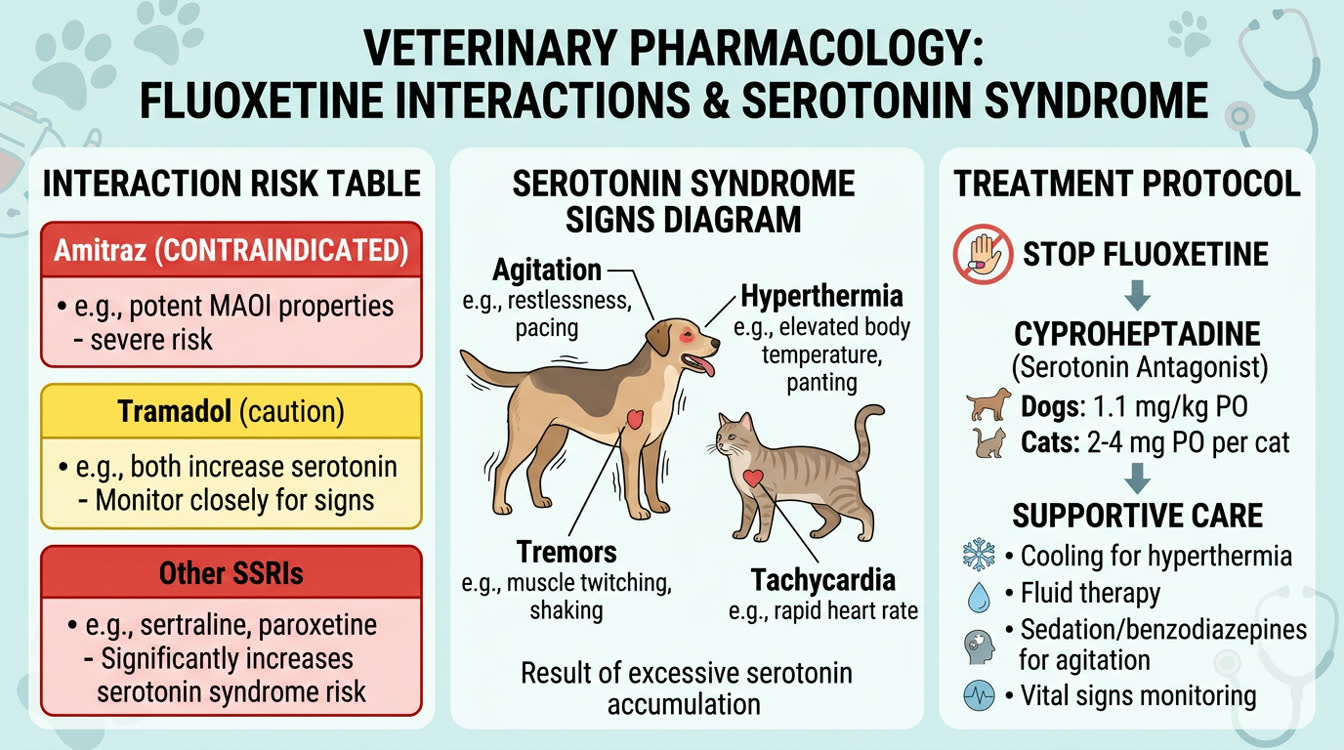
- MAOIs: Amitraz (tick collar/dip), selegiline — CONTRAINDICATED; 14-day washout before/after fluoxetine
- Tramadol: Weak serotonin reuptake inhibitor; combination increases serotonin syndrome risk — use caution; consider alternative opioids (buprenorphine, methadone)
- Other SSRIs or SNRIs (sertraline, venlafaxine)
- Tryptophan supplements
- St. John's Wort
- Linezolid (antibiotic with MAOI activity)
Serotonin Syndrome Signs:
- Agitation, hyperthermia, tachycardia, hypertension
- Muscle tremors, clonus, hyperreflexia
- GI signs: vomiting, diarrhea
- In severe cases: rhabdomyolysis, seizures, respiratory failure
Management of Serotonin Syndrome:
- Discontinue fluoxetine and all serotonergic drugs immediately
- Cyproheptadine (5-HT2A antagonist): 1.1 mg/kg PO (crushed and given via syringe) q4–6h in dogs; 2–4 mg/cat PO q6–12h
- Supportive care: IV fluids, cooling, benzodiazepines for muscle tremors, ICU monitoring
Other Drug Interactions:
- Fluoxetine inhibits CYP2D6 and CYP3A4: increases plasma levels of diazepam, cyclosporine, certain opioids
- Phenobarbital may reduce fluoxetine levels via hepatic enzyme induction — may need dose adjustment
- NSAIDs: additive GI mucosal risk at higher fluoxetine doses
Frequently Asked Questions
What is the standard fluoxetine dose for dogs with separation anxiety?
The FDA-approved dose of fluoxetine (Reconcile) for canine separation anxiety is 1–2 mg/kg orally once daily. Start at 1 mg/kg/day and assess after 6–8 weeks before increasing. The Reconcile formulation is available in 8, 16, 32, and 64 mg beef-flavored scored tablets for accurate dosing.
How long does fluoxetine take to work in dogs and cats?
Initial behavioral changes may be seen at 2–4 weeks, but full therapeutic effect requires 6–8 weeks at the therapeutic dose. Owners must be counseled about this delay to maintain compliance. If no improvement is seen at 8 weeks at the maximum dose, reassess diagnosis and consider combination behavioral pharmacotherapy.
Can fluoxetine be combined with tramadol in dogs?
Use caution. Tramadol has weak serotonin reuptake inhibitor activity, and combining it with fluoxetine increases the risk of serotonin syndrome. If an opioid analgesic is needed in dogs on fluoxetine, consider buprenorphine or methadone instead. If tramadol is used, use the lowest effective dose and monitor for signs of serotonin toxicity.
What is the fluoxetine dose for cats with urine spraying?
For cats with urine spraying or inappropriate elimination, start fluoxetine at 5 mg per cat orally once daily (equivalent to 0.5–1 mg/kg in an average 5–10 kg cat). Reassess after 4–6 weeks; if needed, increase to 7.5–10 mg/cat/day. Response rates for reducing urine marking are approximately 50–70%.
What should be avoided before starting fluoxetine in dogs and cats?
Amitraz-containing products (tick collars, dips) and selegiline (Anipryl, L-Deprenyl) are MAOIs and are absolutely contraindicated with fluoxetine. Allow a 14-day washout after discontinuing any MAOI before starting fluoxetine, and vice versa. Also avoid concurrent use of other SSRIs, tramadol at high doses, and tryptophan supplements.
References
- Landsberg G, et al. "Effectiveness of fluoxetine chewable tablets in the treatment of canine separation anxiety." J Vet Behav. 2008;3(1):12-19.
- Pryor PA, et al. "Effects of a selective serotonin reuptake inhibitor on urine spraying behavior in cats." J Am Vet Med Assoc. 2001;219(11):1557-1561.
- Crowell-Davis SL, Murray T. Veterinary Psychopharmacology. 2nd ed. Wiley-Blackwell; 2019.