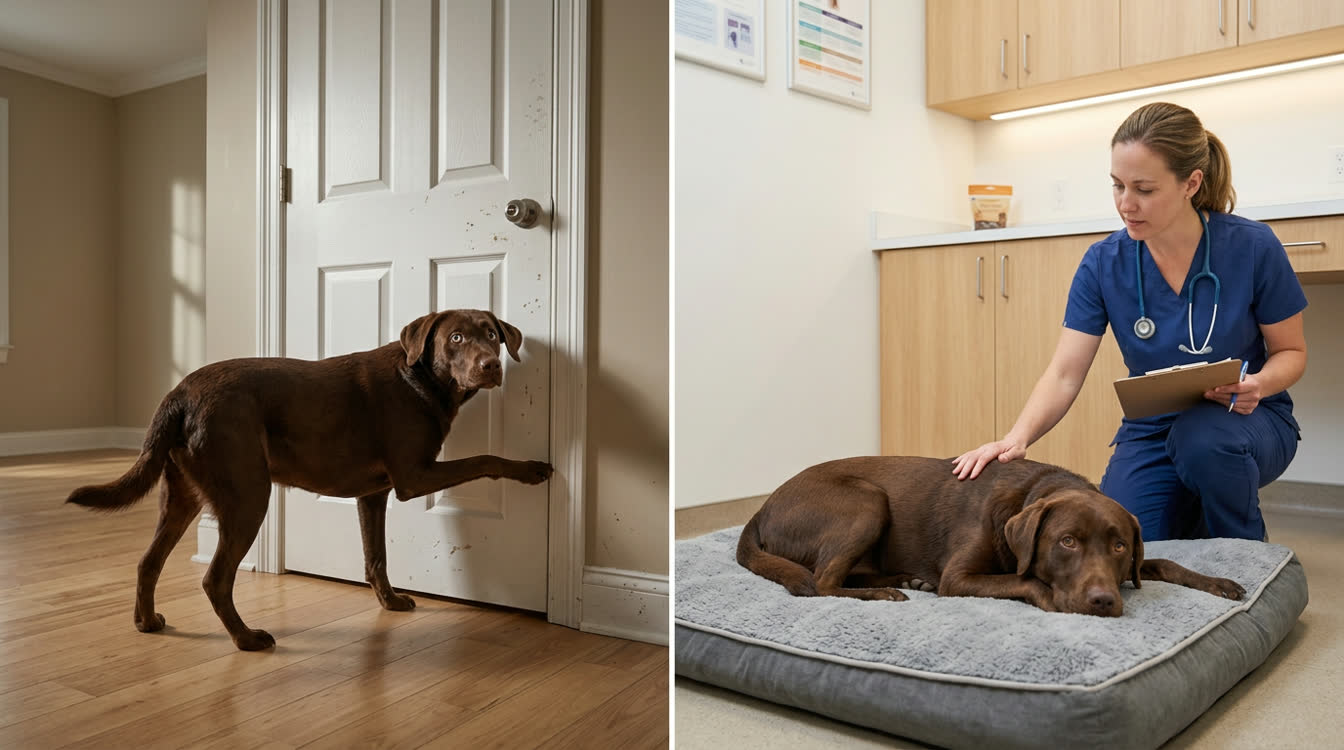
Quick Answer
Clomipramine (Clomicalm) is an FDA-approved tricyclic antidepressant for canine separation anxiety with additional serotonin reuptake inhibition. This guide covers dosing, indications for OCD and anxiety, cardiac and anticholinergic side effects, ECG monitoring, and comparison with SSRI alternatives.
Key Takeaways
- ✓Clomipramine (Clomicalm) is FDA-approved for canine separation anxiety at 1–3 mg/kg/day in divided doses q12h, combined with behavior modification.
- ✓As the most serotonin-selective TCA, clomipramine is the benchmark treatment for canine compulsive disorder (OCD) when SSRIs are insufficient.
- ✓Amitraz (tick products) and selegiline are MAOIs absolutely contraindicated with clomipramine; require a 14-day washout on both sides.
- ✓Pre-treatment ECG is recommended in dogs over 7 years or with cardiac history due to QT-prolonging effects.
- ✓Anticholinergic effects (dry mouth, constipation, urinary retention) are the most common adverse effects; transient sedation is expected in the first two weeks.
- ✓Minimum 6–8 weeks of therapy is needed to assess behavioral response; OCD typically requires long-term or lifelong treatment.
Mechanism of Action, FDA Approval and Behavioral Indications
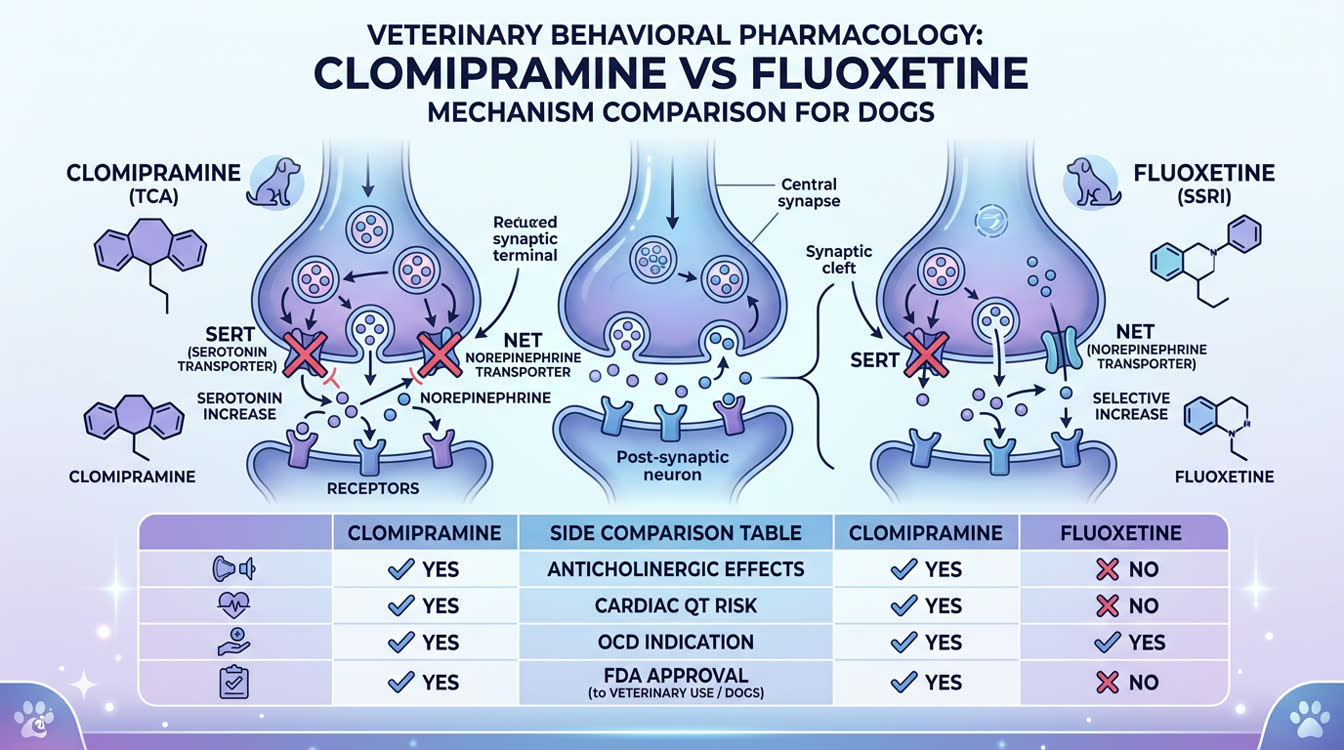
Clomipramine (Clomicalm, Novartis) is a tricyclic antidepressant (TCA) with a unique pharmacological profile that distinguishes it from other TCAs in veterinary use.
Mechanism of Action:
- Serotonin reuptake inhibition (primary): Clomipramine is the most serotonin-selective TCA; blocks SERT more potently than other TCAs (imipramine, amitriptyline), giving it a partial SSRI-like profile
- Norepinephrine reuptake inhibition: Secondary mechanism; contributes to anxiolytic and antidepressant effects
- Active metabolite: Desmethylclomipramine (dCMI); has additional norepinephrine > serotonin selectivity, prolonging and broadening pharmacological effects
- Anticholinergic effects: Muscarinic receptor blockade; responsible for dry mouth, urinary retention, constipation, and cardiac conduction slowing
- Antihistaminergic (H1): Sedation, especially at initiation
FDA Approval:
- Clomicalm (NADA 141-080, Novartis): FDA-approved for separation anxiety in dogs in combination with behavior modification therapy (1998)
- Available as 20 mg, 40 mg, and 80 mg scored tablets
Behavioral Indications in Dogs:
- Separation anxiety (FDA-approved): destruction, vocalization, elimination, self-injurious behavior when owner absent
- Canine compulsive disorder (OCD): Tail chasing, flank sucking, acral lick granuloma, light/shadow chasing, fence running
- Generalized anxiety and fear-based disorders: As second-line after SSRIs or when OCD is prominent
- Cognitive dysfunction syndrome (CDS): Off-label; combined with selegiline in some protocols (important MAOI interaction caveat)
Clomipramine vs Fluoxetine in Separation Anxiety:
| Parameter | Clomipramine | Fluoxetine |
|---|---|---|
| FDA approval (dogs) | Separation anxiety | Separation anxiety (Reconcile) |
| Mechanism | TCA + SERT | Pure SSRI |
| Anticholinergic effects | Yes — constipation, dry mouth, urinary retention | No |
| Cardiac effects | QT prolongation risk | Minimal |
| Sedation | Yes (initial) | Minimal |
| OCD efficacy | Strong (benchmark) | Moderate |
| Onset | 4–6 weeks | 4–6 weeks |
Dosing Protocol, Titration Schedule and Administration in Dogs
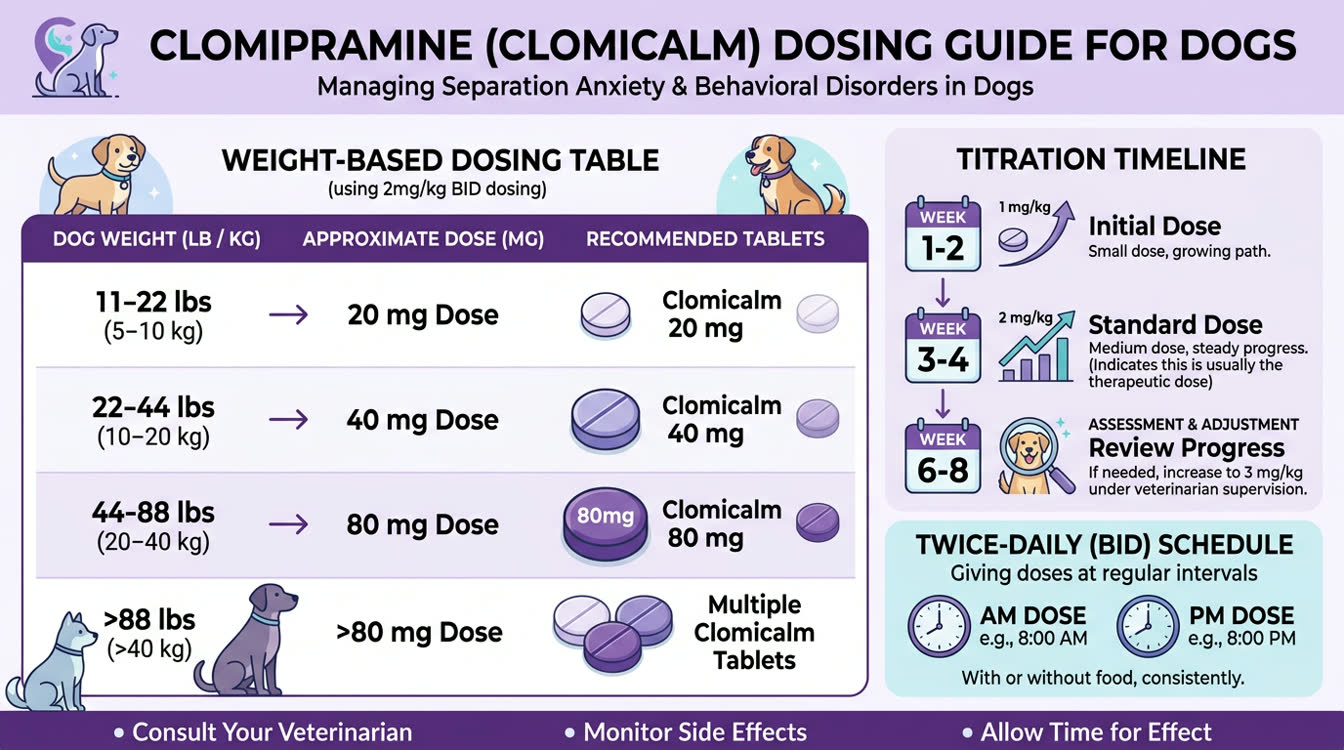
Clomipramine dosing in dogs requires careful titration to minimize early anticholinergic and sedative side effects while achieving therapeutic plasma concentrations within 4–6 weeks.
Standard Dosing for Dogs:
- Starting dose: 1–2 mg/kg PO q12h with food
- Therapeutic dose: 2–3 mg/kg PO q12h
- FDA-approved range (Clomicalm): 1–2 mg/kg PO q12h (labeled dosing: 1–3 mg/kg/day)
- Maximum dose: 3 mg/kg PO q12h (6 mg/kg/day total); exceed with caution
Practical Dosing by Weight:
- Dogs <10 kg: 20 mg q12h (1 x 20 mg tablet per dose)
- Dogs 10–20 kg: 20–40 mg q12h
- Dogs 20–40 kg: 40–80 mg q12h
- Dogs >40 kg: 80 mg q12h
Titration Protocol:
- Week 1–2: Start at 1 mg/kg PO q12h with food; monitor for lethargy and GI signs
- Week 3–4: If tolerated, increase to 2 mg/kg PO q12h
- Week 6–8: Assess behavioral response; increase to 3 mg/kg q12h if partial response
Administration Notes:
- Give consistently with food to reduce GI upset and improve palatability
- Scored tablets may be split; do not crush (bitter, unpalatable)
- Consistent twice-daily dosing is essential; missing doses reduces therapeutic effect
- Total daily dose can be given once daily in some dogs if compliance issues arise (less validated)
Duration of Therapy:
- Minimum treatment duration: 6–8 weeks to assess response
- Separation anxiety: 6–12 months minimum; taper after sustained improvement (>3 months off triggers)
- OCD: Often lifelong or very long-term; relapse common with discontinuation
- Taper over 4–6 weeks on discontinuation to avoid rebound anxiety
Monitoring Initial Response:
- Owner diary (incident frequency, severity) kept for 4 weeks before starting and throughout treatment
- Video monitoring at home (home camera) to objectively assess vocalization and destruction
- Reassess at 6–8 weeks with structured behavioral questionnaire (Separation Anxiety Questionnaire)
Adverse Effects, Cardiac Safety, Drug Interactions and Monitoring
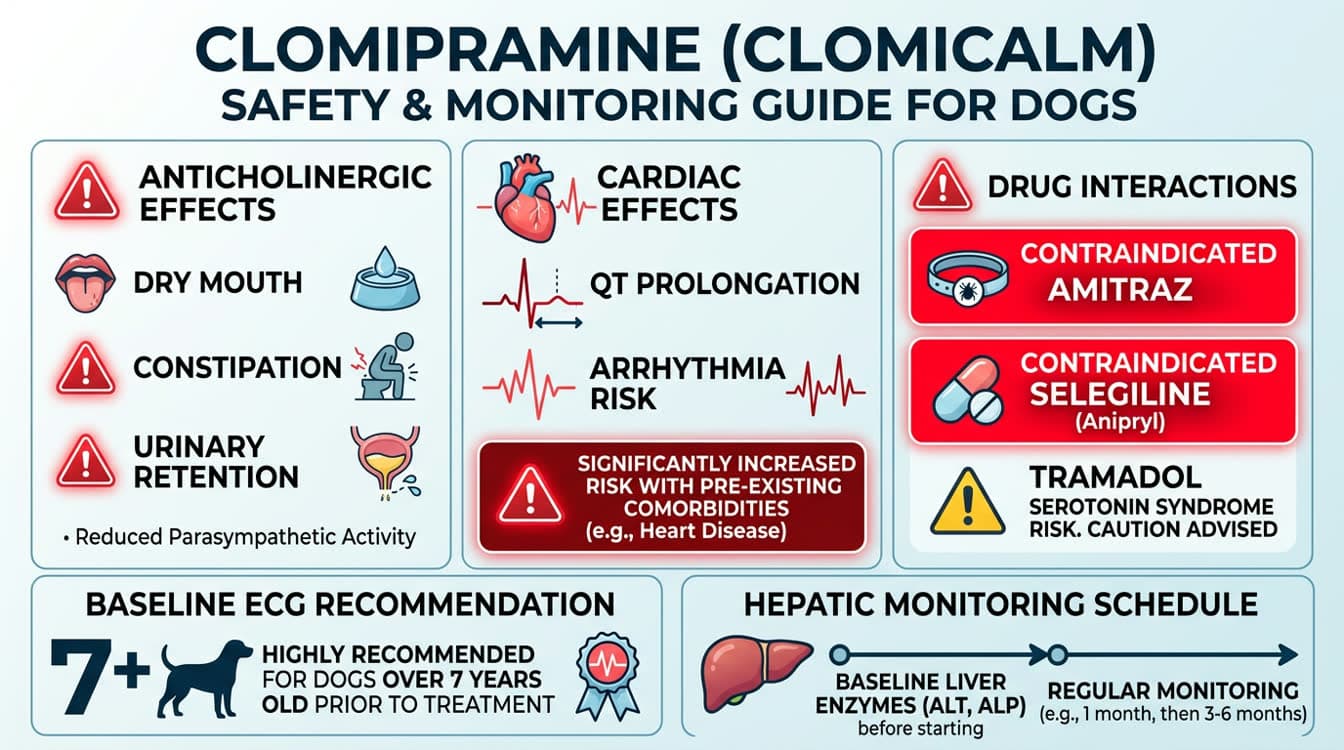
Clomipramine's TCA pharmacology creates a distinct adverse effect profile compared to SSRIs. Cardiac effects and anticholinergic toxicity are the primary safety concerns.
Anticholinergic Adverse Effects:
- Dry mouth/xerostomia: Common; often transient; provide unlimited water access
- Constipation: Add dietary fiber or lactulose 1–2 mL/kg PO q12–24h if severe
- Urinary retention: Monitor urination frequency; hold drug and catheterize if urinary obstruction occurs
- Mydriasis: Avoid in dogs with glaucoma; monitor intraocular pressure
- Tachycardia: Baseline and periodic heart rate monitoring; cardiac history required
Cardiac Effects:
- Clomipramine prolongs the cardiac QT interval by blocking hERG potassium channels
- Risk of ventricular arrhythmias (torsades de pointes) is low at recommended veterinary doses but increases with:
- Pre-treatment ECG and cardiac auscultation are recommended in dogs >7 years or with known cardiac history
- If arrhythmia detected: consult cardiology before initiating TCA therapy
CNS Effects:
- Sedation: Common in first 1–2 weeks; usually resolves; administer evening dose before bedtime initially
- Lowered seizure threshold: Avoid in dogs with epilepsy; if seizures are controlled with phenobarbital, monitor serum levels as TCA may alter metabolism
- Behavioral activation/anxiety: Paradoxical increase in anxiety in first 1–2 weeks; reassure owners; usually resolves
MAOI Drug Interaction — CRITICAL:
- Amitraz (tick collars/dips/amitraz shampoo) is an MAOI — ABSOLUTELY CONTRAINDICATED
- Selegiline (Anipryl): CONTRAINDICATED; allow 14-day washout after selegiline before starting clomipramine
- Tramadol: increased serotonin syndrome risk; use alternative opioids
- Other SSRIs/SNRIs: do not combine
Hepatic Monitoring:
- Clomipramine is extensively hepatically metabolized (CYP2D6, CYP3A4)
- Check baseline ALT and ALP; recheck at 6 months
- Use caution in dogs with hepatic disease; reduce dose by 25–50% if significant hepatic impairment
Overdose:
- Clomipramine overdose causes severe anticholinergic toxidrome and cardiac arrhythmias
- Treatment: activated charcoal if acute ingestion; IV benzodiazepines for seizures; sodium bicarbonate IV for QRS widening; ICU monitoring
Frequently Asked Questions
What is the FDA-approved dose of clomipramine for dogs with separation anxiety?
The FDA-approved dose of clomipramine (Clomicalm) for canine separation anxiety is 1–3 mg/kg/day divided into twice-daily dosing (q12h). Most dogs are started at 1–2 mg/kg PO q12h and increased to 2–3 mg/kg q12h after 2–4 weeks if tolerated. Treatment must be combined with behavior modification.
Is an ECG necessary before starting clomipramine in dogs?
An ECG is recommended before starting clomipramine in dogs over 7 years of age or in any dog with known cardiac disease, arrhythmias, or structural heart disease. Clomipramine prolongs the QT interval, and pre-existing arrhythmias significantly increase the risk of life-threatening ventricular tachyarrhythmias.
Can clomipramine be used in dogs wearing amitraz tick collars?
No. Amitraz is an MAOI and is absolutely contraindicated with clomipramine. Concurrent use risks severe serotonin syndrome and hypertensive crisis. Remove all amitraz-containing products (tick collars, dips) and allow a 14-day washout period before starting clomipramine. Use non-amitraz tick prevention alternatives.
How does clomipramine compare to fluoxetine for canine separation anxiety?
Both are FDA-approved for canine separation anxiety with similar 4–6 week onset and comparable efficacy. Clomipramine has stronger anti-OCD efficacy and greater serotonergic potency among TCAs. Fluoxetine has a cleaner adverse effect profile (no anticholinergic or cardiac effects), making it preferred in older dogs or those with comorbidities. Clomipramine is preferred when OCD behaviors co-occur.
What are the signs of clomipramine anticholinergic toxicity in dogs?
Anticholinergic toxicity from clomipramine presents as dry mouth, urine retention, constipation, tachycardia, mydriasis, and sedation. Severe toxicity causes hyperthermia and ileus. If urinary obstruction is suspected, immediately palpate the bladder and catheterize if distended. Discontinue the drug and provide supportive care.
References
- King JN, et al. "Treatment of separation anxiety in dogs with clomipramine: results from a prospective, randomized, double-blind, placebo-controlled clinical trial." Appl Anim Behav Sci. 2000;67(4):255-275.
- Overall KL, Dunham AE. "Clinical features and outcome in dogs and cats with obsessive-compulsive disorder: 126 cases (1989–2000)." J Am Vet Med Assoc. 2002;221(10):1445-1452.
- Hewson CJ, et al. "Efficacy of clomipramine in the treatment of canine compulsive disorder." J Am Vet Med Assoc. 1998;213(12):1760-1766.