Quick Answer
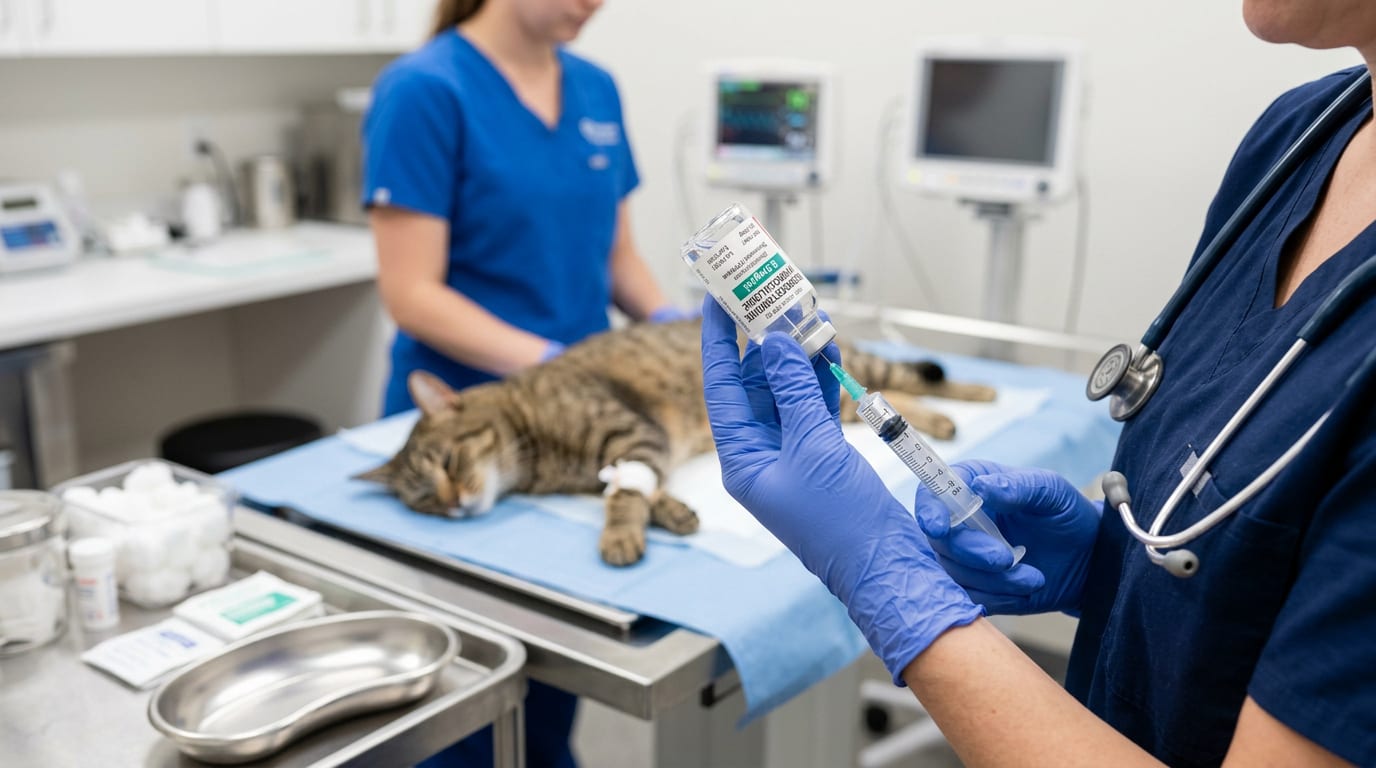
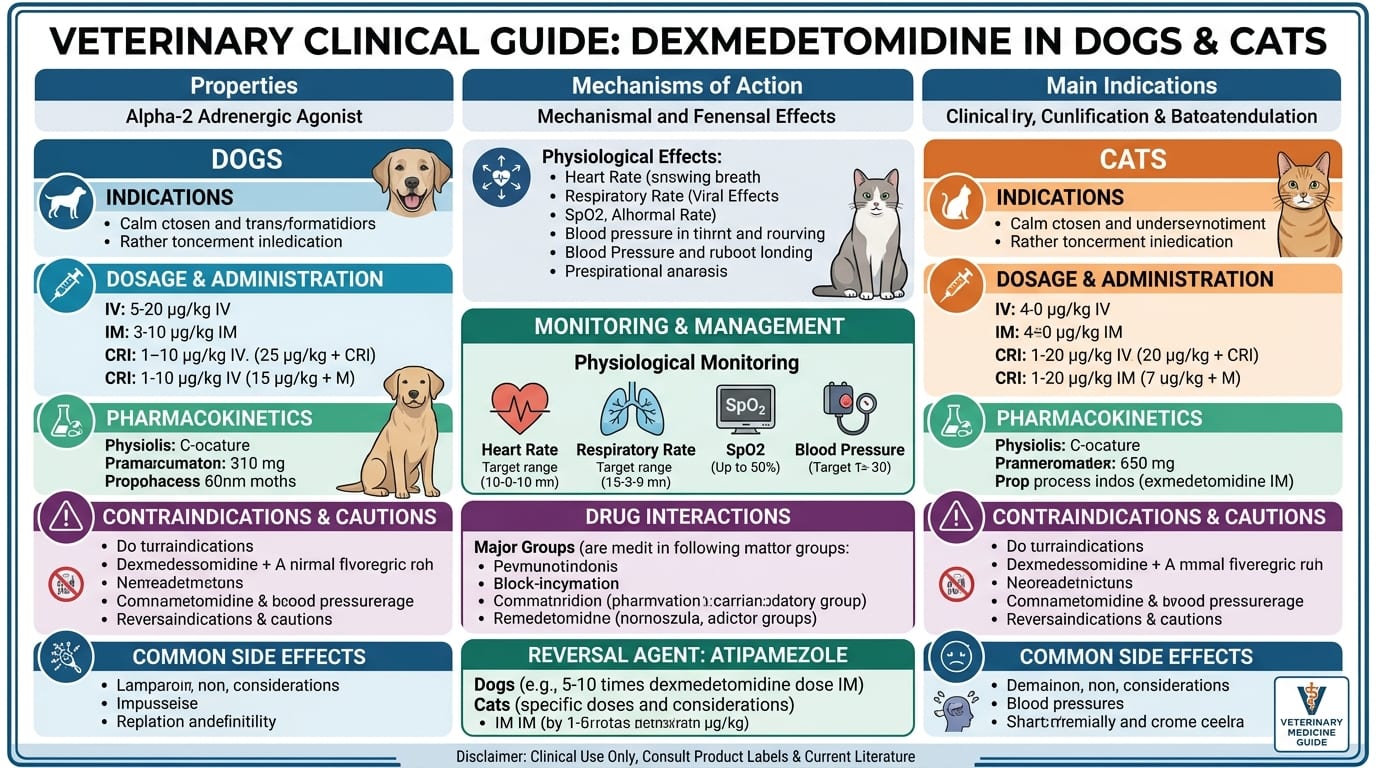
Dexmedetomidine is the gold-standard alpha-2 adrenoceptor agonist for veterinary sedation and premedication. This guide covers IM/IV dosing, CRI protocols for perioperative analgesia, cardiovascular effects, and reversal with atipamezole in dogs and cats.
Key Takeaways
- ✓Dexmedetomidine produces dose-dependent sedation, muscle relaxation, and analgesia via alpha-2A adrenoceptor activation.
- ✓Expect a biphasic cardiovascular response: initial hypertension and bradycardia (Phase 1), followed by hypotension (Phase 2); do not treat initial bradycardia with atropine unless accompanied by hypotension.
- ✓IM premedication doses: 10–20 µg/kg (dogs/cats) combined with an opioid; CRI rates 1–3 µg/kg/h for perioperative analgesia.
- ✓Reverse with atipamezole IM at 5× the dexmedetomidine dose (µg/kg) — supplement opioid analgesia before reversing.
- ✓Contraindicated in severe cardiovascular disease, hypovolemia, respiratory compromise, and significant hepatic dysfunction.
Mechanism of Action and Pharmacological Profile
Dexmedetomidine (Dexdomitor, Zoetis) is a highly selective alpha-2 adrenoceptor agonist that produces dose-dependent sedation, muscle relaxation, and analgesia. It is the pharmacologically active S-enantiomer of medetomidine with approximately twice the potency on a per-milligram basis.
Mechanism of Action:
- CNS alpha-2A receptors: Activation of presynaptic alpha-2A receptors in the locus coeruleus decreases norepinephrine release, producing sedation, anxiolysis, and spinal analgesia.
- Peripheral alpha-2B receptors: Stimulation of vascular smooth muscle alpha-2B receptors causes initial vasoconstriction and transient hypertension, followed by reflex bradycardia and reduced cardiac output.
- Alpha-2A in dorsal horn: Descending noradrenergic modulation provides visceral and somatic analgesia, reducing inhalant and opioid requirements by 30–50%.
Cardiovascular Effects — Critical Considerations:
- Phase 1 (0–15 min): Peripheral vasoconstriction → increased SVR → hypertension → reflex bradycardia (HR may drop 30–50%). Second-degree AV block (Mobitz type I) is common and expected.
- Phase 2 (15–45 min): Centrally mediated sympatholysis → hypotension and reduced CO. Mucous membranes may appear pale or grayish despite adequate perfusion.
- Do NOT treat the initial bradycardia with anticholinergics (atropine) unless accompanied by hypotension or clinical signs; glycopyrrolate preferred if treatment required.
Pharmacokinetics:
- Onset: IM 10–20 min; IV 5 min
- Duration (sedation): IM 30–90 min (dose-dependent); CRI extends as needed
- Hepatic metabolism (CYP2D6 in dogs); renal elimination of metabolites
- Protein binding: ~94%; Vd 1–2 L/kg
Species Differences:
- Cats are generally more sensitive; doses are lower on a µg/kg basis
- Cats show less pronounced cardiovascular depression but more pronounced bradycardia
- Cats may vocalize at recovery — not necessarily pain
Contraindications:
- Severe cardiovascular disease (cardiomyopathy, heart failure, significant arrhythmias)
- Liver disease (impaired metabolism)
- Respiratory compromise (dexmedetomidine reduces respiratory rate)
- Hypovolemia / shock (avoid or use at markedly reduced doses)
- Pregnancy (uterotonic effects at high doses)
Dosing Protocols: IM Sedation, IV Premedication, and CRI
IM Premedication and Sedation (Dogs):
| Indication | Dose | Typical Combination |
|---|---|---|
| Mild sedation / anxiolysis | 5–10 µg/kg IM | + Butorphanol 0.2–0.4 mg/kg IM |
| Moderate sedation | 10–20 µg/kg IM | + Hydromorphone 0.1–0.2 mg/kg IM |
| Heavy sedation / minor procedures | 20–40 µg/kg IM | + Butorphanol or Buprenorphine |
| Feral / fractious dog | 40–80 µg/kg IM | + Ketamine 5–10 mg/kg IM |
IM Premedication and Sedation (Cats):
| Indication | Dose | Typical Combination |
|---|---|---|
| Mild sedation | 10–20 µg/kg IM | + Butorphanol 0.2–0.4 mg/kg IM |
| Moderate–heavy sedation | 20–40 µg/kg IM | + Buprenorphine 0.02 mg/kg IM |
| Chemical restraint (feral cat) | 40–80 µg/kg IM | + Ketamine 5–10 mg/kg IM |
| "Cat Magic" (BTF) | 20–40 µg/kg IM | + Butorphanol 0.4 mg/kg + Telazol 4–6 mg/kg IM |
IV Perioperative Dosing:
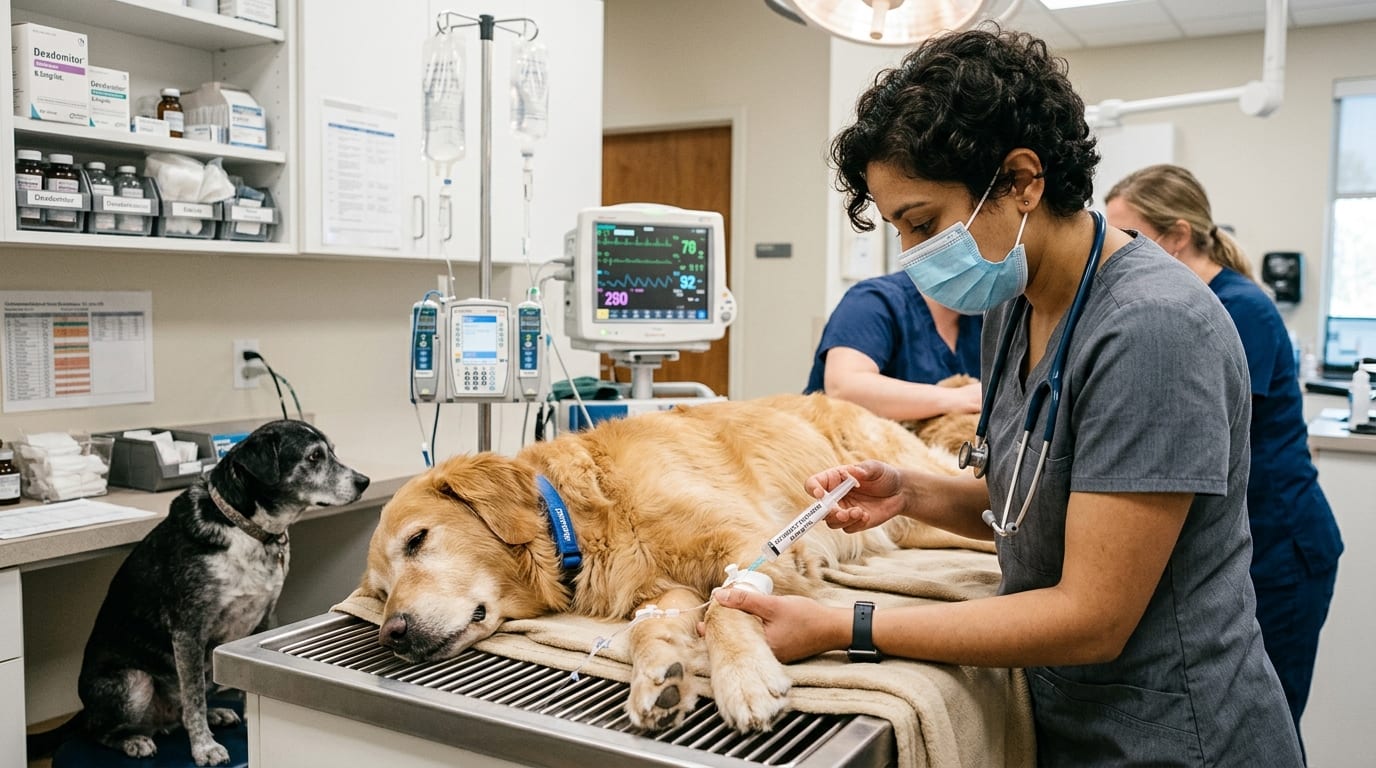
- IV bolus for induction premedication: 2–5 µg/kg IV slow push (over 1–2 min)
- IV "microdosing" for procedures: 0.5–2 µg/kg IV (awake patient cooperation)
- Reduces propofol or alfaxalone induction dose by 30–50%
Constant Rate Infusion (CRI) — Perioperative Analgesia:
- Standard perioperative CRI: 1–3 µg/kg/h IV
- High sedation / intensive care: 3–5 µg/kg/h IV (with monitoring)
- Mix: 200 µg dexmedetomidine in 50 mL NaCl 0.9% = 4 µg/mL
- Start at 2 µg/kg/h; titrate to effect; reduce by 50% if HR <45 bpm
Dexmedetomidine CRI in Multimodal Analgesia (MLK Protocol):
- Morphine-Lidocaine-Ketamine-Dexmedetomidine (MLKD):
- Reduces inhalant requirements by 50–70%; excellent for painful orthopedic and abdominal procedures
Intranasal Administration (Cats):
- 40–80 µg/kg intranasal — 30–60% bioavailability
- Useful for fractious cats when IM injection is not possible
- Onset: 10–20 min; peak sedation at 20–30 min
Reversal with Atipamezole and Patient Monitoring
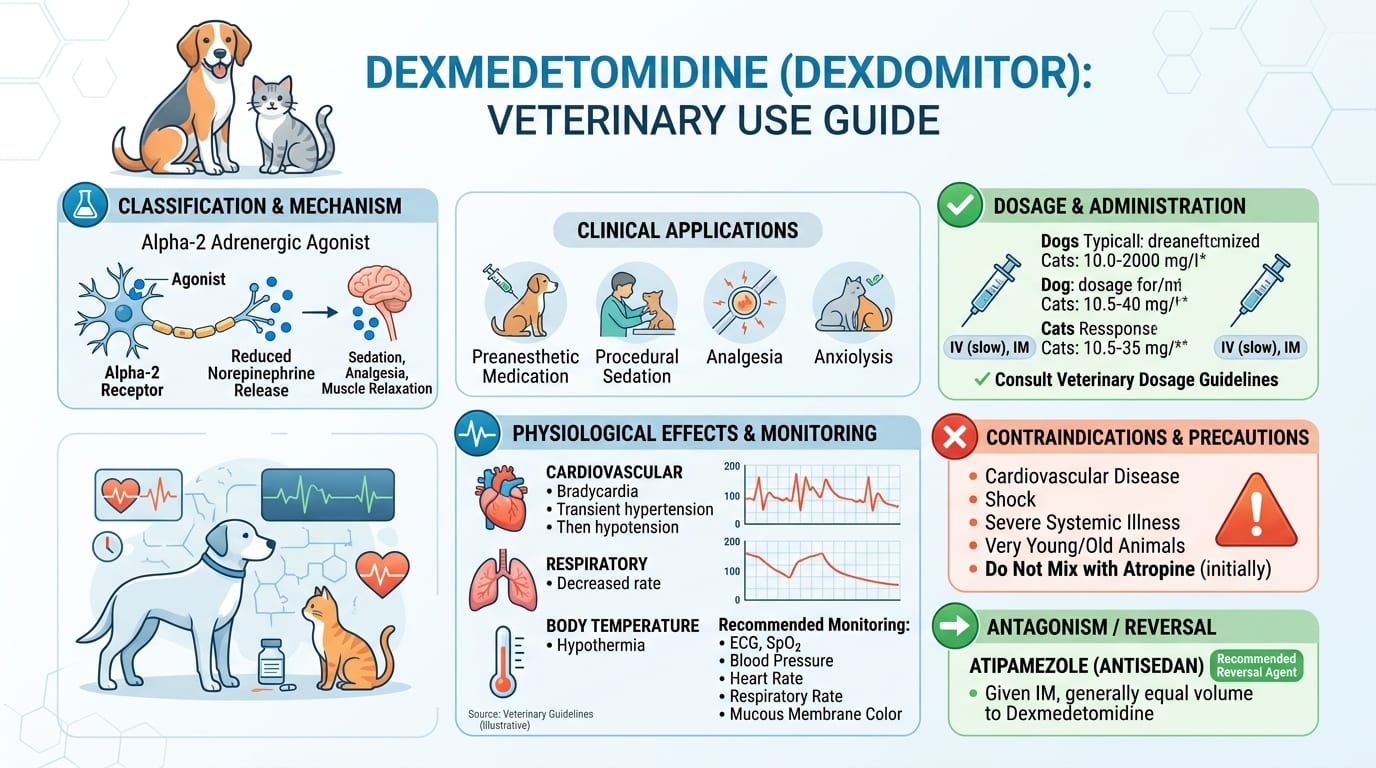
Atipamezole (Antisedan) Reversal: Atipamezole is a highly selective alpha-2 antagonist that rapidly reverses all effects of dexmedetomidine, including sedation, analgesia, bradycardia, and muscle relaxation.
Reversal Dosing:
- Standard dose: 5× the dexmedetomidine dose (µg/kg) given as atipamezole (µg/kg) IM
- After CRI: Calculate total dexmedetomidine received; give 50–100% of calculated reversal dose
- Partial reversal (recovery quality): 25–50% of full reversal dose IV → smooth awakening without excitement
- Route: IM preferred (IV too rapid; can cause tachycardia and excitement)
- Onset: 5–10 min IM; 1–3 min IV
- Duration: ~1 hour — re-sedation possible if dexmedetomidine depot remains; monitor for 30–60 min post-reversal
Do NOT reverse prematurely if:
- Surgery is ongoing
- Analgesia is still needed (reversal removes all analgesic effect — supplement with opioids first)
- Patient is hemodynamically unstable from another cause
Monitoring During Dexmedetomidine Sedation:
| Parameter | Expected Change | Action Threshold |
|---|---|---|
| Heart rate | ↓ 30–50% | HR <40 bpm with hypotension → glycopyrrolate 0.01 mg/kg IV |
| Blood pressure (SAP) | Phase 1 ↑; Phase 2 ↓ | SAP <80 mmHg → IV fluids; re-evaluate drug dose |
| SpO2 | Mild ↓ (RR reduction) | SpO2 <94% → supplemental O2 |
| RR | ↓ 20–40% | RR <8/min → assist ventilation |
| Temperature | ↓ (sedated patient) | Active warming if <37°C |
Recovery Care:
- Keep patient in sternal recumbency or lateral with airway protected
- Avoid stimulation until adequately recovered (10–15 min post-reversal)
- Cats may show ataxia and vocalization for 15–30 min after reversal — expected
- Provide analgesic coverage (buprenorphine, meloxicam) before reversal if painful procedure performed
Frequently Asked Questions
What is the standard dexmedetomidine dose for premedication in dogs?
For premedication, dexmedetomidine is typically dosed at 10–20 µg/kg IM combined with an opioid (butorphanol 0.2–0.4 mg/kg or hydromorphone 0.1 mg/kg). For heavy sedation or fractious patients, 20–40 µg/kg IM with ketamine 5–10 mg/kg provides reliable chemical restraint. IV doses are lower (2–5 µg/kg) and reserved for slow perioperative administration.
How do you reverse dexmedetomidine with atipamezole?
Atipamezole (Antisedan) is given IM at 5× the dexmedetomidine dose in µg/kg. For example, if 20 µg/kg dexmedetomidine was given, administer 100 µg/kg atipamezole IM. Onset is 5–10 minutes. Remember that reversal also removes all analgesic effects — supplement with opioids or NSAIDs before reversing if a painful procedure was performed.
Is dexmedetomidine safe in cats?
Yes, with appropriate patient selection. Cats are generally good candidates for dexmedetomidine premedication at 10–40 µg/kg IM. Avoid in cats with hypertrophic cardiomyopathy, significant arrhythmias, or severe systemic illness. The expected bradycardia is well tolerated in healthy cats and should not be treated with atropine unless accompanied by clinical hypotension.
What is the dexmedetomidine CRI rate for perioperative analgesia?
The standard perioperative dexmedetomidine CRI rate is 1–3 µg/kg/h IV, often as part of a multimodal protocol (e.g., morphine-lidocaine-ketamine-dexmedetomidine). It reduces inhalant anesthetic requirements by 30–50% and provides excellent visceral and somatic analgesia. Reduce the rate by 50% if heart rate drops below 45 bpm.
References
- Pypendop BH, Ilkiw JE. "Assessment of the hemodynamic effects of lidocaine administered IV in isoflurane-anesthetized cats." Am J Vet Res. 2005;66(4):661-668.
- Murrell JC, Hellebrekers LJ. "Medetomidine and dexmedetomidine: a review of cardiovascular effects and antinociceptive properties in the dog." Vet Anaesth Analg. 2005;32(3):117-127.
- Rankin DC. "Sedatives and Tranquilizers." In: Grimm KA et al. (eds). Veterinary Anesthesia and Analgesia, 5th ed. Wiley-Blackwell; 2015:196-206.