Quick Answer
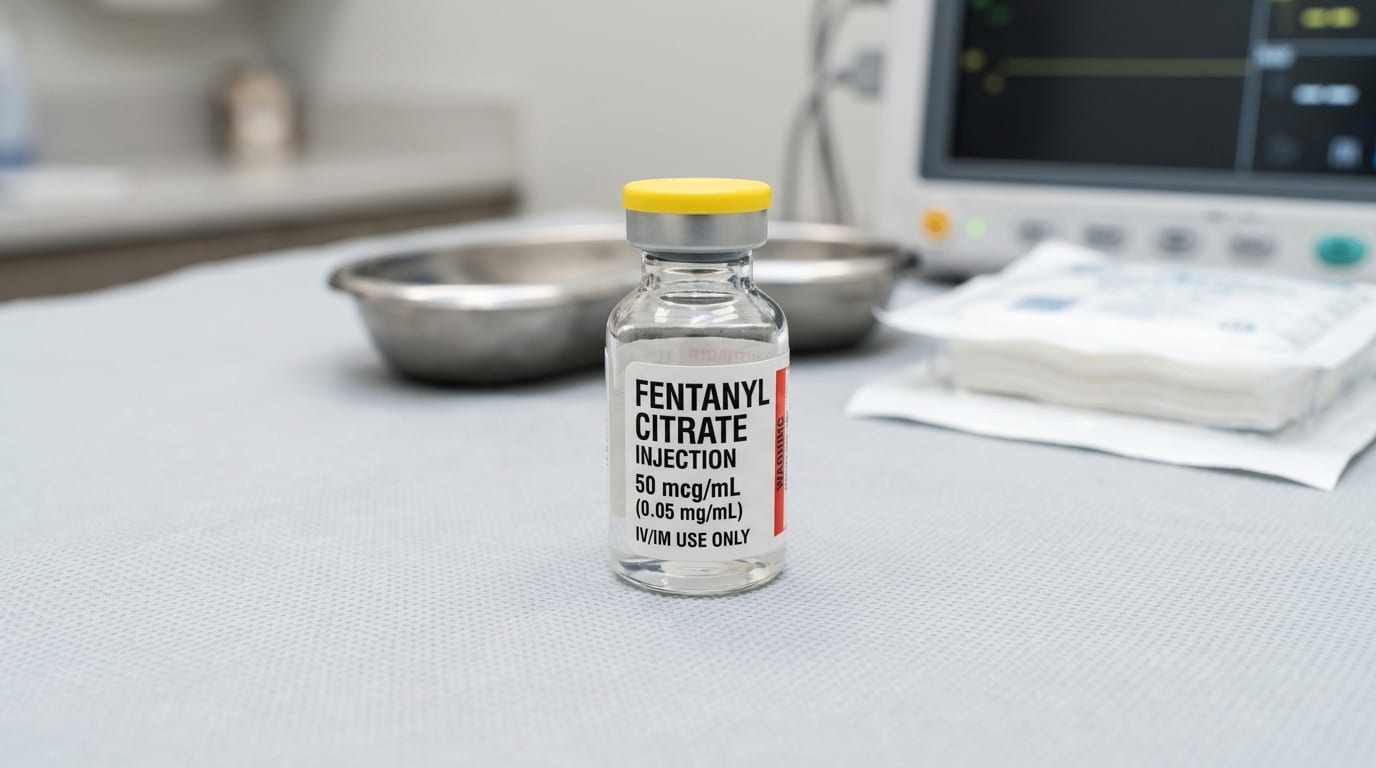
Fentanyl is a synthetic mu-opioid 100x more potent than morphine, used in veterinary medicine for perioperative analgesia, CRI in critically ill patients, and transdermal patch delivery for chronic cancer pain. This guide covers IV CRI protocols, patch application and limitations, and MAC-sparing effects in anesthesia.
Key Takeaways
- ✓Fentanyl is 75–100x more potent than morphine; standard IV dose is 2–5 mcg/kg (dogs) and 2–3 mcg/kg (cats) given slowly over 2–3 min.
- ✓Intraoperative CRI at 5–20 mcg/kg/h (dogs) provides excellent analgesia and reduces isoflurane MAC by 20–40%.
- ✓Transdermal patches have 12–24 h onset in dogs and 6–12 h in cats — always bridge with IV opioids perioperatively.
- ✓Rapid IV bolus causes vagally-mediated bradycardia and "wooden chest" syndrome — always give slowly.
- ✓Fentanyl is DEA Schedule II — requires detailed logging, secure storage, and documented waste disposal.
- ✓Naloxone (0.01 mg/kg IV titrated) reverses fentanyl but may restore pain — titrate carefully.
Fentanyl Pharmacology and Potency vs Morphine
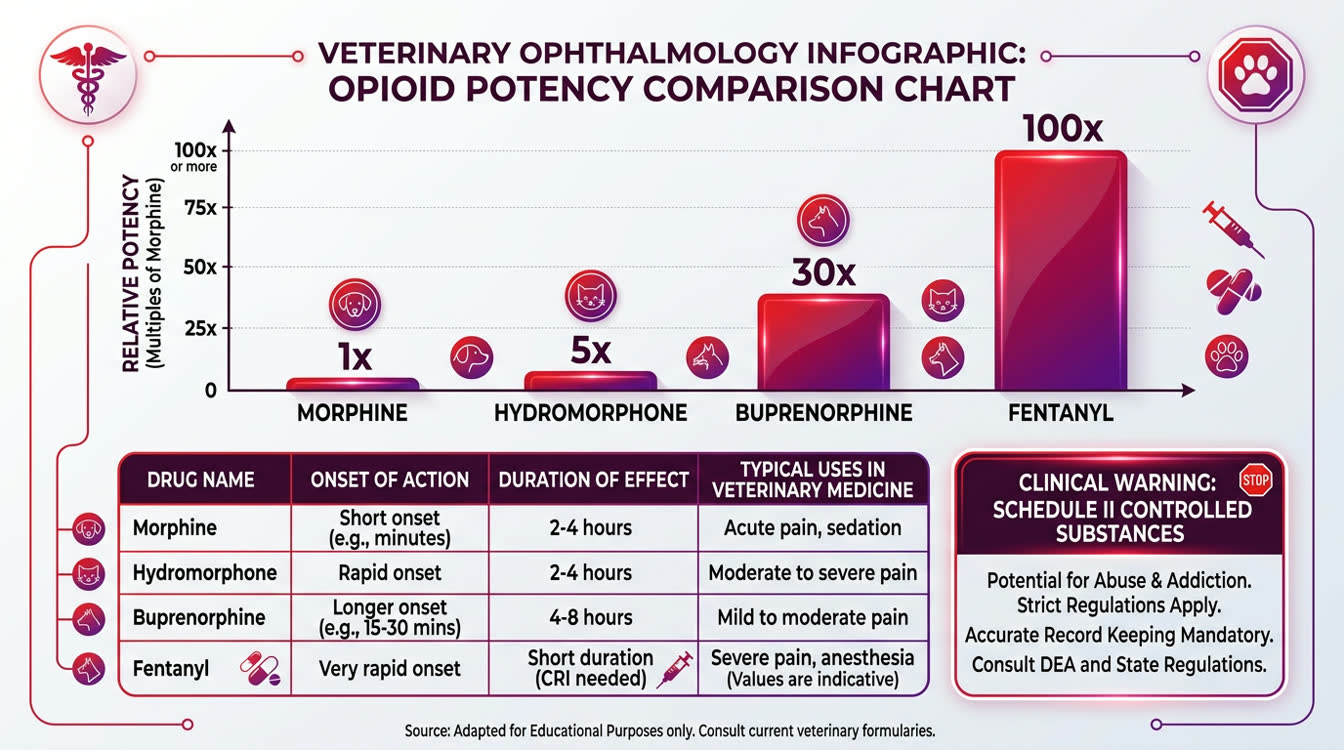
Fentanyl is a phenylpiperidine synthetic opioid that acts as a full mu-opioid receptor agonist with 75–100x the potency of morphine on a per-milligram basis. Its high lipophilicity produces rapid onset and short duration of action with IV administration — ideal for intraoperative analgesia.
Pharmacokinetic Profile
| Parameter | Dogs | Cats |
|---|---|---|
| Onset (IV) | 1–2 min | 1–2 min |
| Duration (IV bolus) | 20–40 min | 20–30 min |
| Half-life | 2–4 h | 1.5–3 h |
| CRI steady-state | 30–60 min | 30–60 min |
| Protein binding | ~80% | ~80% |
| Metabolism | Hepatic (CYP3A4) | Hepatic |
Potency Equivalence
| Drug | Equianalgesic Dose | Relative Potency |
|---|---|---|
| Morphine | 0.5 mg/kg | 1x |
| Hydromorphone | 0.1 mg/kg | 5x |
| Fentanyl | 0.005–0.01 mg/kg (5–10 mcg/kg) | 100x |
| Buprenorphine | 0.02 mg/kg | 30x |
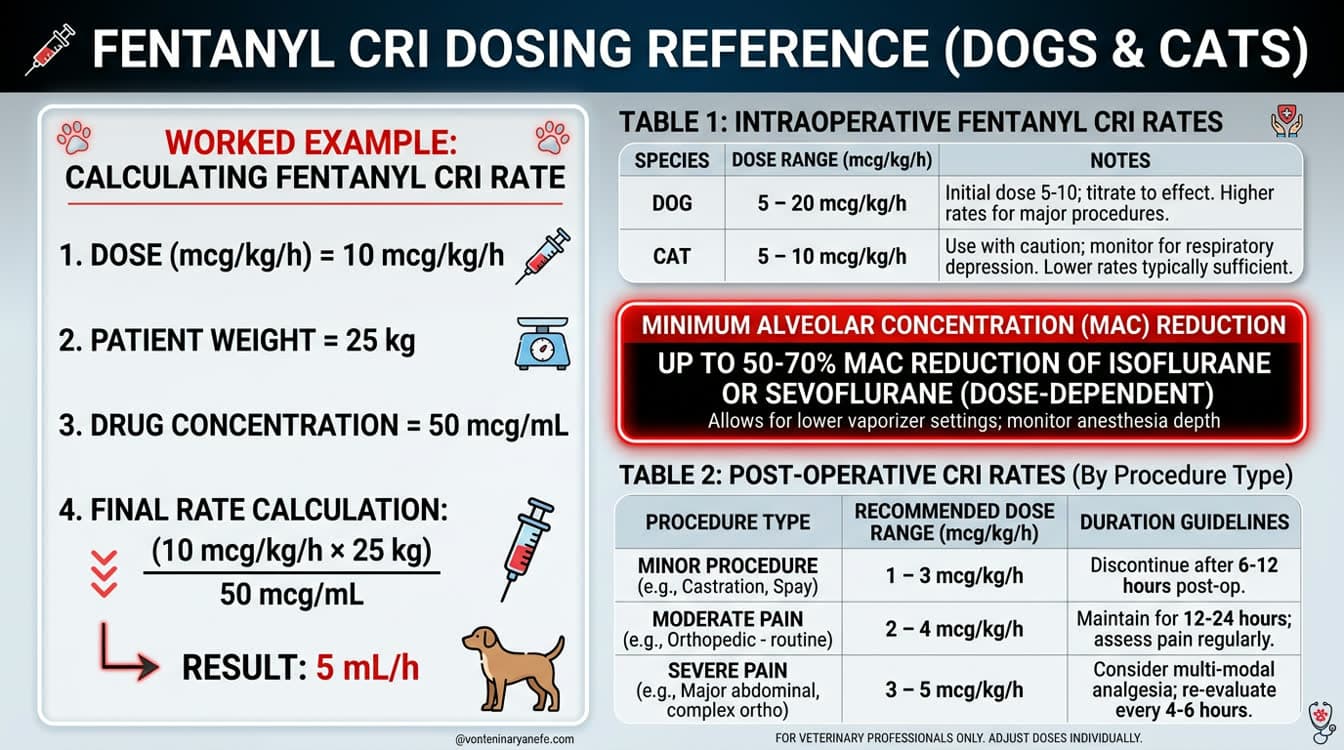
MAC-Sparing Effect (Intraoperative) Fentanyl CRI reduces inhalant anesthetic (isoflurane, sevoflurane) requirements by 20–40%, allowing lighter planes of anesthesia with improved cardiovascular stability.
Schedule II DEA Controlled Substance Fentanyl requires DEA Schedule II logging, dedicated storage, and waste documentation in all practices. Transdermal patches require cut-and-flush disposal after use.
IV Bolus, CRI Dosing, and Perioperative Protocols
IV Bolus (Acute Pain or Pre-induction)
| Species | Dose | Route | Indication |
|---|---|---|---|
| Dog | 2–5 mcg/kg | IV slowly over 2–3 min | Pre-induction, acute severe pain |
| Cat | 2–3 mcg/kg | IV slowly over 2–3 min | Pre-induction, acute severe pain |
Administer fentanyl boluses SLOWLY. Rapid IV injection causes histamine-independent bradycardia via vagal stimulation and chest wall rigidity ("wooden chest" syndrome) at high doses.
Constant Rate Infusion (CRI) — Intraoperative
| Species | CRI Rate | Notes |
|---|---|---|
| Dog | 5–20 mcg/kg/h | Start at 5, titrate up; reduce isoflurane 20–40% |
| Cat | 5–10 mcg/kg/h | Cats more sensitive; start low |
CRI Setup (Ready Reference) ``` Example: 25 kg dog at 10 mcg/kg/h Total fentanyl needed: 25 kg x 10 mcg/kg/h = 250 mcg/h Fentanyl concentration: 50 mcg/mL Infusion rate: 250/50 = 5 mL/h ```
Post-operative Fentanyl CRI
| Indication | Rate | Duration |
|---|---|---|
| Major orthopedic surgery | 5–10 mcg/kg/h | 4–12 h post-op |
| Thoracotomy, major abdominal | 5–15 mcg/kg/h | 6–24 h post-op |
| Critical care pain (ICU) | 2–10 mcg/kg/h | Titrate to effect |
MLK Protocol (Morphine-Lidocaine-Ketamine)
- Morphine 0.1–0.2 mg/kg/h
- Lidocaine 1–3 mg/kg/h (dogs only — cats are sensitive to lidocaine)
- Ketamine 0.1–0.6 mg/kg/h
Fentanyl Transdermal Patches: Application, Limitations, and Monitoring
Fentanyl Transdermal Patches
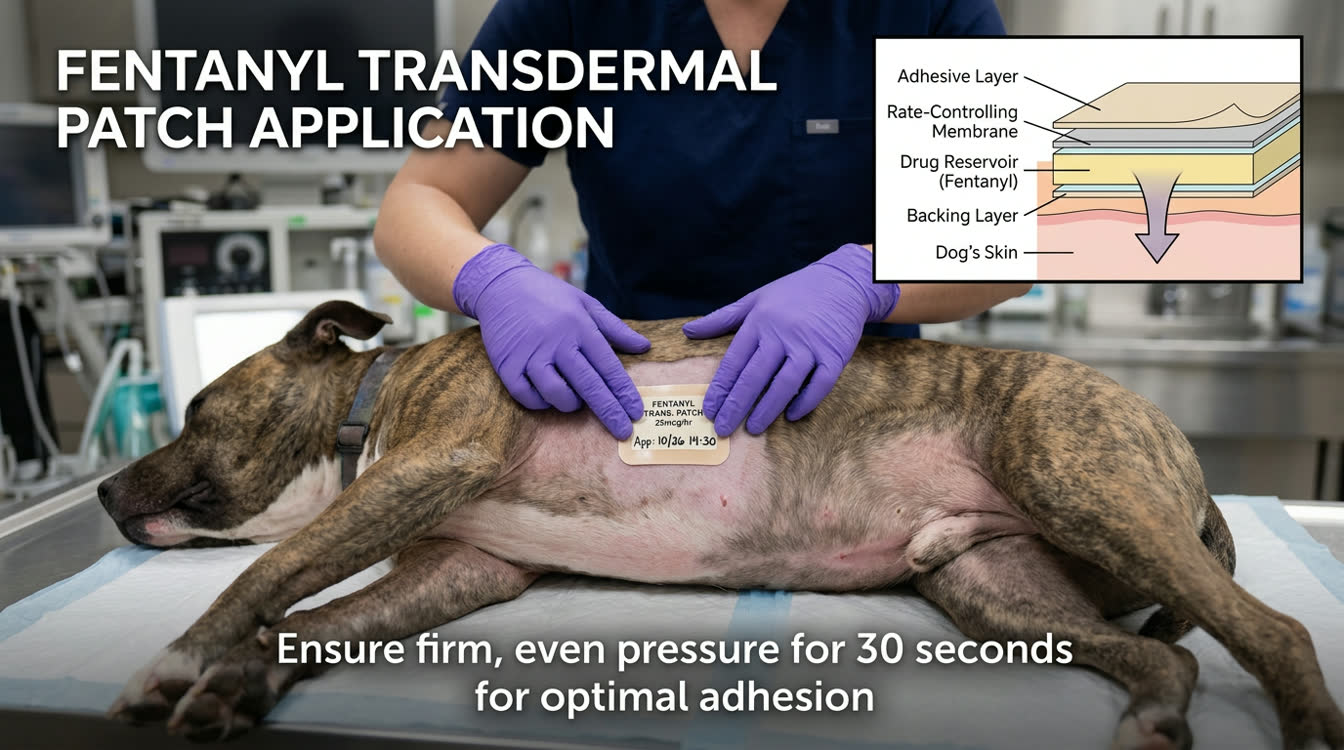
Patches (Duragesic and generic) deliver fentanyl continuously through the skin for 72 h in dogs and 104 h in cats.
Available Patch Sizes
| Patch Size | Delivery Rate | Typical Patient |
|---|---|---|
| 12.5 mcg/h | 12.5 mcg/h | Cats <5 kg |
| 25 mcg/h | 25 mcg/h | Cats >5 kg, dogs <10 kg |
| 50 mcg/h | 50 mcg/h | Dogs 10–20 kg |
| 75 mcg/h | 75 mcg/h | Dogs 20–30 kg |
| 100 mcg/h | 100 mcg/h | Dogs >30 kg |
Application Protocol 1. Clip and clean skin (ventral neck or lateral thorax — avoid high motion areas) 2. Wipe with alcohol — allow to dry completely 3. Apply patch with firm hand pressure for 60 seconds 4. Label with application time and date 5. Onset of analgesic effect: 12–24 h in dogs; 6–12 h in cats 6. Bridge with IV/IM opioids during the onset delay period
Important Limitations
- Highly variable skin absorption between individuals (up to 50% variation)
- Fever, fever blankets, or warming devices increase absorption (overdose risk)
- Cannot be cut (dose cannot be reduced once applied)
- Not appropriate as sole analgesic for surgical procedures
- Disposal: cut in half and flush in toilet per DEA guidelines
Overdose Signs
- Excessive sedation, miosis, bradycardia, respiratory depression
- Reversal: naloxone 0.01 mg/kg IV — titrate to restore respiration without reversing analgesia
Related Articles: [Tramadol for Dogs and Cats](/articles/tramadol-dogs-cats) | [Ketamine Analgesia in Dogs and Cats](/articles/ketamine-analgesia-dogs-cats)
Frequently Asked Questions
How is fentanyl used in veterinary anesthesia?
Fentanyl is most commonly used as an intraoperative CRI at 5–20 mcg/kg/h in dogs and 5–10 mcg/kg/h in cats. It provides potent intraoperative analgesia, reduces isoflurane requirements by 20–40%, and improves cardiovascular stability. IV boluses of 2–5 mcg/kg are used for pre-induction analgesia or acute breakthrough pain.
When do fentanyl patches start working in dogs?
Fentanyl patches have a slow onset of 12–24 hours in dogs due to the time required to build up drug in the skin reservoir. Cats achieve therapeutic levels faster (6–12 h). Always bridge the onset period with IV or IM opioids when placing a patch perioperatively.
Can fentanyl be reversed in veterinary patients?
Yes. Naloxone (0.01 mg/kg IV) reverses fentanyl and all mu-opioid effects. Titrate the dose carefully to restore ventilation without reversing all analgesia. Because fentanyl has a shorter duration than naloxone in some patients, monitor for re-narcotization after reversal.
What is the difference between fentanyl and buprenorphine for cats?
Fentanyl is a full mu-opioid agonist with higher ceiling effect and is used for moderate-to-severe pain or during anesthesia. Buprenorphine (0.01–0.02 mg/kg OTM q6–8h) is a partial agonist better suited for mild-to-moderate pain management at home. Buprenorphine is easier to administer and has fewer respiratory effects at standard doses.
References
- Lamont LA, Mathews KA. Opioids, nonsteroidal anti-inflammatories, and analgesic adjuvants. In: Tranquilli WJ, Thurmon JC, Grimm KA, eds. Lumb and Jones Veterinary Anesthesia and Analgesia. 4th ed. Blackwell; 2007.
- Egger CM, Duke T, Archer J, Cribb PH. Comparison of plasma fentanyl concentrations by using three transdermal fentanyl patch sizes in dogs. Vet Surg. 1998;27(2):159-166.
- Steagall PV, Taylor PM, Rodrigues LC, et al. Analgesia for cats after ovariohysterectomy with either buprenorphine or carprofen alone or in combination. Vet Rec. 2009;164(12):359-363.