Quick Answer
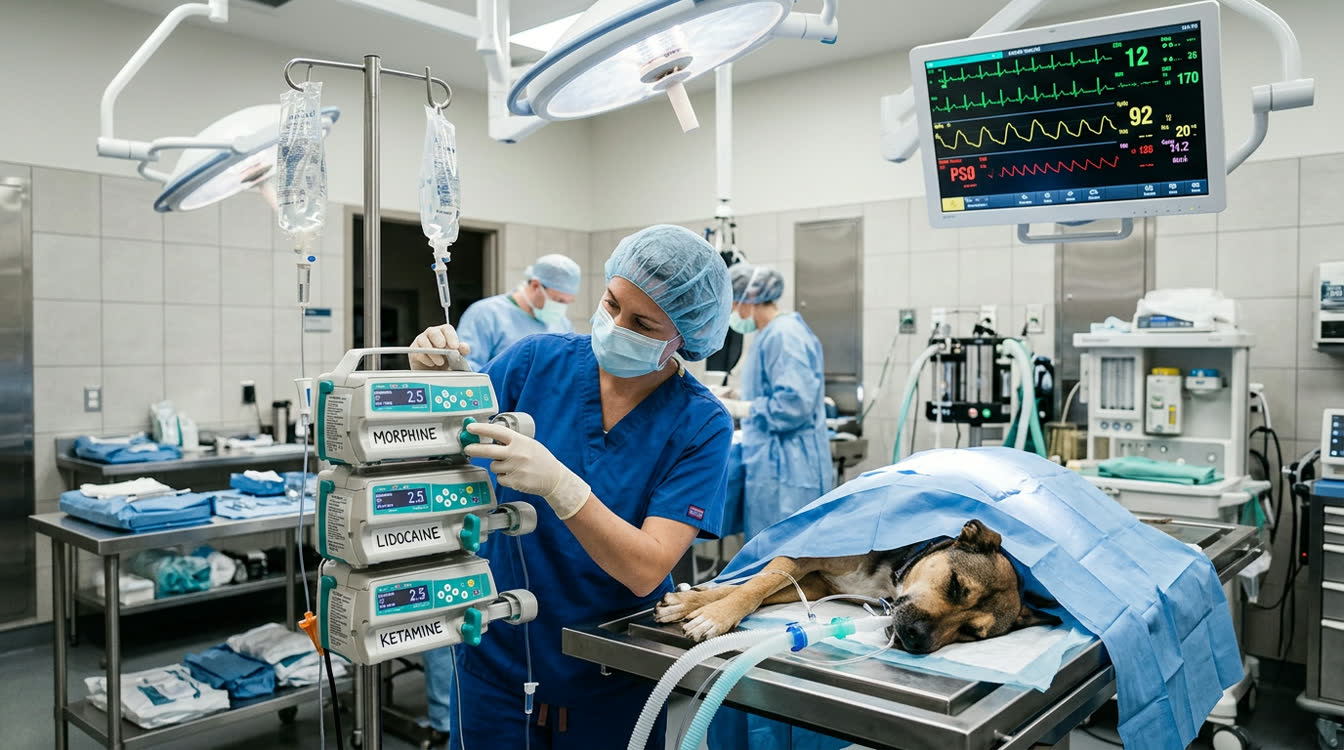
At sub-anesthetic doses, ketamine provides powerful analgesia by blocking NMDA receptors and preventing central sensitization ("wind-up"). This guide covers analgesic CRI protocols, the MLK combination, its role in opioid-sparing anesthesia, and emerging evidence for perioperative ketamine in veterinary pain management.
Key Takeaways
- ✓Sub-anesthetic ketamine CRI (0.1–0.6 mg/kg/h dogs; 0.1–0.4 mg/kg/h cats) prevents central sensitization by blocking spinal NMDA receptors.
- ✓The MLK protocol (morphine-lidocaine-ketamine) is a standard multimodal CRI for major surgeries in dogs — do NOT include lidocaine in cats.
- ✓Ketamine uniquely stimulates the cardiovascular system — valuable in hemodynamically unstable trauma patients, but dangerous in HCM cats.
- ✓A loading bolus of 0.5 mg/kg IV before CRI initiation achieves therapeutic levels faster.
- ✓Recovery dysphoria at dissociative doses is managed with concurrent benzodiazepine or alpha-2 agonist; minimal issue at analgesic CRI doses.
- ✓Ketamine is DEA Schedule III — requires controlled substance logging and secure storage.
NMDA Receptor Antagonism and Central Sensitization Prevention
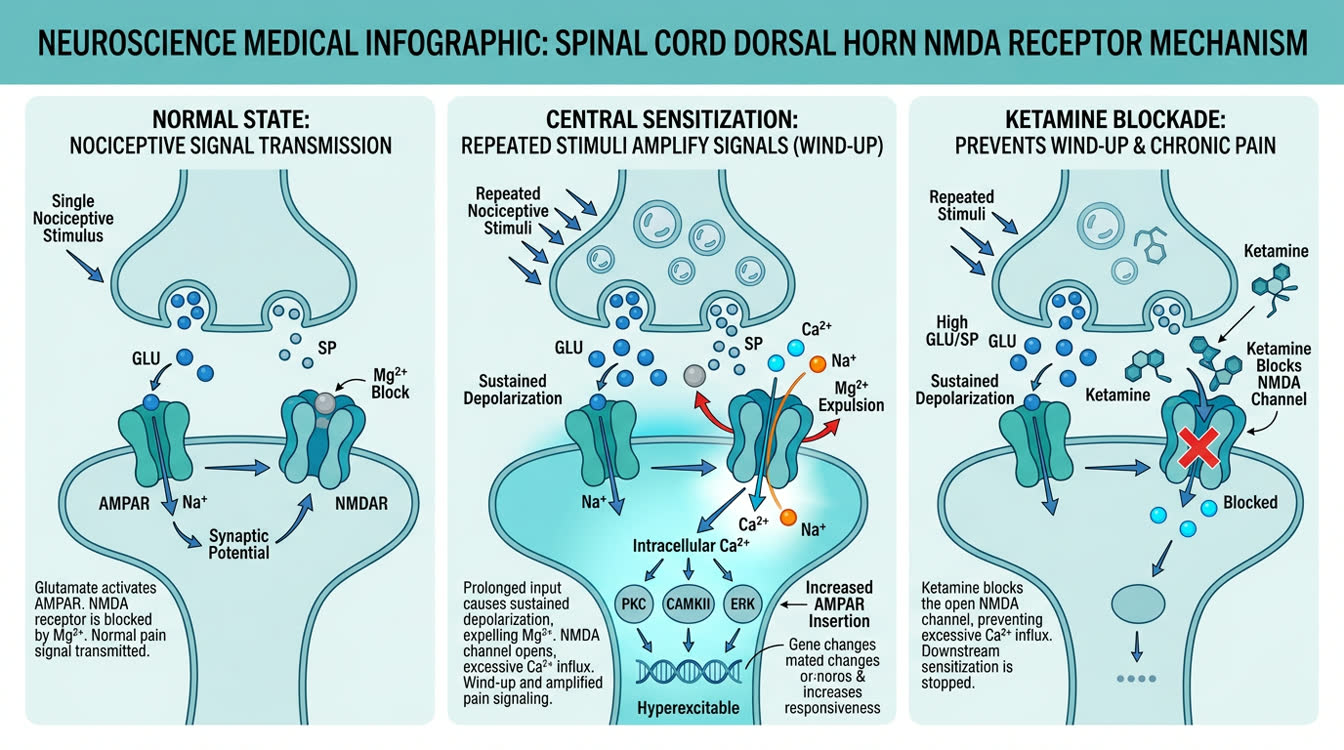
Ketamine's analgesic effects at sub-anesthetic doses are mediated primarily through non-competitive antagonism of the NMDA (N-methyl-D-aspartate) receptor in the spinal cord dorsal horn.
Central Sensitization ("Wind-up") and Why It Matters
- Hyperalgesia (exaggerated response to painful stimuli)
- Allodynia (pain from normally non-painful stimuli)
- Prolonged postoperative pain beyond expected healing time
Ketamine's Role By blocking NMDA receptors BEFORE and DURING painful stimuli, ketamine: 1. Prevents establishment of central sensitization 2. Reduces postoperative pain scores and analgesic requirements 3. Provides opioid-sparing effect (reduces fentanyl/morphine dose needed)
Dissociative vs Analgesic Doses
| Effect | Dose Range (Dogs/Cats) |
|---|---|
| Analgesia only (sub-anesthetic) | 0.1–0.6 mg/kg/h CRI |
| Induction/dissociation | 5–10 mg/kg IV |
| Maintenance (TIVA) | 0.5–2 mg/kg/h CRI |
Preserved Laryngeal Reflexes Unlike most induction agents, ketamine preserves laryngeal reflexes and increases pharyngeal tone — a useful property in unstable patients or for short procedures without endotracheal intubation (use caution in regurgitation-prone patients).
Sub-anesthetic CRI Protocols and MLK Combination
Sub-anesthetic Ketamine CRI Dosing
| Use Case | Dog CRI Rate | Cat CRI Rate | Duration |
|---|---|---|---|
| Perioperative analgesia | 0.1–0.6 mg/kg/h | 0.1–0.4 mg/kg/h | Intraop + 4–24 h post-op |
| Chronic pain (cancer, neuropathic) | 0.1–0.3 mg/kg/h | 0.1–0.2 mg/kg/h | 4–6 h intermittent |
| Post-traumatic pain | 0.3–0.6 mg/kg/h | 0.2–0.4 mg/kg/h | 12–24 h |
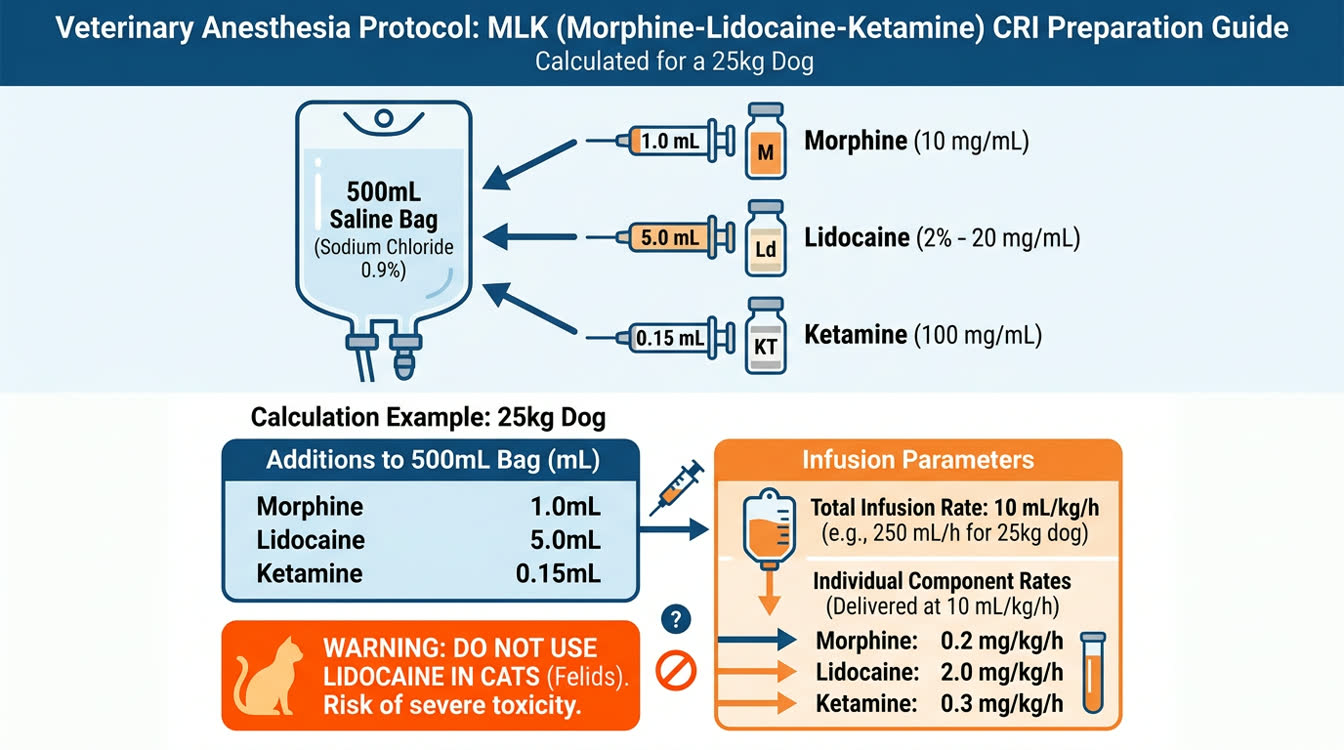
MLK (Morphine-Lidocaine-Ketamine) Protocol — Dogs Only
This three-drug CRI is a cornerstone of intraoperative multimodal analgesia in dogs:
```
- Morphine: 0.66 mg/kg added to bag
- Lidocaine: 3 mg/kg added to bag
- Ketamine: 0.66 mg/kg added to bag
- Infuse at 10 mL/kg/h intraoperatively
Individual rates at 10 mL/kg/h:
- Morphine: 0.13 mg/kg/h
- Lidocaine: 0.6 mg/kg/h
- Ketamine: 0.13 mg/kg/h
Fentanyl-Lidocaine-Ketamine (FLK) — Alternative for Dogs
- Fentanyl 10 mcg/kg/h + Lidocaine 1–2 mg/kg/h + Ketamine 0.3–0.6 mg/kg/h
- Preferred when morphine causes vomiting or histamine release
Cats and Lidocaine Warning Cats are significantly more sensitive to lidocaine systemic toxicity. Lidocaine CRI should not be used in cats at doses used in dogs. The KF (Ketamine-Fentanyl) CRI without lidocaine is preferred for cats.
Ketamine Loading Dose A loading bolus of 0.5 mg/kg IV slowly before starting CRI helps achieve therapeutic plasma levels faster. Rapid IV bolus may cause transient muscle rigidity and tachycardia.
Safety Profile, Cardiovascular Effects, and Clinical Applications
Cardiovascular Effects
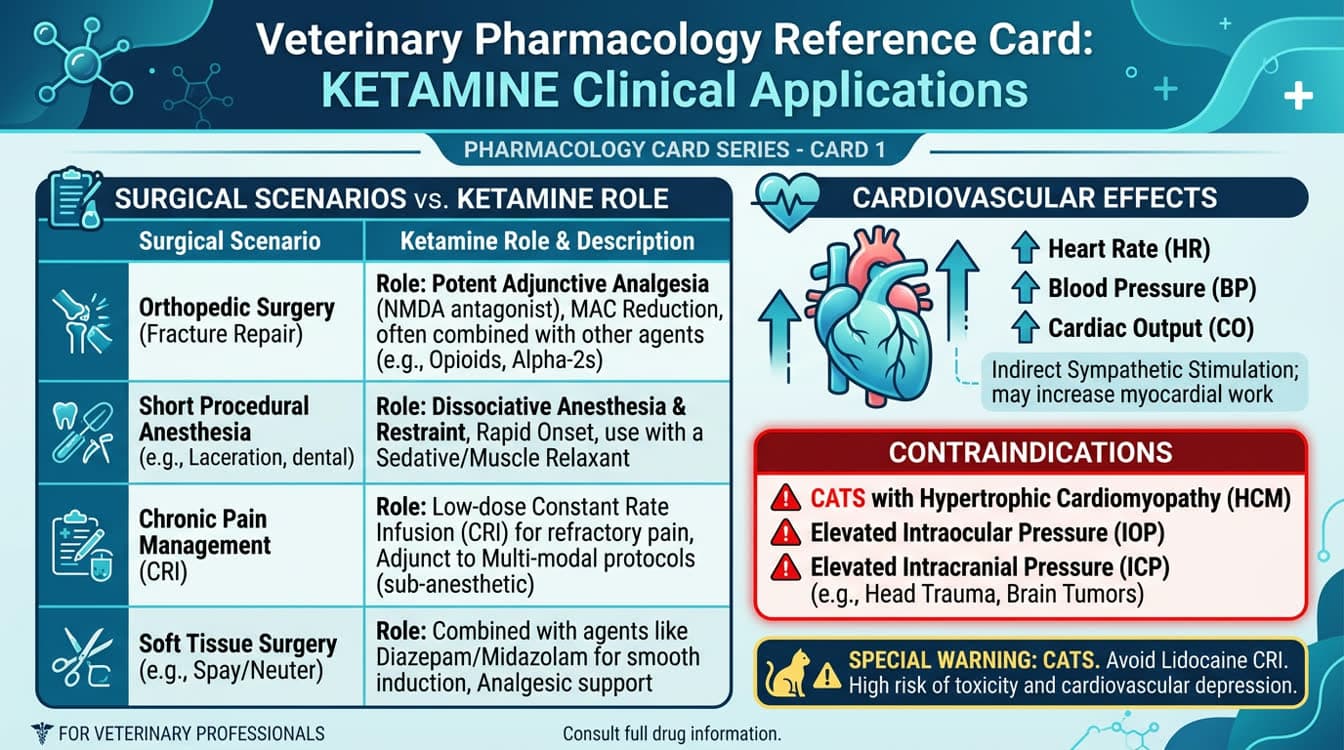
Ketamine is unique among veterinary anesthetic/analgesic agents in that it stimulates (rather than depresses) the cardiovascular system through centrally mediated sympathomimetic activity:
- Increases heart rate, cardiac output, and blood pressure
- Useful in hemodynamically unstable patients (trauma, hypovolemia)
- May be deleterious in patients where tachycardia is already present (HCM cats)
Contraindications
| Condition | Risk | Alternative |
|---|---|---|
| Hypertrophic cardiomyopathy (cats) | Tachycardia dangerous | Butorphanol, buprenorphine |
| Elevated intracranial pressure | ICP may increase | Propofol, alfaxalone |
| Hyperthyroidism | Exacerbates tachycardia | Use with caution + pretreatment |
| Seizure disorders | Lowers seizure threshold at high doses | Phenobarbital pretreatment |
Recovery Effects
- Dysphoria, vocalization, paddling ("recovery excitement")
- Prevention: co-administration of benzodiazepine (diazepam 0.2 mg/kg IV) or alpha-2 agonist
- Sub-anesthetic CRI: minimal recovery dysphoria
Clinical Applications Summary
| Scenario | Ketamine Role |
|---|---|
| Major orthopedic surgery (dogs) | MLK CRI perioperatively |
| Thoracic/abdominal surgery | KF CRI (cats), MLK (dogs) |
| Traumatic injury (unstable patient) | 0.5 mg/kg IV bolus for analgesia + cardiovascular support |
| Chronic neuropathic pain | 0.1–0.3 mg/kg/h CRI x 4–6 h sessions |
| Fentanyl CRI augmentation | Add ketamine 0.1–0.3 mg/kg/h to fentanyl CRI |
Related Articles: [Tramadol for Dogs and Cats](/articles/tramadol-dogs-cats) | [Fentanyl for Dogs and Cats](/articles/fentanyl-dogs-cats)
Frequently Asked Questions
What is the difference between anesthetic and analgesic doses of ketamine?
Anesthetic/dissociative doses are 5–10 mg/kg IV, causing unconsciousness, muscle rigidity, and catalepsy. Analgesic sub-anesthetic doses are 0.1–0.6 mg/kg/h as a CRI, causing no sedation but blocking NMDA receptors to prevent central sensitization. The analgesic CRI is compatible with normal consciousness in recovery.
Can ketamine be used in cats with heart disease?
Ketamine should be used cautiously or avoided in cats with hypertrophic cardiomyopathy (HCM). Its sympathomimetic effects increase heart rate and blood pressure, which can worsen dynamic outflow obstruction in HCM and trigger acute decompensation. Butorphanol or buprenorphine are safer alternatives in cardiac cats.
What is the MLK protocol and when is it used?
MLK (Morphine-Lidocaine-Ketamine) is a multimodal CRI combining three drugs with complementary mechanisms into one infusion bag, typically run at 10 mL/kg/h during surgery. It provides superior intraoperative analgesia versus single agents. MLK is used for major surgeries in dogs; avoid lidocaine in the protocol for cats due to feline lidocaine sensitivity.
Does ketamine lower the seizure threshold?
At high anesthetic doses, ketamine may lower the seizure threshold. At sub-anesthetic analgesic CRI doses (0.1–0.6 mg/kg/h), seizure induction is not a clinically relevant concern. In patients with known seizure disorders, consider using lower CRI rates and ensure appropriate anticonvulsant coverage.
References
- Murrell JC, Hellebrekers LJ. Medetomidine and dexmedetomidine: a review of cardiovascular effects and antinociceptive properties in the dog. Vet Anaesth Analg. 2005;32(3):117-127.
- Wagner AE, Walton JA, Hellyer PW, Gaynor JS, Mama KR. Use of low doses of ketamine administered by constant rate infusion as an adjunct for postoperative analgesia in dogs. J Am Vet Med Assoc. 2002;221(1):72-75.
- Slingsby LS, Waterman-Pearson AE. The post-operative analgesic effects of ketamine after canine ovariohysterectomy. Vet Anaesth Analg. 2000;27(2):77-82.