Quick Answer
Hypertrophic cardiomyopathy is the most common heart disease in cats. This guide covers echocardiographic diagnosis, ACVIM staging, drug selection (atenolol, diltiazem, furosemide, clopidogrel), and management of acute decompensated heart failure.
Key Takeaways
- ✓HCM diagnosis requires LV or IVS wall thickness ≥6 mm on echocardiography; always rule out hypertension and hyperthyroidism first.
- ✓LA:Ao ratio >1.5 (Stage B2) drives the decision to start clopidogrel 18.75 mg/cat/day for ATE prophylaxis.
- ✓Stage B1 cats do not benefit from drug therapy; annual echocardiography monitoring is sufficient.
- ✓Acute CHF in cats presents most commonly with bilateral pleural effusion; minimize stress and perform thoracocentesis early.
- ✓Furosemide 2–4 mg/kg IV/IM is the cornerstone of acute CHF treatment; recheck BUN, creatinine and electrolytes within 24 hours.
- ✓Teach owners to monitor resting respiratory rate at home; >40 breaths/min is an emergency threshold.
Echocardiographic Diagnosis and ACVIM Staging of Feline HCM
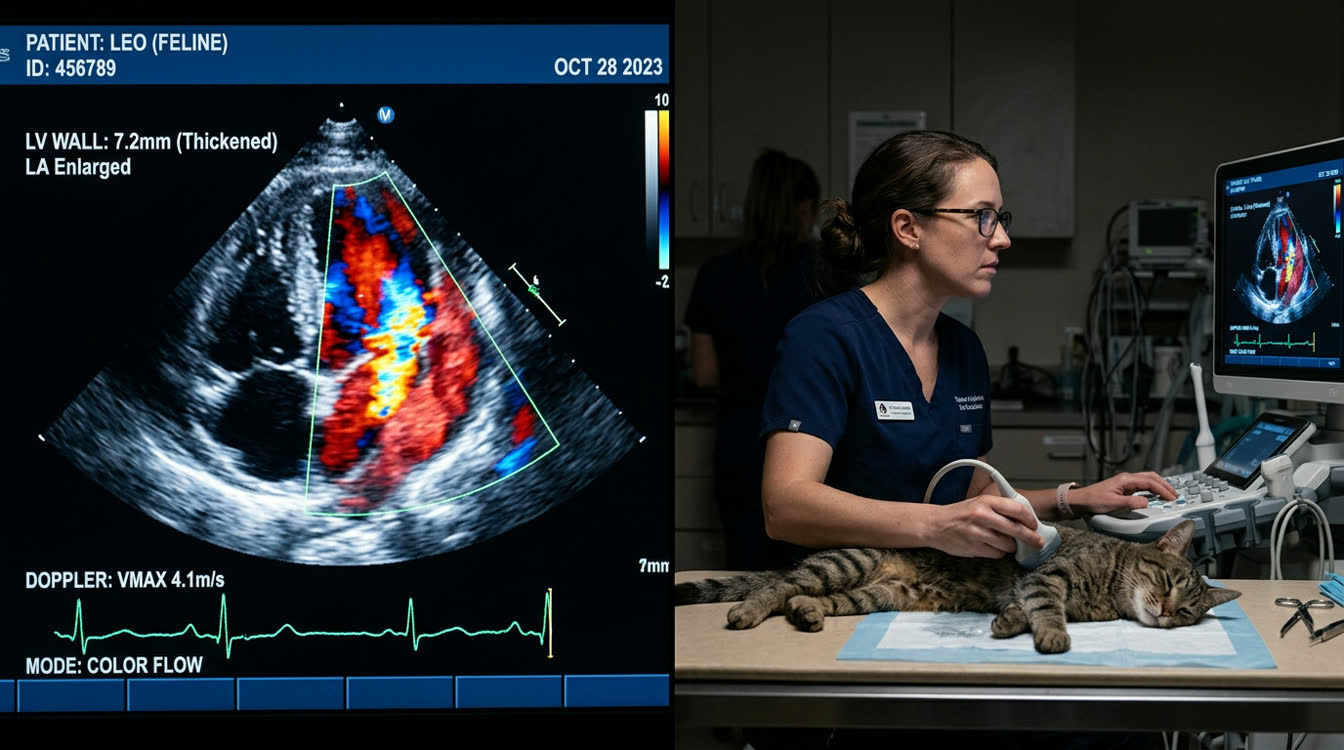
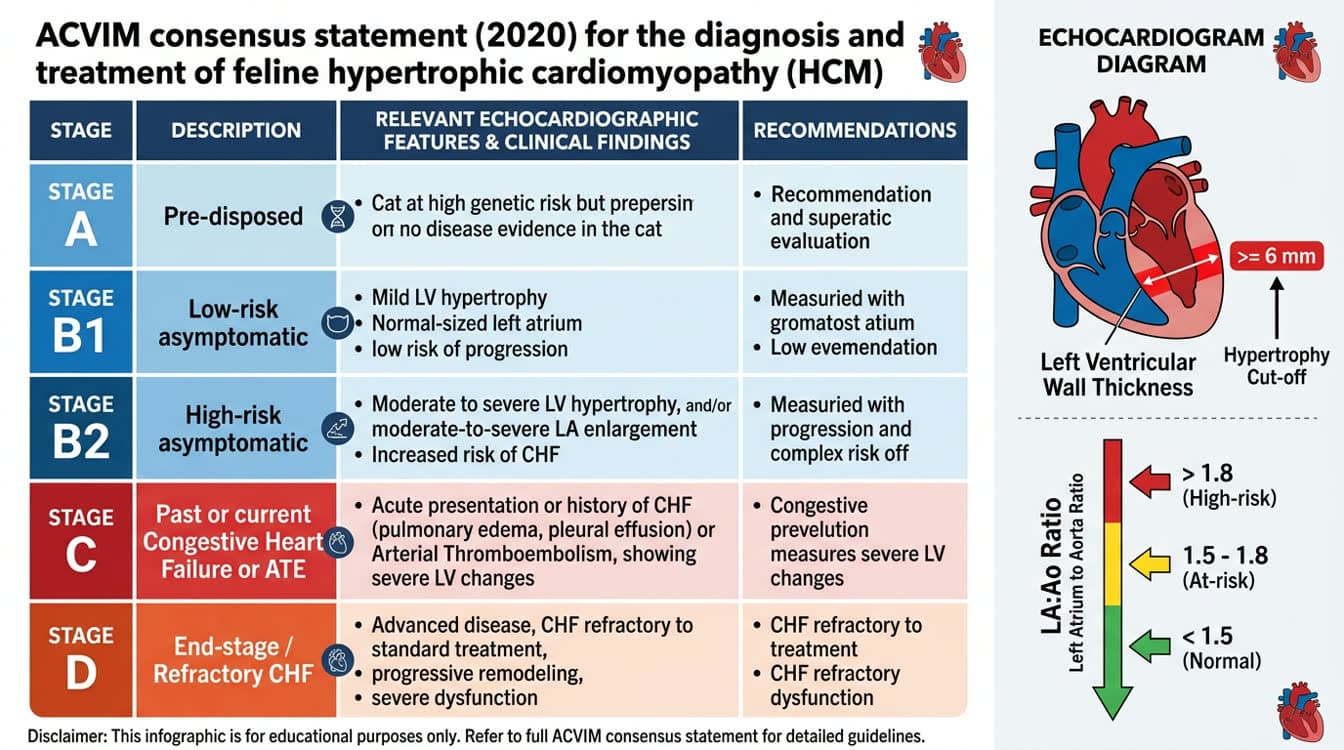
Hypertrophic cardiomyopathy (HCM) is defined by left ventricular (LV) or interventricular septal (IVS) wall thickness ≥6 mm at end-diastole on echocardiography in the absence of other causes (hypertension, hyperthyroidism, acromegaly).
Echocardiographic Diagnostic Criteria:
- LV free wall or IVS thickness >6 mm (diastole, right parasternal short-axis)
- Exclude secondary hypertrophy: measure systolic blood pressure and test for hyperthyroidism before diagnosing primary HCM
- Left atrial (LA) enlargement: LA:Ao ratio >1.5 (right parasternal short-axis view) indicates significant disease
- LA:Ao >1.8–2.0 carries high risk of congestive heart failure (CHF) and aortic thromboembolism (ATE)
ACVIM Staging (2020 Consensus):
| Stage | Description |
|---|---|
| A | High-risk breed/genetics; no structural disease (Maine Coon, Ragdoll, Siberian) |
| B1 | Structural HCM; no LA enlargement, no CHF history |
| B2 | Structural HCM; LA enlargement (LA:Ao >1.5); no CHF history |
| C | Current or prior CHF (pleural effusion, pulmonary edema) |
| D | Refractory CHF despite standard doses |
Genetic Testing:
- MYBPC3 mutations: Maine Coon (A31P mutation) and Ragdoll (R820W mutation) gene panels available
- A negative test does NOT exclude HCM; most cases are genetically heterogeneous
- Annual echocardiography recommended for at-risk breeds from age 1–2 years
Physical Exam Findings:
- Systolic murmur: Grade I–IV/VI over left cardiac apex or sternal border; absent murmur does NOT exclude HCM
- Gallop rhythm (S3 or S4) — significant finding suggesting elevated filling pressures
- Premature ventricular contractions or sustained arrhythmias on auscultation
Differentiating Causes of LV Hypertrophy in Cats:
- Hypertension (systolic BP >160 mmHg) — treat underlying cause first
- Hyperthyroidism — total T4; hypertrophy often reversible with methimazole treatment
- Acromegaly (IGF-1 elevation) — rare but underdiagnosed in diabetic cats
- Infiltrative disease (lymphoma, thrombus)
Drug Selection: Atenolol, Diltiazem, Furosemide and Clopidogrel Dosing
Drug selection in feline HCM depends on clinical stage, presence of dynamic obstruction (LVOTO), heart rate, and LA size.
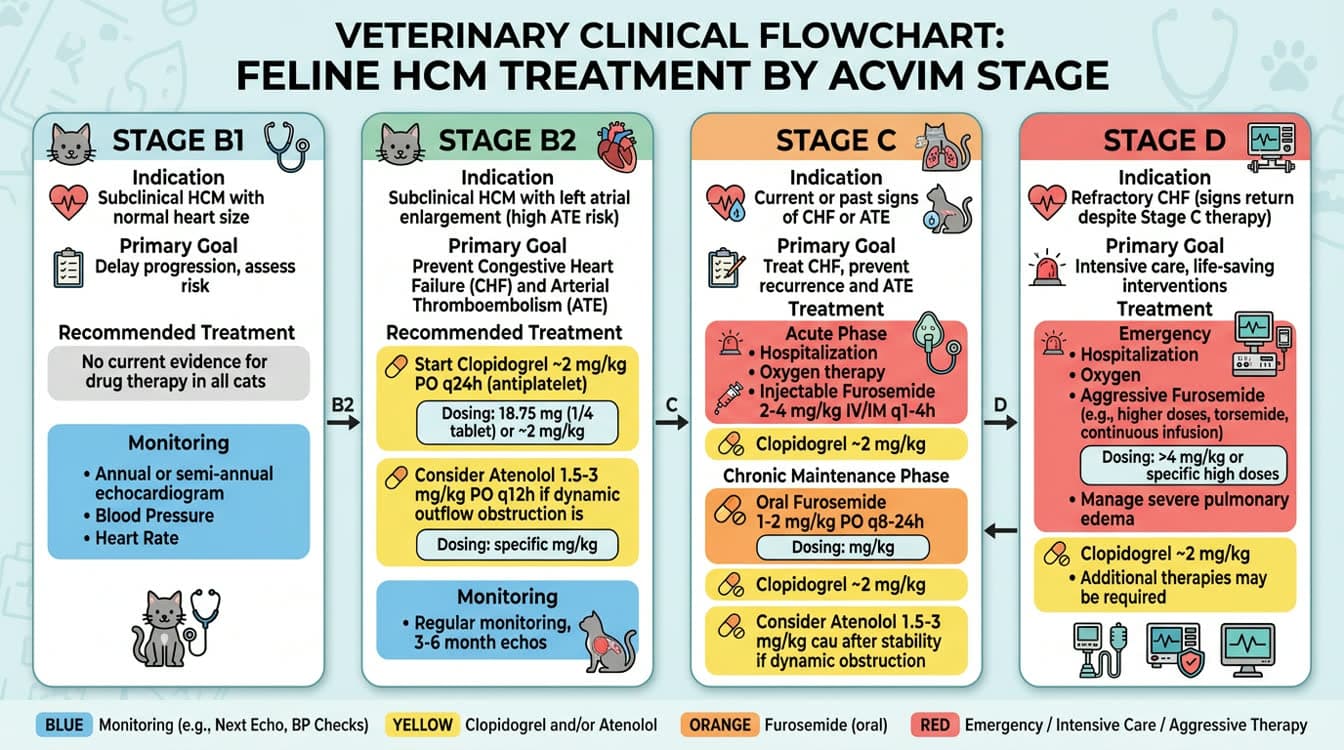
Stage B1 — No Current Evidence for Treatment The 2020 ACVIM consensus does NOT recommend routine drug treatment in Stage B1 cats. Annual echocardiography monitoring is recommended.
Stage B2 — LA Enlargement Without CHF
- Clopidogrel: 18.75 mg/cat PO once daily
Some cardiologists add atenolol or diltiazem in B2 with dynamic LVOTO or tachycardia, though evidence is limited.
Rate Control and Dynamic Obstruction:
- Starting dose: 6.25 mg/cat PO q12–24h
- Titrate to heart rate 120–160 bpm
- Reduces dynamic obstruction severity and myocardial oxygen demand
- Contraindicated in acute decompensated CHF (bronchospasm risk, negative inotropy)
Diltiazem (calcium channel blocker) — alternative for rate control:
- Diltiazem extended-release (Cardizem CD): 45 mg/cat PO q24h
- Short-acting diltiazem: 7.5 mg/cat PO q8h (less preferred)
- Use when atenolol is not tolerated or in cats without clear LVOTO
Stage C — Active CHF Management:
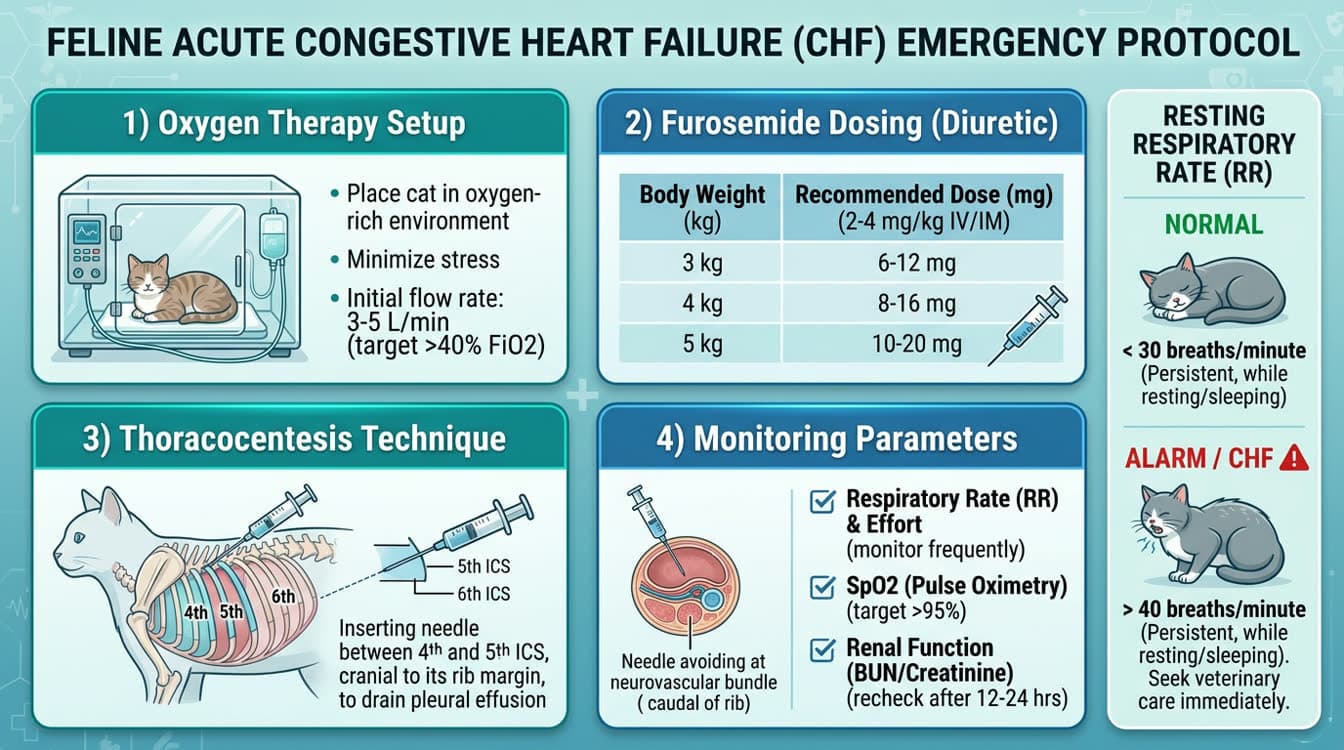
- Acute CHF (pulmonary edema): 2–4 mg/kg IV/IM; repeat q1–4h as needed
- Maintenance: 1–2 mg/kg PO q12–24h
- Monitor BUN, creatinine, electrolytes; reduce dose if azotemia worsens
Atenolol in stage C: Continue if already established and compensated; introduce cautiously once decompensation resolved
Benazepril or Enalapril (ACE inhibitors): Often added in stage C for vasodilation and neurohormonal benefit:
- Benazepril: 0.5–1 mg/kg PO q24h
- Enalapril: 0.25–0.5 mg/kg PO q12–24h
Spironolactone: 2 mg/kg PO q24h — aldosterone antagonist; may have antifibrotic benefit in HCM
Stage D — Refractory CHF:
- Increase furosemide dose (up to 4 mg/kg PO q8h)
- Thoracocentesis for recurrent pleural effusion
- Consider torasemide (torsemide): 0.1–0.2 mg/kg PO q24h — loop diuretic with higher bioavailability than furosemide in cats
- Pimobendan: controversial in feline HCM (may worsen LVOTO); generally avoided unless systolic dysfunction develops (end-stage HCM)
Acute Decompensated CHF in Cats: Emergency Stabilization Protocol
Cats with acute decompensated HCM-related CHF are critically ill and easily stressed into respiratory arrest. A gentle, oxygen-first approach is essential.
Clinical Signs of Acute CHF:
- Open-mouth breathing or severe tachypnea (RR >40–60 breaths/min)
- Orthopnea (refuses to lie down)
- Muffled heart sounds (pleural effusion — most common presentation in cats: 70–80% bilateral)
- Pulmonary crackles (pulmonary edema)
- Hypothermia, pale or cyanotic mucous membranes
Immediate Stabilization (First 30 Minutes): 1. Oxygen supplementation — flow-by, oxygen cage, or nasal prongs at 1–3 L/min; target SpO2 >95% 2. MINIMIZE HANDLING — stress is lethal in dyspneic cats 3. Furosemide: 2–4 mg/kg IM/IV immediately 4. Butorphanol: 0.2–0.3 mg/kg IM — reduces anxiety and respiratory effort without significant respiratory depression 5. Do NOT place IV catheter until cat is more stable unless critical
Thoracocentesis — Immediate if Pleural Effusion Suspected:
- Right and left sided drainage (bilateral in 80%)
- 21–22G butterfly needle, 4th–5th intercostal space, dorsal third
- Remove fluid to patient comfort; do NOT drain dry (leave 5–10 mL)
- Fluid is typically modified transudate (protein 2.5–3.5 g/dL, nucleated cells <5,000/uL)
Post-Stabilization Monitoring:
- Repeat chest radiographs at 12–24 hours
- BUN, creatinine, electrolytes (K+) every 24 hours — furosemide causes hypokalemia
- Blood pressure — start amlodipine 0.625 mg/cat PO q24h if systolic BP >160 mmHg
- Respiratory rate: maintain <40 breaths/min at rest before discharge
Home Monitoring Instruction:
- Teach owners to count resting respiratory rate (RRR) at home
- Target RRR ≤25–30 breaths/min
- RRR >40 or increasing trend = emergency recheck
- Free smartphone apps (Cardalis, Vet-SF) simplify owner monitoring
Frequently Asked Questions
Should all cats with HCM receive medication?
No. Stage B1 cats (HCM without left atrial enlargement) have no proven benefit from treatment. Clopidogrel is recommended at Stage B2 (LA:Ao >1.5) to reduce ATE risk. Furosemide and other cardiac drugs are reserved for Stage C (active CHF).
What is the difference between atenolol and diltiazem in feline HCM?
Atenolol is a beta-1 blocker preferred for cats with dynamic left ventricular outflow tract obstruction (LVOTO) and tachycardia. Diltiazem is a calcium channel blocker used as an alternative, particularly for rate control when atenolol is not tolerated. Evidence for either drug improving outcomes in preclinical HCM is limited.
Can HCM cause sudden death in cats without prior symptoms?
Yes. Sudden cardiac death or acute aortic thromboembolism (FATE) can be the first sign of HCM. Approximately 20–30% of cats with FATE had no previously diagnosed heart disease. This underscores the importance of screening in at-risk breeds.
How does pleural effusion differ from pulmonary edema in cats with HCM?
In cats with CHF from HCM, pleural effusion (bilateral in ~80%) is more common than pulmonary edema, unlike dogs. Thoracocentesis is often the most impactful immediate treatment. Radiographs help differentiate, but thoracocentesis may precede imaging in critical patients.
What is the prognosis for cats with HCM?
Prognosis varies widely. Stage B1 cats may remain asymptomatic for years. Median survival after first CHF episode is approximately 9–18 months, though some cats live 3–5 years with good management. FATE carries a guarded prognosis, with 50–70% short-term mortality or euthanasia at presentation.
References
- Luis Fuentes V, et al. (2020). ACVIM consensus statement guidelines for the classification, diagnosis, and management of cardiomyopathies in cats. J Vet Intern Med. 34(3):1062–1077.
- Hogan DF, et al. (2015). Secondary prevention of cardiogenic arterial thromboembolism in the cat: FATCAT study. J Vet Cardiol. 17(Suppl 1):S306–S317.
- Payne JR, et al. (2015). Prognostic indicators in cats with hypertrophic cardiomyopathy. J Vet Intern Med. 29(5):1292–1302.