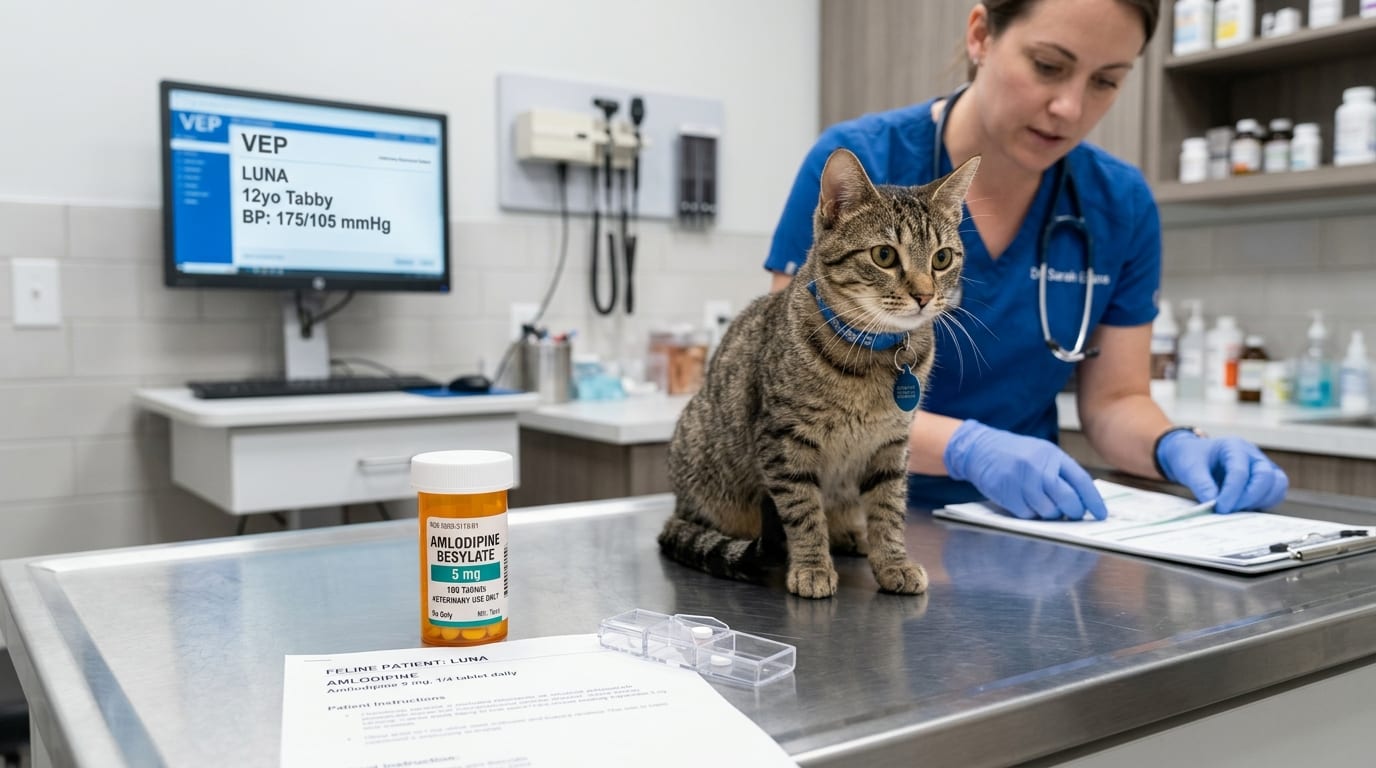
Quick Answer
Amlodipine is the first-line antihypertensive drug for cats with systemic hypertension. This guide covers diagnostic blood pressure thresholds, dosing protocols for cats with CKD, hyperthyroidism, and hypertrophic cardiomyopathy, target blood pressure goals, monitoring frequency, and second-line options when amlodipine alone is insufficient.
Key Takeaways
- ✓Amlodipine is the first-line antihypertensive for cats; calcium channel blockade produces reliable 20-60 mmHg systolic reduction
- ✓Initiate treatment at systolic BP >=160 mmHg, or at 140-159 mmHg if target organ damage is present
- ✓Starting dose 0.625 mg/cat SID for mild-moderate hypertension; 1.25 mg/cat SID for severe (>180 mmHg)
- ✓Target systolic BP 120-150 mmHg; avoid over-correction below 100 mmHg especially in CKD cats
- ✓ACE inhibitors alone are ineffective as antihypertensives in cats — use telmisartan (ARB) as second-line add-on if needed
- ✓Acute bilateral blindness in a hypertensive cat = retinal detachment emergency — start amlodipine immediately; vision recovery possible within 24-72 hours
Diagnosing Feline Hypertension: Thresholds and Measurement
Systemic arterial hypertension in cats is defined as persistently elevated systemic blood pressure causing or risking target organ damage (TOD) to the kidneys, eyes, brain, and heart. The ACVIM Consensus Statement (2018) establishes risk categories based on systolic blood pressure:
Blood Pressure Risk Categories (Systolic BP):
- <140 mmHg: Normotensive — no treatment indicated
- 140-159 mmHg: Mild risk — reassess in 1-3 months; treat if TOD present
- 160-179 mmHg: Moderate risk — initiate antihypertensive therapy
- >=180 mmHg: High risk (severe hypertension) — immediate treatment; TOD likely
Target Organ Damage (TOD) in Hypertensive Cats: Eyes are the most clinically apparent: hypertensive retinopathy/choroidopathy with perivascular exudate, retinal hemorrhage, and retinal detachment. Acute blindness from bullous retinal detachment is a common presentation of severe undiagnosed hypertension. Renal: glomerular hypertension accelerates CKD progression. Cardiac: left ventricular hypertrophy. CNS: disorientation, vestibular signs, hemorrhagic stroke.
Blood Pressure Measurement in Cats:
- Oscillometric (Petmap, Dinamap) or Doppler ultrasonography
- Doppler most reliable for cats — measures systolic BP accurately in small patients
- Measure after 5-10 minutes quiet acclimation in a calm room
- Avoid measuring immediately after transport or handling
- Take 5-7 consecutive readings; discard highest and lowest; average the remainder
- White coat hypertension (measurement anxiety) is a significant confounder — consider ambulatory BP or multiple visit readings before initiating lifelong therapy in mild hypertension (140-160 mmHg) without TOD
Underlying Causes to Investigate:
- CKD (most common; renin-angiotensin system activation)
- Hyperthyroidism (high cardiac output hypertension; often resolves with hyperthyroidism treatment)
- Hyperaldosteronism (rare; hypokalemia often present — aldosterone measurement indicated)
- Primary/idiopathic hypertension (less common in cats than dogs)
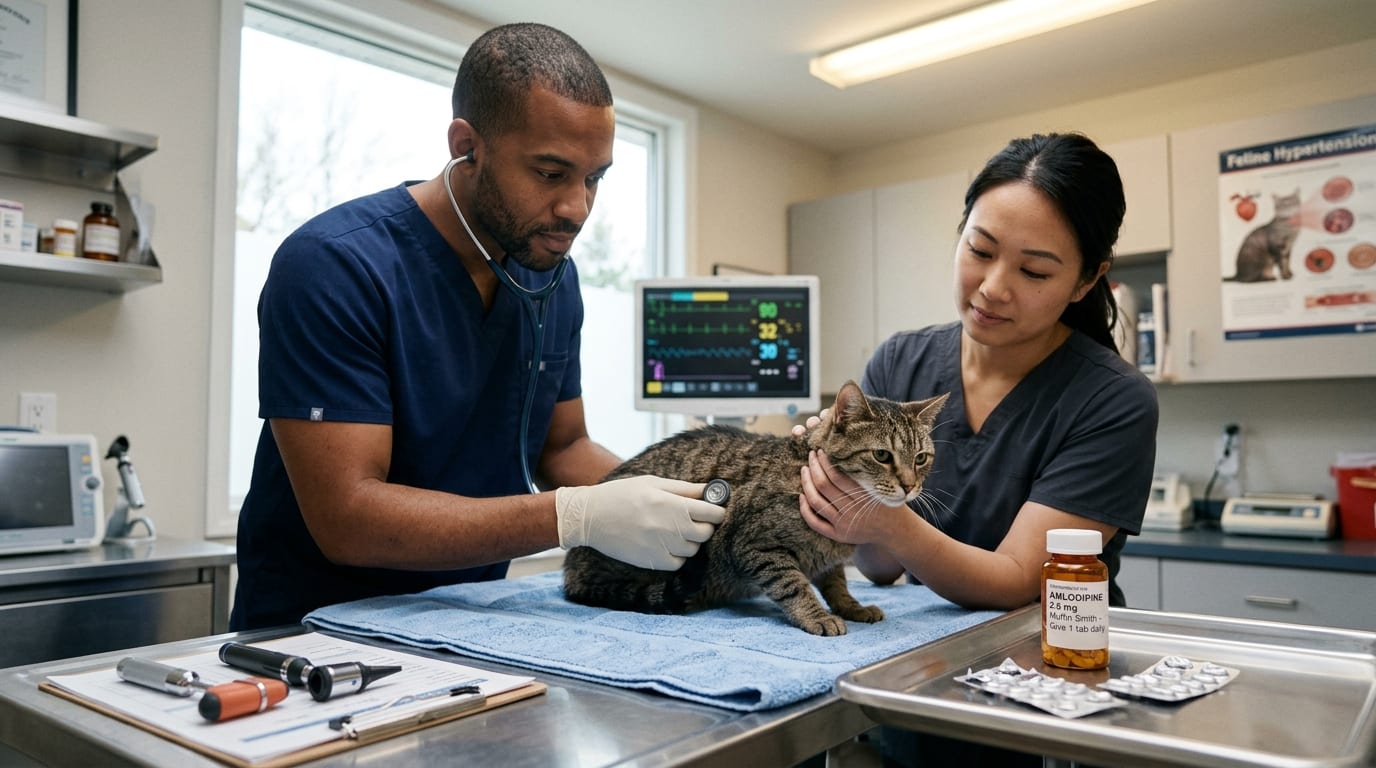
Amlodipine: First-Line Dosing and Expected Response
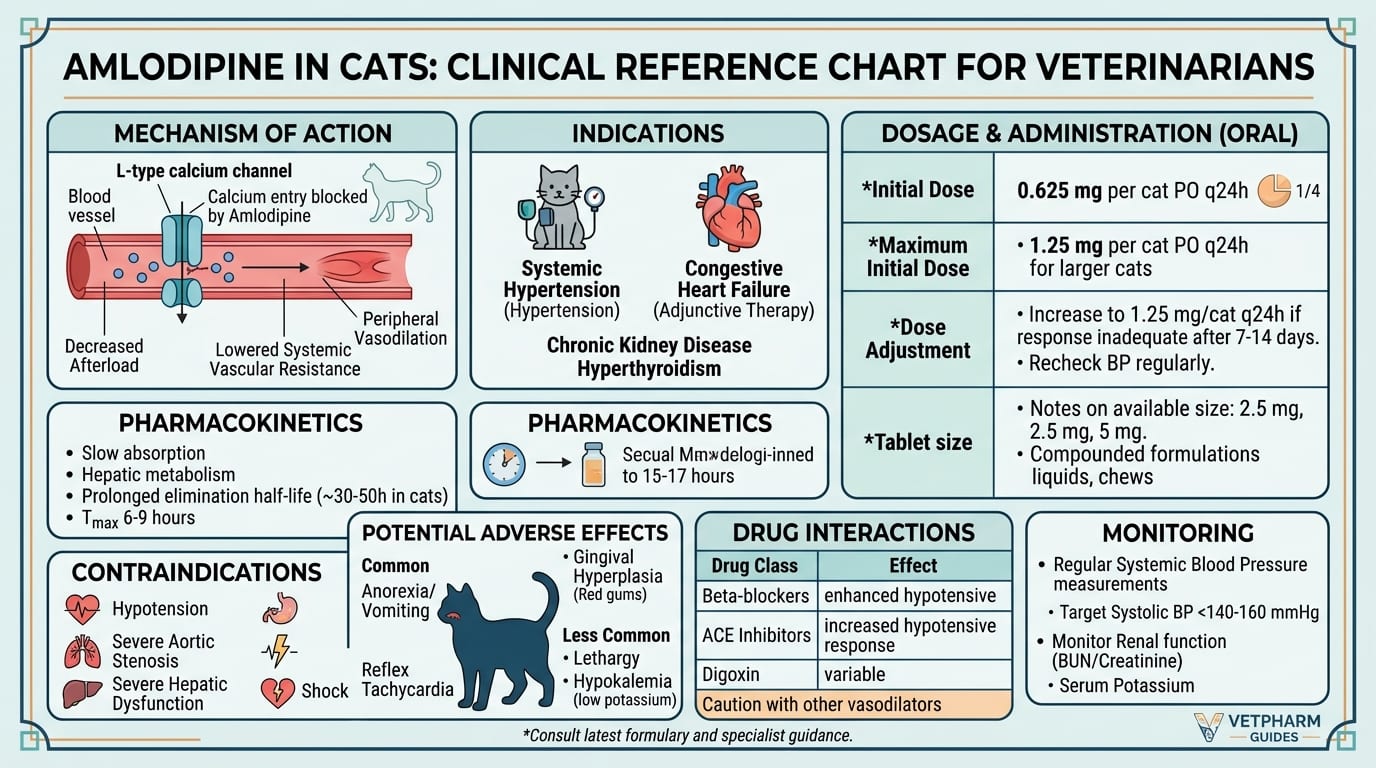
Amlodipine (Norvasc, generic) is a third-generation dihydropyridine calcium channel blocker that reduces systemic vascular resistance by blocking L-type calcium channels in vascular smooth muscle, causing arterial vasodilation. It has minimal effect on cardiac conduction or contractility at clinical doses, making it safe even in cats with hypertrophic cardiomyopathy.
Amlodipine is significantly more effective in cats than in dogs — feline hypertension is predominantly vasoconstrictive (renin-angiotensin dependent in CKD), and calcium channel blockade produces dramatic, reliable blood pressure reduction. In contrast, ACE inhibitors alone are relatively ineffective as antihypertensives in cats with CKD-associated hypertension.
Dosing Protocol:
| Clinical Scenario | Starting Dose | Frequency | Expected BP Reduction |
|---|---|---|---|
| Mild-moderate hypertension (160-180 mmHg) | 0.625 mg/cat (approx 0.1-0.25 mg/kg) | Once daily | 20-40 mmHg reduction |
| Severe hypertension (>180 mmHg) | 1.25 mg/cat | Once daily | 30-60 mmHg reduction |
| If BP remains >160 after 2 weeks | Increase to 1.25 mg/cat | Once daily | Titrate to BP target |
| Maximum dose if needed | Up to 2.5 mg/cat | Once daily | Use with add-on therapy at this dose |
Compounding Note: Amlodipine 0.625 mg/cat requires tablet splitting (the smallest commercially available tablet is 2.5 mg) — pill splitters with dust collection are recommended for accurate dosing. Transdermal amlodipine (PLO gel) has been studied but shows significantly lower and more variable bioavailability than oral administration; oral dosing is strongly preferred.
Expected Response: Most cats respond within 1-7 days of initiation. Recheck BP 7-14 days after starting to assess response. Target: systolic BP <150 mmHg, ideally <140 mmHg. Do not over-correct — hypotension (<100 mmHg systolic) causes acute azotemia and clinical deterioration, particularly in cats with concurrent CKD.
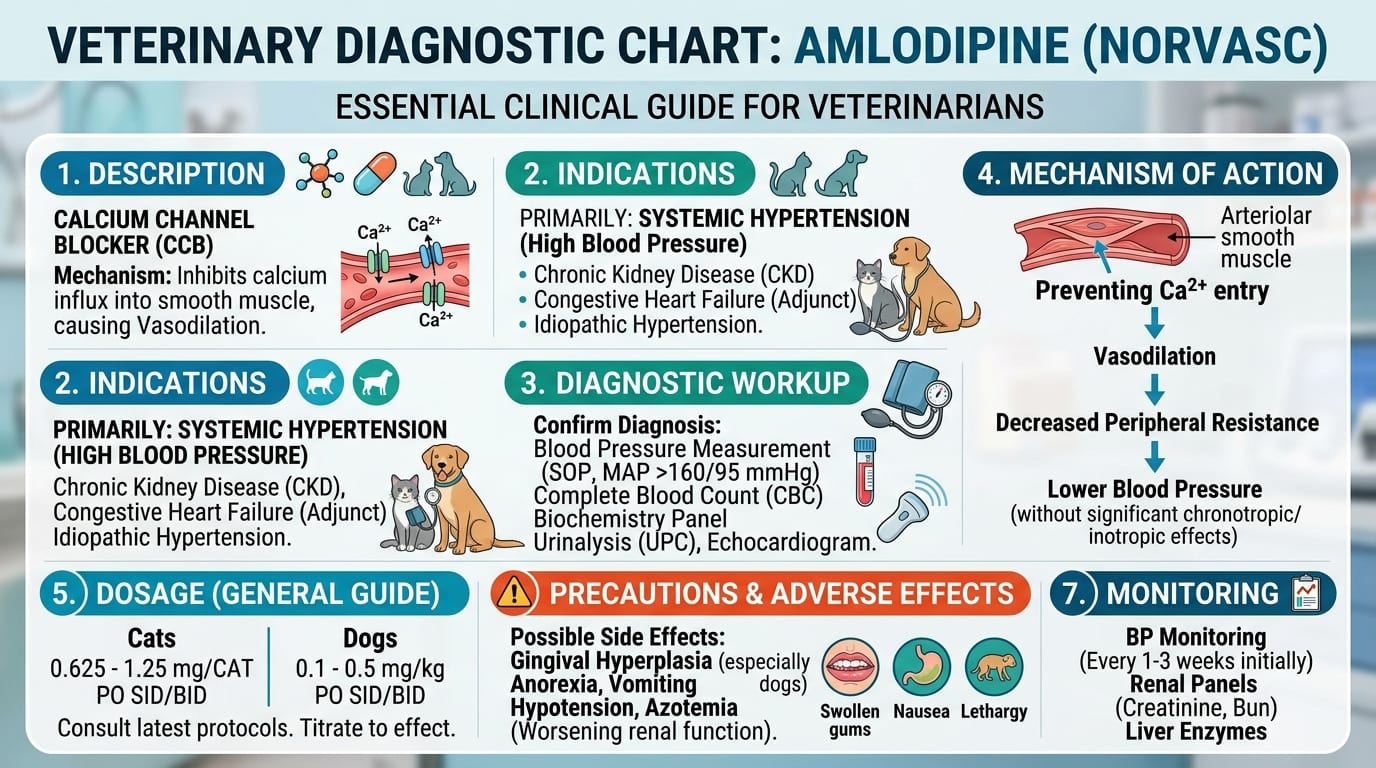
Monitoring Protocol and Second-Line Antihypertensive Options
Long-Term Monitoring Schedule:
- 7-14 days after initiating or changing dose: BP recheck (ensure target achieved without hypotension)
- 1 month after dose stabilization: BP + chemistry panel (creatinine, electrolytes — amlodipine can transiently worsen azotemia if BP drops too quickly in CKD cats)
- Every 3 months (stable): BP + chemistry + urinalysis
- Every 3-6 months (stable, BP controlled): eye examination by veterinarian or ophthalmology referral if retinal lesions present
Blood Pressure Targets During Monitoring:
- Target: systolic BP 120-150 mmHg
- Acceptable: 140-160 mmHg if patient well and no new TOD
- Over-corrected: systolic <100 mmHg — reduce dose, rehydrate if needed, recheck in 24-48 hours
- Treatment failure (systolic >160 after maximum amlodipine): add second agent
Second-Line Antihypertensive Options When Amlodipine Alone Is Insufficient:
Telmisartan (Semintra): angiotensin receptor blocker (ARB); approved in EU for feline CKD-associated proteinuria and hypertension. Dose: 1-2 mg/kg PO once daily. ARBs complement amlodipine by blocking renin-angiotensin-aldosterone system activation. Effective combination with amlodipine for cats with persistent hypertension despite optimal calcium channel blocker therapy.
Benazepril or Enalapril (ACE inhibitors): less effective than telmisartan for BP reduction in cats, but useful for proteinuria reduction and renoprotection in CKD. Not first-line antihypertensive but can be added as adjunct.
Managing Hypertension with Concurrent Hyperthyroidism: Treat hyperthyroidism first (methimazole/radioiodine); reassess BP after 4-8 weeks of controlled thyroid status. High-output cardiac hypertension often normalizes with hyperthyroidism treatment, and amlodipine dose may need reduction or discontinuation after euthyroid state is achieved. Do not over-treat blood pressure in hyperthyroid cats before thyroid is controlled — their baseline GFR depends partially on the elevated cardiac output, and over-lowering BP can unmask pre-existing renal insufficiency.
Hypertensive Ocular Emergency: Acute bilateral retinal detachment with blindness in a cat is a hypertensive emergency. Start amlodipine 1.25 mg immediately. Retinal reattachment is possible if treated within 24-72 hours of detachment. Urgent ophthalmologic evaluation is recommended. Vision recovery occurs in approximately 40-60% of cats treated promptly.
Frequently Asked Questions
What is the starting dose of amlodipine for a hypertensive cat?
For mild to moderate hypertension (systolic 160-180 mmHg), start at 0.625 mg per cat once daily. For severe hypertension (systolic >180 mmHg or with target organ damage), start at 1.25 mg per cat once daily. Recheck blood pressure in 7-14 days to assess response and adjust.
What blood pressure should I target in a cat on amlodipine?
Target systolic blood pressure of 120-150 mmHg. Acceptable range during stabilization: 140-160 mmHg if the patient is clinically well and without progressive target organ damage. Avoid over-correction below 100 mmHg systolic — particularly in cats with concurrent CKD, where acute hypotension causes azotemic crisis.
Is transdermal amlodipine effective in cats?
Transdermal amlodipine (PLO gel applied to the pinna) has significantly lower and more variable bioavailability than oral administration in cats. Oral dosing is strongly preferred. If a cat is difficult to medicate orally, consider compounded flavored chews or gelatin capsules rather than transdermal formulations.
Can amlodipine be used in cats with hypertrophic cardiomyopathy (HCM)?
Yes. Amlodipine has minimal effects on cardiac conduction or contractility at clinical doses and is generally safe in cats with HCM and concurrent hypertension. Monitor for signs of cardiac decompensation. Avoid beta-blockers as antihypertensives in cats with obstructive HCM.
What should I do if a cat presents with sudden blindness and high blood pressure?
This is a hypertensive emergency — likely bilateral retinal detachment from severe hypertension. Start amlodipine 1.25 mg orally immediately and recheck blood pressure in 24 hours. Retinal reattachment and vision recovery are possible if treated within 24-72 hours of detachment. Refer for urgent ophthalmologic evaluation. Investigate underlying cause (CKD, hyperthyroidism).
References
- Acierno MJ, et al. "ACVIM consensus statement: Guidelines for the identification, evaluation, and management of systemic hypertension in dogs and cats." Journal of Veterinary Internal Medicine. 2018;32(6):1803-1822.
- Brown SA, et al. "Effects of once daily renal limited telmisartan vs twice daily enalapril on blood pressure in cats with hypertension." Journal of Veterinary Internal Medicine. 2001.
- Elliott J, et al. "Amlodipine salts for the treatment of feline hypertension." Journal of Veterinary Internal Medicine. 2001;15(6):479-490.