Quick Answer
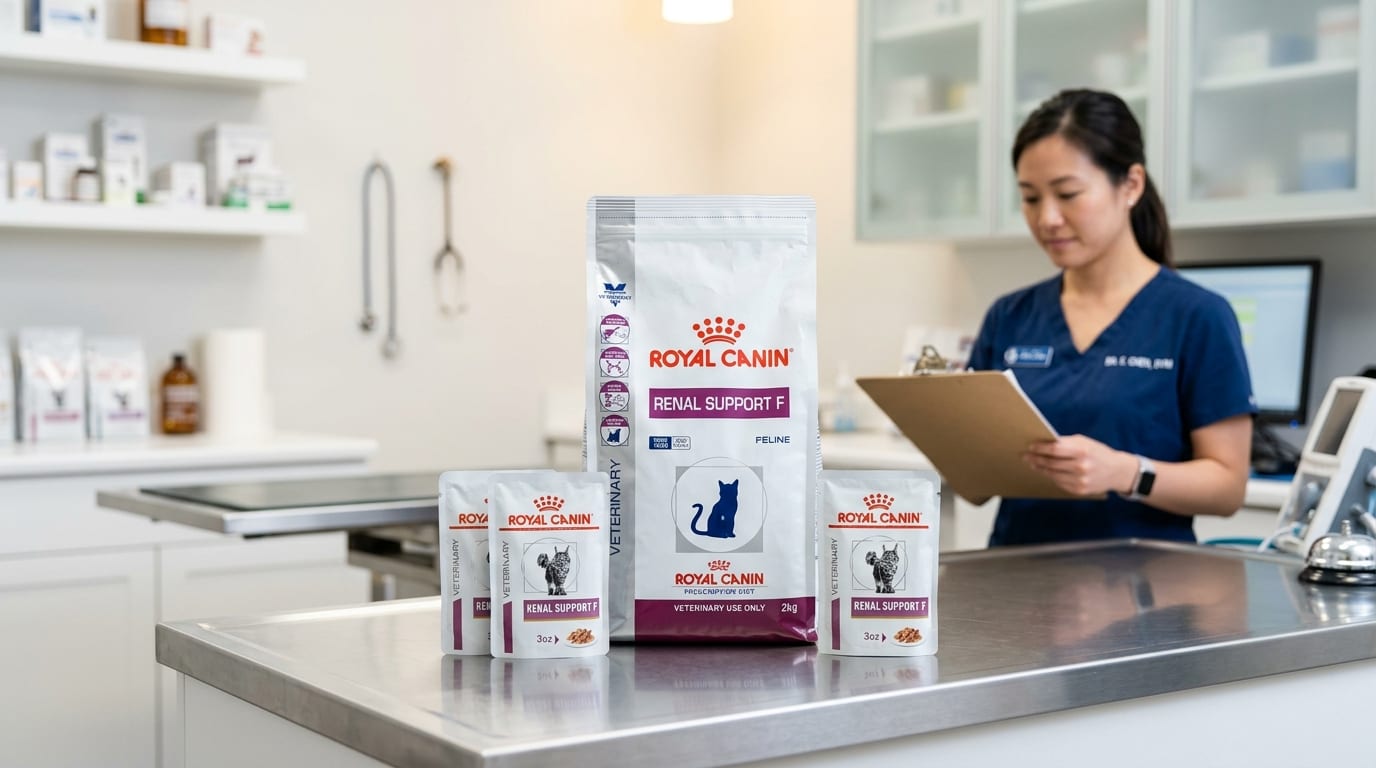
Prescription renal diets are the cornerstone of chronic kidney disease management in dogs and cats. This guide covers IRIS-stage-appropriate dietary modifications, phosphorus restriction targets, protein intake debate, and how to transition patients successfully to renal diets.
Key Takeaways
- ✓IRIS Stage 2 is the recommended starting point for renal diet transition; avoid delaying until Stage 3-4
- ✓Phosphorus restriction is the most critical dietary intervention in CKD — target <4.5 mg/dL in dogs and <4.0 mg/dL in cats at Stage 2
- ✓Protein restriction must be balanced with risk of protein-energy malnutrition — monitor albumin and body condition score monthly
- ✓Cats require 26-32% DM protein minimum; overly aggressive restriction risks cachexia and worsens outcomes
- ✓Transition gradually over 4 weeks; never force a CKD patient to eat a diet they refuse
- ✓Add intestinal phosphate binders when diet alone fails to achieve phosphorus targets — always give with meals
IRIS Staging and Dietary Modification Targets
Dietary intervention in chronic kidney disease (CKD) is guided by the International Renal Interest Society (IRIS) staging system. Dietary changes should be introduced progressively as renal function declines, prioritizing patient acceptance and caloric adequacy alongside restriction targets.
IRIS Stage and Recommended Dietary Targets
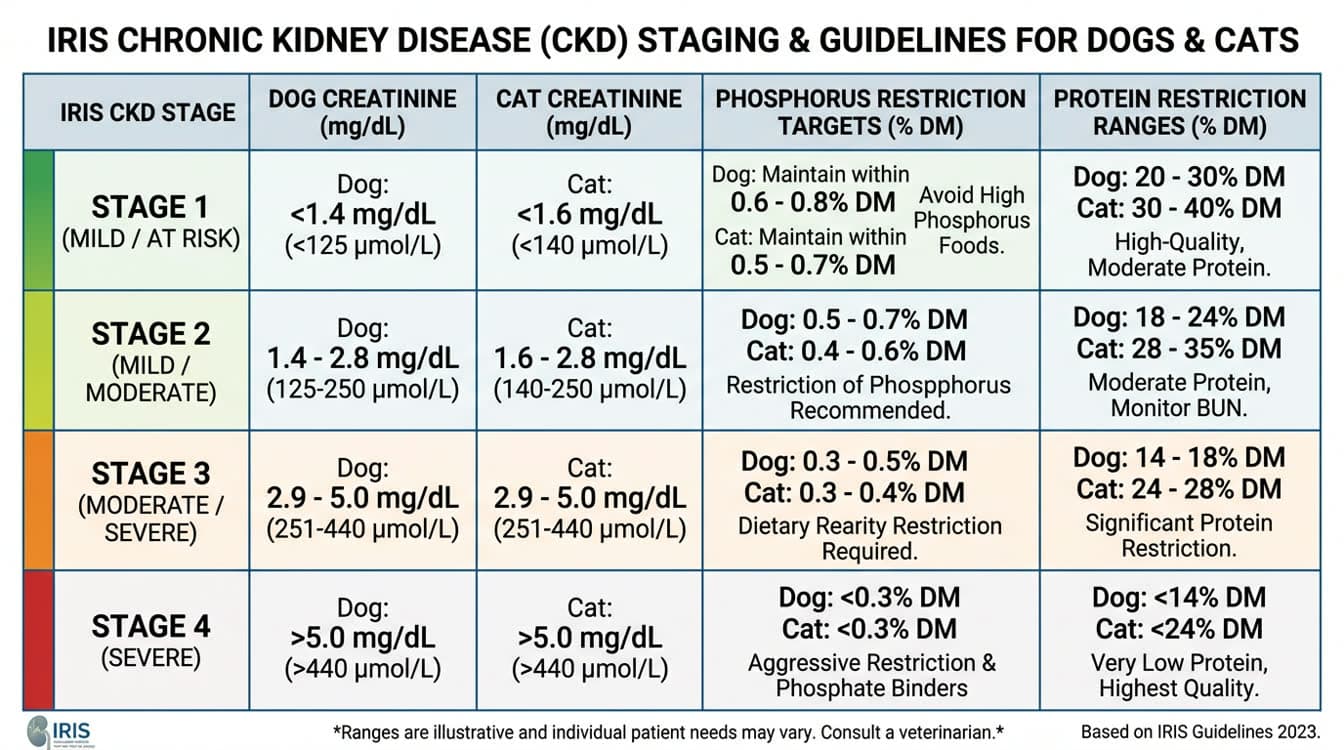
Stage 1 (creatinine <1.6 mg/dL dogs, <1.4 mg/dL cats): Normal or slightly protein-restricted diet; avoid phosphorus excess; no formal restriction required yet. Monitor water intake and encourage hydration.
Stage 2 (creatinine 1.6-2.8 mg/dL dogs, 1.4-2.8 mg/dL cats): Begin phosphorus restriction to 0.4-0.6% DM (dogs) and 0.3-0.5% DM (cats). Moderate protein restriction 14-20% DM (dogs) and 26-32% DM (cats). Consider transition to prescription renal diet.
Stage 3 (creatinine 2.9-5.0 mg/dL dogs, 2.9-5.0 mg/dL cats): Phosphorus restricted to <0.4% DM (dogs) and <0.3% DM (cats). Protein 14-18% DM (dogs) and 24-28% DM (cats). High-quality, highly digestible protein is essential to minimize uremic solute production while preventing hypoalbuminemia.
Stage 4 (creatinine >5.0 mg/dL both species): Maximum dietary phosphorus restriction; intestinal phosphate binders often required in addition to dietary management. Protein restriction must be balanced against risk of protein-energy malnutrition — body condition score and albumin must be monitored monthly.
Phosphorus Binder Addition: When serum phosphorus remains above target (>4.5 mg/dL dogs, >4.0 mg/dL cats) despite dietary restriction alone, intestinal phosphate binders should be added: aluminum hydroxide 30-90 mg/kg/day divided with meals (short-term), lanthanum carbonate (cats: 50 mg per meal), or calcium carbonate.
Protein Restriction in Renal Disease: Evidence and Clinical Application
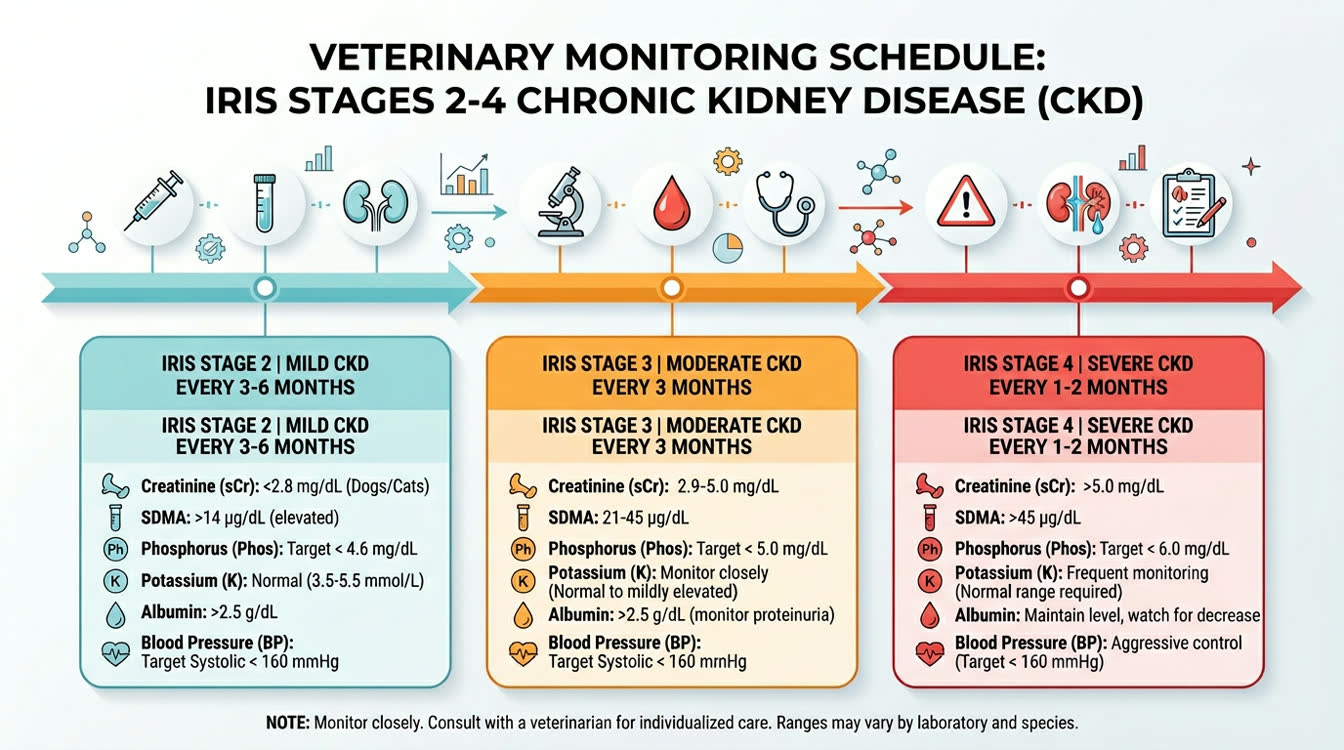
The degree and necessity of protein restriction in veterinary CKD remains one of the most debated topics in clinical nutrition. The rationale for restriction is reducing uremic toxin (blood urea nitrogen, creatinine, uremic solutes) production. However, excessive restriction risks protein-energy malnutrition, muscle wasting, and hypoalbuminemia — all associated with poorer outcomes.
Dogs: Clinical trials support protein restriction beginning at IRIS Stage 3, targeting 14-20% DM crude protein from high-quality sources. A landmark study by Finco et al. demonstrated that dogs fed low-protein renal diets showed slower GFR decline versus maintenance diets, though methodology has been debated. Current consensus: restrict protein only when uremia is present or developing (BUN >70 mg/dL), and always from high-quality, highly digestible sources.
Cats: Protein requirements in cats are substantially higher due to obligate carnivore metabolism. Protein restriction below 26% DM has been associated with loss of lean body mass in multiple feline studies. IRIS guidelines recommend 26-32% DM protein in Stage 2-3 CKD for cats, with restriction only when uremia is clinically significant. Palatability is a major challenge — renal diets are often rejected by cats initially.
Monitoring Markers:
- Serum albumin: target >2.5 g/dL; if declining, reassess protein level
- BCS (Body Condition Score): target 4-5/9; below 3/9 indicates inadequate caloric intake
- Urine protein:creatinine (UPC) ratio: track proteinuria response to dietary modification
- BUN:creatinine ratio: helps differentiate dietary uremia from progressive renal azotemia
Practical tip: Protein source quality matters more than gross quantity. Egg and poultry proteins generate fewer uremic precursors per gram than plant proteins. High-digestibility proteins (>85% digestibility) reduce colonic bacterial fermentation of undigested protein, decreasing uremic toxin production.
Transitioning to Renal Diet and Long-Term Monitoring
Successful transition to a prescription renal diet requires patience, gradual introduction, and close monitoring of caloric intake and patient acceptance — particularly in cats, who are highly neophilic and often reject novel foods when ill.
Transition Protocol:
- Week 1: 75% current food + 25% renal diet (mix thoroughly; warm slightly to enhance aroma)
- Week 2: 50% current food + 50% renal diet
- Week 3: 25% current food + 75% renal diet
- Week 4: 100% renal diet if accepted
If a patient refuses renal diet at any stage, do not force transition. A patient eating a maintenance diet is far preferable to anorexia on a renal diet. Consider alternative renal diet brands or textures (wet vs dry). Multiple wet renal diet options exist: Hill's k/d (original, with chicken in gravy, with tuna), Royal Canin Renal, Purina NF Kidney Function.
Hydration Support: Cats with CKD benefit enormously from increased water intake. Recommend switching to or adding wet food, using water fountains, offering broth (low-sodium, no onion), or considering subcutaneous fluid therapy at home (60-120 mL/cat every 24-72h depending on stage).
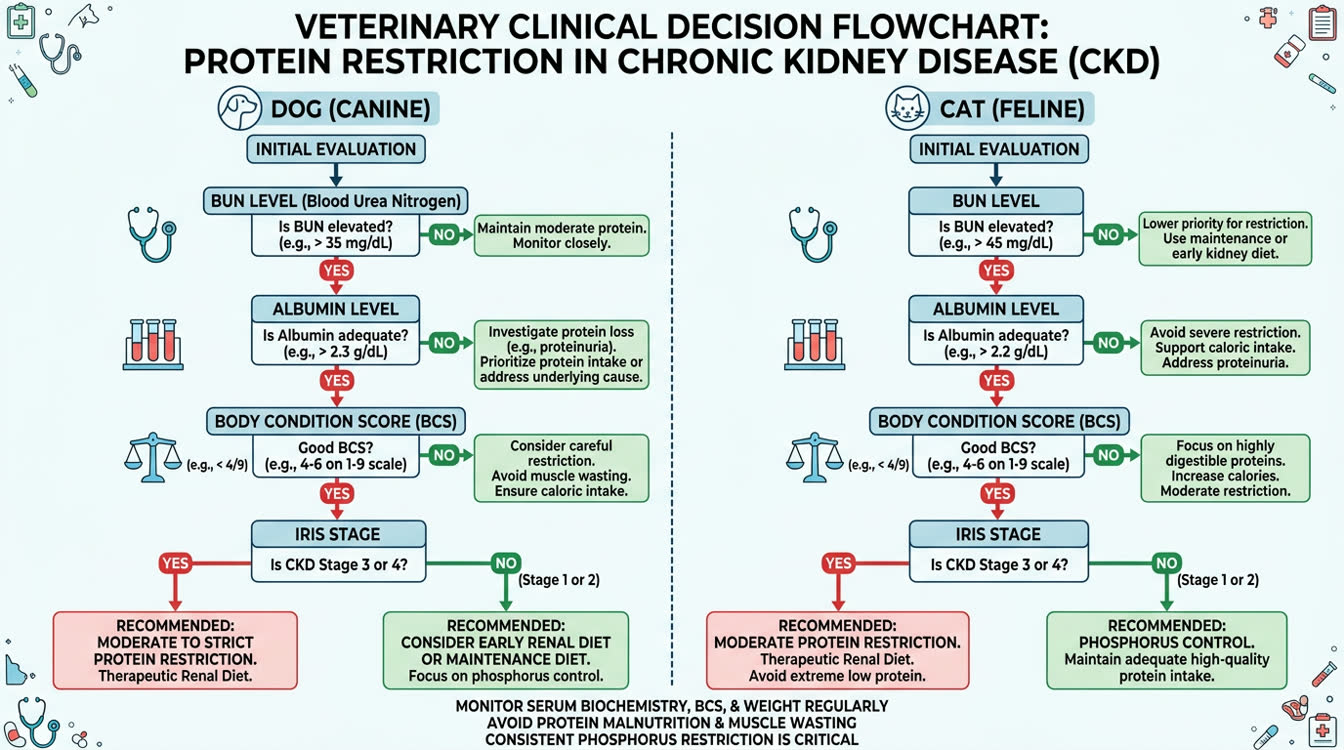
Long-Term Monitoring Schedule (IRIS recommended):
- IRIS Stage 2: Every 3-6 months (BMP, urinalysis, UPC, blood pressure)
- IRIS Stage 3: Every 3 months
- IRIS Stage 4: Every 1-2 months or as clinical status dictates
Key Monitoring Parameters:
- Serum creatinine + symmetric dimethylarginine (SDMA) for GFR trending
- Phosphorus: maintain below 4.5 mg/dL (dogs), 4.0 mg/dL (cats) in Stage 2-3
- Potassium: hypokalemia common in cats — supplement if <3.5 mEq/L (potassium gluconate 2-6 mEq/cat/day PO)
- Blood pressure: target <140 mmHg systolic; treat hypertension with amlodipine (cats) or amlodipine/enalapril (dogs)
- Albumin and body weight: monthly in advanced stages
Frequently Asked Questions
When should I start a renal diet in a dog or cat with CKD?
Renal diet transition is recommended beginning at IRIS Stage 2. At Stage 1, focus on avoiding high-phosphorus foods and encouraging hydration. Formal dietary restriction (phosphorus and protein) is indicated when creatinine exceeds 1.6 mg/dL in dogs or 1.4 mg/dL in cats.
How much should I restrict protein in a cat with CKD?
Cats require significantly more protein than dogs due to obligate carnivore metabolism. Target 26-32% DM crude protein in IRIS Stage 2-3 CKD. Protein restriction below 26% DM risks muscle wasting and hypoalbuminemia. Only restrict further in Stage 4 or when BUN exceeds 80-100 mg/dL with uremic signs.
What phosphorus level should I target in a CKD patient?
IRIS targets: Stage 2 dogs <4.5 mg/dL, cats <4.0 mg/dL; Stage 3 dogs <5.0 mg/dL, cats <4.0 mg/dL; Stage 4 dogs <6.0 mg/dL, cats <5.0 mg/dL. When diet alone is insufficient, add intestinal phosphate binders with meals.
What if my cat refuses to eat the renal diet?
Never force transition on an anorexic patient. A cat eating a maintenance diet is far better than anorexia on a renal diet. Try multiple brands (Hill's k/d, Royal Canin Renal, Purina NF), warm food slightly, mix with familiar food, and consider wet over dry formulations. Some cats accept fish-flavored variants when chicken is refused.
Should I add phosphate binders even if the patient is on a renal diet?
Yes, if serum phosphorus remains above target despite dietary restriction alone. Begin intestinal phosphate binders given with meals: aluminum hydroxide (30-90 mg/kg/day divided, short-term use), lanthanum carbonate (cats: 50 mg per meal), or calcium carbonate. Binders must be given at meal time — they bind dietary phosphorus in the GI tract, not circulating phosphorus.
References
- IRIS (International Renal Interest Society) CKD Guidelines 2023. www.iris-kidney.com
- Brown SA, et al. "Beneficial effects of chronic administration of dietary omega-3 polyunsaturated fatty acids in dogs with renal insufficiency." Journal of Laboratory and Clinical Medicine. 1998.
- Elliott DA. "Nutritional management of chronic renal disease in dogs and cats." Veterinary Clinics of North America: Small Animal Practice. 2006;36(6):1377-1384.