Quick Answer
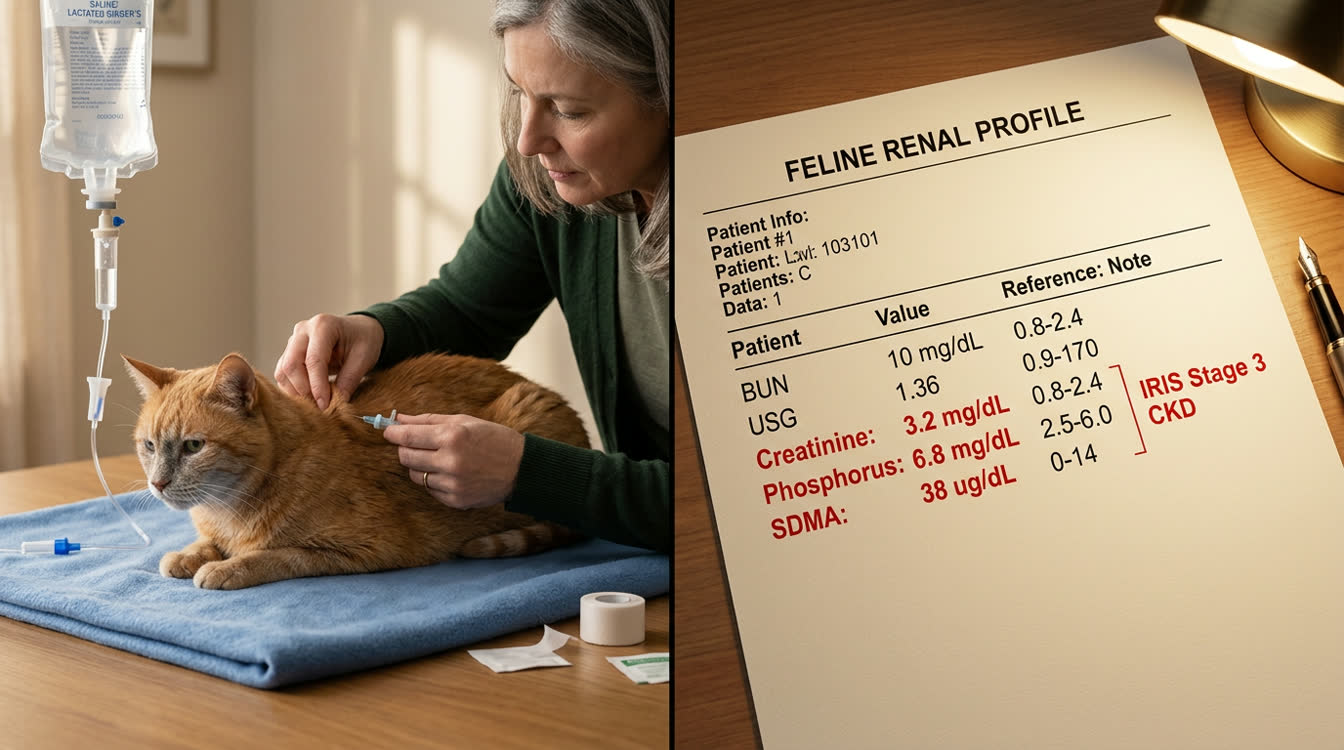
Feline chronic kidney disease (CKD) is the most common chronic disease in middle-aged to senior cats, affecting >30% of cats over 15 years. This guide covers IRIS staging, phosphorus management, anti-proteinuric therapy, subcutaneous fluid protocols, appetite stimulation, and nausea management in a comprehensive staging-guided treatment framework.
Key Takeaways
- ✓IRIS staging is based on two fasting creatinine or SDMA measurements in a stable, hydrated cat — never stage during a dehydration episode
- ✓SDMA >=18 mcg/dL with normal creatinine = IRIS Stage 1 CKD; detects disease ~25-40% GFR loss before creatinine rises
- ✓Phosphorus control is critical — target <4.5 mg/dL in Stage 2; add intestinal binders (given with meals) when diet alone fails
- ✓Home SQ fluid therapy (75-150 mL SC q24-72h) is one of the most impactful quality-of-life interventions in Stage 3-4 cats
- ✓Proteinuria (UPC >0.4) requires telmisartan 1-2 mg/kg SID; anti-proteinuric therapy slows CKD progression
- ✓Mirtazapine (1.875 mg q48-72h) and maropitant (1 mg/kg SID) address anorexia and uremic nausea — critical for maintaining caloric intake
IRIS CKD Staging in Cats: Creatinine, SDMA and Substaging
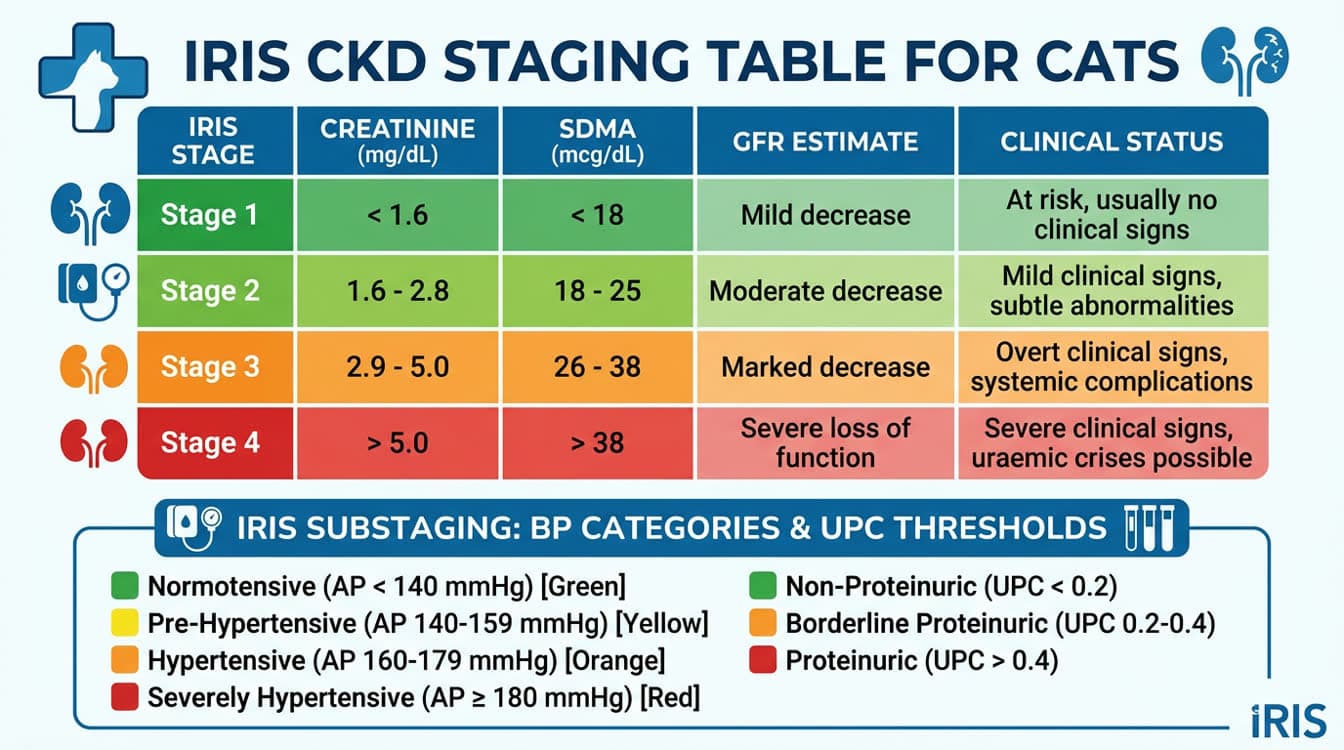
The International Renal Interest Society (IRIS) staging system provides the framework for standardized CKD diagnosis, communication, and treatment planning in cats. Staging is based on fasting serum creatinine (or SDMA) measured on at least two occasions >=2 weeks apart in a stable, hydrated patient.
IRIS CKD Staging for Cats:
| Stage | Creatinine (mg/dL) | SDMA (mcg/dL) | GFR Estimate | Clinical Status |
|---|---|---|---|---|
| 1 | <1.4 | >=18 | >40% of normal | Non-azotemic; renal disease present (proteinuria, imaging, SDMA) |
| 2 | 1.4-2.8 | 18-25 | 25-40% normal | Mild azotemia; most cats asymptomatic |
| 3 | 2.9-5.0 | 26-38 | 10-25% normal | Moderate azotemia; clinical signs common |
| 4 | >5.0 | >38 | <10% normal | Severe azotemia; uremia likely; poor prognosis without intensive management |
SDMA (Symmetric Dimethylarginine): SDMA is a more sensitive marker of GFR decline than creatinine, detecting loss of approximately 25-40% of nephron function before creatinine rises (creatinine requires ~75% nephron loss). SDMA >14 mcg/dL in a cat with creatinine <1.4 mg/dL = IRIS Stage 1 CKD. Important: SDMA is less affected by muscle mass than creatinine, making it more reliable in cats with sarcopenia or low body condition score.
Substaging (applied within each IRIS stage):
- Blood pressure substage: normotensive (<140 mmHg), at risk (140-159), hypertensive (160-179), severely hypertensive (>=180 mmHg)
- Proteinuria substage: UPC ratio <0.2 (non-proteinuric), 0.2-0.4 (borderline proteinuric), >0.4 (proteinuric)
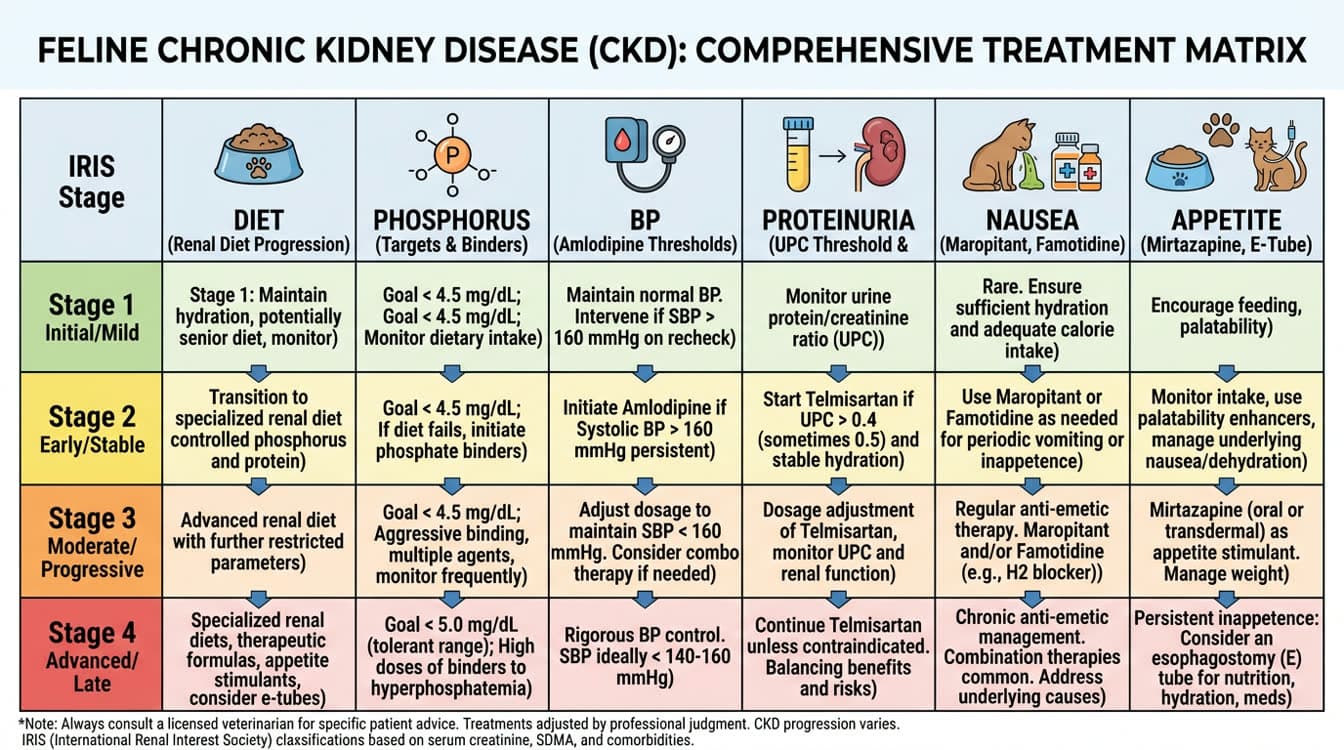
Treatment interventions are guided by both the primary IRIS stage and the substage. A Stage 2 cat that is severely hypertensive and proteinuric requires more aggressive management than a non-proteinuric, normotensive Stage 2 cat.
Phosphorus Control, Subcutaneous Fluid Therapy and Supportive Care
Phosphorus Management:
Hyperphosphatemia accelerates CKD progression through renal mineralization, tubular injury, and secondary renal hyperparathyroidism. Phosphorus control is among the most impactful interventions in feline CKD.
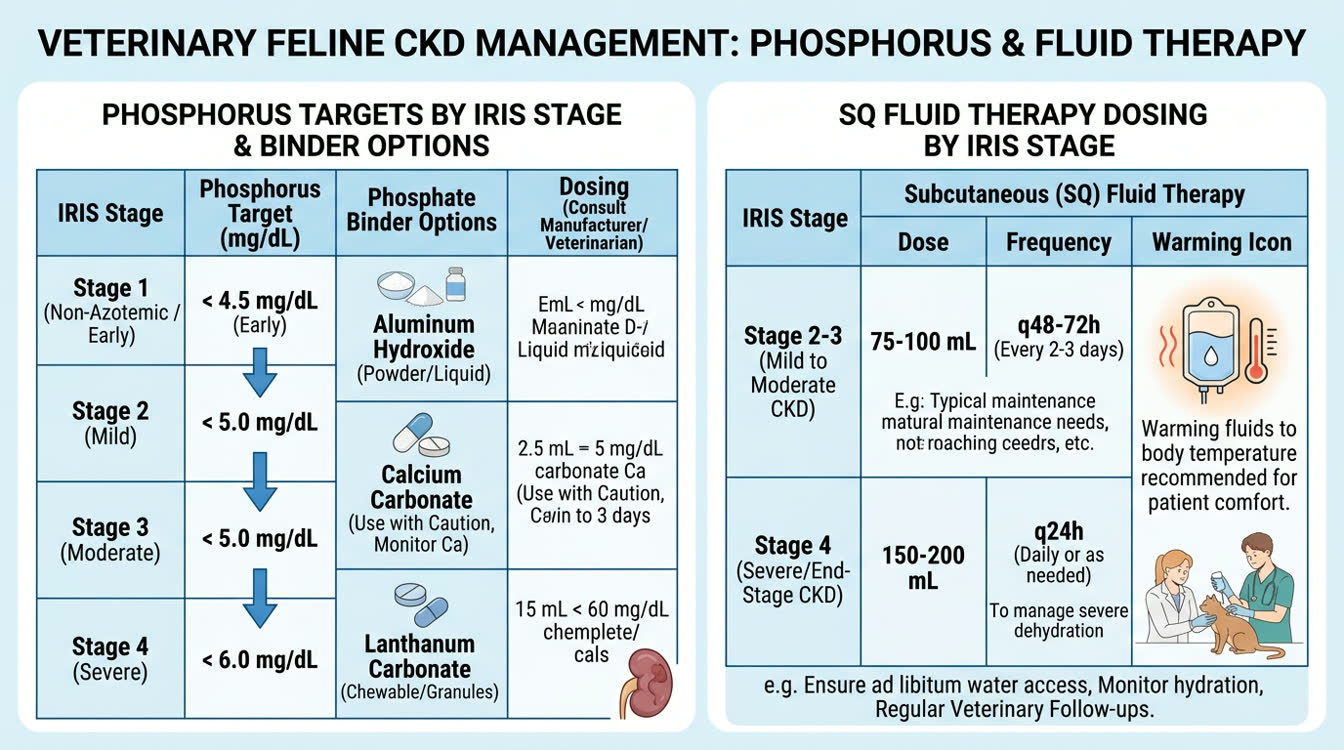
Target serum phosphorus by IRIS stage:
- Stage 1-2: <4.5 mg/dL
- Stage 3: <5.0 mg/dL
- Stage 4: <6.0 mg/dL (more difficult; use diet + binders aggressively)
Step 1: Renal diet (prescription diet with restricted phosphorus). Transition per gradual protocol over 4 weeks.
- Aluminum hydroxide: 30-100 mg/kg/day divided with meals (most potent binder; short-term first-line; avoid long-term aluminum accumulation in renal failure patients)
- Calcium carbonate: 40-60 mg/kg/day divided with meals (widely used; risk of hypercalcemia at high doses — monitor calcium)
- Lanthanum carbonate (Renalzin): 400 mg per cat per meal; safe for long-term use; available as palatable paste in Europe
- Sevelamer: less commonly used in cats; limited palatability
Subcutaneous Fluid Therapy: Home SQ fluid administration is one of the most impactful quality-of-life interventions in IRIS Stage 3-4 cats. Fluids correct dehydration, reduce azotemia, and improve appetite and alertness.
Recommended volumes by stage:
- Stage 2-3: 75-100 mL SC every 48-72 hours
- Stage 3-4 (moderately dehydrated): 100-150 mL SC every 24-48 hours
- Stage 4 (severe): 150-200 mL SC every 24-48 hours
Fluid choice: lactated Ringer's solution (LRS) or 0.9% NaCl. Avoid high-potassium fluids if hyperkalemic. Warm to body temperature before administration. Teach owners the tent-and-release technique for SC fluid administration.
Potassium Supplementation:
- Potassium gluconate (Tumil-K): 2-6 mEq/cat/day PO in food
- Potassium chloride: add to SQ fluids if severe hypokalemia (20 mEq/L in SQ fluid)
Anti-Proteinuric Therapy, Nausea Control and Appetite Management
Anti-Proteinuric Therapy:
Proteinuria (UPC >0.4) in CKD cats is a negative prognostic indicator — higher UPC is associated with faster progression and reduced survival time. Anti-proteinuric therapy is indicated for persistent proteinuric CKD cats (UPC >0.4 on two measurements 2+ weeks apart after UTI has been ruled out).
Telmisartan (Semintra oral solution): 1-2 mg/kg PO once daily. Angiotensin receptor blocker; reduces glomerular hypertension and UPC. FDA-approved for this indication in cats. Start at 1 mg/kg; can increase to 2 mg/kg if partial response. Monitor creatinine and potassium after 2 weeks (transient creatinine rise of <0.5 mg/dL expected — acceptable). Discontinue if acute azotemia worsens significantly (creatinine increase >0.5-1.0 mg/dL above baseline).
Benazepril or enalapril: ACE inhibitors with renoprotective and antiproteinuric effects; less effective than telmisartan in cats but widely used. Dose: benazepril 0.5-1 mg/kg PO SID-BID.
Nausea and Uremic GI Signs: Uremia causes nausea, anorexia, vomiting, and hypersalivation via direct effects on the chemoreceptor trigger zone. Controlling nausea dramatically improves quality of life and caloric intake.
Maropitant (Cerenia): 1 mg/kg SC or PO SID — first-line antiemetic for uremic nausea in cats; NK1 receptor antagonist; highly effective. Ondansetron: 0.1-0.5 mg/kg PO or IV BID-TID — 5-HT3 antagonist; useful adjunct for refractory nausea. Famotidine: 0.5-1 mg/kg PO or IV SID — H2 blocker; reduces uremic gastric acid hypersecretion.
Appetite Stimulation:
- Mirtazapine: 1.875 mg/cat PO every 48-72 hours (transdermal: 2 mg/cat applied to pinna q72h). Serotonin antagonist with appetite-stimulating effects in cats. Most effective appetite stimulant available for cats.
- Cyproheptadine: 1-4 mg/cat PO BID — weaker appetite stimulant; use if mirtazapine not tolerated.
- Assisted feeding: nasogastric tube or esophagostomy tube for cats that cannot maintain caloric intake voluntarily. Esophagostomy tubes are well-tolerated and allow owner-administered nutrition at home.
Erythropoietin-Stimulating Agents: Non-regenerative anemia (hematocrit <20% in cats) is common in Stage 3-4 CKD. Darbepoetin alfa (Aranesp): 0.45-1 mcg/kg SC every 1-2 weeks until target PCV reached (30-35%), then monthly maintenance. Monitor for pure red cell aplasia (anti-EPO antibodies) — rare but serious.
Frequently Asked Questions
At what creatinine level is a cat considered to have Stage 3 CKD?
IRIS Stage 3 CKD in cats is defined by a fasting serum creatinine of 2.9-5.0 mg/dL, measured twice at least 2 weeks apart in a stable, well-hydrated patient. SDMA 26-38 mcg/dL also places a cat in Stage 3. Stage 3 cats often show clinical signs including weight loss, polyuria/polydipsia, anorexia, and nausea.
When should I start subcutaneous fluid therapy at home in a cat with CKD?
Home SQ fluid therapy is typically introduced at IRIS Stage 3 (creatinine 2.9-5.0 mg/dL), particularly when the cat shows signs of chronic dehydration, reduced appetite, or worsening azotemia. Stage 2 cats may benefit if dehydration is documented. Start at 75-100 mL every 48-72 hours and adjust based on hydration status and clinical response.
What is the best appetite stimulant for a cat with CKD-related anorexia?
Mirtazapine is the most effective appetite stimulant for cats: 1.875 mg orally every 48-72 hours, or 2 mg transdermal (applied to pinna) every 72 hours. It should be combined with nausea control (maropitant 1 mg/kg SID) since uremic nausea is a major cause of anorexia in CKD cats.
What UPC ratio is considered proteinuric in a cat with CKD?
A urine protein:creatinine (UPC) ratio >0.4 on two measurements taken at least 2 weeks apart (after ruling out UTI and lower urinary tract inflammation) is classified as proteinuric by IRIS. This indicates glomerular injury and warrants anti-proteinuric treatment with telmisartan (1-2 mg/kg SID).
How is SDMA used to stage feline CKD differently from creatinine?
SDMA detects GFR loss of approximately 25-40% (before creatinine becomes abnormal, which requires ~75% nephron loss). A cat with creatinine <1.4 mg/dL but SDMA >=18 mcg/dL is classified as IRIS Stage 1 CKD. SDMA is also less affected by muscle mass than creatinine, making it more reliable in thin, sarcopenic geriatric cats.
References
- IRIS (International Renal Interest Society) CKD Staging and Treatment Guidelines 2023. www.iris-kidney.com
- Brown CA, et al. "Cats with oral disease have a higher risk of chronic kidney disease." Veterinary Internal Medicine. 2016.
- Bartlett PC, et al. "Associations between dietary phosphorus, urinary phosphorus, and fibroblast growth factor-23 in cats with chronic kidney disease." Journal of Veterinary Internal Medicine. 2018.